International Research Journal of Engineering and Technology (IRJET) e-ISSN: 2395-0056

Volume: 09 Issue: 12 | Dec 2022 www.irjet.net p-ISSN: 2395-0072
International Research Journal of Engineering and Technology (IRJET) e-ISSN: 2395-0056
Volume: 09 Issue: 12 | Dec 2022 www.irjet.net p-ISSN: 2395-0072
Mohammed oveze1, Sangeetha mandal2, Rumana Kouser3 , Melvin Mickle4, Kiranashree B.K5
1,2,3,4 Students, Department of Computer Science & Engineering, T John Institute of Technology, Bengaluru, India 5 Asst. Professor, Department of Computer Science & Engineering, T John Institute of Technology, Bengaluru, India ***
Abstract - In this study, machine learning techniques are used to forecast Alzheimer's. Among neurodegenerative illnesses Although the symptoms are first mild, they worsen over time. A typical dementia is Alzheimer's disease. Psychological factors like as age, the frequency of visits, the MMSE, and education can be used to predict the AD
Key words: Alzheimer disease, mild cognitive impairmentMachinelearningalgorithms,psychological parameters
Short-termmemoryloss,paranoia,anddelusionalthoughts aresymptomsofAlzheimer'sDisease(AD),adegenerative neurologicaldisorderthatisoftenmisdiagnosedasstressor aging-related symptoms. About 5.1 million Americans are afflicted by this disease. AD does not receive adequate medical care. AD must be treated with medication consistently. Because AD (1) is chronic, it might last for a longtimeorfortherestofyourlife.Therefore,inorderto preventsignificant brain damage,itiscrucial to prescribe medicationattherighttime.Sinceweneedtogatheralotof data,applyadvancedmethodsforprediction,andconsultan experienceddoctor,earlydetectionofthisdiseaseisatimeconsumingandexpensiveprocess.
Innovative approaches such as machine learning are increasingly being used to offer prescient and customized prescriptions.Viewingmedicalreportsmayleadradiologists tomissotherdiseaseconditionsbecauseitonlyconsidersa fewcausesandconditions.Thegoalhereistoidentifythe knowledgegapsandpotentialopportunitiesassociatedwith MLandEHRderiveddata.
ThisprojectisbeingputforthtoforecastAlzheimer'sdisease predictionandtoacquirebetterandaccurateresults.
It will use a CNN algorithm and SVM algorithm Python programminglanguageisemployedformachinelearningin ordertocompletethisoperation
ThereisnoproperawarenessaboutAlzheimerDisease.As they age, they may experience changes in your physical
abilities and walking, sitting, and eventually swallowing. Individuals may need substantial assistance with daily activitiesastheirmemory,andcognitiveskillscontinueto decline.Atthisstage,individualsmayneed24/7assistance for personal care and daily activities When people suffer fromdementia,theirabilitytocommunicate,adapttotheir environment,andeventuallymoveislost.Itbecomesmuch moredifficultforthemtocommunicatepainthroughwords orphrases
Python is a sophisticated, widely used programming language. In 1991, "GUIDO VAN ROSSUM" invented it. Numerous libraries, including pandas, numpy, SciPy, matplotlib,etc.,aresupportedbyPython.ItsupportsXlsx, Writer, and X1Rd, among other packages. Complex performed extremely effectively using it. There are numerousfunctionalPythonframeworks Machinelearning is a branch of artificial intelligence that allows computer frameworks to pick up new skill and enhance their performancewiththehelpofdata.Itisemployedtoresearch thedevelopmentofcomputer-basedalgorithmsformaking predictionsaboutdata.Providingdataisthefirststepinthe machine learning process, after which the computers are trainedbyusingavarietyofalgorithmsto createmachine learningmodels.Softwareengineering'sbranchofmachine learninghassignificantlyalteredhowpeopleanalysesdata.
According to research [1] The most prevalent and commontypeofdementiaisAlzheimer'sdisease(AD).AD can be clinically diagnosed by physical and neurologicalexamination,sothereisanneedfordeveloping better diagnostic tools for AD. MRI (Magneticresonanceimaging)scanswereprocessedbyFree Surfer, a powerful tool suitable for processing and normalizingbrainMRIimages.Themultistageclassifierused inthisthesisproducedagoodperformanceforADdetection as compared with previous individual machine learning approaches,suchasSVMandKNN.
Based on [2] In this paper, we have proposed a new classificationframeworkbasedoncombinationofCNNand RNNtoperformthelongitudinalanalysisofstructural MR imagesforADdiagnosis.CNNmodelwasproposedtoextract thespatialfeaturesofeachtimepointandgeneratessingletime classification result, while RNN based on cascaded
International Research Journal of Engineering and Technology (IRJET) e-ISSN: 2395-0056
Volume: 09 Issue: 12 | Dec 2022 www.irjet.net p-ISSN: 2395-0072
BGRUwasusedtomodelthetemporalvariationsanextract the longitudinal features for improving disease classification. Experimental results on the ADNI dataset demonstratetheeffectivenessoftheproposedclassification algorithm.Inthefutureworks,wewillincludeotherimaging features such as structural and functional connection networks of brain for RNN based longitudinal analysis. In addition, our work can beExperimental resultsshowthat the proposed method achieves classification accuracy of 91.33% for AD vs. NC and 71.71% for pMCI vs. sMCI, demonstratingthepromisingperformanceforlongitudinal MRimageanalysis.
The[3]Alzheimer'sdiseaseseriouslyaffectsthelivesofthe elderlyandtheirfamilies.Mildcognitiveimpairment(MCI)is atransitionalstatebetweennormalagingandAlzheimer's disease. MCI is often misdiagnosed as the symptoms of normalaging,whichresultstomissthebestopportunityof treatment.Inthispaper,theneuroimagingdiagnosisandthe clinical psychological diagnosis are combined. The experimental resultsshowthatthe proposed multi-modal auxiliary diagnosis can achieve an excellent diagnostic efficiency. The consistency of the output of two convolutional neural networks is judged by correlation analysis.IftheresultsofthetwoCNNmodelsaresimilar,itis intuitive that the diagnosis for the same patient are consistent with the difference modality diagnosis. The accuracy rates achieves 95.9% (CN vs. AD), 85.0%(CN vs. MCI),and75.8%(MCIvs.AD),respectively.
As in [7] The accurate diagnosis of Alzheimer's disease (AD)isessentialfortimelytreatmentandpossibledelayof AD. Fusion of multimodal neuroimaging data,suchasMRIandPET,hasshownits effectivenessfor ADdiagnosis.TheproposedMM-SDPNalgorithmisapplied totheADNIdatasettoconductbothbinaryclassificationand multiclass classification tasks. Deep learning and deep polynomial networks. It can be found that MM-SDPN algorithm achieves the best performance with mean classificationaccuracyof97.13%.
In[10]15metabolitesassociatedwithcognitionincluding subfractionsofhigh-densitylipoprotein,docosahexaenoic acid, ornithine, glutamine, and glycoprotein acetyls. Six of the metabolites were related to the risk of dementia and lifestylefactorsindependentofclassicalriskfactorssuchas dietandexercise.Measurementsofcognitivefunctionand blooddrawnformetabolitemeasurementswereconcurrent in all metabolite measurements from our discovery and 73.6%ofthesamplesinthereplication.
Aswithreference[8]"Viewalignedhypergraphlearningfor Alzheimer's disease diagnosis with incomplete multimodality data", Med. Image Anal., 2017. View-aligned hypergraphlearning(VAHL)methodtoexplicitlymodelthe coherence among views. We evaluate our method on the baseline ADNI-1 database with 807 subjects and three modalities. Experimental results show that our method
outperformsstate-of-the-artmethodsforAD/MCIdiagnosis. Wedevelopaview-alignedhypergraphclassificationmodel toexplicitlycapturetheunderlyingcoherenceamongviews, as well as automatically learn the optimal weights of different views from data. Results on the baseline ADNI-1 databasewithMRI,PET,andCSFmodalitiesdemonstratethe efficacyofourmethodinAD/MCIdiagnosis.thispaper,they propose a view-aligned hypergraph learning (VAHL). By usingVAHLaccuracyof78.9%.
According to [10] In this paper, the authors developed a system to improve the prediction of progression to Alzheimer’s Disease (AD) among older individuals with mildcognitiveimpairment.ThedatasetusedwastheADNI dataset for predicting the progression of AD. PHS, Atropy score and MMSE predictor algorithm were used for the prediction of the progression, highest accuracy of 78.9% alongwithasensitivityof79.9%wasfoundwhenallthree predictoralgorithmswereusedtogether.
3.1
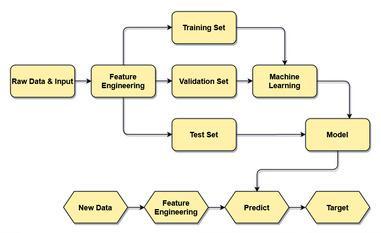
Thestructuralbasicworkingmethodologyisbasedonthe flowchartgivenabove.
3.2 Data Collection and Data Cleaning
International Research Journal of Engineering and Technology (IRJET) e-ISSN: 2395-0056
Volume: 09 Issue: 12 | Dec 2022 www.irjet.net p-ISSN: 2395-0072
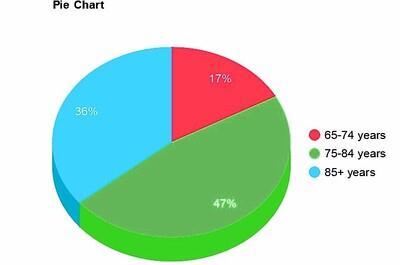
Adecisiontreeisasupervisedlearningmodelthatusesaset ofrulestofindasolution.Aproportionofpeopleaffectedby AD according to ages in the United States. Of course, the imagesearchprocessrequirestwoprocesses.
step: In the first stage we generate the features and then reproducesthequeryimageandsubsequentstepscorrelate these characteristics with those already recorded in the database[2].TheselectionusesthePSOalgorithmtocreate thebestbiomarkerindicativeofADorMCI.DataisAcquired from Alzheimer's Disease Neuroimaging Initiative (ADNI) Database. Control Based Image Retrieval was used for retrieving images from the database feature selection includesvolumeandthicknessmeasurement.Thenthebest featurelistisobtainedfromthePSOalgorithm[2].controlbased image search was used to retrieve images from the database. Then use 3D Convolutional neural network to perform feature learning. CNN is followed via the pooling layertherearemanywaystopoolorotherwisecollectthe maximumvalue,oraspecificsequenceofneuronswithina section.
Firstpre-processedMRIimagesarecreatedafterrecording the database. Ruoxuan Cuia et al. provided a model that performs longitudinal analysis which is performed sequentiallyandisrequiredforIRMdesignandcalculation. Diseaseprogressionovertimefor:moreaccuratediagnosis [3].actualprocessused
Features of brain morphological abnormalities and longitudinal differences in MRI and a classifier is built to distinguish between different groups. The classification modelconsistsoftheearlydiagnosis,initiallypreprocessing ofrawR-fMRIisdone
Datavisualizationistherepresentationofdatathroughuse ofcommongraphics,suchascharts,plots,infographics,and even animations. Data visualization is used in many highqualityvisualrepresentations.
To train a machine learning model using a subset of the dataset,cross-validationisperformed.trainingisimportant toachieveaccuracywhendividingthedatasetintosetof"N" fortheevaluationofthemodelhasbeen built.Weneedto train the model first because the data is divided in two modules:atestsetandatrainingset.TheTargetvariableis partofthetrainingset.Thetrainingdatasetisaccordingto thedecisiontreeregressionmethod.Usingonedecisiontree togenerate regressionmodel.Whenfiniteamountofdata cases is taken, k-fold cross verification was implemented mainlytoavoidtheoverfittingcomplication.
A web framework like Flask provides us with technology, tools,andthelibrariesneededtocreatewebapplication.The bottle is one framework mainly used to integrate Python models because it is easy to build routes together. Alzheimer'sdiseaseis predictedusingtraining model and testdataset.Thefrontisthenconnectedtothemodelwhich istrainedusingPython'sFlaskframework.Aftercreatingthe modelandsuccessfullycreatingthedesiredresults,followed byintegrationwiththeuserinterface(UI)phase,thenflask isused.
Thecurrentstudydemonstratesthattheage-sensitivePHS and structural neuroimaging can be combined to more accurately predict the clinical progression to AD in MCI patients and basic mental capacity. Improved individual assessmentsofADrisk amongelderlypatientspresenting withsubjectivememorycomplaintsmaybeusefulinclinical practice to guide treatment plans. These assessments are also extremely important for intervention studies, where recruitinghigh-risksubjectsatanearlystageofthedisease processiscrucialforevaluatingtheefficacyofnoveldiseasealteringintervention.
We thank, Dr. Thomas P John (Chairman), Dr. Suresh VenugopalP(Principal),DrSrinivasaHP(Vice-principal), Ms.SumaR(HOD–CSEDepartment),Dr.JohnTMesiaDhas (AssociateProfessor&ProjectCoordinator),Ms.Kiranashree B.K(AssistantProfessor&ProjectGuide),Teaching&NonTeachingStaffsof T.JohnInstituteofTechnology,Bengaluru–560083.
[1] K.R.Kruthika,Rajeswari,H.D. Maheshappa, “Multistage classifier-basedapproachforAlzheimer’sDiseaseprediction andretrieval”,InformaticsinMedicineUnlocked,2019. https://doi.org/10.1016/j.imu.2018.12.003
[2] RonghuiJu,ChenhuiHu,PanZhou,andQuanzhengLi, “EarlyDiagnosis ofAlzheimer’sDiseaseBasedonRestingState Brain Networks and Deep Learning”, IEEE/ACM transactionsoncomputationalbiologyandbioinformatics, vol.16,no.1,January/February2019. https://doi.org/10.1109/TCBB.2017.2776910
[3] Ruoxuan Cuia, Manhua Liu “RNN-based longitudinal analysisfordiagnosisofAlzheimer’sdisease”,Informaticsin MedicineUnlocked,2019. https://doi.org/10.1016/j.compmedimag.2019.01.005
International Research Journal of Engineering and Technology (IRJET) e-ISSN: 2395-0056 Volume: 09 Issue: 12 | Dec 2022 www.irjet.net p-ISSN: 2395-0072
[4] Fan Zhang, Zhenzhen Li, Boyan Zhang, Haishun Du , Binjie Wang , Xinhong Zhang, “Multi-modal deep learning modelforauxiliarydiagnosisofAlzheimer’sdisease”,Neuro Computing,2019. https://doi.org/10.1016/j.neucom.2019.04.093
[5] Chenjie Ge , Qixun Qu , Irene Yu-Hua Gu , Asgeir Store Jakola “Multi-stream multi-scale deep convolutional networks for Alzheimer’s disease detection using MR images”,NeuroComputing,2019 https://doi.org/10.1016/j.neucom.2019.04.023
[6]Tesi,N.,vanderLee,S.J.,Hulsman,M.,Jansen,I.E.,Stringa, N., van Schoor, N. et al, “Centenarian controls increase varianteffectsizesbyanaveragetwofoldinanextremecase extremecontrolanalysisofAlzheimer'sdisease”,EurJHum Genet.2019;27:244–253 https://doi.org/10.1038/s41431-018-0273-5
[7] J. Shi, X. Zheng, Y. Li, Q. Zhang, S. Ying, "Multimodal neuroimaging feature learning with multimodal stacked deep polynomial networks for diagnosis of Alzheimer’s disease",IEEEJ.Biomed.HealthInform.,vol.22,no.1,pp. 173-183,Jan.2018. https://doi.org/10.1109/JBHI.2017.2655720
[8] M. Liu, J. Zhang, P.-T. Yap, D. Shen, "View aligned hypergraphlearningforAlzheimer'sdiseasediagnosis with incompletemulti-modalitydata",Med.ImageAnal.,2017vol. 36,pp.123-134. https://doi.org/10.1016/j.media.2017.10.005
[9] Hansson O, Seibyl J, Stomrud E, Zetterberg H, TrojanowskiJQ,BittnerT,“CSFbiomarkersofAlzheimer’s disease concordwith amyloid-bPET and predict clinical progression: A study of fully automated immunoassays in BioFINDERandADNIcohorts”. Alzheimer’sDement2018; 14:1470–81.
https://doi.org/10.1016/j.jalz.2018.01.010
[10] Van der Lee SJ, Teunissen CE, Pool R, Shipley MJ, TeumerA,ChourakiV,“Circulatingmetabolitesandgeneral cognitive abilityand dementia: Evidence from 11 cohort studies”,Alzheimer’sDement2018;14:707–22. https://doi.org/10.1016/j.jalz.2017.11.012
[11]KauppiKarolina,DaleAndersM,“CombiningPolygenic HazardScoreWithVolumetricMRIandCognitiveMeasures Improves Prediction of Progression from Mild Cognitive Impairment to Alzheimer’s Disease”, Frontiers in Neuroscience,2018. https://doi.org/10.3389/fnins.2018.00260
[12] Grassi M, Loewenstein DA, Caldirola D, Schruers K, DuaraR,PernaG,“Aclinically-translatablemachinelearning algorithm for the prediction of Alzheimer's disease conversion: further evidence of its accuracy via a transfer learningapproach”,IntPsychogeriatr,201814:19.
https://doi.org/10.1017/S1041610218001618
[13]Nation,D.A.,Sweeney,M.D.,Montagne,A.,Sagare,A.P., D’Orazio, L.M., Pachicano, M. et al, “Blood-brain barrier breakdown is an early biomarker of human cognitive dysfunction”,NatMed.2019;25:270–276. https://doi.org/10.1038/s41591-018-0297-y
[14] G. Chen, B. D. Ward, C. Xie, et al. “Classification of Alzheimerdisease,mildcognitiveimpairment,andnormal cognitivestatuswithlarge-scalenetworkanalysisbasedon resting-statefunctionalMRimaging,”Radiology,vol.259,no. 1,pp.213-221,2011 https://doi.org/10.1016/j.imu.2019.100248
[15]R.Cuingnet,E.Gerardin,J.Tessieras,etal.“Automatic classification of patients with Alzheimer’s disease from structuralMRI:acomparisonoftenmethodsusingtheADNI database,”Neuroimage,vol.56,no.2,pp.766-781,2011. https://doi.org/10.1016/j.imu.2020.100339
[16]O.Firat,L.OztekinandF.T.Y.Vural,“Deeplearningfor brain de-coding,” Image Processing (ICIP), 2014 IEEE InternationalConferenceon.IEEE,pp.2784-2788,2014. https://doi.org/10.1109/ICIP.2014.7025563
[17] S. Liu, S. Liu and R. Kikinis, “Early diagnosis of Alzheimer’sdiseasewithdeeplearning,”BiomedicalImaging (ISBI),2014IEEE11thInternationalSymposiumon.IEEE, pp.1015-1018,2014. https://doi.org/10.1109/ISBI.2014.6868045
[18]D.H.Ye,K.M.PohlandC.Davatzikos,“Semi-supervised pattern classification application to structural MRI of Alzheimer’sdisease,”PatternRecognitioninNeuroimaging (PRNI), 2011 International Work-shop on. IEEE, pp. 1-4, 2011.
https://doi.org/10.1109/PRNI.2011.12
[19]C.Wee,P.Yap,K.Denny,J.N.Browndyke,G.G.Potter, K.A. Welsh-Bohmer, L. Wang, and D. Shen, “Resting-state multi-spectrum functional connectivity networks for identification of MCI patients,” PLoS one, vol. 7, no. 5, e37828,2012.
https://doi.org/10.1371/journal.pone.0037828
[20]C.Sorg,V.Riedl,M.Mhlau,etal,“Selectivechangesof resting-statenetworksinindividualsatriskforAlzheimer’s disease,”ProceedingsoftheNationalAcademyofSciences, vol.104,no.47,pp.18760-18765,2007.
https://doi.org/10.1073/pnas.0708803104
2022, IRJET | Impact Factor value: 7.529 | ISO 9001:2008 Certified Journal |