International Research Journal of Engineering and Technology (IRJET) e-ISSN: 2395-0056

Volume: 09 Issue: 12 | Dec 2022 www.irjet.net p-ISSN: 2395-0072
International Research Journal of Engineering and Technology (IRJET) e-ISSN: 2395-0056
Volume: 09 Issue: 12 | Dec 2022 www.irjet.net p-ISSN: 2395-0072
1 Student, M. Tech (Construction Management), Dept. of Civil Engineering, Srinivas University Institute of Engineering & Technology, Mukka, Mangalore
2 Associate Professor, Dept. of Civil Engineering, Srinivas University of Engineering & Technology, Mukka, Mangalore ***
Abstract - Construction industry is one of the very prominent industries in India due to its huge contribution to the economic development of the country. Due to the geographical, political, social and financial situations, many of the construction projects in the country are prone to delays. These delay factors can only be avoided by identifying factors and their sources.
The main objectives of this research are to find out the main causes of delays in the construction projects in the State of Kerala. The research design was quantitative where data was collected from owners, designers, and contractors. The questionnaire was prepared using Google form, included a list of reasons for delays factors, each of which respondents were asked to rank on a 5-point scale. Acquired data were analyzed using SPSS, the statistical program for social scientists. Questionnaire survey was conducted in order to find the top 15 delays occurred in the private projects in Kerala. Finally, recommendations are made to void delays in construction projects
Key Words: construction management, construction delays, construction industry, effects of delays, India, Kerala
Constructionsectorisoneofthemostimportanteconomic sectors that play an important role in economic development of a country. However, many projects had significant delays that exceeded original time and cost estimates. Construction delays are applied in terms of time, cost, quality and safety as project success. If the projectduration(theactualdurationofthework)iseither above the final end date specified in the contract document or above the date the project owner and contractorsagreedtotransfertheprojectandexceedsthe expectedtime,itisidentifiedasatimedelay.Thisiswhen project work is out of date and requires higher construction costs and additional labor time than what is agreed to be planned on the contract document. For project holders, the delay can be defined by the loss of income in the absence of construction services and rentable premises or dependence on side services. For contractors or developers of projects, the delay is a big
financial loss due to the fact that the work takes a long timetoprogress,higherpriceofconstructionmaterialdue to inflation, increase in labor costs. Usually delays in the constructionindustrymanyfactorsrelatedtotime,quality and cost. A construction project is generally accepted as successful when it is completed on time, within budget, according to specifications and to the satisfaction of the parties involved. Delay increases work slippage and late project completion, client and contractor disagreement. This can cause project progress disruptions and loss of services, also increases time-bound costs and ultimately canresultintheterminationofprojectconstructionwork anditscontract.
International Research Journal of Engineering and Technology (IRJET) e-ISSN: 2395-0056
A compensable delay is a delay in which the contractor is entitled to an extension of the deadline and additional compensation. Regarding excusable and inexcusable delays, only excusable delays can be compensated. Irreparable delays meanthatalthough an excusable delay may have occurred, the contractor is not entitled to any additionalcompensationarisingfromtheexcusabledelay.
1.14Concurrentornon-concurrent
concurrent delays refer to delay situations where two or moredelaysoccuratthesametimeoroverlaptoacertain extent. For example, if the owner denies access to the project site for two weeks and a severe storm prevents itone of these two weeks will work on the project simultaneouslyforoneweek.
The7effectsofdelaysare
1.Timeoverruns.
2. Cost overruns have significantly reduced the contractors’profits.
3. Loss of owner unproductivity due to long stays in the constructionphase.
4. Distrust the contractor and damage the company’s reputation.
5. Do not rely on owners to delay payments leading to contractorcashflow.
6. A project stakeholder is in dispute, in arbitration, or in litigation.
7.Finishtheproject.
The purpose of this study is to identify and identify various factors that cause delays in construction projects, theirimpact,andsolutionstodelays.Thisresearchaimsto identifythemaincausesofdelays.Toachievethegoal,itis identifiedas:
1.Determinetherootcauseofaproject.
2.Effectofdelay.
3.Recommendationsforminimizingandcontrolling constructionprojects.
[1] N. Hamezah, M.A. Khoiry, I. Arshad, N.M. Tawil "Theoretical Framework for Construction Delays" In this article, the formwork is developed by three different authors. Here are the results of his research: Financial
difficulties and economic problems, financial problems, late supervision and slow decision-making, late instructions, lack of materials on the market, poor construction management, lack of materials on the constructionsite,constructionerrorsworkdefects,delays in delivery of materials to the site, and slow decisionmaking.
[2]Cairo.Mohamed,M.Marzouk,Tarek,I.,ElRasas(2014) also examined the causes of construction delays in Egypt and,accordingtohisanalysis,themaingroupsresponsible for delays were: project ownership; consultants; developers; materials; workers and, machines; projects, externalrelateddelayfactors.
[3]MegaDesaiandRajivBhatt;59delayfactorshavebeen identifiedinresidentialprojects.Thesefactorsaredivided intoninemainareasrelatedtodelays:projects,promoters (users), consultants, design, design materials, equipment, workers,external factors basedontheir natureandmode ofexistence,andproject-related.
Based on the literature review, this study has identified various causes of delays in construction projects nowadays.Theresultsoftheliteraturesearchshowedthe tenmostimportantfactorsinparticularare;verypoorsite management; lack of skilled labor; unrealistic project planning;workersabsence;designchanges/reworkdueto designdefects;accidentsduetopoorsitesafety;delaysof subcontractors; lack of materials on site; late delivery of building materials and the effect of bad weather on construction activity. With these factors, the following methods are recommended to reduce project delays, providing detailed and realistic schedule of site works to coordinate construction activities and stages; timely delivery of construction materials; improving the workforce and workforce through ongoing training; selection of appropriate experts to control certain activities; using technology to track workforce performance; proper planning of activities so that they prevaileveninadverseweatherconditions;definingplans and goals to limit design changes; employment of subcontractors with adequate experience and increased qualifications; improvement of construction site conditionstoreducethenumberofconstructionaccidents andsufficientfundingfromclients.
First, a literature review was conducted to find factors causingconstructionprojectdelays.Thishelpedconducta survey of his professionals in the professional and other participants in his construction industry in India to find out the causes related to the situation in India. Achieving these goals requires a research methodology. These are themainstagesforconductingthisstudy.
Volume: 09 Issue: 12 | Dec 2022 www.irjet.net p-ISSN: 2395-0072 © 2022, IRJET | Impact Factor value: 7 529 | ISO 9001:2008 Certified Journal | Page9
International Research Journal of Engineering and Technology (IRJET) e-ISSN: 2395-0056
Volume: 09 Issue: 12 | Dec 2022 www.irjet.net p-ISSN: 2395-0072
A questionnaire survey was conducted as a source of primary data. There are two ways to collect data from surveys. One is called cross elevation and other one is called longitudinal elevation. Cross-sectional studies are designedtocollectdata overa shortperiodoftime,while longitudinal studies are designed to collect data over a long period of time. A cross-sectional survey method was chosenduetothetimelimitationofthisstudy.
The survey was sent to 40 people, 30 peoples are responded within three weeks of time, so the response rate is 75%, these 30 people’s response used for the analysis.Socompletedwith75%validityrate.
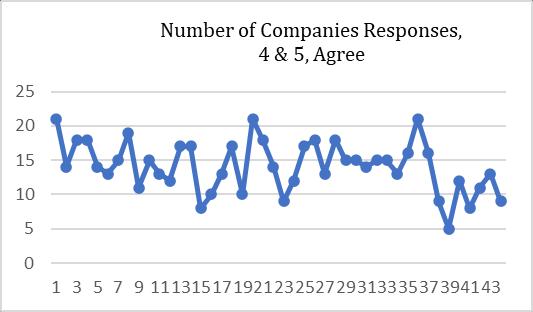
Each statement in these questions should be rated on a scale from strongly agree to strongly disagree, starting withtheratingsystemwasgivenasfollow;Stronglyagree – 5 Agree – 4 Satisfactory – 3 Disagree – 2 strongly disagree–1
Rework due to errors during construction
International Research Journal of Engineering and Technology (IRJET) e-ISSN: 2395-0056
Volume: 09 Issue: 12 | Dec 2022 www.irjet.net p-ISSN: 2395-0072
The purpose of this study was to identify the factors responsiblefordelaysinconstructionprojectsinthestate of Kerala and their effects and solution. The study identified the factors causing delays in construction projects across various stakeholders and categories including owner, contractor, designer, labor, materials, equipment and external factors. Based on the research carried out in Kerala, 15 common causes of delays were identifiedasbelow:
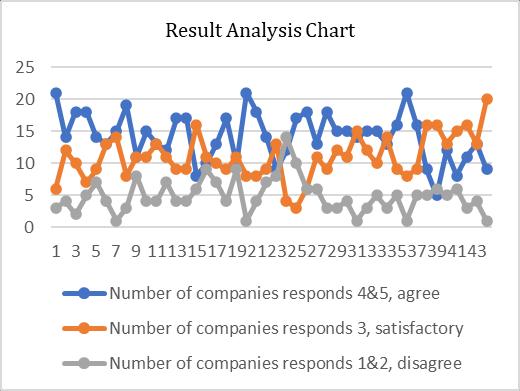
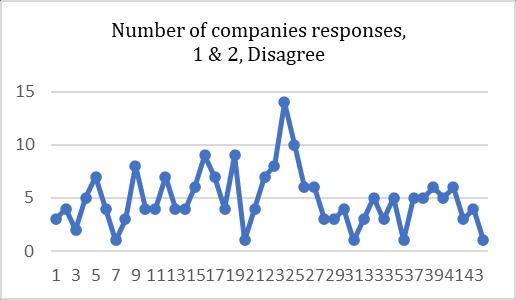
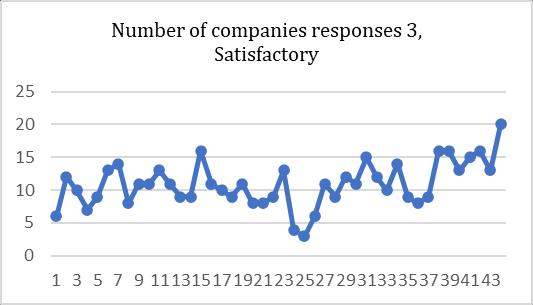
1) Delay in progress due to the payment issues by the owner, 2) Delay in revising and approving design document, 3) Change in orders (plan/design) & extra orders by owner during construction, 4) Rework due to errors during construction, 5) Lack of arranging the resources (manpower, materials, machines), 6) Insufficient data collection and survey before design, 7) Misunderstanding of owner’s requirements by design engineers, 8)Lowskilled/productivity level orunqualified labours, 9) Lack of motivation - Shortage of construction materialsinmarket, 10)Damageofsortedmaterial whiletheyareneededurgentlyduetoimproperstorageof materials, 11)Damageof sortedmaterialwhiletheyare neededurgentlydue toimproper storage of materials,12) Price fluctuation/inflation in material prices, 13)Low productivity and efficiency of equipment, 14) Weather, climate (hot or cold) & rain effect on construction activities, 15) Delay in obtaining permits from municipality.
Regarding the impact of delays in the Kerala construction industry, the five most common impacts are: Cost overruns, Acceleration of losses, Time overruns, Negative socialimpacts,litigation.
Regarding the impact of delays in the Kerala construction industry,thefivemostcommonimpactsare:
As mentioned earlier, different countries have different causes of construction delays, different impacts and different risks, and different measures suitable for each country are taken to eliminate these risks. To eliminate the construction delays the project participants are recommendedsomepointsandthatpointsare: • Propersharingofinformation
International Research Journal of Engineering and Technology (IRJET) e-ISSN: 2395-0056
Volume: 09 Issue: 12 | Dec 2022 www.irjet.net p-ISSN: 2395-0072
• Totalqualitymanagement
• Properarrangementofmaterials
• Propermanagementoflabors
• Continuoustrainings
• Earlyinvolvementofcontractorand subcontractor
• Qualitycycles
Construction delays are anunavoidable phenomenonthat occurs in almost every country due to the combination of factors considered above. However, construction delays areverycommoninmostdevelopingcountries.Therefore, considering all the above and in order to reduce or mitigate these factors, the following measures may be implementedinKerala:
• Indigenous domestic building material production plant at local level: This will reduce some chances of delay occurringofshortageofmaterial.Thereissomechanceof reducingthecostofmaterialsbecausetherewillnotaxon importsandexcisedduties.
• The government, in collaboration with other stake holders, should invest heavily in human capital development by training construction workers in the appropriatetechnicalskillstomakethemefficient.By this wecanconstructqualityinfrastructure.
• Owners / Clients are required to make progressivepaymentstocontractorsontime.
• Ownersconsiderminimizingthechangeinorders duringconstructionforavoidingdelays.
• Factorsthatcontractorscanconsider:
• Effective planning and scheduling of project by consideringalltheriskfactorsmayoccur.
• Contractors should find an effective material managementsystem.
• Contractor should have a better communication and coordination skills, then only they can managethelaborsandtheirproductivity.
• Designershouldbeaquickproblemsolver,which can solve the problems arriving during execution andfinishtheprojectontime.
• Designer make sure that all the documents are approved properly otherwise the work progress willaffect
• Designer also make an eye for proper arrangementofdocuments.
• Designer have to monitor the work frequently or makeinspectionsfrequenttimes.
Delay in approval of contractor submission by the engineer and that is the very important sector that the contractor complaints from, and its second most important reason in the contractor’s point of view. In general,thecontractorcannotstartanyworkorfinishany work withoutapprovaloftheengineer.So,ingeneralthat process delay of the project. In some cases, out of 30 responses, we noticed that in some contractors the engineers got specific time to give the approval to the contractor for example 24hrs and that is a cause a lot delay in the project because the contractor can’t work before getting the approval. And in some of the cases the contractorshavestartedtheworkwithouttheapprovalof the engineer and in that case the engineer has right to make the contractor does that work again as per the contractcondition.
Shortage of materials was one of the frequent causes according to the data which is collected out of 30 responseswherecontractorconsultantandownerandit’s themostfrequentreasonamongtheowner’spointofview and owners have indicated that this is the reason why there was a delay in the construction as material was not delivered on the right time and because of that work was not carried out as per the project which is planned and schedulebeforethestartofthework.
The main objective of this research work was to find out the causes of delays that produced greatest effects and extend to which these effects can be compensated in the private construction projects in Kerala. The detailed data was collected from around 30 companies which have indicated the critical areas where the delay have taken place. The important index of these each cause is calculated as an average of the frequency indices of each cause.47causesofdelayswereidentifiedthroughoutthis projectwork.Theidentifiedcausesarecombinedanddata collected are analysed and it has found that whatever the critical reasons of delay which were identified in our project can be solved in latest stage or in the future by proper consultation with the material suppliers, subcontractors, contractors, client, client representative and engineers and all this delay can be mitigated if not fully controlledorfullynullified.
During all the 30 projects were started after proper planning and scheduling. However, as a planning was flexible and there are many unforeseen problems and
International Research Journal of Engineering and Technology (IRJET) e-ISSN: 2395-0056
Volume: 09 Issue: 12 | Dec 2022 www.irjet.net p-ISSN: 2395-0072
unforeseen parameters have taken into consideration but however in spite of having there are some critical issues because of which delay has taken place. Hence whenever there is a delay can be compensated by increasing the workhourforexampleifthescheduledis8hrssothiscan be compensated by working 2 hrs extra in a day or by employing more resources so that the overall delay for example if the delay is 100 days the overall delay can be broughttolessthan50daysbecauseeverydaywhenyou work for 2hrs extra or when you work on holydays or even when you work with the more resources more man powermore machine’smore materialsthenautomatically theworkswillprogressandtheoveralldelayattheendof theprojectcanbecontrolled.
[1] N.Hamzah,M.A.Khoiry,I.Arshad,N.M. Tawil,andA.I. Che Ani (2011) “Causes of Construction Delay” “TheoreticalFramework”,ProcediaEngineering.
[2] Mohamed M. Marzouk *, Tarek I. El-Rasas, “Analysing delay causes in Egyptian construction projects”, JournalofAdvancedResearch(2014)5,49–55.
[3] MeghaDesai,RajivBhattP.G.Student,“CriticalCauses of Delay in Residential Construction Projects”, International Journal of Emerging Technology and Advanced Engineering, (ISSN 2250-2459, ISO 9001:2008CertifiedJournal,Volume3,Issue3,March 2013).
[4] Ajibade Ayodeji Aibinu and Agboola Odeyinka (2006) “Construction Delays and their causative factors in Nigeria”, Journal of Construction Engineering and Management,Vol.132,No.8,PageNo.667-677
[5] AssafSA,Al-KhalilM,Al-HazmiM.“Causesofdelaysin large building construction projects.” ASCE J Manage Eng.1995;11(2):45–50.
[6] M.E. Abd EI-Razek, H.A. Bassioni, And A.M. Mobarak (2008) “Causes of Delay in Building Construction ProjectsinEgypt”JournalofConstructionEngineering andManagement,Vol.134,No.11,PageNo.831-841.
[7] Pablo Gonzalez, Vicente Gonzalez, Keith Molenaar Ph.D. M ASCE and Francisco Orozco Ph.D. (2013) “Analysisofcausesofdelayandtimesperformancein construction projects”, Journal of Construction EngineeringandManagement.
[8] ThillaiA.Rajan,GovindGopinathandMonalisaBehera (2013) “PPPs and Project Overruns: Evidence from Road Projects in India” Journal of Construction EngineeringandManagement.
[9] Cecilia Gravina da Racha and Sergio Luiz Kemmer (2013) “Method of Implement Delayed product Differentiation in Construction of High-Rise Apartment Building Projects” Journal of Construction EngineeringandManagement.
[10] HemantDoloi,AnilSawhney,K.C.Iyer,SameerRentala “Analysing factors affecting delays in Indian constructionprojects”,InternationalJournalofProject Management30(2012)479–4.
JideshK(jitheshkunnoth6@gmail. com) is pursuing MTech Construction Management at Srinivas University Institute of Engineering & Technology, Mukka, Mangaluru. After Bachelor Degree in Civil Engineering, Jidesh has worked asCivilEngineeratALineStudio, anArchitecturalCompany,Kerala foroneyear.

Shrinath Rao K is working as AssociateProfessorintheDeptof Civil Engg at Srinivas University Institute of Engineering & Technology, Mukka, Mangaluru. He has 7 years of work experience at Abroad and 14 yearsatIndiaincludingTeaching, Review & Re-Design of Syllabus, Quality Assurance in Higher Educational Institutions and ConstructionIndustry.