International Research Journal of Engineering and Technology (IRJET) e-ISSN:2395-0056

Volume: 09 Issue: 11 | Nov 2022 www.irjet.net p-ISSN:2395-0072
International Research Journal of Engineering and Technology (IRJET) e-ISSN:2395-0056
Volume: 09 Issue: 11 | Nov 2022 www.irjet.net p-ISSN:2395-0072
Venkatesh1 , CH. Venkateshwarao2
1PG Student, Department of Civil Engineering, Nova College of Engineering and Technology, Affiliated to JNTU Kakinada, Vegavaram, Jangareddygudem, West Godavari (District), A.P-534447.
2Guide, Assistant Professor of Civil Engineering, Nova College of Engineering and Technology, Affiliated to JNTU Kakinada, Vegavaram, Jangareddygudem, West Godavari (District), A.P-534447 ***
Abstract - The increasing emphasis on energy conservation and environmental protection has led to investigation of alternatives to customary building material. Effort are urgently underway all over the world to develop environment friendly construction materials which makes minimum utility of natural resources and helps to reduce greenhouse gas emission. Geopolymer Concrete (GPC) is the name given to concrete where the binder is entirely replaced by an inorganic polymer formed between a strong alkaline solution and an aluminosilicate source. In this investigation,thestudyhasgone through development of strength for various grades of geopolymer concrete for different curing conditions (ambient and oven curing). The trail mix has chosen for low calcium fly ashbased geopolymer concrete using mix design. Thestudy has gone through, to change in concentration and curing condition on mechanical property such as compressive strength, tensile strength, flexural strength for only GPC Solid Block (GPCSB). The investigation conducted in this study of performance of the new concrete mix-proportion. The various characteristic of GPCSB used for high potential to be an alternative structural material. The study concludes that, investigation is environmental eco-friendly of mechanical properties.
Key Words: GPCSB,CompressiveStrength,TensileStrength andFlexuralStrength.
Theriskofclimatechangeiscarefultobeoneofthemajor environmental-tests for the society. The production of cement contributes to the emission of CO2 through the decarbonizationoflimestone.Cementisoneofthemostvital building materials used worldwide for theproduction of concrete[1] Thecementindustryisamajorsourceofcarbon emissions and deserves attention in the assessment of carbon emission- reduction options. Concrete is the most commonlyusedconstructionmaterialintheworldduetoits high compressive strength, durability and availability. Fly ashisaresiduefromthecombustionofcoalwhichiswidely available worldwide and leads to waste disposal proposal problems[2].Recentresearchhasshownthatitispossibleto use100%offlyashasthebinderinmortarbyactivatingit with an alkali component, such as silicate salts and non silicatesaltsofweakacids.Theworldisfacingthechallenge of global warming and climate changes due to carbon
dioxide (CO2) greenhouse gases and increment of CO2 concentration.Accordingtocurrenttrendsanddevelopment the industrial sector has a big challenge to maintain high qualityoflifewhileensuringlowenergyconsumptionsand CO2 emissions.
In this research work, low calcium fly ash based geopolymerconcreteisobtainedfromEnnorePowerStation (EPS), Andhra Pradesh, India was used as the base material[3].Thesource materialsuchasflyash,thatisrich insilicon(Si)andaluminium(Al)areactivated byalkaline liquidtoproducethebinder.Theflyash-basedgeopolymer pastebindstheloosecoarseaggregates,fineaggregatesand other un-reacted materials with alkaline liquid that is a combination of sodium silicate and sodium hydroxide solutions to form the geopolymer paste that binds the aggregatesandothernon-reactedmaterialstogethertoform thegeopolymerconcrete[4]
Themainobjectiveoftheresearchistoconductanextensive study on geopolymer concrete block. The sub objective includesthefollowing:
1.Tostudy thephysical,mechanicalandchemicalproperty ofgeopolymerconcreteblock.
2. To study the Mechanical property of geopolymer concretehollowblock[5]
Flyashisafinepowderrecoveredfromthegasesof burning coalduringthegenerationofelectricity.Thesemicron-sized earthelementsconsistprimarilyofsilica,aluminaandiron. Fly ashimproves considerably the performance of binder
International Research Journal of Engineering and Technology (IRJET) e-ISSN:2395-0056
Volume: 09 Issue: 11 | Nov 2022 www.irjet.net p-ISSN:2395-0072
pasteandincreasesthebondingactionwithaggregateand reinforcement[6].
Itincreasesthepackingdensityofthecementitioussystem, thus creating a less permeable structure. Geopolymer concrete in this study was made from low calcium fly ash withacombinationofsodiumhydroxide(NaOH)andsodium silicatesolution(Na2SiO3)[7]
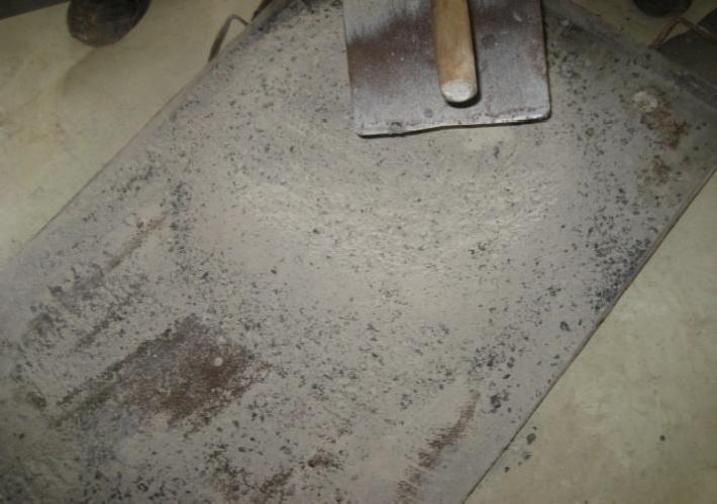
Flyashusedinthisstudywaslow-calcium(ASTMClassF) dryflyashasshowninTable-1[8].Thechemicalcompositions of the fly ash from all batches as determined by X-Ray Fluorescence(XRF)analysisaregiveninTable-2.
Table -1: Collectionofflyash
Material Class Source
Flyash F Thermalpowerstation, Vijayawada,AndhraPradesh, India
Table -2: Reportoftestsofflyash
1 Silica(asSiO2) 48
2 Alumina(asAl2O3) 29
3 FerricOxide(asFe2O3) 12.7
4 CalciumOxide(asCaO) 1.76
5 MagnesiumOxide (MgO) 0.89
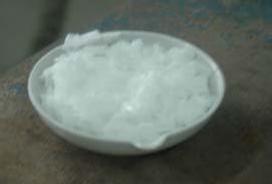
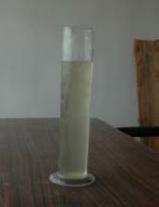
Thealkalineliquidusedwasacombinationofsodiumsilicate solutionandsodiumhydroxidesolution[9].TheNaOHsolids weredissolvedinwaterto makethesolution.Themassof NaOHsolidsinasolutiondependsontheconcentrationofthe solutionandisexpressedintermsofMolar(M)[10]
Intheabsenceoftheusageofproperalternativeaggregates becoming possible in the near future[20], the concrete
industrygloballywillconsume8-12billiontonsannuallyof naturalaggregatesaftertheyear2015.
Table -3: Sieveanalysisoffineaggregate
IS Sieve size
Mass Retained on Sieve (gm)
Cumulative Mass Retained (gm)
Cumulative % Mass Retained Cumulative % Passing
4.75mm - - -236mm 70 70 35 965 1.18mm 98 168 8.4 91.6
600µ 9855 11535 5768 4233
300µ 7265 1880 94 6 150µ 95 1975 9875 125 Pan 25 2000 100 0
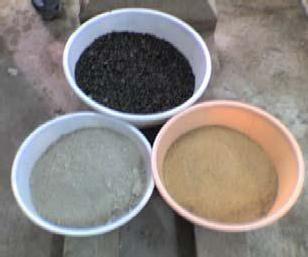
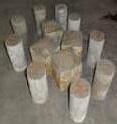
Fig -1:MaterialsusedinGPC
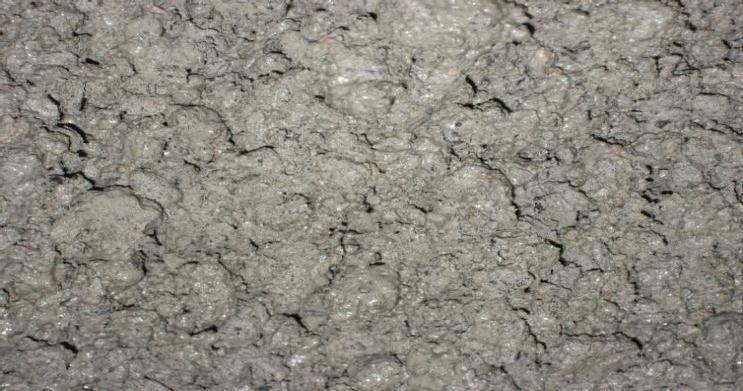
Fig -2:DryMixingofMaterials
International Research Journal of Engineering and Technology (IRJET) e-ISSN:2395-0056
Volume: 09 Issue: 11 | Nov 2022 www.irjet.net p-ISSN:2395-0072
Speci men
Design ation of Mix C. A Sa nd (k g)
Aggregat e Fl y as h (k g)
(k g)
GPC Solid Block (150 x150x 150m m)
Ma ss (k g)
NaOH Solution Sodi um Silic ate (kg)
Mola rity (M)
Curin g Condi tion
GP1 12 74 53 9 49 0 41 8M 103 30ºC and 60ºC
GP2 12 74 53 9 49 0 41 10M 103 30ºC and 60ºC
GP3 12 74 53 9 49 0 41 12M 103 30ºC and 60ºC
GP4 12 74 53 9 49 0 41 14M 103 30ºC and 60ºC
The behaviour of unreinforced geopolymer brick masonry prismiscomparedwithclaybrickmasonryprism[11].English bondun-reinforcedClayBrickPrism(CBP)andGeopolymer BrickPrismGBP(M1)andGBP(M2)ofbricksize225x105x 70mmwerecastusing10Mand12MNaOHconcentration withprismdimensionof609x220x609mm(h/t=2.77) and609x220x914mm(h/t=4.3).Table-5showsthemix proportionforpreparingGPCbricks.
Table -5: MixProportionsforGeopolymerbrick
Designatio n of Prism Type of Brick Mix Proportio n of Brick
The laboratory program conducted in this investigation focusedonfourbasicmixesandtheseweredesignatedwith themolarityofNaOH[12] TheconcentrationofNaOHusedin theexperimentationwasbased onthereview ofprevious research The ratio of fly ash: sand: coarse aggregate was 1:1.1:2.6withratioofactivatorsolutiontoflyashas0.4.The geopolymer concrete mixes were designated as GP1, GP2, GP3andGP4respectively.Table-4showsthemixproportion forGPC[13].
Mix Proportio n of Fly ash : Binder)
Mix Proportio n of mortar (Cement : Sand)
CBP ClayBrick Burnt Clay Moulded - 01:04
GBP(M1) Geopolyme rBrick
GBP(M2) Geopolyme rBrick
1:3(Fly ash: Quarry Dust) 01:00.5 01:04
1:1.1:2.6 01:00.5 01:04 (Flyash: sand: Coarse Aggregate)
International Research Journal of Engineering and Technology (IRJET) e-ISSN:2395-0056
Volume: 09 Issue: 11 | Nov 2022 www.irjet.net p-ISSN:2395-0072
Thetestingofconcreteplaysanimportantroleincontrolling and confirming the quality of cement concrete works[14]. Systematic testingof raw materialsandfreshconcrete are inseparablepartsofanycontrolprogrammeforconcrete.The main task is that when different materials are used in the concrete,carefulstepsaretobetakenateverystageofwork fordifferenttests.Thetestsalsohaveadeterringeffecton thoseresponsibleforconstructionwork.Testsaremadeby castingcubesorcylinderfromtherespectiveconcrete[15] It istobenotedthatthestandardcompressiontestspecimens giveameasureofthepotentialstrengthoftheconcrete,not ofthestrengthoftheconcreteinstructure.Inthisstudytotal experimentationconsistsofthefollowingtests:
Compressive strength of concrete is one of the most important and useful properties of concrete. In most structuralapplicationsconcreteisimpliedprimarilytoresist compressive stress[16] In this experimental investigation, both geopolymer concrete cubes and hollow blocks were usedfortestingcompressivestrength.Theloadatwhichthe specimenultimatelyfailsisnoted
Flexural strength is a measurement that indicates the resistanceofamaterialtodeformationwhenplacedunder load. The beam specimens were 100 x 100 x 500 mm in cross-section[18]. Two legged vertical stirrups of 8 mm diameter at a spacing of 100 mm centre to centre were provided as shear reinforcement. The test specimen was mountedinauniversaltestingmachineof1000KNcapacity. Theloadwasappliedontwopointsfromcentreofthebeam towardsthesupport[19]
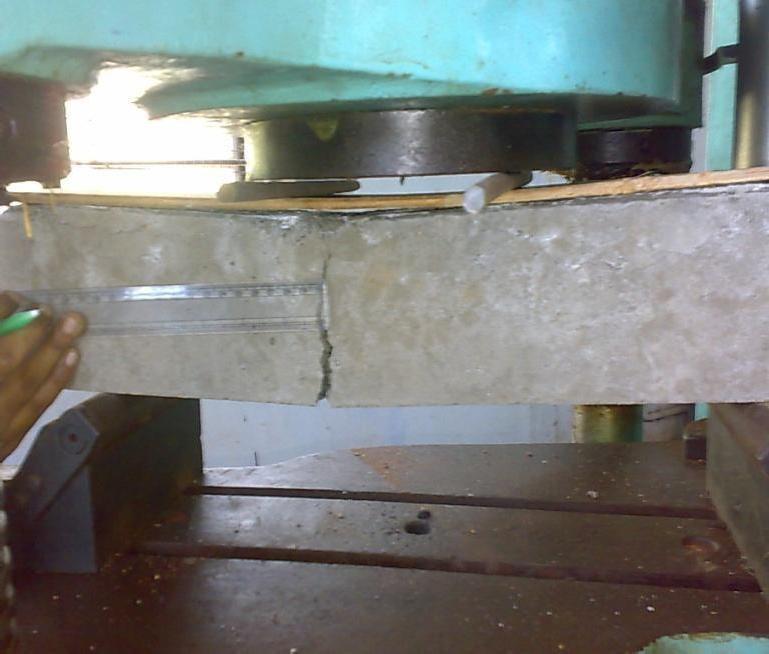
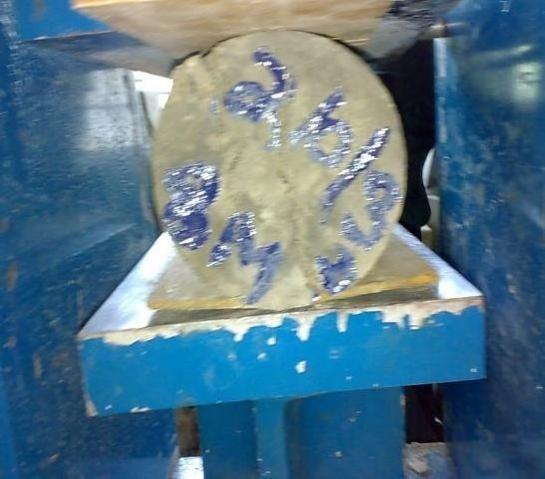
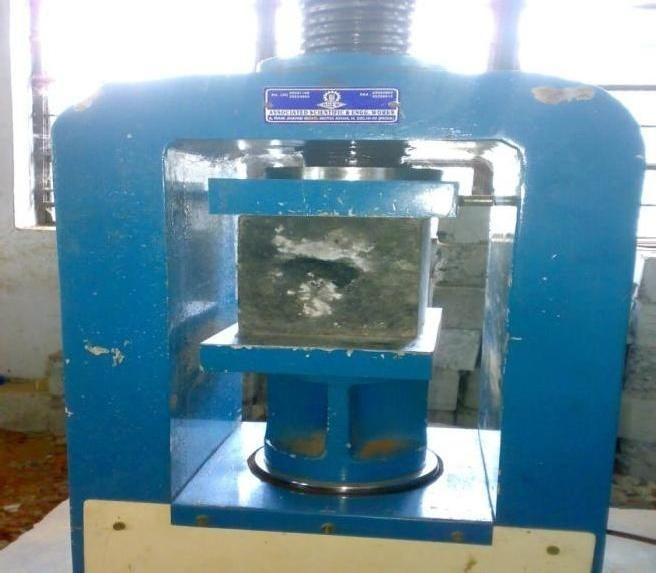
Thespecimenfails duetotensilestressesdevelopedinthe specimen[17].Thetensilestressatwhichthefailureoccursis termed the tensile strength of concrete.
International Research Journal of Engineering and Technology (IRJET) e-ISSN:2395-0056
Volume: 09 Issue: 11 | Nov 2022 www.irjet.net p-ISSN:2395-0072
Table -6: MixProportionsforGeopolymerbrick
Material Properties Shape Dimensions of the Specimens (mm)
Compressive Strength Cube 150×150×150
FlexuralStrength Prism 100×100×500 SplitTensile Strength Cylinder 100×150
Hollowblock Cube 100x100x250with onehollowofsize45x 75x125
Tests were conducted in various experimental setups to study the mechanical properties and chemical property of geopolymerconcretefor variouscuringconditionsinwhich flyashwasusedasareplacementofcement.Thebehaviour ofgeopolymerbrickmasonryprismforvaryingheightwas comparedwiththatofordinaryclaybrickmasonryprism.
Table -7: CompressivestrengthofGPCat30°and60°
Mix Desig natio n
Mol arit y Of NaO H
Curi ng Con ditio n
Table -8: FlexuralstrengthofGPCat30°
Mix Designation Molarity of NaOH Curing Condition
Flexural Strength (MPa) (Days)
7 14 28
GP1 8M 30oC 1.25 1.5 2.32
GP2 10M 30oC 1.34 1.67 2.45 GP3 12M 30oC 1.67 2.53 3.25 GP4 14M 30oC 1.95 2.76 3.75
Table -9: SplittensilestrengthofGPCat30°and60°
Mix Desig natio n
Mol arit y of NaO H
Curi ng Cond ition
Split Tensile Strength (MPa) (Days)
GP1 8M 30oC
Split Tensile Strength (MPa) (Days) 7 1 4 2 8 7 1 4 2 8
Curing Condit ion
1. 2 1. 7 6
2. 3 6
Compressive Strength (MPa) (Days)
Curi ng Con ditio n
Compressive Strength (MPa) (Days) 7 14 28 7 14 28
GP1 8M 30oC
22 .2 5
25 .3 7
30 .1 4
32 .1 4
29 .1 2 60oC
24 .1 5
27 .7 6
32 .1 1 GP2 10M 27 2 2
31 .1 2
34 .1 2
GP4 14M 30 .4 5
34 .2 2
36 .2 4
28 .1 2
30 .1 2
32 .4 5
30 .4 3
32 .1 1
34 .1 2
36 .1 6
33 .3 6 GP3 12M 29 .2 3
37 .1 2
GP3 12M 1. 9 8
2. 6 5
2. 2 3 60oC
1.0 5 2. 3 4
2. 5 6 2.1 2 2. 5 6 3. 2
2. 9 8 GP2 10M 1. 5 4
2. 9 5 2.7 8 2. 6 5
2. 8 7 3. 5 3.4 5 3. 5 7
4. 1 2
3. 6 8 GP4 14M 2. 3 2
Test procedures used inthis study were basedon availableormodifiedproceduresnormallyusedfor Portlandcementconcreteeitherfromtheavailable standardssuchastheIndianStandardorASTMor from thepreviously published works in theareas withinthisstudy.
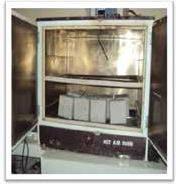
Laboratory tests were conducted to find the characteristic mechanical properties such as compressive strength, Split tensile strength and flexuralstrengthforGPCsolidblockfor7,14and28 daysoftestingandforcuringatroomtemperature andelevatedtemperature.
Cube specimens of size 150 x 150 x 150 mm for measuring compressive strength, cylinder specimensof100mmdiameterby150mmheight for indirect splitting tensile strength and prism
International Research Journal of Engineering and Technology (IRJET) e-ISSN:2395-0056
Volume: 09 Issue: 11 | Nov 2022 www.irjet.net p-ISSN:2395-0072
specimens of 100 x100 x 500 mm for flexural strengthwerecastinthestudy.
In order to study the water absorption and the resistanceofflyashbasedgeopolymerconcreteto sulphuric acid GPC cube specimen of 150 x 150x 150mmcuredat30oCand60oCweretested.The testspecimens were immersed ina 3% sulphuric acid for a period of exposure of 28 days. The sulphate resistance was evaluated based on the change in weight and change in compressive strength, split tensile strength and pH value of specimenaftersulphateexposure.
Compressive strength and split tensile strength increases with increase in concentration ofNaOH from8Mto14M.Increaseincompressivestrength wasalsoobservedwithincreaseincuringtimefor GPCsolidblock.
Maximum compressive strength achieved for GPC solidblock forcuringat60oCwas37.12MPa.The maximum value of split tensile strength for GPC solidblockcuredat60oCwas4.12MPa
Water absorption decreases with increase in concentration and curing time. The percentage of water absorption was found to decrease with increaseinconcentrationofNaOHfromGP1toGP4.
Thebondbetween geopolymerconcreteandsteel reinforcementsneedstobestudiedforthepractical useofthismaterial.
[1] Abrams, D.P. “Strength and Durability of MasonryElement”,EarthquakeEngineering,Tenth WorldConference,pp 3475-3480,1992.
[2] Abdul Aleem, M.I and Arumairaj, P.D. “Optimum Mix for the Geopolymer Concrete”, Indian Journal of Science and Technology, Vol.5, No.3,pp2299–2301,2012.
[3] ACICommittee363."State-of-the-art-Reporton-HighStrengthConcrete",ACIManualofConcrete Practice,pp55,1995.
[4] AmmarMotorwala,VineetShah,Ravishankar Kammula,PraveenaNannapaneniandRaijiwala,D. B. “Alkali Activated Fly-Ash Based Geopolymer Concrete”, International Journal of Emerging TechnologyandAdvancedEngineering,Vol.3,No.1, 2013.
[5] AndiArhamAdam.“StrengthandDurability Properties of Alkali Activated Slag and Fly Ash-
submitted in School of Civil, Environmental and ChemicalEngineering,RMITUniversityMelbourne, Australia,2009.
[6] Anurag Mishra, Deepika Choudhary and Namrata Jain. “Effect of Concentration of Alkaline Liquid and Curing Time on Strength and Water AbsorptionofGeopolymerConcrete”,ARPNJournal ofEngineeringandAppliedSciences,Vol.3,No.1,pp 14-18,2008.
[7] Antony Jeyasehar, C., Saravanan, G., Ramakrishnan,A andKandasamy,S.,“Strengthand Durability Studies on Fly Ash Based Geopolymer Bricks”,AsianJournalofCivilEngineering(BHRC), Vol.14,No.6,pp797-808,2013.
[8] ASTM C- 67-09. “Standard test method of samplingandtestingbrickandstructuralclaytile.” ASTMStandard,USA,2009.
[9] ASTMC642-82.“TestingMethodforSpecific Gravity, Absorption and Void of Hardened Concrete”.ASTMStandards,USA,2008.
[10] ASTMC618-08.“StandardSpecificationfor CoalFlyAshandRaworCalcinedNaturalPozzolan forUseinConcrete
[11] Atkinson,R.HandNoland,J.L.“AProposed FailureTheoryforBrickMasonryinCompression”. Proceedingof3rdCanadianMasonrySymposium. Edmonton,Alta.,Canada,pp5.1–5.17,1983.
[12] Bakharev,T. “Durability of Geopolymer Materials in Sodium and Magnesium Sulphate Solutions”.CementandConcreteResearch,Vol.35, No.6,pp1233-1246,2005a.
[13] Bakharev, T. “Geopolymeric Materials Prepared Using Class F Fly ash and Elevated Temperature Curing”, Cement and Concrete Research,Vol.35,No.6,pp1224-1232,2005b.
[14] Bakharev, T. “Resistance of Geopolymer Materials to Acid Attack”, Cement and Concrete Research,Vol.35(4),pp658-670,2005c.
[15] Bakharev,T.,Sanjayan,J.G.,andCheng,Y.B. “Alkali Activation of Australian Slag Cements”, Cement and Concrete Research, Vol. 29, No.1, pp 113-120,1999a.
[16] Bakharev,T.,Sanjayan,J.G.andCheng,Y.B. “Resistance of Alkali- Activated Slag Concrete to Acid Attack”, Cement and Concrete Research, Vol. 33,No.1,pp1607–1612,2003.
2022, IRJET | Impact Factor value: 7.529 | ISO 9001:2008 Certified Journal |
International Research Journal of Engineering and Technology (IRJET) e-ISSN:2395-0056 Volume: 09 Issue: 11 | Nov 2022 www.irjet.net p-ISSN:2395-0072
[17] BaojuLiu.,YounjunXieandJianLi,“Influence of Steam Curing on theCompressive Strength of Concrete Containing Supplementary Cementing Materials”,CementandConcreteResearch,Vol.35, pp994-998,2005.
[18] Barbosa, V.F.F., MacKenzie, K.J.D., and Thaumaturgo,C.“SynthesisandCharacterisationof MaterialsbasedonInorganicPolymersofAlumina and Silica: Sodium Polysialate Polymers”. InternationalJournalofInorganicMaterials,Vol.2, No.4,pp309-317,2000.
[19] Bhikshma,V.,KotiReddyMandSrinivasRao, T.“AnExperimentalInvestigationonPropertiesof GeopolymerConcrete(nocementconcrete)”,Asian JournalofCivilEngineering(buildingandhousing), Vol.13,No.6,pp841-853,2011.
[20] Bhosale, M.V. “Geopolymer Concrete by Using Fly Ash in Constuction”, IOSR Journal of MechanicalandCivilEngineering(IOSRJMCE),Vol. 1,No.3,pp25-30,2012.
2022, IRJET | Impact Factor value: 7.529 | ISO 9001:2008 Certified