International Research Journal of Engineering and Technology (IRJET) e-ISSN:2395-0056

Volume: 09 Issue: 11 | Nov 2022 www.irjet.net p-ISSN:2395-0072
International Research Journal of Engineering and Technology (IRJET) e-ISSN:2395-0056
Volume: 09 Issue: 11 | Nov 2022 www.irjet.net p-ISSN:2395-0072
1student M.tech (T.E) at Desh Bhagat University
2Asst. Professor at Deppt. Of Civil Engineering in Desh Bhagat University Mandi Gobindgarh Punjab India ***
Abstract - Concrete is an extensively used material in the construction industry. Normally the concrete is made up of cement, sand and coarse aggregate at the appropriate ratio as per the requirements. The cement used in the preparation of concrete has its own detrimental effect on health and the environment. Sand is a natural building material that depletes fast due to excessive usage. Sand mining done for construction purposes has its own impact on the environment. Hence there has been a concerted effort to substitute the cement and sand through alternate technologies. Thus, the primary objective of this research is to propose optional strategies to combat the problems of excessive sand usage by industrial waste/by-products and agro wastes.
For the experimentation purpose, the industrial by-products namely fly ash, and copper slag was used in this research work. The activation of fly ash was carried out with different concentrations of sodium hydroxide (10 M, 12 M, 14 M and 16 M) and the effect of concentration of NaOH, the different proportions of copper slag as a substitute for sand and the curing conditions were taken as the validation parameters.
The experimental investigations were conducted to examine the suitability of copper Slag as fine aggregate in High Strength Concrete flexural members (Beams). The parameter considered for this research was the replacement to natural sand by Copper Slag at 25%, 50%, 75% and 100%, in M40, M60 and M80 grades. For Rigid pavement (concrete samples of rectangular cross section were cast five boxes in each grade with similar reinforcement and of same sizes, tested under uniformly increasing static applied load at 1/3rd points. The load–deflection curve at mid-span and Moment–Curvature based on deflection under the loads and at mid-span were analysed. The load carrying capacity of the beams made of 100% copper slag as fine aggregate performed well when compared with the control concrete beam alytical modelling is developed by using Regression analysis to evaluate the strength of the geopolymer concrete with copper slag/sand.
Key Words: copperslag,Flyash,Aggregates,sandetc
Concrete is the most versatile and commonly used building material. Cement is a major pozzolanic constituent for concrete production, as conventional concretetypicallycontains10to30%ofcementpasteand the remaining are filler material like fine aggregates and coarse aggregates (sand, gravel, crushed rock).Currently, concrete consumes a large amount of natural resources such as sand, crushed stones and limestone as filler material and binder, that leads to several environmental impacts such as deforestation, depletion of natural resources, a drastic reduction in the water retaining sand strata, and disturbance to the vegetation and aquatic life affecting the ecosystem. As per the report of National Institution for Transforming India (NITI) Aayog on the Strategy on Resource Efficiency Survey 2017, 1.4 billion tonnesofsandwillberequiredfortheconstructionsector bytheyear2020,inIndia.
Hence, the consumption of a huge amount of sand may leadtothebiggestecologicaldisastersintheenvironment likeloweringofthewatertableanderraticchangesinthe ecology.
In recent years, rapid industrialization has led to the generation of huge solid waste, causing environmental problems such as land pollution, deforestation, and water loss. . The world's annual cement production is approximately 1.6 billion tonnes, which accounts for approximately 7% of worldwide carbon dioxide, loading into the environment . The production also consumes an enormous quantity of electricity during manufacturing and grinding process . Fly ash from coal-based thermal power plants is one of the major industrial waste/byproducts that cause environmental issues by altering the patternsoflanduseinandaroundthesepowerplantsand causes air pollution. The awareness in the construction industry had risen to address the above problems. The sustainable solutions the usage of geopolymer binder triggers the fabrication and usage of environmentally friendly building products, that would significantly decreaseglobalwarm
International Research Journal of Engineering and Technology (IRJET) e-ISSN:2395-0056
Volume: 09 Issue: 11 | Nov 2022 www.irjet.net p-ISSN:2395-0072
Beforealsoreducedthechlorideionpenetrability.
● Rahul Sharma and Rizwan A (2019) Khan investigated the Self Compacting Concrete (SCC) withcopperslagasfineaggregate,theflyash,and silica fume as a supplementary cementitious material. The copper slag replacement was at the increment of 20%. They reported that the compressive strength and splitting strength had improved, compared to the control mix for Copper slag substitution. The Scanning Electron Microscope (SEM) micrograph study reveals the formation of uniformly distributed and compact C-S-Hgelforthecopperslagsubstitutedconcrete.
● Das et al. (1983) studied the geotechnical properties of copper slag and found out that the copper slag is generally similar to medium sands as far as maximum, minimum and average void ratio; permeability; and compressibility are concerned. The minimum and maximum unit weights of oven dried samples were determined in the laboratory to be 1779.4 kg/m3 and 2180.2 kg/m3 respectively. The void ratios correspondingtothemaximumandminimumdry unit weights were found to be 0.468 and 0.8 respectively. The angle of friction of shearing resistanceoftheslagisgenerallyhigherthanthat of sand. This is because of the angularity of the slag particles. It is generally about 53 degrees. Based on EPA toxicity tests, it appeared that the copperslagisanonhazardouswasteasfarasthe groundwaterpollutionpotentialisconcernedasit does not contain any organic materials. Copper slagisblack incolour.
● Kaniraj and Gayathri (2003) investigated the effect of cement content stabilized with fly ash at different curing period to their use as pavement base materials. For any cement content, the unconfinedcompressivestrength(UCS)increased at a certain curing period and then decreases after.Therateofincreaseinstrengthwashightill about14days,decreaseddrasticallyduring28–90 days,andbecameverysmall.
● Patel et al. (2007) investigated the engineering properties of copper slag mixed with different percentageofflyash(20,25,30,35and40%)and theCBRvaluewasfoundat32forthemixof80% slag and 20% fly ash. With increasing fly ash content,CBR valuedecreasingfrom32to13.The mix consisting of 30% fly ash and 70% copper slag was chosen for the construction of embankment and subgrade. The cost saving in
this project by using copper slag and fly ash was reportedasRs8.22lacsperkmofroad.
● Havanagi et al. (2007 and 2008) studied the geotechnicalpropertiesofcopperslag-flyashmix asaroadconstructionmaterial.Thecopperslagis also known as poor sand in grade . Its specific gravitywasfoundtobe3.22.Thecopperslagwas mixedwithflyashintherangeof0to100%with 25% interval. The result of modified proctor test and soaked CBR test are shown in Figs. 2.1 and 2.2,respectively.Inthecaseofcopperslag-flyash mixes, the increase in CBR is predominant only aftertheslagcontentreaches50%.TheCBRvalue of copper slag fly ash mix with 75% copper slag content satisfied the MORTH criteria (20-30%) foruseinthesubbaselayerofroadpavement.The angle of internal friction of copper slag-fly ash mixes was determined as 390 to 360 from Direct Sheartestinsaturatedcondition.
● Toohey et al. (2013) investigated the stressstrain-strength behavior of four lime- stabilized fine grained soils subjected to 23°C (normal) and 41°C (accelerated) curing. Table 2.2 shown the comparison of different curing period. Specimens cured at 41°C reached qu values equivalent to 28 day 23°C qu after 1.8–5.9 days. The 7-day 41°C accelerated curing regime overestimates 28-day normal curing qu by 13–256%. The 5- day 41°C curing produced qu values within 0.90–1.94 of 28-day23°Cqu.
● Sinha (2009)investigatedthestrengthproperties of blast furnace slag (BFS) and granulated blast furnace slag (GBFS) under cyclic loading conditions for their use in the subbase layer of a flexible pavement. The cyclic triaxial tests were conducted at three confining pressures .At 10000 load cycles the permanent strain of BFS is very highascomparedtothatofGBFS.
International Research Journal of Engineering and Technology (IRJET) e-ISSN:2395-0056
Volume: 09 Issue: 11 | Nov 2022 www.irjet.net p-ISSN:2395-0072
● FlyAsh
Thehardbrokengranitestoneof12mmsize wasusedas thecoarseaggregate in the manufacturingofgeopolymer concrete. The specific gravity, bulk density, water absorption, and void ratio were found as 2.74, 1420 kg/m3,0.45%and0.95respectively.
The soaked CBR values obtained for different FAL mixes andFACmixesafter7days curingand4days soakingare given in Table The broad trends observed for CBR values and the reasons for these trends are similar to those describedearlierforUCSvalues.
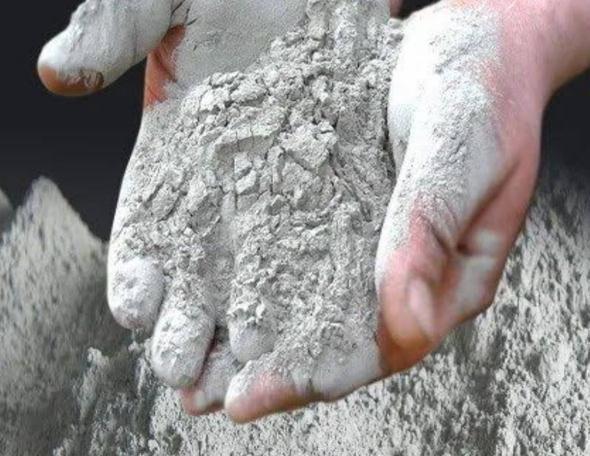
is an industrial by-product, which is rich in silica and alumina collected from the Tuticorin Thermal Power Plant, Tamil Nadu, India . The ash appears dark grey in colour and spherical shapes of different diameters. The chemical composition obtained by X-Ray Fluorescence (XRF) of the collected fly ash is shown in Table 3.1. It is evidentthatflyashbelongstoClassFcategoryasthesum of SiO2+Al2O3+Fe2O3isfoundtobehigherthan70% (AsperASTMC618).
● Copperslag
Mixes CBR (%) Mixes CBR (%)
FA6L 64 FA6C 58
FA9L 89 FA8C 73
The loss of dry weight for FA6L, FA9L, FA6C and FA8C mixes are obtained as 17.1%, 16.2%, 17.8% and 16.6%, respectively.Hence,allthefourmixessatisfythecriterion forthemaximumpermissiblepercentagelossinweight(= 30%) recommended by IRC: 89 (2010) for the stabilized mixtobeusedinpavementsubbasecourse.
(gm)
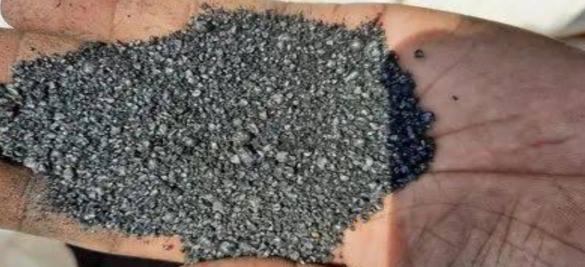
Copper slag and sand is used as a fine aggregate. The physical properties such as specific gravity, water absorption, sieve analysis, particle size distribution and the chemical composition were analysed using XRF and are presente. The microscopic analysis was also performed to determine the shape and angularity of copper slag and sand. The mineral and crystalline characteristics of the source material were studied throughtheXRDanalysisandreported.
The locally available river sand is used as the filler material,anditwaspartiallyreplacedwithcopperslag.To remove the larger sized particles, aggregates were sieved through 4.75 mm IS sieve and it was used for the geopolymerconcretemanufacturing.
To ensure the minimum utilization of binder (lime and cement) the CFL mixes with maximum 6% lime and CFC mixes with maximum 6% cement which satisfied the minimumstrengthcriteriarecommendedbyIRC:37-2012 weresubjectedtothedurabilitytests.
Theobservationsforthevariationofdurabilitytestresults with different CFL and CFC mixes are opposite to the broad trends observed for the UCS values. The higher the
International Research Journal of Engineering and Technology (IRJET) e-ISSN:2395-0056
Volume: 09 Issue: 11 | Nov 2022 www.irjet.net p-ISSN:2395-0072
UCS values the higher will be the resistance against the disintegration of the slag and fly ash particles, and the lower will be the percentage loss in dry weight. The maximum permissible percentage loss in dry weight for the cemented base materials is 14 % as per IRC: 37 (2012).TheCFLmixwith6%limecontentandCFC
The percentage loss in dry weight of the specimens obtained after 12 wetting and drying cycles is given in Table
Initial dry weight (gm)
Final dry weight (gm)
Lossin dry weight (%)
Mix proportions
Initial dry weight (gm)
Final dry weight (gm)
● UCSvaluesincreasecontinuouslywithincreasein binder(limeandcement)content.
● The gel formation increases with an increase in bindercontentleadingtoamoreefficientbinding oftheslagparticles.Foragivenflyashandbinder content, UCS values as well as IDT and Mr values of CFC mix were found to be lower than that of CFL mix. This may be due to the lower specific surface area of cement as compared to that of lime.
Lossin dry weight (%)
544 453 16.7 90CS-10F4C 561 464 17.3 514 433 15.8 80CS-20F4C 512 432 15.6 465 394 14.5 70CS-30F4C 469 390 16.9 429 355 17.3 60CS-40F4C 421 344 18.2 390 319 18.2- - -
541 491 9.2 90CS-10F6C 551 508 7.8
Engineering properties of copper slag-fly ash-lime (CFL) and copper slag-fly ash-cement (CFC) mixes were investigatedfortheirutilizationasbasecoursematerialin flexiblepavements.Thefollowingconclusionsaredrawn:
● As the fly ash percentage in the CFL and CFC mixes increases, the compressive strength increases up to the optimum fly ash content and decreasesthereafter.Theoptimumflyashcontent for CFL and CFC mixes was found to be 30% and 20%, respectively. Beyond the optimum percentage fly ash simply serves as weak filler in the mix resulting in a decrease of strength and stiffness.Thevariationofindirecttensilestrength as well as resilient modulus follows the same trend as that of UCS for the variation in fly ash content.
● A linear correlation between IDT and UCS was observedwithagoodR2valueforboththemixes. The IDT value was found to be 17.3% and 18.1% ofUCSvalueforCFLandCFCmixes,respectively
● CFL mixes with 6% lime content and CFC mixes with6%cementcontentsatisfyboththeUCSand durability criteria suggested by Indian Road Congress and hence, recommended for use as basecoursematerialinflexiblepavement.
● Resilient modulus of all the CFL and CFC mixes wasfoundtobeincreased withanincreasein WD cycles. As a result of strain hardening phenomenonMrvalueincreaseswiththeincrease indeviatorstress.MostoftheCFL andCFCmixes exhibited higher resilient modulus than WMM indicatingthatalowerthicknessofbaselayercan be adopted if WMM is replaced with the CFL and CFCmixes.
● The main drawback of the two parameter model is its in capability of separating the effect of confining pressure and deviator stresses on resilientmodulus forthepredictionofMr.Higher values of coefficient of determination were obtained using the threeparameter model, which separates the effect of confining pressure and deviatorstressonMrvalues.
[1] ASTM (2009) D5102. “Standard test methods for unconfined compressive strength of compacted soillime mixtures.” ASTM International, West Conshohocken,PA,USA.
[2] AUSTROADS(2004).“Guidetothestructuraldesignof roadpavements.”AUSTROADS,Sydney,Australia
[3] Bennert,T.,Papp,W, J.Maher.,A,Jr.,andGucunski,N. (2000). “Utilization of construction and demolition debris under traffic-type loading in base and subbase
International Research Journal of Engineering and Technology (IRJET) e-ISSN:2395-0056
Volume: 09 Issue: 11 | Nov 2022 www.irjet.net p-ISSN:2395-0072
applications.” Transportation Research Record, No. 1714,Washington,DC,33–39.
[4] Clough, G. W., Sitar, N., Bachus, R. C., and Rad, N., S. (1981). “Cemented sands under static loading.” JournalofGeotechnicalEngineering107(6),799–817.
[5] Consoli, N. C., Rosa, A. D., and Saldanha, R. B. (2011). “Variables governing strength of compacted soil-fly ash-lime mixtures.” J. Mater. Civ. Eng., 10.1061/(ASCE)MT.1943-5533.0000186,432-440.
[6] Das,B.M.,Yen,S.C.,andDass,R.N.(1995).“Brazilian tensile strength test of lightly cemented sand.” CanadianGeotechnicalJournal32,166–1
[7] Dung,N.T.,Chang,T.,andChen,C.(2015).“Hydration processandcompressivestrengthofslag-CFBCflyash materialswithoutPortlandcement.”J.Mater.Civ.Eng., 10.1061/(ASCE)MT.1943-5533.0001177,04014213.
[8] Ghosh, A., and Subbarao, C. (2006). “Tensile strength bearing ratio and slake durability of class F fly ash stabilized with lime and gypsum.” J. Mater. Civ. Eng., 10.1061/(ASCE)0899-1561(2006)18:1(18)
2022, IRJET | Impact Factor value: 7.529 | ISO 9001:2008 Certified Journal | Page376