International Research Journal of Engineering and Technology (IRJET) e-ISSN:2395-0056

Volume: 09 Issue: 11 | Nov 2022 www.irjet.net p-ISSN:2395-0072
Digitization: Protecting the future of history, A case study of Archaeological site of Sinauli in Uttar Pradesh (India)
1 Students of Computer Engineering department at D.A. Degree Engineering & Technology, Mahemdavad, India387130
2 Professor of Computer Engineering department at D.A. Degree Engineering & Technology, Mahemdavad, India387130
3 Principal of D.A. Degree Engineering & Technology, Mahemdavad, India - 387130 ***
ABSTRACT - Digitization has given a new life to history. Computing for cultural heritage has become a trend among specialists. Different technologies such as 2D/3D systems, Image scanning, Photogrammertry, AR/VR, etc. are being used for preservation. restoration and protection of cultural heritage around the world as people became aware of the importance of our remaining heritage sites and artifacts. In this paper, we discuss how different kinds of technologies can be used to full fill the purpose with the case study of a village named Sinauli, in Uttar Pradesh, India where artifacts from thousands of years ago have been found.
Key Words: Digitization, Cultural Heritage, 2D/3D Technologies, AR/VR, Photogrammetry
1. INTRODUCTION
India is a country with rich Cultural Heritage (CH) belongings, which includes many tangible and intangible types of CH remainings to cherish. There are tons of sites In India where researchers, archeologists, and other expert bodies have found CH present in various forms such as art, craft, the architectural remains of buildings and cities, costumes and jewelry, etc. These precious remainsfromourhistoryshowourvalues,rootswherewe comefrom,andwhatwearetodayasagreatnation.
SincethedeclarationofTheWorldHeritageConventionby the United Nations Educational, Scientific and Cultural Organization (UNESCO) in 1972, all the countries have been actively taking part in cultural heritage protection programs and continuously making efforts to protect, restore and secure their cultural heritage. India is one of the countries having CH properties inscribed on the list. Some of them which are enlisted by UNESCO under their programareAjanta,Ellora,andElephantaCaves,Churches and Convents of Goa, forts located at different places, and otherhistoricalsites.
However,thesadpartisthatthesevaluablepropertiesare being damaged by natural disasters, human destruction, uncontrolledurbanization,andarmedconflicts.Becauseof these reasons preservation, restoration, and protection of
culturalheritagehavebeenanintenseconcernalloverthe world. Conventional preservation of CH needs to be carriedoutbyspecialmeans,buttheyarelimited.
As a solution to this problem, in recent years, the implementation of different digital approaches to do the task is gaining popularity among specialists. Which includes photogrammetry, 2D digital imaging, 3D modeling, image scanning, AR/VR, etc. This work aims to address the point that why digitizing cultural heritage is importantandhowmoderntechnologyplaysanimportant role in preserving and securing the world’s cultural heritage.
1.1 A case study on Sinauli, India
Sinauli is an archaeological site located near the confluence of the Ganga and Yamuna rivers [1][2], in Baghpat district, Uttar Pradesh, India. The site gained popularity, in 2018, after ASI (Archaeological Survey of India) excavated Bronze Age solid disk wheel carts, also knownas“chariots” bysomeinterpreters.[3][11]Thesite has uncovered connections that might be related to the MahabharatortheRamayanatimecivilization.[4]
Thesiteatsinauliwasaccidentallydiscoveredby farmers when they were performing their daily chores on agricultural land. ASI began the excavation in 2005 after gettingthenews.[8]
1.2 2005-06 Excavations
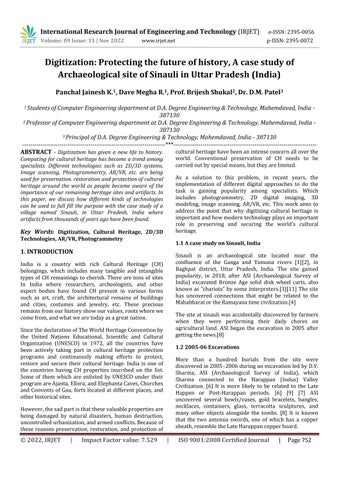
More than a hundred burials from the site were discoveredin2005–2006duringanexcavationledbyD.V. Sharma, ASI (Archaeological Survey of India), which Sharma connected to the Harappan (Indus) Valley Civilization. [6] It is more likely to be related to the Late Happen or Post-Harappan periods. [6] [9] [7] ASI uncovered several bowls/vases, gold bracelets, bangles, necklaces, containers, glass, terracotta sculptures, and many other objects alongside the tombs. [8] It is known that the two antenna swords, one of which has a copper sheath,resembletheLateHarappancopperhoard.
International Research Journal of Engineering and Technology (IRJET) e-ISSN:2395-0056
Volume: 09 Issue: 11 | Nov 2022 www.irjet.net p-ISSN:2395-0072
1.3 2018 Excavations
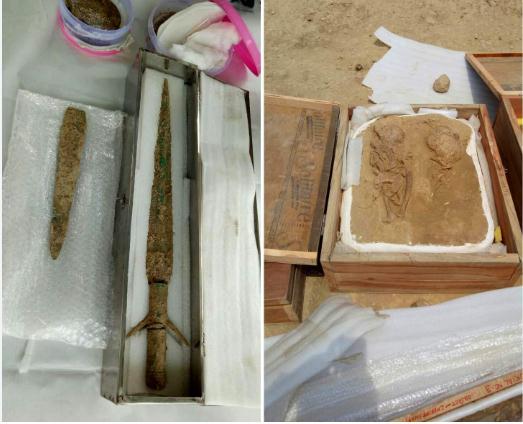
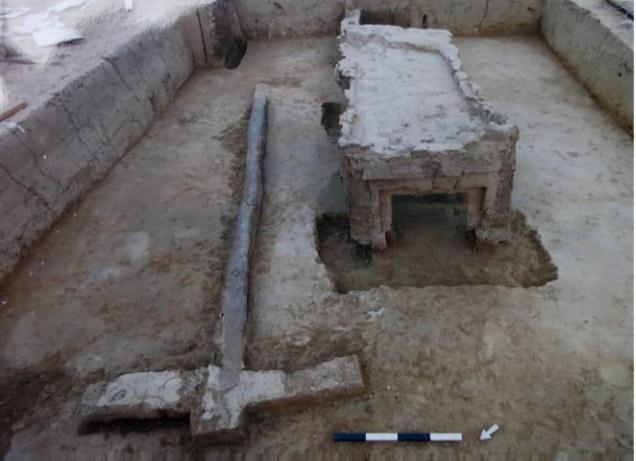
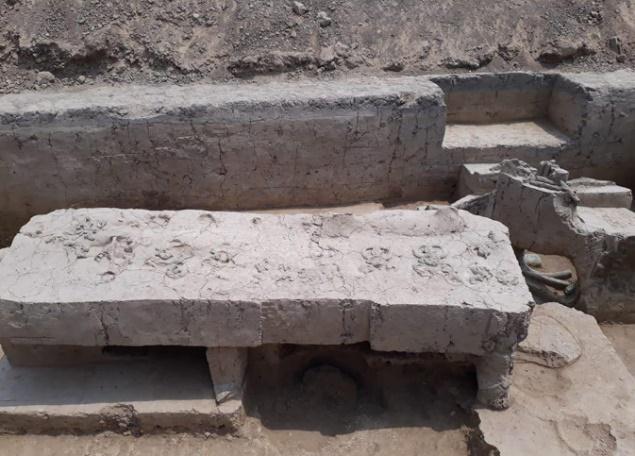
When ASI received the news from the residents of Sinauli in2018,itbroughttheSinaulisitebackintothepubliceye after a period of time. [6][10] This time, S. K. Manjul, director of ASI, oversaw the trial excavation. A number of carts and coffin graves were discovered during excavations in March 2018. Swords, helmets, copper ladles,pottery,pots,vases,andotheritemshavealsobeen found. [6][9] As a result of this discovery, S. K. Manjul, director of ASI, said “a unique discovery in the entire subcontinent”.Theycouldbedatedto“around2000BCE” andwere“contemporarytoHarappanculture”,hesaid.
S. K.
Manjul, ASIdirector (excavations) [6]
He stated that the carts are similar to the chariots made using Indo-Aryan technology which comes from Ochre ColouredPottery(OCP).[1][6]
AccordingtoS.K.Manjul, “This is the very first time such evidence has ever been recovered. The coffins and chariots are something we haven’t encountered before. This discovery is not only importantinthecontextofIndiabutalsotheworld,” [9]
Healsosaid, thewarchariotfoundatthesitewasthefirstdiscoveryof itskindandthatafteradvancedtestingitwasfoundtobe “a horse-pulled” one, which brings the site “closer to the cultureofMahabharata”.[4]
Fig. No. 2 Copper Swords
Fig. No. 3 Chariot
Fig. No. 1 Coffin with carving on the lid
Fig. No. 4 Chariot
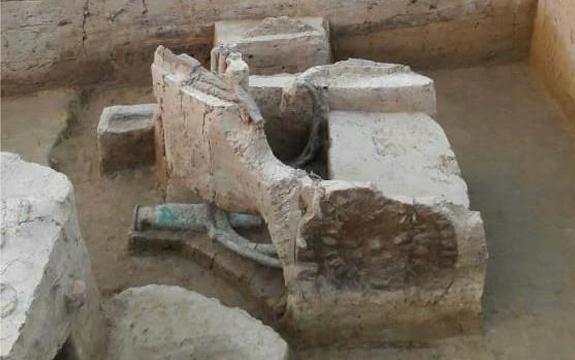
*ImageCourtesy:ASI(ArchaeologicalSurveyofIndia)
These discoveries are known to have connections to
different eras according to the kind of properties they possess. According to the claims, these findings can be related to the late Harappan period or the early Aryan migrationofProto-IndoIranians.[5]Somestatethatthese
International Research Journal of Engineering and Technology (IRJET) e-ISSN:2395-0056
Volume: 09 Issue: 11 | Nov 2022 www.irjet.net p-ISSN:2395-0072
artifacts are related to the Mahabharata or the Ramayana era. Either way, the connections show how important these discoveries are for us as a nation. As protecting thesepropertiesareofutmostimportanceforourcountry, ASI began to collect and restore the findings with the techniquespossibletoperformthem.
2. DIGITIZATION PROCESS
Here digitization process comes into play. There are enormous techniques that are being used for the preservation, restoration, and protection of cultural heritage around the world. Some of them that wecan use forthiscasearediscussedhere,whichshowspossibilities of how we can secure our remaining cultural heritage usingdifferentcomputingtechniques.
2.1 Capturing the Objects
Firstofall,wewillconsidercapturingtheobjects inaraw form such as hard objects, texts, etc. and store it as photographsusinganycompatiblecamera.
2.2 Sketching and Scanning the objects-
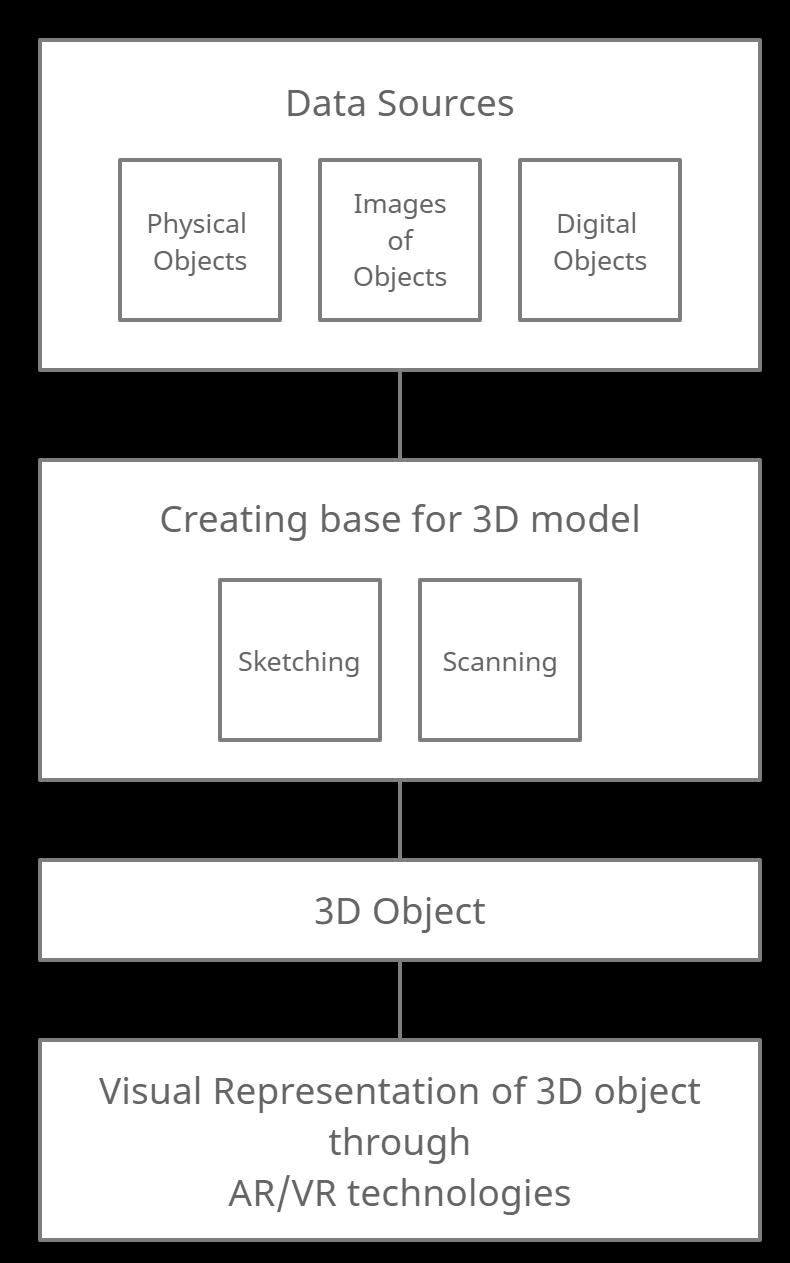
After capturing the images, sketching takes place. Sketching using different softwares are done on damaged objectstoredefineitsshapeandidentity.
After making sketches of objects they are scanned thoroughly for creating 3D model. Different scanning techniques such as Optical Sensor Scanning, Laser Scanning, and Thermal Scanning using software like LiDAR and dToF are of great use. We can use techniques that can capture photographic images from all different angles like the 2D graphic information storing techniques andsystemssuchasVolumeGraphics,ArtecStudio,Pix4D, etc.
Fig No. 5 Digitization Process
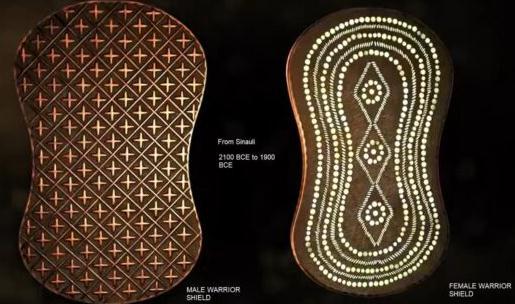
Fig. No. 6 Shield drawn and excavated
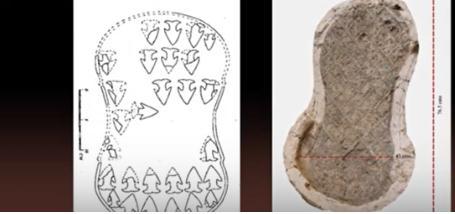
2.3 Photogrammetry used for 3D Modeling
Next step is to use these images and sketches to obtain proper model, which looks exact, twin copy of the actual object.
International Research Journal of Engineering and Technology (IRJET) e-ISSN:2395-0056
Volume: 09 Issue: 11 | Nov 2022 www.irjet.net p-ISSN:2395-0072
Photogrammetry techniques are used widely by experts, which is a reliable technology for obtaining information about physical objects and the environment through the processof recordingandmeasuring photographicimages. Photogrammetric analysis may be applied to one photograph or may use remote sensingto detect and record complex 2D and 3D fields. Photogrammetry uses methods from many disciplines, includingopticsandgeometry. Digital image capturing and photogrammetric processing includes several welldefined stages, which allow the generation of 2D or 3D digitalmodelsoftheobjectasanendproduct.
This process and the techniques/software can be helpful in obtaining the desired results in the field of digitization ofculturalheritage.
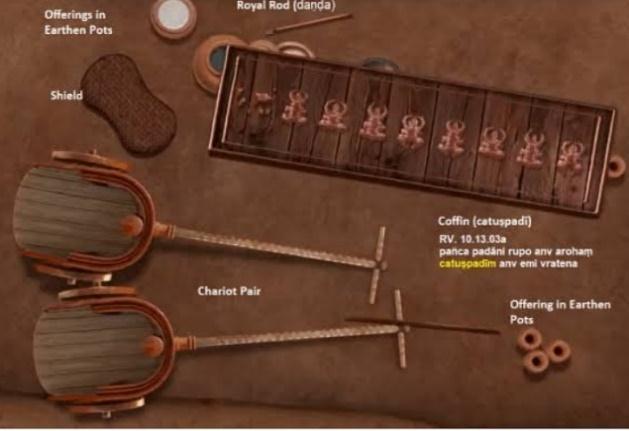
3. FUTURE SCOPE
Fig. No. 7 Shield rebuilt
using technology
There are various photogrammetry software such as Agisoft Metashape, Meshroom, and Autodesk ReCap Pro used for this purpose. Using this kind of software 3D models of any object can be developed. In the same way, wecanusehigh-qualitydensecloudgenerationtoobtaina moredetailed geometry of theoriginal photo. Using these softwares and techniques one can rebuild the damaged partsofan object or restore itto perfection.After making thenecessarychangeswecansaveourwork.
2.4 AR/VR methods
Once the 3D models are obtained through photogrammetry, we can move forward to display the results. Nowadays AR/VR systems are blooming around the world, as it provides realistic experiences with less worktousers.VRcreatesanimmersive,mesmerizing,lifelikevirtual environment, whileAR augments real-world scenarios The combination of both of these offers excellent systems, when combined they provide an enhancedandmoreengagingexperience.
Different kinds of softwares such as Adobe Aero, Amazon Sumerian,GoogleTiltBrush,etc.arebeingusedbyexperts all around the world to create great VR and AR experiencesforpeople.
Beyond what was envisioned in the pre-digital era, the move to digitally conserve endangered cultural property offersnewpotentialtosafeguardandbroadenthereachof knowledge for any generation. Technology that is datadriven will improve research capabilities and opportunities to preserve cultural heritage for future generations. Institutions can look for chances for partnershipwithtechnologyleaderslikeIBM,Google,and Microsoft that fund and launch their own projects on protecting cultural heritage using digital technology in ordertoimprovetheprospectsforculturalheritageinthe digital era. Understanding the current technological constraints that require improvements in any manner feasible is also crucial. The proper application of digital technology will assist preserve current cultural heritage and create a learning opportunity for our future generations.
4. CONCLUSION
This study has taken as a base the excavations at Sinauli, UttarPradeshinIndiatodemonstratehowthedigitization process can be performed on cultural heritage sites and objects. We discussed how preservation, restoration, and protection can be done through digital technologies. In this paper, we tried to explain the importance of our cultural heritage and why securing it is important for futuregenerations.
International Research Journal of Engineering and Technology (IRJET) e-ISSN:2395-0056
Volume: 09 Issue: 11 | Nov 2022 www.irjet.net p-ISSN:2395-0072
REFERENCES
NewsReferences-
[1] ASIunearths‘first-ever’physicalevidenceofchariotsin Copper-Bronzeage. TheTimesofIndia. - https://timesofindia.indiatimes.com/city/meerut /asi-unearths-first-ever-physical-evidence-ofchariots-in-copper-bronzeage/articleshow/64469616.cms-
[2] GraveSecretsofSinauli. The Times of India. - https://timesofindia.indiatimes.com/home/sund ay-times/deep-focus/Grave-Secrets-ofSinauli/articleshow/1696409.cms
[3] Putting the horse before the cart: What the discovery of4000-year-oldchariotinUPsignifies. Scroll.in - https://scroll.in/article/882188/putting-thehorse-before-the-cart-what-the-discovery-of4000-year-old-chariot-in-up-signifies
[4] Mahabharatamucholder,SaysASIarchaeologists. The Economic Times.
- https://economictimes.indiatimes.com/news/pol itics-and-nation/mahabharata-much-older-sayasi-archaeologists/articleshow/71658119.cms
[5] Royal “Chariot” Burials of Sanauli near Delhi and Archaeological Correlates of Prehistoric Indo-Iranian Languages. Studia Orientalia Electronica. - https://journal.fi/store/article/view/98032
[6] RoyalBurialinSanauli. FRONTLINE. - https://frontline.thehindu.com/arts-andculture/heritage/article24923229.ece
[7] Inafirst,Chariotfrompreironfoundinexcavationin UP’sSanauli. news18.com - https://www.news18.com/news/india/in-afirst-chariot-from-pre-iron-age-found-inexcavation-in-uttar-pradeshs-sanauli1768085.html
[8] 2005-06 excavations ASI (Archaeological Survey of India).
- https://asi.nic.in/sanauli/
[9] “ASIClaimstoHaveFoundHarappan-Era'Chariots'at ExcavationSiteinUP”– The Wire
- https://thewire.in/history/asi-claims-to-havefound-harappan-era-chariots-at-excavation-sitein-up
[10] 2018Excavations. Wikipedia.org. - https://en.wikipedia.org/wiki/Sinauli-
[11] Who is a Hindu? The missing horse of Baghpat. MumbaiMirror.Indiatimes. https://mumbaimirror.indiatimes.com/others/sunda y-read/who-is-a-hindu-the-missing-horse-ofbaghpat/articleshow/77045101.cms
ResearchPaperReferences-
[12] Calvo-Serrano, M.A., Ortiz-Cordero, R., HidalgoFernandez.,R.E.etal.Historical-graphicalanalysisand digital preservation of cultural heritage: case study of thebaptismalfontofthechurchofSantiagoApostolin Montilla (Cordoba, Spain). Herit Sci 10. 149 (2022). https://doi.org/10.1186/s40494-022-00782-7
[13] ComputingforChineseCulturalHeritage,MengLi,Yun Wang, Ying-Qing Xu, Visual Informatics, Volume 6, Issue 1, 2022, Pages 1-13, ISSN 2468-502Xhttps://www.sciencedirect.com/science/article/pii/S 2468502X21000644
[14] Trebeleva, G.; Glazov, K.; Kizilov, A.; Kizilova, A.; Yurkov,V.;Yurkov,G.AdvancedTechnologiesUsedin Digitizing the Cultural Heritage of Northwestern Colchis: The Experience of the Markul Expedition. Appl. Sci. 2022, 12, 2052. https://doi.org/10.3390/app12042052
[15] Palčák, M.; Kudela, P.; Fandáková, M.; Kordek, J. Utilization of 3D Digital Technologies in the Documentation of Cultural Heritage: A Case Study of the Kunerad Mansion (Slovakia). Appl. Sci. 2022, 12, 4376.https://doi.org/10.3390/app12094376
[16] Comes,R.;Neamțu,C.G.D.;Grec,C.;Buna,Z.L.;Găzdac, C.; Mateescu-Suciu, L. Digital Reconstruction of Fragmented Cultural Heritage Assets: The Case Study of the Dacian Embossed Disk from Piatra Roșie. Appl. Sci. 2022, 12, 8131. https://doi.org/10.3390/app12168131
[17] Rabosh,Ekaterina&Balbekin,Nikolay&Mezhenin,A. & Petrov, Nikolay. (2022). APPLICATION OF PHOTOGRAMMETRY FOR DIGITIZING INFORMATION ABOUT CULTURAL HERITAGE IN THE FORM OF DISPLAY HOLOGRAMS. The International Archives of the Photogrammetry, Remote Sensing and Spatial Information Sciences. XLIII-B2-2022. 869-875. 10.5194/isprs-archives-XLIII-B2-2022-869-2022.
[18] YongjianSun,JieLi,SimingChen,GennadyAndrienko, Natalia Andrienko, Kang Zhang, A learning-based approach for efficient visualization construction, VisualInformatics,Volume6,Issue1,2022,Pages1425, ISSN 2468-502X, https://doi.org/10.1016/j.visinf.2022.01.001
International Research Journal of Engineering and Technology (IRJET) e-ISSN:2395-0056
Volume: 09 Issue: 11 | Nov 2022 www.irjet.net p-ISSN:2395-0072
[19] YuhengZhao,JinjingJiang,YiChen,RichenLiu,Yalong Yang, Xiangyang Xue, Siming Chen, Metaverse: Perspectives from graphics, interactions and visualization, Visual Informatics, Volume 6, Issue 1, 2022, Pages 56-67, ISSN 2468-502X, https://doi.org/10.1016/j.visinf.2022.03.002
[20] Christina Stoiber, Davide Ceneda, Markus Wagner, Victor Schetinger, Theresia Gschwandtner, Marc Streit, Silvia Miksch, Wolfgang Aigner, Perspectives of visualization onboarding and guidance in VA, Visual Informatics, Volume 6, Issue 1, 2022, Pages 68-83, ISSN 2468-502X, https://doi.org/10.1016/j.visinf.2022.02.005.
[21] SecretsofSinauli-discovery+(discoveryplus.in)