International Research Journal of Engineering and Technology
(IRJET) e-ISSN: 2395-0056

Volume: 09 Issue: 11 | Nov 2022 www.irjet.net p-ISSN: 2395-0072
(IRJET) e-ISSN: 2395-0056
Volume: 09 Issue: 11 | Nov 2022 www.irjet.net p-ISSN: 2395-0072
1 Department of Computer Systems Engineering Sri Lanka Institute of Information Technology Malabe, Sri Lanka
2 Department of Computer Systems Engineering Sri Lanka Institute of Information Technology Malabe, Sri Lanka
3 Department of Computer Systems Engineering Sri Lanka Institute of Information Technology Malabe, Sri Lanka
4 Department of Computer Systems Engineering Sri Lanka Institute of Information Technology Malabe, Sri Lanka ***
Abstract - At present, the world is seeing an unprecedented push to an electric vehicle future which is forcedmainlyduetotheclimatechangeconcernsassociated with the internal combustion engine-based cars. These traditional automobiles are significantly less efficient, as a result vehicle infrastructure around cars holds a major role in reducing the carbon footprint. Thus, this research is focused on resolving a major problem that automatically comes with cars and parking. A modern single car takes up a significant space when compared with cars in the early days. Now with most of the world’s population are now living in cities, invaluable space in sprawled urban infrastructure is becoming increasingly concerning. Even the electric future won’t be any help to this situation. Therefore, this is suggesting improving the existing infrastructure using AI to process the existing surveillance footage. Even though most modern cars equipped with parking sensors they are limited when making small maneuvers at low speeds and cease working as soon as the car’s ignition is off. There is a lack of personalized individually serving system of surveillance which the drivers can check whether a crash had been detected associated withhisorhercarwhichiscurrentlyparked.
Undercurrentcircumstances,driversdonothave theabilitytoforeseetheparktheyareabouttoenterfrom anywhere they prefer. From the driver’s point of view, if the park is busy drivers would find it stressful to manoeuvre inside the facility. This is a much more significant problem in a tight urban space and could lead to miles of traffic jams and ultimately wasting millions of manhoursperday.Oursolution wouldbemucheasier to implement because it doesn’t require any additional hardware components unlike IoT systems which mostly use proximity sensors for each parking lot. This whole
transformation process of a single garage would be much costlieraswell.Thissystemavoidstheneedtoinstallsuch hardware and nullifies all the maintenance toll that is guaranteed with that kind of upgrade since this is mostly basedonsoftwareplatform.
Mobile applications would be provided via major OS platforms so users can easily install and get into the service. This mobile application would act as the gateway foraccessingpersonalizedreal-timeinformationaboutthe park and the vehicle status. When it comes to data visualization aspect s in the application, they are intuitively displayed where most important data is in the upfrontandeasilyaccessibleviewingmodesarepresented to the user with a few touches away. There are several view modes which users can check out the latest stats of theparkinggarage.
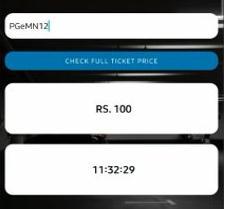
The system uses surveillance cameras to keep an eye on the movements and behaviour of vehicles in a certainregiontoassumeiftheyareapproachingorleaving a parking garage. These observations allow computer vision to identify license plate numbers and show drivers the location of the closest vacant parking lot in real-time via a cloud-based application. The system tracks the driver's departure when he or she comes back to retrieve the car, and it determines the cost based on how long the carhasbeenleftinthegarage.
Major pillars of this system include parking spot recognition,licenseplatedetection,collisiondetectionand data visualization which is being developed by using Artificial Intelligence and Machine learning based frameworks. By eliminating the need for sensors this systemhastheadaptabilityandscalabilitywhichwouldbe vitalfortheefficiencyofallkindsofaspects.Functioningof thissystemneedsaminimumofthreesurveillancecamera feeds: at the entrance, view from the top, and at the exit.
© 2022, IRJET | Impact Factor value: 7.529 | ISO 9001:2008 Certified Journal | Page619
Key Words: AI, Computer Vision, Smart Parking, Surveillance footage, parking infrastructureInternational Research Journal of Engineering and Technology (IRJET) e-ISSN: 2395-0056
The live footage obtained by the entrance would be extractedandprocessedtoidentifyvehiclelicenseplates.
employed to merge the coordinates of the detection findings. The output of the chunked detection results is combinedwiththeoutputoftheglobaldetectionresults.
Toplevel feedwouldbeprocessedtoachievetwo major functions; to detect empty parking lots while detectingthevacantoneswhileprovidingagraphicalUIfor the user implementing data visualization techniques. Additionally, to detect collisions that may occur during making small maneuvers inside the park as drivers trying to park their vehicles into a vacant lot or when they are trying to leave the park after keeping the car parked for sometime.Thefootagedeliveredbythecamerafeedatthe exit would be used to detect the parking time of a certain vehicle according to the time they have kept the vehicle parked.
This function is developed by utilizing artificial intelligence models like YOLOv5, PyTorch and OpenCV basedonthe Pythonlanguage.This YOLOv5AI model can detectobjectsinreal-timebydividingeachframeofvideo footage or pictures extracted from the surveillance cameras into a grid of cells. It has the ability to shed it attentiontospecificpartofthefootageaswell.Thismodel is named after the phrase ‘You only look once’ because it has accuracy speed and efficiency adequate enough to serve in a lightweight mobile based platform. When considering PyTorch, it is a great open-source framework whichisoftenusedinthisdomain.
For the purpose of addressing the feature loss brought on by the compression of high-resolution photographs during the normalization stage, an adaptive clipping strategybasedontheYOLOobjectidentificationalgorithm isrecommendedforthedatapre-processinganddetection stage. A high-resolution training dataset is first improved usingtheadaptiveclippingmethod.Then,bydevelopinga fresh training set, the detailed features of the object detection network are preserved. During the network detectionphase,theadaptiveclippingapproachisutilized toidentifytheimageinsegments,andpositionmappingis
With the rapid growth of the social economy and urbanization, traffic problems are becoming more and moreofaproblem.Effectivetrafficmonitoringcanhelpto solveserioustrafficproblems.AsAIbecomesapriorityon the national agenda, the appeal of intelligent transportation systems will rise. In the transportation sector,anunmannedaircraftwithhigh-definitioncameras has a variety of applications and an advantage in parking lot management, intelligent traffic control, and disaster relief. The improved YOLO algorithm can effectively capitalize on the advantages of auxiliary decision-making in a variety of challenging traffic circumstances thanks to the characteristics of quick identification speed, high accuracy,andgooddetectioneffect.
Top level views and ground images for detecting vehicles are slightly different because the ground view is mostly acquired by a stationary camera. The top view is photographed from the top view using a camera and a bird's eye lens. Somevehiclesideinformationisthuslost. The image conveys a tremendous amount of information, and top-level cameras' image quality is much superior to that of ground cameras. Therefore, it is important to use imageswiselyandappropriately.
Identification of ground targets using deep learning is an established method. When it comes to camera-based vehicle recognition, there are still certain problems with the current technology, such as the small number of targets in parking lots that are made up of car parts. By way of illustration, the YOLO object detection network creates a 13*13 prediction grid with a down sampling factor of 32. When there are fewer than 32 pixels separatingtwotargetobjects,targetdifferentiationerrors happeninthenetwork.
The top-tier camera takes high-resolution pictures or footage,whicharetheneditedtoprovideanimagelibrary. TheYOLOv5objectdetectionmethodisthentrainedusing these images or videos, which are then arranged into an initial training dataset using human labelling and divided into a final training dataset following processing by the suggested adaptive clipping approach. We get the appropriatemodelweights.
This function is developed by using key artificial intelligence technologies like EasyOCR, YOLOv5 and Pytorch which would be running in Python. The gradient valuesforthebuilt-inneuralnetworkscanbefoundusing the PyTorch framework. PyTorch employs dynamic computationalgraphs.Duringtheforwardcalculation,the graph is inferentially defined using operator overloading.
Volume: 09 Issue: 11 | Nov 2022 www.irjet.net p-ISSN: 2395-0072 © 2022, IRJET | Impact Factor value: 7.529 | ISO 9001:2008 Certified Journal | Page620
International Research Journal of Engineering and Technology (IRJET) e-ISSN: 2395-0056
Volume: 09 Issue: 11 | Nov 2022 www.irjet.net p-ISSN: 2395-0072
Usershavemoreflexibilitywhenusingdynamicgraphsas opposed to static ones because they may simultaneously designandassessthegraph.Theyareeasytodebugsince theycanruncodelinebyline.Findingproblemsincodeis mademucheasierwithPyTorchDynamicgraphs,whichis a crucial feature that makes PyTorch such a well-liked choiceintheindustry.
ComputationalgraphsarebuiltfromscratchinPyTorch during each cycle. This makes it possible to utilize any Python control flow expression, changing the graph's size and structure in the process. The advantage is that training can start without encoding every possible path. Youputwhatyouidentifyintoaction.
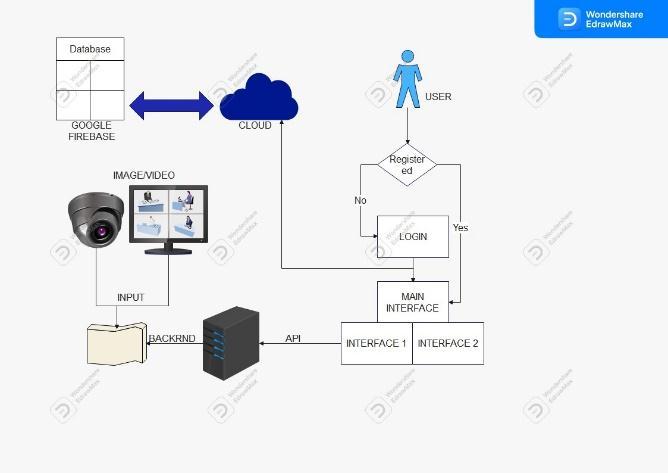
Fig -2:SystemDiagram
This feature is developed using the above discussed technologiesandEasyOCRcharacterrecognitionalgorithm. Installing the Easy OCR Python package creates the primary key for optical character recognition. EasyOCR takes the lead in number plate identification, making it possibletoconstructthemodel moresimply.Thisprocess is much more sophisticated than it seems as it has the capability to crop down the frame which is delivering the footageconsistingofthelicenseplatesothatitworksmore efficiently.
Tostarttheprocedure,firstanEOCRobjectwould be built. There are two ways the process can go forward fromthere.AftercreatingtheEOCRobject,thefirstpathis to load the font file. The recognize method should thenbe called,andthefinalstepistoturntherecognitionsettings. Thedetectionofnumberplatecharactersdoesnottypically usethismethod.Thesecondapproach,inwhichalearning modeisderivedfromtheEOCRobject,shouldbeemployed forthat.Theimageofthetextthatmustbereadmustthen be loaded. In this instance, it must be read with a loaded video. Both the NewFront and LearnPattern methods shouldbecalledafterthevideohasloaded
Thesystemusesasubstantialopen-sourcelibrary for computer vision, machine learning, and image processing, called OpenCV. Real-time operation, which is essential in contemporary systems, is one area where it currently plays a vital role. It may be used to search for people, objects, and even human handwriting in images and movies. When Python is used in conjunction with other libraries, like NumPy, it can handle the OpenCV array structure for analysis. To recognize visual patterns and their various qualities, we use vector space and mathematical operations on these properties. Computer vision transforms data from a still or video camera into a decisionoranewrepresentation.Allthesealterationsare meanttoachieveacertaingoal.
We offer a method for detecting car crashes in parking lots. The suggested process consists of two parts. First,foregroundextractionandmotionmappingareused toidentifyacar.Inthefinalstage,itisdecidedwhetheran accidenthashappenedbasedonthespeedanddirectionof the car. Experimental results show that the suggested method accurately detects car accidents that occur while parked. This system uses cameras to capture video of the parkinglotandtheautomobilesthere.Italsousescameras to capture photos of the vehicles and image processing to determine the distances between them. Python is the language utilizing here, along with a few libraries. Following image processing, the system uses surveillance camerastotrackthemovementsofvehiclesandthespace between them. Calculate the distance after taking the picture. If the value exceeds the predetermined value and there are cars present without the allocated standard distancesystem,theregionisconsideredariskzone
International Research Journal of Engineering and Technology (IRJET) e-ISSN: 2395-0056
Volume: 09 Issue: 11 | Nov 2022 www.irjet.net p-ISSN: 2395-0072
requests. Users are greeted with the login screen where they can enter the vehicle license plate numbers and createthelogin.ThisIDissignificantbecauseitisusedto bringapersonalizedexperiencetothedriver.
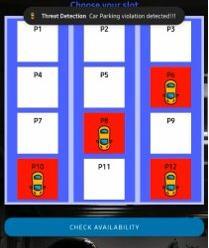
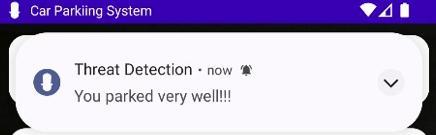
Fig -4:Collisiondetectionnotifications
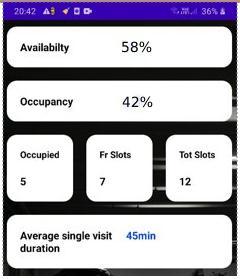
The processed data accumulated by the above methodology should be visualized in a way that is straightforward and easily digestible manner. Unless this development will not help the driver already being busy steering their vehicles through tight corners and narrow spaces in an overcrowded urban parking space. Remedy comesasadevelopmentofamobileapplicationwhichcan handle multiple functionalities at once including several viewsandadashboardregardingtheparkingspace.
Application intended for the drivers is developed basedonJava,XML andretrofitokhttp3isused tohelp in API calls. Square has created Retrofit, a type-safe REST client for Android, Java, and Kotlin. The library offers a robust framework for communicating with and authenticating APIs as well as sending network requests viaOkHttp.SeethismanualtolearnhowOkHttpfunctions. When retrofit is returned, it typically creates the object thatwasretrievedusingtheGsonFactoryconstructorthat we supply. Most items are defined; therefore, the amount ofpersonalizationisconstrained.
Converter is used for data serialization and is configured in Retrofit. Typically, a free Java library called Gsonisusedtoserializeanddeserializeitemstoandfrom JSON. To parse XML or other protocols, you can also add your own converters to Retrofit if necessary. To send HTTP requests, Retrofit takes use of the OkHttp framework. It manages all low-level network activities, caching, and manipulation of requests and answers. OkHttpisapureHTTP/SPDYclient.Retrofit,incontrast,is a high-level REST abstraction built on OkHttp. Retrofit is closelylinkedtoOkHttpandlargelydependsonit.
OkHttp provides the following functionalities, among others: All queries to the same host may share a socket thanks to HTTP/2 capability, Request latency is decreased via connection pooling (if HTTP/2 is not supported),GZIPtransparencyreducesdownloadsize.
Retrofit offers the following crucial characteristics: Support for query parameters and replacement of URL parameters,Converting an objectto the request body e.g., JSON, protocol buffers, Upload of files and multipart
Fig -5:DashboardViewoftheapplication
The world is currently experiencing an unparalleleddrivetowardanelectricvehiclefuture,which is being compelled mostly by concerns about climate change related to internal combustion engine-based vehicles.Becausetheseconventionalcarsaresomuchless efficient, the infrastructure built around them plays a key part in lowering the carbon impact. Thus, the goal of this researchistofindasolutiontoparking,asignificantissue that arises frequently with cars. In comparison to early cars,asinglemoderncaroccupiesasubstantialamountof area.Giventhatcitiescurrentlyhousemostoftheworld's population, valuable space in sprawling metropolitan infrastructure is a growing source of concern. This problemwon'tbesolvedbytheelectricfutureatall.
ThissuggestsemployingAItoprocessthe current surveillance footage in order to improve the infrastructure that is already in place. Even though the majorityofmoderncarscomewithparkingsensors,these devices are only effective for tiny maneuvers at moderate speeds and stop functioning as soon as the ignition is turned off. There isn't a tailored, individually served monitoring system that allows drivers to verify if a crash has been discovered linked to their currently parked automobile.
Itisagreatopportunitytopursueresearchinthe domain of automotive infrastructure development becausethewholesystemseemstobecrippledatthisrate ofnewcarproductionandcarbuyingrates.Weareexcited and grateful to all the supervisors, friends and family for theguidanceandcouragetopursuethisjourney.
International Research Journal of Engineering and Technology (IRJET) e-ISSN: 2395-0056
Volume: 09 Issue: 11 | Nov 2022 www.irjet.net p-ISSN: 2395-0072
[1] FadiAl Turjmana, Arman Malekloob (2019, August). Smart parking in IoT-enabled cities: A survey ScienceDirect Volume 49, 101608 Available at: https://www.sciencedirect.com/science/article/abs/ pii/S2210670718327173
[2] Vijay Paidi, Hasan Fleyeh, Johan Håkansson, Roger G. Nyberg (2018 May) Smart parking sensors, technologies,andapplicationsforopenparkinglots: a review. IET research Available at: https://ietresearch.onlinelibrary.wiley.com/doi/full/ 10.1049/iet-its.2017.0406
[3] Liehuang Zhu, Meng Li, Zijian Zhang, Zhan Qin. (2018 June) ASAP: An Anonymous Smart-Parking and Payment Scheme in Vehicular Networks. IEEE Xplore Volume 17 Issue 4. Available at: https://ieeexplore.ieee.org/abstract/document/8396 301
[4] Fotios Zantalis, Grigorios Koulouras, Sotiris Karabetsos,DionisisKandris(April2019)AReviewof Machine Learning and IoT in Smart Transportation. Mdpi volume 11, Issue 4. Available at: https://www.mdpi.com/1999-5903/11/4/94
[5] Ali Hassan Sodhro, Sandeep Pirbhulal, Zongwei Luod, Victor Hugo C.de Albuquerque (May 2019) Towards anoptimalresourcemanagementforIoTbasedGreen and sustainable smart cities. ScienceDirect. Volume 220. Available at: https://www.sciencedirect.com/science/article/abs/ pii/S0959652619302082
[6] Moneeb Gohar, Muhammad Muzammal, Arif Ur Rahman (August 2018) SMART TSS: Defining transportation system behavior using big data analytics in smart cities. ScienceDirect. Volume 41. Available at: https://www.sciencedirect.com/science/article/abs/ pii/S2210670717309757
[7] Mehdi Nourinejad, Sina Bahrami, Matthew J.Roorda. (March 2018) Designing parking facilities for autonomous vehicles. ScienceDirect. Volume 109 Available at: https://www.sciencedirect.com/science/article/abs/ pii/S0191261517305866
[8] M.MazharRathor,AnandPaul,Won-HwaHong,Hyun Cheol Se Imtiaz Awan Sharjil Saeed. (July 2018) Exploiting IoT and big data analytics: Defining Smart Digital City using real-time urban data. ScienceDirect. Volume 40 Available at: https://www.sciencedirect.com/science/article/abs/ pii/S2210670717309782
[9] Prince Waqas Khan, Yung-Cheol Byun, Namje Park. (March 2020) A Data Verification System for CCTV SurveillanceCamerasUsing BlockchainTechnologyin SmartCities.mdpi.comVolume9Issue3.Availableat: https://www.mdpi.com/2079-9292/9/3/484
[10] Harshitha Bura; Nathan Lin; Naveen Kumar; Sangram Malekar; Sushma Nagaraj; Kaikai Liu (July 2018) An Edge Based Smart Parking Solution Using Camera Networks and Deep Learning. IEEE Xplore Volume Available at: https://ieeexplore.ieee.org/abstract/document/8457 691
[11] ChynIraC.Crisostomo;RoyceValC.Malalis;RomelS. Saysay; Renann G. Baldovino (November 2019) A Multi-storey Garage Smart Parking System based on Image Processing. IEEE Xplore Available at: https://ieeexplore.ieee.org/abstract/document/8932 899
[12] Chandra Kiran B. Krishnamurthy, Nicole S.Ngoc. (January2020)Theeffectsofsmartparkingontransit and traffic: Evidence from SFpark. ScienceDirect. Volume 99, 102273. Available at: https://www.sciencedirect.com/science/article/abs/ pii/S0095069619301664
[13] Faris Alshehri; A. H. M. Almawgani; Ayed Alqahtani; Abdurahman Alqahtani. (May 2019) Smart Parking System for Monitoring Cars and Wrong Parking. IEEE Xplore Available at: https://ieeexplore.ieee.org/abstract/document/8769 463
[14] Kuchi N S S S S Utpala, Suresh Kumar, K.Praneetha, D.Hema Sruthi, K.Sai Avinash Varma. (2019) AuthenticatedIoTBasedOnlineSmartParkingSystem with Cloud. Pramana Research Journal. ISSN NO: 2249-2976, Available at: https://www.pramanaresearch.org/gallery/prjp622.pdf
[15] Noah Sieck; Cameron Calpin; Mohammad Almalag. (March 2020) Machine Vision Smart Parking Using Internet of Things (IoTs) In A Smart University. IEEE Xplore. Available at: https://ieeexplore.ieee.org/abstract/document/9156 121
[16] Tayo Fabusuyi, Victoria Hill (2020) Designing an integrated smart parking application. ScienceDirect, Volume 48. Available at https://www.sciencedirect.com/science/article/pii/S 2352146520305500
2022, IRJET | Impact Factor value: 7.529 | ISO 9001:2008 Certified Journal | Page623
International Research Journal of Engineering and Technology (IRJET) e-ISSN: 2395-0056
Volume: 09 Issue: 11 | Nov 2022 www.irjet.net p-ISSN: 2395-0072
[17] Jan Šilar; Jirí Růžička; Zuzana Bělinov{; Martin Langr; Kristýna Hlubučkov|; (October 2018) Smart parking inthesmartcityapplication.IEEEXploreAvailableat: https://ieeexplore.ieee.org/abstract/document/8402 667
[18] Amal O. Hamada, Fatma Zahran; Noha Ezz ElDin; Mohamed Azab; Mohamed Eltoweissy; Denis Gračanin.(October 2019) smartpark: A LocationIndependent Smart Park and Transfer System. IEEE Xplore. Available at: https://ieeexplore.ieee.org/abstract/document/8936 180
[19] Garisa, Shankara Sree Vatsava Konanki Rangaiahgari, Dinesh Chakravarthi. (2022) Smart Parking Assisting System. Divaportal. Available at: https://www.divaportal.org/smash/record.jsf?pid=diva2%3A1690643 &dswid=3298
[20] Mingyan Bai; Shenghua Zhong; Pengyu Yan; Zhibin Chen;ZhixianZhang.(December2021)AData-Driven Near-Optimization Approach for Smart Parking Management Platforms. IEEE Xplore. Available at: https://ieeexplore.ieee.org/abstract/document/9702 219
2022, IRJET | Impact Factor value: 7.529 | ISO 9001:2008 Certified Journal |