International Research Journal of Engineering and Technology (IRJET) e-ISSN:2395-0056

Volume: 09 Issue: 11 | Nov 2022 www.irjet.net p-ISSN:2395-0072
International Research Journal of Engineering and Technology (IRJET) e-ISSN:2395-0056
Volume: 09 Issue: 11 | Nov 2022 www.irjet.net p-ISSN:2395-0072
1M.E. Student, Department of Civil Engineering and Applied Mechanics, Shri G. S. Institute of Technology and Science, Indore, India 2Assistant Professor, Department of Civil Engineering and Applied Mechanics, Shri G. S. Institute of Technology and Science, Indore, India ***
Abstract - Concrete is the most widely used construction material. Concrete aggregates are obtained from natural resources through mining and other costly techniques, which increases concrete's cost and environmental impacts. Therefore, it becomes necessary to study alternativematerials for natural aggregates. The advantages of using waste products as alternate aggregates inconcretearethereduction in cost and environmental impacts. On the other hand, the properties of concrete canalso be improvedbyusingalternate aggregates. This study presents a comprehensive reviewofthe effect of partially replacing natural aggregates of concrete with e-waste and steel slag. This study aims to explore the effect of e-waste andsteel slag onthe mechanicalpropertiesof concrete. As per the literature, steel slag and e-waste have been used as coarse. Available literature has presented the effect on compressive strength, flexural strength, and split tensile strength of the concrete by partially replacing the natural aggregates in the range of 0 to 40%.
Key Words: E-Waste, Steel Slag, Concrete, Coarse Aggregate, Mechanical Properties.
Nowadays,theproblemofdisposalofindustrialwastehas beenincreasingdaybyday.Ahugeamountofe-waste,steel slag,andAluminumTinwastewasgeneratedintheprevious years.Duetothis,thedecompositionofthiswastebecomesa serious problem for the government and society. The researchersworkonthestrengthandeconomiccriteria of the construction. Concrete plays an important role in the constructionindustry.Thedesignofspecialconcretetaking intoaccountspeedofconstruction,strength,durability,and environmental friendliness with industrial materials includingflyash,blastfurnaceslag,silicafume,metakaolin, e-waste,steelslag,etc.aretheoutcomeofongoingresearch inthefieldofconcretetechnology.Concreteisacomposite mixture of cement, fine aggregate, coarse aggregate, and water. The partial replacement of coarse aggregate with differentindustrialandcommercialwastematerialsreduces thecostofconstruction.
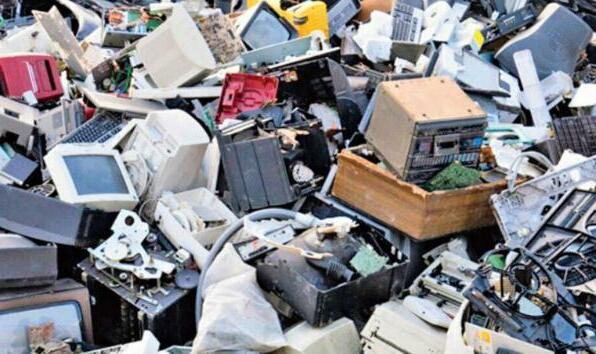
The rapid growth of technology, up-gradation of technical innovations, and a high rate of obsolescence in the electronicsindustryhaveledtooneofthefastest-growing waste streams in the world, consisting of end-of-life ElectricalandElectronicEquipment(EEE)productsknown asE-waste.Only12.5%ofe-wasteiscurrentlyrecycledalso StorageofwasteisabigprobleminIndia[1].Severaltonnes of E-waste need to need year. The traditional landfill or stockpilemethodisnotanenvironmentallyfriendlysolution andthedisposalprocessisverydifficult[2].Amilliontonne every year, a million tonnes of electronic waste from obsolete computers and other electronic articles are generatedinnumerous-types(morethan1000different)of substancesandchemicalscreatingserioushumanhealthand environmental problemsif nothandledproperly. E-waste also includes many toxic substances viz-heavy metals like lead, cadmium, mercury, arsenic, selenium, hexavalent chromium,etc.About70%oftheheavymetals(mercury& cadmium)inlandfillscomefromelectronicwaste.Consumer electronicsistherootcauseforthepresenceofabout40%of the lead in landfills. These toxins can cause brain damage, allergicreactions,andcancer[3].AspertheCentralPollution ControlBoard(CPCB),listofDismantlers/Recyclersasper the authorization issued by SPCBs/PCCs under E-Waste (Management) Rules 2022 the state Wise Capacity of EWaste. The total amount of E-waste is recycled in India 1426685.22MetricTonsperAnnum(MTA).Thereissome majorstate,whichrecyclesthemaximumamountofE-Waste areshowninTable1[4] Fig1showsexamplesofE-waste
(2022)
International Research Journal of Engineering and Technology (IRJET) e-ISSN:2395-0056
Volume: 09 Issue: 11 | Nov 2022 www.irjet.net p-ISSN:2395-0072
Fig. 1 E-waste
AccordingtothedefinitionsinthedirectiveoftheParliament and European Union council on waste electronic and electrical equipment, WEEE can be sub-divided into ten different categories as listed in Table 2 [3] and the environmental impact of the processing of different electronicwastecomponentsareshowninTable3[5] Table 2 WEEEcategoriesaccordingtotheEUdirectiveon WEEE[3] S.No E-waste S.No E-waste
and Controlling instruments Table 3 Differentelectronicwastecomponents[5] S. No E-Waste Component ProcessUsed Potential Environmental Hazard 1 Chips and othergoldplated component
Hydrocarbons,heavymetals, andbrominatedsubstances aredischargeddirectlyinto rivers acidifying fish and flora. Tin and lead contaminationofsurfaceand groundwater.Airemissions ofbrominateddioxins,heavy metals,andhydrocarbons 2 Plastics from Shreddingand low temp Emissions of brominated dioxins, heavy metals, and
Chemical stripping using nitric and hydrochloric acid and burning of chips
printers, keyboards, monitors, etc.
melting to be reused hydrocarbons 3 Computer wires Open burning and stripping to remove copper
Hydrocarbon ashes are releasedintotheair,water, andsoil
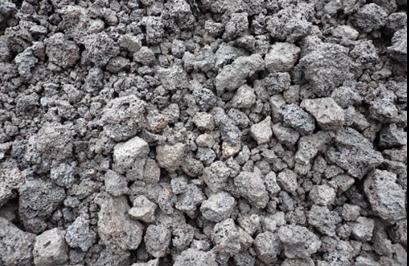
Steel slag is the waste product of the steel industry. The successful incorporation of steel slag as an aggregate in constructionproductsrequirestheconsiderationofcertain issues. Firstly, steel slag is an industrial by-product until recentlydisposedofinthelandfill;thequestioniswhetherit is suitable for use in construction [6]. The predominant compoundsinsteelslagaredi-calciumsilicate,tri-calcium silicate, di-calcium ferrite, calcium aluminate, calciummagnesiumironoxides,andsomefreelime,andmagnesia. Steelslagismildlyalkaline,withasolutionpHgenerallyin therangeof8to10[7]. Thenthetechnicalcharacteristicsof the material are examined because due to its steel slag requiresspecialcareduetoitsphysicochemicalproperties, butithasamaximumvalueifusedforspecificapplications [6]. The use of Steel slag reduces the need for coarse aggregate/natural rock as a construction material. Slag is usefulinmakingeco-friendlymaterials.Maximumutilization of by-products, and waste materials for economic and environmentalreasons.Itleadstorapiddevelopmentinslag utilization[8].Fig3showsanexampleofsteelslag
1. Steelslagcanbeusedinnormalconcretetoimprove itsmechanical,chemical,andphysicalproperties.
2. Theuseofsteelslagbyreplacingcoarseaggregateis themostpromisingconcept.
PhysicalpropertiesSteelslagaggregatesareangular,roughly cubicalpieceshavingflatorelongatedshapes.Someofthe positives of steel slag are given in Table 4 [7] and the chemicalcompositionofsteelslagisgiveninTable5[9]
International Research Journal of Engineering and Technology (IRJET) e-ISSN:2395-0056
Volume: 09 Issue: 11 | Nov 2022 www.irjet.net p-ISSN:2395-0072
Table 4 Physicalpropertiesofsteelslag[7]
Property Value
SpecificGravity 3.2-3.6
ApproximateDryroddedUnitWeight, kg/m3(lb/ft3) 1600-1920 (100120)
WaterAbsorption Upto3% LosAngelesAbrasion(ASTMC131)% 20-25
SodiumSulfateSoundnessLoss(ASTM C88)% <12
Theangleofinternalfriction 400°-500° Hardness(measuredbyMohr’sscale) 6-7 CaliforniaBearingRatio Upto300
Table 5 ChemicalCompositionofSteelSlag(%)[9]
Compounds
SteelSlag Basic Oxygen Furnace Slag %
E-wasteasreinforcementbeam.Acomparisonofbothbeam shows that the maximums load carried by the steelreinforcedbeamandinthe2ndbeamdropped73%ofloadbearingcapacityincreased.
Aditya Gavhane, et. al. (2016), replaced e-waste with coarse as well as fine aggregate 0%, 10%, and 20% by volume. This Electronic was collected from old computer parts,mice,keyboards,CPUs,smartphones,LCDs,etc.,and Electrical and electronic waste was reused for daily life needs. The maximum compressive strength gets in 10% replacementofbothfineandcoarseaggregate;testingwas doneat7,14,and28days.Comparableresultsarefoundin thecompressivestrengthtestwhileonmovingto20%the compressivestrengthstartsdecreasing.Throughthestudy, they concluded that the E-waste concrete has higher workabilitythanthecontrolconcretemixthus,itsavesthe costofconstructionduetolessdensityofe-wasteparticles, andtheconcretepreparedwaslightweightconcrete.
Electric Arc Furnace Slag%
CalciumOxide(CaO) 43 35 SiliconOxide(SiO3) 15 14 IronOxide(Fe2O3) 25 29
MagnesiumOxide(MgO) 8 8 ManganeseOxide(MnO) 5 6 AluminumOxide(Al2O3) 2 5 SulfurOxide(SO3) 0.07 0.1
Rajiv Gupta, et. al. (2015), theyuseseveralvarietiesofEwastePrintedCircuitBoards(PCBs)asanaggregateintheir research. The PCB e-waste was cut into pieces by using machinery.InthisstudydifferentcombinationsofE-waste andrecycledaggregatewereusedtoperformcompressive strength and flexural strength of M20 grade concrete. The replacementofe-wastevariesfrom(0to20%)andrecycled aggregatevariesfrom(95to80%)inthe5%ofinterval,the compressivestrengthtestwasheldattheageof7,14,and28 daysofcuring,andtheflexuralstrengthtestwasheldat7 and 28 days. The result shows that the replacement of ewasteandrecycledaggregateshowspositiveresultsat5% and 10 %. The flexural strength test was performed on a beam,1stbeamwithsteelreinforcementbeamand2ndwith
R. Lakshmi, et. al. (2011), the partially replaced e-waste withcoarseaggregate(0%to24%)inthe2%intervaland partiallyreplacedcementwithflyash(10%).Theelectronic and electrical waste is obtained from large household appliances, small household appliances, Toys, leisure, and sports equipment, IT and telecommunication equipment, Consumerequipment,etc.ThereplacementofE-wastewith coarseaggregateat4%and8%showsconcreteismaximum compressivestrengthat28daysofcuring.Thecompressive strengthofconcreteat12%replacementofe-wasteand10% replacement of cement with fly ash at 28 days of curing shows a higher compressive strength than that of conventionalconcrete.
Ashwini Manjunath B T (2015), in this experimental investigationtheutilizationofE-wasteparticlesasfineand coarseaggregateinconcretewithpartialreplacement,range of 0%, 10%, 20%, and 30% on the strength criteria of concrete.Thecompressive,splittensileandflexuralstrength ofconcretewastestedafter7,14,and28daysofcuring.The resultshowsthatthecompressivestrengthofconcretegives a better result at 10% replacement of E-waste as coarse aggregateafter28daysofcuring.Itshowshigherresultsin splittensilestrengthandflexuralstrengthofconcreteat10% replacement. Compared with conventional concrete at 28 days the compressive strength, split tensile strength and flexuralstrengthisreducedby52%whencoarseaggregateis partiallyreplacedwithE-waste.Asaresult,thisconcreteis usedaslightweightconcrete.
A. C. Umare, et. Al (2018), in this experimental investigation the utilization of nonmetallic E-waste as a partialreplacementofcoarseaggregateinahigher,gradeof concreteintheproportionof0%,5%,10%,and15%.The result shows that the replacement of 10% E-waste with conventional aggregate shows higher compressive, split tensileandflexuralstrengthofconcreteattheageof28days ofcuring.
© 2022, IRJET | Impact Factor value: 7.529 | ISO 9001:2008 Certified Journal | Page552
International Research Journal of Engineering and Technology (IRJET) e-ISSN:2395-0056
Volume: 09 Issue: 11 | Nov 2022 www.irjet.net p-ISSN:2395-0072
Harsh Gupta, et. al. (2017), thisexperimentalinvestigation istoevaluatethephysicalandmechanicalpropertiesofsteel slag in concrete. After proper investigation of their experiment, they found that the replacement of fine aggregate with steel slag at (0% to 40%) at an interval of 10% shows the enhancement properties of concrete. The compressivestrength,tensilestrength,andflexuralstrength ofM25andM30gradesofconcreteweretestedattheageof 7,14,28,and50daysaftercuring.Theresultshowsthatthe replacement of steel slag at 20% and 30% gives a higher compressivestrengthat28daysofcuring.Tensilestrength andflexuralstrengthgivehigherresultsat30%replacement ofsteelslagintheconcretemix.
M.H. Lunagaria, et. al. (2017), this experimental investigation is to evaluate the physical and mechanical properties of steel slag in concrete. In their investigation, study the partial replacement of steel slag with natural coarseaggregate.Thecompressivestrengthandsplittensile strengthofconcreteshowpositiveresultsat30%and40% ofreplacementofcoarseaggregate.Theincrementinsteel slag percentage decreases the compressive strength of concrete.Thecompressivestrengthofconcreteenhancesby upto5%andthesplittensilestrengthofconcreteenhance byupto10%.
S.P.Palanisamy, et. al. (2015),inthisexperimentalstudy, theyinvestigatethecomparisonofconventionalaggregate andsteelslagontheofbasistheirchemicalandmechanical properties. The enhancement of conventional concrete properties such as compressive strength, split tensile strength,andflexuralstrengthwithpartialreplacementof steel slagpowder withcement 0%, 10%, 20%, 30%, 35%, 36%,37%,and 40%.Theresultshowsat36%replacement ofcementwithsteelslagpowdergiveshighercompressive strength,splittensilestrength,andflexuralstrengthafter28 daysofcuring.
Rutwij Shah, et. al. (2021),inthisexperimentalstudy,they investigatethecompressivestrengthofconcretebyreplacing thecoarseaggregatewithsteelslagby0%,40%,and60%in theconcrete.Theresultshowsthattheinitialstrengthgainis thehighestinconventionalconcrete.After28daysofcuring the highest strength gain in concrete with a 40% replacementincreaseinstrengthby110%.
M. Gopinath, et. al. (2019),inthisexperimentalstudy,they investigate the mechanical properties of the concrete. The partialreplacementcoarseaggregatewithsteelslagdifferent proportion are 0%, 10%, 20%, 30%, 40%, and 50%. The cube and cylinder were cast for testing of mechanical propertiesofconcrete.Thereplacementofcoarseaggregate by up to 30% enhances the strength of concrete. The comparisonoftheaboveliteraturereviewisgiveninTable6.
S. N o Author
1 Rajiv Gupta. 2015
% of Range of materi al
Max. resu lt at %
0%20% 5%
Materi alused Strength Tests Result and Remark
Ewaste and recycle d aggreg ate
2 Aditya Gavhane, 2016
Compress ive Flexural
Compress ive strength decreases upto5% Flexural strength enhance up to 4.5%
0%30% 10 % Ewaste Compress ive
3 R.Lakshmi 2011 0% –24% 12 %
Ewaste andfly ash (10%)
Compress ive
Compress ive strength decrease up to 5.5%
Compress ive strength enhance up to 3.5%
4
Ashwini Manjunath BT 2015
0%30% 10% Ewaste
Compress ive Flexural Tensile
Compress ive strength decrease up to 6.5% Flexural strength decrease upto2% Tensile strength enhance up to 1.15%
5 A.C.Umare et.al 2018
0%15% 10 % Ewaste
Compress ive Flexural Tensile
Compress ive strength enhance up to 45.3% Flexural strength decrease up to 8.87%
Tensile strength enhance up to 43.9%
6 Harsh Gupta 2017
0%40% 30 % Steel slag Compress ive Tensile
Compress ive strength enhance up to
International Research Journal of Engineering and Technology (IRJET) e-ISSN:2395-0056
Volume: 09 Issue: 11 | Nov 2022 www.irjet.net p-ISSN:2395-0072
15.5% Tensile strength enhance up to 15.6%
7 M.H.Lunaga riaet.al. 2017
0%40% 30% and 40% Steel slag Compress ive Tensile
Compress ive strength enhance upto5% Tensile strength enhance up to 10%
3 Ascomparedtotheconventionalaggregateweight ofE-wasteislesssoitisusedtopreparelightweight concrete.
4 The steel slag has some similar physical and mechanical properties as conventional aggregate, duetowhichtheresearchermainlyfocusesonsteel slagusedasacoarseaggregateinconcrete.
5 It is economical to use the steel slag in the constructionindustry,asthecostofsteelslagis 50%lessthantheconventionalaggregate.
8 S.P.Palanisa my 2015
0%40% 36 % Steel slag powder
Compress ive Flexural Tensile
Compress ive strength enhance up to 13.45% Flexural strength enhance up to 28.54% Tensile strength enhance up to 47.64%
6 The partial replacement of steel slag up to 30% increasesthecompressivestrengthofconcrete;itis usedasbothfineandcoarseaggregateinconcrete.
7 The use of E-waste in concrete increase the workability,whichreducesthecostofadmixture.
8 ThepartialreplacementofE-wastewitha10%will increase the split tensile strength and flexural strengthofconcrete.
9 Rutwij Shah 2021
1 0
M. Gopinath 2019
0%, 40% and 60%
40 % Steel slag Compress ive
0%50% 30 % Steel slag Compress ive
Compress ive strength enhance up to 10.11%
Compress ive strength enhance up to 14.41%
The literature shows that the replacement of E-waste and steelslaginconcreteuseasamodernconstructionmaterial enhancesthemechanicalpropertiesofconcreteandreduces thecostofconstruction.
1 The use of E-waste and steel slag in concrete reduces environmental pollution and reduce the disposalproblemofwaste.
2 Thereplacementofbothcoarseandfineaggregate through E-waste and steel slag at a certain percentage,whichleadstoaneco-friendlyconcrete.
Based on above Table 6 literature comparison the strength criteria of concrete enhance at different percentageofpartialreplacementofE-wasteandSteel slaginconcrete.Thecompressivestrengthofconcrete enhancesuptorangeof3%to45%,splittensilestrength of concrete enhance up to 1% to 48% and flexural strengthofconcreteenhanceuptorangeof2%to33%. Theoverallstrengthcriteriaofconcreteenhanceupto therangeof1%to45%.
[1] PravinA.Manatkar,“UseofNon-MetallicE-WasteAs a Coarse Aggregate in a Concrete,” Int. J. Res. Eng. Technol., vol. 04, no. 03, pp. 242–246, 2015, doi: 10.15623/ijret.2015.0403040.
[2] Mr.AdityaGavhane,Mr.DineshSutar,Mr.Shubham Soni,andMr.PraveenPatil,“UtilisationofE-Plastic WasteinConcrete,” Int. J. Eng. Res.,vol.V5,no.02,pp. 594–601,2016,doi:10.17577/ijertv5is020538.
[3] R.Lakshmi,S.Nagan,andS.Dist,“Investigationson Durability Characteristics of E-Plastic Waste IncorporatedConcrete,” Asian J. Civ. Eng.,vol.12,no. 6,pp.773–787,2011.
[4] CPCB, “List of Dismantlers / Recyclers as per the authorizationissuedbySPCBs/PCCsunderE-Waste ( Management ) Rules,” 2022. [Online]. Available: https://cpcb.nic.in/
[5] A. Manjunath, “Partial Replacement of E-plastic Waste as Coarse-Aggregate in Concrete,” Procedia
© 2022, IRJET | Impact Factor value: 7.529 | ISO 9001:2008 Certified Journal | Page554
International Research Journal of Engineering and Technology (IRJET) e-ISSN:2395-0056
Volume: 09 Issue: 11 | Nov 2022 www.irjet.net p-ISSN:2395-0072
Environ. Sci., vol. 35, pp. 731–739, 2016, doi: 10.1016/j.proenv.2016.07.079.
[6] S. P. Palanisamy and G. Maheswaran, “Steel slag to improve the high strength of concrete,” Int. J. ChemTech Res.,vol.7,no.5,pp.2499–2505,2015.
[7] R. Chandini, “Use of steel slag in concrete as fine aggregate,” Int. J. Eng. Innov. Technol.,vol.7,no.4,pp. 34–41,2020,doi:10.17605/OSF.IO/EFGPN.
[8] R. Shah, “Evaluation of Compressive Strength by Utilization of Steel Slag in Concrete Evaluation of CompressiveStrengthbyUtilizationofSteelSlagin Concrete,” Int. J. Innov. Res. Technol. (IJIRT ),no.April, 2021.
[9] WSPMS,“UseofSteelSlagAggregateinPavements,” 2015. [Online]. Available: https://wsdot.wa.gov/engineeringstandards/construction-materials/pavement-designmanagement
[10] A. C. Umare “Experimental Study of Concrete by PartialReplacementofCoarseAggregatebyE-Waste” Journal of Advances and Scholarly Researches in Allied Education, vol. 15, pp. 163- 167, 2018, DOI: 10.29070/JASRAE
[11] R.Gupta“ApplicationofRecycledCoarseAggregates andE-WasteforPavementswithLowTraffic” IOSR Journal of Mechanical and Civil Engineering, vol.12, pp.64-70.DOI:10.9790/1684-12226470.
[12] H. Gupta “Strength Properties of Steel Slag in Concrete” International Journal of Engineering Research & Technology (IJERT), vol. 6, pp. 93- 97, 2017.
[13] J. Saravanan “Mechanical Properties of Concrete UsingSteelSlagAggregate” International Journal of Engineering Inventions vol.4,pp.7-16,2015
[14] M.Gopinath“AnExperimentalStudyonLightWeight ConcretebyPartialReplacementofCoarseAggregate with Steel Slag” International Journal of Current Engineering and Scientific Research (IJCESR) vol. 6, pp.571-590,2019.
© 2022, IRJET | Impact Factor value: 7.529 | ISO 9001:2008 Certified Journal | Page555