International Research Journal of Engineering and Technology (IRJET) e-ISSN: 2395-0056

Volume: 09 Issue: 10 | Oct 2022 www.irjet.net p-ISSN: 2395-0072
International Research Journal of Engineering and Technology (IRJET) e-ISSN: 2395-0056
Volume: 09 Issue: 10 | Oct 2022 www.irjet.net p-ISSN: 2395-0072
2
1B.E, Dept. of Civil engineering, 2022 Student, Datta Meghe College Of Engineering, Airoli, Navi Mumbai- 400708, Maharashtra, India 2Assistant Professor, Dept. of Civil engineering, Rizvi College of Engineering, Bandra, Mumbai- 400050, Maharashtra, India ***
Abstract - Freshwater‘Scarcity’andsecurityhasbeen identifiedasmajorglobalenvironmentalproblemsofthe21st century.Indiaishometooneoftheworld’shighestnumberof people who lack access to clean water,imposing a huge financialburdenforsomeofthecountry’spoorestpopulation. Waterneutralityisanimportant,butrelativelynewconcept for managing water resources in the context of new development. This study aims to ‘Develop a broader understandingofwaterneutrality,especiallywithrespectto thespatial/temporaldynamicsofachievingneutralitysothat itbecomesausefulconceptfortheEnvironmentAgencyto apply operationally.’ In our effort to study the various methods used for conservation of water and to design the system of Water Neutrality for a G+12 structure in Sion, Mumbai, we have adopted a simple yet effectiveapproach towards oursubject. Combiningliteraturereferences from varioussources,enablesenhancedperspectiveofstrengthand weaknesses of the method of managing the Rain Water in citiesfacingwaterscarcitylikeMumbai.
Key Words: Water neutrality, freshwater scarcity, Ground water management, Rain water harvesting.
Freshwaterscarcityhasbeencitedasthemajorcrisisofthe 21stcentury,butitissurprisinglyhardtodescribethenature oftheglobalwatercrisis.Freshwater‘Scarcity’andsecurity hasbeenidentifiedasmajorglobalenvironmentalproblems ofthe21stcentury.Although,globalpopulationisexpectedto increasetoabout9billionby2050,theplanet’sendowment ofaccessiblerenewablefreshwaterhasbeenorremainmore orlessconstant.Although,someadditionalfreshwatercould beappropriated for humanuses bycapturing flood waters and increasing storage capacity, humans already use over 50%ofallavailablerenewablefreshwater,risinglegitimate concerns that water shortages may limit agricultural and industrialproductionandhumanwellbeinginthefuture.
Inthepastdecade,therehasbeenincreasingevidenceofthe interconnected nature of the global system through the hydro-climatic system and ‘virtual water’ transfers among regions. But despite the recognition of the existence of a globalhydro-commons,mostwaterisabstracted,managed, andusedattheregionaltolocalscale.Dependingonthelocal
socioeconomic,politicalandhydrologicalcircumstances,the common global drives of change, such as climatic change, populationgrowth and globalization have diverse regional impacts.
Themagnitudeoftheglobalfreshwatercrisisandtherisks associatedwithithavebeengreatlyunderestimated.Water stress is expanding globally nut especially at mid-latitude countries that are already deemed to be water scarce, threateningtofurtherundermineimportantprogress.The environmental impacts of the water crisis are equally alarming.Multiple,cumulativeandcompoundingproblems with water supply and quality are converging globally. Increasing populationgrowth is already competing with nature for infinite water resources. A growing number of rivers donot make it to the sea, and there is widespread surface and ground water contamination that makes valuable water supplies unfit for other uses. A growing number of contaminants, such as endocrine- altering substances, will demand higher wastewater treatment standardandmoreexhaustivemonitoringtreatments.
A number of recommendations were made to the policy communityonconcretestepsthatcanbetakenforawatersecurefuture: 1) Continuetheglobaldialogueonthewatercrisis. 2) Endorsethehumanrightstowater. 3) Support Ratification of the UN water-courses convention. 4) Encouragethehumansecuritycounciltofocuson watersecurity. 5) Facilitates links between National and Global Water,Agricultureandenergypolicies. 6) Support the Protection of Ecologically Sustainability Boundaries and Investment in EcologicalRestoration. 7) Encourage cooperation and act as a mediator in waterconflicts.
International Research Journal of Engineering and Technology (IRJET) e-ISSN: 2395-0056
Volume: 09 Issue: 10 | Oct 2022 www.irjet.net p-ISSN: 2395-0072
Thewaterqualitymonitoringresultsobtainedduring1995to 2006indicatethattheorganicandbacterialcontaminationare continuedtobecriticalinwaterbodies.Thisismainlydueto dischargeofdomesticwastewatermostlyinuntreatedform from the urban centres of the country. The municipal corporationsatlargearenotabletotreatincreasingtheload of municipal sewage flowing into water bodies without treatment.Secondlythereceivingwaterbodiesalsodonot have adequate water for dilution. Therefore, the oxygen demandandbacterialpollutionisincreasingdaybyday.This ismainlyresponsibleforwaterbornediseases.
Thisstudyaimsto:‘Developabroaderunderstandingofwater neutrality, especially with respect to thespatial/temporal dynamicsofachievingneutralitysothatitbecomesauseful conceptfortheEnvironmentAgencytoapplyoperationally.’
What are the key environmental risks (and benefits)ofmovingtowardswaterneutrality?For instance, what are the potential environmental impacts ofpoint sourcedischarge returns tothe hydrologicalsystem?
What is the most meaningful spatial scale to achievewaterneutralityover,i.e.,community,sub catchment,waterresourcezone,region?
Does the environment or specific ecological parameters require water neutrality over all timescales and what is the environmental justification for seeking to achieve water neutralityovera particulartime step and spatial scale?
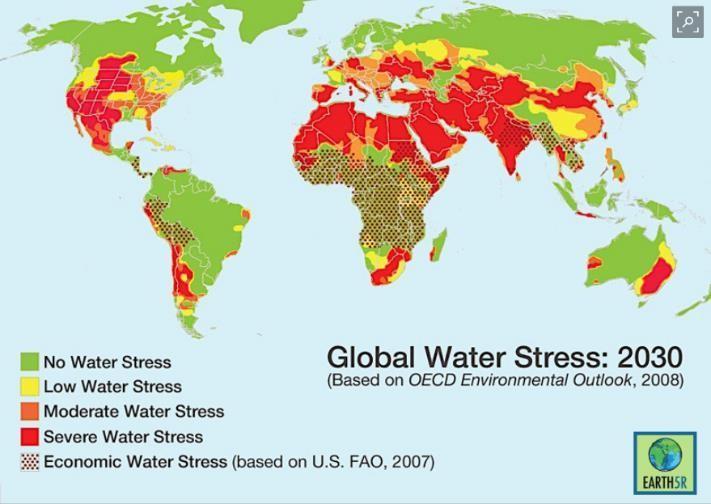
Fig. 1-Predictedwaterscarcity
Indiaishometooneoftheworld’shighestnumberofpeople who lack access to clean water,imposing a huge financial burden for some of the country’s poorest population. Evidently,thesewerelinkedtounsafewaterandthelackof hygiene practices. These include parasitic and infectious diseases, nutritional deficiencies such as underweight and stunting, as well as respiratory infections. The alarming conditionofwaterqualityisbasedonthefactthatthelackof cleandrinkingwaterhasputover11.5millionpeopleofIndia at a high risk of a bone crippling disease, fluorosis. The ministryofhealthandfamilywelfarehasidentified19states severelyaffectedbyhighfluoridecontentindrinkingwater, andatleast10statessufferingfromarseniccontamination causingthequalityofwateravailabletothecountryisina very poor state. It is affected by sewage discharge, run-off fromagriculturalfieldsandurbanrun-off,anddischargefrom industries.Floodsanddroughts,incombinationwiththelack ofawarenessandeducationamongusers,affectsthequality ofwaterinagreatway.TheWorldBankestimatesof2015 showthatinIndia28.1percentofthedeathstookplacedue tocommunicablediseasesArsenicosis–adiseasethataffects thelungs,skin,kidneys,andliverduetoarsenicpoisoning.
In what circumstances is water neutrality (or variation of) an appropriate aim (i.e. develop a criterion for water neutrality based on water availability)?Thestudywillbefromahydrological andwaterneutralitydeliveryperspective,focusing on the environmental risks and benefits and potential delivery issues that may have greater relevanceatdifferentspatialscalesorindifferent geographicalcontexts.
Watersuppliedbythemunicipalitiestourbanandruralareas fordomesticcommercialorindustrialuseshastobepricedin such a way that the RMO (Running, Maintenance and Operation) costs as well as the depreciation and interest charges on the capital investment is returned by the beneficiaries in form of revenue returns from the sale of water. Although, no official estimates have been made to compute the tariff levels, which will allowfull recovery of operation,maintenanceandcapitalcosts;yetvariousexpert analysishavesuggestedatariffof15/-rupeeperkL(cu.m). For the treated water supplied through piped supplies. As compared to this economic rate of rupee 15/- per kL the existingratesinthecountryvaryfromabout0.01rupeeperkL toaboutrupee3.60perkLovermostoftheStatesofIndia, exceptforMizoram(whereminimumrateis10rupeesper Kl.Aminimumeconomicalrateof6rupeeperlitrehasbeen suggested to be fixed by NGO- PPILF (Public Private InfrastructureAdvisoryFacility)whichcanbeaffordedeven bythepoorestof thefamilies.Higherwaterpriceswillnot onlyencouragealluserstousewatermoreefficientlybutwill also generate funds to maintain the existing water infrastructure and to build new infrastructure.The State Governments will have to show political courage to do so,
2022, IRJET | Impact Factor value: 7.529 | ISO 9001:2008 Certified Journal | Page609
International Research Journal of Engineering and Technology (IRJET) e-ISSN: 2395-0056
Volume: 09 Issue: 10 | Oct 2022 www.irjet.net p-ISSN: 2395-0072
before thewater completelyruns out, and people become totallydependentupon.
Thevarioustypesofwaterdemand,whichacity,mayhave, maybebrokendownintothefollowingclasses:
1. Domesticwaterdemand.
2. Industrialwaterdemand.
3. Institutionandcommercialwaterdemand.
4. Demandforpublicuses.
5. Firedemand;and
6. Water required to compensate losses in wastesandthefts.
ConsideringaG+12Urbanresidentialbuildingbasedin Sion,MumbaiinMaharashtra,forevaluation.
DesignforG+12Urbanresidentialbuilding:-
1. NumberofFloors=Stilt+12floors=40m
2. Refugefloorat8th floor
3. Considering4flatsoneachfloorexceptonrefuge floor.
4. Rateofwatersupply=135lpcd
5. Eachfloorconsistsoffour2BHK.
6. Numberofflats=2BHK(11x4)=44
7. Assuming 5 persons per flat, Population to be served=44x5=220souls.
8. Totaldemandconsideringrateofwatersupply as135lpcd, =135x220 =29,700litres~30,000litres
Designing the sump or suction tank for a capacityof90lcpd =90x220
= 19,800 litres ~20,000 litres. + fire requirement
=20,000+5,000 =25,000litres
Designingtheoverheadtankforacapacityof45lpcd =45x220
=9,900litres~10,000litres
Total capacity of overhead tank = 8000 + fire requirement
=10,000+5,000 =15,000litres
9. Dimensionsoftanks:
a)Suctiontank=25,000litres=25cu.m = 4 x 3 x 2.5 = 30 cum > required.
b)OverHeadtank=10,000litres=10cu.m =4.8 x 3.1 x 1.2 = 17.85 cu.m>required
c)Rechargepit=2x2x2cu.m
10. Borewelldimensions=0.15m(6”)diameterand 60metersdepth
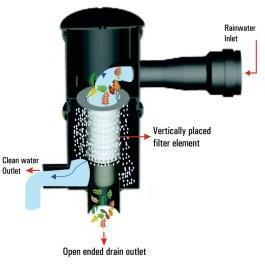
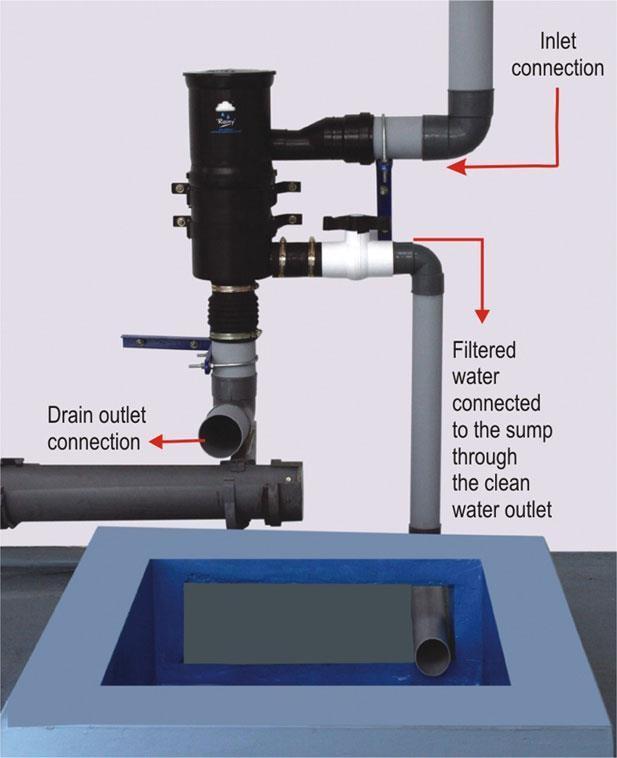
RainwaterHarvestingisatechnologyusedforcollectingand storingofrainwaterfromrooftops,thelandsurfaceorrock catchmentsusingvarioussimpletechniquessuchasjarsand pots as well as more complex techniques such as check dams.Also,harvestingsurfaceandgroundwater,prevention of losses through evaporation and seepage and all other hydrological studies and engineering inventions, aimed at conversation and efficient utilizationof the limited water endowmentofphysiographic unitsuchasa watershed. In general,waterharvestingisaactivityofdirectcollectionof rainwater.Therainwatercollectedcanbestoredfordirect useorcanberechargedintothegroundwater.Wegetalotof rainandyetwedonothavewater.Thisisbecausewehave notreflected enoughonthe valueofraindrop.Theannual rainfalloverIndiaiscomputedtobe1,170mm.InMumbai alone, we have an annual rainfall of around 2147mm. However, this rainfall occurs during short spells of high intensity.Becauseofsuchintensitiesandshortdurationsof heavyrain,mostofthefallingonthesurfacetendstoflow awayrapidly,leavingverylittleforrechargeofgroundwater. ThismakesmostMumbaiexperiencelackofwaterevenfor the domestic uses. This is because the rainwater is not conservedandallowedtodrain.Thus,itdoesnotmatterhow much rain we get, if wedon’t capture or harvest it. This highlightstheneedtoimplementmeasurestoensurethathe rain falling over a region is tapped as fully as possible through water harvesting, either by recharging it into the groundwateraquifersorstoringitfordirectuse.
International Research Journal of Engineering and Technology (IRJET) e-ISSN: 2395-0056
Volume: 09 Issue: 10 | Oct 2022 www.irjet.net p-ISSN: 2395-0072
For calculation of the potential a co-efficient is used. The valuesforthesamevarywiththetypeofroofinthesystem. Thetablebelowshowscoefficientvaluesfordifferenttypesof roof.
Table 4:Coefficientsforpotentialcalculation
Coeffic-ientValues
Flatroof 0.8 SlopedRoof 0.95 Opengroundwith Grass 0.1 Openground withoutgrass 0.3
Estimate: Table 5:Estimateforproject
1 Provision of Rain water harvesting system
i) RainyfilterFL100 1 No. 10707 10707 ii) RainyfilterFL200 5 No. 14812 74060 2 Provision of Pipes i) Collection System
a) PVCSWRPipeof 4kg/pressureof63 mm
b) PVCSWRPipeof 4kg/pressureof75 mm
c) PVCSWRPipeof 4kg/pressureof90 mm
d) PVCSWRPipeof 4kg/pressureof110 mm
9 Rmt 650 5850
9 Rmt 750 6750
75 Rmt 850 63750
9 Rmt 950 8550 Contingencies 1 LS 10000 10000 Grand Total 179667 TotalTax 6% 107800 2 TotalPrice 190447 02 Say 200000
Table 6:CostofAccessories
Sr. No Descripti on Rate (Rs.) Quantity Cost (Rs.) Remark
1 NonReturn Valve
100 15nos 1500 100*15= 1500 2 Pipe Fittings - - 9000 5%of totalcost of pipes
3 2HP Pumps 1200 0 3nos 36000 12000*3 =36000 4 Borewell Investigati on
8000/ acre 0.793 acres 7000 Areaof plot= 3194.6 sq.m= 0.793acr e 5 Borewell Drilling 100/f t 200ft 20000 Depthof borewell = 60.96m 6 Casing 320/ m 20m 6400 Onlyfor initial 20m 7 Transport at-ion LS - 20008 Flushi ngof Bore w-ell
LS - 20009 Construc ti-onof Rechar gePit
1250 00 1 12500 010 TotalcostforWaterNeutralityofG+12 residentialbuilding 400000
ThetotalcostofthesystemforG+12ResidentialBuildingis Rs. Four Lakh Only.
4. MODEL FOR DEMONSTRATION OF WATER SUPPLY SYSTEM AND RAINWATER HARVESTING SYSTEM IN A G+12 RESIDENTIAL BUILDING PRACTICING WATER NEUTRALITY
4.1 Aim of model
To demonstrate how a Water Neutrality Project can be effectiveenoughtoreducethewaterwastageandtoreduce thedisposal,andtoexplaintherainwaterharvestingsystem fortheG+12buildingusingvariousstandards.
International Research Journal of Engineering and Technology (IRJET) e-ISSN: 2395-0056
Volume: 09 Issue: 10 | Oct 2022 www.irjet.net p-ISSN: 2395-0072
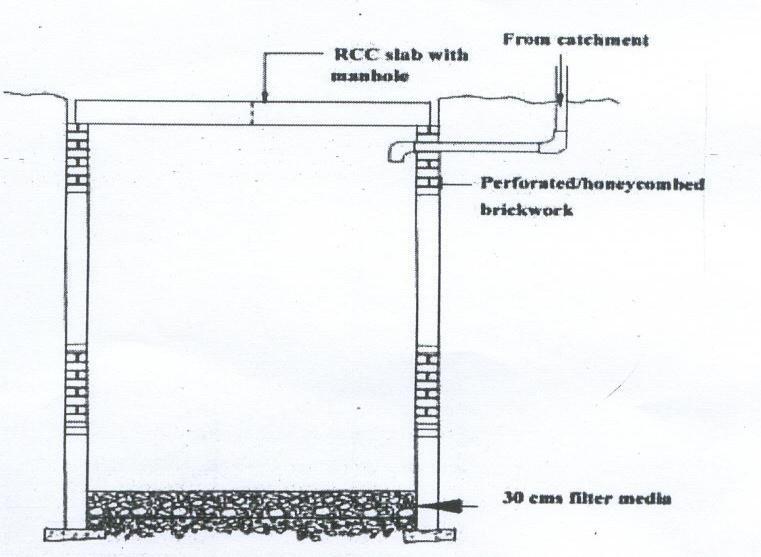
1. The model comprised of the G+12 structure including water supply system and Rainwater Harvestingsystem,withtheaimtoachieveWater Neutrality.
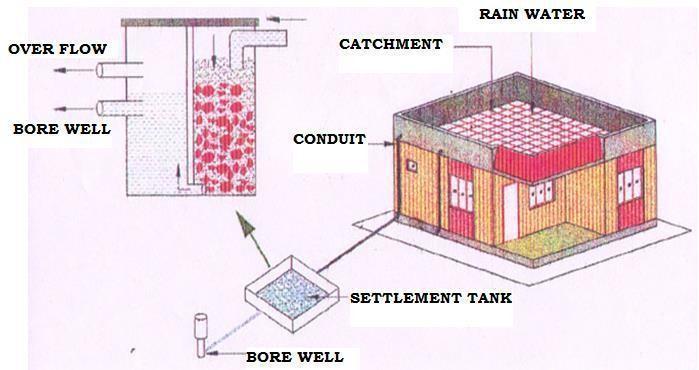
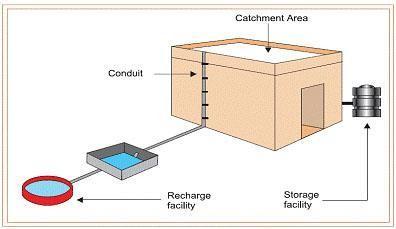
2. The model has been made in 3 parts i.e. the artificial recharge pit, part ofthestructure from ground floor to the 7th floor along with refuge area, and the last part consists of the remaining top4floors.
3. Using the detailed drawing of plan, accurate dimensionsaremarkedonthesunboardandthen cutintherequiredusingthecutter.Thescaleused was1:75.
4. All the openings were properly marked and the cut.
International Research Journal of Engineering and Technology (IRJET) e-ISSN: 2395-0056
Volume: 09 Issue: 10 | Oct 2022 www.irjet.net p-ISSN: 2395-0072
5. Thesethree parts arethen spraypainted with a darkbrownshade.
6. Similarly, other components like the overhead tank,undergroundstoragetank,andtherecharge pitwerethenaccuratelymadetothescale.
7. Wehavetriedtogiveasimplebutrepresentative looktothemodel.
8. Themodelisassembledbyjoiningthe3pieces
1. Waste water treatment for the project can be designed.
2. Recyclingofwastewatergeneratedinthebuilding canbeimplemented.
3. Automationoftheentiresystem’sworking.
4. Addsystemsorcollectedrainwateraccordingto healthconsideration.
5. Withfurtherworking,thisbuildingcouldbeWater EfficientBuilding(WEB).
6. ReuseandRecycleofGreyWater
7. The Water Footprint of the system could be calculatedandworkedon.
8. Useofothernon-conventionalsourcesofwater
WaterEfficientBuildingencompassesthefollowing:
1. A harmony with the natural features surroundingsite
2. Minimize use of water in construction andbuildingpremises
3. Reuse and Recycle of waste water generated
4. Useofplantswhichneedsminimumorno water
5. AdoptsRainwaterHarvestingstructures to recharge ground water during monsoonanditsefficientuse.
Conventionalsourcesofwater,supplementingregular sources, shall be practiced.These are useful even in crisisperiod.Someofthemare:
1. Rejuvenatingofolddiscardedsources.
2. Useifrecyclewater.
3. Rechargingofgroundwateraquifer.
4. Useofwatersavingdevices.
5. Useoflesswaterconsumingflushtanks.
6. Useofflowtaps/showers.
Withthismodelweaimtodemonstratethat‘AchievingWater Neutralityisanimportanttasktoconservethewaterandto
fullyusethesuppliedwaterwithzeroliquiddischarge.Itis alsoimportant to know that this is only a demonstration model,aimedatroughlyshowingapartofwaterneutrality and how it can be achieved. It must not be considered as standard.
1. As the water crisis of the country is becoming criticalatanalarmingrate,wethoughttherewasa needtofindasustainablesolutiontothisproblem
2. We have tried our best to give many solutions to minimizethewastageofwater
3. Wehavetriedtouserainwatertoitsfullpotential andreducesurfacerunoff.
4. We have tried to bring about awareness about relatively new concepts like water neutrality amongthepeople
5. Mainly because of increasing water scarcity and increasingdemandsonafinitesupplyoffreshwater, thereisneedtoadoptsomealternativeandfinda sustainablesolution. Therefore,thisneutralization methodwillhelpustoachievethesame withthe helpofRainwaterHarvesting
1. Victoria Ashton, Simon Gordan (October 2009), “DeliveringWaterNeutrality-MeasuresandFunding Mechanisms-EnvironmentAgencyReview”,United Kingdom.
2. Prof. T.I. Eldho, IIT Bombay, “Rainwater Harvesting and Sustainable Water ManagementTheoryandpractice”.
3. Prof. T.I. Eldho, IIT Bombay, “CEP short term course on Rainwater Harvesting andSustainable watermanagement”.
4. Prof. T.I. Eldho, IIT Bombay, “CEP training programmedonUrbanRainwaterHarvesting”.
5. GSFC Science Foundation Environment (2003), “ManualofRainwaterHarvesting”.
Prof. Santosh Kumar Garg (2011), “Water supply Engineering”.
6. Prof.SubhashM.Patil(2012),“Buildingservices”.
7. Centre for Science and Environment, New Delhi (May2008),“Do–It-YourselfRecycleandReuse”.
International Research Journal of Engineering and Technology (IRJET) e-ISSN: 2395-0056
8. Centre for Science and Environment, New Delhi (May 2008), “Water Harvesting Manual forUrban Areas”.
9. Nandan Abhishsek, Purnima Singh (2015), Researchjournalofengineeringandtechnology.
10. American society of civil engineering (1908ongoing),Journalofwaterresourcesplanningand management-ASCE.
11. Kluwer academic publishers (2008-ongoing), Journalonwaterresourcesmanagement.
12. JournalsofINDIANWATERWORKSASSOCIATION:
i) Volume-XXXVII No. 1, Pg 71, January-March 2005
ii) Volume-XXXXVIINo.3,Pg474,July-September 2015.
iii) Volume-XXXXVI No. 4, Pg 231, OctoberDecember2014.
iv) Volume-XXXXIVNo.1,117,91,April-June2012.
v) Volume-XXXXII No. 1, Pg 26, January- March 2010.
Volume: 09 Issue: 10 | Oct 2022 www.irjet.net p-ISSN: 2395-0072 © 2022, IRJET | Impact Factor value: 7.529 | ISO 9001:2008 Certified Journal | Page615