International Research Journal of Engineering and Technology (IRJET) e-ISSN: 2395-0056
Volume: 09 Issue:10 | Oct 2022 www.irjet.net p-ISSN: 2395-0072

International Research Journal of Engineering and Technology (IRJET) e-ISSN: 2395-0056
Volume: 09 Issue:10 | Oct 2022 www.irjet.net p-ISSN: 2395-0072
Under the guidance of Mrs.VandanaSoni, assistant professor of Shah & Anchor Kutchhi college of engineering. ***
Abstract - Orientation is still a focal component of our character. In our public activity it’s likewise a huge component. Knowledge age predictions have various applications, including but not limited to: the creation of cutting-edge human-machine interfaces; the healthcare andcosmeticsindustries;electroniccommerce;andmany more. Research into the feasibility of determining a person'ssexandageonlyfroma photographoftheirface is an active and developing field of study. Experts have proposed a variety of solutions to this problem, however current models and actual implementation fall short. In this work, we propose using the methodology of recognizing genuine examples to address the problem. The proposed layout makes use of the Deep Learning calculation known as Convolutional Neural Networks (CNN/ConvNet) to extract data. CNN takes in images and assignsvaluestodifferentpartsoftheimageaccordingon what iextras (based on learnable loads and predispositions). Verifies to previous characterization computations, CNN needs far less time spent in preprocessing. Although the channels are hand-made using rudimentary methods, CNN can be trained to recognize and use them effectively. People's ages and sexes have been predicted with a high rate of progress usingconvolutional neural networkstrainedonimages of human faces prepared for this study. In excess of 20,000 pictures are containing age, orientation also, nationality comments. The pictures cover an extensive variety of presents,look,lighting,impediment,andgoal.
Key Words: Facial Pictures; Convolutional Neural Network; Orientation.
Thegoalistolookintothefutureandpredictwhenpeople willuseimagedatabasestogetinformation.Anincreasing number of users, especially in light of the proliferation of social networks and online entertainment, are concerned about automated age discrimination. When it comes to making friends, age and orientation are two of the most telling facial characteristics. Access control, humancomputer interface, authorization, marketing knowledge, visual management, etc. are just a few of the many hightech areas where being able to tell someone's age from a short photograph is vital. Popular AI methods for this purpose include deep learning, image recognition, and controlled learning, all of which need a complex network of neural connections in the brain. As a form of artificial
intelligence(AI),directedlearninginvolvesarrangingdata in the form of input-yield pairs with an eye toward a desired outcome. TensorFlow is a widely-used useable frameworkintherealmofartificialintelligence(AI).
Calculation, data flow, and overt artificial intelligence. When it comes to computing the extraction of features from images, the Convolutional Neural Network (CNN) is among the most well-known algorithms. age-based clusteringwithconvolutionalneuralnetworks:
DeepLearningcomputationssuchasConvolutionalNeural Networks (ConvNet/CNNs) make it possible for a single data image to stand in for multiple opinions or protests (learnable loads and predispositions). ConvNet requires far less preparation than standard characterising calculations. Despite the terrible hand-made approaches employed by the channels, ConvNets can be trained to become proficient with these highlights. The study of the visualcortexinspiredthedevelopmentofConvNets,which mimicthebehaviourofhumanneurons.TheOpenFieldis alimitedregionofthevisualfieldinwhichonlyindividual neurons respond to enhancements. Protection for the entire visual field can be calculated using these fields. UTKFace'suseful indexisbasedona massivefacedataset that includes people of all ages (0116 years). The dataset contains over 30,000 facial photos annotated with information such as age, orientation, and nationality. The photographs depict a wide range of attitudes, appearances, lighting conditions, difficulties, and achievements. There are a wide variety of potential applications for this technology, including face recognition, age estimation, tracking demographic shifts, pinpointing the location of popular tourist destinations, and more. An agediscovery network of the brain's organisation has been constructed using picture datasets toinformthisstudy(CNN).Theissuecanberestatedasan orderconcernifthenetworkconsistsofthreeconvolution layers, two completely linked levels, and a final result layer. Assessing a patient's age at relapse is a very interactive process. Because of the importance of its modulesanduseinseveralPCvisionapplications,suchas human-computer collaboration, health care systems, and visual monitoring, the market for age prediction frameworks has been rapidly expanding in recent years. Several models demonstrate the usefulness of an age prediction. You have to be a specific age to legally purchasealcohol,driveacar,goonaninternationaltripby yourself, smoke cigarettes, and other similar activities.
2022, IRJET | Impact Factor value: 7.529 | ISO 9001:2008 Certified Journal |

International Research Journal of Engineering and Technology (IRJET) e-ISSN: 2395-0056
Volume: 09 Issue:10 | Oct 2022 www.irjet.net p-ISSN: 2395-0072
Still, the problem with age prediction is that human bounds are inadequate and problematic. That's why it's crucialtohavecomputervisionsystemsthatcanfilterout minors. Already, computerised age and orientation expectation frameworks are being used in a wide variety of settings, including hotels, airports, transportation services, clubs, government buildings, universities, hospitals, urgent care centres, movie theatres, and more. Medical systems, data retrieval, educational assessments, and Electronic Customer Relationship Management (ECRM) are just a few other examples of where age predictionmethodshavefoundusefuluse.Thereisawide range of ages represented in the board's (ECRM) user base.
The information gleaned from customers' day-to-day activities, such as their habits, preferences, rituals, wants, etc.,couldhelpbusinessestargettheirofferingstocertain age groups, thereby increasing revenue. Apparel stores that sell men's or high clothing according on their customers' ages, restaurants who want to know which entrees are most popular with clients of a certain age range,andsoonallbelievethatadvertisingtocertainage groupsiseffective.
A similar architecture for age prediction was introduced byIshitaVerma[2].BypreferringCNNoverRNN.Another engineering for face picture arrangement named as the unaided CNN was presented by S. U. Rehman [3]. By integrating CNN with other modules and computations, it is possible to create a network capable of performing several tasks, such as facial location and localized grouping. In [4], N. Jain developed a model that combines the power of convolutional neural networks (CNNs) with that of recurrent neural networks (RNNs) (Intermittent Brain Organization). The model's focus is on the global effect of facial positioning. MI Both the Look and JAFFE datasets were used to test and measure the model's performance. For structuring the environment with limiteddata,G.Levi[5]suggestedaconvolutionalnetwork design.
The model was built with the help of the Crowd Benchmark. S. Turabzadeh [6] proposed a framework in whichacontinuouslyprogrammedlookframework might be mapped out. As a first step in developing a one-of-akind gaze detection chip for a social robot, it was implemented and tested on an existing device. The initial framework was constructed and replicated in MATLAB, and then an existing framework was modified to suit the needs of the project. N. Srinivas et al. examined the difficultiesofimplementingprogrammedexpectationageappropriate, orientation, and identity on the East Asian population using a Convolutional Neural Network (CNN). A fine-grained country's future is predicated on a precise
classification of its citizens (Chinese, Japanese, Korean, and so on.). Based on historical data, it appears that determininganindividual'sprecisenationalityisthemost fundamental job, followed by estimating their age and, last, their orientation. A. Dehghan[7] presented a comprehensive brain-organized robotic recognition framework for age, direction, and emotion. In a study presented at the ImageNet LSVRC-2010 competition, A. Izhevsketal.[8]suggestedsegmenting1.2millionimages into 1000 distinct classifications using a sophisticated Convolutional neural network. Results indicated that directed learning can achieve high levels of accuracy. It hasbeenshownthatcertaindatasetscontainannotations on the accompanying face photos that are not helpful for facial recognition. Although RNN has been used in some previous works, this technique is irrelevant to our objective because RNN can only take text or discourse as input, whereas we were hoping to use images instead. Consequently, we have decided to use CNN rather than RNN for this task. While there is some support in the literature for using unsupervised CNN, supervised learning is the preferred method in this case. The UTFace datasetwillbeusedinthisstudy.
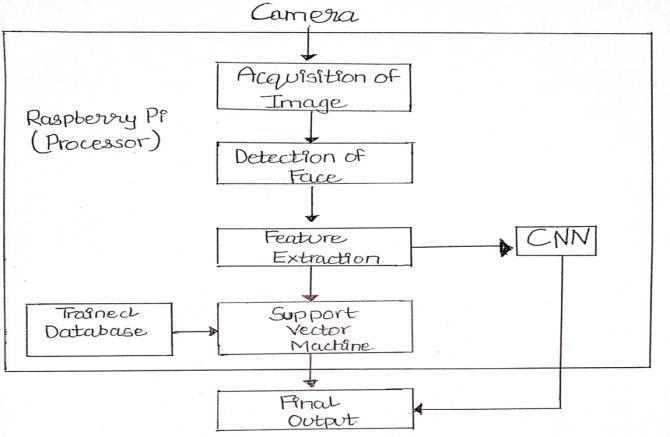
We'll use convolutional neural networks to engineer the brains of the organisation in order to predict the future (CNN).The3convolutionallayersand2stackedontopof eachotherresultlayermakeupthisCNN.
Instead than letting this recur as a problem with the established order, it can be figured out. Relapse is a difficult method for determining an exact age. One's age cannot be determined simply by observing the face. Therefore, we will try to predict the age inside a certain window, say, between the ages of 20 and 40. A single photograph can't tell you anything about the myriad factorsthatgointodeterminingsomeone'sage.
2022, IRJET | Impact Factor value: 7.529 | ISO 9001:2008 Certified Journal |
International Research Journal of Engineering and Technology (IRJET) e-ISSN: 2395-0056
Volume: 09 Issue:10 | Oct 2022 www.irjet.net p-ISSN: 2395-0072
Agelocationis the course ofnaturallyknowingthe age of an individual exclusively from a photograph of their face. Regularly,you'llseeagelocationcarriedoutasatwostage process:
1. Stage #1: Distinguish faces in the info picture/video transfer.
2. Stage #2: Toestimateaperson'sage,wemayfirstget rid of the face AOI and then use the age identifier equation.
In Step 1, you can use any tool that can locate faces in an image and draw bounds around them for leaping. After receiving the face's location in the image or video stream asaseriesofbouncingboxes,thenextstepistodetermine thesubject'sage.
• NUMPY: When it comes to numerical and logical figuring and information handling in Python, the NumPy module is the most essential but powerful option. This library is available freely and written in Python.
• PANDAS: Dataprocessingandanalysisareperformed using the Pandas package. To read and write Excel files, CVs, and do other manipulative tasks is supported.
• OPENCV: OpenCV is a free and open-source presentinglibraryforhigh-levelimageprocessingand computervision.
• MATPLOTLIB: The Python programming language and the numpy math library include a graphing packagecalledmatplotlib.
• OS: The operating system module in python gives an approachtoutilizingworkingframeworksubordinate usefulness
• PIL: Python'sPictureInteractionLibrary(PIL)isused for managing images. With the aid of this library, we may access images in a dataset and modify their dimensions.
• SCIPY: Various tools for optimization, linear algebra, integration,andstatisticalanalysisareincludedinthe SciPypackage..
• X KERAS: Keras is a free and open-source Python programming interface for high-fidelity neural networks.Itmakesrapidprototypingeasyandfast.
• TENSORFLOW: Data-flow and differentiable programming are just two of the many uses for the Tensorflow open-source package. It has applications inseveralbrainstructures.
• Image Processing: Theterm"pictureprocessing"refers toasetofproceduresthatmaybeappliedtoanimagein order to either enhance it or strip away irrelevant information.It'samethodofdealingwithsignsinwhich an image serves as a symbol for information and the output might be another picture or a set of characteristicsorhighlights associatedwiththeoriginal. One of the many rapidly evolving advancements in recent times is photo processing. It also serves as a pivotalresearchhubforthefieldsofdesignandsoftware development.Basicstepsinimageprocessingincludethe oneslistedbelow:
Tools for acquiring images, analysis, and storage managementforimages.Togenerateanimageor report usingimageanalysisinawaythat permitsacustomizable result.
To be more precise, two methods simple and computerized are used for photo management. Simple image manipulation may be used for printing and photographs. Researchers that rely on visual approaches use a variety of translation fundamentals. The use of PCs and sophisticated photo processing techniques allows for complete command of all digital images. When using a cutting-edge method, there are three primary steps that any and all data must take: pre-handling, development, andpresentation.
Computer Vision: PC vision, or computer vision, is a subfieldofartificialintelligencethatteachescomputersto recognise and understand images. With the use of advanced learning models and digital images from cameras and recorders, computers may soon be able to properly recognise and classify objects and react accordingly.
•
•
•
•
2022, IRJET | Impact Factor value: 7.529 | ISO 9001:2008 Certified Journal | Page1094
International Research Journal of Engineering and Technology (IRJET) e-ISSN: 2395-0056
• Libraries: Numpy, pandas, math, cv2, matplotlib, seaborn, os, Image, scipy, sklearn, kerasandtensorflow.
Anaconda Navigator: Anaconda is an open-source software that combines the Python and R programming languagesforstatisticalanalysiswiththegoalofmakingit easier for both programmers and administrators to transmit and receive code (computer and artificial intelligence application; large-scale data processing; foresightresearch;etc.).
Jupyter Notebook IDE: Jupyter Note-book is a free, opensource program that lets you create and share documents that include running code, data, user comments, and narrative. Other features of the IDE include data cleaning and transformation, mathematical simulation, factual demonstration, data perception, and manymore.
Steps to follow:
1. IdentifyingfacesusingtheHaarcascade
The vast majority of us have been generally aware of this portion. When it comes to facial recognition, OpenCV provides straightforward methods for importing Haar cascadesandusingthem.
Age estimation is performed using CNN's computational methods. This CNN uses a result layer (likelihood layer) with 5 characteristics representing 5 age groups. ("1-14", "1425","25-40","40-60","60-").
• To begin, we use os.chdir() to navigate to the directory containing our picture dataset. Next, we call os.listdir() togetarankedlistofallthedirectoriesandfilespresent inthisdefaultlocation.•Alloftheavailablepicturefiles canbesortedatrandomwithshuffle().
• Using the split() function, the photos' ages can be determinedandsavedintheagevariable.
• Under-14sarerecordedas0,between-14and25yearolds as 1, between-25 and 40-year-olds as 2, and between-60and60-year-oldsas4.
• Using misc.imread() and cv2.resize(), we read a picture from each record as an exhibit, reduced the size of the
images to 32x32, and then stored them in a list called exhibits.Xdata.
• The X coordinates of display objects with a single layer are retrieved using the press() function and stored in a variable.
•Next,wefilteroutextremevaluesbycastingXtofloat32 and inserting a 255 decimal separator between its components.
• The model's accuracy is increased to 0.6170588 after beingtestedonthevalidationset.
• At this time, we have a model that can accurately determinetheageofanyout-of-the-ordinaryphotoinour dataset.
• We map out a biased sample of 10 test images together withpredictedgradesandtheactualresults.
• The outcome is achieved by displaying the images with theirrespectivetitles.
KerasisusedtomanageTensorflowinthistask.Kerasisa free software library for creating neural networks. It works with convolutional neural networks (CNN) and is userfriendly because to the inclusion of reenactment tools, layers, enhancers, and more. Using the right Keras class and the JVM, sophisticated learning models may be constructed for iOS and Android (Java Virtual Machine). Keras allows the model to make arbitrary inputs and standardisation actions on large amounts of image data, thanks to capabilities like level shift, width shift, pivot range, rescale, shear range, zoom range, flat tear, and fill mode.. Pivot, interpret, resize, and zoom in/out, apply shearing modifications, tear images uniformly, fill in newlyproducedpixels,andsoonareallpossiblebecause to the framework's dynamic nature. To fine-tune the classifier's hyper-boundaries, we use a dataset with preestablished quality standards. It is crucial to have a validationdatasettoassistreduceoverfitting.Thedataset forapproval canbeusedindependentlyofthedatasetfor preparation.
Test Dataset:Theobjectiveofthetestdatasetistoassess the classifier's or model's accuracy, loss, and selfawareness.Itdoesn'trequireanypriorplanningorofficial stampofapproval.
In software design, a framework test is a kind of integration test that verifies the whole program. A framework test'spurposeistoevaluatethecompleteness oftheframework'swork.Generally,theproductismerely a single component of a wider PC based architecture. Finally, integration with other systems of code and hardware has been completed. In reality, framework
Volume: 09 Issue:10 | Oct 2022 www.irjet.net p-ISSN: 2395-0072 © 2022, IRJET | Impact Factor value: 7.529 | ISO 9001:2008 Certified Journal | Page1095
International Research Journal of Engineering and Technology (IRJET) e-ISSN: 2395-0056
Volume: 09 Issue:10 | Oct 2022 www.irjet.net p-ISSN: 2395-0072
testing is a battery of tests designed to mimic the PCbasedframeworkinitsentirety.
• The goal of the evaluation dataset is to measure the classifier's or model's precision, loss, and metacognition. There is no need for formal approval or foranyonetoputinanyprepwork.
• Variations in shape: One picture had a shape (66,46)thoughotherhad(102,87).
• Multiple viewpoints: We have faces that can portrayeverypossibleangle.
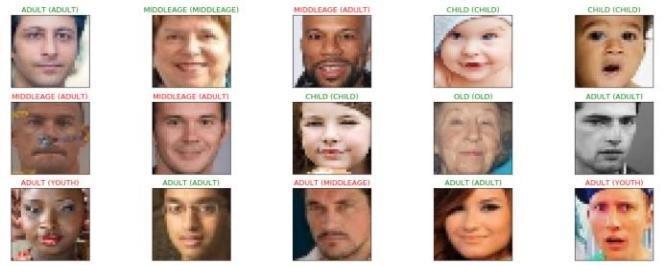
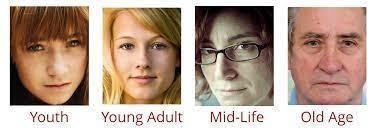
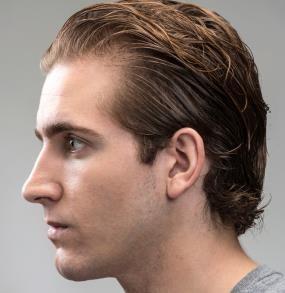
• Theframeworkistriedinviewofthemultitudeof potential points of pictures and issues which might happen. The suggested framework performs superbly underthedetailedtestingcircumstancesoutlinedabove.
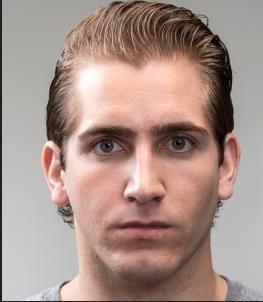
TEST CASE 1: front view
TEST CASE 2: side view
The suggested model is durable since it was developed carefully and without flaws. Overall, we believe the model's accuracy is adequate and superior to many other currentmodels,butitmaybefurtherenhancedbytheuse of more data, information increment, and superior organizational architecture. Predicting the picture's age using the task model yields similarly little variations in slipandpointproblems.Therewasnotenoughtrustinthe fully automated facial recognition system for it to reach highaccuracy.Themainreasonforthiswasthatthefaceperceiving system showed no invariance to faults in the fragmented facial image caused by changes in size, pivot, orshift.Thisventurepermitsustogethelpfulinformation about various points, for example, profound learning, the utilization of various libraries like Keras, Pil, Seaborn, Tensor-flow.Thewholeconceptissafe,andwe'velearned a lot about project development and teamwork in the process. We have also learned how to conduct tests of various venture components. For us, the greatest reward ofourendeavorhasbeentherealizationofaconceptthat hasthepotentialtopromotepositivechangeandimprove people's lives. With regards to our mission, there is more than enough room for unexpected developments. For the purposes of access control and verification round, fantastic techniques such as iris or retina recognition and facial acknowledgment are implemented due to the demand for extreme precision. It is anticipated that the framework for programmed continuous data will be particularly well-suited to use in conditional control. Methodsforlocatingandrecognizingfacesthatarerobust under change. Manual face location and a computerised
International Research Journal of Engineering and Technology (IRJET) e-ISSN: 2395-0056
acknowledgment framework is great for the mug shot matching, while the fully automated face discovery and acknowledgment framework (with an eye-shoot identification framework) might be utilised in simple observation applications like ATM client security. Little extra study and tweaking of the current architecture would be needed to adopt an eye-discovery method. Any remaining techniques have shown great outcomes and depend on the deformable model and principal part investigationprocedures.
1. To begin, visit https://www.kaggle.com/agegroupclassification-usingcnntogetthedataset.
2. Age Estimation from an Image Dataset with the Aid of Machine Learning, Reference: Ishita Verma, Urvi Marhatta, Sachin Sharma, and Vijay Kumar, "International Journal of Innovative Technology and Exploring Engineering"(IJITEE),2019.
3. 2016, Third IEEE International Conference on Online Analysis and Computing Science (ICOACS). Face recognition: A Novel unsupervised Convolutional Neural Network Approach, S. U. Rehman, S. Tu, Y. Huang, and Z. Yang.
4. IEEE International Conference on Automatic Face and Gesture Recognition, 2017, Paper No. 4, Predicting Age, Gender, and Fine-Grained Ethnicity Using ConvolutionalNeuralNetworksfortheEastAsianFacial.D. S. Bolme, K. Ricanek, G. Mahalingam,B. C. Rose, and N. Srinivasaretheotherfourauthors.
5. The Fifth Generation of Hybrid Deep Neural Networks for Facial Expression Analysis, M. Zareapoor, P. Shamsolmoali, N. Jain, S. Kumar, and A. Kumar. 2018.PatternRecognitionLetters.
6. Age and gender classification with convolutional neural networks, IEEE Conference on Computer Vision andPatternRecognition(CVPR),Boston,2015.G.Leviand T. Hassner, IEEE Workshop on Analysis and Modeling of FacesandGestures(AMFG).
7. S.Turabzadeh,H.Meng,R.M.Swash,M.Pleva,and J. Juhar presented Realtime Emotional State Detection From Facial Expression On Embedded Devices at the Seventh International Conference on Innovative ComputingTechnology(INTECH)in2017.
8. Eighth, A. Dehghan, E. G. Ortiz, G. Shu, and S. Z. Masood, "Dager: Deep Age, Gender, and Emotion Recognition Using Convolutional Neural Network," preprintarXiv:1702.04280,2017.
Volume: 09 Issue:10 | Oct 2022 www.irjet.net p-ISSN: 2395-0072 © 2022, IRJET | Impact Factor value: 7.529 | ISO 9001:2008 Certified Journal | Page1097