International Research Journal of Engineering and Technology (IRJET) e-ISSN: 2395-0056

Volume: 09 Issue: 10 | Oct 2022 www.irjet.net p-ISSN: 2395-0072
International Research Journal of Engineering and Technology (IRJET) e-ISSN: 2395-0056
Volume: 09 Issue: 10 | Oct 2022 www.irjet.net p-ISSN: 2395-0072
1
1Dept of Information Technology, National Institute of Technology Karnataka, Surathkal ***
Abstract - Today’s world is growing rapidly making human life easier than it already is with every passing moment. Creating a smart cart that takes care of comfort & smart interaction while shopping is one more step taken in the same direction. A supermarket is a place where customers visit to purchase their day today using products and pay for that. The smart shopping cart explores the minicomputers and automatic identification technology. Instant billing without queuing and keeping track of the expenditure is the main motive of this intelligent cart. The aim is to reduce the time spent in the shopping mart and to make shopping of day-to-day items an interactive experience instead of a headache. In this system, every product in the store will have a unique RFID tag, and every cart which customers use will be having RFID Reader attached to it, and customer should have our app installed in their mobiles. It helps the consumers to utilize the time saved in other activities instead of wasting their time by standing in long queues at the checkout counter.
Key Words: Smart shopping cart, RFID, firebase, celery, RabbitMQ-server.
The shopping and grocery industry sector is highly importantforsociety.Wehavewitnessedstandinginlong queues in the supermarket that takes most of our time. During shopping, consumers may encounter many problems like worrying on the bill amount, is it not sufficient,incompleteinformationabouttheitemstheyare purchasing. Other than this they must select the best product out of variety of similar products available. Also, theownerwantstorevolutionizetheshoppingmechanism in the supermarket or store to attract number of customers and reduce the labour cost. Furthermore, the unavailability of exact change during exchange starts another round of loitering. The recent evolution in technology and people’s understanding towards the technical advancements have made it possible to develop comfort in the shopping industry. We are aiming to developanautonomousshoppingcartwhichisconnected tomobile.
In the market there are similar solutions to this. Developers have made a similar cart with remote capabilities which can automatically fetch the desired itemsfrom thesuperstore whilethecustomer issittingin lounge and other one is a similar shopping cart with a tabletattachedtoit.Eventhoughthesearegoodsolutions
buttherearenotcosteffectiveanduserattachmentisnot greatinthesesolutions.
IntherecentyearswehavewitnessedtheinterestinRFID and supporting technologies to identify products. Similar technologycanbeappliedhereforuniqueidentificationof each product in the supermarket. Rapid growth in RFID technology is making impact on many sectors and has a good influence on industries. As the working of RFID is wireless, RFID makes the conventional retail process fast, transparent,andefficient
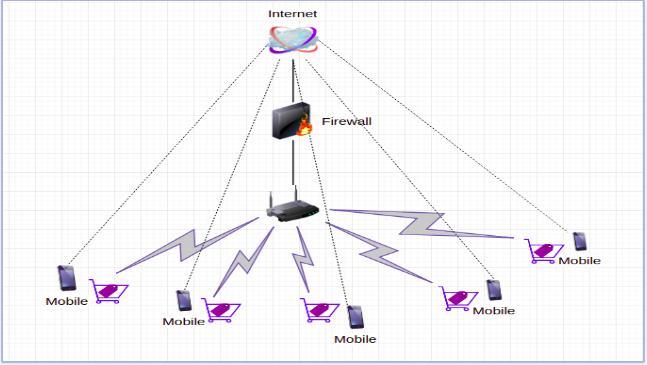
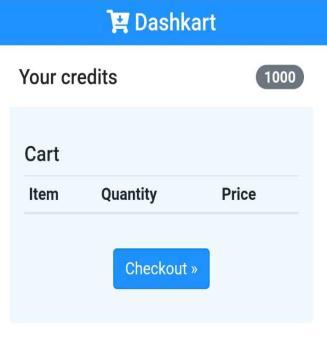
EveryproductinstorewillhaveaRFIDtag,andeverycart will be having RFID scanner/reader attached to it. The RFID reader are non-contact sensors that can read over a considerable distance. When the customer enters the store, he/she should open our web-app which will be connected to the shopping cart through valid credentials. Theitemscanbeaddedjustbydroppingtheitemintothe cart,thereaderreadsuptheRFIDtagattachedtotheitem. Removing the item from the cart which can be done by taking it out of the cart which has the RFID tag attached withit.Theseactionsaredisplayedintheweb-app,sothe customer can know the items currently in the shopping cart in real-time. The cost of each item dropped into the cart is displayed along with the quantity of each item purchased.
Theweb-appwhichwillbeinsyncwiththeshoppingcart andwillgetupdatedinreal-time.
Weusethereal-timedatabaseofFirebasetofacilitate our process of displaying the items in real-time. During the processofshoppingthecustomercanseethetotalcostof the products in cart in mobile and then can stop or continue shopping based on the budget available. When the cart reaches the exit of the mall, the application redirects to the payment gateway or deducts the amount fromthewallet.
This Smart shopping cart mainly focuses on the user interaction with the cart during shopping. In the market there are no existing solutions like the shopping cart connected to mobile which displays purchased items in real-time. Further development in the app can make the interactionbetterandcaneliminatethehelperintervening in the shopping process. This paper consists of the methodology of the implemented product, real-time and resultanalysis,andlimitationsofthesmartshoppingcart.
International Research Journal of Engineering and Technology (IRJET) e-ISSN: 2395-0056
Volume: 09 Issue: 10 | Oct 2022 www.irjet.net p-ISSN: 2395-0072
Microcontrollerbased Attendance Management system
International Journalof Engineering and Innovative Technology (IJEIT) Volume5, Issue10,April 2016
AttendanceMonitoring System(AMS)helpsusto controllaborcosts, minimizecompliancerisk, andimproveworkforce productivity.Itisalso reducestheadministrative timeassociatedwith attendanceexceptionsand employeeinquiries.
AttendanceManagement Systemisproposedusing RadioIdentification(RFID) Frequencytagand fingerprintreader.The systemtakesattendance electronicallywiththehelp oftheRFIDandfingerprint device.
When we visit a supermarket for shopping, we spend enough time in selecting the right product, after that we spend even more time in standing in queue for billing at the checkout counters. In the case of weekends or during festival seasons when everyone come to shop, we have to wait even more due to the heavy crowd. To eliminate waitingtimeandhavegreaterinteractionduringshopping we need a smart shopping cart to eliminate all these problems.
Update web-app when item is inserted or removedfromthecart.
Displaycartitemsinrealtime.
Automatic billing when cart moves out of the shop.
Ingenious ShoppingCart: RFIDEnabled Automated Billingusing Raspberry-pi
International Journalof Computer Scienceand Mobile Computing, Vol.5Issue.5, May-2016, pg.209-214
Thepaperisbasedon developmentofaproject withtheaimtoreducethe timespentinthestoreand tomakeshoppingofdayto-dayitemsanexperience insteadofaheadache.This cartusesmodernand cheaptechnologylikeRFID andminicomputersto makeitintelligentandtime saving.Ithelpsthe consumerstoutilizethe timesavedinotherfruitful activitiesinsteadofwasting theirtimebystandingin longqueuesatthe checkoutcounter.
Raspberry-pi Image Processing Based
Economical AutomatedToll System
GlobalJournal ofResearches in Engineering Electricaland Electronics Engineering
Implementationofimage processedtollsystemsare onlylimitedinsomeplaces. Acamerawillbeusedto takepictureofthevehicle's nameplatetosortthetoll chargeaccordingto vehiclescategory.Along withmultipleautomatic tollstakingbooththerewill beamanualboothwith operatoralsowhowill handlethosevehicles whichexperienceissues withanyoftheautomatic tolltakingbooth.
1. ThetotalsystemwasbuiltonAgilemodel.
2. Initially the requirements were noted along withthedependenciesrequired.
3. Survey was done for the required components.
4. As every item in the supermarket requires a RFID tag, we have to choose a tag which is costeffective.
5. As every cart in the supermarket requires a RFID reader, we have to choose a reader whichhasthecapabilitytoreadmultipletags and read over a distance equal to the size of thecart.
International Research Journal of Engineering and Technology (IRJET) e-ISSN: 2395-0056
Volume: 09 Issue: 10 | Oct 2022 www.irjet.net p-ISSN: 2395-0072
6. Every customer to use the produce must possess an app built by us to use our shoppingcart.
7. Customerhastoopentheappbeforeentering thesupermarketandscantheQRcodeonthe shoppingcartinordertosyncwiththecart.
8. Theshoppingcartmustbecapableofreading multipletagsandsoftwareadjustmentshasto bemadeforthisfeature.
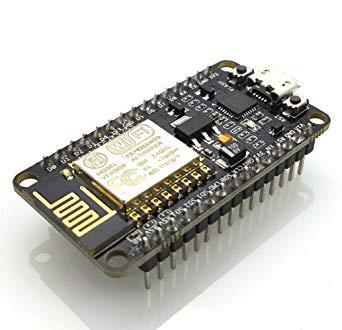
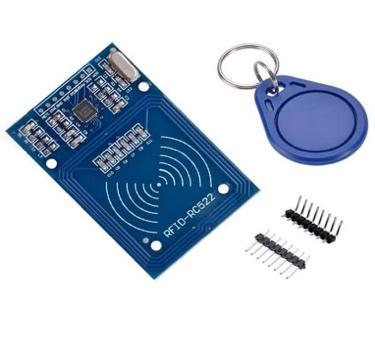
1. Interfacing of NodeMCU and RFID scanner is doneusingthejumperwires.
2. Interfacing between the App and the NodeMCUusingfirebase.
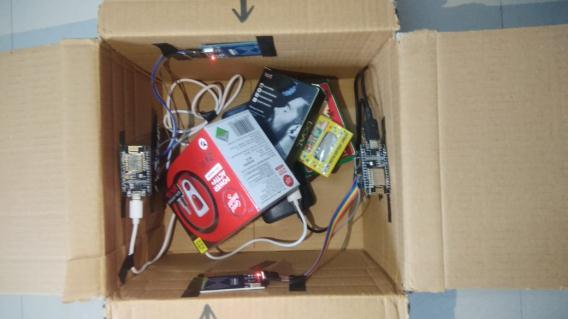
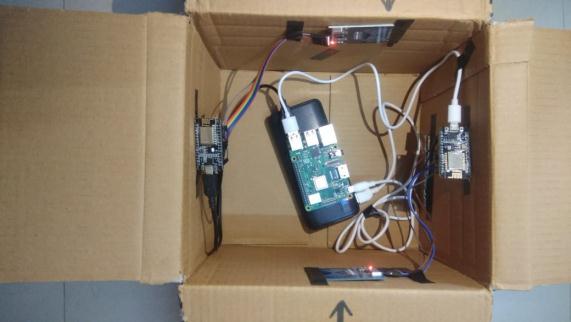
3. Two NodeMCU's are connected to Raspberry Pi for processing and sending the data to firebase.
4. NodeMCU is programmed to connect to a local Wi-Fi network and RFID reading capabilitythroughArduinoIDE.
5. NodeMCUdatacanbereadintotheraspberry piwiththehelpoftty0(aterminalforreading andwritingdata).
6. Pyserial module in python is used to read commandsfromNodeMCU.
7. Raspberry pi is also connected to the local WIFI network, which runs the server to send the data read through RFID readers into the firebaseserver.
8. When an item is pushed into the firebase, we have to wait till we get an ack message, then only we can send the next item. In our scenario as many items could be added/removed at once we have to maintain a task queue to store all the requests and executeeachtaskonebyone.
9. To avoid errors in pushing data to cloud, we use an asynchronous task queue Celery, which puts the tasks in queue and executes eachoneindependently.
10. To facilitate the Celery queue a broker called Rabbit MQ is used, which connects the backendtoCelery.
11. Only the item ID is sent to the firebase database.Whenitemisreceivedintheapp,it
is matched with the local database which containsallthedetailsofalltheitems.
12. Then both the Raspberry, NodeMCU and the RFID scanner are powered up using an USB cablewhichcanbeseenbyblinkingofLEDin bothofthem.
13. ThenoncetheentirecircuitismadetheRFID tags are kept near the RFID scanner for scanning.
14. As soon as the scanning takes up, module whichisrunningonRaspberryPidisplaysthe IDoftagswhicharescannedandlikewisewe can see the product getting displayed in our shoppingapp.
15. This can be done multiple times and finally thetotalamounttobepaidbythecustomeris displayedonthescreenalonglistthelistofall theproductsandtheirrespectiveprices.
16. If wewant to remove the product in the cart, we can just remove it, as it is scanned before once inserted, if the same item is scanned againmeansitisremovedfromthecart.
17. After successful shopping customer moves out of the shopping complex and the app redirects into any payment gateway (Paytm, Phonepayetc.)whichthecustomercompletes thepayment.
Thus, these above-mentioned steps delineate the detailed working and methodology adopted in our project which enables any customer to experience a smart shopping experience without interacting with any employee in the supermarketorthestore.
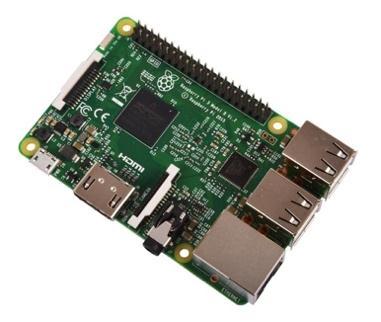
Raspberry Pi - This contains the Rasbian OS for runningtheprograms.
International Research Journal of Engineering and Technology (IRJET) e-ISSN: 2395-0056 Volume: 09 Issue: 10 | Oct 2022 www.irjet.net p-ISSN: 2395-0072


International Research Journal of Engineering and Technology (IRJET) e-ISSN: 2395-0056
Volume: 09 Issue: 10 | Oct 2022 www.irjet.net p-ISSN: 2395-0072
Casewhenitemisremovedfromthecart
Requires continuous power supply and proper WiFiconnection.
Since the app and cart works in real-time the overalltimedelayisaround1.5-2.0seconds.
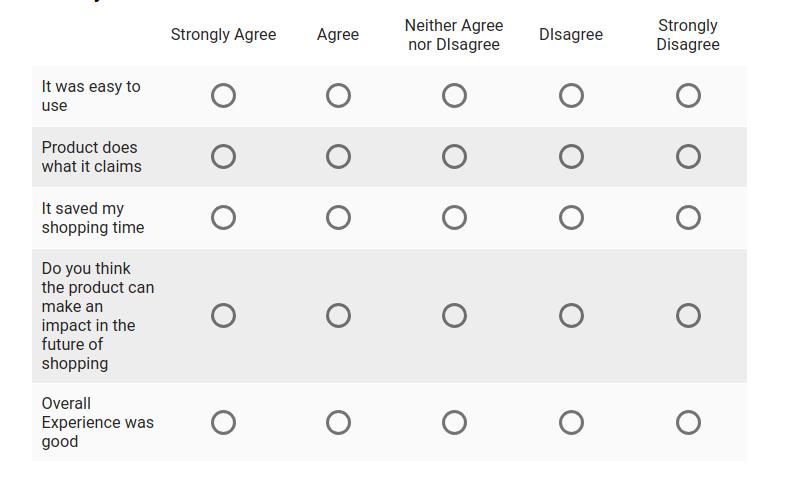
Questionnaireaskedtovarioususers.
ResultsobtainedfromtheQuestionnaire.
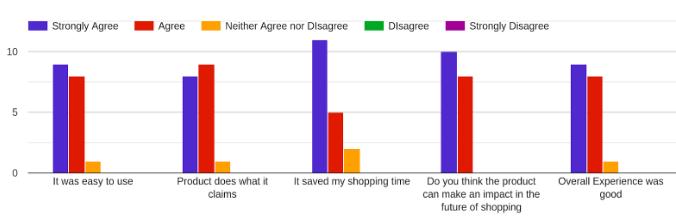
Thisapplicationcreatesanautomatedcentralbillsystem for supermarkets and mall. It helps in keeping the shopping experience good by displaying the total cost of the products to the customer. Suppose the product is removed from the cart, it must be also removed from the billtoo.Itwillalsoenableonlinetransactionprocedurefor billing. The ongoing trend of online shopping, which reduces the hassle of shopping offline at stores, introducing smart carts maynot onlybeable to eliminate the surge but contributes to the reduction of the usage of paperbillsmakingenvironmentallyfriendly,&savestime wastedinstandinginlongqueues.Thisalsomakesitmore economicalviablefortheownertomanagefewerstaff.
[1] Rashmi S. Moharil Dr. Shankar N. Dandare, Microcontroller based Attendance Management System, International Journal of Engineering and InnovativeTechnology(IJEIT)
[2] Tanushree, Siddharth Yadav, Saksham Aggarwal, Sagar, Mohit Yadav, Neeraj Gupta, Shruti Karkra, IngeniousShoppingCart:RFIDEnabledforAutomated Billing International Journal of Computer Science and Mobile Computing, Vol.5 Issue.5, May- 2016, pg. 209214.

[3] Kumbhar Aakanksha, Kumavat Sukanya, Lonkar Madhuri, Mrs. A.S. Pawar, Smart Ration Card System Using Raspberry-pi , International Journal of Advanced Research in Computer and Communication EngineeringVol.5,Issue4,April2016.
Range of the RFID scanner used is up to 2cm, so the item has to be scanned very closely to RFID scanner.
RFID tags can be damaged, hence can be made undetectedbythescanners.
RFID reader used can’t detect multiple RFID tags atonce
[4] Md. Kawser Jahan Raihan, Mohammad Saifur Rahaman, Mohammad Kaium Sarkar & Sekh Mahfuz, Raspberry Pi Image Processing Based Economical Automated Toll System Global Journal of Research in Engineering Electrical and Electronics Engineering Volume13Issue13Version1.0Year2013.