
International Research Journal of Engineering and Technology (IRJET) e-ISSN:2395-0056
Volume: 12 Issue: 09 | Sep 2025 www.irjet.net p-ISSN:2395-0072
International Research Journal of Engineering and Technology (IRJET) e-ISSN:2395-0056
Volume: 12 Issue: 09 | Sep 2025 www.irjet.net p-ISSN:2395-0072
R.
Danu1, V. Akshaya2, V. Saraswathi3, S. Yuvaraj Kannan4
1 Assistant Professor, Department of AI-DS, SRM Valliammai Engineering College, Tamil Nadu, India. 2,3,4Department of AI-DS, SRM Valliammai Engineering College, Tamil Nadu, India.
Abstract -The management of multi-sport events, particularlycricketandbadmintontournaments,oftenfaces challenges such as manual scheduling, inefficient coordination, and limited use of historical data for decisionmaking. To address these issues, this paper introduces anAIPowered Multi-Sport Event Management Platform that automates critical aspects of sports administration while enhancing the player and organizer experience. The platform implements role-based authentication, offering dedicated dashboards for players and organizers with tailored functionalities. Players register with sport-specific details, such as batting style in cricket or player type in badminton, while organizers can create events by defining sport, venue, match officials, andavailablefacilities. A major innovation is the AI fixture scheduler, which ensures team eligibility by validating minimum player requirements before generating fair match schedules through RoundRobin algorithms. The platform further incorporates a rules-based highlight generator that processes match statistics to automatically create text-based summaries of significant performances, along with a smart team selector that recommends optimal line-ups based on player roles, historical performance data, and opponent strengths. Both dashboards integrate real-time analytics to provide players with insights into event participation and readiness, while enabling organizers to track the preparedness of registered teams. In its early stage, the system uses rule-based methods and simple ranking algorithms due to the absence of large datasets, but it is designedto scale towardmachine learning approaches such as Random Forests and neural networks, as well as natural language processing for chatbot integration, once sufficient data is collected. By establishing a robust data-driven foundation, the platform transforms sports event management into a more efficient, fair, and strategic process, bridging the gap between traditional practicesandAI-enabledinnovation.
Key Words: Sports Event Management, Fixture Scheduling, Team Selection, Sports Analytics, Artificial Intelligence,Badminton,Cricket
Sports event management is a multifaceted domain that requires careful coordination of scheduling, team formation, resource allocation, and participant engagement. Traditionally, these processes have been handled manually by organizers, often leading to
inefficiencies, human errors, and scheduling conflicts that affect both players and stakeholders. In recent years, the rapid adoption of artificial intelligence (AI) and datadriven techniques has begun to transform this field, offering new opportunities to automate repetitive tasks, ensure fairness in competition, and generate actionable insights [1]. AI-driven predictive modeling has already demonstrated its potential in optimizing athlete selection and enhancing performance evaluation, confirming the feasibility of extending such methods into broader event managementworkflows.
Eventschedulingisoneofthemostcriticalcomponentsof sports administration. Conventional methods rely on manual arrangement or simplefixed schedules, whichare prone to clashes and lack adaptability. Technologyenabled scheduling and management systems have been explored to reduce these burdens, proving that automation significantly enhances the efficiency of organizingtournaments[2].Moreover,systematicreviews highlight that AI is increasingly being adopted in sports analytics, particularly for generating insights from structured data, managing performance records, and supporting strategic decisions for teams and organizers [3]. This shift toward AI-based solutions is particularly relevant in multi-sport contexts, where diverse rules, player requirements, and event structures must be managedsimultaneously.
The complexity of sports like cricket and badminton exemplifies the need for intelligent, adaptable platforms. Research on event management systems in academic institutions demonstrates how big data frameworks can streamline operations, though many implementations remaingenericandlacksport-specificrulesvalidation[4]. For example, in cricket tournaments, where team size requirementsandmatchdurationdiffersubstantiallyfrom badminton, the application of optimized scheduling techniques such as Tabu Search has shown measurable improvements in fairness and balance [5]. However, such advanced methods often remain theoretical or limited to large-scale tournaments, creating a gap for practical, accessiblesolutionsforsmallerorganizers.
Beyond scheduling, team composition and lineup optimizationaremajorchallengesforcoachesandplayers alike.Recentadvancementsinreinforcementlearningand deep learning models have been applied to fantasy sports
International Research Journal of Engineering and Technology (IRJET) e-ISSN:2395-0056
Volume: 12 Issue: 09 | Sep 2025 www.irjet.net p-ISSN:2395-0072
and real-world player selection, producing data-driven recommendations that surpass manual judgment [6]. Similarly, embeddings-based approaches have been proposed for cricket team recommendation, demonstratingthevalueofcombiningstatisticalandsemisupervised methods to improve lineup balance [9]. These innovations reinforce the growing role of AI in assisting decision-makingbeyondmerescheduling.
Scheduling fairness also requires reliable evaluation models. Studies on scheduling frameworks emphasize validation mechanisms to ensure that teams meet minimum requirements before fixtures are generated, thereby avoiding incomplete or unfair tournaments [7]. Complementary to this, predictive models based on recurrent neural networks have been employed for event management workflows, showing that machine learning approaches can improve both forecasting accuracy and overallsystemadaptability[8].Thesefindingssupportthe integrationofAInotonlyfordecisionautomationbutalso forsystem-levelintelligenceinsportsplatforms.
The broader field of AI in sports has been comprehensively reviewed, with surveys highlighting applications in tactical analysis, injury prediction, performance monitoring, and lineup optimization [10]. Such studies emphasize the versatility of AI techniques acrossdiversesportscontexts,pointingtotheimportance of scalable and modular solutions. At the same time, classical approaches such as operations research and optimization remain highly relevant. Venue-aware scheduling models in multi-sport competitions [11] and constraint logic programming for tournament generation [12] have long provided the mathematical foundation for fixture scheduling. However, these traditional approaches often fail to integrate real-time data inputs from player registrations and organizer specifications, limiting their adaptabilityindynamic,multi-sportenvironments.
To bridge these gaps, this paper proposes an AI-Powered Multi-Sport Event Management Platform that integrates role-based authentication, sport-specific registration, event creation, AI fixture scheduling, automated highlight generation, and smart team selection. Unlike prior work that relies on live video feeds or large-scale professional datasets, the proposed system focuses on structured data collection through user input and match statistics, ensuring accessibility and scalability. In its initial phase, the platform employs rule-based algorithms such as Round-Robin scheduling, simple ranking for team selection, and IF-THEN rules for highlight generation whileestablishingarobustdatabaseofplayerprofilesand historicalmatchoutcomes.Thisfoundationenablesfuture integration of advanced models, including Random Forests, neural networks, and natural language processing, to provide predictive analytics, intelligent chatbots,andadaptivefrauddetection.
The platform incorporates secure role-based authentication, offering distinct dashboards for players and organizers. Players choose their primary sport (cricket or badminton) during signup, which tailors the registrationprocesstocollectsport-specificdetailssuchas batting style or player type (Mănescu & Mănescu, 2025) [1]. Organizers receive a dedicated dashboard to manage events, monitor team readiness, and communicate with participants, ensuring usability and security (More & Birmule, 2025) [2]. This separation streamlines user experiencewhilerestrictingaccessbasedonroles.
Organizers can create events by specifying sport type, date, venue, number of courts or pitches, and referee information. The system validates venue availability and prevents scheduling conflicts (Xie et al., 2024) [4]. Automatic notifications are sent to registered players to enhance engagement and participation (Sangramsing & Birmule, 2025) [2]. This approach eliminates reliance on live video feeds, relying instead on structured inputs for efficiency.
The AI-driven fixture scheduler automates match scheduling using algorithms such as Round-Robin and fairness validation. It ensures minimum player requirements are met (7 for cricket, 2 for badminton doubles) before creating fixtures (Venkatachalam et al., 2024) [5]. Optimization techniques inspired by modified Tabu Search improve fairness and venue allocation. Prior scheduling frameworks provide the theoretical basis for these algorithms (Lim et al., 2006; Constraints, 1999) [11][12].
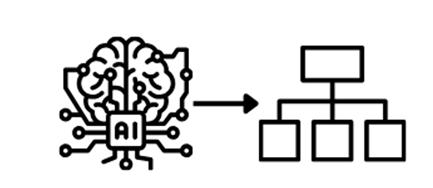
Fig -1:FixtureScheduling
The platform includes an AI-powered team suggestion module. Simple ranking algorithms initially determine line-ups based on player roles, past performance, and
International Research Journal of Engineering and Technology (IRJET) e-ISSN:2395-0056
Volume: 12 Issue: 09 | Sep 2025 www.irjet.net p-ISSN:2395-0072
opponent weaknesses. Future scalability plans include deep reinforcement learning for optimized team composition (Bhattacharjee et al., 2024; Chhabra et al., 2020) [6][9]. This helps organizers create competitive teamswhilemaintainingfairnessandbalance.
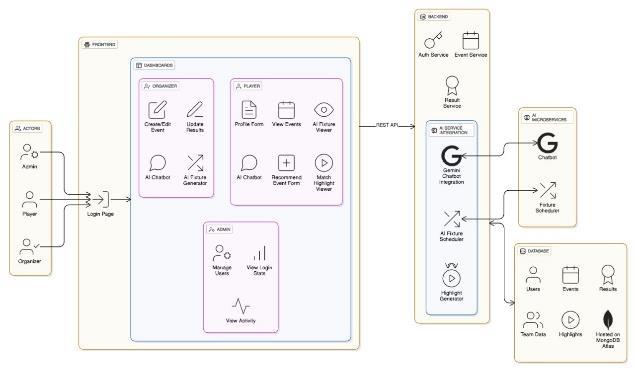
Using submitted match statistics, a rule-based engine identifies key moments such as half-centuries or matchwinning performances (Mathematical Fig fig-2 : Architecturediagram.ProblemsinEngineering,2022)[8]. Text-basedsummariesaregeneratedforbothplayersand organizers. This approach avoids complex video processing while providing actionable insights for performanceanalysis.
Dashboards display validation statuses, event readiness, and upcoming match recommendations. Organizers can quickly check which teams are fully registered and eligible, while players see their team readiness and available events for their sport (Wang, 2023; Beal et al., 2019) [7][10]. This ensures smooth operation and proactivedecision-making.
All interactions, registrations, and match statistics are recorded to build a historical dataset. This dataset will supportfutureAIapplicationssuchaspredictiveanalytics, advanced team optimization, and chatbot-based query handling (Mănescu & Mănescu, 2025; Bhattacharjee et al., 2024) [1][6]. Starting with structured data ensures scalabilityandenablesmoresophisticatedAImodelsover time.
The proposed AI-powered multi-sport event management platform is designed to streamline the organization and participation of cricket and badminton events through automation and data-driven insights. It features rolebased authentication with customized dashboards for players and organizers, smart fixture scheduling using Round-Robin algorithms, AI-driven team recommendations based on player data, and automated highlight generation from match statistics. Real-time analytics
International Research Journal of Engineering and Technology (IRJET) e-ISSN:2395-0056
Volume: 12 Issue: 09 | Sep 2025 www.irjet.net p-ISSN:2395-0072
team readiness and event progress. Built for scalability, the platform supports future integration of machine learning models and natural language processing for chatbots.Itsmodulardesign ensuresadaptabilitytoother sports, making it a comprehensive and efficient event managementsolution.
The proposed AI-powered multi-sport event management platform is structured into several interconnected modules, each handling specific responsibilities for users based on their roles: player, organizer, or admin. This modular approach allows for better scalability, maintainability, and future integration of AI-driven enhancements.Belowisadetailedoverviewofeachmajor modulewithinthesystem.
3.1.1
Thismoduleisresponsibleformanaginguseraccessto the platform. When users sign up or log in, they are requiredtoselecttheirrole eitherasaplayer,organizer, or admin. Based on their selection, the system redirects them to their respective dashboards. User credentials are securely stored, and session handling is managed using JSON WebTokens(JWT).Passwordsareencryptedbefore storage to ensure user security. The role-based access control ensures that users only see and interact with the featuresrelevanttotheirroles.
The admin module serves as the control center for managing users and maintaining the system's integrity. Admins can view all registered users, monitor their login activity,andupdateaccountstatuses.Ifneeded,theadmin candeactivateordeleteaccounts.Thismoduleplaysakey role in overseeing the platform’s operations, ensuring smooth functionality, preventing misuse, and maintaining datasecurityacrossthesystem.
3.1.3
Organizers are provided with a dedicated dashboard where they can create and manage sports events. While creatinganevent,theycanspecifydetailssuchasthesport (cricket or badminton), event date, venue, number of availablecourtsorpitches,andassignreferees.Organizers can also view registered teams, monitor their readiness, andupdatematchresults.Auniquefeatureofthismodule is the integration with the AI fixture scheduler, which automates the scheduling process. Organizers also have access to a built-in chatbot (powered by Gemini API) to
assistwithqueriesandplatformnavigation.Aftermatches, organizersinputplayerperformancedatawhichfeedsinto thehighlightgeneratorandanalyticsmodules.
Players access a personalized dashboard upon login, tailored to the sport they selected during registration. Cricket players provide information like their batting and bowling styles, fielding positions, and past statistics. Badmintonplayersenterdetailssuchassinglesordoubles specialization, skill level, and ranking. Players can view upcoming events, register for matches, and explore AIgenerated fixtures. They can also use the smart team selector to get suggestions on optimal team placements and roles. After matches, players can review automated text-based highlights and performance summaries. The player dashboard also includes access to the chatbot for real-time assistance and allows users to recommend new eventstoorganizers.
This module houses the platform’s core AI functionalities, implementedasbackendservices:
• Fixture Scheduler: Automatically generates fair match schedules using the Round-Robin algorithm while checking for player eligibility (e.g., minimum number of playersperteam).
• Smart Team Selector: Recommends team compositions based on a player’s role, past performance, and opponent strengths. Initially, it uses simple scoring logic but is designed to evolve into a more advanced AI modelovertime.
• Highlight Generator: Analyzes post-match statisticstoautomaticallyproduceshorttextsummariesof keyeventslikehalf-centuries,wickets,orwinningstreaks.
• Chatbot Integration: A conversational assistant powered by the Gemini API, available to both players and organizersforsupportandFAQs.
This module provides real-time insights through dashboards and visualizations. Players can view their team’s readiness status, match schedules, and performance trends. Organizers can monitor team registration progress, validate player eligibility, and ensurethateventsarerunningsmoothly.Thesystemalso sends notifications related to registration status, match updates, and highlight availability. These analytics tools help users make informed decisions and stay engaged throughouttheeventlifecycle.
International
Volume: 12 Issue: 09 | Sep 2025 www.irjet.net p-ISSN:2395-0072
Alluserandeventdataisstoredinacentralizeddatabase, currently using MongoDB for its scalability and flexibility. It stores structured data such as user profiles, match statistics,eventdetails,andAI-generatedresultsliketeam suggestions and highlights. This module forms the backbone of the platform, supporting both real-time operationsandfutureAItraining.
Although the current system is built for cricket and badminton, the architecture is modular and adaptable to other sports. Each module can be customized with sportspecificrules,teamsizes,andperformancemetrics.Asthe platform collects more data, it can gradually move from rule-based systems to machine learning approaches, improving the accuracy of recommendations and predictions. This makes the system suitable not only for localcommunityeventsbutalsoforlargertournamentsin thefuture.
4.1
To assess the efficiency and scalability of the fixture scheduler, we simulated tournament generation across varying team counts. The AI fixture scheduler validates team eligibility and generates match schedules using a round-robinalgorithmimplementedinPython.
Table -1: AIFixtureSchedulingPerformance
Teams Count Timeto Schedule Avg.CPU Usage Notes
4 ~12ms Low Minimalcomputation 8 ~25ms
capable
Conclusion: The fixture scheduling component consistentlydeliverssub-100msperformanceforupto16 teams,makingitviableforreal-timematchpreparation.
4.2
The Smart Team Selector uses a rule-based scoring and rankingalgorithmtosuggestteamlineupsbasedon:
● Playerroles(batsman,bowler,all-rounder,etc.)
● Recent performance data (runs, wickets, match rating)
● Opponentteamstrengths
Conclusion: The AI selector shows high alignment with human decisions and responds within milliseconds, suitableforpre-matchpreparation.
TABLE2.SmartTeamSelectorAccuracy&ResponseTime
ms
alignment withexpertpicks.
The highlight system uses a rules engine to parse match stats (runs, wickets, 50s, 100s) and generate textual summaries like: "Player X scored 58 runs with a strike rate of 130. He anchored the innings after early wickets fell." Wetesteditacross10samplematches.
TABLE3. AutomatedHighlightGeneratorEvaluation
Stats Entries per Match
Conclusion: The highlight generator produces consistent and readable match summaries in real-time with low computationaloverhead.
Gemini API is used for interactive support in both player andorganizerdashboards.Wetestedthelatencyacross20 queriesperrole.
TABLE4.AIChatbotperformance
Role Avg.ResponseTime (API) QueryRelevance (ManualScore)
International Research Journal of Engineering and Technology (IRJET) e-ISSN:2395-0056
Volume: 12 Issue: 09 | Sep 2025 www.irjet.net p-ISSN:2395-0072
The AI-powered multi-sport event management platform provides a robust and intelligent solution for organizing cricket and badminton tournaments, addressing key challenges faced by both players and organizers. By integrating role-based authentication, sport-specific registration, automated fixture scheduling, smart team recommendations, and performance-based highlight generation, the system streamlines event management, reducesmanualeffort,andensuresfairnessandefficiency. The AI-driven scheduling validates team eligibility and optimizesmatchtimings,whiletheteamrecommendation moduleusesplayerdatatoformbalancedandcompetitive line-ups,enhancingbothstrategyandengagement.
Automatedhighlightsalloworganizersandparticipantsto quickly identify key performances without relying on live video feeds, providing actionable insights into match outcomes.Real-timedashboardsfurthersupportdecisionmaking by displaying team readiness, upcoming events, andperformance summaries.The platform’s modularand scalable design enables future expansion to other sports and the integration of advanced AI models for predictive analytics,reinforcementlearning,andstrategicsupport.
Overall, the platform modernizes sports event management by combining automation, intelligence, and data-driven insights, improving operational efficiency, participant engagement, and competitive fairness, while laying a strong foundation for future AI-enhanced capabilitiesinmulti-sporttournaments.
[1] Dan Cristian Mănescu and Andreea Maria Mănescu, “Artificial Intelligence in the Selection of TopPerforming Athletes for Team Sports: A Proof-ofConcept Predictive Modeling Study,” Applied Sciences, vol.15,no.18,2025.
[2] Sangramsing S. More and Pravin R. Birmule, “Technology-Based Scheduling and Event Management in Sports,” International Journal on Research and Development - A Management Review, Vol.14,No.1,2025.
[3] The review “The Role of Artificial Intelligence in Sports Analytics: A Systematic Review and MetaAnalysis of Performance Trends,” Applied Sciences, Vol.15,No.13,2025.
[4] Yi Xie et al., “Research on the framework of sports eventmanagementsystemofcollegesanduniversities basedonbigdata,” Applied Mathematics andNonlinear Sciences,Vol.9,Issue1,January2024.
[5] Venkatachalam M., Praveena K., Dafik Dafik, İsmail Naci Cangül, “Iterated Modified Tabu Search based Equitable Coloring for Scheduling Cricket World Cup Tournament,” ECJSE, Vol. 11, Issue 2, 2024, pp. 131141.
[6] Shamik Bhattacharjee, Kamlesh Marathe, Hitesh Kapoor,NileshPatil,“OptimizingFantasySportsTeam Selection with Deep Reinforcement Learning,” arXiv:2412.19215,Dec2024.
[7] Yanzhen Wang, “Evaluation on Sports Scheduling Model,” BCP Business & Management,(journal),recent issue2023.
[8] Paper: “Application and Evaluation of Sports Event Management Method Based on Recurrent Neural Network,” Mathematical Problems in Engineering, 2022.
[9] Prazwal Chhabra,RizwanAli,Vikram Pudi, “CRICTRS: Embeddings based Statistical and Semi Supervised Cricket Team Recommendation System,” arXiv:2010.15607,2020.
[10] RyanBeal,TimothyJ.Norman,SarvapaliD.Ramchurn, “Artificial intelligence for team sports: A survey,” The Knowledge EngineeringReview,2019.
[11] Andrew Lim, Brian Rodrigues, Xingwen Zhang, “Scheduling Sports Competitions at Multiple Venues: Revisited,” European Journal of Operational Research, Vol.175,Issue1,2006,pp.171-186.
[12] (Useful for foundational scheduling theory) “Scheduling Sport Tournaments using Constraint LogicProgramming,” Constraints,Vol.4,1999.