
Comparative Analysis of Mechanical and Physical Properties of Cement Mortar Reinforced with Synthetic (Polypropylene) and Natural (Pine Needle) Fibers
Aqeel Haider1, Fahad Yaqoob1 , Khawaja Haseeb Maqbool1
1School of Mechanics and Transportation Engineering, Northwestern Polytechnical University, Xi’an 710129, China
Abstract
This study investigates the mechanical and physical properties of cement mortar reinforced with synthetic polypropylene(PP)andnaturalpineneedle(PN)fibersat1–5% by cement weight. Fresh and hardened properties including workability, flexural strength, compressive strength, ultrasonic pulse velocity, density, and water absorption were evaluated. Results identified 2% PP as an optimal dosage, giving a 7% increase in flexural strength while maintaining acceptable compressive strength and internal quality. PN fibers showed potential as a wastederived, sustainable alternative but exhibited lower mechanical performance and higher water absorption than PP at comparable contents. For both fiber types, increasing dosage reduced workability and compressive strength and increasedwaterabsorptionwhilereducingdensityinadosedependent manner. A strong correlation between fiber content, decreased pulse velocity, and reduced compressive strength indicated increased porosity. Overall, PP fibers provided superior reinforcement with a better balance of properties, while PN fibers require further treatment to improvecompatibilitywiththecementmatrix.
Keywords: Fiber-reinforced mortar, polypropylene fibers, pine needle fibers, mechanical properties, sustainable constructionmaterials
1 Introduction
Cement-based materials form the backbone of modern construction but remain intrinsically brittle and weak in tension. Under load, shrinkage, or environmental actions, this leads to crack initiation and sudden failure, limiting service life and reliability. Incorporating discrete fibers is a well-established strategy to mitigate these drawbacks: properly designed fiber reinforcement bridges cracks, increases energy absorption, and converts a brittle matrix intoamoreductilecomposite[1,2].
A wide range of fibers has been used in cementitious systems, including synthetic polymers (e.g. polypropylene, polyvinyl alcohol), steel, and glass or carbon fibers. Their
efficiency depends on geometry (length, diameter, aspect ratio), mechanical properties (modulus, strength), and the quality of the fiber–matrix interface, which together control stresstransferandcrack-bridgingcapacity[3].
Synthetic fiber systems have been extensively characterized. Nataraja et al. [5] linked fiber type to composite stress– strain response under different loading conditions. Long et al. [6] showed that the matrix-to-fiber modulus ratio governs whether stiffness or ductility is improved, with high-modulus carbon fibers primarily enhancing stiffness and low-modulus polypropylene fibers improving toughness and energy dissipation. Nayak [7] reported clear mechanical benefits from polypropylene fibers, accompanied by a reduction in workability at higher dosages.
At the high-performance end, Engineered Cementitious Composites (ECC) achieve strain-hardening and tensile strains of 3–5% using carefully tailored PVA or polyethylene fibers[9].Hybridconcepts,suchascombiningpolypropylene fibers with nano-silica, have demonstrated improved fiber–matrixbondandmorestablecrackpatterns[10],illustrating how microstructural tailoring can further enhance performance.
In parallel, environmental and resource considerations haverenewedinterestinnaturalandwaste-derivedfibersas partial substitutes for petroleum-based synthetics. Among these, pine needles are an abundant forest residue that can acidify soil and hinder vegetation if left on the forest floor. Utilizing pine needles as cementitious reinforcement offers the dual benefit of waste valorization and reduced dependenceonconventionalsyntheticfibers[14].
Polypropylenefibersincement-basedmaterialshavebeen studied indepth[12],and natural fibershave been explored in various polymer and cementitious composites [13]. However, direct, side-by-side comparisons of conventional synthetic fibers and natural waste fibers within the same mortar system, test matrix, and curing conditions remain limited. This lack of controlled comparative data makes it difficult to judge whether natural waste fibers can International Research Journal of Engineering and Technology (IRJET)
Volume: 12 Issue: 11 | Nov 2025 www.irjet.net p-ISSN: 2395-0072
realistically act as sustainable alternatives rather than niche additions. The present work addresses this gap by systematically comparing polypropylene (PP) and pine needle(PN)fibersincementmortar.Thestudyfocuseson:
• characterizing and preparing PP and PN fibers for use inmortar;
• establishing a standardized incorporation procedure at1–5%bycementweight;
• evaluating fresh and hardened properties (workability,flexural and compressive strength, ultrasonicpulsevelocity,density,andwaterabsorption); and
• assessing the feasibility of PN fibers as a wastederivedalternative to PP in terms of performance and practicaluse.
Through this comparative framework, the study examines whether abundantly available natural waste, such as pine needles, can provide mechanically and physically acceptable reinforcement while contributing to more sustainable constructionpractices.
2 Experimental Methodology
2.1 Mix Proportioning
Allmixesusedacement:sandratioof1:2byweightwitha constant water–cement ratio of 0.45. The control mix contained no fibers, while the fiber-reinforced mixes includedpolypropylene(PP)orpineneedle(PN)fibersat1–5%by cement weight. The detailed proportionsarelisted in Table1.
Table1:Mixturedesignproportion
2.2 Cement and Fine Aggregate
Ordinary Portland cement was used in all mixes. Fine aggregate was characterized by standard sieve analysis. The gradation from 4.75 mm to 0.15 mm was used to compute thefinenessmodulusandtoverifythatthesandsatisfiedthe limitsformortarapplications.
2.3 Polypropylene (PP) Fibers
Commercial monofilament PP fibers were supplied with nominal length of 12 mm and diameter of 0.032 mm. The fibers had a tensile strength of about 350 MPa, an elastic modulusof3.5GPa,andaspecificgravityof0.91.Theirhigh aspect
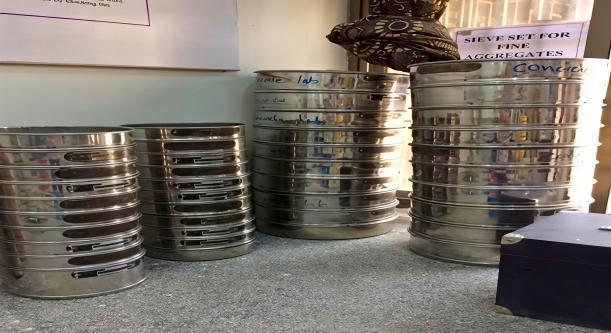
Figure 1: Standardsievesetusedforfineaggregate gradation.
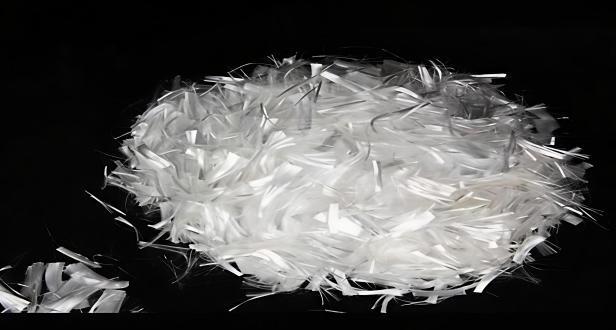
Figure 2: Commercialpolypropylenemonofilamentfibers. ratio (L/D ≈ 375) and hydrophobic, chemically inert surface make them suitable for crack-bridging and post-cracking ductilityincementitiousmatrices.
2.4 Pine Needle (PN) Fibers
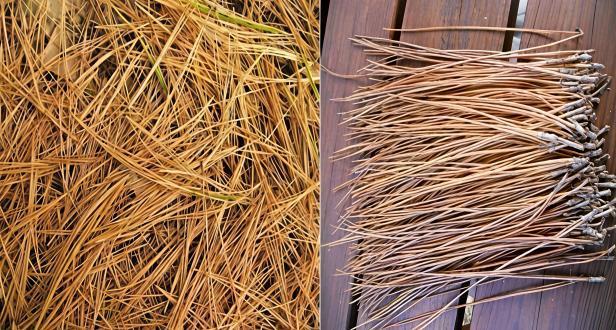
Pine needles from mature Pinus trees were collected during the natural shedding period. They were washed with distilledwater,air-driedfor48h,andthencutmanuallyto12 mm length to match the PP fiber length. The needles have a tapered cross-section with an average diameter of 0.8–1.2 mm and a specific gravity of about 0.55, resulting in a much lower aspect ratio (L/D ≈10–15). The cellulosic composition
International Research Journal of Engineering and Technology (IRJET) e-ISSN: 2395-0056
Volume: 12 Issue: 11 | Nov 2025 www.irjet.net p-ISSN: 2395-0072
offers a lightweight, biodegradable reinforcement while maintaining sufficient stiffness during the service life of the mortar.
Usingidenticaldosagelevels(1–5%bycementweight)for PPandPNmixesallowsdirectcomparisonoftheinfluenceof fibertypewhilekeepingthematrixcompositionunchanged.
2.5 Mixing, Casting, and Curing
2.5.1 Mixing Protocol
A laboratory mortar mixer was used to ensure consistent mixing across all batches. The sequence was kept identical forallmixes:
• Dryblendcementandsandfor60sat140rpm.
• Addwatergraduallyover30swhilemixingcontinues.
• Introduce fibers incrementally over 45 s to minimizeclumping.
• Continue mixing for a further 90 s until a visually uniformdispersionisobtained.
This sequence gave a total mixing time of 225 s and producedauniformdistributionoffiberswithoutnoticeable agglomerationorsegregation.
2.5.2 Specimen Casting and Compaction
Fresh mortar was cast into lubricated 40×40×160 mm steelprismmolds(Figure4).
Compaction was performed on a mechanical jolting table (Figure 5) using 60 drops from a height of 12.5 mm to remove entrapped air and achieve uniform density while limitingfibersegregation.
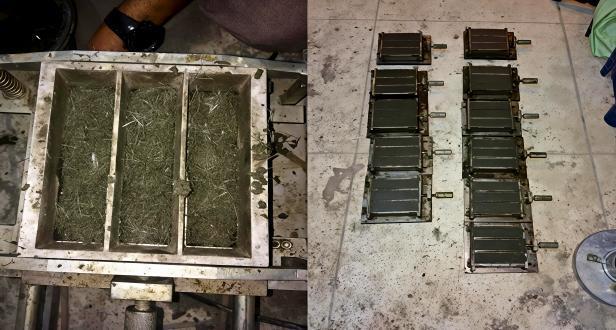
Figure4:Prismaticsteelmolds(40×40×160mm)andfresh fiber-reinforcedmortar.
CuringRegime
After casting, molds were covered with a damp cloth and stored at 23±2◦C for 24 h. Specimens were then demolded and placed in water at 23±2◦C (saturated lime water) until thetestage(28daysformechanicalandphysicaltests).This curingregimewasappliedconsistentlytoallmixes.
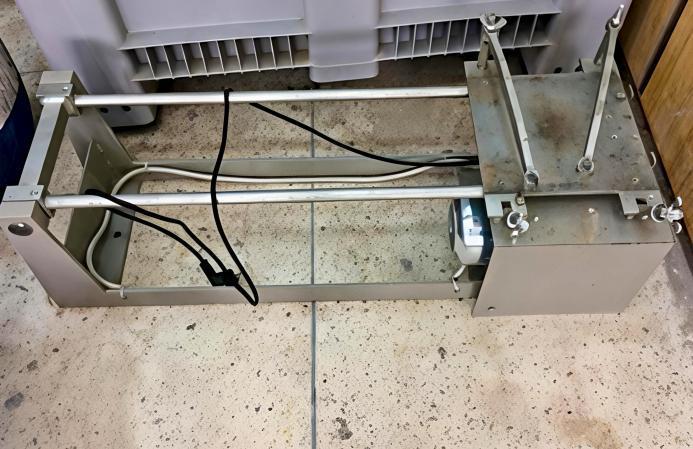
Figure 5: Mechanicaljoltingmachineusedforspecimen compaction.
2.5
Test Methods
Alltestswereperformedunderlaboratoryconditionsona minimum of three specimens per mix. Reported values are arithmetic means; the coefficient of variation for strength datawaskeptbelow5%.
2.5.1 Fresh Properties: Workability
Workabilitywasevaluatedusingtheflowtabletest(ASTM C1437), see Figure 6. The test was carried out within 5 min aftermixing. Thespreadof themortar wasmeasuredintwo perpendiculardirectionsandtheaveragediameterwasused astheflowvalueforeachmix.
Figure3:Pineneedlefibers:rawneedles(left)andprocessed fibers(right).
International Research Journal of Engineering and Technology (IRJET) e-ISSN: 2395-0056
Volume: 12 Issue: 11 | Nov 2025 www.irjet.net
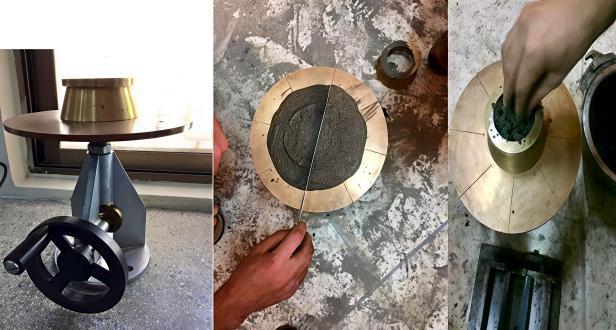
Figure6:Flowtableusedforworkabilitymeasurements.
2.5.2 Compressive, and Flexural Strength
Compressive strength was measured on 40 mm cubes prepared from the prisms according to ASTM C109. Tests wereperformedat28daysusingauniversaltestingmachine withaloadingrateof1.0MPa/s.
Flexural strength was determined on 40×40×160 mm prisms in three-point bending following ASTM C348. A span of 100 mm and a loading rate of 0.05 MPa/s were used. Ultimate load and mid-span failure were recorded, and flexuralstrengthwascomputedusingthestandardformula.
2.5.3 Physical Properties and Ultrasonic Pulse Velocity
Water absorption and apparent density were determined in accordance with ASTM C642. Specimens were oven-dried at 105◦C to constant mass (72 h), cooled to room temperature, and then saturated in water to obtain the required mass measurements (oven-dry, saturated-surfacedry,andsubmerged).
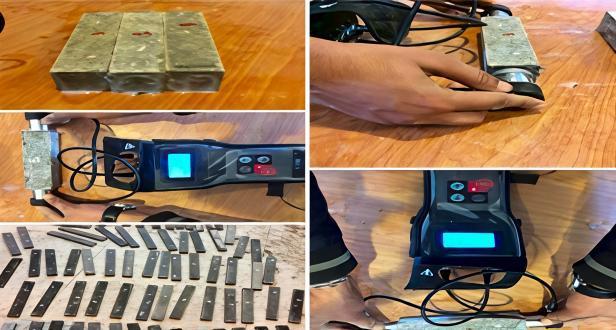
Figure 7:Ultrasonicpulsevelocity(UPV)testsetup.
Ultrasonic pulse velocity (UPV) was measured using the direct transmission method (Figure 7). Matched 54 kHz transducers were placed on opposite faces of the specimen withcouplinggel to ensurepropercontact.Transittime was recorded witha resolution of ±01 µsandUPV wasobtained bydividingthespecimenlengthbythemeasuredtraveltime,
2395-0072
providing a non-destructive indicator of internal quality and homogeneity.
3 Results and Discussion
This section first summarizes the material and mixture properties that form the basis for later performance comparisons between polypropylene (PP) and pine needle (PN) fiber–reinforced mortars. The focus is on verifying the suitability of the constituent materials and confirming that the mixture design consistently isolates the effect of fiber typeanddosage.
3.1
Material Characterization
PortlandCementProperties
Cement testing confirmed that the binder satisfies ASTM C150limitsforallkeyparameters,indicatingreliablesetting behavior,adequatefineness,andstablevolumechange.
Table 2: Portlandcementpropertiesandcompliancewith ASTMC150
The measured standard consistency (28%) lies near the mid-range of the specified band, supporting stable workability at the adopted water–cement ratio. Blaine fineness above 3000 cm2/g and low residue on the 90 µm sieve (7%) indicate adequate surface area for normal hydration kinetics. Soundness of 6 mm, well below the 10 mm limit, confirms acceptable volume stability. The specific gravity of 3.09 is close to typical values for Type I portland cementanddoesnotintroduceunusualdensityeffectsinthe mixturedesign.
3.2 Fine Aggregate Characterization
Fine aggregate characterization showed that the sand is medium-fine and well graded, with properties suitable for mortarproduction.
International Research Journal of Engineering and Technology (IRJET) e-ISSN: 2395-0056
Volume: 12 Issue: 11 | Nov 2025 www.irjet.net p-ISSN: 2395-0072
3:Sandgradationandderivedfinenessmodulus
3.3 Fresh Property Assessment
3.3.1 Workability from Flow Table Test
Flow table tests were used to quantify the consistency of thecontrolandfiber-reinforcedmortars.Table5summarizes the measured flow spread and corresponding flow index for eachmix.
Table 5: Flowtableresultsforcontrolandfiber-reinforced mortars
The fineness modulus of 2.94 classifies the aggregate as medium-fine sand with a continuous gradation, which promotes dense packing and limits internal voids. A specific gravity of 2.65 and low water absorption (0.4%) imply that the aggregate contributes minimally to additional water demand,allowingthedesignedwater–cementratiotogovern workability and strength development. The gradation curve (Figure 9) lies within typical limits for mortar sand, confirmingthatnocorrectiveblendingwasrequired.
3.2 Mixture Proportions
All mixtures were designed to keep the binder and aggregatecontentsconstantwhilevaryingonlythefibertype and dosage. Table 4 summarizes the mixture compositions usedfortheexperimentalprogram.
Table 4: Mixturecompositionswithsystematicfiberdosage variation
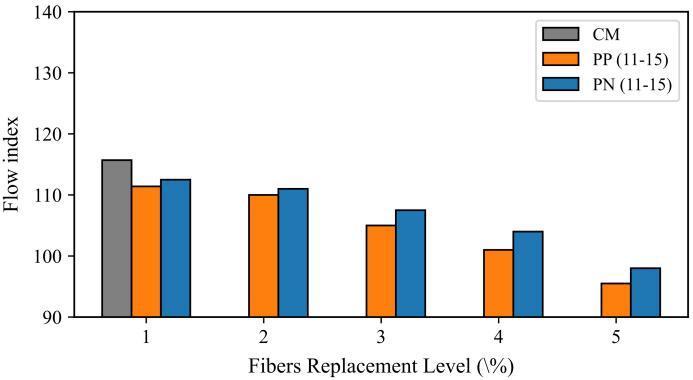
Figure 8: Effectoffibercontentonmortarworkability.
The control mix (CM) establishes the reference response without fibers. Fiber-reinforced mixes maintain identical binder, aggregate, and water contents, while the fiber mass increases linearly from 1% to 5% of cement weight. This designensuresthatobservedchangesinfreshandhardened properties can be attributed primarily to fiber type and dosage, rather than to changes in the underlying matrix composition.
Both PP and PN fibers cause a clear, approximately linear reduction in flow with increasing dosage. At 5% fiber content,theflowindexdecreasesbyabout17%forPPmixes and 15% for PN mixes relative to the control. The stronger reduction in PP mixes is consistent with their higher aspect ratioandfinerdiameter,whichincreaseinternalfrictionand restrictmortarflowmorethanthecoarserPNfibers.
From a practical standpoint, the results indicate that mixtures with higher fiber contents will require either
Table
additional workability control (e.g., plasticizers) or modified placementprocedures,especiallywhenPPfibersareused.
3.4 Aggregate Gradation Analysis
The particle size distribution of the fine aggregate, summarized in Table 3 and illustrated in Figure 9, corresponds to a fineness modulus of 2.94 and a fines content of 14.6%. This medium-fine, continuously graded sand promotes dense packing and a relatively cohesive mortar matrix. Because the aggregate skeleton is already well-graded, the observed changes in workability can be attributed primarily to fiber geometry and content rather thantovariationsinaggregate

Figure 9: Particlesizedistributioncurveforfineaggregate.
structure. In other words, the gradation provides a stable background against which the influence of PP and PN fibers onfreshbehaviorcanbeclearlydistinguished.
3.5 Mechanical Property Development
Mechanical properties at 28 days were evaluated in terms of compressive strength, flexural strength, and ultrasonic pulsevelocity(UPV),followingthetestmethodsdescribedin the Experimental Methodology. For each mix, at least three specimens were tested and the mean values were used for comparison. These results are discussed alongside the durabilityindicatorstohighlightthecombinedeffectoffiber typeanddosageonoverallmortarperformance.
3.6 Durability Characteristics
Durability was assessed through water absorption and saturated surface-dry (SSD) density, both obtained in accordance with ASTM C642. These parameters provide insight into porosity, permeability, and the effect of lowdensityfibersonthecomposite.
3.6.1 Water Absorption
Water absorption increases monotonically with fiber content for both PP and PN systems. At 5% dosage, absorption is approximately doubled relative to the control, reaching 17.7% for PP-5 and 21.1% for PN-5, compared to 8.1% for CM. PN mixes consistently show higher absorption thanPPmixesatthesamedosage,reflectingthehydrophilic, porous nature of the cellulosic PN fibers and their rougher surface, which create additional pathways for water transport.
3.6.2 SSD Density
The corresponding SSD densities are reported in Table 7. SSD density decreases nearly linearly as fiber content increases, with PN mixes showing larger reductions than PP mixes. At 5% dosage, PP-5 exhibits a 3.7% reduction in density, while PN-5 shows a 5.7% reduction relative to the Table 6: Water absorption results for control and fiber reinforced mortars control. This trend is consistent with the lower specific gravity of PP (0.91 g/cm3) and especially PN (0.55 g/cm3) compared to the cementitious matrix (about 3.09g/cm3).Fiberseffectivelyreplaceafractionofthedense matrixwithlighterinclusionsandintroduceadditionalvoids atthefiber–matrixinterface.
Table 6:Waterabsorptionresultsforcontrolandfiber reinforcedmortars
International Research Journal of Engineering and Technology (IRJET) e-ISSN: 2395-0056
Volume: 12 Issue: 11 | Nov 2025 www.irjet.net p-ISSN: 2395-0072
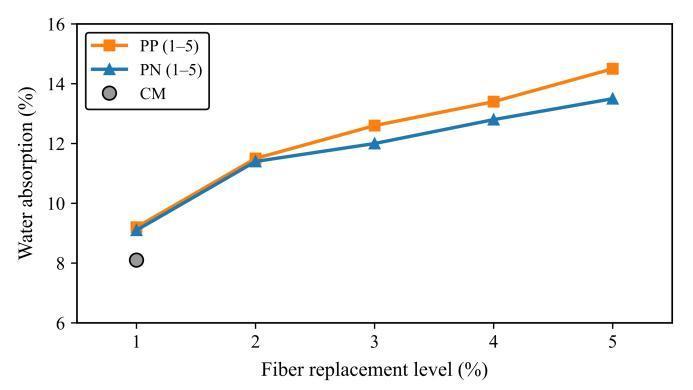
Figure 10: Variationofwaterabsorptionwithfibercontent.
Table 7:SSDdensityofcontrolandfiber-reinforcedmortars
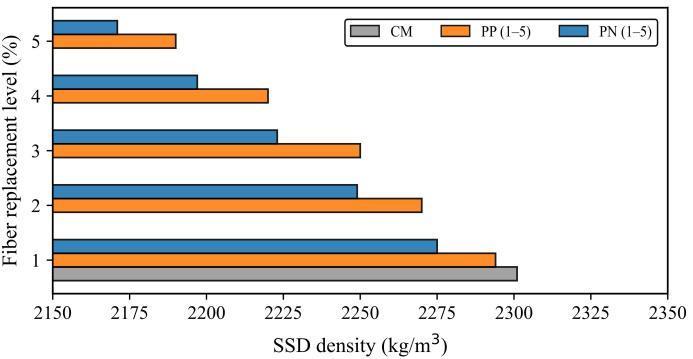
11: Densityreductionwithincreasingfibercontent.
From a durability perspective, higher absorption implies greater susceptibility to freeze–thaw damage and chemical ingress, while reduced density can be advantageous where weight reduction is required. A practical compromise emerges at moderate fiber dosages (about 2–3%), where mechanical benefits can be obtained without pushing water absorptiontothehighestlevelsobservedinthe4–5%mixes. For applications where durability is critical, PP fibers are more favorable than untreated PN fibers, due to their lower impact on absorption and better moisture resistance. Improving PN performance would likely require surface treatmentsor modifications aimedat reducing wateruptake andrefiningthefiber–matrixinterface.
3.7 Mechanical Properties and Internal Quality
Mechanical performance at 28 days was assessed through flexural strength, compressive strength, and ultrasonic pulse velocity (UPV). The results in Table 8 provide a compact overviewoftheresponseofallmixes.
3.7.1 Summary of Mechanical Test Results
3.6.3
Combined Interpretation and Durability Implications
The strong correlation between increasing water absorptionanddecreasingdensity(withR2>0.95)indicates that fiber incorporation primarily acts by increasing overall porosityandmodifyingthemicrostructurearoundthefibers. These effects are more pronounced in PN-reinforced mortars, where hydrophilic fibers and a more irregular geometryleadtohigherpermeabilityandlowerdensitythan inthePPmixesatthesamedosage.
Table 8: Mechanicalpropertiesandultrasonicpulsevelocity at28days
Figure
International Research Journal of Engineering and Technology (IRJET) e-ISSN: 2395-0056
Volume: 12 Issue: 11 | Nov 2025 www.irjet.net p-ISSN: 2395-0072
3.7.2 Flexural Response
PP-reinforced mortars show a clear flexural benefit at low dosage.ThemaximumflexuralstrengthisobtainedforPP-2
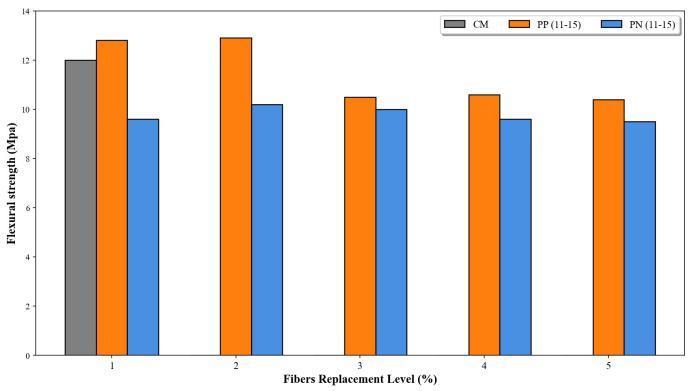
Figure 12: Flexuralstrengthasafunctionoffibercontent.
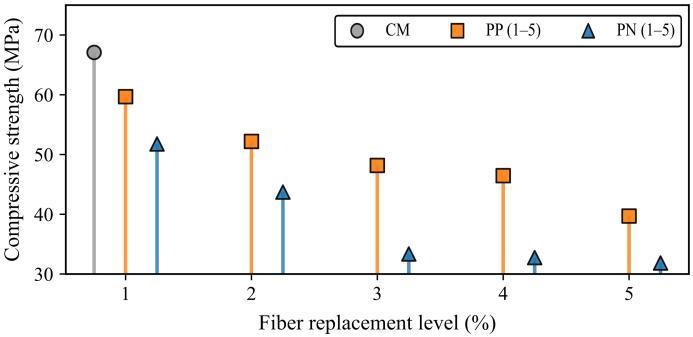
Figure 13: Compressivestrengthtrendsforfiber-reinforced mortars.
(12.65 MPa), corresponding to an increase of about 7 % relative to the control. This behaviour is consistent with effective crack bridging at moderate fibercontents;oncethe dosage exceeds 2 %, the loss of matrix continuity and increased likelihood of fiber clumping outweigh the reinforcement benefit, and flexural strength drops back towardsorbelowthereferencevalue.
PNmixes,incontrast,remainbelowthecontrolacrossthe entire dosage range (9.5–10.1 MPa). The limited improvement suggests weaker fiber–matrix interaction, likely driven by the hydrophilic cellulosic nature of the needles and less favourable surface characteristics, which promote interfacial defects rather than efficient stress transfer.
3.7.3 Compressive Strength Behaviour
Both fiber systems reduce compressive strength, but the severity ofthe reduction dependson fiber typeandcontent. ForPPmixes,compressivestrengthdecreasesfrom67.1MPa (CM)to59.7MPaat1%(PP-1,roughly11%reduction)and
to 39.7 MPa at 5 % (PP-5, about 41 % reduction). PN mixes show a stronger penalty, with PN-5 dropping to 31.8 MPa (around 53 % lower than the control). The main factors behindthestrengthlossare:
• increased void content and disruption of dense pastepacking,
• weakerinterfacialtransitionzonesaroundfibers,
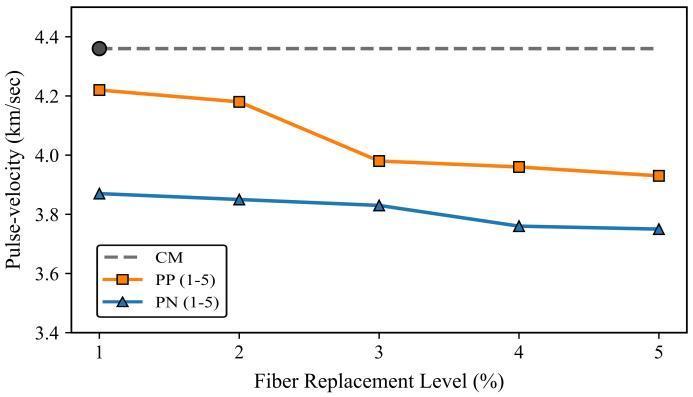
Figure 14: Correlationbetweenultrasonicpulsevelocityand compressivestrength.
• microcrack initiation at fiber–matrix interfaces undercompressiveloading.
PPfibersretainhighercompressivestrengthatalldosages than PN fibers, indicating better compatibility with the cementmatrixandmoreuniformdispersion.
3.7.4 Ultrasonic Pulse Velocity and Internal Quality
UPVvaluesfollowthesametrendascompressivestrength. The control mix shows the highest pulse velocity (4.36 km/s), consistent with a dense and relatively defect-free microstructure. As fiber content increases, UPV gradually decreases: PP mixes remain in the 3.93–4.22 km/s range, whereasPNmixesfallto3.75–3.87km/s.
A strong correlation (R2≈ 094) is observed between UPV and compressive strength (Figure 14), confirming that UPV canbeusedasareliablenon-destructiveindicatorofinternal quality for these mortars. Lower velocities are associated with higher porosity and more pronounced microstructural discontinuities,especiallyinPN-reinforcedmixes.
3.7.5 Optimal Fiber Content and Comparative Assessment
For PP-reinforced mortars, 2 % fiber content emerges as a practicaloptimum.Atthisdosage,themixcombines:
• increased flexural strength (12.65 MPa, about +7 % vs.CM),
International Research Journal of Engineering and Technology (IRJET) e-ISSN: 2395-0056
Volume: 12 Issue: 11 | Nov 2025 www.irjet.net p-ISSN: 2395-0072
• acceptablecompressivestrength(52.19MPa,roughly 22%belowCM),
•onlyamodestreductioninUPV(4.18km/s).
This balance indicates that moderate PP dosages can enhance toughness and post-cracking behaviour without excessively compromising compressive capacity or internal quality.
PN reinforcement, in its current untreated form, does not exhibitasimilaroptimum:alldosagesresultinlowerflexural strength, significantly reduced compressive strength, and lower UPV compared to the control. While PN fibers offer clear environmental and density advantages, their mechanical efficiencyislimited by poorinterfacial bond and higher induced porosity. To become competitive with PP in structural or semi-structural applications, PN fibers would require additional treatments (e.g. surface modification, coupling agents, or hybridization with synthetic fibers) to improve bonding and reduce the associated microstructural damage.
4 Conclusion
This study investigated the use of polypropylene (PP) and pineneedle(PN)fibers incement–sandmortarfor potential strengthening and retrofitting applications. By keeping the matrixcompositionconstantandvaryingonlyfibertypeand content, the workability, mechanical properties, density, water absorption, and internal quality were systematically assessed.
PP fibers showed a clear beneficial effect on flexural behaviour at low dosages. An optimum around 2% (by cement weight) emerged, where flexural strength increased by about 7% compared with the control, while compressive strengthandUPVremainedatacceptablelevels.Beyondthis dosage, the loss of matrix continuity and increased porosity ledtoareductioninbothstrengthandinternalquality.
PN fibers, in their untreated form, did not provide comparable mechanical improvements. Across the tested range, PN mixes generally exhibited lower flexural and compressivestrengthsthanthecontrol,togetherwithhigher water absorption and a more pronounced decrease in density and UPV. These trends are consistent with the hydrophilic, porous nature of the natural fibers and less favourable fiber–matrix bonding, which promote interfacial defectsratherthanefficientstresstransfer.
Durability-related indicators confirmed the trade-off introducedbyfiberaddition.BothPPandPNfibersincreased
water absorption and reduced SSD density in a dosedependentmanner,withPNhavingthestrongereffect.While theresultingreductionindensityisattractiveforlightweight applications, the higher absorption implies increased permeabilityandpotentiallylowerresistancetofreeze–thaw andchemicalattack,especiallyathighfibercontents.
Overall, PP-reinforced mortar at moderate fiber content can be considered a technically viable option where enhanced toughness and limited weight reduction are desirable,providedthattheassociatedincreaseinporosityis managed.PNfibers,althoughattractivefroma sustainability and density perspective, require further modification before theycanmatchorexceedtheperformanceofPPinstructural orsemistructuraluses.
Recommendations for Future Work
Based on the experimental findings, the following directionsarerecommended:
• Surface modification of pine needles:Applychemical or physical treatments to remove waxy layers, reduce water uptake, and improve bonding at the fiber–matrix interface.
• Influenceoffibergeometry:InvestigatelongerPNfibers (e.g.upto50mm)andalternativeaspectratiosforboth PP and PN to clarify their role in crack bridging and post-crackingbehaviour.
• Extensiontoconcrete:StudytheperformanceofPPand modified PN fibers in concrete mixes and in fullscale structural elementstoassesstheir effectivenessbeyond mortar-leveltesting.
• Fiber orientation and placement: Explore methods to control fiber orientation (e.g. preferential alignment along the prism length) and to minimise surface exposure, with the aim of improving mechanical efficiencyandsurfacefinish.
• Workability control: Evaluate the use of plasticizers or superplasticizers to maintain target workability at constant water–cement ratio when using higher fiber dosages,particularlyforPP-reinforcedmortars.
These steps would help refine fiber-reinforced mortar systems and bring natural fiber solutions closer to practical, durable,andsustainablestrengtheningapplications.
Acknowledgment
All authors are grateful to the entire research team and supporting members of the staff for their technical help and
International Research Journal of Engineering and Technology (IRJET) e-ISSN: 2395-0056
Volume: 12 Issue: 11 | Nov 2025 www.irjet.net p-ISSN: 2395-0072
formakingavailablethelaboratoryfacilitiesrequiredforthis work
References
[1] S. Prashanth, K. Subbaya, K. Nithin, and S. Sachhidananda,“Fiberreinforcedcomposites-a review,” J. Mater. Sci. Eng,vol.6,no.03,pp.2-6,2017.
[2] D. N. Saheb and J. P. Jog, “Natural fiber polymer composites: a review,” Advances in Polymer Technology: Journal of the Polymer Processing Institute, vol. 18, no. 4, pp.351-363,1999.
[3] A.Katz,“Effectoffibermodulusofelasticityonthelong term properties of micro-fiber reinforced cementitious composites,” Cement and Concrete Composites, vol. 18, no.6,pp.389-399,1996.
[4] M. Safiuddin, G. Abdel-Sayed, and N. Hearn, “Flexural and impact behaviors of mortar composite including carbonfibers,” Materials,vol.15,no.5,p.1657,2022.
[5] M. Nataraja, N. Dhang, and A. Gupta, “Stress–strain curves for steel-fiber reinforced concrete under compression,” Cement and Concrete Composites, vol. 21, no.5-6,pp.383-390,1999.
[6] W. Long and Y. Wang, “Effect of pine needle fibre reinforcement on the mechanical properties of concrete,” Construction and Building Materials, vol. 278, p.122333,2021.
[7] J. R. Nayak, J. Bochen, and M. Gołaszewska, “Experimental studies on the effect of natural and synthetic fibers on properties of fresh and hardened mortar,” Construction and Building Materials,vol.347,p. 128550,2022.
[8] E.Haily,N.Zari,R.Bouhfid,andA.Qaiss,“Naturalfibers asanalternativetosyntheticfibersinthereinforcement ofphosphatesludge-based geopolymermortar,” Journal of Building Engineering,vol.67,p.105947,2023.
[9] A.A.Deshpande,D.Kumar,andR.Ranade,“Influenceof high temperatures on the residual mechanical propertiesofahybridfiber-reinforcedstrain-hardening cementitious composite,” Construction and Building Materials,vol.208,pp.283-295,2019.
[10] S. K. Lee, T. Oh, N. Banthia, and D.-Y. Yoo, “Optimization of fiber aspect ratio for 90 MPa strain-hardening geopolymer composites (SHGC) with a tensile strain capacity over 7.5%,” Cement and Concrete Composites, vol.139,p.105055,2023.
[11] R.Ghosh,S.P.Sagar,A.Kumar,S.K.Gupta,andS.Kumar, “Estimation of geopolymer concrete strength from ultrasonic pulse velocity (UPV) using high power pulser,” Journal of Building Engineering, vol. 16, pp. 3944,2018.
[12] K. Wille, D. J. Kim, and A. E. Naaman, “Strainhardening UHP-FRC with low fiber contents,” Materials and Structures,vol.44,no.3,pp.583-598,2011.
[13] B. Nematollahi, J. Sanjayan, and F. U. Ahmed Shaikh, “Tensile strain hardening behavior of PVA fiberreinforced engineered geopolymer composite,” Journal of Materials in Civil Engineering, vol. 27, no. 10, p.04015001,2015.
[14] H.Guneyli,S.Karahan,andA.G¨uneyli,“Watercontent¨ and temperature effect on ultrasonic pulse velocity of concrete,” Russian Journal of Nondestructive Testing, vol. 53,no.2,pp.159-166,2017.
[15] F. Jove-Sandoval, M. M. Barbero-Barrera, and N. F.´ Medina, “Assessment of the mechanical performance of threevarietiesofpineneedlesasnaturalreinforcement of adobe,” Construction and Building Materials, vol. 187, pp.205-213,2018.
[16] A. Singh and B. P. Yadav, “Sustainable innovations and future prospects in construction material: a review on natural fiber-reinforced cement composites,” Environmental Science and Pollution Research, vol. 31, no.54,pp.62549-62587,2024.
[17] L. E. Beckett, J. T. Lewis, T. K. Tonge, and L. T. Korley, “Enhancement of the mechanical properties of hydrogels with continuous fibrous reinforcement,” ACS Biomaterials Science & Engineering, vol. 6, no. 10, pp. 5453-5473,2020.
[18] K. Guc¸l¨ uer, “Investigation of the effects of aggregate¨ textural properties on compressive strength (CS) and ultrasonic pulse velocity (UPV) of concrete,” Journal of Building Engineering,vol.27,p.100949,2020.
[19] H.Bolat, O.S¸ims¸ek,M. C¸ullu,G.Durmus¸,and O.¨Can, “The effects of macro synthetic fiber reinforcement use on physical and mechanical properties of concrete,” Composites Part B: Engineering, vol. 61, pp. 191-198, 2014.
[20] A.A.Okeola,S.O.Abuodha,andJ.Mwero,“Experimental investigation of the physical and mechanical properties ofsisalfiber-reinforcedconcrete,” Fibers,vol.6,no.3,p. 53,2018.
International Research Journal of Engineering and Technology (IRJET) e-ISSN: 2395-0056
Volume: 12 Issue: 11 | Nov 2025 www.irjet.net p-ISSN: 2395-0072
[21] A. H. H. Al-Masoodi, A. Kawan, M. Kasmuri, R. Hamid, andM.Khan,“Staticanddynamicpropertiesofconcrete with different types and shapes of fibrous reinforcement,” Construction and Building Materials, vol. 104,pp.247-262,2016.
[22] M.S.MeddahandM.Bencheikh,“Propertiesofconcrete reinforced withdifferentkindsofindustrial wastefibre materials,” Construction and Building Materials, vol. 23, no.10,pp.3196-3205,2009.
[23] A. Alhozaimy, P. Soroushian, and F. Mirza, “Mechanical properties of polypropylene fiber reinforced concrete and the effects of pozzolanic materials,” Cement and Concrete Composites,vol.18,no.2,pp.85-92,1996.
[24] M. Shariq, J. Prasad, and A. Masood, “Studies in ultrasonicpulsevelocityofconcretecontainingGGBFS,” Construction and Building Materials,vol.40,pp.944950, 2013.