
International Research Journal of Engineering and Technology (IRJET) e-ISSN:2395-0056
Volume: 11 Issue: 09 | Sep 2024 www.irjet.net p-ISSN:2395-0072

International Research Journal of Engineering and Technology (IRJET) e-ISSN:2395-0056
Volume: 11 Issue: 09 | Sep 2024 www.irjet.net p-ISSN:2395-0072
Sabari
Vasan V1 , Sadankumar M2, Mariappan A C3 , Peter Packiaraj G4
1,2Final Year B.E Marine Cadets, PSNCET, Tirunelveli, Tamil Nadu
3,4Assistant Professor Department of Marine Engineering PSNCET, Tirunelveli Tamil Nadu ***
ABSTRACT
The maritime industry is exploring innovative solutions to address environmental challenges and reduce the carbon footprint of global shipping. One promising development is the integration of modern tall sails into cargo ships. These sails engineered from advanced materials and equipped with sophisticated automation systems, leverage wind power to complement traditional propulsion methods. The concept of modern tall sails on cargo ships is part of a broader movement towards sustainable and eco-friendly maritime transport. This innovation, often referred to as *wind-assisted propulsion or sail-assisted shipping, integrates large, high-tech sails or other wind-capturing devices onto modern cargo vessels. The primary goal is to harness wind energy to reduce the ship's reliance on fossil fuels, thereby lowering carbon.
Keywords: Wind assisted propulsion, Eco friendly marinesolution
CHAPTER-I
1-INTRODUCTION
These modern tall sails, often constructed from lightweight, durable materials and equipped with automated control systems, harness the power of the windtosupplementtheship’senginepower.
Thishybridapproachnotonlyreducesfuelconsumption but also significantly cuts down on greenhouse gas emissions, making shipping more sustainable. As the global economy continues to demand efficient and ecofriendly logistics, the reimagining of sail technology represents a pivotal step forward in the pursuit of greenerseas.
2- COMPONENTS NEEDED:
2.1 SAIL STRUCTURE
Wing Sails : Shaped like an airplane wing, they generate liftwhenwindpassesoverthem,creatingforwardthrust thathelpsmovetheship.
FlettnerRotors:Thesearespinningcylindersthatcreate lift through the Magnus effect, a phenomenon where a spinning object moving through air generates a force perpendiculartothedirectionofthewind.
Kites:Theseareflownhighabovetheship,wherewinds arestronger,andpulltheshipforwardusingthe tension inthekiteline
2.2 Automated Rigging and Control Systems:
Actuators and Motors: Used to adjust the position and angle of the sails automatically, optimizing their performancebasedonwinddirectionandspeed.
Sensors: Wind sensors, GPS, and gyroscopes provide real-time data to the control system for optimal sail adjustment.
Control Software: Advanced algorithms manage sail deployment,trimming,andstowing,integratingwiththe ship’snavigationandpropulsionsystems.
2.3 Energy Management and Integration:
Power Supply: For Flettner rotors and automated systems,apowersupplyisneeded,oftenintegratedwith theship’sexistingelectricalsystems.
Modern tall sails, also known as "wing sails" or "rotor sails," are part of a new approach to reducing fuel consumption and carbon emissions in cargo ships by harnessing wind power. These sails are quite different fromtraditionalsailsusedonoldsailingships.
Design:Wingsailsarerigid,aerodynamicstructuresthat resembleairplanewingsmountedverticallyontheship’s deck. They can be adjusted to capture wind more efficiently.
Operation : These sails pivot or tilt to optimize their angle to the wind, allowing them to generate lift, much
International Research Journal of Engineering and Technology (IRJET) e-ISSN:2395-0056
Volume: 11 Issue: 09 | Sep 2024 www.irjet.net p-ISSN:2395-0072
like an airplane wing. This lift creates a force that helps propel the ship forward, reducing the load on the ship's engines.
Automation : The sails are often automated, using sensors and computers to adjust their position in realtime for maximum efficiency. This automation reduces theneedformanualoperation.
Design : Rotor sails are tall, cylindrical structures that spin on their vertical axis. These structures use the Magnus effect, where a spinning object moving through air generates a lift perpendicular to the direction of the wind.
Operation : As the rotor spins, wind passing over it creates a pressure difference,generatingforward thrust. This thrust assists the ship’s engines, reducing the amountoffuelneeded.
Efficiency Rotor : sails can be particularly effective in strong crosswinds, where they can produce significant propulsion with minimal energy input to keep the rotor spinning.
Hybrid Power :Modern tall sails are usually part of a hybrid system, where wind power supplements conventional engine power. This setup reduces fuel consumption and emissions, particularly on long ocean voyageswherewindconditionsarefavourable
Fuel Savings: Depending on wind conditions and the ship’sroute,thesesystemscanleadtofuelsavingsof1030%, which is significant given the high fuel costs and environmentalimpactoflargecargoships.
Carbon Reduction : By reducing reliance on fossil fuels, thesesystemshelpinloweringcarbondioxide(CO2)and other greenhouse gas emissions from shipping, which is amajorcontributortoglobalemissions.
Regulatory Compliance : The use of modern sail technology helps ships meet increasingly stringent internationalenvironmentalregulations.
In summary, modern tall sails on cargo ships are an innovativesolutiontoenhancefuel efficiencyandreduce environmental impact by effectively utilizing wind energyasacomplementarypowersource.
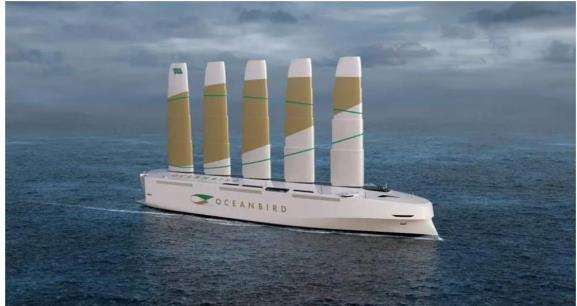
Sails : The sails, typically made from durable, high-tech materials like Dacron or laminated composites, require regular inspection for wear and tear. This includes checking for rips, chafing, or UV damage. Sails might need to be repaired or replaced depending on their condition.
Rigging:Therigging,whichincludesropes,figwires,and pulleys, must be inspected regularly for signs of corrosion, fraying, or stretching. Standing rigging (permanent)andrunningrigging(movable)bothrequire periodictensionadjustmentsandlubrication.
Masts and Spar : Masts and spars, which support the sails, must be checked for structural integrity. This includes inspecting for cracks, corrosion, and ensuring thatallfittingsaresecure.
Winches and Blocks : Modern sail cargo ships use motorized winches and blocks to handle sails. These systems require regular lubrication, inspection for mechanical wear, and testing to ensure they can handle theloadsrequired.
Hydraulic and Electric Systems : Sail control systems, which may include hydraulics or electric motors, need regular maintenance to ensure they are operating correctly. This includes checking for leaks, ensuring proper electrical connections, and replacing worn components.
Emissions Control :While the ship is sail-assisted, it will still have engines for auxiliary power. Emission control systems, such as scrubbers or selective catalytic reduction(SCR)systems,requireregularmaintenanceto complywithenvironmentalregulations.
Safety Gear : Lifesaving equipment, fire suppression systems, and other safety gear must be maintained
International Research Journal of Engineering and Technology (IRJET) e-ISSN:2395-0056
Volume: 11 Issue: 09 | Sep 2024 www.irjet.net p-ISSN:2395-0072
according to maritime regulations, ensuring they are in goodworkingorderatalltimes.
RegularInspections:Routineinspectionsaremandatory toensureallsystems,includingsails,rigging,mechanical, andsafetyequipment,arefunctioningcorrectly.
Certifications : Ships must comply with international maritime regulations, requiring periodic certification from relevant authorities. Maintenance records are crucialforthesecertifications.
6. Difference Between With & With Out Modern Tall Sails in Cargo Ship
Withtallsails Without tall sails
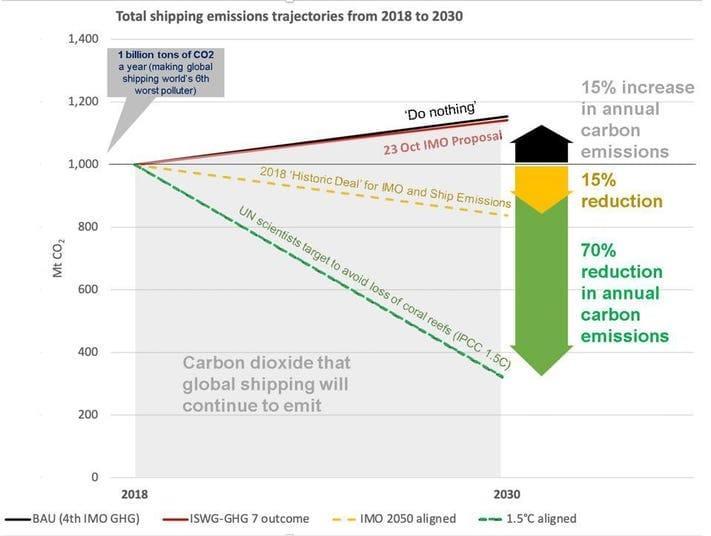
Fig:2 GraphForReducingCarbonEmission
7.Regulatory and Environmental Impact
Compliance with IMO Regulations: The International Maritime Organization (IMO) is pushing for lower emissions, and wind-assisted propulsion helps meet
these targets by reducing fuel consumption and CO2 emissions.
Carbon Footprint Reduction: By relying partially on renewable wind energy, sail-assisted cargo vessels can significantly reduce greenhouse gas emissions, which alignswithglobalsustainabilitygoals.
and Integration
ShipDesignModifications:Cargoshipsmustbedesigned or retrofitted to accommodate sail systems, including space on the deck for mast rigging, or kite systems. Structural reinforcements may be needed to handle the forcesfromthesails.
Automated Controls: Modern tall sail systems rely on automation to deploy, adjust, and retract sails based on windconditions.Sensorsandcomputersystemsmanage sailadjustmentsinreal-time.
Hybrid Propulsion: Sail systems typically complement existing engines, allowing the ship to switch between or combine wind power and traditional fuel-based propulsiondependingonconditions.
Wind Patterns and Routes: Wind-assisted ships benefit most on long oceanic routes with predictable wind patterns. Operators must consider how wind variability willaffectshippingschedules.
Fuel Savings: Dependingon the wind conditionsand the type of sail system, fuel savings can range from 5% to over 20%, contributing to both economic and environmentalbenefits.
CrewTraining:Crewsmustbetrainedtounderstandthe technology and operate the sail systems, especially if manualinterventionsareneeded.
Wind Challenger Project: A project in Japan using rigid sailsoncargoshipstoreducefuelconsumption.
Oceanbird: A Swedish initiative developing a cargo ship poweredprimarilybytallrigidsails.
Michelin's WISAMO: Michelin’s inflatable wing sail technology is designed to retrofit existing vessels to reducefuelconsumption.
MVAfrosbyAnemoiMarineTechnologies
Description: The MV Afros is a bulk carrier equipped with four large rotor sails, known as Flettner rotors. These cylindrical sails spin to generate thrust using the
International Research Journal of Engineering and Technology (IRJET) e-ISSN:2395-0056
Volume: 11 Issue: 09 | Sep 2024 www.irjet.net p-ISSN:2395-0072
Magnus effect, effectively assisting propulsion and reducingfuelusage
SailType:Rotorsails(Flettnerrotors).
PyxisOceanbyCargillandBARTechnologies
Description: The Pyxis Ocean is the world’s first cargo ship fitted with Wind Wings, large solid sails that help harness wind energy. Developed by BAR Technologies, the Wind Wings system is designed to reduce fuel consumptionandemissionsbyasmuchas30%.
SailType:Rigidwingsails.
Energy SailsbyEcoMarinePower
Description: Energy Sails are innovative rigid sails that incorporate solar panels, allowing ships to harness both wind and solar energy. These sails are designed for hybrid vessels and can be adjusted for optimal wind angles.
SailType:Rigidsailswithintegratedsolarpanels.
WindshipTechnology
Description:WindshipTechnologydevelopsvesselswith three large vertical wing sails. These are fixed and designed to provide significant fuel savings, with potentialreductionsofupto30%inemissions.
SailType:Rigidwingsails.
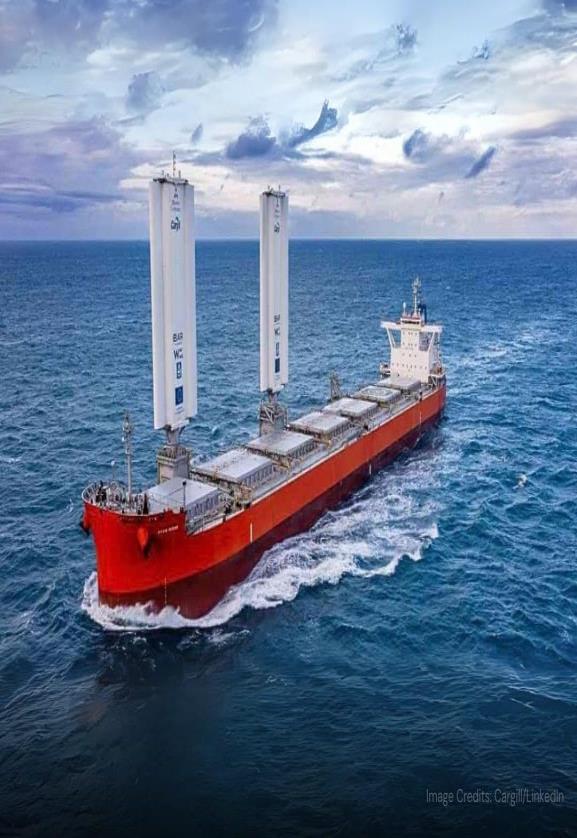
Fig:3 Modern tallsails incargovessels
:
Modern tall sails on cargo ships represent a significant advancement in sustainable maritime technology, offering a practical solution to reduce fuel consumption andlowercarbonemissions.
By integrating advanced wind-assisted propulsion systems with traditional engines, these sails help create more efficient and environmentally friendly shipping operations.
As the industry faces increasing pressure to reduce its environmental impact, the adoption of modern tall sails is poised to play a crucial role in the future of global shipping, blending innovation with the timelesspowerofwind.
Reference
[1] Wind Propulsion for Ships of the Future"* by Hakan Ringsberg(Edito
[2] "SustainableShipping:ACross-DisciplinaryView"by Harilaos N. Psaraftis (Editor) It offers insights into sustainable practices in the maritime industry, includingwind-assistedpropulsion.
[3] "Wind-Assisted Ship Propulsion: The State of the Art" by Andrew G. C. Lesley and Ian Drummond (Editors)
BIOGRAPHIES


IampursuingB.EfinalyearMarine Engineering cadet at PSN College of Engineering & Technology, Tirunelveli,TamilNadu.
IampursuingB.EfinalyearMarine Engineering cadet at PSN College of Engineering & Technology, Tirunelveli,TamilNadu.
International Research Journal of Engineering and Technology (IRJET) e-ISSN:2395-0056
Volume: 11 Issue: 09 | Sep 2024 www.irjet.net p-ISSN:2395-0072


Project Guide cum Assistant Professor PSN College of Engineering & Technology, Tirunelveli, Tamil Nadu. Also having 15 years’ experience in Oil and Gas industries. Specialization in NDT and worked variesGulfCountries
Project Guide cum Assistant Professor PSN College of Engineering & Technology, Tirunelveli, Tamil Nadu. MEO Class-IV Marine Engineer and workedvariesCountries
© 2024, IRJET | Impact Factor value: 8.315 | ISO 9001:2008