
International Research Journal of Engineering and Technology (IRJET) e-ISSN: 2395-0056
Volume: 11 Issue: 09 | Sep 2024 www.irjet.net p-ISSN: 2395-0072

International Research Journal of Engineering and Technology (IRJET) e-ISSN: 2395-0056
Volume: 11 Issue: 09 | Sep 2024 www.irjet.net p-ISSN: 2395-0072
Nandita Gyanchandani1 , Abhishek Govekar2 , Jay Jogad3 , Prof. (Dr) Rajesh Chaudhari4
1,2,3
B.tech ,Mechanical Engineering, Vishwakarma Institute of Technology, Pune, Maharashtra, India
4Prof. (Dr)Rajesh Chaudhari, Dept. of Mechanical Engineering, Vishwakarma Institute of Technology, Pune, Maharashtra, India ***
Abstract - In both Internal Combustion Engine (ICE) vehicles and Electric Vehicles (EVs), weight reduction is crucialduetoitsdirectimpactonfuelefficiency,handling, and overall performance. While aluminum is a promising materialforachievingthisgoal,itsrelativelylowinherent strength poses a challenge. Although certain aluminum alloys offer improved strength, they come at a significant cost, limiting their widespread adoption in automotive applications. This dilemma has driven research into alternativesolutions,suchascompositematerials,tobalance weightreductionwithstructuralintegritywithoutincurring prohibitiveexpenses.Onesuchavenueisthesynthesisand characterizationofanaluminumandboron-likeatom(BLA) composite,whichofferspotentialforimprovedstrengthata lowercost.However,twoprimarychallenges aluminum's lowinherentstrengthandthehighcostofstrongeralloys continuetohinderitsbroaderintegrationintheautomotive industry, forming a critical bottleneck in fully realizing its potential as a transformative material for vehicle manufacturing.
Key Words: Weight reduction, Aluminium, Composite materials, Automotive industry, Strength-to-cost ratio
1.INTRODUCTION
Ceramicparticlefillershavegarneredsignificantattentionin the realm of composite materials due to their profound impact on augmenting the strength of metal matrices. Severalkeymechanismscontributetothisenhancement,as outlinedbelow:
1. ThermalMismatch
2. OrowanMechanism
3. GrainRefinement
1.1 Thermal Mismatch
One of the primary mechanisms through which ceramic particle fillers bolster the strength of metal matrices is through the exploitation of thermal mismatch. When a compositematerialexperiencesachangeintemperature,the components comprising it may expand or contract at differentrates.Ceramicparticles,knownfortheirrelatively low thermal expansion coefficients, introduce localized stress points within the matrix material. This disparity in
thermal response contributes to the reinforcement of the composite'smechanicalproperties.
Ceramicsandmetalsexhibitstrikinglydifferentbehaviorsin responsetotemperaturevariations,aphenomenonknown asthermalexpansion.Ceramicsboastanextraordinarilylow coefficient of thermal expansion, bordering on zero. In contrast,metalspossesscoefficientsof thermal expansion thatarenotablyhigher.Thisstarkdisparityformsthecruxof thethermalmismatchphenomenon.
When subjected to temperature fluctuations, the metal componentofacompositematerialendeavorstoexpandin accordancewithitshighercoefficientofthermalexpansion. However,the embeddedceramicparticles, exemplified by the ceramic compounds found in Boron-Like Atom (BLA), stand in stark contrast. Their inherent resistance to expansioneffectivelyinhibitsthisprocess.
The consequence of this resistance is the emergence of localizedstresspointswithinthematrix.Thesestresspoints give rise to a phenomenon known as local plastic deformation. In essence, the ceramic particles act as fortifying agents, impeding the natural expansion of the metal matrix. This opposition results in heightened mechanicalstrengthwithinthecompositematerial.
Byharnessingthisthermalmismatchmechanism,itbecomes possibletosignificantlyenhancethematerialpropertiesof composites.Thisphenomenonholdsrelevanceinthecontext ofcompositematerialsusedinhigh-stressenvironments,as it provides a means to fortify the material without compromisingotherdesirablecharacteristics.
Inconclusion,thethermalmismatchmechanismstandsasa powerful tool in the pursuit of strengthening composite materials,offeringa viableavenueforachievingmaterials with enhanced mechanical integrity and performance.
The Orowan mechanism is a pivotal phenomenon in strengtheningcompositematerials.Itrevolvesaroundthe impedimentofdislocationmotionwithinthecrystallattice structure of the matrix material. Ceramic particles act as obstacles, hindering the movement of dislocations and therebyenhancingthematerial'sresistancetodeformation.
International Research Journal of Engineering and Technology (IRJET) e-ISSN: 2395-0056
Volume: 11 Issue: 09 | Sep 2024 www.irjet.net p-ISSN: 2395-0072
This mechanism plays a crucial role in fortifying the mechanicalintegrityofthecomposite.
The Orowan mechanism is a fundamental principle that plays a central role in reinforcing composite materials. It hingesonanuancedunderstandingofdislocationbehavior withinthecrystallatticestructureofthematrixmaterial.
Dislocations, or line defects in the crystal lattice, play a significant role in material deformation. They are the primarycarriersofplasticdeformationwithinamaterial.In a composite material, the matrix material's crystal lattice structureservesasthefoundationforthisphenomenon.
Ceramicparticles,suchasthosepresentinBoron-LikeAtom (BLA), assume a critical role in this mechanism. They function as formidable obstacles, impeding the free movementofdislocationswithinthematrixmaterial.This obstruction exerts a twofold effect on the material's mechanicalbehavior.
Firstly, it significantly increases the energy required for dislocation motion, effectively raising the material's resistance to deformation. This heightened resistance translatesintoenhancedstrengthanddurability,makingthe materialmorerobustinthefaceofappliedforces.
Secondly,byimpedingdislocationmovement,theceramic particles facilitate the propagation of other strengthening mechanisms, such as grain boundary strengthening. This synergisticeffectfurtheramplifiesthematerial'smechanical integrity.
In essence, the Orowan mechanism represents a pivotal means of fortifying composite materials. By strategically introducingceramicfillers,suchasthosefoundinBLA,itis possible to effectively modulate dislocation behavior, resultinginacompositematerialwithsuperiormechanical propertiesandresistancetodeformation.
This mechanism not only forms the bedrock of composite strengthening but also holds significant implications for a widearrayofapplicationswheremechanicalrobustnessand resilienceareparamount.
Ceramicparticlefillersexertanotableinfluenceonthegrain structureofthemetalmatrix.Byintroducingtheseparticles, especially at high volume fractions, the growth of grain boundaries is constrained. This leads to a refined microstructure characterized by smaller grain sizes. The presence of finer grains contributes significantly to the overallstrengtheningofthecompositematerial.
Understandingthesefundamentalmechanismsisessentialin harnessing the full potential of ceramic particle fillers in
composite materials. By strategically incorporating these particles,itispossibletotailorthemechanicalpropertiesof the material to meet specific performance requirements, making them highly desirable for diverse applications, includingtheautomotiveindustry.
The influence of ceramic particle fillers on the grain structureofametalmatrixisapivotalaspectincomposite material strengthening. By integrating these particles, particularly at elevated volume fractions, a distinct transformationoccurswithinthemicrostructure.
One of the key outcomes is the suppression of grain boundary growth. In essence, the presence of ceramic particles acts as a constraint, preventing the typical enlargement of grain boundaries. As a consequence, the resulting microstructure exhibits a refined character, characterizedbysignificantlysmallergrainsizes.
Thepresenceoffinergrainsholdsprofoundimplicationsfor theoverallmechanicalstrengthofthecompositematerial. Thisrefinementleadstoanincreaseinthenumberofgrain boundaries, which serve as barriers to dislocation movement.Consequently,thematerial'sresistancetoplastic deformation is augmented, culminating in heightened mechanicalintegrity.
Understanding and harnessing these fundamental mechanismsareimperativeinfullyunlockingthepotential of ceramic particle fillers in composite materials. By judiciouslyincorporatingtheseparticles,itbecomespossible totailorthemechanicalpropertiesofthematerialtoprecise performancespecifications.Thisversatilityrendersceramic particle-filledcompositeshighlysought-afterforadiverse arrayofapplications,withtheautomotiveindustrystanding asaprominentbeneficiaryofthisinnovativeapproach.
In summary, the strategic integration of ceramic particle fillers offers a transformative avenue for enhancing the mechanicalpropertiesofcompositematerials.Throughthe modulationofgrainstructureandassociatedstrengthening mechanisms,thesematerialscanbepreciselyengineeredto meet the stringent demands of various industries, revolutionizing the landscape of materials science and engineering.
The primary objective of this project is to augment the strengthoftheAluminiumalloy(ADC12)byincorporating Boron-Like Atom (BLA) and Rice Husk Ash (RHA) as reinforcingfillers.
International Research Journal of Engineering and Technology (IRJET) e-ISSN: 2395-0056
Volume: 11 Issue: 09 | Sep 2024 www.irjet.net p-ISSN: 2395-0072
Theprojectcanbebrokendownintothefollowingkeysteps:
2.1
Theinitialphaseinvolvestheestablishmentofastircasting apparatus.Thissetupiscriticalforensuringahomogenous distributionofBLAandRHAwithinthemoltenAluminium matrix.
2.2
Thenextstepencompassesthesynthesisofthecomposite material. This is achieved by introducing BLA and RHA fillers, each constituting 2% of the total mixture, into the moltenAluminium.Thestircastingmethodisemployedto facilitate the uniform dispersion of the fillers within the Aluminiummatrix.
2.3
Following the synthesis, specimens are meticulously prepared for subsequent testing. This involves the careful shapingandsizingofthecompositematerialtoconformto testingstandards.
2.4 Characterization:
The final phase of the project revolves around the comprehensivecharacterizationofthecompositematerial. Variousanalyticaltechniqueswillbeemployedtoassessits structural, mechanical, and thermal properties. This will include Scanning Electron Microscopy (SEM) for microstructural analysis and X-ray Diffraction (XRD) for phaseidentification.
Throughthiswell-structuredmethodology,theprojectaims to not only enhance the strength characteristics of the Aluminium alloy but also gain valuable insights into the potential applications of BLA and RHA as effective reinforcingagentsincompositematerials.
3. EXPERIMENTATION WORK
3.1 Stirrer Design
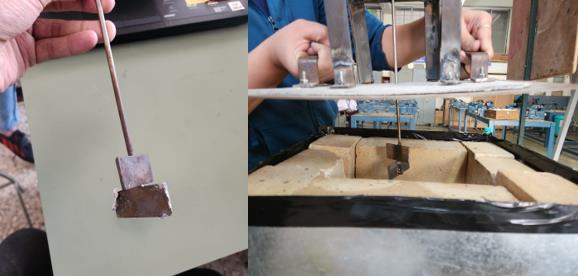
The establishment of the stir casting setup was further informed by a comprehensive study on various stirrer designs, each tailored to specific applications. This comparative analysis considered factors such as usability, advantages, and potential drawbacks associated with different stirrer geometries. The following stirrer designs wereevaluated:
Advantages:
I. Propervortexformation.
II. Reducedagglomeration.
III. Highertensilestrength.
IV. Improvedhardness.
V. Enhancedfillerreinforcemententrapment.
Disadvantages:
I. Tendency towards shrinkage defects, resulting in increasedporosity.
II. Poor mechanical properties due to clustering of particles.
III. Inadequatedistributionofceramicparticles.
IV. Lowertensilestrengthandductility.
V. Significant reduction in percentage elongation.
Advantages:
I. Propervortexformation.
II. Reducedagglomeration.
III. Highertensilestrength.
IV. Improvedhardness.
V. Enhancedfillerreinforcemententrapment.
VI. Lesspronetoshrinkagedefects.
Disadvantages:
I. Minimal disadvantages, making it a favorable choice.
Advantages:
I. Highest improvement in hardness.
II. Similar benefits to Alternate Blades Stirrer. III. Selectedasthemostsuitableoptionforourspecific application.
Themeticulousevaluationofthesestirrerdesignsplayeda pivotal role in shaping the final configuration of the stircasting setup. The Four Side Peddle Blade Stirrer was identifiedastheoptimalchoice,aligningseamlesslywiththe objectives of the project. This selection ensures that the synthesis of the Aluminium and Boron-Like Atom (BLA) compositeproceedswiththehighestdegreeofefficiencyand effectiveness
International Research Journal of Engineering and Technology (IRJET) e-ISSN: 2395-0056
Volume: 11 Issue: 09 | Sep 2024 www.irjet.net p-ISSN: 2395-0072
EntireexperimentationsetupwasbuiltinCATIAv5
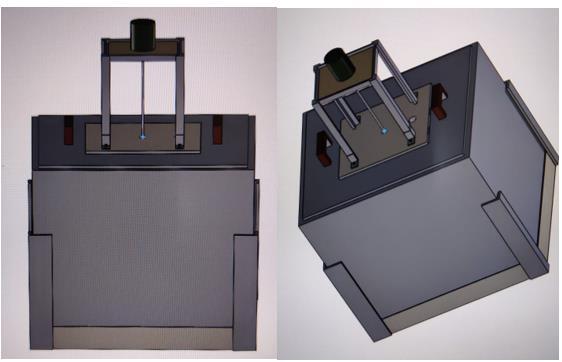
3.3 Setup
Thecornerstoneofthisprojectliesintheestablishmentofa robust stir casting setup, a critical component in the synthesis of the Aluminium and Boron-Like Atom (BLA) composite. The construction of this apparatus involved a meticulous process, integrating conventional machining techniquestoensureprecisionandfunctionality.
The following steps were undertaken to create the stir castingsetup:
3.3.1 Mild Steel Cutting:
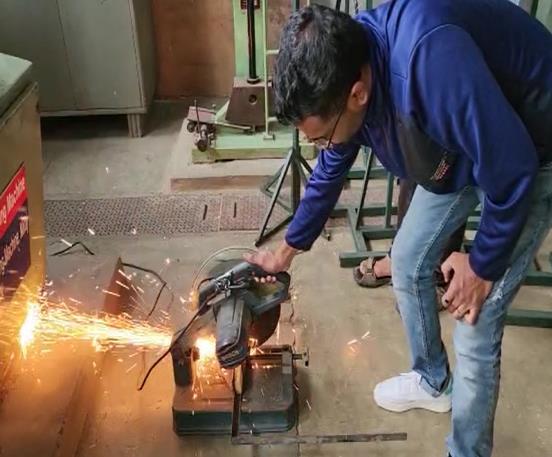
The initial phase involved the fabrication of structural componentsusingmildsteel.Thismaterialwasselectedfor its durability and malleability, ensuring that the resulting componentswouldwithstandtherigorsofthestircasting process.
3.3.2Aluminium Cutting:
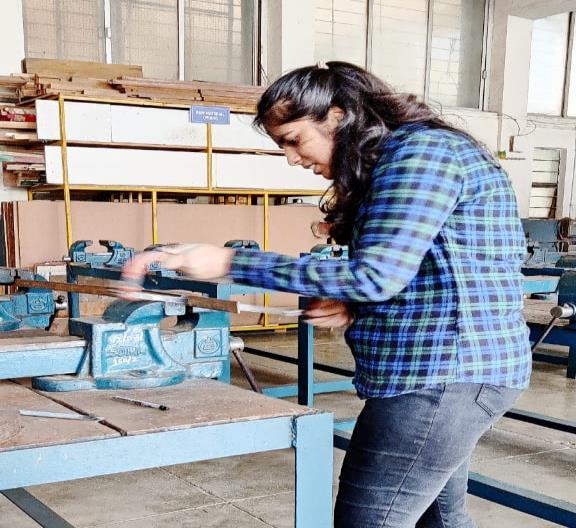
fig4: Aluminium Cutting
Precision-cuttingofAluminiumcomponentswasexecutedto complementthemildsteelframework.Thiswasimperative inachievingcompatibilityandseamlessintegrationbetween thevariouspartsofthestircastingsetup.
International Research Journal of Engineering and Technology (IRJET) e-ISSN: 2395-0056
Volume: 11 Issue: 09 | Sep 2024 www.irjet.net p-ISSN: 2395-0072
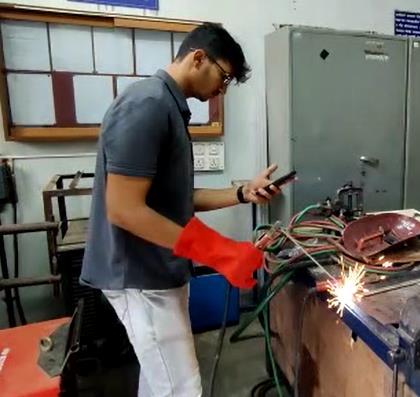
Electric arc welding was employed to join the machined components,creatingacohesiveandstablestructure.This weldingprocessfacilitatedthefusionofbothmildsteeland Aluminium elements, ensuring structural integrity and operationalreliability.
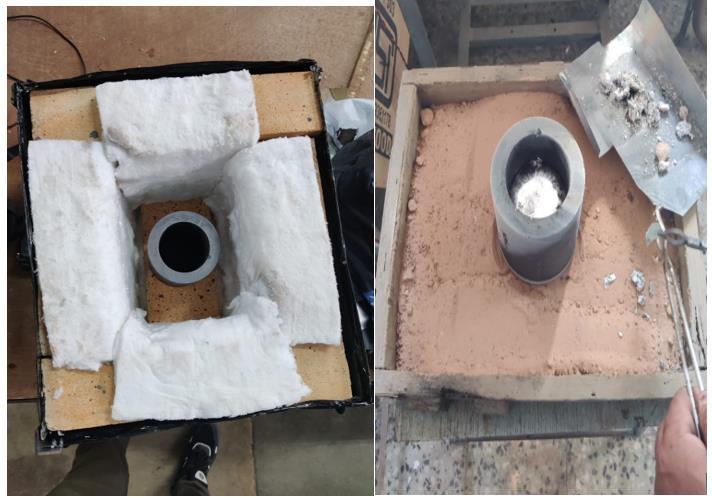
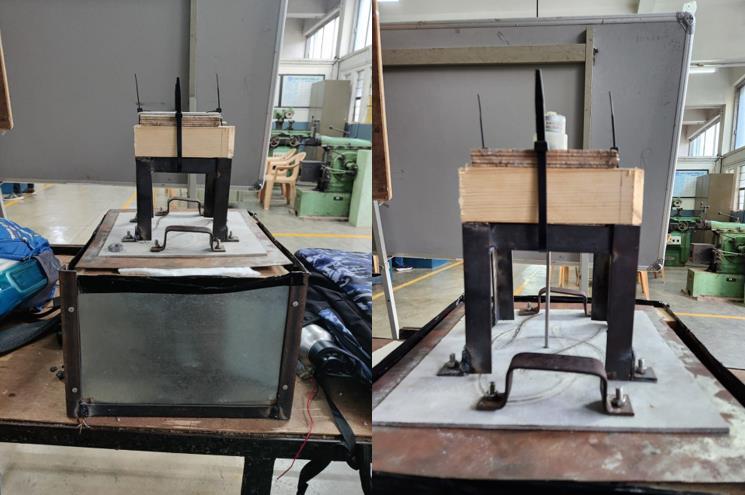
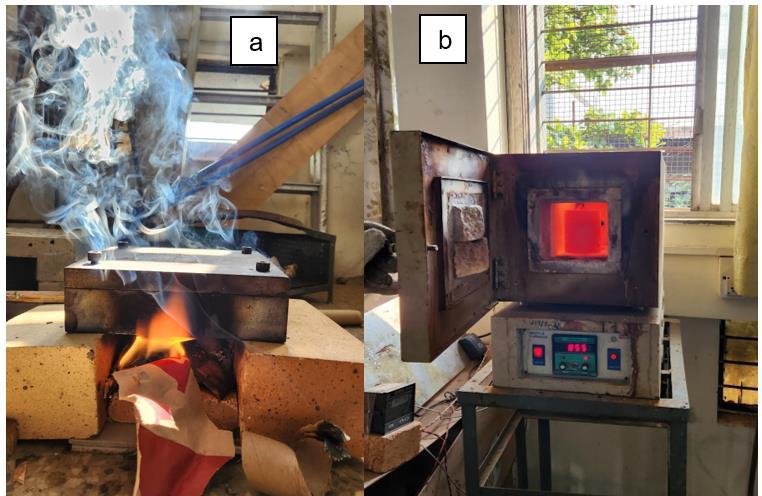
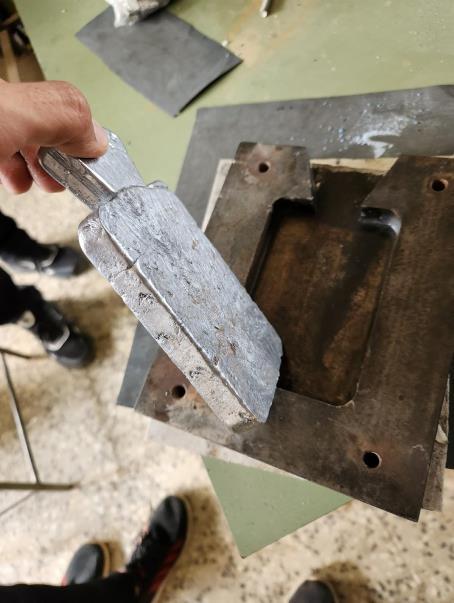
Theculminationoftheseprocessesyieldedapurpose-built stir casting apparatus, engineered to exacting standards. This setup embodies a harmonious marriage of materials and techniques, culminating in a tool that stands ready to facilitatethesynthesisoftheAluminiumandBLAcomposite. The successful construction of this stir-casting setup is a testament to the meticulous planning and execution that underlie the experimental endeavors of this project. It provides a solid foundation for the subsequent stages of compositesynthesisandcharacterization,ensuringthatthe researchobjectivesarepursuedwithprecisionandrigor
International Research Journal of Engineering and Technology (IRJET) e-ISSN: 2395-0056
Volume: 11 Issue: 09 | Sep 2024 www.irjet.net p-ISSN: 2395-0072
Thepreparationofspecimensfortestinginvolvedamultistep process, leveraging a combination of specialized techniquestoensureprecisionandaccuracy.
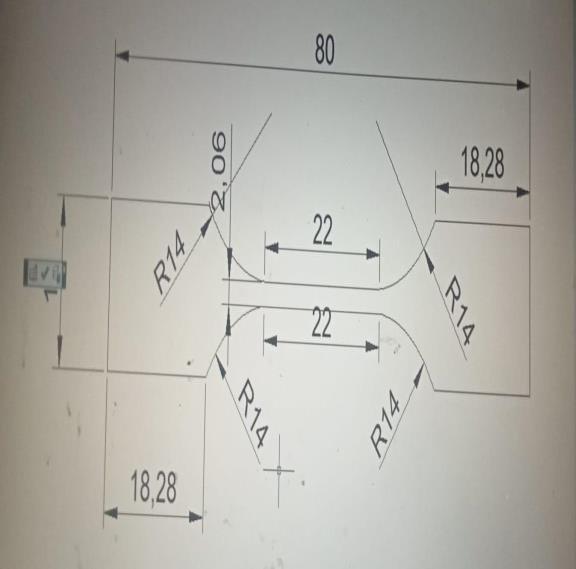
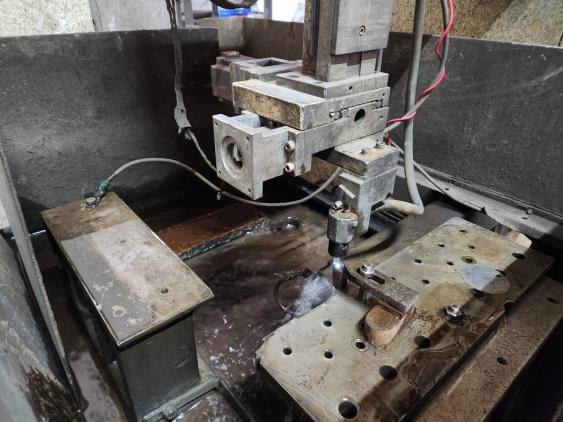
To realize the designs outlined in the AutoCAD drawings, Electrical Discharge Machining (EDM) wire cutting was employed.Thisadvancedmachiningtechniqueenabledthe preciseshapingandcontouringofthematerial,ensuringthat the specimens adhered meticulously to the specified dimensions.EDMwirecutting,knownforitshighprecision andversatility,wasinstrumentalincraftingspecimenswith intricatedetailsandaccuracy
3.5
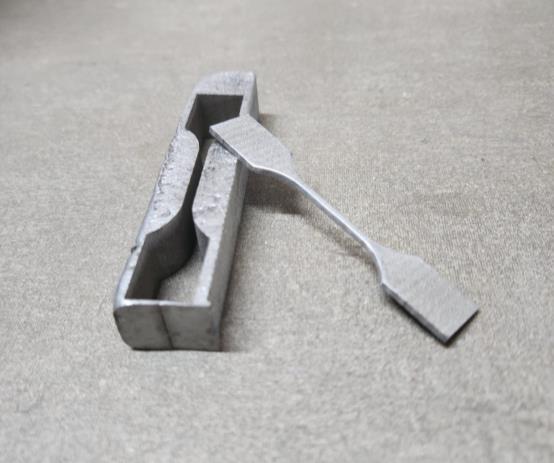
The culmination of these processes yielded the final specimens,exemplifyingtheculminationofcarefulplanning, precision machining, and adherence to stringent specifications. These specimens serve as representative samples for subsequent characterization tests, offering invaluable insights into the mechanical properties and performanceoftheAluminiumandBoron-LikeAtom(BLA) composite.
ThesynthesisoftheAluminiumandBLAcompositeyielded promising outcomes. The observed increase in material strength can be attributed to several key factors. The thermalmismatchmechanism,whereinthelowcoefficientof thermal expansion of ceramic particles inhibits the expansion of the metal matrix, resulted in local plastic deformationsandheightenedmechanicalstrength.
Additionally, the Orowan mechanism, which impedes dislocationmotionwithinthecrystallatticestructure,played acrucialrole.Ceramicparticlesactedasobstacles,hindering dislocation movement and enhancing the material's resistancetodeformation.Furthermore,theintroductionof ceramic fillers led to grain refinement, resulting in a microstructure characterized by smaller grain sizes and increasedmechanicalstrength.
Thesuccessofthisprojectunderscoresthesignificanceof understandingandharnessingthefundamentalmechanisms thatgovernthebehaviorofcompositematerials.Thecareful selection of stirrer design, guided by the principles of thermal mismatch, the Orowan mechanism, and grain refinement, played a pivotal role in achieving the desired outcome.
The future scope of the project involves a comprehensive characterization endeavor, including tensile testing, hardnesstesting,SEManalysis,andXRDanalysis.Thesetests willprovidedeeperinsightsintothematerial'smechanical andstructuralproperties,furthervalidatingitssuitabilityfor automotiveapplications.
In conclusion, the synthesis and characterization of the Aluminium and BLA composite not only represents a significantadvancementinmaterialsciencebutalsoholds thepotentialtorevolutionizetheautomotiveindustry.This projectstandsasatestamenttotheingenuity,precision,and
International Research Journal of Engineering and Technology (IRJET) e-ISSN: 2395-0056
Volume: 11 Issue: 09 | Sep 2024 www.irjet.net p-ISSN: 2395-0072
meticulous planning that underlie the development of advancedmaterialsforcriticalapplications.
The synthesis and characterization of the Aluminium and Boron-Like Atom (BLA) composite represent a significant milestone in the pursuit of advanced materials for automotiveapplications.Thisprojectaimedtoaddressthe challengesassociatedwithweightreductioninautomobiles, regardlessofwhethertheyareInternalCombustionEngine (ICE)vehiclesorElectricVehicles(EVs).
Through a meticulous methodology involving the construction of a purpose-built stir casting setup and a comprehensive study of stirrer designs, the project successfully synthesized the composite material. The selection of the Four Side Peddle Blade Stirrer proved instrumentalinachievingthedesiredresults.
The literature review highlighted three key mechanismsthermal mismatch, the Orowan mechanism, and grain refinement - that contribute to the strengthening of composite materials. These mechanisms were carefully consideredintheselectionofthestirrerdesignandplayeda pivotalroleinthesuccessfulsynthesisoftheAluminiumand BLAcomposite.
The future scope of this project encompasses a comprehensivecharacterizationendeavor,aimedatgaining deeper insights into the mechanical and structural properties of the Aluminium and Boron-Like Atom (BLA) composite.Theplannedcharacterizationmethodsinclude
TensileTest:
A tensile test will be conducted to assess the material's mechanical behavior under axial loading. This test will provide crucial data on parameters like ultimate tensile strength,yieldstrength,and percentageelongation.These metrics are instrumental in evaluating the material's performanceinresponsetoappliedforces.
HardnessTest:
Hardnesstestingwillbeemployedtoquantifythematerial's resistance to deformation. This test offers valuable information on the material's hardness profile, which is indicativeofitsabilitytowithstandlocalizedstresses.This dataiscriticalforunderstandingthematerial'ssuitabilityfor specificapplications.
ScanningElectronMicroscopy(SEM):
SEManalysiswillbeconductedtoprobethemicrostructure of the composite at high magnification. This technique enables a detailed visual examination of the surface morphology, providing crucial insights into grain
boundaries, filler dispersion, and any potential microstructuralirregularities.
X-rayDiffraction(XRD):
XRD analysis will be employed to elucidate the crystallographic structure of the composite material. This technique will identify the phases present, offering vital information on the composition and crystalline characteristicsofthematerial.
The execution of these characterization tests represents a significantstridetowardsacomprehensiveunderstandingof theAluminiumandBLAcomposite.Thedatagleanedfrom these analyses will not only validate the efficacy of the synthesis process but will also serve as a cornerstone for future advancements and applications of the composite material.
This ambitious future scope underscores the project's commitmenttoadvancingthefieldofcompositematerials, with a specific focus on enhancing the performance and viabilityofAluminium-basedalloysincriticalapplications.
WewouldliketothankVishwakarmaInstituteofTechnology (VIT)forprovidinguswithaplatformforproducingsucha wonderfulproject.WewouldliketoacknowledgeourGuide facultyProf.Dr.RajeshChaudhariforhisincrediblesupport andguidanceforthisproject.
[1] DislocationGenerationDuetoDifferencesbetweenthe CoefficientsofThermalExpansionR.J.ARSENAULTand N.SHIEngineeringMaterialsGroup,andMetallurgical Materials Laboratory, University of Maryland, College ParkM. Young, The Technical Writer’s Handbook. Mill Valley,CA:UniversityScience,1989.
[2] Microstructureandsome mechanical propertiesoffly ash particulate reinforced AA6061 aluminum alloy composites prepared by compocasting J. David Raja Selvam
[3] Strengthening Of Mechanical And Tribological PropertiesOfAl-4.5%CuMatrixAlloyWithTheAddition OfBambooLeafAshPraveenKumarBannaravuriEtAl.
[4] SynthesisAndCharacterizationOfAluminium-Bamboo Leaf Ash Metal Matrix Composite By Stir Casting TechniqueKammuluri.Baburaja,EtAl.
[5] DesignAndFabrication OfBladeSystemStirrer Setup ForStirCastingMachineMr.R.SriSabarinathan
International Research Journal of Engineering and Technology (IRJET) e-ISSN: 2395-0056
Volume: 11 Issue: 09 | Sep 2024 www.irjet.net p-ISSN: 2395-0072

NanditaGyanchandani,(B.Techin Mechanical Engineering, Vishwakarma Institute of Technology)


Abhishek Govekar, (B.Tech in Mechanical Engineering, Vishwakarma Institute of Technology)



Parikshit Gokhale, (B.Tech in Mechanical Engineering, Vishwakarma Institute of Technology)
Professor (Dr) Shrinivas Chippa, Department of Mechanical Engineering,VIT,Pune.