
International Research Journal of Engineering and Technology (IRJET) e-ISSN: 2395-0056
Volume: 11 Issue: 09 | Sep 2024 www.irjet.net p-ISSN: 2395-0072

International Research Journal of Engineering and Technology (IRJET) e-ISSN: 2395-0056
Volume: 11 Issue: 09 | Sep 2024 www.irjet.net p-ISSN: 2395-0072
Pratibha Yadav1
1MLIS, Assistant Librarian, Central Library, Shri Ramswaroop Memorial University, Uttar Pradesh, India
Abstract - Cloudcomputingisrevolutionizinguniversity libraries by transforming how resources are accessed, managed,anddelivered.Thistechnologyenableslibraries toofferseamlessaccesstovastdigitalarchives,databases, and e-resources from anywhere, at any time. By shifting data storage, cataloging, and processing to the cloud, libraries can optimize space, reduce costs, and enhance collaboration among users. Cloud-based services also facilitate the integration of advanced tools like data analytics, artificial intelligence, and personalized user experiences.Asa result,universitylibrariesare becoming more agile, responsive, and capable of meeting the evolving needs of students, faculty, and researchers in a digital-firstworld.
Keywords- Cloud computing, university libraries, seamless access, data storage, enhance collaboration, integration.
The advent of cloud computing has marked a significant turning point in the evolution of university libraries, redefininghowtheyoperateandservetheircommunities. Traditionally, libraries have been the custodians of physical and digital collections, tasked with providing access to knowledge, supporting research, and fostering learning environments. However, the rapid growth of digital resources coupled with increasing demands for remote access and collaboration has challenged the conventionalmodelsoflibraryservicedelivery.
Cloud computing offers a solution to these challenges by enabling libraries to move beyond the limitations of physical infrastructure. It allows for the storage, management, and dissemination of vast amounts of data through remote servers, making resources available anytime, anywhere, and on any device. This shift not only enhances accessibility but also improves efficiency in managing collections, automating processes, and providingpersonalizedservicestousers.
Moreover, the integration of cloud technologies facilitates collaboration among institutions, enabling shared access to resources and the development of consortium networks. As university libraries increasingly embrace cloud computing, they are positioned to offer more dynamic, scalable,and Providing affordable services that
satisfy the various demands of their clients in a dynamic academicenvironment.

A new technology known as "cloud computing" makes it possible to provide computer services via the internet, often known as "the cloud."including storage, processing power, networking, and software. Cloud computing gives users access to these resources through distant servers housed in data centres all over the world, in contrast to conventional computing, which stores data and applications on local servers or personal PCs. The transition from local to remote computing has brought about a great deal of efficiency, scalability, and flexibility in the way that people and organisations utilise and manage technology. Generally speaking, there are three mainservicemodelsforcloudcomputing:
2.1. Infrastructure as a Service(IaaS):This idea allows virtualised computer resources to be accessed online, including networking, storage, and virtual PCs. Users may adjust resource levels based on demand, only paying for whattheyreallyneed.InfrastructureasaService(IaaS)is idealforcompaniesthatwantagreatdealofflexibilityand control over their IT infrastructure without having to worryaboutmaintainingphysicalhardware.
2.2. Platform as a Service(PaaS): With the help of PaaS, developers can design, test, and publish applications without worrying about the infrastructure supporting
International Research Journal of Engineering and Technology (IRJET) e-ISSN: 2395-0056
Volume: 11 Issue: 09 | Sep 2024 www.irjet.net p-ISSN: 2395-0072
them. It provides middleware, databases, and development tools that streamline the application development process. This approach is particularly beneficial for developers who would rather focus on code andcreativityratherthaninfrastructuremanagement.
2.3. Software as a Service(SaaS): SaaS is an online software application delivery mechanism that is based on subscriptions. Installing, updating, and maintaining these applications is not necessary for users since they may access them from any device that has an internet connection. Typical examples are email services, CRM (customer relationship management) applications, and collaborationtools.
3. Role of Cloud Computing in University Libraries
Cloudcomputinghasemergedasatransformativeforcein various sectors, including education. University libraries, in particular, have embraced cloud computing to enhance their services, improve accessibility, and optimize resource management. By leveraging cloud technologies, university libraries can better serve their academic communities, offering a more efficient and collaborative environmentforstudents,faculty,andresearchers.
3.1. Enhanced Accessibility and
One of the most significant roles of cloud computing in universitylibrariesisimprovingaccessibility.Cloud-based platforms enable students and faculty to access library resources from anywhere, at any time. Whether it's ebooks, journals, or databases, cloud computing ensures that users are not restricted by location or time, making academicresourcesavailable24/7.
Remote Access: Cloud-based library systems allow users to access digital resources remotely. Thisisparticularlybeneficialfordistancelearning
studentsandfacultyworkingoff-campus,whocan accessthesameresourcesasthoseoncampus.
Mobile Accessibility: Many cloud services are optimized for mobile devices, enabling users to access library resources on smartphones and tablets, making learning and research more flexible.
Cloudcomputingplaysacrucialroleinthemanagementof library resources. With cloud-based Library Management Systems(LMS),librariescanstreamlineoperationssuchas cataloging, circulation, and acquisitions. Cloud platforms also offer scalabilities, allowing libraries to expand their digital collections without the need for significant investmentsinphysicalinfrastructure.
Centralized Management: Cloud computing allows for centralized management of library resources,reducingredundancyandensuringthat resourcesareefficientlyutilized.
Scalability: As the demand for digital resources grows, cloud platforms can easily scale to accommodate larger collections and more users withouttheneedforadditionalphysicalstorage.
Cost Efficiency: By moving to the cloud, libraries can reduce costs associated with maintaining onpremises servers, IT infrastructure, and software upgrades. Cloud providers handle these aspects, allowing libraries to focus on delivering services totheirusers.
Cloud computing fosters collaboration and knowledge sharing within academic communities. By providing a platformforreal-timecollaboration,cloudservicesenable students, researchers, and faculty to work together more effectively.
Collaborative Tools: Cloud-based tools such as Users may work together in real-time on papers, presentations,andresearchprojectsusingGoogle Workspace and Microsoft 365. These tools are integrated into many university library systems, facilitatinggroupworkandresearch.
Shared Resources: Libraries can create shared digital spaces where academic resources are easily accessible to multiple users, promoting knowledgesharingandcollaborativelearning.
University libraries often serve as repositories for academic research, theses, dissertations, and other scholarly materials. Cloud computing provides a robust
International Research Journal of Engineering and Technology (IRJET) e-ISSN: 2395-0056
Volume: 11 Issue: 09 | Sep 2024 www.irjet.net p-ISSN: 2395-0072
solutionforstoring,preserving,andaccessingthesedigital assets.
Digital Preservation: Cloudstorage ensuresthat valuable academic resources are preserved and protected from physical damage, loss, or degradation. This is particularly important for rareorsensitivematerials.
Open Access Repositories: Many universities use cloud-based platforms to host open access repositories, making academic research freely available to the public. This promotes the dissemination of knowledge and enhances the university’sacademicimpact.
Cloudcomputingenableslibrariestoharnessthepowerof dataanalytics,improvinguserexperiencesandoptimizing libraryservices.Byanalyzingusagepatterns,librariescan gaininsightsintouserbehaviorandpreferences.
Personalized Recommendations: Cloud-based analytics can help libraries offer personalized recommendations to users, suggesting books, articles,ordatabasesbasedontheirinterestsand pastusage.
Resource Optimization: Data analytics can also inform libraries about which resources are most in demand, helping them make informed decisionsaboutacquisitionsandsubscriptions.
While cloud computing offers numerous advantages, it also requires careful consideration of security and compliance issues. University libraries must ensure that sensitive data, such as user information and academic research,isprotectedinthecloud.
Data Security: To secure data, cloud providers often incorporate multi-factor authentication and other sophisticated security features. However, libraries must ensure that their cloud solutions comply with institutional policies and legal regulations,suchasGDPR.
Compliance: Libraries must work with cloud providers to ensure compliance with academic and governmental regulations regarding data privacyandintellectualproperty.
Cloud computing plays a pivotal role in the modern universitylibrary,offeringenhancedaccessibility,efficient resource management, and opportunities for collaboration. By adopting cloud technologies, libraries can provide better services to their academic communities, ensuring that students and faculty have the toolstheyneedtosucceedintheirresearchandlearning..
Libraries in India have historically been vital centers for learning and knowledge dissemination. However, with rapid advancements in technology and changes in user expectations, Indian libraries face both challenges and opportunities. The present situation of Indian libraries reflects a dynamic landscape where traditional practices are being reassessed in light of digital transformation, resourceconstraints,andevolvingeducationalneeds.
The installation of cloud-based library management systems (LMS) is the main use of cloud computing in university libraries. These systems allow libraries to manage their collections, circulation, acquisitions, cataloging,anduseraccountsonacloudplatform.
Themainuseofcloudcomputinginacademiclibrariesare the development of digital libraries. Cloud-based platformsallowlibrariestostorevastcollectionsofdigital content, including e-books, journals, databases, and multimedia resources, enabling easy and remote access forstudentsandfaculty.Theflexibilityofcloudcomputing ensures that libraries can scale their digital collections according to demand without the need for substantial investmentinphysicalinfrastructure.
Cloudcomputingprovidesuniversitylibrarieswithrobust data storage solutions. Unlike traditional on-premises storage systems, cloud storage is scalable, cost-effective, and offers enhanced security features. Libraries can store a significant amount of data, including digital archives, research datasets, and institutional repositories in the cloud. Additionally, cloud-based data management systems facilitate better organization, retrieval, and preservationofinformation.
Cloud computing supports collaboration among academic institutions by enabling libraries to share resources and services. Through cloud-based platforms, universities can participate in consortia that pool resources, negotiate collective access to databases, and share digitization projects. This collaborative approach enhances resource availabilityandreducescosts.Moreover,cloud-basedtools enable real-time collaboration among librarians, researchers, and students, promoting knowledge sharing andacademicproductivity.
2024, IRJET | Impact Factor value: 8.315 | ISO 9001:2008
International Research Journal of Engineering and Technology (IRJET) e-ISSN: 2395-0056
Volume: 11 Issue: 09 | Sep 2024 www.irjet.net p-ISSN: 2395-0072
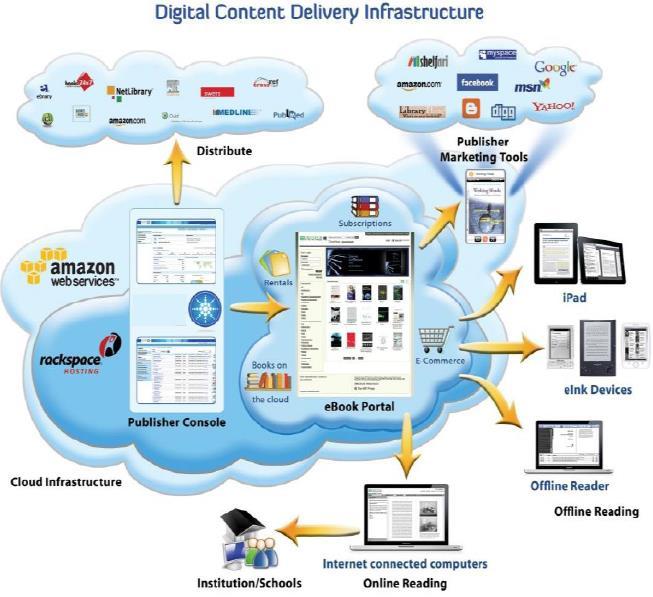
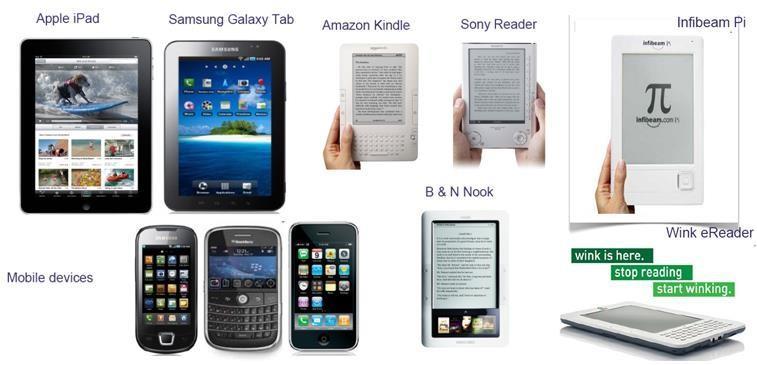
Cloud computing has significantly impacted the way digitalcontentisconsumed,particularlyintherealmofebooks. E-book readers, such as Amazon Kindle, Kobo, and Nook, leverage cloud computing to enhance user experiencesbyofferingseamlessaccesstovastlibrariesof digitalbooks,synchronizationacrossdevices,andefficient storage solutions. This theory explores the various ways cloud computing is utilized by e-book readers and its implicationsforbothusersandthepublishingindustry.
Cloud computing offers a wide array of benefits for university libraries, fundamentally enhancing their ability to serve students, faculty, and researchers in a rapidly changing digital environment. Here are some of the key advantages:
Through cloud computing, library patrons may access digital materials, databases, and services on any time, from anywhere, and on any device with an internet connection. This flexibility is particularly beneficial for distance learners, researchers working remotely, and faculty members who require access to library materials outside of traditional operating hours. It ensures that the library's resources are always available, breaking down geographicalandtemporalbarrierstoinformationaccess.
University libraries may save expenses associated with maintaining hardware, IT infrastructure, and physical servers by using cloud-based services. By managing and maintainingtheunderlyinginfrastructure,cloudproviders enable libraries to only pay for the resources they really utilise. By switching from capital expenditures (CapEx) to operational expenditures (OpEx), budgetary resources
may now be allocated to more pressing requirements, suchasimprovinguserservicesorgrowingcollections.
Cloud computing offers virtually unlimited storage capacity,allowinguniversitylibrariestoscaletheirdigital collections without the constraints of physical storage space. As the volume of digital content grows whether through digitization projects, subscription to e-resources, or user-generated content libraries can easily scale up their storage solutions to accommodate this growth. Additionally, the cloud’s elasticity allows libraries to adjust their resource usage based on demand, such as duringpeakperiodslikeexamseasons.
Cloud-based platforms facilitate collaboration among institutions, enabling university libraries to participate in consortium networks and resource-sharing initiatives. This capability allows libraries to pool resources, share access to specialized databases, and collaborate on joint researchprojects.Suchcollaborationnotonlyenrichesthe resources available to users but also fosters a sense of communityamongacademicinstitutions.
Cloud computing provides advanced data management tools that help university libraries organize, catalog, and retrieve information more efficiently. Many cloud providers also offer robust security measures, including encryption, automated backups, and disaster recovery solutions, ensuring that library data is protected against loss,theft,orcyberattacks.Thesefeaturesareoftenmore sophisticated than what a single library could implement onitsown.
By automating routine tasks such as cataloging, user authentication, and circulation management, cloud computing can significantly streamline library operations. This automation reduces the workload on library staff, allowing them to focus on more strategic initiatives such as user engagement, program development, and personalized support for researchers. Additionally, cloudbased systems can integrate with other institutional services, creating a more cohesive and efficient campus environment.
The cloud provides university libraries with the tools and platforms to experiment with new technologies and services, such as Artificial Intelligence(AI), Machine Learning(ML), and Big Data analytics. These technologies can be used to enhance search capabilities, provide
International Research Journal of Engineering and Technology (IRJET) e-ISSN: 2395-0056
Volume: 11 Issue: 09 | Sep 2024 www.irjet.net p-ISSN: 2395-0072
personalized recommendations, and analyze user behaviortoimprovelibraryservices.Thecloud’sflexibility allows libraries to pilot new initiatives with minimal risk, scalingsuccessfulprojectsasneeded.
Cloud computing may help university libraries achieve their environmental sustainability objectives by minimising the requirement for physical equipment and optimising energyuse. Inadditiontolettinglibrariestake advantage of the economies of scale offered by cloud providers, cloud data centres are often more energyefficientthanconventionalon-premisesdatacentres.
Overall, the adoption of cloud computing empowers university libraries to be more agile, responsive, and forward-thinking, positioning them to meet the evolving needs of their academic communities while optimizing resourcesandenhancingservicedelivery.
Cloud computing has brought numerous benefits to university libraries, including enhanced access to resources, cost savings, and improved collaboration. However, alongside these advantages, the adoption of cloud technologies also presents a range of challenges. University libraries must carefully navigate issues related to data security, privacy, vendor lock-in, and the digital divide. Additionally, the reliance on cloud infrastructure introduces concerns around internet dependency and the control of digital resources. Understanding these challenges is crucial for libraries to effectively implement cloudcomputingsolutions whilesafeguardingtheirusers' interestsandmaintainingtheintegrityoftheirservices.
While cloud computing offers enhanced security features, it also raises concerns about data privacy and the protection of sensitive information. University libraries must ensure that cloud service providers comply with legalandregulatoryrequirementsfordata protectionand that they have robust measures in place to prevent unauthorizedaccess.
7.2. Reliance on internet access
Cloud computing relies heavily on stable and high-speed internet connections. In regions, where internet infrastructure is less developed, libraries may face challenges in fully leveraging cloud-based services. Interruptions in connectivity can disrupt access to resourcesandhinderservicedelivery.
A library may have vendor lock-in if they are dependent on a single cloud service provider, making it difficult for them to move to a different provider because of compatibility problems or costly migration costs. Furthermore, there may be issues with compatibility across several cloud platforms, especially when libraries employmanycloudservicesforvariouspurposes.
Cloud computing has become a vital tool for university libraries, enabling them to manage resources more efficiently, improve access to digital content, and collaboratewithotherinstitutions.Althoughtherearestill issues with data security and vendor lock-in, cloud computing offers advantages including cost effectiveness andalsoscalability.,andenhanceduserexperience,makes it an essential component of modern library services. As cloud technologies continue to evolve, university libraries arewell-positionedtoharnesstheseinnovationstobetter servetheiracademiccommunitiesandsupportthepursuit ofknowledge.
With continuous improvements in cloud technology and growingusageintheacademicsector,cloudcomputingin universitylibrariesseemstohaveabrightfuture.Inorder to further improve resource management and user experience, libraries are probably going to keep growing their cloud-based services and incorporating Machine Learning (ML) and Artificial Intelligence (AI). Furthermore,thecreationofhybridcloudmodelscouldbe able to address some of the issues surrounding cloud computing and provide libraries more flexibility and controlovertheirdataandservices.
[1] Armbrust, M., et al. (2010). "A View of Cloud Computing." Communications of the ACM, 53(4), 50-58.
[2] Chiu, D. K., et al. (2014). "Data Management in the Cloud: Challenges and Opportunities." Journal of Cloud Computing: Advances, Systems, andApplications,3(1),2-15.
[3] Mell, P., & Grance, T. (2011). "The NIST Definition of Cloud Computing." National InstituteofStandardsandTechnology.
[4] Smith,M.(2012)."CloudComputinginLibraries: A Librarian's Perspective." Library Technology Reports,48(6),27-38.
[5] Liu, G., & Cai, Y. (2013). Cloud Computing and Libraries: A Perspective. Library Hi Tech, 31(1), 9-19.
International Research Journal of Engineering and Technology (IRJET) e-ISSN: 2395-0056
Volume: 11 Issue: 09 | Sep 2024 www.irjet.net p-ISSN: 2395-0072
[6] Breeding, M. (2012). Cloud Computing for Libraries.AmericanLibraryAssociation.
[7] Corrall, S., & Cox, A. M. (2014). The Impact of Cloud Computing on Academic Libraries. In The Changing Role of Academic Libraries in the Digital Age, edited by D. Baker & W. Evans, ChandosPublishing.
[8] Rhoton, J., & Haukioja, R. (2011). Cloud Computing Architected: Solution Design Handbook.RecursivePress.
[9] Zhang, Y., & Chiu, D. K. W. (2012). A Survey on Cloud Computing for Education and Research.Proceedings of the 2012 IEEE International Conference on Cloud Computing TechnologyandScience,578-583.
[10] San Jose State University (SJSU) School of Information. (2019). Cloud Computing in Libraries.[Webinar].SanJoseStateUniversity.
[11] Gartner Research. (2020). Top Trends in Cloud Computing and Their Impact on Academic Institutions.Gartner,Inc