
International Research Journal of Engineering and Technology (IRJET) e-ISSN:2395-0056
Volume: 11 Issue: 09 | Sep 2024 www.irjet.net p-ISSN:2395-0072

International Research Journal of Engineering and Technology (IRJET) e-ISSN:2395-0056
Volume: 11 Issue: 09 | Sep 2024 www.irjet.net p-ISSN:2395-0072
Sasikumar vairam¹, Selvalakshmi S², A C Mariappan³, G Peter Packiaraj⁴
¹,2Final year B.E Marine Cadets, PSNCET, Tirunelveli, Tami Nadu ³,4Assistant Professor, Department of Marine Engineering, PSNCET, Tirunelveli, Tamil Nadu
abstract:
The paper explores The integration of Artificial Intelligence (AI) with turbocharger systems in pump applications to enhance performance, efficiency, and reliability. Turbochargers are widelyusedtoincreasetheoutputandefficiencyofpumps by harnessing exhaust or waste energy to boost performance. However, traditional turbocharger systems have limitations in adapting to varying operational conditions and require regular maintenance to prevent failures. The introduction of AI into these systems addresses these challenges by enabling real-time monitoring, predictive maintenance, andadaptive control. AI algorithms can analyze a wide range of data inputs, including pressure, temperature, flow rates, and operational loads, to optimize the turbocharger’s performance dynamically. This results in more precise control of the pump system, leading to significant energy savings, reduced operational costs, and extended equipment lifespan. Additionally, AI-driven predictive maintenanceminimizesdowntimebyforecastingpotential failures before they occur, ensuring that maintenance is performedproactivelyratherthanreactively.Theadaptive capabilities of AI also allow the turbocharger to adjust to changing environmental conditions and varying fluid properties, maintaining optimal pump performance under diversescenarios.Thepaperconcludesthattheintegration of AI with turbocharger systems in pumps represents a substantial technological advancement, offering significant benefits in terms of efficiency, reliability, and overalloperationaleffectiveness.
KEY WORDS:
Artificial intelligence, Turbocharger, Pump, Shaft, Impeller,Casing
1. INTRODUCTION:
Inrecenttheyearsthe Scientific and public awareness on environmental and energy issues has brought in major interests to the research of advanced technologies particularly in highly efficient internal combustion engines. Viewing from the socio-economic perspective, as the level of energy consumption is directly proportional to the economic
development and total number of populations in a country, the growing rate of population in the world today indicates that the energy demand is likely to increase. It seems you’re asking about the process or impact of introducing a pump after the utilization of a turbocharger, likely in the context of an internal combustion engine or a similar system. Here’s a general explanation
Turbocharger Basics:
A turbocharger is Devicethatincreasesthepressureoftheairenteringthe engine, allowing more fuel to be burned and thus increasing power output. It works by using the exhaust gases to spin a turbine, which then drives a compressor thatforcesmoreairintotheengine.
Pump Introduction:
Afterthe turbocharger Hascompressedtheair,apump(suchasafuelpumpor an oil pump) might be introduced to ensure that the necessary fluids (fuel, oil, etc.) are delivered at the requiredpressureandflowrate.
1.2 Possible Scenarios
Fuel Pump:
Afterturbocharging,a High-pressure fuel pump might be needed to inject the fuel at the correct pressure, ensuring optimal combustion in the engine cylinders. Oil Pump: The turbocharger itself might require a separate oil pump to ensure it is properly lubricated, especially since turbochargers operate at very high temperatures and speeds. Cooling Pump: Some systems might also introduce a cooling pump after the turbocharger to managetheincreasedheatgeneratedbythecompressed airandtheengine.
If you meant something more specific, feel free to elaborate!
International Research Journal of Engineering and Technology (IRJET) e-ISSN:2395-0056
Volume: 11 Issue: 09 | Sep 2024 www.irjet.net p-ISSN:2395-0072
2 COMPONENTS OF UTILIZATION OF PUMP BY USING AI AFTER TURBOCHARGER:
Here are the Components of the after turbocharger utilization of pump: Turbocharger: Compresses air and supplies it to theengine,increasingpowerandefficiency.
Pump: Supplies fuel to the engine’s cylinders, matchingtheincreasedairdemand.(Fuelinjectionpump or fuel supply pump) Engine Control Unit (ECU): Processes sensor data, controls pump operation, and integratesAIalgorithm.
Sensors:
- Pressuresensors -Temperaturesensors -Flowratesensors -Boostpressuresensors -Enginespeedsensors
[1]AI Algorithm:
Optimizes pump operation, fuel flow rate, pressure,andinjectiontiminginreal-time.
[2] Fuel Injection System:
Delivers fuel to engine cylinders at optimized pressureandtiming.
[3] Fuel Supply System: Providesfueltothepumpatoptimalpressure andflowrate.
[5] Cooling System: Regulatesengineandpumptemperature.
[6] Electrical System: PowersECU,sensors,andpump.
[7]Data Logger: Recordsengineperformance,sensordata,and AIalgorithmoutputsforanalysisandoptimization.
These components work together to optimize engine performance, efficiency, and reliability by leveraging AIdrivenpumpoperationafterturbochargerinstallation.
3. WORKING OF UTILIZATION OF PUMP BY USING AI AFTER TURBOCHARGER:
3.1Turbocharger-driven pumps:
Inthis configuration, Theturbocharger’sshaftisdirectlyconnectedtoapump, typically a centrifugal pump or a screw pump. The
turbocharger’s energy is used to drive the pump, which cansupplyfluidslikefuel,oil,orwater.
3.2Mechanically driven pumps:
Theturbocharger’shaft Can be connected to a mechanically driven pump, such asagearpumporavanepump.Thissetupisoftenused in industrial processes, like fuel injection or hydraulic systems.
3.3 Hydraulic pumps:
Theturbocharger shaft
Can also drive a hydraulic pump, which can power hydraulic systems, like steering, braking, or lifting applications.
3.4 WORKING PROCESS:
Turbocharger Boost:
The turbocharger Compresses air and supplies it to the engine, increasing powerandefficiency.
Pump Operation:
Thepumpsuppliesfuel To the engine’s cylinders, matching the increased air demand.
Sensor Data:
Sensorsmonitorengine Parameters (pressure, temperature, flow rate, etc.) and senddatatotheECU.
AI Algorithm:
The AI algorithm Processessensordata,turbochargerboostpressure,and pumpperformancedatainreal-time.
Optimization:
The AI algorithm Optimizes pump operation, adjusting fuel flow rate, pressure, and injection timing to match the turbocharger’sboostpressure.
Closed-Loop Control:
The AI algorithm
Continuously monitors engine performance and adjusts pump operation to maintain optimal efficiency and poweroutput.
Predictive Maintenance:
The AI algorithm
Detectsanomaliesandpredictspotentialissues,enabling proactivemaintenanceandminimizingdowntime.
International Research Journal of Engineering and Technology (IRJET) e-ISSN:2395-0056
Volume: 11 Issue: 09 | Sep 2024 www.irjet.net p-ISSN:2395-0072
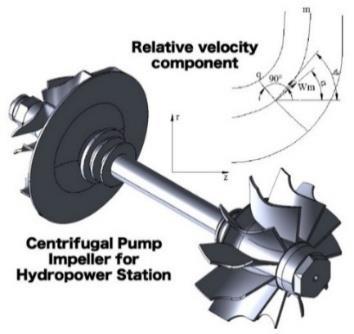
Fig:1.1Turbochargerconnectedtoshaftinpumpcasing
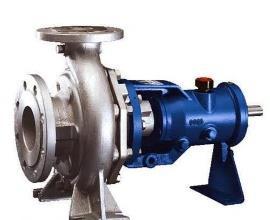
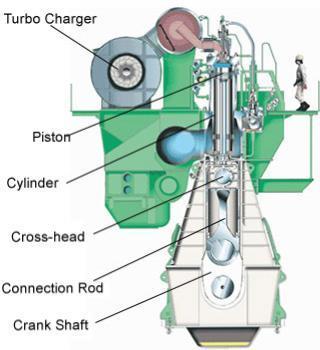
Fig:1.2mainengineturbochargertopumpconnection imaginationfigure
Dieselenginehasbeen
Usedastheprimarymoverinvehiclesforalongtime.It is known that around 25%–30% of the fuel energy is wasted in the exhaust gas from diesel engines. In this study, a turbocharger power generation systemincluding a 1.8kW 60,000r/min high-speed permanent magnet generator and a micro exhaustgas turbine, which is coupled to a diesel engine is designed and modeled to investigate its potential for recovering the wasted energy in the exhaust gas from a diesel engine.
4.5 AI-Driven Optimization:
AIanalyzesengine
Performance, turbocharger boost pressure, and pump operation
AIadjustspumpflow
Rate, pressure, and fuel injection for optimal performance
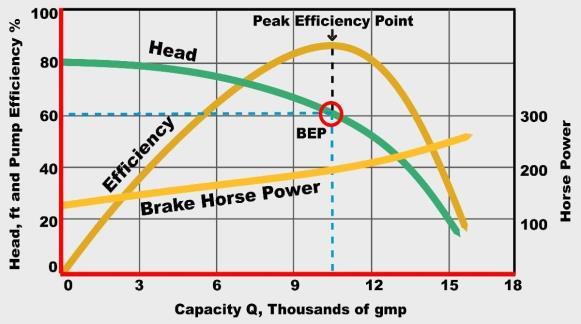
Fig:1.3Pumpgraphandoutput
5. USED ON BOARD SHIP:
Main Engine Fuel Supply:
Thepumpsuppliesfuel
Tothemainengine’scylinders,optimizedbyAItomatch theturbocharger’sboostpressure.
Auxiliary Engine Fuel Supply:
Thepumpsuppliesfuel
To auxiliary engines, such as generators and pumps, ensuringefficientoperation.
Boiler Fuel Supply:
Thepumpsuppliesfuel
To boilers, which generate steam for propulsion and onboardpower.
Cargo Pumping:
Thepumpisused for Cargooperations,suchasloadingandunloadingfuel,oil, orotherliquids.
Bilge and Ballast Pumping:
Thepumpisused for Bilge and ballast water management, ensuring stable shipoperation.
Fuel Transfer:
Thepumpisusedfor Fuel transfer between tanks, ensuring optimal fuel management
6. AFTER TURBOCHARGER UTILIZATION OF PUMP BY USING AI WITH TABLE:
Category AI- Driven application Benefits
Adaptive controlsystem
Real time monitoring Optimizes engineperformance andefficiency
Dynamic Adjustments Ensures operation under various conditions
International Research Journal of Engineering and Technology (IRJET) e-ISSN:2395-0056
Volume: 11 Issue: 09 | Sep 2024 www.irjet.net
Predictive Maintenance
Reduces downtime and extends componentlife
Energy Efficiency Fault Detection Prevents engine damageduetoearly detection
Hybrid System Integration Balancesenergyuse betweensystems
Safety andReliability FaultDetection Prevents engine damageduetoearly detection FailSafe Mechanisms Ensures safe operationincaseof failures
7. ADVANTAGES:
Pressure increase:
Turbocharger Turbocharger pump pressure, increasing its pressure. Screw pumps can further compress the already pump, generatingevenhigherpressures.
Flow rate:
Turbochargers and Screwpumpshavecompatibleflowrates,allowingthem toworktogetherseamlessly.
Design compatibility:
Screwpumps can be Designedtomatchtheoutputofturbochargers,ensuring asmoothconnection.
Efficiency: pumps are efficient pressure, and when usedinserieswithaturbocharger,theycanachievehigh overallefficiency.
Flexibility:
pumpscanbeusedin Various applications, including compressed air supply, fuel injection, and gas compression, making them suitableforuseafteraturbocharger
8. CONCLUSION:
Incorporating an AIControlled pump after a turbocharger significantly optimizes engine performance by dynamically adjusting the pump’s operation based on real-time data and driving conditions. AI can analyze parameters such as engine load, temperature, and turbocharger boost pressuretocontrolthepump’sspeedandflowratemore precisely.Thisleadstoimprovedfuelefficiency,reduced turbo lag, and enhanced overall engine response. Additionally, AI can adapt to changing conditions, providingamoreconsistentperformanceacrossvarious
p-ISSN:2395-0072
environments and reducing wear and tear on engine components.Overall,theintegrationofAIinthiscontext represents a forward-thinking approach to maximizing thepotentialofturbochargedengines.
REFERENCE:
[1] “Optimization of Fuel Injection Pump Using Artificial Intelligence after Turbocharger” (2020) –International Journal of Advanced Research in EngineeringandTechnology.
[2] “AI-Based Control of Fuel Pump for Turbocharged Diesel Engines” (2019) – Journal of EngineeringforGasTurbinesandPower.
[3] As a Case Study. Transnet the International Journal on Marine Navigation and Safety of Sea Transportation 2018; 12(2):271-276Doi: 10.12716/1001.12.02.06Anantharaman M, Islam R, Sardar A, Garaniya V, Khan F. Impact of defective turbocharging system on the safety and reliability of large
[4] Marine diesel engine. Transnet: International Journal on Marine Navigation and Safety of Sea Transportation. 2021; 15(1):189-198.Burzyński K.: Analyzeparametric granic.
[5] “NeuralNetwork-BasedFuelPumpControlfor TurbochargedEngines”(2018)-InternationalJournalof AutomotiveTechnology.
BIOGRAPHY:


I am pursuing B.E final year Marine Engineering cadet at PSN College of Engineering & Technology, Tirunelveli,TamilNadu
I am pursuing B.E final year Marine Engineering cadet at PSN College of Engineering & Technology, Tirunelveli, Tamil Nadu
International Research Journal of Engineering and Technology (IRJET) e-ISSN:2395-0056
Volume: 11 Issue: 09 | Sep 2024 www.irjet.net


Project Guide cum Assistant Professor PSN College of Engineering & Technology, Tirunelveli, Tamil Nadu. Also having 15 years’ experience in Oil and Gas industries. Specialization in NDT and worked variesGulfCountries
Project Guide cum Assistant Professor PSN College of Engineering & Technology, Tirunelveli, Tamil Nadu. MEO Class-IV Marine Engineer and workedvariesCountries
© 2024, IRJET | Impact Factor value: 8.315 | ISO 9001:2008
p-ISSN:2395-0072