
Volume: 11 Issue: 09 | Sep 2024 www.irjet.net

Volume: 11 Issue: 09 | Sep 2024 www.irjet.net
Sanjay 1
Tech Mahindra
Abstract - Thispaperpresentsanautomatedsolutionfor thecandidateselectionprocessinonlinerecruitmentusing theNLP.Inanerawheretraditionalhiringpracticesprove lesseffective,ourapproachaddressesthechallengesposed bythegrowingofunstructuredresumes.ByemployingTFIDF Vectorizer, Truncated SVD, and Cosine Similarity, it accuratelyevaluatesresumes'relevancetojobdescriptions. Integration of NLTK and PDFMiner ensures precise text processing,handlingvariousresumeformats.Thesystem's user-friendly interface, developed with Flask, simplifies interaction, allowing seamless uploading and analysis of resumes.Real-worldevaluationsdemonstrateitsefficiency, significantly reducing manual screening efforts. This approachstandsasacomprehensiveandpracticalmethod, showcasingthepowerofNLPinoptimizingtherecruitment processfororganizations.
Key Words: TF-IDF Vectorizer, Truncated SVD, and CosineSimilarityNLTK,pdfminer,flask
1.INTRODUCTION
Thepapertitled"AutomatedResumeShortlistingUsingNLP: A Comprehensive Approach with TF-IDF Vectorizer, Truncated SVD, Cosine Similarity, NLTK, PDF Miner, and Flask"addressesthechallengesfacedbyHR professionals andrecruitersinsortingthroughalargevolumeofresumes to identify suitable candidates. The study introduces an innovative solution by integrating Natural Language Processing (NLP) techniques and machine learning algorithms,utilizingadvancedtoolslikeTF-IDFVectorizer, Truncated SVD, Cosine Similarity, NLTK, PDF Miner, and Flask.
Theresearchfocusesonautomatingtheresumeshortlisting process,makingitefficientandaccurate.TF-IDFVectorizer converts resume text into numerical vectors, capturing candidate qualifications. Truncated SVD reduces data dimensionality for faster analysis, while Cosine Similarity matches job requirements with applicant skills, ensuring precise shortlisting. NLTK handles language processing tasks, and PDFMiner extracts text from PDF resumes, broadeningdocumentformatcompatibility.Flask,aPython web framework, creates an interactive interface for userfriendlyrecruitment.
By automating resume screening, organizations save time and effort in initial recruitment stages. It guarantees fair evaluation,promotingdiversityandinclusivity.Thepaper emphasizespracticalimplications,demonstratingtechnical
***
integration and real-world effectiveness. The subsequent sectionsdelveintomethodologies,experiments,andresults, showcasing the approach's efficacy. The research contributes to HR technology, enabling data-driven hiring decisions and fostering efficient, unbiased recruitment processes.
TheimplementationofNaturalLanguageProcessing(NLP) techniques in various domains has significantly revolutionizedthewaydataisprocessedandinterpreted.In the realm of online examinations, NLP has enabled the assessment of descriptive answers, moving beyond the constraintsoftraditionalmultiple-choiceformats[1].This shifthasbeenfacilitatedbyemployingPythonandDjango for implementation, providing students with a digital, errorcorrectingexperienceandensuringinstantevaluation. The versatility of this approach is enhanced by its facultycustomizablequestionsandkeyword-basedanswer evaluation, leading to a dashboard-driven user interface. Additionally, this innovation has paved the way for the detection of academic dishonesty, thereby enhancing the integrityofexaminations[1].
In the domain of requirements extraction, heuristic rules have been explored to extract conceptual models from naturallanguagerequirements[2].Thisinvolvesidentifying concepts through nouns and relationships through verbs, utilizing rules such as compound nouns forming concepts andhierarchicalrelationshipsindicatedbyverbslike'tobe'. This comprehensive approach ensures the extraction of relevant models from natural language requirements, contributing to effective requirement analysis and system design.
In the context of automated resume shortlisting, NLP algorithmshavebeeninstrumentalinparsingresumesand socialprofilesautomatically,transformingunstructureddata intoastructuredformat[5].Thisinnovationaddressesthe challengeofextractingstructuredinformationfromdiverse resume formats. The ranking process, which includes attributessuchaseducation,experience,andcommunication skills,ishandledefficientlythroughthisautomatedsystem. By employing techniques such as cosine similarity and machine learning models like K-Nearest Neighbor and SupportVectorMachine,thesystemachievesaccurateand efficientautomatedrankingforclientcompanies[5][10].
International Research Journal of Engineering and Technology (IRJET) e-ISSN: 2395-0056
Volume: 11 Issue: 09 | Sep 2024 www.irjet.net p-ISSN: 2395-0072
Furthermore,NLPhasbeenemployedinskillanalysis,where techniques like Word2Vec and bigrams are utilized to streamlinerecruitmentprocesses[11].ByintegratingNLP algorithms such as SBERT and cosine similarity, resume screening is optimized, swiftly identifying job matches, accommodating diverse languages and unstructured data [12]. Additionally, NLP algorithms have been utilized for structuring text data and topic modeling, contributing to resumescoringbasedonjobdescriptions[13].
In the domain of search engine ranking functions, various techniques,includingBM25andLM-DS,havebeenexplored and compared using particle swarm optimization [7]. The study emphasizes the effectiveness of stemming and the superiorityofcombiningstemmingandfeedbackmethods for improved ranking function performance. This comparative analysis provides valuable insights into the effectivenessofdifferentrankingfunctions,pavingtheway forenhancedinformationretrievalsystems.
Moreover, machine learning methods such as Random Forest, Naive Bayes, and Logistic Regression have been applied for resume classification, utilizing libraries like NLTK,SpaCy,andScikit-learn[14].Thesemethods,coupled with matching algorithms such as Cosine Similarity and LevenshteinDistance,contributetoaccurateskillmatching and resume classification. This integration of machine learning techniques and matching algorithms ensures preciseidentificationofcandidatessuitableforspecificjob roles.
In summary, the integration of NLP techniques, machine learning models, and various algorithms has significantly advanced the fields of online examinations, requirements extraction, and automated resume shortlisting. These innovations have not only enhanced the efficiency and accuracyofprocessesbutalsoopenedavenuesforfurther researchandimprovementsinthesedomains.
Thissectionoutlinesarobustmethodologyforcreatingan advancedresumeshortlistingsystem.Itcombinesvarious techniques to automate candidate selection, ensuring efficiency and accuracy in the process. The proposed methodologyisstructuredsystematically,offeringadetailed frameworkforseamlessintegrationandimplementation.It encompasses diverse strategies, enhancing the overall effectiveness of resume screening and optimizing the recruitmentworkflow.
Data CollectionandPreprocessing: Ourresearchinitiative commenced with the acquisition of a diverse dataset of resumessourcedfromprominentjobportals,encompassing awidearrayofindustries,experiencelevels,andjobroles. These resumes, often stored in PDF format, were meticulously processed using the PDFMiner library. Text extractionfromPDFswasfollowedbyarigorouscleansing
process,wherespecialcharacters,formattingdiscrepancies, andirrelevantinformationwereexpunged.Thisensuredthe extractedtextwaspristineandreadyforanalysis.
CGPA Filtering: Recognizing the significance of academic achievements, we incorporated an additional layer of qualification.Candidates'CumulativeGradePointAverage (CGPA)wasextractedfromtheresumes.Tostreamlinethe shortlistingprocess,astringentcriterionwasapplied:only candidates with a CGPA greater than or equal to 8 were considered for further analysis. This step ensured that candidatesnotonlypossessedprofessionalexperiencebut alsodemonstratedexceptionalacademicperformance.
Skill ExtractionandDataset Preparation:To automate the process of resume shortlisting, a comprehensive skills dataset was essential. Leveraging an existing skills repository,wemeticulouslycuratedadictionarycontaining anextensivelistoftechnical,soft,anddomain-specificskills. Thisdatasetservedasthefoundationuponwhichtheskills mentioned in the resumes were matched, allowing for a nuancedanalysisofapplicants'qualifications.
Text Vectorization using TF-IDF: Raw textual data, inherently unstructured, underwent a transformational processleveragingthepowerofTF-IDFvectorization.This technique converted the textual content into numerical vectors,essentialforsubsequentmachinelearninganalysis. ByassigningTF-IDFscorestoeachterminthecorpus,the importanceoftermswithinindividualresumeswasweighed againsttheirprevalenceacrosstheentiredataset.
Dimensionality Reduction using Truncated SVD: The resultanthigh-dimensionalTF-IDFvectorsweresubjectedto theefficiency-enhancingprocessofTruncatedSingularValue Decomposition (SVD). By significantly reducing the dimensionality of the data while retaining its essential information, Truncated SVD facilitated streamlined computationsandoptimizedmodelperformance.
Cosine Similarity Calculation: Cosine similarity, a pivotal metricinourmethodology,quantifiedthelikenessbetween resumes.ComputedfromthereducedTF-IDFvectors,cosine similarity scores provided a measure of resemblance between applicants' qualifications. Resumes with higher cosinesimilarityscoresindicatedamoresubstantialoverlap in skills and experiences, a vital factor in the shortlisting process.
Natural Language Processing (NLP) for Skill Context Enhancement: To further enhance the accuracy of skill matching, advanced Natural Language Processing (NLP) techniques were deployed. Tokenization, stemming, and lemmatization, implemented via the NLTK library, transformedboththeskillsdatasetandresumetext.These processes ensured thatvarious formsofa skill term were
International Research Journal of Engineering and Technology (IRJET) e-ISSN: 2395-0056
Volume: 11 Issue: 09 | Sep 2024 www.irjet.net p-ISSN: 2395-0072
recognized uniformly, refining the matching accuracy and minimizingdiscrepancies.
Development of Flask Web Application: To provide an intuitiveandaccessibleinterfaceforresumeshortlisting,a robust web application was developed using the Flask framework. Within this platform, users could seamlessly uploadresumesinPDFformat.Uponupload,theapplication processed the resumes using the integrated NLP and machine learning techniques, ensuring a smooth user experience.
IntegrationofSkillsMatchingAlgorithm:CentraltotheFlask application was the seamlessly integrated skills matching algorithm. Leveraging the preprocessed skills dataset, TFIDF vectors, truncated SVD components, and cosine similarity calculations, the algorithm performed a comprehensive analysis. When a user uploaded a resume, thealgorithmprocessedthetext,calculatedcosinesimilarity scores against the skills dataset, and identified the most pertinentskillsmentioned.Candidatesmeetingthestringent CGPAcriterionwererankedbasedonthesesimilarityscores, presentingthemostqualifiedapplicantstotheuser.
In conclusion, our meticulous methodology encompassed CGPAfiltering,datapreprocessing,skillextraction,TF-IDF vectorization, dimensionality reduction, cosine similarity calculation,andadvancedNLPtechniques.Theseelements synergistically contributed to the development of an automated resume shortlisting system, ensuring the identification of highly qualified candidates for further considerationintherecruitmentprocess.
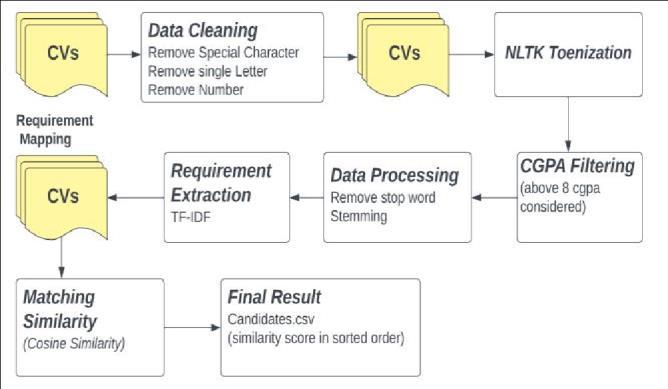
Fig.1.ResumeShortlistingFlowchart
MathematicalExplanation
Vectorization of TF-IDF and Reduction of Dimensionality determinedtheTermFrequency(TF)foreveryterminthe CVandjobdescription:
TF(i,A)=(TotalnumberoftermsinA)/(Numberoftimes termiappearsinA)
TF(i,B)=(TotalnumberoftermsinB)/(Numberoftimes wordiappearsinB)
Determineeachterm'sInverseDocumentFrequency(IDF): IDF(i)=log(N/n)wherenisthenumberofdocumentsthat includethephraseiandNisthetotalnumberofdocuments.
Determineeachterm'sTF-IDFvalueinthetwodocuments:
TF-IDF(i,A)=TF(i,A)*IDF(i)
TF-IDF(i,B)=TF(i,B)*IDF(i)
UsePrincipalComponentAnalysis(PCA)tomaketheTFIDF vectors less dimensional. Say that you want to reduce the dimensionalitytokdimensions.
ComputeCosineSimilarity
AfterPCA,youwillgetreduced-dimensionTF-IDFvectorsA' andB'.Youmaynowcomputetheircosinesimilarity:
DeterminethevectorsA'andB'dotproduct:Forallelements i, the Dot Product (A' · B') = Σ (A'[i] * B'[i]). The reduceddimensionTF-IDFvaluesfortheithterminthevectorsA' andB'aredenotedbythevaluesA'[i]andB'[i].
DeterminevectorA'smagnitude(Euclideannorm):
Forallelementsi,magnitudeA'(|A'|)=√(Σ(A'[i]^2)
DeterminevectorB'smagnitude(Euclideannorm): Forallelementsi,magnitudeB'(|B'|)=√(Σ(B'[i]^2)
Using the dot product and magnitudes, get the cosine similarity (cos(θ)) between vectors A' and B': Similarity betweencosines(cos(θ))=(A'·B')/(|A'|*|B'|)Whenusing PCAfordimensionalityreduction,thenecessaryinformation in the TF-IDF vectors is preserved while a significant reduction in computational complexity and memory utilizationisachieved.Youcanadjusttheparameterk,orthe numberofdimensions,tosuityourparticularrequirements.
ExampleData
Assume the following terms are present in our TF-IDF vectors:
Words: ["develop", "medical", "software", "programming", "experience"]
TF-IDF Vector (A): A = [0.2, 0.3, 0.4, 0.1, 0.2] is the job description.
RestarttheTF-IDF Vector(B)bywritingB=[0.1,0.2, 0.3, 0.5,0.4].
PCA-AssistedDimensionalityReduction
SupposewewishtousePCAtodecreasethedimensionality totwodimensions:
Volume: 11 Issue: 09 | Sep 2024 www.irjet.net
Reduced-dimension vectors A' and B' are obtained by applyingPCAonvectorsAandB.
The cosine similarity between the reduced-dimension vectorsA'andB'willnowbedetermined:
DeterminethevectorsA'andB'dotproduct:
DotProduct(A'·B')=(A'[1]*B'[1])+(A'[2]*B'[2])Utilizing theformulaMagnitude,A'(|A'|)=√((A'[1]^2)+(A'[2]^2), findthemagnitudeofvectorA'.
DeterminethevectorB'smagnitudeusingtheformula:
MagnitudeB'(|B'|)=√((B'[1]^2)+(B'[2]^2))
Determinethesimilarityofcosine:
Similaritybetweencosines(cos(θ))=(A'·B')/(|A'|*|B'|) Let'sdoastep-by-stepcalculationofthesevalues:(0.2*0.1) +(0.3*0.2)=0.02+0.06=0.08isthedotproductof(A'·B').
MagnitudeA'(|A'|):-√((0.2^2)+(0.3^2))=-√(0.04+0.09)
=-0.13≈0.36
MagnitudeB'(|B'|):-√((0.1^2)+(0.2^2))=-√(0.01+0.04)
=-0.05≈0.22
(A'·B')/(|A'|*|B'|) =(0.08)/(0.36*0.22)≈0.97isthe cosinesimilarity(cos(θ))
Thus,thereisasignificantdegreeofsimilaritybetweenthe jobdescriptionandtheresume,asindicatedbythecosine similarityofroughly0.97betweenthereduced-dimension TF-IDFvectorsA'andB'.Usually,uselibrariesorothertools tocarryoutthesecomputationsinpractice.
ThedeploymentofNaturalLanguageProcessingtechniques enhances the precision of skill matching, while the development of a user-friendly Flask web application streamlines the interaction between recruiters and the automatedshortlistingsystem.
Figure 2 illustrates the overall interface of the Automated Resume Shortlisting Web App. This visual representation showcasestheuserinterfaceandtheprimarycomponentsof the application. It likely provides an overview of the softwarelayout,includingthedifferentsectionsandfeatures available to the users. This figure serves as a baseline referenceforreaderstounderstandtheinterfacedesignof theautomatedresumeshortlistingsystem.
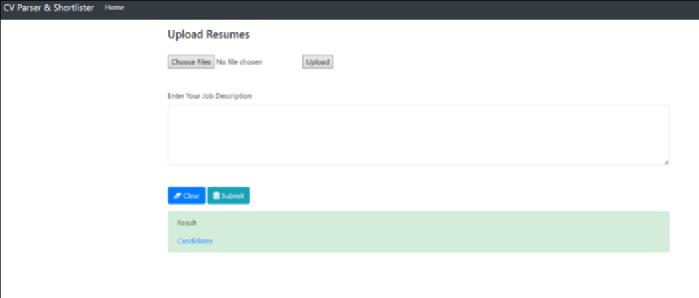
Fig.2.AutomatedResumeShortlistingWebApp
Fig.3 depicts the resumes uploaded for the parsing and shortlisting purpose. It can be clearly seen that here 2 resumes are uploaded with .pdf extension. The allowed documenttypeisvariedsuchas.docs,.pdfetc.
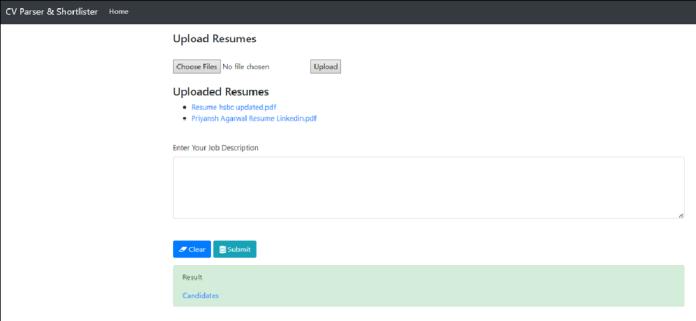
Fig.3.AutomatedResumeShortlistingWebApp
Withuploadedresumes
Fig.4showsthatuserhaveaddedthejobdescriptionforthe shortlisting of the candidates with the highest similarity score It demonstrates the seamless integration of job requirements, showcasing the system's capability to compareuploadedresumeswithspecificjobcriteria.
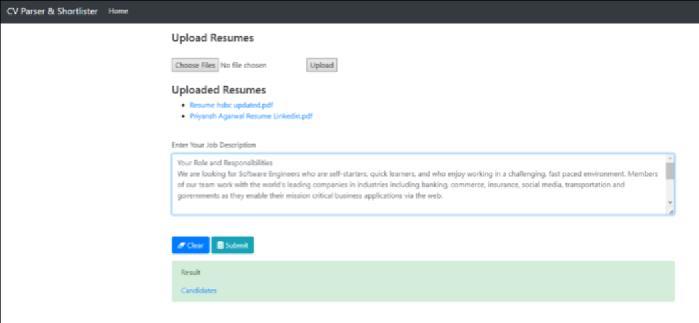
Fig.4AutomatedResumeShortlistingWebAppWith uploadedresumesandJobDescription
Fig.5showstheexcelsheetinwhichcandidatesarelistedout insortedwayinsequenceofhighestsimilarityscore
International Research Journal of Engineering and Technology (IRJET) e-ISSN: 2395-0056
Volume: 11 Issue: 09 | Sep 2024 www.irjet.net p-ISSN: 2395-0072
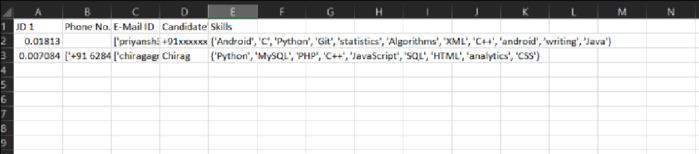
Fig.5.Candidate’ssimilarityscoreinsortedorder
While our automated resume shortlisting system demonstrates significant efficiency, it has limitations. The currentsystemmayfacechallengeswithhighlycomplexjob descriptionsandnuancedskillrequirements.Additionally, The CGPA criterion may not be universally applicable, limitingitsuseinindustrieswhereit'snotarelevantmetric.
Future research can focus on refining the skills dataset, incorporatingdeeplearning techniquesformore nuanced skill matching, and exploring natural language understanding for context-aware evaluation. Integration withonlineprofessionalplatformsandcontinuouslearning algorithmscouldenhancethesystem'sadaptability,ensuring it remains effective in dynamically changing job markets. Furthermore,userexperienceenhancementsandreal-time analytics could be explored for more comprehensive recruitmentsolutions.
Inthisstudy,wehavepresentedasophisticatedapproachto automated resume shortlisting using Natural Language Processing(NLP)techniques,wehavecoveredstepbystep implementations for resume shortlisting. By integrating Cumulative Grade Point Average (CGPA) filtering, we ensured that candidates not only possessed professional experience but also demonstrated exceptional academic excellence.
Our methodology, employing TF-IDF vectorization, Truncated Singular Value Decomposition (SVD),andcosinesimilaritycalculation,facilitatedaccurate and efficient matching of candidates' skills against job requirements.
Thisresearchnotonlyenhancestheefficiencyof resume screening but also reduces the time and effort invested in manual shortlisting.Asthe demand for skilled professionals continues to rise, our automated resume shortlistingsystemstandsasavaluabletoolinstreamlining thehiringprocess,ensuringthatorganizationscanswiftly identifyandengagewiththemostqualifiedcandidates
[1] JayaramNoriBroadcomInc, USA.DOI:https://www.doi.org/10.56726/IRJMETS53503
[2] P. Prasad and A. Rao, "A survey on various challengesandissuesinimplementingAIforenterprise monitoring," Journal of Network and Computer Applications, vol. 116, pp. 42-55, 2018, doi: 10.1016/j.jnca.2018.05.005.
[3] Y. Dang, Q. Lin, and P. Huang, "AIOps: real-world challenges and research innovations," in 2019 IEEE/ACM41stInternationalConferenceonSoftware Engineering: Companion Proceedings (ICSECompanion),2019,pp.4-5,doi: 10.1109/ICSE-Companion.2019.00023.
[4] D. Xu et al., "Unsupervised anomaly detection via variational auto-encoder for seasonal KPIs in web applications,"inProceedingsofthe2018WorldWide Web Conference, 2018, pp. 187-196, doi: 10.1145/3178876.3185996.
[5] V.Chandola,A.Banerjee,andV.Kumar,"Anomaly detection:Asurvey,"ACMComputingSurveys(CSUR), vol. 41, no. 3, pp. 1-58, 2009, doi: 10.1145/1541880.1541882.
[6] M.Chenetal.,"Bigdata:Asurvey,"MobileNetworks andApplications,vol.19,no.2,pp.171-209,2014,doi: 10.1007/s11036-013-0489-0.
[7] Y.Lietal.,"Deeplearningforanomalydetectionin cloud native systems," in 2020 IEEE International ConferenceonCloudEngineering(IC2E),2020,pp.106116,doi:10.1109/IC2E48712.2020.00022.
[8] F.Salfner,M.Lenk,andM.Malek,"Asurveyofonline failurepredictionmethods," ACMComputingSurveys (CSUR), vol. 42, no. 3, pp. 1-42, 2010, doi: 10.1145/1670679.1670680.
[9] F.Jiangetal.,"Artificialintelligencein healthcare: Past, present and future," Stroke and Vascular Neurology,vol.5,no.2,2020,doi:10.1136/svn-2020000443.
[10] F.Salfner,M.Lenk,andM.Malek,"Asurvey ofonlinefailurepredictionmethods,"ACMComputing Surveys (CSUR), vol. 42, no. 3, pp. 1-42, 2010, doi: 10.1145/1670679.1670680.
[11] X.Liuetal.,"PANDA:FacilitatingusableAI development,"arXivpreprintarXiv:2003.04070,2020.
International Research Journal of Engineering and Technology (IRJET) e-ISSN: 2395-0056
Volume: 11 Issue: 09 | Sep 2024 www.irjet.net p-ISSN: 2395-0072
[12] G. A. Susto, A. Beghi, and C. De Luca, "A predictive maintenance system for epitaxy processes based on filtering and prediction techniques," IEEE TransactionsonSemiconductorManufacturing,vol.25, no.4,pp.638-649,2012,doi: 10.1109/TSM.2012.2209131.
[13] X.Liuetal.,"PANDA:FacilitatingusableAI development,"arXivpreprintarXiv:2003.04070,2020.
[14] E. Cortez et al., "Resource central: Understandingandpredictingworkloadsforimproved resource management in large cloud platforms," in Proceedings of the 26th Symposium on Operating Systems Principles (SOSP), 2017, pp. 153-167, doi: 10.1145/3132747.3132772.
[15] Z. Yin et al., "An empirical study on configuration errors in commercial and open source systems," in Proceedings of the 26th Symposium on Operating Systems Principles (SOSP), 2017, pp. 159176,doi:10.1145/3132747.3132773.
[16] D. Wang et al., "Failure prediction using machine learning in a virtualised HPC system and application,"ClusterComputing,vol.20,no.1,pp.103115,2017,doi:10.1007/s10586-016-0668-4.
[17] J. Gao, "Machine learning applications for data centeroptimization,"Google White Paper, 2014. [Online]. Available: https://research.google/pubs/pub42542/
[18] R. Sommer and V. Paxson, "Outside the closedworld:Onusingmachinelearningfornetwork intrusion detection," in 2010 IEEE Symposium on Security and Privacy, 2010, pp. 305-316, doi: 10.1109/SP.2010.25.
[19] R.Boutabaetal.,"Acomprehensivesurvey on machine learning for networking: evolution, applications and research opportunities," Journal of InternetServicesandApplications,vol.9,no.1,pp.199,2018,doi:10.1186/s13174-018-0087-