
International Research Journal of Engineering and Technology (IRJET) e-ISSN: 2395-0056
Volume: 11 Issue: 09 | Sep 2024 www.irjet.net p-ISSN: 2395-0072

International Research Journal of Engineering and Technology (IRJET) e-ISSN: 2395-0056
Volume: 11 Issue: 09 | Sep 2024 www.irjet.net p-ISSN: 2395-0072
K. T.
Gaikwad1, S.
M. Valvi
2, N.
K. Aher
3, R. R. Ahire4, A.V. Dudhekar5
1,2,3,4 Student, Department of Civil Engineering, KK Wagh Institute of Engineering Education and Research, Nashik, India
5 Prof., Department of Civil Engineering, KK Wagh Institute of Engineering Education and Research, Nashik, India
Abstract - This study offers an in-depth examination of Marathwada region’s morphometric characteristics, specifically focusing on its susceptibility to drought. Using Digital Elevation Models (DEMs) and administrative boundaries, the research generated river networks and assessed various morphometric properties including Elongation Ratio, Form Factor, Circularity Ratio, Relief Ratio, Bifurcation Ratio, Ruggedness Number, Stream Frequency, Drainage Density, Constant Channel of Maintenance, Length of Overland Flow, Drainage Intensity, and Drainage Texture. These metrics were then analyzed to evaluate the district's vulnerability to drought. The results yield significant insights into the hydrological dynamics of the area, aiding in the development of more efficient water management strategies and drought mitigation measures.
Key Words: GIS,morphometricanalysis,DEM
1.INTRODUCTION
Thisresearchundertakesadetailedandcomprehensiveanalysisofthetopographicandmorphometricparametersoffourkey districtsintheMarathwadaregion-Jalna,Aurangabad,Nanded,andBeed,alongwiththeirrespectivetalukas.Leveragingthe robustcapabilitiesofQuantumGeographicInformationSystem(QGIS),awidearrayofparametersweremeticulouslyderived togainadeeperunderstandingofthephysicalcharacteristicsofthesebasins.
Theparametersstudiedencompassabroadspectrum,rangingfromtopographicaspectssuchasarea,perimeter,basinlength, maximumandminimumheight,topographicpositionindex,terrainruggednessindex,androughness,tomorphometricaspects likestreamnumber,streamorder,streamlength,bifurcationratio,andmeanstreamlength.Eachoftheseparameters,derived fromrigoroussoftwareanalysisandmathematicalcomputations,providesvaluableinsightsintothehydrologicalbehaviorof theregion.
Furthermore,thestudydelvesintoarealaspectssuchaselongation ratio,formfactor,circularityratio,streamfrequency, drainage density, constant channel of maintenance, length of overland flow, drainage intensity, drainage texture, and ruggedness number. It also explores relief aspects like slope, relief, and relief ratio. Each of these parameters, carefully calculatedandanalyzed,contributestoaholisticunderstandingoftheregion’sgeomorphology.
The implications of these parameters are manifold, influencing flood prediction, water resources management, and the assessmentoflandusechangesonthebasin’shydrology.Thisresearch,therefore,standsasasignificantcontributiontothe fieldofgeomorphologyandhydrology,offeringadetailed,data-drivenexaminationoftheMarathwadaregion.
Thefindingsofthisstudyhavethepotentialtoinformsustainablewatermanagementpracticesandcontributetotheregion’s resilience against climate change impacts. By providing a comprehensive understanding of the region’s topography and morphology,thisresearchpavesthewayforfuturestudiesandinterventionsaimedatenhancingtheregion’swatersecurity andsustainability.Thisresearch,therefore,notonlycontributestoacademicknowledgebutalsohassignificant practical implicationsfortheregion’sdevelopmentandenvironmentalmanagement.
Researchersinhydrologyandgeomorphologyusegeospatialtechniquesformorphometricanalysisofriverbasins,focusingon understandingbasinpropertiesforholistichydrologicalassessment.
International Research Journal of Engineering and Technology (IRJET) e-ISSN: 2395-0056
Volume: 11 Issue: 09 | Sep 2024 www.irjet.net p-ISSN: 2395-0072
GSDeepaVargheseetal.'sstudyevaluatesgroundwatercapacityintwocoastalKeralasub-watershedsthroughmorphometric analysisusingremotesensingandQGIS.Thenorthernsub-watershed,withhigherdrainagedensity,streamfrequency,and bifurcationratio,exhibitedgreatergroundwaterpotential.ThestudyconcludesthatremotesensingandGISeffectivelyassess groundwaterpotentialforresourcemanagementandconservation.
AbhishekJainetal.'sresearchpaperanalyzesKakanWatershed'smorphometriccharacteristicsusingremotesensingandGIS, emphasizingtheirroleinwatershedanalysisandconservation.Thestudyhighlightstheaccurateassessmentoflithological featuresandpredictionofgeomorphiclandslides,underscoringthevalueofmorphometricassessmentinunderstandingwater behaviorinaspecificregion.
ResearchbyRameshKumarPateletal.,HazirS.Çadraku,andAbrarYousuffocusesonmorphometricanalysisusingremote sensingandGIStechniquesindifferentriverwatersheds,emphasizingtheimportanceofwatershedattributesforeffective waterresourcemanagement.
2.
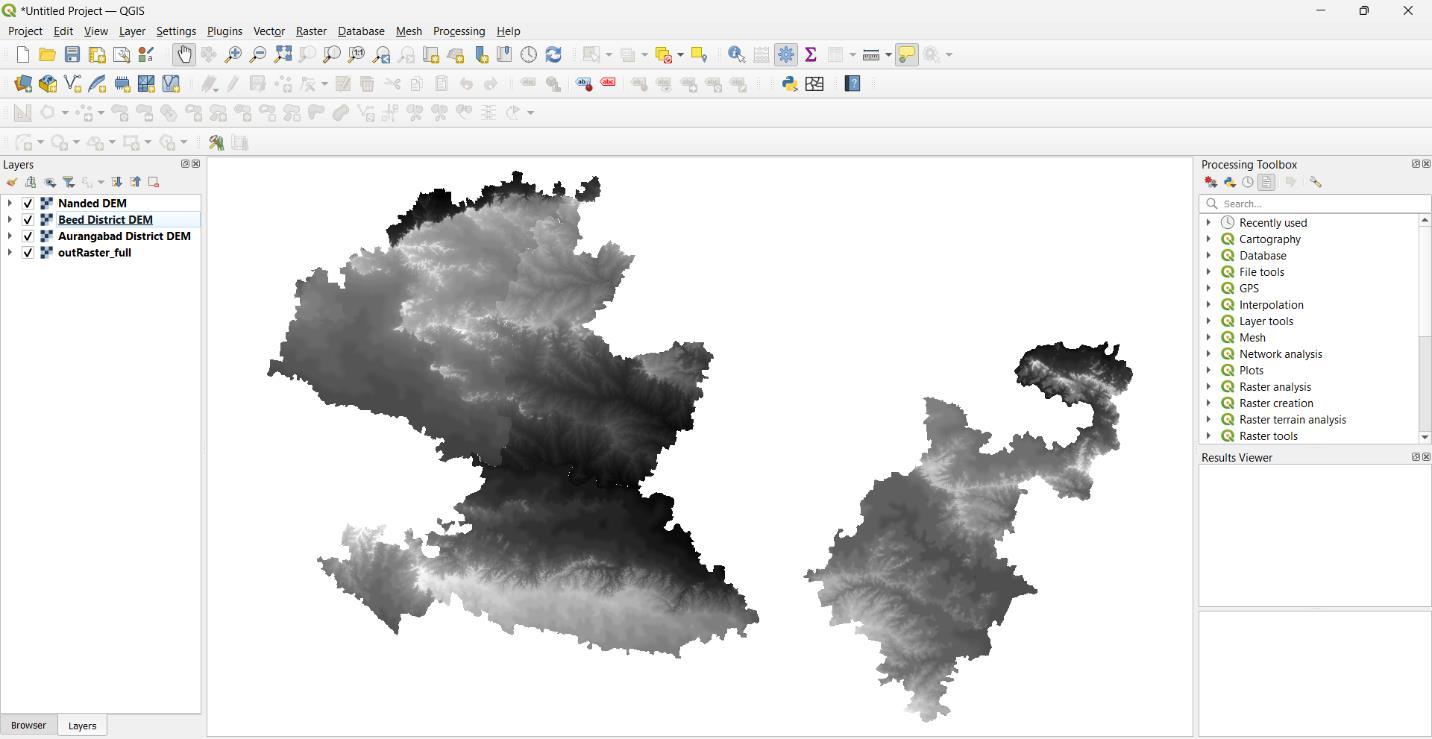
Inthisstudy,researcherscombinedremotesensingdata,GISsoftware,andmorphometricanalysistechniques.Theyutilized DigitalElevationModels(DEMs)obtainedfromthereliableOpenTopographywebsite.Thesehigh-resolutionmodelsprovided detailedterraininformationessentialformorphometricanalysis.Additionally,talukaleveladministrativeboundarydatafrom theSurveyofIndiahelpeddefinethestudyareawithinJalna,Aurangabad,Nanded,andBeedDistricts.UsingQGIS,theDEMs were clipped to obtain specific taluka and district extents. River networks were derived, revealing drainage patterns. Morphometricproperties(e.g.,ElongationRatio,BifurcationRatio)werecalculated,aidinginunderstandinghydrological behavioranddroughtvulnerability.Thestudycontributestoeffectivewaterresourcemanagement.
3. RESULTS AND DISCUSSION
Followingaretheparametersstudiedinthisstudy: TopographicParameters:
Area(A)(Schumm(1956)[7]):Thetotalsurfaceareaofthebasin,measuredinsquarekilometers.Itisdetermined throughsoftwareanalysis.Largerareascancontributetohigherrunoffvolumes.
International Research Journal of Engineering and Technology (IRJET) e-ISSN: 2395-0056
Volume: 11 Issue: 09 | Sep 2024 www.irjet.net p-ISSN: 2395-0072
Perimeter(P)(Schumm(1956)[7]):Thetotallengthoftheboundaryofthebasin,measuredinkilometers.Itisalso determinedthroughsoftwareanalysis.Alargerperimetercanindicateamoreirregularshape,whichcanaffectthe timingofrunoff.
Basin Length (Lb) (Schumm (1956) [7]): The maximum length of the basin, measured in kilometers. It is determinedthroughsoftwareanalysis.Thelengthofthebasincaninfluencethetimeofconcentrationofrunoff.
MaximumHeight(Z):Thehighestpointinthebasin,measuredinmeters.ItisdeterminedfromaDigitalElevation Model(DEM).Higherelevationscanleadtosteeperslopesandfasterrunoff.
MinimumHeight(z):Thelowestpointinthebasin,measuredinmeters.ItisalsodeterminedfromaDEM.The minimumheightcanindicatethebaselevelforthebasin.
TopographicPositionIndex(TPI):Adimensionlessmeasureofalocation’selevationrelativetoitsneighbors.Itis determinedthroughsoftwareanalysis.Highervaluescanindicatehilltops,whilelowervaluescanindicatevalleys.
TerrainRuggednessIndex(TRI):Adimensionlessmeasureofterrainroughness.Itisdeterminedthroughsoftware analysis.Highervaluescanindicateamoreruggedorcomplexterrain.
Roughness:Adimensionlessmeasureofthevariationinelevationinthebasin.Itisdeterminedthroughsoftware analysis.Highervaluescanindicateamoreunevenorruggedterrain.
MorphometricParameters:
a. LinearAspects:
StreamNumber(Nu):Thisisthetotalnumberofstreamsinthebasin.Itisadimensionlessquantitydetermined throughsoftwareanalysis.Morestreamscanindicateamorecomplexdrainagenetwork.
StreamOrder(Su)(Strahler(1957)[9]):Thisisahierarchicalrankingofstreamsbasedontheirsizeandtributary relationships,asproposedbyStrahler.Higherorderstreamsaretypicallylargerandhavemoretributaries.
StreamLength(Lu)(Horton(1932)[2]):Thisisthetotallengthofallstreamsinthebasin,measuredinkilometers. Itiscalculatedasthesumofthelengthsofallindividualstreams(Lu1+Lu2+….Ln).
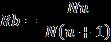
Bifurcation Ratio (Rb) (Horton (1945) & Strahler (1964) [10-11]): This is a dimensionless measure of the branchingpatternofthestreamnetwork.Ahigherbifurcationratiocanindicateamorecomplexdrainagenetwork.
MeanStreamLength(Lū)(Strahler(1964)[11]):Thisistheaveragelengthofstreamsinthebasin,measuredin kilometers.Itiscalculatedasthetotalstreamlengthdividedbythenumberofstreams(Lu/Nu).Alongermean streamlengthcanindicateamoreelongatedbasinshape.
b. ArealAspects:
ElongationRatio(Re)(Schumm(1956)[7]):Thisisadimensionlessmeasureoftheshapeofthebasin.Ahigher elongationratiocanindicateamorecircularbasinshape.

FormFactor(Ff)(Horton(1932)[2]):Thisisadimensionlessmeasureoftheshapeofthebasin.Ahigherform factorcanindicateamorecircularbasinshape.

CircularityRatio(Rc)(Miller(1953)&Schumm(1956)[8-7]):Thisisadimensionlessmeasureoftheroundnessof thebasin.Ahighercircularityratiocanindicateamorecircularbasinshape.

StreamFrequency(Fs) (Horton(1932)[2]):Thisisthenumberofstreamsperunitarea,measuredininverse squarekilometers(ΣNu/A).Ahigherstreamfrequencycanindicateamoredensedrainagenetwork.
DrainageDensity(D)(Horton(1932)[2]):Thisisthetotallengthofstreamsperunitarea,measuredinkilometers persquarekilometer(ΣLu/A).Ahigherdrainagedensitycanindicateamoredensedrainagenetwork.
ConstantChannelofMaintenance (Schumm(1956)[7]):Thisisthearearequiredtomaintainaunitlengthof streamchannel,measuredinsquarekilometersperkilometer(1/D).Alowerconstantofchannelmaintenancecan indicateamoredensedrainagenetwork.
LengthofOverlandFlow(Lg)(Horton(1945)[10]):Thisistheaveragelengthofoverlandflowpaths,measuredin kilometers Alongerlengthofoverlandflowcanindicateaslowerresponsetorainfall.
International Research Journal of Engineering and Technology (IRJET) e-ISSN: 2395-0056
Volume: 11 Issue: 09 | Sep 2024 www.irjet.net p-ISSN: 2395-0072

DrainageIntensity(Di)(Faniran(1968)[13]):Thisisameasureoftheintensityofthedrainagenetwork,measured ininversekilometers(Fs/D).Ahigherdrainageintensitycanindicateamoredensedrainagenetwork.
Drainage Texture (Dt) (Horton (1945) [10]): This is a measure of the fineness or coarseness of the drainage pattern, measured in inverse kilometers (Nu/P). A higher drainage texture can indicate a more fine-grained drainagepattern.
RuggednessNumber(Rn)(Melton(1957)[12]):Thisisadimensionlessmeasureoftheruggednessoftheterrain.It iscalculatedasthedrainagedensitytimestherelief(DxH).Ahigherruggednessnumbercanindicateamore ruggedterrain.
c. ReliefAspects:
Slope(S):Thisisthesteepnessoftheterrain,measuredinsquarekilometers.Itisdeterminedthroughsoftware analysis.Steeperslopescanleadtofasterrunoff.
Relief(H)(Strahler(1957)[9]):Thisisthedifferenceinelevationbetweenthehighestandlowestpointsinthe basin,measuredinmeters(Z-z).Greaterreliefcanindicatesteeperslopesandfasterrunoff.
Relief Ratio (Rh) (Schumm (1956) [7]): This is a dimensionless measure of the steepness of the terrain. It is calculatedasthereliefdividedbythebasinlength(H/Lb).Ahigherreliefratiocanindicatesteeperslopes.
International Research Journal of Engineering and Technology (IRJET) e-ISSN: 2395-005
Volume: 11 Issue: 09 | Sep 2024 www.irjet.net p-ISSN: 2395-0072
Table -1: VariousparametersofJalnaDistrict (a)
International Research Journal of Engineering and Technology (IRJET) e-ISSN: 2395-0056
Volume: 11 Issue: 09 | Sep 2024 www.irjet.net p-ISSN: 2395-0072
Table -2: VariousparametersofAurangabadDistrict (a)
International Research Journal of Engineering and Technology (IRJET) e-ISSN: 2395-0056
Volume: 11 Issue: 09 | Sep 2024 www.irjet.net p-ISSN: 2395-0072
International Research Journal of Engineering and Technology (IRJET) e-ISSN: 2395-0056
Volume: 11 Issue: 09 | Sep 2024 www.irjet.net p-ISSN: 2395-0072
Table -3: VariousparametersofNandedDistrict (a)
International Research Journal of Engineering and Technology (IRJET) e-ISSN: 2395-0056
Volume: 11 Issue: 09 | Sep 2024 www.irjet.net p-ISSN: 2395-0072
International Research Journal of Engineering and Technology (IRJET) e-ISSN: 2395-0056
Volume: 11 Issue: 09 | Sep 2024 www.irjet.net p-ISSN: 2395-0072
Table -4: VariousparametersofBeedDistrict (a)
International Research Journal of Engineering and Technology (IRJET) e-ISSN: 2395-0056
Volume: 11 Issue: 09 | Sep 2024 www.irjet.net p-ISSN: 2395-0072
International Research Journal of Engineering and Technology (IRJET) e-ISSN: 2395-0056
Volume: 11 Issue: 09 | Sep 2024 www.irjet.net p-ISSN: 2395-0072
International Research Journal of Engineering and Technology (IRJET) e-ISSN: 2395-0056
Volume: 11 Issue: 09 | Sep 2024 www.irjet.net p-ISSN: 2395-0072
Basedonaboveresults,followingaretheconclusionsforJalnadistrict:
1. Jafferabad,havingtheminimumareaanddrainagedensity,islikelytohave higherwaterretentionandthus,lower droughtrisk.
2. Bhokardan,havingthemaximumarea,circularityratio,andbasinrelief,islikelytohavequickerdrainageandthus, higherdroughtrisk.
3. Partur,havingtheminimumperimeter,meanTRI,meanroughness,elongationratio,formfactor,basinrelief,reliefratio, andstreamlength,islikelytohavehigherwaterretentionandthus,lowerdroughtrisk.
4. Badnapur,havingthemaximummeanTPI,meanTRI,andreliefratio,islikelytohavequickerdrainageandthus,higher droughtrisk.
5. Ambad,havingthemaximumelongationratio,formfactor,andcircularityratio,islikelytohavequickerdrainageand thus,higherdroughtrisk.
6. Ghansawangi,havingtheminimummeanbifurcationratio,ruggednessnumber,andstreamorder,islikelytohave higherwaterretentionandthus,lowerdroughtrisk.
7. Jalna,havingthemaximummeanTPI,ruggednessnumber,streamlength,drainagedensity,anddrainagetexture,islikely tohavequickerdrainageandthus,higherdroughtrisk.
8. Mantha,havingtheminimumdrainageintensity,islikelytohavehigherwaterretentionandthus,lowerdroughtrisk.
FollowingaretheconclusionsforAurangabaddistrict:
1. Khuldabad, having the minimum area, drainage density, and length of overland flow, is likely to have higher water retentionandthus,lowerdroughtrisk.
2. Vaijapur,havingthemaximumarea,elongationratio,andformfactor,islikelytohavequickerdrainageandthus,higher droughtrisk.
3. Soegaon,havingthemaximumperimeter,meanTRI,meanroughness,circularityratio,reliefratio,anddrainagetexture, islikelytohavequickerdrainageandthus,higherdroughtrisk.
4. Gangapur,havingtheminimummeanTRI,meanroughness,streamfrequency,drainageintensity,islikelytohavehigher waterretentionandthus,lowerdroughtrisk.
5. Phulambri,havingthemaximumelongationratio,formfactor,andcircularityratio,islikelytohavequickerdrainageand thus,higherdroughtrisk.
6. Kannad,havingthemaximumbasinrelief,islikelytohavequickerdrainageandthus,higherdroughtrisk.
7. Ghansawangi,havingtheminimummeanbifurcationratio,islikelytohavehigherwaterretentionandthus,lower droughtrisk.
8. Sillod,havingtheminimumruggednessnumber,drainagedensity,andmaximumconstantchannelofmaintenance,is likelytohavehigherwaterretentionandthus,lowerdroughtrisk.
9. Aurangabad, having the maximum ruggedness number, stream order, stream length, stream frequency, drainage intensity,anddrainagetexture,islikelytohavequickerdrainageandthus,higherdroughtrisk.
FollowingaretheconclusionsforNandeddistrict:
1. Ardhapur,havingtheminimumarea,perimeter,andmeanTPI,islikelytohavehigherwaterretentionandthus,lower droughtrisk.
2. Kinwat,havingthemaximumarea,elongationratio,formfactor,andbasinrelief,islikelytohavequickerdrainageand thus,higherdroughtrisk.
3. Mudkhed,havingthemaximumperimeter,islikelytohavequickerdrainageandthus,higherdroughtrisk.
4. Bhokar,havingthemaximummeanTPI,ruggednessnumber,anddrainagetexture,islikelytohavequickerdrainage andthus,higherdroughtrisk.
5. Dharamabad,havingtheminimummeanTRI,meanroughness,streamfrequency,meanbifurcationratio,anddrainage texture,islikelytohavehigherwaterretentionandthus,lowerdroughtrisk.
6. Mahoor,havingthemaximummeanTRI,meanroughness,andreliefratio,islikelytohavequickerdrainageandthus, higherdroughtrisk.
7. Mukhed,havingthemaximumelongationratioandformfactor,islikelytohavequickerdrainageandthus,higher droughtrisk.
8. Loha,havingtheminimumcircularityratioandreliefratio,islikelytohavehigherwaterretentionandthus,lower droughtrisk.
9. Biloli,havingthemaximumcircularityratio,islikelytohavequickerdrainageandthus,higherdroughtrisk.
10. Kinwat,havingthemaximumbasinreliefandminimumstreamorder,islikelytohavequickerdrainageandthus,higher droughtrisk.
International Research Journal of Engineering and Technology (IRJET) e-ISSN: 2395-0056
Volume: 11 Issue: 09 | Sep 2024 www.irjet.net p-ISSN: 2395-0072
11. Kandhar,havingthemaximummeanbifurcationratio,islikelytohavequickerdrainageandthus,higherdroughtrisk.
12. Hadgaon,havingtheminimumruggednessnumber,streamorder,streamlength,drainagedensity,andmaximumlength ofoverlandflow,islikelytohavehigherwaterretentionandthus,lowerdroughtrisk.
13. Nanded,havingthemaximumstreamlengthandminimumdrainageintensity,islikelytohavehigherwaterretention andthus,lowerdroughtrisk.
14. Bhokar,havingthemaximumstreamfrequency,drainagedensity,drainagetexture,andminimumconstantchannelof maintenance,islikelytohavequickerdrainageandthus,higherdroughtrisk.
FollowingaretheconclusionsforBeeddistrict:
1. Dharur,havingtheminimumarea,perimeter,meanTPI,meanroughness,constantchannelofmaintenance,andlength ofoverlandflow,islikelytohavehigherwaterretentionandthus,lowerdroughtrisk.
2. Ashti,havingthemaximumarea,perimeter,andbasinrelief,islikelytohavequickerdrainageandthus,higherdrought risk.
3. Parli, having the maximum mean TPI, elongation ratio, form factor, and circularity ratio, is likely to have quicker drainageandthus,higherdroughtrisk.
4. Majalgoan,havingtheminimummeanTRI,meanroughness,basinrelief,reliefratio,meanbifurcationratio,ruggedness number,streamfrequency,drainageintensity,anddrainagetexture,islikelytohavehigherwaterretentionandthus, lowerdroughtrisk.
5. Wadwani,havingthemaximummeanTRIandminimumcircularityratio,islikelytohavehigherwaterretentionand thus,lowerdroughtrisk.
6. Georai,havingthemaximumelongationratio,formfactor,andmeanbifurcationratio,islikelytohavequickerdrainage andthus,higherdroughtrisk
7. BeedandPatoda,havingthemaximumbasinrelief,arelikelytohavequickerdrainageandthus,higherdroughtrisk.
8. Dharur,havingthemaximumreliefratio,ruggednessnumber,streamfrequency,drainagedensity,drainagetexture,and minimumlengthofoverlandflow,islikelytohavequickerdrainageandthus,higherdroughtrisk.
9. Patoda,havingtheminimumstreamlength,drainagedensity,andmaximumconstantchannelofmaintenance,islikely tohavehigherwaterretentionandthus,lowerdroughtrisk.
10. Shirur,havingtheminimumdrainagetexture,islikelytohavehigherwaterretentionandthus,lowerdroughtrisk.
ACKNOWLEDGEMENT (Optional)
TheauthorsarethankfultoDr.K.N.Nandurkar,Principal,KKWIEER,Dr.S.Y.Kute,Dean,KKWIEER,andDr.P.D.Jadhao,HOD, DepartmentofCivilEngineering,KKWIEER.Theauthorsarealsothankfultothepeoplewhoknowinglyandunknowingly helpedthemwiththispaper.
[1] Mohd.SayeedUlHasan,KalyanAdhikariandSoumyaBhattacharyya.MorphometricAnalysisusingRemoteSensingand GIS.JCEET.2017;4(1):17-22p
[2] R.E.Horton.Drainagebasincharacteristics.Eos.1932;13:350–361p
[3] Rabu,P.P.,&Askaran,R.B.DrainageMorphometryofUpperVaigaiRiverSub-basin,WesternGhats,SouthIndiaUsing RemoteSensingandGIS.GEOSOCINDIA.2013;82:519–528p
[4] Gajbhiye, S., & Ashish, S. K. M. Prioritizing erosion prone area through morphometric analysis : an RS and GIS perspective.AppliedWaterScience2014;4:51–61p.http://doi.org/10.1007/s13201-013-0129-7
[5] Agarwal,R.,Garg,P.K.,&Garg,R.D.(2013).RemoteSensingandGISBasedApproachforIdentificationofArtificial RechargeSites.WaterResourcesManagementvolume2013;27:2671–2689phttp://doi.org/10.1007/s11269-0130310-7
[6] Shrudha, V. K. , Hafeezunnisa. ESTIMATION OF MORPHOMETRIC PARAMETERS AND RUNOFF USING RS & GIS TECHNIQUES.IRJET2013;IC-RICEConferenceIssue:449–455p
[7] S.A.Schumms.EvolutionofdrainagesystemsandslopesinBadlandsatPerthAmboy,NewJersey.Geol.Soc.Am.Bull. 1956;67:597–646p
[8] MillerVG(1953).AquantitativegeomorphicstudyofthedrainagebasincharacteristicsintheClinchMountainarea, VirginiaandTennessee.IJG1953;5(13):389-042p
[9] A.Strahler.Quantitativeanalysisofwatershedgeomorphology.Eos1957;38:913–920p
[10] R. E. Horton. Erosional development of streams and their drainage basins: hydrophysical approach to quantitative morphology.Geol.Soc.Am.Bull.1945;56:275–370p
International Research Journal of Engineering and Technology (IRJET) e-ISSN: 2395-0056
Volume: 11 Issue: 09 | Sep 2024 www.irjet.net p-ISSN: 2395-0072
[11] A.N.Strahler.Quantitativegeomorphologyofdrainagebasinsandchannelnetworks.HandbookofAppliedHydrology 1964;V.T.Chow,Ed:section4–11
[12] MeltonMA.Ananalysisoftherelationamongelementsofclimate,surfacepropertiesandgeomorphology.Technical OfficeofNationalResearch1957;projectNR:389–642p
[13] Faniran,A.TheIndexofDrainageIntensity-AProvisionalNewDrainageFactor.AJBAS.1968;31:328-330p
[14] GSDeepaVarghese,MohandasChadaga,UALathashri,SurumiRasiaSalim.MorphometricAnalysisbyUsingRemote Sensing&QGISApproachtoEvaluatetheAquiferResponseofTwoSubWatershedsofCoastalKerala.IOPConf.Series: EarthandEnvironmentalScience987(2022)012018
[15] AbdulQadir,MohammadYasir,IsmailAhmadAbir,NaseemAkhtar,LimHweeSan.QuantitativeMorphometricAnalysis UsingRemoteSensingandGISTechniquesforMandakiniRiverBasin.IOPConf.Series:EarthandEnvironmentalScience 540(2020)012021
[16] AbhishekJain,ManjeetSingh,P.K.SinghandK.K.Yadav.MorphometricAnalysisofKakanWatershedusingRemote SensingandGIS.IJCMAS2020;9(12)
[17] N.Sahoo,B.Panigrahi,J.C. Paul andB.P.Behera.AssessmentofMorphometricParametersinBaitaraniBasinusing RemoteSensingandGIS.IJCMAS2019;8(08)
[18] Mohamed ElKashouty. Watershed delineation and morphometric analysis using remote sensing and GIS mapping techniquesinQena-Safaga-BirQueh,CentralEasternDesert.IJCMAS2020;12(2):22-46p
[19] SandeepAdhikari.MorphometricAnalysisofaDrainageBasin:AStudyofGhatgangaRiver,BajhangDistrict,Nepal.The GeographicBase2020;7:127-144p
[20] AsaadA.M.Al-Hussein,AbdulrahmanA.Yahyaa.MorphometricCharacteristicsofWadiKoysenjaqBasinInErbilUsing GIS.INJES2019;19(2):15-40p
[21] R.S.ShelarandS.S.Mane.MorphometricAnalysisoftheNiraRiverBasininMaharashtraState,IndiausingGeographical InformationSystem.IJCMAS2019;8(11)
[22] MahmoudH.Ashmawy,MohamedA.AbdEl-Wahed,SamirZ.KamhandAlyShebl.Comparativestudyofthedrainage basinmorphometryextractedfromtopographicmapsandSRTMDEMs:anexamplefromGhadirwatershed,Eastern Desert,Egypt.SciJBAS2018;39:52-64p
[23] B.D.Premanand,U.Satishkumar,B.MaheshwaraBabu,S.K.Parasappa,MallikarjunaM.Dandu,IbrahimKaleel,N.L. RajeshandS.A.Biradar.MorphometricAnalysisofPatapurMicro-watershedinNorth-EasternDryZoneofKarnataka UsingGeographicalInformationSystem:ACaseStudy.IJCMAS2018;7(04)
[24] KeshavBasnet,Er.RamChandraPaudelandBikashSherchan.AnalysisofWatershedsinGandakiProvince,NepalUsing QGIS.TECHNICALJOURNAL2019;1(1)
[25] ImelidaTorrefranca&RolandEmeritoOtadoy.GIS-basedwatershedcharacterizationandmorphometricanalysisin BoholWatersheds,Philippines.Geol.ecol.Landsc.2022;DOI:10.1080/24749508.2022.2158554
[26] MujtabaIsmail,HarmeetSingh,IshfaqFarooq,NahidaYousuf.QuantitativemorphometricanalysisofVeshavandRembi Arawatersheds,India,usingquantumGIS.Appl.Geomat.SIFET2022https://doi.org/10.1007/s12518-022-00417-3
[27] Abrar Yousuf, Shabnam Ara, Shaik Iftikhar Ahmad, Ramashray Prasad, BR Thakur. Remote Sensing and GIS based MorphometricAnalysisofaMicrowatershed.2020
[28] HAZIRS.ÇADRAKU.MORPHOMETRICANALYSISOFLLAPRIVERWATERSHED(KOSOVO)”,Rev.Roum.Géogr./Rom. Journ.Geogr.2023;67(1):33–49p,2023.DOI:10.59277/RRG.2023.1.04
[29] Dr.SahilSalvi,Dr.SudarshanBobade,Mrs.AnujaRajgopalan,SurajAhire,AnujJadhav,ShubhangiWaghmare,Shravani Patil. MORPHOMETRIC ANALYSIS OF SINA RIVER BASIN AT MIDSANGAVI USING RS & GIS. Eur. Chem. Bull. 2023;12(SpecialIssue5):2630-2652p
[30] RameshKumarPatel,VineetKumarRai,DhirajKumarSharma,andSatyaPrakash.EvaluationofMorphometricAnalysis ofKharagRiverBasin,OdishaUsingGeospatialTechniques.2023.DOI:10.1007/978-981-99-3660-1
[31] R.R. Ahire, S.G. Wagh, A.V. Dudhekar. Study of Morphometric and Topographic Parameters of Nashik District and Its TalukasUsingGISTool.InternationalJournalofWaterResourceEngineeringandManagement.2023;10(2):39–49p.