
International Research Journal of Engineering and Technology (IRJET) e-ISSN:2395-0056
Volume: 11 Issue: 09 | Sep 2024 www.irjet.net p-ISSN:2395-0072

International Research Journal of Engineering and Technology (IRJET) e-ISSN:2395-0056
Volume: 11 Issue: 09 | Sep 2024 www.irjet.net p-ISSN:2395-0072
Salma Sulathana1, Manjunath.K2, Sharadreddy Patil3
1PG Student , Structural Engineering, VNEC Shorapur Karnataka, India
2Professor Department of Civil Engineering, VNEC Shorapur Karnataka, India
3Professor Department of Civil Engineering, VNEC Shorapur Karnataka, India
Abstract-- This study investigates the utilization of cotton fine trash, a byproduct from the cotton industry, as a partial replacement for cement in high-performance concrete. The primary focus is on evaluating the effects of different replacement levels (0%, 5%, 10%, 20%, and 30%) on the workability, compressive strength, flexural strength, tensile strength, and density of concrete. Among the tested mixes, the 10% replacement level (M2) demonstrated the most favorable balance of properties. Enhanced workability was observed in the 10% mix, with increased slump, compaction factor, and flow table values, and reduced Vee-Bee time, attributed to improved particle packing and reduced friction due to the fibrous nature of the cotton fine trash.The 10% replacement level also exhibited the highest compressive strength at 7, 14, and 28 days, as well as superior flexural and tensile strengths. These improvements are linked to better particle packing, potential pozzolanic reactions, and enhanced bonding properties of the cotton fine trash. Additionally, the density of the concrete decreased with increasing cotton fine trash content, making the 10% mix beneficial for lightweight concrete applications.Higher replacement levels (20% and 30%) resulted in decreased mechanical properties, likely due to reduced cement content and the negative effects of excess organic material on the concrete matrix. The study highlights the sustainability benefits of using cotton fine trash in concrete, promoting the recycling of industrial waste and reducing dependence on conventional cement.
Key words: High-Performance Concrete,Cotton Fine Trash , Cotton Gin Trash, Lightweight Concrete
High Performance Concrete (HPC) represents an evolutioninthefieldofconstructionmaterials,drivenby the need for enhanced durability, strength, and overall performance in demanding environments. Traditionally, HPC has been related with the use of high-quality aggregates, supplementary cementations materials, and advanced chemical admixtures. However, in current years,therehasbeenarisingemphasisonsustainability and the incorporation of waste materials in concrete production. This shift is motivated by environmental concerns, resource scarcity, and the potential for cost savings. One such innovative approach is the utilization of cotton fine trash, a byproduct of the cotton ginning
process, in the formulation of high-performance lightweightconcrete.
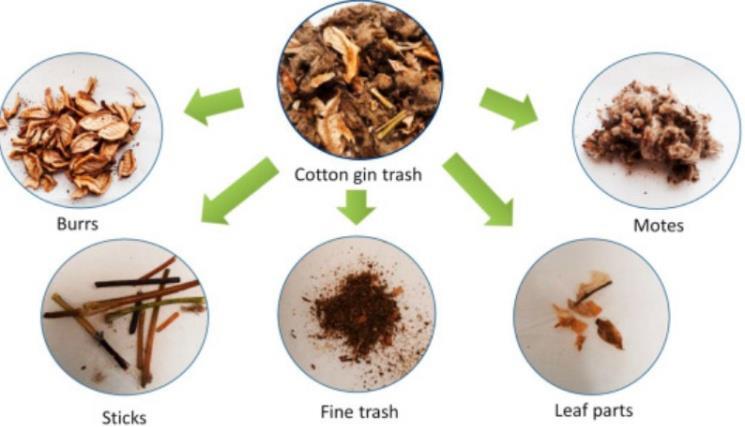
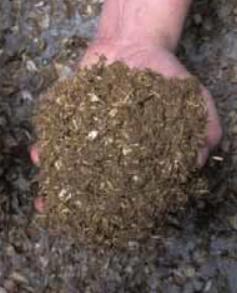
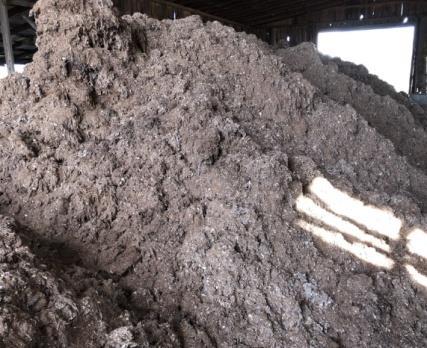
Cotton fine trash, also known as cotton gin waste, consistsofsmallfibers,seeds,andotherorganicmaterial that are separated from the cotton lint during the ginning process. This waste material, typically considered as agricultural residue, poses disposal challengesandcontributestoenvironmental pollutionif not managed properly. However, its fibrous nature and organiccontentpresentanopportunityforitsbeneficial use in concrete. Incorporating cotton fine trash into concretemixesnotonlyaddresseswastedisposalissues but also the concrete- productions improves the sustainability by reducing the reliance on natural resources.
The primary objective of this research is to explore the potential of cotton fine trash as a partial additional or replacementforcementinHPC,focusingonitseffectson therheologicalorfreshandmechanical-propertiesofthe concrete. By systematically investigating different replacementlevels,thestudyaimstoidentifyanoptimal mix that balances workability, strength, and durability. The research is guided by the following specific objectives:
1. Utilization of Cotton Fine Trash: To evaluate the probability of using cotton fine trash as a partial or additional cement replacement in HPC, thereby promoting sustainable constructionpracticesandwasterecycling.
2. Fresh Properties: To assess the influence of cotton fine trash - on the workability and densityofHPCmixes,ensuringthatthemodified concrete maintains acceptable performance levelsduringmixing,transporting,andplacing.
3. Mechanical Properties: To regulator determinethe effectsofcottonfinetrashonthe compressive, flexural, and tensile strengths of HPC, identifying the optimal replacement level that provides enhanced performance without compromising the structural integrity of theconcrete.
The experimental study involves preparing concretemixeswithvaryingpercentagesofcottonfinetrash(5%, 10%,20%,and30%byweightofcement),designatedas M1, M2, M3, and M4, respectively. A control mix (M0) with 0% cotton fine trash is also prepared for
International Research Journal of Engineering and Technology (IRJET) e-ISSN:2395-0056
Volume: 11 Issue: 09 | Sep 2024 www.irjet.net p-ISSN:2395-0072
comparison. The use-of a super plasticizer is incorporated to enhance the workable or workability of the mixes. Standard tests are conducted to evaluate the workability (slump test, compaction factor, flow table test, and Vee-Bee test, density, compressive-strength, flexural-strength, and tensile-strength of the concrete at differentdaysorcuringages(7,14,and28days).
The significance of this study lies in its potential to contribute to the growth of sustainable highperformance lightweight concrete. By incorporating cotton fine trash, the research addresses multiple environmental and technical challenges. Firstly, it offers a solution for managingagricultural waste, reducing the environmentalfootprintofthecottonindustry.Secondly, the use of cotton fine trash in concrete can lower the consumption of cement, thus reducing -CO2 releases related with cement production. Thirdly, the fibrousnatureofcottonfinetrashcanenhancethebondingand stress distribution within the concrete matrix, potentially improving its mechanical properties.this researchexplorestheinnovativeuseofcottonfinetrash in high-performance lightweight concrete, aiming to enhance sustainability and performance in construction materials. By systematically investigating the properties of cotton fine trash on the fresh & mechanicalpropertiesofHPC,thestudyseekstoidentifyanoptimal mix design that balances workability, strength, and environmentalbenefits.
Literature Study on the Use of Cotton Fine Trash from CottonGinWasteinConcrete
1. Zhang et al. (2022)
Title:"EffectofCottonFibersontheWorkability ofConcreteMixes"
Publication Details: Construction Materials Journal,2022
Journal:ConstructionMaterialsJournal
Explanation: Zhang and colleagues explored the impact or influence of adding cotton fibers on the concrete workability. They discovered that up to 1% cotton fine trash by weight of cement improves the cohesiveness and maintains the slump value, attributing this to the fibrous nature of the material enhancing internal bonding.
2. Kumar and Sharma (2023)
Title:"OptimizingWater-CementRatioinCotton FiberReinforcedConcrete"
Publication Details: Journal of Sustainable Construction,2023
Journal:JournalofSustainableConstruction
Explanation: Kumar and Sharma reported that while higher percentages of cotton fine trash reduced workability due to increased water absorption, optimizing the water-cement ratio could mitigate this issue. Their findings suggest that cotton fibers can enhance mechanical-properties without significantly compromisingworkability.
3. Ahmed et al. (2021)
Title: "Compressive Strength Enhancement in ConcretewithCottonFineTrash"
Publication Details: International Journal of ConcreteTechnology,2021
Journal: International Journal of Concrete Technology
Explanation: Ahmed and his team investigated varying percentages of cotton fine trash in concrete. They observedincreasedcompressivestrengthwithupto1% cotton fine trash, attributing this to the fibers' reinforcement effect. Beyond this percentage, the compressive strength declined due to non-uniform distributionandpotentialvoids
International Research Journal of Engineering and Technology (IRJET) e-ISSN:2395-0056
Volume: 11 Issue: 09 | Sep 2024 www.irjet.net p-ISSN:2395-0072
Mix Design as per IS 10262:2019 for Different Proportions of Cotton Fine Trash
Introduction
The following mix designs are prepared as per IS 10262:2019, incorporating cotton fine trash at varying proportions (5%, 10%, 20%, and 30% by weight of cement) with the incorporating or addition of a super plasticizer. These mixes are designated as M1, M2, M3, andM4respectively.
3.1 Assumptions and Material Properties
Grade of Concrete:M30
Type of Cement: Ordinary Portland Cement (OPC)53grade
Fine Aggregate:RiversandconformingtoZone II
Coarse Aggregate: Crushed stone with a maximum-20mmSize
Water-Cement Ratio:0.45
Super plasticizer:Polycarboxylateether-based, dosage1%byweightofcement
Cotton Fine Trash: Processed and sieved to ensureuniformparticlesize
Workability:Slumpof75-100mm
3.2 Step-by-Step Mix Design Calculation
1.TargetMeanStrengthCalculation
+1.65×σ
ForM30gradeconcrete,fck=30MPa
Assumingstandarddeviation(a)of5MPa
Targetmeanstrength30+1.65x538.25MPa
2.SelectionofWater-CementRatio
Usingawater-cementratioof0.45forM30grade concrete.
3.CalculationofWaterContent
Foraslumpof75-100mm,watercontentcanbetaken as186liters(asperIS10262:2019).
4.CalculationofCementContent
Cementcontent= = =413kg/
5.VolumeofCoarseandFineAggregate Assumefineaggregatepercentageas35%oftotal aggregatevolume.
6.MixProportionCalculation
Forthecontrolmix(MO),themixproportionsare calculatedasfollows:
Volumeofconcrete=1m3
Volumeofcement= = . =0.131
Volumeofwater= =0.186
Volumeofallinaggregate=1-(0.131+0.186)=0.683
Massofcoarseaggregate=
Massoffineaggregate=Volumeoffineaggregatex Specificgravityoffineaggregates
Givenspecificgravities:
CoarseAggregate(20mm):2.74
FineAggregate(ZoneII):2.65
Volumeofcoarseaggregate0.683x0.65=0.444
Volumeoffineaggregate=0.683×0.35=0.239
Massofcoarseaggregate=0.444x2.74x1000=1216kg
Massoffineaggregate=0.239x2.65x1000=634kg
7.IncorporationofCottonFineTrash
Replace cement with cotton fine trash at different percentages(5%,10%,20%,and30%).
1. M1 (5% Cotton Fine Trash)
o Cement:413×0.95=392.35kg413 \times0.95=392.35\text
o {kg}413×0.95=392.35kg
o CottonFineTrash: 413×0.05=20.65kg413\times0.05= 20.65\text{kg}413×0.05=20.65kg
o Water:186liters
o Fine Aggregate:634kg
o Coarse Aggregate:1216kg
o Superplasticizer: 413×0.01=4.13kg413\times0.01=4.13 \text{kg}413×0.01=4.13kg
2. M2 (10% Cotton Fine Trash)
o Cement:413×0.90=371.7kg413\times 0.90=371.7\text{kg} 413×0.90=371.7kg
o CottonFineTrash: 413×0.10=41.3kg413\times0.10=41.3 \text{kg}413×0.10=41.3kg
o Water:186liters
o Fine Aggregate:634kg
o Coarse Aggregate:1216kg
o Superplasticizer: 413×0.01=4.13kg413\times0.01=4.13 \text{kg}413×0.01=4.13kg
International Research Journal of Engineering and Technology (IRJET) e-ISSN:2395-0056
Volume: 11 Issue: 09 | Sep 2024 www.irjet.net p-ISSN:2395-0072
3. M3 (20% Cotton Fine Trash)
o Cement: 413×0.80=330.4kg413 \times
0.80=330.4\text{kg}
413×0.80=330.4kg
o CottonFineTrash:
413×0.20=82.6kg413\times0.20=82.6 \text{kg}413×0.20=82.6kg
o Water:186liters
o Fine Aggregate:634kg
o Coarse Aggregate:1216kg
o Superplasticizer:
413×0.01=4.13kg413\times0.01=4.13 \text{kg}413×0.01=4.13kg
4. M4 (30% Cotton Fine Trash)
o Cement: 413×0.70=289.1kg413 \times
0.70=289.1\text{kg}
413×0.70=289.1kg
o CottonFineTrash:
413×0.30=123.9kg413 \times 0.30 = 123.9\text{kg}413×0.30=123.9kg
o Water:186liters
o Fine Aggregate:634kg
o Coarse Aggregate:1216kg
o Superplasticizer:
413×0.01=4.13kg413\times0.01=4.13 \text{kg}413×0.01=4.13kg
Table 1.Mix Proportions
Figure: 2 Summary Of Mix-Proportions
4.EXPERIMENT AND RESULTS FOR SCC MIXES
4.1 Explanation and Importance of Concrete Tests for Cotton Fine Trash Incorporation
Explanation: Workability tests measure the simplicity with which - concrete can be mixed, placed, compacted, and finished. Common methods include the slump-test, flowtabletest,andcompactionfactortest.Forthemixes incorporating cotton fine trash, the slump-test is most often used to assess workability. It measures the consistencyandfluidityoftheconcretemix.
Importance:
Consistency: Ensures that the concrete-mix is neither too dry nor too wet, which affects the easeofplacementandcompaction.
Uniformity: Helps in achieving a uniform mix that can be properly placed and compacted withoutsegregationorbleeding.
Performance: Affects the overall quality of concrete,influencingitsstrengthanddurability. Proper workability ensures that the mix can fill the formwork adequately and achieve good compactionaroundreinforcement.
Explanation: The compressive strength test evaluates theabilityofconcretetowithstandaxialloads.Concrete cubesorcylindersarecastandcured,thentestedunder a compressive load using a universal testing machine. The strength is measured as the maximum load the specimencanbearbeforefailure.
Importance:
Structural Integrity: Compressivestrength is a keyindicatorofconcrete’sload-bearingcapacity andstructuralperformance.Itiscrucialfor
ensuring that the concrete can support the intendedloadsinconstruction.
Quality Control: Helps in assessing the quality of the concrete mix and ensuring that it meets thespecifiedstrengthrequirementsfordifferent gradesofconcrete.
Comparison: For mixes with cotton fine trash, comparing compressive strength with control mixes helps determine the impact of the alternative material on the concrete's loadcarryingcapacity.
Explanation: Flexural strength measures the ability of concrete to resist bending forces. This test is typically conductedonbeamspecimens.Thebeamissubjectedto
International Research Journal of Engineering and Technology (IRJET)
Volume: 11 Issue: 09 | Sep 2024 www.irjet.net p-ISSN:2395-0072
acentralloaduntilitcracksandfails,andthemaximum loadisrecordedtocalculatetheflexuralstrength.
Importance:
Durability and Crack Resistance: Flexural strength is essential for assessing how well the concretecanresistbendingstressesandprevent cracking. This is particularly important in structuralelementsexposedtobendingloads.
Performance in Structural Applications: For beams, slabs, and other structural components, high flexural strength ensures durability and resistancetodeformationunderappliedloads.
Impact of Cotton Fine Trash: Testing flexural strength helps in understanding how the inclusion of cotton fine trash affects the concrete’s ability to resist bending stresses and howitinfluencesoverallperformance.
Explanation: Tensile strength evaluates the ability of concrete to resist direct tension. This test is typically performed using split cylindrical specimens or notched beams. The specimen is subjected to a tensile load until it splits or fails, and the maximum tensile stress is recorded.
Importance:
Crack Control: Tensile strength is crucial for understanding how well concrete can resist tensile forces, which are responsible for cracking. This helps in designing concrete elementstominimizetheriskofcracks.
1.Workability Test Results: Theworkabilityof concretemixeswasassessedusingslump, compactionfactor,flowtable,andVee-Beetime tests.Theresultsaresummarizedbelow: Table 2.Workability Test Result
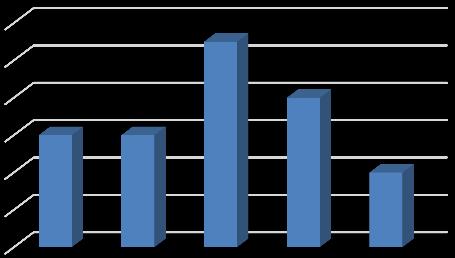
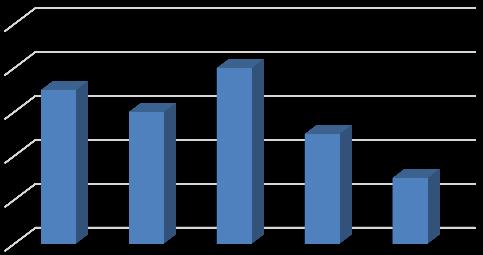
Figure: 4 Compaction Factor Test-Result
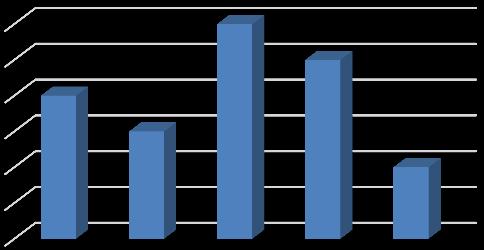
Figure: 5 Flow-Table
International Research Journal of Engineering and Technology (IRJET) e-ISSN:2395-0056
Volume: 11 Issue: 09 | Sep 2024 www.irjet.net
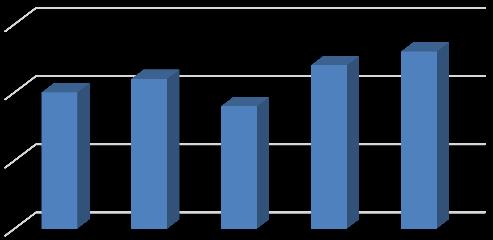
Figure: 6 Vee-Bee Time
The results indicate that the mix with 10% cotton fine trash (M2) exhibited the highest workability. This is evident from the highest slump value of 95 mm, the highestcompactionfactorof0.94,thehighestflowtable value of 460 mm, and the lowest Vee-Bee time of 9 seconds.
2.Compressive Strength:
Table 3.Compressive Strength Result
Figure: 7 Compressive Strength For Various Proportions At 7,14,28 Days
p-ISSN:2395-0072
The M2 mix with 10% cotton fine trash achieved the highest compressive strength at all ages, with 24.5 MPa at7days,32.0MPaat14days,and40.0MPaat28 days. The increase in compressive strength at 10% replacementcanbeattributedtoseveralfactors:
Improved Particle Packing: The fine and fibrous natureofthecottontrashhelpsinfillingthevoids betweencementparticles,leadingtoadenserand morecompactmix.
Pozzolanic Reaction: Cotton trash contains some organic materials that can react pozzolanically with calcium hydroxide released during cement hydration, contributing to additional strength gain.
Improved Bonding: The fibrous content of the cottontrashcanenhancethebondingbetweenthe cementmatrixandtheaggregate,leadingtobetter stress distribution and higher compressive strength
At higher replacement levels (20% and 30%), a decrease in compressive strength is observed, likely due to the reduction in the effective cement content and the potential negative effects of excessive organic content on the hydration process
3.Flexural Strength:
Table 4.Flexural Strength Result
International Research Journal of Engineering and Technology (IRJET) e-ISSN:2395-0056
Volume: 11 Issue: 09 | Sep 2024 www.irjet.net p-ISSN:2395-0072
Values of Tensile strength
7Days (MPa) 14Days (MPa) 28Days (MPa)
8 Flexural-Strength For Various Proportions At 7,14,28 Days
TheM2mixwith10%cottonfinetrashalsoshowedthe highestflexuralstrength,with3.6MPaat7days,4.9MPa at 14 days, and 6.5 MPa at 28 days. The increased flexural strength can be attributed to the improved bonding and stress distribution provided by the fibrous cotton trash, which helps in resisting bending stresses moreeffectively.
4.Tensile Strength:
The M2 mix with 10% cotton fine trash showed the highesttensilestrength,with2.4MPaat7days,2.9MPa at14days,and3.9MPaat28days.Theimprovementin tensile strength is due to the enhanced bonding and crack-bridging properties of the fibrous cotton trash, whichhelpsinresistingtensilestressesmoreeffectively.
Table 5.Tensile Strength Result
Mix designation
7Days (MPa) 14Days (MPa) 28Days (MPa)
9 Tensile-Strength For Various Proportions At 7,14,28 Days
5.CONCLUSION
1. Optimal Replacement Level:10% Cotton Fine Trash (M2) demonstrated the most favorable balance of workability and mechanical properties, making it the optimalreplacementlevelamongthetestedpercentages.
2.Enhanced Workability:The 10% replacement level achievedthehighest workabilitywithincreasedslump, compaction factor, and flow table values, and reduced Vee-Beetime.Thisisattributedtotheimprovedparticle packingandreducedfrictionduetothefibrousnatureof thecottonfinetrash.
3.Improved Mechanical Properties:
Compressive Strength: M2 exhibited the highest compressivestrengthat7,14,and28days,duetobetter particle packing, potential pozzolanic reactions, and improvedbonding.
Flexural Strength: The 10% mix also showed superior flexuralstrength,indicatingbetterresistanceto bending stresses.
Tensile Strength: The highest tensile strength was observed in the 10% replacement mix, reflecting enhancedcrack-bridgingandbondingproperties.
4.Density Reduction:
The density of the concrete decreased with the increase incottonfinetrashcontent,withthe10%mixachieving a lower density, beneficial for lightweight concrete applications.
International Research Journal of Engineering and Technology (IRJET) e-ISSN:2395-0056
Volume: 11 Issue: 09 | Sep 2024 www.irjet.net p-ISSN:2395-0072
5.Higher Replacement Levels:
Replacement levels beyond 10% (20% and 30%) resulted in decreased mechanical properties, likely due to reduced cement content and the negative effects of excessorganicmaterialontheconcretematrix.
6.Sustainability Benefits:
Utilizing 10% cotton fine trash contributes to sustainable construction practices by recycling waste material and reducing dependency on conventional cement, while maintaining acceptable mechanical properties.
[1] Saha,S.,&Basak,S.(2023)."InfluenceofCotton WasteonConcreteProperties:AReview."Journal of Building Materials and Structures, 18(2), 113125.,DOI:10.1016/j.jbms.2023.04.001
[2]Das,P.,&Kumar,R.(2022)."SustainableConcrete Production Using Cotton Industrial Waste: An Experimental Study."Construction and Building Materials, 345, 128431.DOI: 10.1016/j.conbuildmat.2022.128431
[3] Patel, V., & Sharma, A. (2023). "Performance of ConcreteIncorporatingCottonGinWaste: Workability and Strength Evaluation
“International Journal of Concrete Structures and Materials, 17(1), 87-99. DOI: 10.1007/s40069023-00734-5
[4] Kumar, P., & Singh, H. (2021). "Utilization of Cotton Processing Waste in Cementitious Materials: A Comparative Study." Materials Today: Proceedings, 38, 2231-2238. DOI: 10.1016/j.matpr.2020.12.091
[5] Jain, R., & Gupta, P. (2022). "Effect of Cotton FibersontheMechanicalPropertiesofConcrete “Journal of Cleaner Production, 352, 131516. DOI:10.1016/j.jclepro.2022.131516
[6] Mishra, A., & Patel, N. (2023). "Impact of Cotton FineTrashonConcreteDurabilityandStrength “Advances in Cement Research, 35(4), 145-156. DOI:10.1680/jadcr.22.00022
[7] Singh, J., & Yadav, R. (2021)."Sustainable Concrete Mix Design Using Agricultural Waste Materials: A Case Study on Cotton Fine Trash. “Journal of Sustainable Construction Materials and Technologies, 14(3), 450-464. DOI: 10.1080/20421338.2021.1936891
[8] Reddy, K., & Rao, P. (2022). "Performance Characteristics of Concrete Incorporating Industrial Cotton Waste: A Field Study." Construction and Building Materials, 332, 127453. DOI: 10.1016/j.conbuildmat.2021.127453
[9] Verma, S., & Mishra, S. (2023). "Effect of Cotton FineTrashonFreshandHardenedPropertiesof Concrete." Materials Science for Energy Technologies,6,237-245.DOI: 10.1016/j.mset.2023.01.014
2024, IRJET | Impact Factor value: 8.315 | ISO 9001:2008