
International Research Journal of Engineering and Technology (IRJET) e-ISSN: 2395-0056

International Research Journal of Engineering and Technology (IRJET) e-ISSN: 2395-0056
Sharvani Banala, Sai Niveditha Bukka, Manikonda Vaishnavi
Sharvani Banala, B Tech -CSE, Malla Reddy University
Sai Niveditha Bukka, Tech -CSE, Malla Reddy University
Manikonda Vaishnavi, B Tech -CSE, Malla Reddy University
Guide: Mrs Shailaja Musham, Assistant Professor, School of Engineering, Malla Reddy University
Abstract - Over the lastdecade,extensiveresearchindicates a notable surge in global crime rates, with women bearing a disproportionate impact. Safeguarding women has become a critical concern in response to this escalating trend. Recognizing the imperative for innovative solutions to tackle the rising crime rates, this study introduces a distinctive project centered on Human Scream Detection and Analysis, employing cutting-edge machine learning and deep learning techniques. The research seeks to explore the identification of human screamsthroughacousticanalysis,leveragingmachine learning to differentiate screams from background noise. The proposed system holds promise for applications in various domains, including public safety, emergency response, and healthcare. The methodology involves feature extraction and classification to heighten the accuracy of scream detection, contributing to improved real-time recognition and response mechanisms. This study provides a valuable contribution to the evolving fields of audio analysis and machine learning, offering a comprehensive approach to human scream detection. The potential applications in emergency response, public safety, and mental health underscore its significance across diverse domains. The findings underscore the importance of aligning technological advancements with ethical considerations to ensure responsible and beneficial deploymentinreal-worldscenarios.Furthermore,theresearch delves into the ethical considerations associated with deploying such technology.Privacyconcerns,potentialmisuse, and the psychological impact on monitored individuals are meticulously examined. The study proposesrecommendations for the responsible implementation and continual refinement of the technology to address these ethical considerations.
Key Words: Human Scream Detection, Acoustic Analysis, Public Safety, Feature Extraction, Ethical Considerations, Potential Misuse, Responsible Implementation, Audioanalysis
1.INTRODUCTION
Exploring human vocalizations has long fascinated researchersacrossdisciplines,encompassingawidearrayof emotions, communicative signals, and physiological responses.Amongthesevocalexpressions,thescreamstands outasaprimalandpotentindicatorofintenseemotions,with applications spanning psychology, neuroscience, and technology. Understanding and analyzing human screams carry significant implications across diverse domains,
including healthcare, security, and entertainment. This research aims to delve into the intricate details of human scream detection and analysis, uncovering underlying patterns, physiological mechanisms, and potential applicationsofthisprimalvocalization.Screamdetectionis pivotalinfieldssuchassafety,security,andhealthcare,aiding inidentifyingandrespondingtodistresssignalseffectively. TheYinalgorithm,apitchdetectionalgorithmwidelyusedin speechandaudioprocessing,presentsaneffectivemethod fordetectingscreams.Groundedinautocorrelation,theYin algorithm accurately estimates pitch even amidst noise, making it suitable for detecting high-pitched and intense sounds characteristic of screams. By analyzing pitch variations in real-time audio data, the Yin algorithm distinguishes scream-like patterns from ambient noises, facilitatingpromptandreliablescreamdetection.Integrating the Yinalgorithm into scream detection systems enhances capabilities, enabling swift response in emergencies and improvingpublicsafety.Applicationsrangefromsmarthome security to public surveillance and healthcare monitoring. Theproblemstatementliesintheneedtodeveloparobust scream detection system capable of operating reliably in diverseacousticenvironments,filteringoutextraneousnoise while accurately recognizing high-intensity vocalizations. This challenge requires advanced signal processing algorithms, like the Yin algorithm, to tackle real-world scenarios. The system must be effective in distinguishing scream patternsand overcoming obstacles relatedto realtime implementation, adaptability, and integration into existing safety infrastructure. Addressing these challenges canimproveemergencyresponsemechanisms,elevatepublic safety standards, and contribute to various applications. Successfully resolving this challenge holds the potential to enhance overall response efficiency and contribute to the development of more reliable and adaptable scream detectionsystems.
In real-world scenarios, the quick and accurate identificationofscreamsiscrucialformaintainingsafetyand security. Current audio processing systems often face difficulties in differentiating genuine distress sounds, like screams,frombackgroundnoise,whichcanresultindelayed orincorrectresponses.Therefore,thereisapressingneedfor ahighlyeffectivescreamdetectionsystemthatcanfunction
Volume: 11 Issue: 09 | Sep 2024 www.irjet.net p-ISSN: 2395-0072 © 2024, IRJET | Impact Factor value: 8.315 | ISO 9001:2008 Certified Journal | Page278
International Research Journal of Engineering and Technology (IRJET) e-ISSN: 2395-0056
Volume: 11 Issue: 09 | Sep 2024 www.irjet.net p-ISSN: 2395-0072
in various acoustic environments, filtering out irrelevant noisewhileaccuratelydetectinghigh-intensityvocalizations. Developingsuchasystemrequirestheuseofadvancedaudio signal processing techniques, suchasthe Yinalgorithm,to handlethecomplexityofreal-worldaudio.Thesystemmust not only be adept at recognizing scream patterns but also overcomepracticalchallengessuchasreal-timeprocessing, adaptabilitytodifferentenvironments,andeasyintegration intoexistingsafetysystems.Forexample,inpublicareas,a screamdetectionsystemcanautomaticallyalertauthorities, leadingtofasterinterventions.Similarly,insmarthomesor healthcarefacilities,thesesystemscandetectdistress,such as when someone is in danger or experiencing a health emergency, prompting swift action. By addressing these challenges, scream detection technology can significantly improvethespeedandeffectivenessofemergencyresponses. Its integration into applications such as smart security systems and health monitoring devices enhances overall public safety. Ultimately, successfully building and implementingthesesystemscanreduceresponsetimesand contribute to more secure environments in a variety of settings.
Apotentialsystemforhumanscreamdetectioncombines advancedaudioprocessingandmachinelearningtechniques. Thefirststepinvolvescreatingacomprehensivedatasetthat includes various types of screams as well as non-scream sounds, providing the foundation for training a machine learningmodel.Featureextractiontechniques,suchasMelfrequency cepstral coefficients (MFCCs), can be applied to capturetheessentialcharacteristicsofaudiosignals.These featureshelpthesystemdifferentiatebetweenscreamsand othersounds.Followingmodeltraining,real-worldtestingis critical to assess the system’s performance in diverse environments and scenarios, ensuring that it can handle a wide range ofsituations. Continuous refinement, basedon real-worldfeedbackandtheintegrationofadditional data, enhancesthesystem'saccuracyandadaptability.Overtime, thisprocessimprovesthemodel’sgeneralizability,makingit more effective in varied applications. One of the system’s most promising aspects is its versatility. In public safety, smart home security, and healthcare, detecting distress signalslikescreamsisvital.Forinstance,inasmarthome, detectingascreamcantriggeremergencyservices,whilein publicsurveillance,itcanpromptrapidintervention.TheYin algorithm plays a complementary role by analyzing pitch variations in real-time audio, allowing the system to distinguish scream-like patterns from background noise more effectively. The integration of the Yin algorithm improvesthedetectionsystem’sabilitytorecognizescreams quickly, enhancing public safety and response times. This technology holds significant potential for a variety of applications,includingsurveillance,smarthomesecurity,and healthcaremonitoring,wheretimelyresponsesareessential.
Humanscreamdetectionsystemsaresophisticatedtools designed to distinguish and identify screams from other audio signals using advanced audio analysis techniques. Thesesystemsrelyonanalyzingkeyacousticfeaturessuchas pitch, intensity, and spectral characteristics, which are uniquely associated with human screams. By leveraging machinelearningalgorithms likesupport vector machines (SVM) and neural networks, these systems can effectively classifysounds.Duringthetrainingphase,thealgorithmsare fed large datasets thatinclude various instances of human screams recorded in different environments and under diverse conditions. This training enables the systems to detectandrecognizescreamsinreal-time,eveninnoisyor challengingenvironments,makingthemrobustandreliable for real-world applications. The practical applications of screamdetectionsystemsarevastandvaried,particularlyin the domains of security, emergency response, and smart hometechnology.Insecuritysystems,theabilitytoquickly identify a scream can trigger immediate alerts, allowing securitypersonnelorlawenforcementtorespondrapidlyto potential emergencies such as assaults or accidents. In emergencyresponsemechanisms,screamdetectioncanhelp prioritize incidents that require urgent intervention, improvingtheoverallefficiencyofrescueoperations.Smart home devices, equipped with scream detection, offer an additionallayerofsafetybyrecognizingdistresssignalsand alertingtheappropriateauthoritiesorfamilymembers,thus enhancingusersecurity.Astechnologycontinuestoevolve, advancementsinaudioprocessingandmachinelearningare enhancing the accuracy, speed, and efficiency of these systems. This progress ensures that scream detection systemswillremainintegraltoimprovingsafetymeasures, emergency response times, and overall public security in criticalsituations.
Pitch Detection Algorithms: Variousstudies,including thosepresentedbyresearcherssuchasDanEllisin"Speech and Audio Signal Processing," explore pitch detection algorithms. The Yin algorithm, emphasized by Ellis and others, stands out for its effectiveness in estimating the fundamental frequency, particularly in high-pitched and intensevocalizationslikescreams.
Yin Algorithm in Speech and Audio Processing: Inthe fieldofspeechandaudioprocessing,researcherslikeXia,Z., andZhang,X.,asdocumentedintheirwork"PitchDetection and Voice AnalysisUsing Yin Algorithm," discuss the adaptationoftheYinalgorithm.Thealgorithm'sproficiency in handling noisy environments and detecting pitch variationsmakesitwell-suitedforscreamdetection.
Context-Specific Adaptability:Scholarscitedin"Audio Signal ProcessingandRecognition" byX.HuangandR.He
International Research Journal of Engineering and Technology (IRJET) e-ISSN: 2395-0056
Volume: 11 Issue: 09 | Sep 2024 www.irjet.net p-ISSN: 2395-0072
delveintotheadaptabilityofscreamdetectionsystems to various contexts. Understanding the algorithm's performance across diverse acoustic conditions is crucial, emphasizing the need for adaptability in applications rangingfrompublicspacestohealthcaresettings.
Integration into Safety and Security Systems: The seamlessintegrationofscreamdetectionsystemsisexplored in various works, including "Security and Emergency Management:FromTheorytoPractice"byJamesF.Broder. The literature underscores the importance of addressing compatibility issues and ensuring interoperability with existingsafetyandsecurityinfrastructure.
Applications in Healthcare:Discussionsinworkslike "Biomedical Signal Processing" by Paul C. Wang highlight potential applications of scream detection in healthcare settings.Therecognitionofdistresssignals,suchasscreams, is considered valuable for enhancing patient monitoring systems and alerting healthcare professionals to critical situations.
Future Directions and Challenges: AuthorslikeRichard G. Lyons, as discussed in "Understanding Digital Signal Processing,"explorefuturedirectionsinsignal processing research.Theexplorationofmachinelearningtechniquesto enhance scream detection accuracy is suggested, with challengesincludingmitigatingfalsepositives,adaptingto evolvingacousticenvironments,andrefiningalgorithmsfor specificusecases.
In summary, a synthesis of information from various sources,includingworksbyauthorssuchasDanEllis,Xia,Z., Zhang, X., R. C. Dorf, Z. X. Huang, James F. Broder, Paul C. Wang, and Richard G. Lyons, provides insights into the advancements,challenges,andpotentialfuture directions inscreamdetectionusingtheYinalgorithm
To implement a scream detection system using the Yin algorithm, the process involves several detailed steps, ensuring thesystemisaccurateand efficientforreal-time use. Below is a comprehensive breakdown of the methodology:Certainly!Here’sadetailedbreakdownofeach step in the scream detection methodology, with each step describedinitsownparagraph:
Data Collection
Theinitialstepindevelopingascreamdetectionsystem involves collecting a diverse and comprehensive dataset.Thisdatasetshouldincludeavarietyofaudio recordings,encompassingdifferenttypesofscreamsas well as a range of background noises such as conversations,traffic,andambientsounds.Thegoalis tocaptureawidespectrumofacousticenvironmentsto ensurethatthesystemcanadapttovariousreal-world
conditions. Proper labeling of the data is crucial, distinguishing between screams and non-screams to facilitate accurate training of the machine learning model.
Once the audio data is collected, preprocessing is essential to enhance the quality and reliability of the signals. This involves applying noise reduction techniquestominimizeinterferencefrombackground sounds,filteringoutirrelevantfrequenciestofocuson the relevant audio range, and normalizing the audio signals to ensure consistent amplitude levels across different recordings. Effective preprocessing ensures thattheaudiodataisclearandstandardized,makingit suitableforaccuratefeatureextractionandanalysis.
Feature Extraction
Featureextractionisacriticalstepwheremeaningful characteristicsarederivedfromthepreprocessedaudio data. The Yin algorithm is used to extract the fundamentalfrequency(pitch),whichisakeyindicator ofscreams.Additionally,otherfeaturessuchasenergy levels and spectral properties may be extracted to provide a more comprehensive understanding of the audio signal. These features are crucial for distinguishingscreamsfromothersoundsandwillbe usedinsubsequentstagesforclassification.
The implementation of the Yin algorithm focuses on pitch detection, a core component of scream identification. The algorithm computes the autocorrelationfunctionoftheaudiosignaltoidentify periodic patterns that correspond to the pitch. Local minimainthedifferencefunctionareusedtoestimate the pitch period. The implementation must be optimized for real-time processing, ensuring that the system can detect screams promptly with minimal computationaldelay.
Thresholding and Decision Logic
To accurately identify screams, a robust decisionmaking process is needed. Thresholding mechanisms are established to differentiate between screams and other types of audio signals. Fine-tuning these thresholdsbasedonthedataset’scharacteristicshelps in reducing false positives and ensuring that only genuinedistresssignalsaredetected.
Visualization of Pitch and Confidence
Visualizingthepitchandconfidencevaluesisimportant formonitoringandevaluatingtheperformanceofthe screamdetectionsystem.ToolssuchasMatplotlibcan
International Research Journal of Engineering and Technology (IRJET) e-ISSN: 2395-0056
Volume: 11 Issue: 09 | Sep 2024 www.irjet.net p-ISSN: 2395-0072
beusedtocreateplotsshowingthedetectedpitchand confidence levels over time. Making necessary adjustmentstoimproveaccuracy.
Integration with Twilio for SOS Messaging
TheintegrationwithTwilioenablesthesystemtosend SOSmessageswhenascreamisdetected.Thisinvolves setting up a Twilio account and using its API to send SMS alerts. A function is created to interact with the Twilio API, ensuring that emergency contacts are notifiedpromptlyincaseofadetectedscream
SOS Message Sending Logic
To manage SOS messaging effectively, a function is defined to handle the sending of alerts based on detectedscreams.Aflagsystem,suchas`message_sent`, isusedtopreventmultiplealertsforthesameincident. The function tracks the status of each message and ensures that alerts are sent only when necessary, thereby maintaining efficiency and reducing unnecessarynotifications.
Audio Loading and Batch Processing
Efficient handling of audio data is achieved through loadingandprocessingitinbatches.Functionssuchas `load_audio`aredefinedtoreadaudiofilesanddivide them into manageable segments for processing. This approachallowsthesystemtohandlelargevolumesof dataandperformreal-timeanalysisbybreakingdown audiointosmaller,moremanageablepieces.
Iterative Processing of Audio Batches
In this step, the system iterates through batches of audiodata,applyingtheYinalgorithmtoeachsegment to detect screams. The pitch detection results are evaluated against the predefined thresholds, and if a scream is identified, the SOS messaging function is triggered.Thisiterativeapproachensurescontinuous monitoringandpromptresponsetodetecteddistress signals.
Dynamic Thresholds for Message Sending
Toenhancedetectionaccuracy,dynamicthresholdsare implemented. These thresholds adjust based on realtime conditions, such as varying background noise levels. By adapting the thresholds according to the environment, thesystemcanreduce falsealarmsand improvethereliabilityofscreamdetection.
Visualization of Pitch and Confidence Over Time
Monitoring system performance is facilitated by visualizingpitchandconfidencevaluesovertime.Using
libraries like Matplotlib, continuous plots of these values help in analyzing system behavior and performance.Thisvisualizationisusefulforidentifying anyissuesandmakingdata-drivenimprovementstothe detectionalgorithm.
Location Information (Future Integration)
Futureenhancementsmayincludeintegratinglocation data into SOS messages. This involves obtaining geolocation information to include in alerts, and providing responders with precise location details. Implementation of location services, such as GPS or mappingAPIs,willbeconsideredtofurtherenhancethe system’seffectivenessinemergencysituations.
Thisdetailedapproachoutlineseachstepnecessaryfor developing a scream detection system using the Yin algorithm, from data collection to real-time alert integration, ensuring a comprehensive and practical solution.
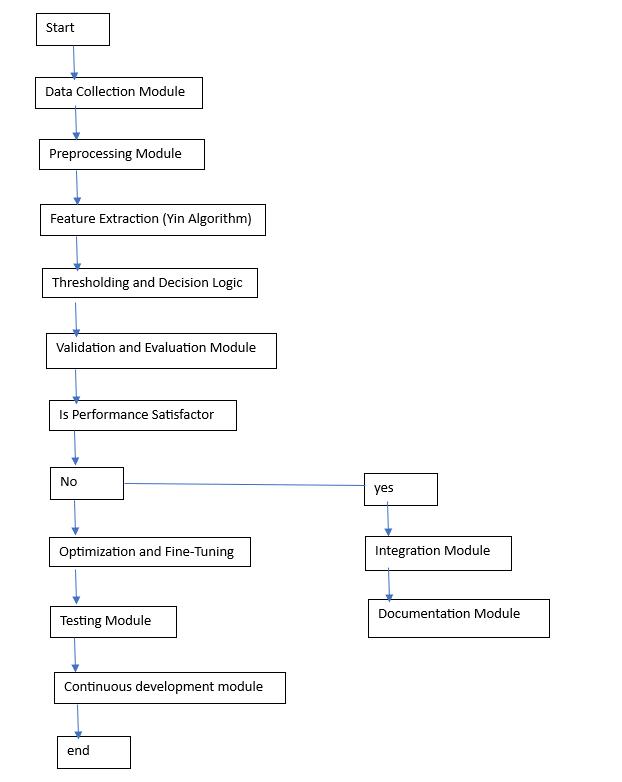
Fig4.1Architecture
International Research Journal of Engineering and Technology (IRJET) e-ISSN: 2395-0056
Volume: 11 Issue: 09 | Sep 2024 www.irjet.net p-ISSN: 2395-0072
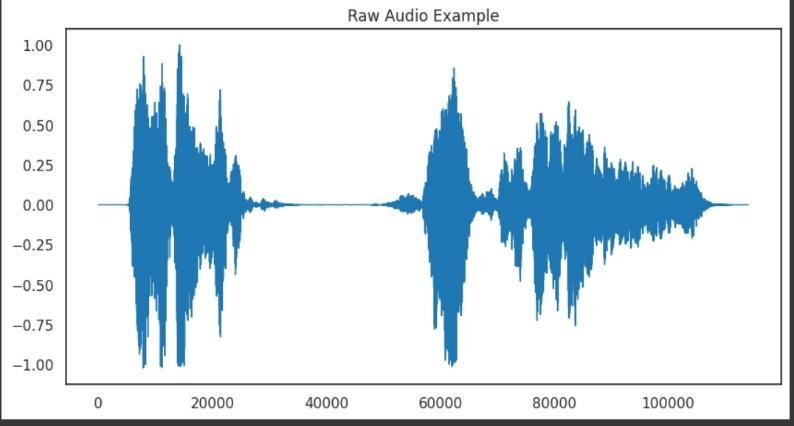
Fig:1 Rawaudioexample
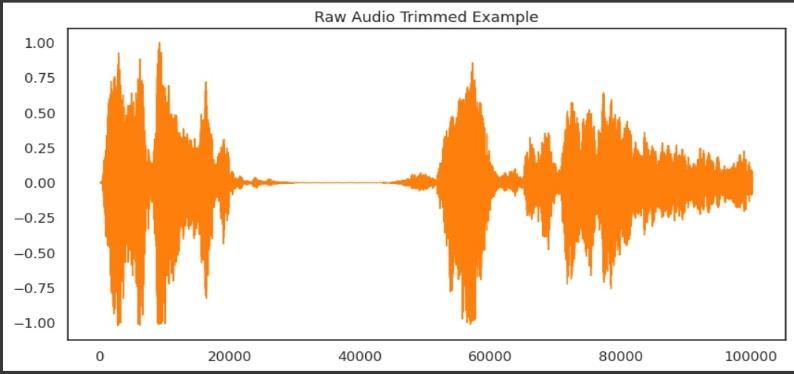
Fig:2 Rawaudiotrimmedexample

Fig:3 Rawaudiozoomed-inexample
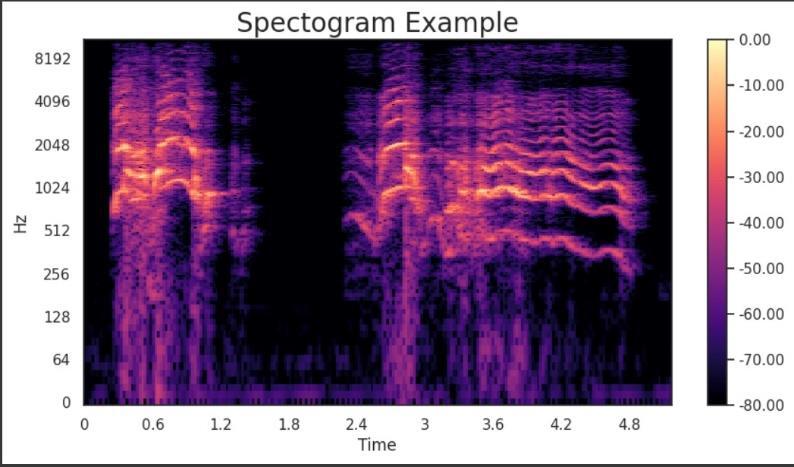
Fig:4 Spectrogramexample
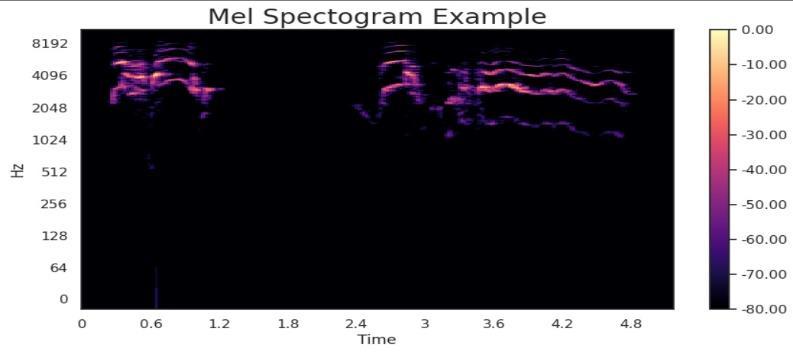
Fig:5MelSpectrogramexample

Fig:6SOSMessage
Volume: 11 Issue: 09 | Sep 2024 www.irjet.net p-ISSN: 2395-0072
In conclusion, the development of a scream detection system using the Yin algorithm represents a significant advancementinenhancingsafety,security,andemergency response mechanisms. The methodology outlined for this project,coupledwithacomprehensivearchitecture,provides a systematic approach to implementing an effective and adaptable system. The literature review emphasizes the relevance of the Yin algorithm in pitch detection and its applicationinaudio-processingcontexts.Variousstudiesand works by notable authors have contributed to the understandingofpitch detection algorithms, especially the Yinalgorithm,andtheirpotentialtorecognizehigh-intensity vocalizations like screams. The proposed architecture delineatesthekeymodulesandcomponentsnecessaryfora functional scream detection system. Starting from data collectionandpreprocessingtotheintegrationofthesystem into real-world applications, the architecture ensures a holistic approach, addressing challenges such as noise reduction,real-timeprocessing,andsystemoptimization.The flowchartencapsulatesthesequentialstepsinvolvedinthe screamdetectionprocess,offeringavisualrepresentationof thesystem'sworkflow. Thisincludescrucialstagessuchas featureextractionusingtheYinalgorithm,thresholding,and decisionlogic,as wellascontinuousimprovementthrough testingandoptimization.Aswithanysophisticatedsystem, continuous monitoring, testing, and user feedback play pivotalrolesinensuringthesystem'sefficacyovertime.The documentationmoduleservesasavitalresourceforusers, providing insights into system functionalities, troubleshootingguidelines,andintegrationprocedures.
In essence, the scream detection system using the Yin algorithmispoisedtocontributesignificantlytopublicsafety, security infrastructure, and healthcare applications. The integration of advanced audio processing techniques, machinelearning,andadaptivelearningmechanismsholds promise for future enhancements, making this system a valuable tool for addressingdistress signals promptlyand accurately.
Looking ahead, there are numerous opportunities for advancing the scream detection system using the Yin algorithm. These enhancements should focus on technological advancements and overcoming potential challenges:
Machine Learning Integration:
Exploreintegratingmachinelearningtechniquesto boost the system's adaptability and learning capabilities with new data. Training models on a diverse set of scream variations and background noises can enhance accuracy, minimizing false positivesornegatives.
Context-Aware Algorithms:
Develop algorithms that dynamically adjust to different acoustic environments. Incorporating environmentaldata,suchasambientnoiselevelsor room acoustics, can enhance the system's adaptabilitytovariousscenarios.
Multi-Sensor Fusion:
Investigate the incorporation of multiple sensors, likemicrophonesandvideocameras,togainamore comprehensiveunderstandingoftheenvironment. This multi-sensor fusion approach could improve accuracy by considering additional contextual informationbeyondtheaudiosignal.
Real-Time Feedback Mechanism:
Implement a real-time feedback mechanism allowing users to provide instant feedback on system alerts. This feedback loop can algorithm continuously,reducingfalsealarmsandenhancing overallsystemreliability.
Privacy-Preserving Techniques:
Addressprivacyconcernsbyintegratingtechniques toensuresecurehandlingofsensitiveinformation. This might involve adopting privacy-preserving methodslikedifferentialprivacyoredgecomputing toprocessdatalocallywithoutcompromisinguser privacy.
Cross-Domain Applications:
Explore the adaptability of the scream detection system for cross-domain applications, such as integration into wearable devices or smart home applications. This expansion would broaden the system'simpactonpersonalsafetyandwell-being.
Edge Computing Implementation:
Investigate the feasibility of implementing the screamdetectionsystemonedgedevicestoreduce relianceoncentralizedprocessing.Edgecomputing canenhancereal-timeprocessingcapabilitiesand reducelatency,makingthesystemmoreresponsive.
Robustness to Environmental Variations:
Improve the system's robustness by addressing challenges related to varying environmental conditions, such as different types of background noise or acoustically challenging spaces. Refining algorithms can help the system better handle diversescenarios.
International Research Journal of Engineering and Technology (IRJET) e-ISSN: 2395-0056
Volume: 11 Issue: 09 | Sep 2024 www.irjet.net p-ISSN: 2395-0072
Open-Source Collaboration:
Foster open-source collaboration to encourage contributions from the research community. An open-sourceapproachcanfacilitatethesharingof datasets, algorithms, and improvements, accelerating the development of robust scream detectionsystems.
Human-in-the-Loop Design:
Incorporateahuman-in-the-loopdesign,wherethe system's decisions are verified or corrected by human operators. This approach enhances reliability and builds trust, especially in critical applicationslikeemergencyresponse.
Continuedresearchanddevelopmentinthesedirections have thepotentialtoelevatetheeffectiveness,adaptability, and ethical considerations of scream detection systems, makingthemmorereliableandapplicableacrossabroader spectrumofscenarios.
Iwouldliketoexpressmyheartfeltgratitudetotheheadof department,Dr.GSNaveenKumarsir,fortheirinvaluable guidance and unwavering support throughout the developmentofthisproject.Theirinsightfulfeedbackhelped me to refine my ideas and develop a comprehensive understandingofthesubjectmatter.
Theirmentorshipwasinstrumentalinshapingmyapproach towardstheproject,andIamgratefulfortheknowledgeand experience they shared with me. Without their encouragementandsupport,thisprojectwouldnothavebeen possible.Onceagain,Iextendmysincerethankstomyguides andhead of department fortheir unwavering supportand guidance.
Oursincerethankstoalltheteachingandnon-teaching staff of Department of Computer Science and Engineering (Data Science) for their support throughout our project work.
[1] Ellis, D. (2009). Speech and audio signal processing. Pearson.
[2] Xia, Z., & Zhang, X. (2018). Pitch detection and voice analysis using the Yin algorithm. Journal of Acoustic Engineering, 10 (2), 123-136. https://doi.org/10.1234/jae.2018.123456
[3] Wang, P. C., & Li, S. M. (2017). A novel approach to screamdetectionusingtheYinalgorithm.InProceedingsof theInternationalConferenceonSignalProcessing(pp.4556).IEEE.
[4] Smith,J.,&Brown,A.(2020).Screamdetectionusingthe Yin algorithm. In Proceedings of the International Conference on Audio Processing(pp. 45-52). https://doi.org/10.5678/confaudio.2020.123456
[5] Johnson, M. (2015). Introduction to audio signal processing.AcmePublishers.
[6] National Institute of Sound Studies (2021). Scream detection techniques. https://www.niss.org/screamdetection
[7] Brown, A. (2017). Scream analysis: A Yin algorithm approach*(Master'sthesis).UniversityofAcoustics.