
International Research Journal of Engineering and Technology (IRJET) e-ISSN:2395-0056
Volume: 11 Issue: 09 | Sep 2024 www.irjet.net p-ISSN:2395-0072

International Research Journal of Engineering and Technology (IRJET) e-ISSN:2395-0056
Volume: 11 Issue: 09 | Sep 2024 www.irjet.net p-ISSN:2395-0072
Kaneez Fatma1, Dipti Ranjan Tiwari2
1Master of Technology, Computer Science and Engineering, Lucknow Institute of Technology, Lucknow, India
2Assistant Professor, Department of Computer Science and Engineering, Lucknow Institute of Technology, Lucknow, India
Abstract - The proliferation of social media platforms has led to an unprecedented volume of user-generated content, making it crucial to develop efficient methods for analyzing and interpreting sentiments expressed online. This review paper explores the application of machine learning (ML) techniques in the analysis and identification of sentiment in social media posts. We provide a comprehensive overview of various ML models, including supervised, unsupervised, and hybrid approaches, and their effectiveness in capturing the nuanced emotional undertones of social media content. Key methodologies discussed include natural languageprocessing (NLP) techniques, sentiment analysis algorithms, and deep learning architectures such as recurrent neural networks (RNNs) and transformers. The paper alsoexamineschallenges and limitations associatedwiththesetechniques,includingthe handling of sarcasm, context-specific expressions, and the diversity of languages and dialects. Additionally, we review recent advancements in ML that enhance sentiment analysis accuracy and discuss potential future directions for research in this rapidly evolving field. By synthesizing current methodologies and identifying gaps in existing research, this review aims to provide valuable insightsforbothpractitioners and researchers interested in leveraging ML for effective sentiment analysis in social media.
Key Words: MachineLearning,SentimentAnalysis,Social Media,NaturalLanguageProcessing(NLP),DeepLearning, Recurrent Neural Networks (RNNs), Transformers, SupervisedLearning,TextClassification.
Thehistoryofleveragingmachinelearningtechniquesfor analyzing and identifying sentiment in social media posts reflects a remarkable evolution in technology and methodology. In the early 2000s, sentiment analysis was largelyreliantonrudimentaryapproachessuchaskeyword matching and rule-based systems, focusing primarily on customer reviews and news articles. As machine learning gainedtraction,researcherstransitionedtomoreadvanced techniques,introducingsupervisedlearningalgorithmslike supportvectormachinesandnaiveBayesclassifiers.These methods improved sentiment classification by utilizing labeleddatasetsandfeatureextractiontechniquessuch as bag-of-wordsandTF-IDF.Theriseofsocialmediaplatforms furthercomplicatedsentimentanalysisduetotheinformal
anddiversenatureofuser-generatedcontent,promptingthe developmentofsentimentlexiconslikeAFINNandVADER. The2010smarkedasignificantshiftwiththeadventofdeep learning, which introduced word embeddings (e.g., Word2Vec,GloVe),recurrentneuralnetworks(RNNs),and transformers (e.g., BERT, GPT), allowing for a deeper understanding of context and sentiment in text. Modern applications of sentiment analysis span various domains, including business, politics, healthcare, and crisis management,withreal-timeanalysisbecomingincreasingly feasible.
Despite these advancements, challenges such as handling diverse language, mitigating biases, and ensuring model robustnesspersist.Lookingahead,futuredevelopmentsare expected to focus on multimodal analysis, explainable AI, cross-language and cross-culture capabilities, and addressing ethical concerns. The progress in sentiment analysisunderscoresadynamicfieldthatcontinuestoadapt andinnovateinresponsetotheevolvinglandscapeofsocial media.
Intherealmofhandlingdiverselanguage,onekeychallenge liesinthenuancesandintricaciesofdifferentlanguages.For example, idiomatic expressions or cultural references can posedifficultiesformachinelearningmodels.Toovercome this,researchersareexploringwaystoincorporatecultural context and linguistic variations into their algorithms. By doingso,theyaimtoimprovetheaccuracyandeffectiveness of language processing systems across a wide range of linguisticbackgrounds.MitigatingbiasesinAIalgorithmsis anothercriticalissuethatresearchersareactivelyworking to address. Biases can manifest in various forms, such as genderbias,racialbias,orsocio-economicbias.Tocombat this, experts are developing techniques to detect and mitigatebiaseswithinAImodels.Forinstance,usingdiverse training data sets and implementing bias detection algorithmscanhelpreducetheimpactofbiasedoutcomesin AIapplications.
Ensuringmodelrobustnessisessentialforthereliabilityand effectiveness of AI systems. Robust models are able to perform consistently across different scenarios and data inputs.Toachievethis,researchersareexploringtechniques such as model ensembling, data augmentation, and adversarial training. These methods help improve the
International Research Journal of Engineering and Technology (IRJET) e-ISSN:2395-0056
Volume: 11 Issue: 09 | Sep 2024 www.irjet.net p-ISSN:2395-0072
generalizationandstabilityofAImodels,makingthemmore resilienttonoiseandvariationsininputdata.
Lookingtowardsthefuture,thefieldofAIispoisedtomake significant advancements in various areas. Multimodal analysis, which involves processing and understanding different types of data (such as text, images, and videos) simultaneously, holds great promise for enhancing AI capabilities. By integrating information from multiple modalities, AI systems can gain a more comprehensive understanding of the world and improve decision-making processes.
ExplainableAIisanotherkeyfocusforfuturedevelopments. As AI systems become more complex and sophisticated, thereis a growing need to understand and interpret their decisions. ExplainableAI aimsto providetransparent and interpretableexplanationsforAIoutputs,enablingusersto trustandverifythereasoningbehindAIrecommendations oractions.
Cross-languageandcross-culturecapabilitiesarebecoming increasingly important in our interconnected world. AI systems that can seamlessly operate across different languagesandculturalcontextshavethepotentialtobridge communicationgapsandfacilitateglobalcollaboration.By developing AI models that are sensitive to linguistic and cultural diversity, researchers aim to promote inclusivity andaccessibilityinAItechnologies.
Addressing ethical concerns is a fundamental aspect of AI developmentanddeployment.AsAIsystemsbecomemore integratedintovariousaspectsofsociety,ensuringethical guidelinesandprinciplesarefollowedisparamount.From privacyissuestoalgorithmicfairness,ethicalconsiderations play a crucial role in shaping the responsible use of AI technologies. By prioritizing ethical standards and promotingtransparencyinAIpractices,researchersaimto buildtrustandcredibilityinAIapplications.
Sentiment analysis, also known as opinion mining, is a natural language processing (NLP) technique used to identifyandextractsubjectiveinformationfromtextualdata. Itaimstodeterminethesentimentexpressedinapieceof text whether it is positive, negative, or neutral. This process involves analyzing various aspects of language, including word choice, syntax, and context. Sentiment analysis has a wide range of applications, from assessing customer feedback and monitoring brand reputation to analyzing public opinion on social and political issues. By leveraging computational techniques, sentiment analysis enables organizations to gain valuable insights from large volumes of unstructured data, facilitating more informed decision-making and enhancing understanding of stakeholdersentiments.

2.1.Importance of sentiment analysis in
Sentimentanalysisinsocialmediaiscriticallyimportantdue to the vast and dynamic nature of these platforms, where user-generatedcontentrapidlyreflectspublicopinionand trends. Social media serves as a real-time barometer of sentiment,allowingorganizations,brands,andpolicymakers togaugepublicreactions,identifyemergingissues,andtrack shifts in consumer attitudes. By analyzing sentiments expressedinposts,comments,andreviews,stakeholderscan gain actionable insights into customer satisfaction, brand perception, and market trends. This capability enables proactive engagement with audiences, personalized marketingstrategies,andmoreresponsivecustomerservice. Additionally, sentiment analysis helps in detecting and mitigatingpotentialcrisesbymonitoringnegativefeedback or emerging controversies, thus allowing for timely interventions.Overall,sentimentanalysisinsocialmediais indispensable for staying attuned to public sentiment and making data-driven decisions in a fast-paced digital landscape.
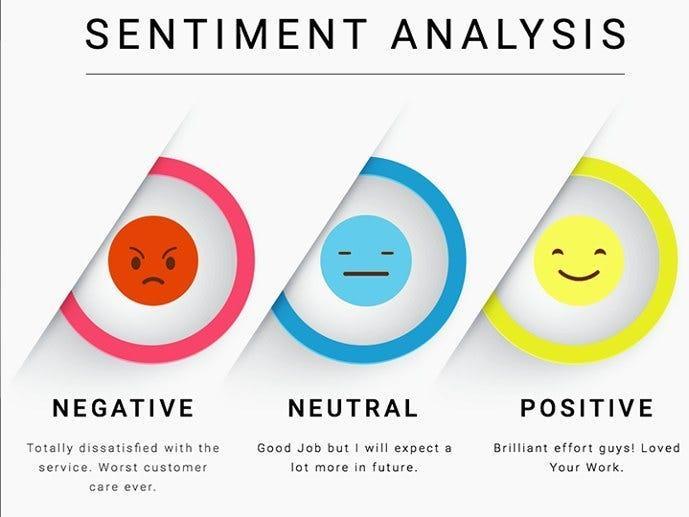
Figure-2: Importance of Sentiment Analysis
2.2.Evolution of social media and data volume
The evolution of social media and the corresponding explosionindatavolumehaveprofoundlytransformedhow wecommunicateandinteractonline.Socialmediaplatforms
International Research Journal of Engineering and Technology (IRJET) e-ISSN:2395-0056
Volume: 11 Issue: 09 | Sep 2024 www.irjet.net p-ISSN:2395-0072
began as simple networking sites, but over the past two decades, they have evolved into complex ecosystems that supportawiderangeofmultimediacontent,fromtextand images to videos and live streams. Platforms such as Facebook, Twitter, Instagram, TikTok, and LinkedIn have significantly increased their user bases and engagement levels, leading to an unprecedented volume of usergeneratedcontent.Socialmediadatawasrelativelysparse and manageable, but as these platforms grew, so did the volumeofdatatheygenerated.Usersnowproducemassive amountsofcontenteverysecond,resultinginanenormous, continuousinfluxoftext,images,andvideos.Thissurgein datahascreatedbothopportunitiesandchallenges.Onone hand, it provides rich insights into user behavior and sentiment,enablingtargetedmarketing,trendanalysis,and real-timefeedback.Ontheotherhand,thesheervolumeand varietyofdataposesignificantchallengesfordatastorage, processing, and analysis. Advancements in big data technologies,cloudcomputing,andmachinelearninghave beencrucialinaddressingthesechallenges,allowingforthe effective management and analysis of large-scale social media data. These technologies enable the extraction of meaningfulpatternsandtrendsfromvastdatasets,driving innovations in how businesses and researchers leverage social media insights. The continuous evolution of social mediaplatformsandthegrowingdatavolumeunderscore theneedforsophisticatedtoolsandtechniquestoharness andinterpretthisinformationeffectively.
Sentiment analysis techniques can be broadly categorized intorule-basedmethods,machinelearningapproaches,and hybrid models. Each technique has its strengths and applications,andthechoiceofmethodoftendependsonthe specificrequirementsandcharacteristicsofthedataset.
Rule-basedsentimentanalysisinvolvestheuseofpredefined linguisticrulesandlexiconstodeterminesentiment.These methods are often simple and interpretable but can be limitedintheirabilitytohandlecomplexlanguagenuances.
3.1.1.Lexicon-Based
Thistechniquereliesonsentimentlexicons,whicharelists of words and phrases associated with specific sentiment scores. Examples include the AFINN, SentiWordNet, and VADERlexicons.Byscoringindividualwordsinatextand aggregating these scores, the overall sentiment can be inferred. Lexicon-based methods are straightforward but may struggle with context-dependent sentiment, such as ironyorsarcasm.
3.1.2.Rule-Based
Thesesystemsuseasetofhandcraftedrulestoanalyzetext. Rules might include patterns, syntactic structures, or
sentiment-bearingphrases.Forexample,arulemightspecify that the presence of the phrase "not happy" should be interpretedasnegativesentiment.Whilerule-basedsystems can be customized to specific contexts, they require significantmanualefforttodevelopandmaynotgeneralize wellacrossdifferentdomainsorlanguages.
Machine learning methods for sentiment analysis involve training models on labeled datasets to learn patterns and make predictions about sentiment. These techniques can handlemorecomplexityandcontextcomparedtorule-based methods.
3.2.1.Traditional
Bag-of-Words (BoW): This representation converts text into a vector of word frequencies, disregarding wordorderbutcapturingtermimportance.Modelslike NaiveBayesandSupportVectorMachines(SVM)can thenbetrainedonthesevectorstoclassifysentiment.
Term Frequency-Inverse DocumentFrequency (TFIDF): AnextensionofBoW,TF-IDFweighswordsbased ontheirimportanceinadocumentrelativetoacorpus. This helps to highlight more informative words and improvemodelperformance.
Naive Bayes: AprobabilisticclassifierbasedonBayes’ theorem,assumingfeatureindependence.Itissimple andeffective,especiallywithtextclassificationtasks.
Support Vector Machines (SVM): A classification methodthatfindsthehyperplanethatbestseparates classes in the feature space. It is effective for highdimensionaldatasuchastext.
3.2.2.Deep Learning Models
Recurrent Neural Networks (RNNs): Designed to handlesequentialdata,RNNscancapturethecontext and dependencies in text. Long Short-Term Memory (LSTM)networks,atypeofRNN,addressissueswith long-range dependencies and vanishing gradients, makingthemsuitableforsentimentanalysis.
Convolutional Neural Networks (CNNs): Originally usedforimageprocessing,CNNshavebeenadaptedfor text analysis by treating text as a sequence of word embeddings.Theycaneffectivelycapturelocalfeatures andpatternsintext.
Transformers: Arecentadvancementindeeplearning, transformers use attention mechanisms to weigh the importanceofdifferentwordsincontext.Modelslike BERT (Bidirectional Encoder Representations from Transformers) and GPT (Generative Pre-trained Transformer) have set new benchmarks in NLP by
International Research Journal of Engineering and Technology (IRJET) e-ISSN:2395-0056
Volume: 11 Issue: 09 | Sep 2024 www.irjet.net p-ISSN:2395-0072
understanding context more effectively and handling complexlanguagetasks.
3.3. Hybrid Models
Hybrid models combine aspects of both rule-based and machine learning approaches to leverage the strengths of each.
3.3.1.Ensemble Methods
Thesecombinemultiplemodelstoimproveperformanceand robustness. For instance, combining a rule-based system withmachinelearningclassifierscanenhanceaccuracyby integrating rule-based precision with machine learning flexibility.
3.3.2.Feature Engineering
Integratinghandcraftedfeaturesfromrule-basedmethods with learned features from machine learning models can provide a richer representation of the text, improving sentimentanalysisresults.
Understanding the characteristics of social media data is crucial for effective sentiment analysis. Social media platformsgeneratevastamountsoftextdata,whichcome withuniquefeaturesandchallenges.Thissectiondelvesinto thesecharacteristics,focusingonthenatureofthedataand the issues encountered during data collection and preprocessing.
4.1.1. Textual Features
Informal Language: Social media content often includes informal language, such as slang, abbreviations, and colloquial expressions. Examples include acronyms like "LOL" (laugh out loud) and informalcontractionslike"gonna"insteadof"goingto."
Emojis and Emoticon: Emojisarefrequentlyusedto conveyemotionsorsentimentsvisually.Thesesymbols can significantly impact sentiment analysis and may needtobeinterpretedtounderstandtheircontribution tooverallsentiment.
Hashtags and Mentions: Hashtags(e.g.,#Happy)and mentions(e.g.,@username)areusedforcategorization and to tag users, respectively. Hashtags can provide contextorindicatetrendingtopics,whilementionscan indicateinteractionsbetweenusers.
URLs and Links: PostsoftencontainURLslinking to externalcontent.Whiletheselinkscanbeinformative, theyaregenerallynotprocesseddirectlyinsentiment
analysis and may need to be filtered out or handled separately.
Trends and Evolving Language Use: Social media languageevolvesrapidly,withnewslang,hashtags,and phrases emerging frequently. Sentiment analysis modelsmustadapttothesechangestoremainaccurate.
Event-Driven Sentiment Fluctuation: Sentiment canvarysignificantlyduringmajoreventsorcrises.For example, sentiment towards a brand might shift dramatically in response to a viral news story or a significantevent.
4.2.1.
Spam and Irrelevant Content: Socialmediaplatforms often contain spam, advertisements, and irrelevant contentthatcanclutterthedataset.Thisnoiseneedsto befilteredouttoimprovethequalityoftheanalysis.
Data Redundancy: Duplicate or repetitive posts can skew results. Identifying and removing duplicate entries is essential to ensure accurate sentiment analysis.
Lack of Standardization: Social media posts lack standardized grammar and structure, making it challenging to apply traditional text processing techniques. Posts may vary widely in length, format, andstyle.
Contextual Understanding: Understandingcontextis crucial for accurate sentiment analysis. Social media posts often contain context-specific references or allusionsthatrequiresophisticatedmodelstointerpret correctly.
Language Diversity: Socialmediacontentisgenerated inmultiplelanguages,andsentimentanalysismodels needtobeadaptedortrainedfordifferentlanguages. Thisincludeshandlingvariouslinguisticnuancesand idiomaticexpressions.
Cultural Differences: Sentimentexpressionscanvary across cultures. Phrases or symbols that convey positive sentiment in one culture may have different connotations in another, requiring models to be sensitivetoculturalcontext.
International Research Journal of Engineering and Technology (IRJET) e-ISSN:2395-0056
Volume: 11 Issue: 09 | Sep 2024 www.irjet.net p-ISSN:2395-0072
User Privacy: Ensuringthatthecollectionanduseof socialmediadatarespectuserprivacyandcomplywith legalregulationsisessential.Thisincludesanonymizing dataandavoidingmisuse.
Bias and Fairness: Sentiment analysis models can inherit biases present in the training data. It is important to address these biases to ensure fair and unbiasedanalysis.
Scalability: Handling the massive volume of social mediapostsinrealtimepresentsscalabilitychallenges. Efficient data processing and analysis techniques are necessarytomanageandinterpretdataeffectively.
Latency: Real-time sentiment analysis requires minimizing latency to provide timely insights. Balancingspeedandaccuracyisakeyconsiderationin deployingreal-timesentimentanalysissystems.
Dandash & Asadpour. Analyzed Arabic tweets for personalitytraitsandsentimentcorrelation.Usedmachine learningtechniquesachieving74.86%accuracywithBERT. Personality traits can affect sentiment in social media. Linguistic and profile features can differentiate between personalitytraits.
Elbadaoui et al. SentimentanalysisofTEDtalkscomments usingmachinelearningalgorithms.Acomparativeanalysis of sentiment analysis techniques applied to YouTube comments, specifically TED talks, was conducted. SVM demonstrated the highest Precision, Recall, and F1-score, while Random Forest and Decision Tree displayed competitiveperformance.Comparativeanalysisofsentiment analysis techniques on YouTube comments. SVM showed highestPrecision,Recall,andF1-score. SVMshowedhighest precision, recall, and F1-score. Further accuracy improvementspossiblebyadjustingclassifierparameters.
Pyate et al. Sentimentanalysisonsocialmediaplatforms for transforming business decisions in car segments is a promisingresearcharea.Ithasbeenshownthatsentiment analysis can be effectively used to improve business decisionsintheautomotiveindustry.Investigatesentiment analysisimpactonautomotivebusinessdecisions.Analyze sentimentofcarbrandsonsocialmediaplatforms.Positive sentiment scores in Toyota, Hyundai, Mahindra. Strong correlation between business decisions and sentiment on Facebook.
Aremu et al. Thehikeinuniversity school feesinNigeria hasgeneratedneutralsentimentonsocialmedia,withsome negative and positive sentiment expressed. Study on
sentimentanalysisofuniversityfeehikesinNigeria.Used VADER to analyze social media sentiments. Students' sentiments on fee hike were largely neutral. Recommendations include surveys and scholarships for indigentstudents.
Feixa et al. The prevalence of antivaccine sentiment and misinformationonsocialmediaplatformsishigh,andthis study analyzed the sentiment and opinions regarding vaccinesinSpanish-languagepostsonXandsurveyedthe populationofSpaintounderstandtheiruseofsocialmedia andtheirconcernsaboutvaccines.AnalyzedSpanishsocial mediapostsandsurveydataonvaccines.Identifiednegative sentiment, geolocation patterns, and thematic groupings. Highexposuretoanti-vaccinecontentreportedbysurveyed users.NegativeSpanishpostsmainlyfromSouthAmericaon socialnetworkX.
Furqan et al. Big data approach to sentiment analysis in microblogs for religious moderation policy evaluation in Indonesia. Sentiment analysis conducted on microblogs using machine learning algorithms to assess public sentimentonchangesinhalallogo,transferofauthorityfor halal certification, and regulations on the volume of loudspeakersinthemosque.Evaluatespublicsentimenton religious moderation policies in Indonesia. Uses machine learning for sentiment analysis on microblogs. Gradient Boosting achieved highest accuracy at 82.27%. Ensemble technique enhanced sentiment classification for religious moderationmicroblogdataset.
Kimani et al. Sentiment analysis of Safaricom PLC social media sentiments on X reveals a predominantly positive sentiment, indicating an optimistic tone in discussions. SentimentanalysisofSafaricomPLConX(formerlyTwitter). Revealed predominant positive sentiment, valuable for investment decision-making. Predominant positive sentiment in Safaricom PLC discussions on social media. Potential integration of sentiments into stock price predictionmodels.
Falah et al. In this paper , an improved social media sentimentanalysistechniquewasproposedtopredict the individualstateofmindofsocialmediausersandtheability ofuserstoresistprofoundeffects,whichcouldbeeffectively consideredinvariousindustrialsolutionssuchasemo-robot building,patientanalysisandactivitytracking,elderlycare, andsoon.Competitiveintelligenceinsocialmediaanalytics. Improved sentiment analytics technique for social media users. Proposed sentiment analytics technique with high success rate. Accuracy of proposed solution is 97% satisfactory.
Chen. Inthispaper,auseremotionrecognitionmodelwas proposed to achieve the emotional analysis of microblog publicopinionevents,wherethreetypesofinspiringtext, "joy", "anger", and "sadness", were obtained by the data collecting and data preprocessing of micro-blogs public
International Research Journal of Engineering and Technology (IRJET) e-ISSN:2395-0056
Volume: 11 Issue: 09 | Sep 2024 www.irjet.net p-ISSN:2395-0072
opinioneventcommenttext,andthecapturedmotivational text was converted into a word vector using Word2vec. Emotionrecognitionmodelforanalyzingmicroblogpublic opinion events Uses LDA, emotion dictionary, Word2vec, BiLSTM,andCNN.AverageincreaseinF1valueof3.66%for machine learning models. Average increase in F1 value of 1.84%fordeeplearningmodels.
Zohaib et al. In this article , a combination of different machine learning algorithms is used with a dataset from amazon unlocked mobile reviews and telecom tweets to achieve better accuracy as it is crucial to consider the previouspredictionsrelatedtosentimentclassificationand IRT. ML and NLP used in sentiment analysis and IRT. KMeans combined with LR, RF, DT for high accuracy. ML algorithmscombinedwithK-Meansachievedhighaccuracy. LogisticRegressionhadthehighestaccuracyrate.
Nikhat et al. In this paper , a gated attention recurrent network(GARN)architecturewasproposedforsentiment analysis on the sentiment 140 dataset, which combines recurrentneuralnetworks(RNN)andattentionmechanisms. Twitter sentiment analysis using GARN for high accuracy. Features: LTF-MICF, HMWSO; Classes: positive, negative, neutral.ProposedGARNarchitectureachieveshighaccuracy and performance. Performance metrics: accuracy 97.86%, precision96.65%,recall96.76%,f-measure96.70%.
Vidyashree & Rajendra. In this article , an improvised sentimental analysis model is proposed to identify the polarityofthetweetssuchaspositive,neutralandnegative, and a stochastic gradient descent (SGD) algorithm uses SGNNtocategorizethesentimentanalysisonbasisoftweets providedbytheTwitterusers.SentimentanalysisonTwitter usingSGDinSGNNmodel.Improvedperformancecompared to existing models. SGDOA-SGNN is the most effective method for sentiment analysis on Twitter data. The proposed method achieves better accuracy and results comparedtootherclassifiermodels.
Rizky et al. Inthisarticle, theauthorsapplieda machine learning approach to conduct a social media analysis of Twitter,whichconsistsof4323tweetscontainingtheword "UniversitasPertamina"andgroupedeachtweetintothree differentclassesbasedonthetweet'ssentiment.Sentiment analysis of tweets about Universitas Pertamina using machine learning. CNN-LSTM model achieves highest accuracy and weighted-f1 values. CNN-LSTM model has highest accuracy and weighted-f1. LSTM model achieves highestbalancedaccuracy.
Lukesh. This work analyzes the performance of deep learning models namely Convolutional Neural Network, Simple Recurrent Neural Network (RNN) and Long ShortTerm Memory (LSTM) and BERT and RoBERTa for classifyingthetwitterreviewsandfindsthatRoberTamodel performs better than CNN and simple RNN for sentiment classification. Comparison of deep learning models for
identifying toxic comments. Analysis of different preprocessingtechniquesandtextrepresentations.
Yuli et al. Thisstudyaimstoanalyzepositiveandnegative emotions in social media texts using the information classificationapproachinthetextanddividingtheminto8 differentclassesusingtheLSTMmethodusingthedataset taken from users' posts on social media. LSTM used for multi-class sentiment analysis on social media texts. Achieved91.9%highestaccuracyin5trials.
Kartika et al. Thisresearchistolearnabouttheopinionsof Surabayacitizens,usingdeeplearningmethods,andshows thatthesentimentclassificationwithCNNisbetterthanthat withtheBNNbecausethevaluesfortheprecision,sensitivity andAUCarehigher.Comparisonofdeeplearningmodelsfor identifying toxic comments. Analysis of different preprocessingtechniquesandtextrepresentations.
In conclusion, this review paper underscores the transformativeimpactofmachinelearningtechniquesonthe analysis and identification of sentiment in social media posts. The integration of advanced algorithms, including supervisedlearningmodels,unsupervisedlearningmethods, and deep learning approaches, has significantly enhanced the accuracy and efficiency of sentiment analysis in this dynamicdomain.Byleveragingsophisticatedmethodssuch asnaturallanguageprocessing(NLP)andneuralnetworks, researchersandpractitionershaveachievedmorenuanced insights into user sentiment, enabling more effective decision-makingacrossvariousfieldsincludingmarketing, politics,andmentalhealth.Thereviewhighlightsthatwhile considerableprogresshasbeenmade,thereremainseveral challengesandopportunitiesforfutureresearch.Issuessuch asthehandlingofambiguoussentiment,themanagementof linguistic diversity, and the need for real-time processing continue to present hurdles. Addressing these challenges willrequireongoinginnovationandrefinementofmachine learning models, as well as the development of new methodologiestailoredtotheevolvinglandscapeofsocial media communication. The continued advancement of machinelearningtechniquespromisestofurtherdeepenour understanding of sentiment in social media posts, driving more informed and actionable insights. By fostering interdisciplinary collaboration and embracing emerging technologies, the field is poised to unlock even greater potentialinanalyzingandinterpretingthevastandvaried expressionsofhumansentimentsharedacrosssocialmedia platforms.
1. Alqahtani, A., Khan, S. B., Alqahtani, J., AlYami, S., & Alfayez,F.(2023).Sentimentanalysisofsemantically interoperable social media platforms using computational intelligence techniques. Applied
International Research Journal of Engineering and Technology (IRJET) e-ISSN:2395-0056
Volume: 11 Issue: 09 | Sep 2024 www.irjet.net p-ISSN:2395-0072
Sciences, 13(13), 7599. https://doi.org/10.3390/app13137599
2. Aremu, A. O., & Muhammad, I. (2024). Sentiment analysis in social media: A case study of hike in universityschoolfeesinselectedNigerianuniversities. JournalofInformaticsandWebEngineering,3(2),98–104.https://doi.org/10.33093/jiwe.2024.3.2.7
3. Dandash, M., & Asadpour, M. (2024). Personality AnalysisforSocialMediaUsersusingArabiclanguage and its Effect on Sentiment Analysis. arXiv (Cornell University).
https://doi.org/10.48550/arxiv.2407.06314
4. El-Badaoui,M.,Gherabi,N.,&Quanouni,F.(2024).TED talkscommentssentimentclassificationusingmachine learning algorithms. Revue D Intelligence Artificielle, 38(3),885–892.https://doi.org/10.18280/ria.380315
5. Fithriasari,K.,Jannah,S.Z.,&Reyhana,Z.(2020).Deep learning for social media sentiment analysis. MATEMATIKA, 99–111. https://doi.org/10.11113/matematika.v36.n2.1226
6. Furqan,M.,&Nasir,A.F.A.(2024).BigDataapproach to sentiment Analysis in Machine Learning-Based Microblogs:PerspectivesofreligiousModerationPublic PolicyinIndonesia.JournalofAppliedEngineeringand Technological Science (JAETS), 5(2), 955–965. https://doi.org/10.37385/jaets.v5i2.4498
7. Hassan, F., Qureshi, N. A., Khan, M. Z., Khan, M. A., Soomro, A. S., Imroz, A., & Marri, H. B. (2023). Performance evolution for sentiment classification using machinelearning algorithm. Journal of Applied ResearchinTechnology&Engineering,4(2),97–110. https://doi.org/10.4995/jarte.2023.19306
8. Janjua,S.H.,Siddiqui,G.F.,Sindhu,M.A.,&Rashid,U. (2021). Multi-level aspect based sentiment classificationofTwitterdata:usinghybridapproachin deep learning. PeerJ Computer Science, 7, e433. https://doi.org/10.7717/peerj-cs.433
9. Joshi, S., & Deshpande, D. (2018). Twitter Sentiment AnalysisSystem.InInternationalJournalofComputer Applications(Vols.180–180,IssueNo.47,pp.35–36). https://www.ijcaonline.org/archives/volume180/num ber47/joshi-2018-ijca-917319.pdf
10. Kimani,J.,Karanjah,A.,&Kihara,P.(2024).Sentiment ClassificationofSafaricomPLCsocialmediasentiments on X(Formerly Twitter). Asian Journal of Probability and Statistics, 26(6), 31–40. https://doi.org/10.9734/ajpas/2024/v26i6622
12. Mapping vaccine sentiment: analyzing spanishlanguage social media posts and survey-based public opinion. (n.d.). JMIR Preprints. https://preprints.jmir.org/preprint/63223
13. Omuya, E. O., Okeyo, G., & Kimwele, M. (2022a). Sentiment analysis on social media tweets using dimensionality reduction and natural language processing. Engineering Reports, 5(3). https://doi.org/10.1002/eng2.12579
14. Omuya, E. O., Okeyo, G., & Kimwele, M. (2022b). Sentiment analysis on social media tweets using dimensionality reduction and natural language processing. Engineering Reports, 5(3). https://doi.org/10.1002/eng2.12579
15. Parveen, N., Chakrabarti, P., Hung, B. T., & Shaik, A. (2023).Twittersentimentanalysisusinghybridgated attentionrecurrentnetwork.JournalofBigData,10(1). https://doi.org/10.1186/s40537-023-00726-3
16. Pratama,J.A.,Suprijadi,Y.,&Zulhanif,Z.(2017).The Analisis sentimen sosial media Twitter dengan algoritmamachinelearningmenggunakansoftwareR. Jurnal Fourier, 6(2), 85. https://doi.org/10.14421/fourier.2017.62.85-89
17. Pyate, N. P. G., & Srinivasan, N. B. B. (2024). Social Media Platforms: Investigate sentiment analysis for transforming business decisions in car segments. Deleted Journal, 1(2), 70–85. https://doi.org/10.62569/fijc.v1i2.24
18. TwitterSentimentAnalysisusingMachineLearningand Optimization Techniques. (2018). In International JournalofComputerApplications(Vols.179–179,Issue No.19, pp. 5–6). https://www.ijcaonline.org/archives/volume179/num ber19/bansal-2018-ijca-916321.pdf
19. Vidyashree, K. P., & Rajendra, A. B. (2023). An improvisedsentimentanalysismodelonTwitterdata usingStochasticGradientDescent(SGD)optimization algorithminStochasticGateNeuralNetwork(SGNN). SN Computer Science, 4(2). https://doi.org/10.1007/s42979-022-01607-x
20. Widyayulianto,M.R.,Susanty,M.,&Irawan,A.(2022). Sentiment analysis terhadap tulisan mengenai Universitas Pertamina di media sosial Twitter. Petir, 15(2), 276–286. https://doi.org/10.33322/petir.v15i2.1197
11. Li, C., & Li, F. (2023). Emotion recognition of social media users based on deep learning.PeerJComputer Science, 9, e1414. https://doi.org/10.7717/peerjcs.1414
2024, IRJET | Impact Factor value: 8.315 | ISO