
International Research Journal of Engineering and Technology (IRJET) e-ISSN:2395-0056
Volume: 11 Issue: 09 | Sep 2024 www.irjet.net p-ISSN:2395-0072

International Research Journal of Engineering and Technology (IRJET) e-ISSN:2395-0056
Volume: 11 Issue: 09 | Sep 2024 www.irjet.net p-ISSN:2395-0072
Yuvraj Nair
Navrachana International School; Vasna - Bhayli Main Rd, Bhayli, Vadodara, Gujarat
Abstract- This study aims to develop and characterize novel bioplastic films derived from cellulose acetate extracted from sugarcane bagasse, a readily available agricultural waste in India. Cellulose was extracted from sugarcane bagasse using hot water treatment, followed by delignification with sodium hydroxide. The extracted cellulose underwent activation and acetylation processes. Bioplastic films were then synthesized using varying ratios of cellulose acetate, chloroform, and glycerol. The resulting films were characterized for their physical, and biodegradation properties using techniques such as thickness measurement, density determination, moisture content and absorption tests, and biodegradability assays. The bioplastic films exhibited thicknesses ranging from 0.79 to 1.12 mm and densities between 0.87 and 0.97 g/cm³. Moisture content and absorption increased with higher glycerol content. The films demonstrated improved biodegradability compared to conventional plastics, with the highest biodegradation rate of 9.3 × 10⁻⁵ g day⁻¹ m⁻². This research contributes to the development of sustainable packaging materials and offers a potential solution for managing sugarcane waste in India. The produced bioplastics show promise for various applications, particularly in the packaging industry, and could help reduce environmental pollution caused by conventional plastics. This study fills a gap in existing literature by developing a novel bioplastic material from sugarcane bagasse and provides valuable insights into the properties and potential applications of cellulose acetatebased bioplastics.
Keywords
Bioplastics, Sugarcane bagasse, Cellulose acetate, Sustainablepackaging,India
1. Introduction
The global plastic crisis has prompted researchers and industries to seek sustainable alternatives to conventionalfossilfuel-basedplastics.Bioplastics,which are plastics derived from renewable biomass sources, have emerged as a promising solution to this environmental challenge. The concept of bioplastics has evolved significantly since their inception in the early 20th century, from early materials like celluloid to modern, sophisticated formulations that rival the propertiesoftraditionalplastics(1).
Bioplasticsofferseveraladvantagesovertheirfossilfuelbased counterparts. They are derived from renewable resources, reducing dependency on finite petroleum reserves. Many bioplastics are biodegradable or compostable, helping to mitigate the environmental pollution caused by conventional plastics. Additionally, the production of bioplastics often results in lower greenhouse gas emissions, contributing to efforts to combatclimatechange(2).
In recent years, there has been a growing trend in utilizing agricultural and food waste to produce bioplastics.Thisapproachnotonlyaddressestheissueof plastic pollution but also provides a solution for managing organic waste. Researchers worldwide have explored various waste materials for bioplastic production. For instance, Ogunmolasuyi et al. (3) developed bioplastics from yam peelings, while Bilal et al. (4) utilized banana peel waste. Other studies have focusedonmaterialssuchaspotatopeels(5),cornhusks (6),andevencoffeegrounds(7).
The development of bioplastics from agricultural waste offers a multifaceted solution to several global challenges. It addresses the pressing issue of plastic pollution, provides a sustainable waste management strategy for agricultural residues, and creates potential newrevenuestreamsforfarmers.Furthermore,asthese materialsareoftenbiodegradable,theycancontributeto reducing the accumulation of plastic waste in landfills andoceans(8).
ForacountrylikeIndia,withitslargeagriculturalsector and growing environmental concerns, bioplastics derived from agricultural waste present a particularly attractive opportunity. India faces significant challenges inmanagingbothplasticwasteandagriculturalresidues. The development of bioplastics from locally available agricultural waste could simultaneously address these issues while promoting sustainable economic developmentinruralareas(9).
While numerous studies have explored bioplastics from various fruit and vegetable wastes, there is a pressing needforsolutionsthatutilizewastematerialscommonly available in India. Sugarcane, being one of the most widely cultivated crops in India, generates substantial amounts of bagasse as a byproduct. This readily
International Research Journal of Engineering and Technology (IRJET) e-ISSN:2395-0056
Volume: 11 Issue: 09 | Sep 2024 www.irjet.net p-ISSN:2395-0072
available waste material presents an excellent opportunityforbioplasticproduction(10).
Despitethepotentialofsugarcanebagasseasafeedstock for bioplastics, there is a gap in the existing literature regarding its use in developing high-performance, biodegradable materials. This research aims to fill this gap by developing a novel bioplastic based on cellulose acetate extracted from sugarcane bagasse. By utilizing this abundant agricultural waste, this study not only contributes to the field of sustainable materials but also offersapotentialsolutiontailoredtotheIndiancontext.
This paper presents the development and characterization of bioplastic films derived from sugarcane bagasse-based cellulose acetate. We explore the effects of various plasticizers and their concentrations on the physical, mechanical, and biodegradationpropertiesoftheresultingbioplastics.
Bioplastics have emerged as a promising sustainable alternative to conventional petroleum-based plastics, which pose significant environmental challenges due to their non-biodegradability and accumulation in ecosystems (11). The global production of traditional plastics reached 360 million tons in 2019, with only 9% being recycled (12). In contrast, bioplastics are derived fromrenewablebiomasssourcesandofferadvantagesin termsofbiodegradability,reducedcarbonfootprint,and utilizationofagriculturalwastestreams(11).
A key driver for bioplastics research has been the valorisationoffoodlossandwaste(FLW)streams,which represent a significant environmental and economic challenge globally. It is estimated that approximately one-third of food produced for human consumption is lost or wasted annually, amounting to about 1.3 billion tons (11). Utilizing these FLW streams as feedstocks for bioplasticsproductionpresentsanopportunitytoreduce wastewhilecreatingvalue-addedproducts.
Researchers have investigated a wide variety of fruits, vegetables,andagriculturalresiduesaspotentialsources for bioplastics. Otoni et al. (11) provide an extensive review of FLW streams that have been explored, including apple pomace, banana peels, brewer's spent grains, coconut fibre, coffee husks, corn stover, grape pomace, mango wastes, citrus peels, pineapple leaves, potato peels, rice husks and straw, sugarcane bagasse, and wheat straw, among others. These diverse biomass sources contain valuable components such as cellulose, hemicellulose,pectin,lignin,andstarchthatcanserveas buildingblocksforbioplasticmaterials.
Recent research has shown growing interest in using protein-rich agri-food by-products for bioplastics
production. These materials are often used as animal feed, but their use in bioplastics can generate added value(13).Someproteinsourcesthathavebeenstudied include soy protein isolate (SPI) from soybean oil production (14), pea protein isolate (PPI) derived from the selection of quality peas (15), crayfish and rice proteins (16,17), egg albumen (18), wheat gluten (19), fish scales (19), and cottonseed protein (20). Among these, SPI and PPI have shown particular promise. SPI bioplastics exhibit excellent superabsorbent characteristics, while PPI bioplastics demonstrate good antimicrobialactivity(13).
Starch is another widely studied raw material for bioplastics due to its abundance, biodegradability, and annual renewability (21). Starch can be obtained from various sources such as cereals, grains, seeds, roots, tubers,andstems.Cassavastarch,inparticular,hasbeen extensively investigated for biodegradable film production.Recentstudieshaveexploredtheuseofcorn starch blended with polyvinyl alcohol (PVA) to produce bioplastic films with improved properties (22). These corn starch/PVA bioplastics have showed promising mechanical properties and biodegradability, with potential for applications in packaging and other industries.
Various processing methods have been explored for bioplastics production, including injection moulding, compression moulding, extrusion, and solvent casting. Injectionmouldinghasbeenidentifiedasacommonand effective technique for producing bioplastics. Processing parameters such as mould temperature and postinjection time can significantly influence the properties oftheresultingmaterials(13).
Despite the progress made in bioplastics research, several challenges remain. Achieving mechanical and barrierpropertiescomparabletoconventionalplasticsis still a significant hurdle. Many bio-based materials still exhibit inferior mechanical and barrier properties comparedtoconventionalplastics(12).
Improving water resistance while maintaining biodegradabilityisanotherchallenge.Thehydrophilicity and water solubility of some bioplastics limit their applicabilityincertainenvironments(12).
Evaluating the environmental impacts of bioplastics production and use is crucial. While bioplastics offer potential environmental benefits, their production and end-of-life management must be carefully assessed to ensureanetpositiveimpact.
International Research Journal of Engineering and Technology (IRJET) e-ISSN:2395-0056
Volume: 11 Issue: 09 | Sep 2024 www.irjet.net p-ISSN:2395-0072
3.1 Materials
Bagasse was obtained from a local sugar mill in Gandhara. Analytical grade chemicals including acetic acid (98%), sulfuric acid (98%), toluene (99.8%), acetic anhydride (98%), sodium hydroxide (98%), and hydrochloric acid (37%) were purchased from AsesChem.Chloroform(99%)andglycerol(99.5%)were obtained from Biomall. All chemicals were used without furtherpurification.
3.2
200gramsofbagasseunderwenthotwatertreatmentat 80°C for 2 hours to extract cellulose. The extracted cellulose was then dried at 60°C for 24 hours in a convection. The dried cellulose was ground into a fine powder using a mortar and pestle and delignified with 1M sodium hydroxide solution at 80°C for 2 hours. The product was washed thoroughly with distilled water until neutral pH was achieved, dried at 60°C for 24 hours, ground, and sieved through a 200-μm mesh. The finalyieldofcellulosewas40.36grams.
3.3
Celluloseactivationwascarriedoutina refluxsetup.10 gramsofcellulosewasmixedwith100mLofaceticacid and50mLof98%sulfuricacid.Themixturewasheated to 60°C and maintained for 3 hours. After the reaction, the product was transferred to a beaker, washed with distilled water, and filtered using a Büchner funnel with Whatman No. 1 filter paper. The activated cellulose was then dried at 60°C in an oven until constant weight was achieved.
Theactivatedcelluloseunderwentacetylationinareflux setup.10gramsofactivatedcellulosewasmixedwith50 mL of 98% sulfuric acid, 50 mL toluene, and 100 mL acetic anhydride. The mixture was heated to 60°C and maintained for 4 hours. Excess toluene was evaporated using a rotary evaporator (R-100, Labline Stock Centre) at 60°C for 2 hours. The product was washed with distilled water until neutral pH was achieved and dried at60°Cinanovenuntilconstantmasswasobtained.The finalyieldofcelluloseacetatewas37.43grams.
The degree of substitution (DS) of cellulose acetate was determined using the titration method described by Wu etal.(23).0.5gramsofcelluloseacetatewasdissolvedin 25mLof0.5MNaOHsolutionandheatedto50°Cfor30 minutes with constant stirring. The sample was then titrated with 0.02 M HCl using phenolphthalein as an

indicator. The DS was calculated using the following equation: Where,
N=molarvalueofsubstance
W=massofcellulose
MW =molecularmassofboundsubstituentatcellulose
Fivegramsofcelluloseacetateweremixedwithdistilled water. Varying amounts of chloroform (98%) were addedandstirreduntilahomogeneouspulpwasformed. Glycerolwasthenaddedtoachieveratiosof1:1,1:2,2:1, 1:3, and 3:1 (cellulose acetate:glycerol). The pulp was spread onto a glass petri dish and compressed to a thin layerusinganotherpetridish.Thesamplesweredriedat 60°C in a convection oven for 1 hour. The resulting bioplasticfilmswerecarefullypeeledoffandstoredina desiccatoratroomtemperature(25°C)and50%relative humidityfor24hoursbeforecharacterization.
4.1
Thethicknessofthebioplasticfilmswasmeasuredusing a digital Vernier caliper with an accuracy of 0.01 mm. Ten measurements were taken at different positions for each sample, and the average thickness was calculated. The method was adapted from ASTM International (24) withslightmodifications.
Densitywasdeterminedbycuttingthebioplasticsinto1 cm × 1 cm squares. The mass was measured using an analytical balance (precision 0.0001 g). The density was calculated using the equation developed by Moshood et al.(25):
Density=Mass/(Thickness×Area)
43 Moisture Content
Moisture content was determined following the method describedbyMoshoodetal.(25).Theinitial massofthe bioplastic samples was measured using an analytical balance. Samples were then oven-dried at 80°C for 5 hours. The final mass was measured, and the moisture contentwascalculatedusingthefollowingequation:
MC(%)=(Initialmass-Finalmass)/Initialmass×100
International Research Journal of Engineering and Technology (IRJET) e-ISSN:2395-0056
Volume: 11 Issue: 09 | Sep 2024 www.irjet.net p-ISSN:2395-0072
Moisture absorption was tested using the method described by Moshood et al. (25). The oven-dried samples from the moisture content test were immersed in distilled water for 24 hours at room temperature (25°C). The samples were then gently blotted with filter paper to remove surface water and weighed. Moisture absorptionwascalculatedusingtheformula:
MA(%)=(Finalmass-Initialmass)/Finalmass×100
4.5 Biodegradability
Biodegradability was assessed using a soil burial degradation test. Fresh 1 cm × 1 cm bioplastic samples were weighed and buried in garden soil with known composition and moisture content. The samples were kept buried for 21 days, maintaining constant soil moisture. After the test period, samples were carefully removed, cleaned, dried, and weighed. The biodegradability rate was calculated using the following equation:
Biodegradabilityrate=(Initialmass-Finalmass)/21
5. Results and Discussion
5.1Thickness
A plastic film's thickness is critical. It can assess toughness of the plastic because it is a physical-tensile property. The thickness of a bioplastic must be considered because it should be able to resist loadbearingpressure.
Anevidentpatternisexaminedinthecollecteddata:the higher the glycerol concentration, the higher the thickness. From Fig. 1, the thickness of the bioplastic filmsrangedfrom 0.79to 1.12mm, withhigherglycerol concentrations resulting in thicker films. This is primarily due to the unique properties of glycerol. As a dense and viscous fluid, glycerol hinders flow and spreading during film formation, resulting in thicker films. This characteristic of glycerol adds to the complexity of bioplastic formation. This trend is similar to that observed by Lim et al. (22) in their study of cassava starch-based bioplastics, where increased glycerolcontentledtothickerfilms.
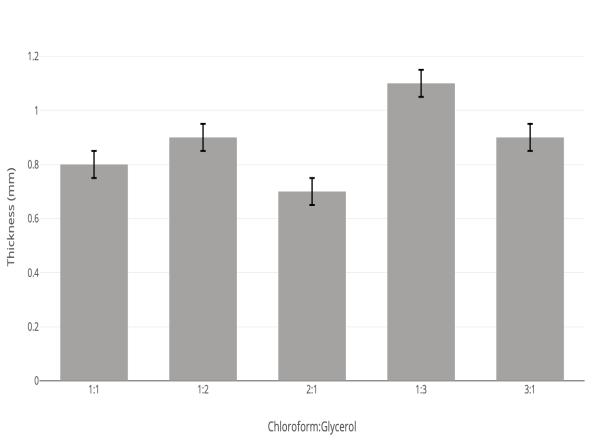
Figure1:Thicknessof bioplasticfilmswith varying chloroformandglycerolratios
Density is a physical-tensile property. The higher the density, the lower a plastic film’s elasticity. A clear pattern is seen in the results obtained: the higher the chloroform percentage, the higher the density. On a molecular level, chloroform has a higher mass (MR = 119.5g/mole)thanglycerol(MR=92.09).
Fig.2showsthatthevaluesofdensityrangedfrom0.87 g/cm³ to 0.97 g/cm³. These values are lower than those reportedforstarch-basedbioplastics(1.2-1.3g/cm³)by Averous and Bouquillon (26) and comparable to the density range (0.87 - 1.20 g/cm³) reported by Bežirhan ArikanandBilgen(5)forpotatostarch-basedbioplastics. The lower density of our cellulose-based bioplastics suggests potential advantages in applications where lightweightmaterialsarepreferred.
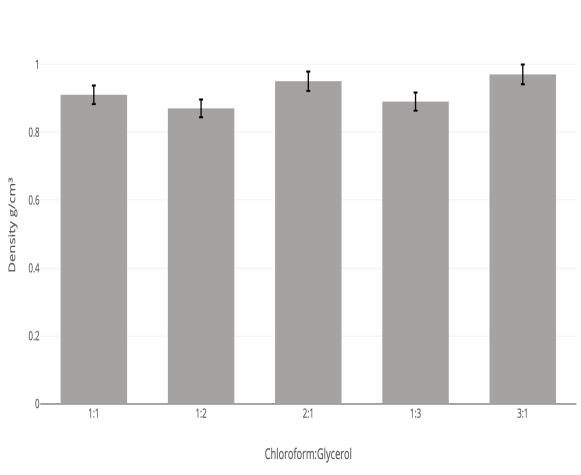
Figure2:Density of bioplasticfilms withvarying chloroformandglycerolratios
International Research Journal of Engineering and Technology (IRJET) e-ISSN:2395-0056
Volume: 11 Issue: 09 | Sep 2024 www.irjet.net
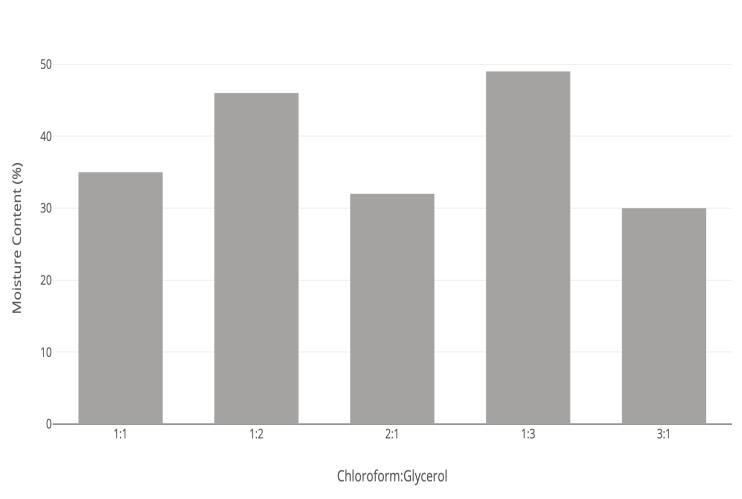
Themoisturecontentofbioplasticsreferstothepercent mass of the bioplastic that was water after the production process was finished. The moisture content increased with the use of plasticizers. From Fig. 3, the bioplastic for which maximum glycerol was added for synthesis had the greatest moisture content (49%), and the bioplastic for which the highest percentage of chloroform was added had the lowest moisture content (30%). When the ratio between both was 1:1, the moisture content lay in the middle. A previous study in which banana peels were used to make starch-based biopolymers (4) has shown that glycerol-based bioplastics had a higher moisture content value. This is because glycerol is part of the hydroxyl group, which readilyformshydrogenbondswithwatermolecules and hasagreataffinityforthem.
Themoisturecontentofthebioplasticsrangedfrom30% to 49%, increasing with higher glycerol content. These values are higher than those reported by Averous and Boquillon (26) for starch-based bioplastics (15-25%), which can be attributed to the higher hydrophilicity of celluloseacetatecomparedtostarch.
5.4 Moisture Absorption
One of the most common concerns about biodegradable plastics is their resistance and diffusivity with water, particularly for packaging purposes. In this study, the water absorption test was conducted over a span of 24 hours at room temperature (28°C). Through this, the stability of the plastic under humid conditions was measured. The moisture absorption of a plastic film is significant when considering its applicability in wet conditions. The immersion of the bioplastics in water caused water molecules to diffuse into the plastic's
p-ISSN:2395-0072
networkchainsandcausedplasticswelling.Attheinitial stage, the absorption rate was speedy; however, this eventually slowed down and approached equilibrium as the number of vacant hydroxyl groups fell. As a plasticizer,glycerolincreasesafilm’stendencytoabsorb water. This is due to the presence of a hydroxyl group andisconsistentwithpreviousresearch(4).
Moisture absorption values for this bioplastic ranged from 56% to 68%, with the lowest being when the glycerol percentage was a minimum and the highest being when the glycerol percentage was a maximum. ThisislowerthanthevaluesreportedbyFelixetal.(27) for rice bran-based bioplastics (85-200%). Cellulose acetateplasticstendtohavehighermoistureabsorption ability than butyrate or propionate, and these plastics usually hold up more water molecules. This difference suggeststhatourcelluloseacetate-basedbioplasticsmay have better moisture resistance, potentially extending theirshelflifeinhumidenvironments.
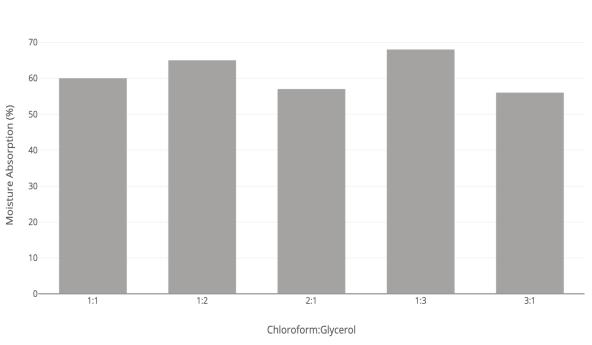
Figure4:Moistureabsorptionofbioplastic films with varying chloroformandglycerolratios
The ability to biodegrade bioplastics is attributed to propertiessuchasmolecularweight,chemicalstructure, affinity to water, surface area, etc. (21). The affinity to waterisapropertythatincreaseswiththepercentageof glycerol used for synthesis, and molecular weight is a property that decreases with the decrease in the rate of chloroform. Overall, the ratio with which the most biodegradable bioplastic was created is three parts glyceroltoonepartchloroform.ThepresenceoftheO-H group (hydroxyl) makes the bioplastic polar, and because of this, it can be broken down through hydrolysiswithanacidorabase.
The highest biodegradability rate observed was 9.3 × 10⁻µgday⁻¹m⁻²,foundinthebioplasticwiththehighest glycerol content. Although the film will require a long time to biodegrade, biodegradability is a step towards a brighterandsaferfuture.TheresultsfromFig.5indicate that the biodegradability of cellulose-based bioplastic films is far superior to starch-based bioplastic films
International Research Journal of Engineering and Technology (IRJET) e-ISSN:2395-0056
Volume: 11 Issue: 09 | Sep 2024 www.irjet.net p-ISSN:2395-0072
(approximately 5.0 × 10⁻µ g day⁻¹ m⁻²) as found in existing literature (21). However, it is lower than the biodegradation rate reported by Ruggero et al. (28) for some commercial bioplastics (up to 2.0 × 10⁻´ g day⁻¹ m⁻²),indicatingroomforfurtherimprovement.
As the above results show, our cellulose acetate-based bioplastics show promising properties compared to many existing bioplastics, particularly in terms of biodegradability and moisture resistance. These results highlight the potential of bagasse-derived cellulose acetate as a sustainable material for bioplastic production.
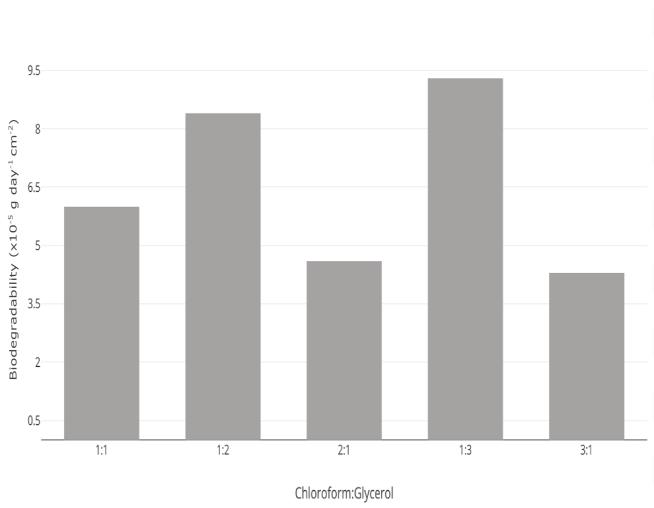
Figure5:Biodegradabilityratesofbioplastic filmswith varying chloroformandglycerolratios
6. Conclusion
This study successfully demonstrated the development and characterization of novel bioplastic films derived from cellulose acetate extracted from bagasse, a renewable agricultural waste product. Bioplastic films withvaryingproperties wereproducedbymanipulating the ratios of cellulose acetate, chloroform, and glycerol. The thickness of these films ranged from 0.79 to 1.12 mm, with densities between 0.87 and 0.97 g/cm³, making them lighter than many conventional starchbasedbioplastics.
The incorporation of glycerol as a plasticizer significantly influenced the moisture content and absorption properties of the bioplastics. Films with higher glycerol content showed increased moisture absorption (up to 68%), suggesting potential applications in controlled release systems or moisturesensitive packaging. Biodegradability tests revealed that all synthesized bioplastics were biodegradable, with the highest biodegradation rate of 9.3 × 10⁻µ g day⁻¹ m⁻² observedin filmswiththehighestglycerol content.This biodegradability rate is notably higher than those reported for many starch-based bioplastics, indicating a reducedenvironmentalimpact.
Despite the promising results, this study has some limitations. The laboratory-scale production may not fully represent the challenges of large-scale manufacturing processes. Additionally, the long-term stability and performance of these bioplastics under various environmental conditions were not extensively tested.
The implications of this research are far-reaching. By successfully developing biodegradable bioplastics from agricultural waste,thisstudycontributestothegrowing body of knowledge on sustainable materials. These bioplastics have the potential to significantly reduce plasticpollutionanddecreasedependenceonfossilfuelbasedplastics.Furthermore, theuseofbagasseasa raw material could provide additional income streams for agricultural communities and promote the concept of a circulareconomyintheagricultural sector.Additionally, these cellulose acetate-based bioplastics from bagasse could lead to more sustainable and environmentally friendlypackagingmaterials.
Future research could focus on optimizing the production process for large-scale manufacturing, investigating additional natural additives to further enhance properties, exploring potential applications in various industries, and conducting long-term degradation studies in different environmental conditions.
Inconclusion,thisstudydemonstratesthefeasibilityand potential of cellulose acetate-based bioplastics as a promising alternative to conventional plastics. The physical properties of these bioplastics, combined with their biodegradability and renewable source material, positionthemasstrongcandidatesforfuturesustainable packaging solutions. As the world continues to grapple with environmental challenges, innovations like these providehopeforamoresustainablefuture.
[1] R. P. Babu, K. O'Connor, and R. Seeram, "Current progressonbio-basedpolymersandtheirfuturetrends," ProgressinBiomaterials,vol.2,no.1,Article8,2013.
[2]EuropeanBioplastics,"Bioplasticsmarketdata2018: Global production capacities of bioplastics 2018-2023," 2018. [Online]. Available: https://www.europeanbioplastics.org/market/
[3]A.M.Ogunmolasuyi,E.C.Egwim,M.A.Adewoyin,and J. E. Nkop, "Effect of phosphoric acid treatment on physicochemical,functional,andstructural propertiesof starch extracted from yam (Dioscorea rotundata)," International Journal of Food Properties, vol. 20, no. 5, pp.1062-1073,2017.
© 2024, IRJET | Impact Factor value: 8.315 | ISO 9001:2008
International Research Journal of Engineering and Technology (IRJET) e-ISSN:2395-0056
Volume: 11 Issue: 09 | Sep 2024 www.irjet.net p-ISSN:2395-0072
[4] M. Bilal, T. Rasheed, F. Nabeel, H. M. N. Iqbal, and Y. Zhao, "Hazardous contaminants in the environment and theirlaccase-assisteddegradation–Areview,"Journalof Environmental Management, vol. 277, Article 111486, 2021.
[5] E. Bežirhan Arikan and H. D. Bilgen, "Production of bioplasticfrompotatopeelwasteandinvestigationofits biodegradability," International Advanced Researches andEngineeringJournal,vol.3,no.2,pp.93-97,2019.
[6]M.A.Mekewietal.,"Preparationandcharacterization of bioplastics from starch and chitosan blends," Journal ofPolymersandtheEnvironment,vol.25,no.3,pp.729737,2017.
[7] N. Zarrinbakhsh, T. Wang, A. Rodriguez-Uribe, M. Misra, and A. K. Mohanty, "Characterization of wastes and coproducts from the coffee industry for composite material production," BioResources, vol. 8, no. 3, pp. 3136-3153,2013.
[8] N. A. Mostafa, A. A. Farag, H. M. Abo-dief, and A. M. Tayeb, "Production of biodegradable plastic from agricultural wastes," Arabian Journal of Chemistry, vol. 11,no.4,pp.546-553,2018.
[9] A. Kumar, Y. S. Negi, N. K. Bhardwaj, and V. Choudhary, "Synthesis and characterization of cellulose nanocrystals/PVA based bionanocomposite," Advances inMaterialsPhysicsandChemistry,vol.4,no.9,pp.165172,2014.
[10]B.O.Solomon,B.Amigun,E.Betiku,T.V.Ojumu,and S. K. Layokun, "Optimization of cellulase production by Aspergillus flavus Linn isolate NSPR 101 grown on bagasse," Journal of Engineering and Applied Sciences, vol.3,no.1,pp.390-395,2011.
[11] C. G. Otoni et al., "The food–materials nexus: Next generationbioplasticsandadvancedmaterialsfromagrifood residues," Advanced Materials, vol. 33, no. 35, Article2102520,2021.
[12]D.MerinoandA.Athanassiou,"Quantitativeanalysis of the mechanical properties and water interactions of biodegradable bioplastics from fruit and vegetable waste," Green Chemistry, vol. 25, no. 3, pp. 1015-1026, 2023.
[13] M. Jiménez-Rosado, J. F. Rubio-Valle, V. PerezPuyana, A. Guerrero, and A. Romero, "Comparison betweenpea and soyprotein-based bioplasticsobtained by injection molding," Journal of Applied Polymer Science,vol.138,no.20,Articlee50412,2021.
[14] H. Tian et al., "Fabrication, properties and applications of soy-protein-based materials: A review,"
International Journal of Biological Macromolecules, vol. 120,pp.475-490,2018.
[15]J.M.Carvajal-Piñero,M.Ramos,M.Jiménez-Rosado, V. Perez-Puyana, and A. Romero, "Pectin from tomato processing by-product as a novel ingredient for manufacturing sustainable bioplastics," Journal of Polymers and the Environment, vol. 27, no. 5, pp. 968978,2019.
[16] M. Felix, A. Romero, F. Cordobes, and A. Guerrero, "Development of crayfish bio-based plastic materials processed by small-scale injection moulding," Journal of the Science of Food and Agriculture, vol. 95, no. 4, pp. 679-687,2015.
[17] M. Felix, V. Perez-Puyana, A. Romero, and A. Guerrero, "Development of protein-based bioplastics modified with different additives," Journal of Applied PolymerScience,vol.134,no.42,Article45430,2017.
[18] L. Fernández-Espada, C. Bengoechea, F. Cordobés, and A. Guerrero, "Thermomechanical properties and water uptake capacity of soy protein-based bioplastics processed by injection molding," Journal of Applied PolymerScience,vol.133,no.24,Article43524,2016.
[19] S. Thammahiwes, S.-A. Riyajan, and K. Kaewtatip, "Preparation and properties of wheat gluten based bioplasticswithfishscale,"JournalofCerealScience,vol. 75,pp.186-191,2017.
[20] H. Yue et al., "On the improvement of properties of bioplastic composites derived from wasted cottonseed protein by rational cross-linking and natural fiber reinforcement," Green Chemistry, vol. 22, no. 24, pp. 8642-8655,2020.
[21] J. Yang, Y. C. Ching, and C. H. Chuah, "Synthesis and characterization of starch/fiber-based bioplastic composites modified by citric acid-epoxidized palm oil oligomer with reactive blending," Industrial Crops and Products,vol.170,Article113797,2021.
[22] R. Lim, P. L. Kiew, M. K. Lam, W. M. Yeoh, and M. Y. Ho, "Corn starch/PVA bioplastics The properties and biodegradability study using Chlorella vulgaris cultivation," Asia-Pacific Journal of Chemical Engineering,vol.16,no.3,Articlee2622,2021.
[23] J. Wu, J. Zhang, H. Zhang, J. He, Q. Ren, and M. Guo, "Homogeneous acetylation of cellulose in a new ionic liquid," Biomacromolecules, vol. 5, no. 2, pp. 266-268, 2004.
[24] ASTM International, "D6988 – 13. Standard Guide for Determination of Thickness of Plastic Film Test Specimens,"2013,pp.1-7.
2024, IRJET | Impact Factor value: 8.315 | ISO 9001:2008 Certified Journal | Page153
International Research Journal of Engineering and Technology (IRJET) e-ISSN:2395-0056
Volume: 11 Issue: 09 | Sep 2024 www.irjet.net p-ISSN:2395-0072
[25]T.D.Moshoodetal.,"Sustainabilityofbiodegradable plastics: New problem or solution to solve the global plastic pollution?" Current Research in Green and SustainableChemistry,vol.5,Article100273,2022.
[26] L. Averous and N. Boquillon, "Biocomposites based on plasticized starch: Thermal and mechanical behaviours," Carbohydrate Polymers, vol. 56, no. 2, pp. 111-122,2004.
[27] M. Felix, A. Lucio-Villegas, A. Romero, and A. Guerrero,"Developmentofriceproteinbio-basedplastic materials processed by injection molding," Industrial CropsandProducts,vol.79,pp.152-159,2016.
[28] F. Ruggero, R. Gori, and C. Lubello, "Methodologies to assess biodegradation of bioplastics during aerobic composting and anaerobic digestion: a review," Waste Management & Research, vol. 37, no. 10, pp. 959-975, 2019