
International Research Journal of Engineering and Technology (IRJET) e-ISSN: 2395-0056
Volume: 11 Issue: 09 | Sep 2024 www.irjet.net p-ISSN: 2395-0072

International Research Journal of Engineering and Technology (IRJET) e-ISSN: 2395-0056
Volume: 11 Issue: 09 | Sep 2024 www.irjet.net p-ISSN: 2395-0072
Gaurav Shrivastav1, Dr. Devnita Polley2
1Department of Civil Engineering, Pacific University, Udaipur
2Assistant Professor, Department of Civil Engineering, Pacific University, Udaipur
Abstract- Seismic Soil-Structure Interaction (SSI) is a fundamental aspect of civil engineering and structural dynamics, particularly in the design and analysis of structures subjected to earthquake excitations. Understanding the behavior of structures in seismic events requires more than just analyzing the structural components in isolation; it necessitates the incorporation of the surrounding soil's properties, as well as the interaction between the soil and the structure. This complex interplay can significantly alter the dynamic response of both the structure and the soil, leading to a more comprehensive understanding of seismic performance. This study investigates the phenomenon of SSI using the finite element analysis (FEA) software ANSYS, a powerful tool for simulating the interaction between structural and geotechnical systems. The main objective of this research is to develop a robust computational model within ANSYS to simulate seismic SSI and analyze its effects on structural responses during earthquake loading. The methodology adopted integrates the dynamic properties of soils, including non-linear behavior, damping, and wave propagation, alongside detailed structural modeling. By focusing on the interaction at the interface between the soil and structure, this study explores how seismic waves traveling through the soil medium affect the structural response, considering the mutual feedback mechanisms.
Keyword: Soil structure interaction, Seismic analysis, wave propagation, finite element analysis.
1. Introduction-
Seismicanalysisofsoilstandsasapivotaldomainwithingeotechnicalengineering,illuminatingtheintricateinterplaybetween seismic forces and the geological substratum upon which infrastructure rests. Spanning an array of methodologies, from laboratorytestingtosophisticatedcomputationalmodels,thisdisciplineplaysafundamentalroleinensuringthesafetyand resilienceofstructuresinearthquake-proneregionsworldwide.Toembarkonacomprehensiveexplorationofseismicanalysis ofsoil,itisessentialtofirstcomprehendtheseismichazardfacedbyaparticularregion.Earthquakehazardanalysisinvolves assessingthelikelihoodofseismiceventsofvaryingmagnitudesoccurringoveraspecifiedperiod,ofteninformedbyhistorical seismicity,faultmapping,andprobabilisticmodels.
Oneprominentmethodemployedinseismicanalysisofsoilistheuseofnumericalmodelingtechniques,suchasfiniteelement analysis (FEA) and boundary element method (BEM), to simulate soil-structureinteraction under seismic loading. These modelsdiscretizethesoilmassintofiniteelementsorboundaryelements,allowingforthecalculationofstresses,strains,and displacementswithinthesoilandadjacentstructures.Bycoupling thesemodelswithearthquakegroundmotionrecords, engineerscansimulatethedynamicresponseofsoil-structuresystems,assessingfactorssuchasfoundationsettlement,soil liquefactionpotential,andstructuraldeformations.
2. Problem Statement-
Theprimarychallengeinseismicanalysisofsoilfoundationsistheaccuratepredictionofthedynamicinteractionbetweensoil andstructureunderseismicloading.Thisinvolvesunderstandingandmodelingthenonlinearbehaviorofsoils,accountingfor soilheterogeneity,andincorporatingtheeffectsofsoil-structureinteractioninnumericalsimulations.Keyissuesinclude:
NonlinearSoilBehavior:Soilsexhibithighlynonlinearbehaviorunderseismicloading,characterizedbyvariationsinstiffness, damping,andpotentialforliquefaction.Currentmodelsoftenoversimplifythesebehaviors,leadingtoinaccuratepredictionsof soilandfoundationresponses.
3. Methodology-
Seismicanalysisofpileandsoilfoundationsassessesthestructuralintegrityandperformanceoffoundationsystemswhen subjectedtoseismicforces.UtilizingANSYS,arobustfiniteelementanalysis(FEA)software,thismethodologyprovidesa
International Research Journal of Engineering and Technology (IRJET) e-ISSN: 2395-0056
Volume: 11 Issue: 09 | Sep 2024 www.irjet.net p-ISSN: 2395-0072
systematicapproachtomodelandsimulatethecomplexinteractionsbetweenthepile,soil,andseismicinputs,ensuringa thoroughunderstandingofthefoundationbehaviourunderearthquakeloading.
Beforeinitiatingtheanalysis,itiscrucialtogathercomprehensivedataandsetclearobjectives: Site-specific geological data: Information about the soil stratigraphy, including soil types, layers, and their respective properties.
Pilespecifications:Detailsaboutthepilematerial,geometry,andinstallationmethod. Seismicinputdata:Groundmotionrecordsorresponsespectratailoredtothesiteconditions.
3.2.1
ThefirststepinANSYSistocreateaprecise3Dmodelofthesoildomainandthepile(s):
ModelingtheSoilDomain:
Createa3Dmodelthatrepresentsthesoildomain,ensuringitextendssufficientlyinalldirectionstominimizeboundary effects.Typically,thedomainshouldextendatleastfivetimesthepilelengthhorizontallyandvertically. Dividethesoilintodistinctlayersaccordingtothegeologicaldata,assigningeachlayeranappropriatethickness. ModelingthePile:
Developadetailed3Dmodelofthepilewithinthesoildomain,ensuringaccuraterepresentationofthepile'slength,diameter, andanyvariationsincross-section.
3.2.2 Material Properties
Accuratematerialpropertiesarevitalforrealisticsimulationresults:
SoilMaterialProperties:
Definethepropertiesforeachsoillayer,includingdensity,Young'smodulus,Poisson'sratio,dampingratio,andshearstrength parameters.
Utilizenonlinearmaterialmodels(e.g.,Drucker-Prager,Mohr-Coulomb)tocapturethesoil'sbehaviorunderseismicloads.
PileMaterialProperties:
Definethepilematerialproperties,typicallyusinglinearelasticmodels.Forconcretepiles,includepropertiessuchasYoung's modulus,Poisson'sratio,andcompressivestrength.
3.2.3 Meshing
Effectivemeshingiscrucialforaccurateandefficientsimulations: MeshingtheSoilandPile:
Useafinermesharoundthepiletocapturedetailedinteractionsandacoarsermeshfurtherawaytosavecomputational resources.
Ensureproperconnectivitybetweensoilandpileelementstoaccuratelysimulatetheirinteraction.
ElementTypes:
Usesolidelementssuitablefor3Dmodeling,suchasSOLID185orSOLID186forbothsoilandpile.
3.2.4.
Accurateboundaryconditionsensurerealisticsimulationresults:
SoilBoundaryConditions:
Applyfixedboundaryconditionsatthebaseofthesoilmodeltosimulatebedrock. Usetransmittingorabsorbingboundariesonthesidestominimizeseismicwavereflection,simulatinganinfinitedomain. ElementslikeCOMBIN14inANSYScanservethispurpose.
PileBoundaryConditions:
Fixthepileattheconnectionwiththesuperstructureoratthepileheadaspertheactualboundaryconditions.
International Research Journal of Engineering and Technology (IRJET) e-ISSN: 2395-0056
Volume: 11 Issue: 09 | Sep 2024 www.irjet.net p-ISSN: 2395-0072
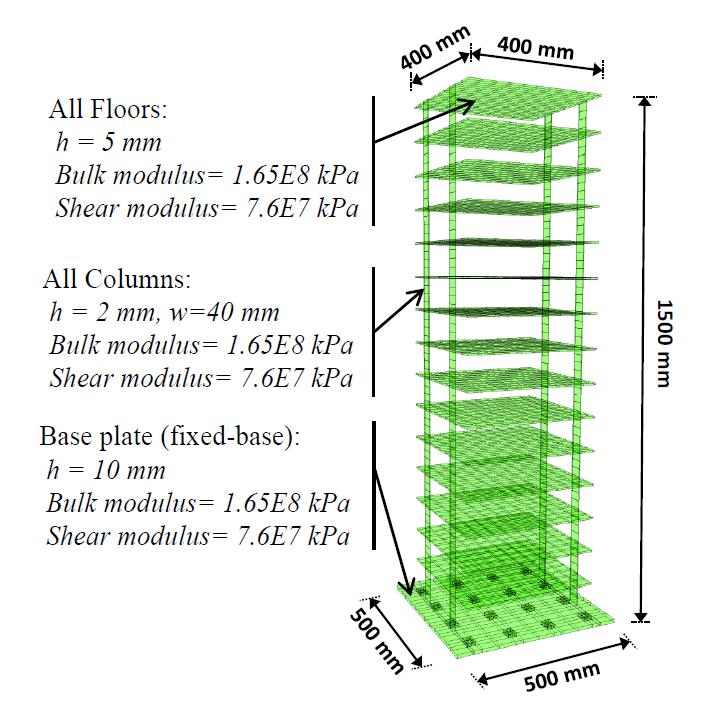
4. Results and discussion
Highrisebuildingsweresubjectedtoseismicloadingconditions.OMRFandSMRFarethetwodifferentconditionsofthe buildingswhichweresubjectedtohighdynamicseismicloadswiththeconditionsofthesoilwerealsoestimated.Normalrise buildings,singlestepbuildingandsteppedrisebuildingsarethethreetypesofbuildingsonthedifferentconditionsofsoil conditionslikethatweresimulatedintermsofseismicloadingusingANSYS.
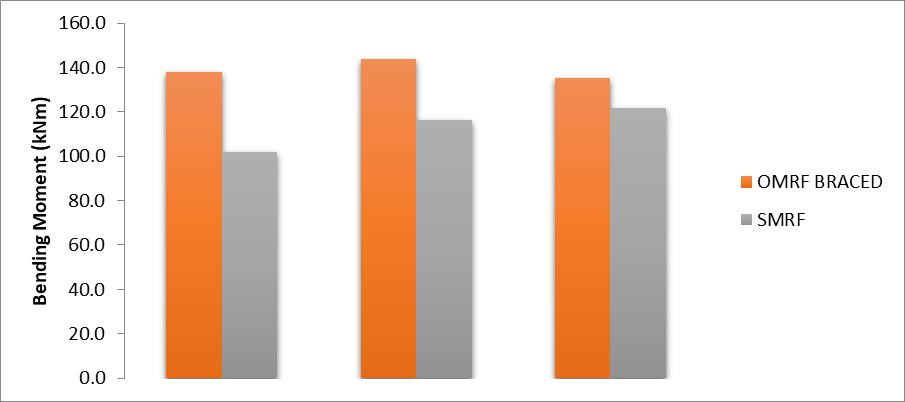
Itwasobservedthatwhenthestructurewassubjectedtohighintensityseismicloadsindifferentdirectionsitwas essentially visiblethataenhancedbendingmomentwasdevelopedinthestructuremainlyduetothepresenceofgravityloadactingatthe centreandduetothevibratorymotionofthebodyadistancewascreatedofthecentroidfromtheregularaxisofthebuilding leadingtogenerationofamomentinabody.
International Research Journal of Engineering and Technology (IRJET) e-ISSN: 2395-0056
Volume: 11 Issue: 09 | Sep 2024 www.irjet.net p-ISSN: 2395-0072
Itwasobservedfromfig.2thatbendingmomentofsteppedframetendstohavemaximumbendingmomentoncomparisonto othertwotypesofstructure.Steppedframethereforestartstobehavemoreunstableonexposuretohighdynamicseismic loads,whileothertwotypesofframesremainmorestable.ItwasalsoobservedfromthefigurethatOMRFbracedbuilding havesubsequentlymorebendingmomentascomparedtoSMRFbracedbuildingframe.Itwastheoutcomeofallthreedifferent typesofbuildings.SMRFbuildingwasobservedtobehighlyefficientandearthquakeresistingstructureascomparedtothatof OMRFbuilding.
WhenthemagnitudeoftheseismicloadsappliedwereasperthatoftimeaccelerationgraphofzoneIII.Allthreedifferent typesofthestructurenormal,singlestepandsteppedbuildingwassubjectedtosameearthquakeloadasperzoneIIIaccording to IS codes. It was evident that stepped frame tends to have maximum shear force on comparison to other two types of structure.
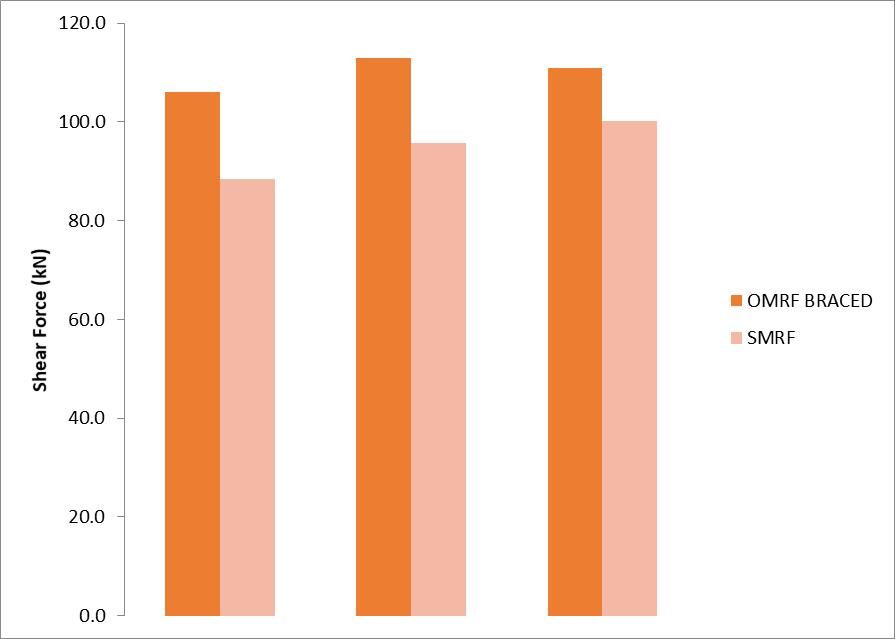
Itwasobservedfromfig.3thatmaximumshearforceofsteppedframetendstohavemaximumshearforceoncomparisonto othertwotypesofstructure.Steppedframethereforestartstobehavemoreunstableonexposuretohighdynamicseismic loads,whileothertwotypesofframesremainmorestable.ItwasalsoobservedfromthefigurethatOMRFbracedbuilding havesubsequentlymoremaximumshearforceascomparedtoSMRFbracedbuildingframe.Itwastheoutcomeofallthree differenttypesofbuildings.SMRFbuildingwasobservedtobehighlyefficientandearthquakeresistingstructureascompared tothatofOMRFbuilding.
This study underscores the critical role of soil-structure interaction in the seismic analysis of high-rise buildings. The incorporationofSSIusingANSYSrevealedsignificantdifferencesinnaturalfrequencies,displacements,accelerations,and stressdistributionscomparedtofixed-basemodels.ThefindingsemphasizetheneedforcomprehensiveSSIconsiderationin the design and analysis of high-rise buildings to ensure their safety and performance during seismic events. Enhanced foundationdesign,carefulstructuraldetailing,andconsiderationofSSIeffectsareessentialforresilienthigh-risestructuresin earthquake-proneareas.
International Research Journal of Engineering and Technology (IRJET) e-ISSN: 2395-0056
Volume: 11 Issue: 09 | Sep 2024 www.irjet.net p-ISSN: 2395-0072
Theseismic analysisofhigh-rise buildings,incorporatingsoil-structureinteraction(SSI), revealscritical insightsintothe behavior and safety of such structures under earthquake loading. This comprehensive study, performed using ANSYS, underscoresthesignificantinfluenceofSSIonthedynamicresponseofhigh-risebuildings.
1. R.K.Ingle and Sudhir K. Jain (2008) , “Final Report: A -Earthquake Codes IITK-GSDMA Project on Building Codes (Explanatory examples for ductile detailing of RC buildings)”,IITK-GSDMA-EQ26-V3.0
2. Handbookonconcretereinforcementanddetailing(SP-16),BureauofIndianstandards,NewDelhi.
3. KumarKiran,RaoG.P.(2013)“Comparison of percentage steel and concrete quantities of a R.C. building in different seismic zones”,InternationalJournalofResearchinEngineeringandTechnology
4. ShresthaSamyog(2013),“Cost comparison of R.C.C columns in identical buildings based on number of story and seismic zone”,InternationalJournalofScienceandResesarch
5. H.J.ShahandSudhirK.Jain(2008),“Final Report: A -Earthquake Codes IITK-GSDMA Project on Building Codes (Design Example of a Six Storey Building)”,IITK-GSDMA-EQ26-V3.0
6. Ghosh K.S.,Munshi J.A. (1998), “Analyses of seismic performance of a code designed reinforced concrete building”, EngineeringStructures,Vol20,No.7,pp.608-616
7. HassanR.,XuL.andGriersonD.E.(2002),“Push-over for performance-based seismic design”,ComputersandStructures 2483–2493.
8. FillippouF.C.,IssaA.(1988),“Nonlinear analysis of reinforced concrete frames under Cyclic load reversals”,ReportNo. UCB/EERC-88/12,UniversityofCalifornia,Berkley.
9. Pauley,T.andM.J.N.Priestley,(1991)“Seismic Design of Reinforced Concrete and Masonry Buildings” . JohnWiley& Sons,Inc.455-824
10. Liauw,T.C.(1984).“Nonlinear analysis of integral infilled frames.”Engineeringstructures6.223-231