
International Research Journal of Engineering and Technology (IRJET) e-ISSN: 2395-0056
Volume: 11 Issue: 09 | Sep 2024 www.irjet.net p-ISSN: 2395-0072

International Research Journal of Engineering and Technology (IRJET) e-ISSN: 2395-0056
Volume: 11 Issue: 09 | Sep 2024 www.irjet.net p-ISSN: 2395-0072
Kapil Shalgar1
1Post Graduate Student, JSPM University, Pune
Abstract - Precastwatertanksrepresentasustainableand efficient approach to water management, addressing the growing need for reliable water storage solutions in both urban and rural settings. These tanks, manufactured off-site using standardized processes, offer significant advantages in terms of durability, cost-effectiveness, and environmental impact.Theuseofprecastconcrete,knownforitsstrengthand longevity, ensures that the tanks are resistant to weathering, chemicalattacks,andphysicalimpacts,makingthemidealfor long-term water storage. Additionally, the modular nature of precasttanksallowsforeasy transportationand installation, reducing on-site construction time and minimizing environmental disruption. Precast water tanks contribute to sustainable water management by enabling the efficient capture, storage, and distribution of water resources, particularly in areas prone to drought or water scarcity. Moreover, their production involves lower carbon emissions compared to traditional cast-in-place methods, further enhancing their environmental credentials. This paper exploresthebenefits,challenges,andpotentialapplicationsof precast watertanks in various water management scenarios, highlightingtheirroleinpromotingsustainabledevelopment and resilience in water infrastructure.
Key Words: Precast Water Tanks, Sustainable Water Management, Precast Concrete, Water Storage, Environmental Impact, Modular Construction, Water Infrastructure, Sustainable Development, Resilience.
Watermanagementisacriticalissueinthefaceofincreasing global water scarcity, urbanization, and climate change. Effectivewaterstoragesolutionsareessentialforensuringa stable and reliable water supply, particularly in regions where water resources are limited or subject to seasonal fluctuations. Traditional water storage methods, such as cast-in-placeconcretetanksandsteelreservoirs,oftenface challengesrelatedtodurability,environmentalimpact,and cost. In response to these challenges, precast water tanks have emerged as a sustainable alternative that offers numerous advantages in terms of construction efficiency, longevity,andenvironmentalsustainability.
Precast water tanks are constructed off-site in controlled environments using high-quality materials, ensuring consistentstandardsofstrengthanddurability.Thismethod allowsfortheproductionofmodularunitsthatcanbeeasily transported and installed, reducing the environmental disruption typically associated with on-site construction.
Additionally,theuseofprecastconcrete,whichisknownfor its low permeability and resistance to a wide range of environmental conditions, makes these tanks particularly suitableforlong-termwaterstorage
As the demand for sustainable infrastructure solutions grows,precastwatertanksareincreasinglybeingrecognized for their potential to contribute to more resilient water managementsystems.Byofferingadurable,cost-effective, and environmentally friendly alternative to traditional storage methods, precast water tanks play a vital role in enhancing water security and supporting sustainable development. This paper explores the characteristics, benefits,andapplicationsofprecastwatertanks,examining their role in advancing sustainable water management practices.
Theimportanceofsustainablewatermanagementhasgained increasingattentioninrecentyearsduetorisingglobalwater scarcity, urbanization,andclimate-relatedchallenges.Asa result,therehasbeenagrowingfocusoninnovativewater storagesolutionsthatarebothenvironmentallyfriendlyand efficient. Precast water tanks have emerged as one such solution,offeringarangeofbenefitsovertraditionalwater storage methods. This literature review explores existing researchonprecastwatertanks,theirsustainabilityfeatures, andtheirpotentialtoaddresswatermanagementchallenges
Precastconcretehaslongbeenrecognizedforitsdurability, versatility, and reduced construction time. According to research by Parrot and Banfill (2000), precast concrete structures, including water tanks, offer improved quality control due to off-site manufacturing, leading to reduced wasteandbetterresourceefficiency.Precastconcrete'slow permeability and resistance to weathering and corrosion makeitanidealmaterialforwaterstorage(Neville,2011). Furthermore, the energy efficiency of precast concrete productionhasbeenemphasizedinstudiessuchasButtler (2008), which highlight the reduced carbon footprint of prefabricatedcomponentscomparedtotraditionalcast-inplacemethods.
Several studies have addressed the durability of precast water tanks, noting that their strength and resistance to chemicalattacksandphysicaldamagemakethemsuitable
International Research Journal of Engineering and Technology (IRJET) e-ISSN: 2395-0056
Volume: 11 Issue: 09 | Sep 2024 www.irjet.net p-ISSN: 2395-0072
forlong-termwaterstorage.WorkbyMehtaandMonteiro (2006)indicatesthatprecastconcrete’sinherentproperties make it less susceptible to cracking and leakage, key concernsinwaterstorageinfrastructure.Additionally,the modularnatureofprecasttanksallowsforeasymaintenance andadaptability,enhancingtheiroperationallifespan(Bijen, 2003).
The environmental advantages of precast water tanks are widelydocumented.Lifecycleassessment(LCA)studies,such asthosebyMarceauetal.(2007),demonstratethatprecast concretestructureshavealowerenvironmentalimpactover theirlifecyclecomparedtootherconstructionmethods.This is attributed to the controlled production process, which minimizeswaste,andthematerial’slongevity,whichreduces theneedforfrequentreplacements.Moreover,thereuseof molds in the manufacturing process helps conserve resources, and precast concrete’s high thermal mass contributes to energy efficiency in water storage systems (Guggemos&Horvath,2005).
Precast water tanks have been increasingly incorporated intosustainablewatermanagementstrategies.Researchby Allen et al. (2014) highlights their use in rainwater harvesting systems, stormwater management, and wastewater treatment. These tanks allow for efficient storage,capture,andreuseofwater,helpingmitigatewater scarcityissuesindrought-proneregions.AstudybyAhmed et al. (2018) demonstrated that precast water tanks are moreresilienttoextremeweatherconditions,makingthem asuitablechoiceforregionsexperiencingclimate-induced watervariability.
Precast water tanks are also recognized for their costeffectiveness. A report by the National Precast Concrete Association(NPCA,2015)outlineshowthemodulardesign andrapidinstallationofprecasttanksreducelaborcostsand on-siteconstructiontime,leadingtooverallprojectsavings. Moreover, due to the longer lifespan and reduced maintenance requirements of precast tanks, they offer a favorablereturnoninvestmentwhencomparedtotraditional steelorcast-in-placeconcretetanks.
Precast water tanks are constructed using high-strength concrete,reinforcedwithsteeltoensurestructuralintegrity andlongevity.Themanufacturingprocesstakesplaceina controlledenvironment,allowingforprecisequalitycontrol andminimizingwaste.Themodulardesignofprecasttanks facilitates easy transportation and installation, which is particularly advantageous in remote or difficult-to-access
locations. Additionally, the use of formwork systems in precast construction reduces the need for onsite labor, furtherminimizingenvironmentaldisruption.
Thestructuraldesignofprecastwatertanksmustaccountfor severalfactors:
Capacity and Dimensions: Tanks are designed based on required storage volumes, whether for residential,commercial,orindustrialpurposes.
Shape: Common designs include cylindrical, rectangular, and modular tanks, which optimize spaceandstructuralstability.
Reinforcement: Steel reinforcement is integrated withintheconcretetopreventcrackingandresist tensileforcescausedbywaterpressure.
Wall Thickness: Adequatethicknessisessentialto withstandinternalwaterpressureandexternalsoil pressurewhenburied.
Environmental Considerations: Sustainabilityisa crucialfactorinmodernwatertankdesign.Precast concreteiseco-friendlyduetoitsdurability,lower carbonfootprintduringproduction,andtheability to incorporate recycled materials. Additionally, precasttankscanbeusedforrainwaterharvesting systems,contributingtowaterconservationefforts.
Water Tightness and Durability: Ensuringwater tightness is fundamental for long-lasting performance.Precasttanksaremanufacturedwith waterproof concrete mixes and utilize advanced joint sealing techniques to prevent leakage. Additionally,thesetanksareresistanttocorrosion and chemical attack, making them ideal for longtermuseinvariousenvironments.
Manufacturing Process- The precast water tank constructionprocessbeginswiththefabricationof moulds,designedtothespecificationsoftheproject. Concrete is then poured into these moulds in a controlledenvironment,ensuringconsistentquality andcuring. The controlled conditionsalso reduce material waste and energy consumption, aligning withsustainableconstructionpractices.
TransportationandInstallation- Oncetheprecast water tank components are ready, they are transportedtothesite.Theinstallationprocessis typically faster than traditional cast-in-place methods due to the modular nature of precast tanks. The components are assembled and connectedusingwatertightjoints,andonceinplace, the tank is subjected to pressure tests to ensure water-tightness.
International Research Journal of Engineering and Technology (IRJET) e-ISSN: 2395-0056
Volume: 11 Issue: 09 | Sep 2024 www.irjet.net p-ISSN: 2395-0072
Site Preparation- The installation site must be properly prepared, including excavation, compactingthebase,andensuringproperdrainage toavoidstructuralissuesovertime.Backfillingafter tankinstallationmustbedonecarefullytoprevent damagetothetankwalls.
Durability and Longevity- Precastwatertanksare highly durable due to the inherent strength of reinforced concrete. They resist damage from weather,soilpressure,andwater,offeringalifespan ofseveraldecadeswithminimalmaintenance.
Sustainability- Precastconcretetankscontributeto sustainable water management by promoting rainwater harvesting and reducing the environmental impact of water storage infrastructure.Theproductionprocessitselfismore sustainableduetoreducedenergyconsumptionand thepotentialuseofrecycledmaterials.
Cost-Effectiveness-Whiletheinitialcostofprecast tanks may be higher than some alternatives, their longlifespanandreducedneedformaintenancelead to cost savings over time. Additionally, the faster construction process lowers labour costs and minimizesdisruptiontotheconstructionsite.
Transportation Limitations- Thesizeandweight ofprecasttankscanmaketransportationtoremote or difficult-to-access sites challenging, requiring carefullogisticalplanning.
Customization- Whileprecasttanksofferstandard shapesandsizes,customdesignsmayincreasecosts orlimitthefeasibilityofcertainprojects,especially whencomplexshapesoruniquesiteconditionsare involved.
4.1
Precast water tanks are typically made from concrete, a materialknownforitslonglifespan,strength,andresistance toenvironmentalfactorssuchasUVradiationandcorrosion. The production process for these tanks involves careful materialoptimization,leadingtoreducedwastecomparedto traditional on-site poured concrete structures. The use of supplementary cementitious materials (SCMs) such as fly ashorslagintheconcretemixcanfurtherreducethecarbon footprint of these tanks, as SCMs lower the demand for Portlandcement,whichisenergy-intensivetoproduce.
Manufacturing precast water tanks in controlled factory environments leads to optimized energy use compared to the energy-intensive processes required for on-site construction. Precast production facilities often employ energy-saving technologies and techniques that reduce overall energy consumption and emissions. Additionally, centralizedproductioncanensureconsistencyandquality control,reducingmaterialwastageandtheneedforrepairor reconstruction,bothofwhichcanhavehighenvironmental costs.
Althoughprecastwatertanksneedtobetransportedtothe installation site, they are usually installed faster than traditional tanks. This minimizes the need for heavy equipment and prolonged use of construction vehicles, leadingtoreducedtransportation-relatedemissionsduring theinstallationphase.Bulktransportationandlocalsourcing ofmaterialscanalsoreducethecarbonfootprintassociated withtransportingtheprecastunits.
Precast water tanks are known for their durability, which translatestoalongerservicelifecomparedtootherwater storage systems. This reduces the need for frequent replacements and repairs, ultimately conserving raw materialsandenergyoverthelifecycleoftheproduct.Inthe long term, a durable tank system minimizes the environmentalimpactassociatedwithresourceextraction, production,andtransportation.
Precastwatertankscancontributetosustainabilitythrough effective water management. Their tight seals and robust structurepreventleakageandreducewaterlossovertime, contributingtowaterconservationefforts.Inregionswhere waterisascarceresource,reliablewaterstoragesolutions helpensurewateravailabilityforagriculture,industry,and personaluse,supportingbroadersustainabilitygoals.
At the end of their lifecycle, precast water tanks are often recyclable. Concrete can be crushed and repurposed as aggregatefornewconstructionprojects,reducingtheneed forvirginmaterials.Thishelpsminimizewasteinlandfills andconservesnaturalresources.Additionally,ifthetanks arenotfullyrecycled,componentslikesteelreinforcements areoftensalvageableandreusable,furthercontributingto theirsustainability.
Despite their benefits, precast water tanks still rely on concrete,amaterialwithasignificantenvironmentalimpact, particularly in terms of carbon dioxide (CO2) emissions. Cement production, a key component of concrete, is
International Research Journal of Engineering and Technology (IRJET) e-ISSN: 2395-0056
Volume: 11 Issue: 09 | Sep 2024 www.irjet.net p-ISSN: 2395-0072
responsible for a substantial portion of global CO2 emissions.However,precastmanufacturerscanmitigatethis impactbyincorporatingeco-friendlypracticessuchasusing recycled aggregates, energy-efficient manufacturing processes,andSCMsintheconcretemix.
Precastwatertanks,wheninstalledproperly,haveaminimal impactonsurroundingecosystems.Unliketraditionalwater storagesolutionsthatmayrequiresignificantsitealteration and long-term construction activity, precast tanks are installedquicklywithminimalsitedisruption.Theirrobust constructionminimizestheriskofleaksorcontamination, protecting soil and groundwater from potential pollution. Additionally, by allowing for rainwater harvesting and efficientwaterstorage,precastwatertankscanreducethe demand for natural water sources, preserving local ecosystems.
Precast Water Tanks - A Sustainable Approach to Water Management under the Jal Jeevan Mission (Government of India)
The Jal Jeevan Mission (JJM),launchedbytheGovernmentof India in 2019, is an ambitious project aimed at ensuring potable water access to every rural household through FunctionalHouseholdTapConnections(FHTCs)by2024.The mission'scoreobjectivesarecentredaroundprovidingsafe drinking water, improving public health, and promoting communityinvolvementinwaterresourcemanagement.A crucialaspectofthisinitiativeisensuringsustainablewater storagesolutionsinremoteareaswherewaterinfrastructure hasbeentraditionallyinadequate.
Challenges in Water Management
India faces significant challenges related to water management.Theseinclude:
Seasonalrainfallvariationleadingtowaterscarcity duringsummers.
Unequal distribution of water resources across regions.
Over-extractionofgroundwaterleadingtodepletion andcontamination.
Infrastructureinadequaciesinruralareas,especially intermsofstorageanddistribution.
To address these challenges, JJM has placed significant emphasis on technological innovations and sustainable practices.Onesuchapproachthathasproveneffectiveisthe use of precast water tanks for water storage and distribution,contributingtoamorereliableandeco-friendly watermanagementsystem.
Precast Water Tanks: The Sustainable Solution
Precast water tanks have emerged as an efficient and sustainablesolutionundertheJalJeevanMission,particularly in rural and remote areas. Precast concrete tanks are manufacturedoff-siteandthentransportedandinstalledat the desired location. The following are key advantages of usingprecastwatertanks:
1. Durability and Longevity:Precastwatertanksare built using high-strength concrete, making them highlydurableandresistanttoweatherconditions, corrosion, and physical damage. This ensures a longer lifespan compared to traditional storage tanksmadeofsteelorplastic.
2. Time-EfficientConstruction:Unliketraditionalinsitu concrete tanks, which require extensive site preparation,curingtime,andlabour,precasttanks are manufactured incontrolled environmentsand can be quickly installed on-site. This saves time, reduces project delays, and allows the rapid deployment of water infrastructure in areas with urgentwaterneeds.
3. Cost-Effectiveness: Precast tanks offer a costefficient solution as they minimize labour costs, reduce material wastage, and have lower maintenancerequirements.Theeconomiesofscale inproductionalsohelploweroverallcostsforwater managementprojectsundertheJalJeevanMission.
4. EnvironmentallyFriendly:Precastconcreteisecofriendly, as it uses locally sourced materials and generatesminimalon-sitewaste.Furthermore,since precasttanksaredesignedforlong-termuse,they reduce the need for frequent replacements, thus decreasingtheenvironmentalimpactovertime.
5. Scalability:Precastwatertankscomeinavarietyof sizesandcanbescaledtomeetthespecificneedsof different regions, from small rural households to larger community-based storage systems. This flexibility makes them an ideal solution for the diverserequirementsoftheJalJeevanMission.
6. Water Safety and Quality: The controlled manufacturingprocessofprecasttanksensuresthe use of non-toxic materials and high-quality standards, preventing contamination of stored water.Additionally,precasttanksaredesignedtobe water-tight, protecting the stored water from external pollutants and ensuring the health and safetyoftheruralpopulation.
UnderJJM,precastwatertankshavebeendeployedacross severalstates,especiallyinregionswithchallengingterrains such as hilly areas, coastal regions, and drought-prone districts.Theprecasttankshavebeenusedfor:
International Research Journal of Engineering and Technology (IRJET) e-ISSN: 2395-0056
Volume: 11 Issue: 09 | Sep 2024 www.irjet.net p-ISSN: 2395-0072
Household water storage: Ensuring individual householdshavesufficientpotablewaterstorageto meetdailyrequirements.
Community-based water storage: In areas with communalwaterdistribution,largerprecasttanks are used to store and distribute water across multiplehouseholds.
Onenotableexampleofsuccessfulimplementationisinthe state of Madhya Pradesh, which faces both drought conditionsandseasonalflooding.ThegovernmentofMadhya Pradesh,undertheJalJeevanMission,adoptedprecastwater tanks for rural households and community water management systems. The state partnered with local manufacturerstoproduceandinstallprecasttanksquickly, ensuringthemission'stimelyexecution.Asaresult:
Over85%ofruralhouseholdsinselectdistrictsnow haveaccesstotapwater.
Theuseofprecasttankshasreduceddependenceon ground and surface water during lean periods, as storedwaterisefficientlymanaged.
Community participation has increased, as water user committees oversee the maintenance of the tanks,ensuringtheirlongevity.
Impact on Sustainability and Community Participation
Theadoptionofprecastwatertankshasnotonlysupported the core goals of the Jal Jeevan Mission but also promoted sustainable water management practices in rural communities. It has empowered communities to actively participateintheoperationandmaintenanceoftheirwater supply infrastructure, fostering a sense of ownership and responsibility.Additionally,ithasreducedtheenvironmental footprintbyminimizingtheneedforrepeatedconstruction andensuringwatersecurityforfuturegenerations.
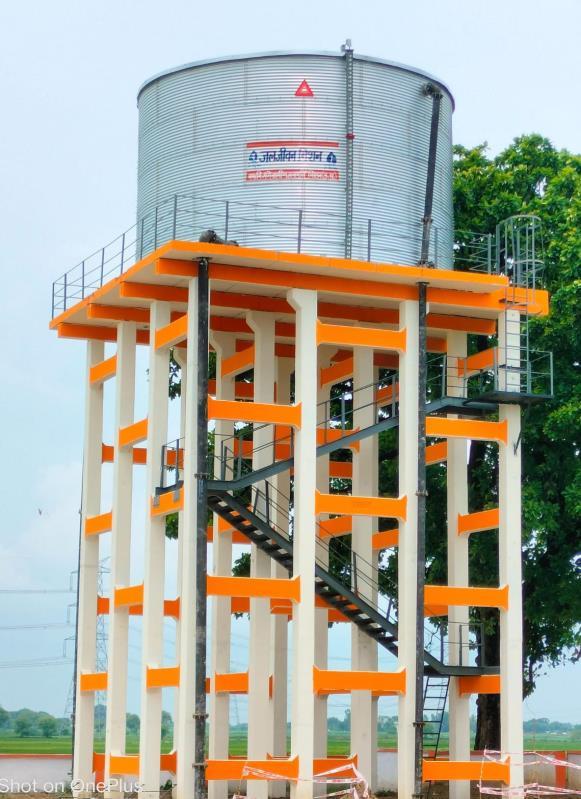
Precast water tanks represent a sustainable, efficient, and durable solution to the growing challenges of water management, especially in rural and underserved areas. Their ability to provide long-lasting water storage, quick installation, and cost-effectiveness makes them a valuable alternative to traditional water storage methods. By incorporating eco-friendly materials and reducing the environmentalimpactassociatedwithwaterinfrastructure, precast tanks align with global sustainability goals. Moreover,theirdeploymentfosterscommunityinvolvement inmanagingwaterresources,ensuringlocalownershipand long-termfunctionality.Asaresult,precastwatertanksare not just an immediate answer to water scarcity but alsoa forward-thinkingstrategyforpromotingsustainablewater managementpracticesworldwide.
[1] Mehta, P. K., & Monteiro, P. J. M. (2014). Concrete: Microstructure, Properties, and Materials.McGraw-Hill Education.M.Young,TheTechnicalWriter’sHandbook. MillValley,CA:UniversityScience,1989.
[2] Neville, A. M. (2011). Properties of Concrete. Pearson Education Limited.K. Elissa, “Title of paper if known,” unpublished.
International Research Journal of Engineering and Technology (IRJET) e-ISSN: 2395-0056
Volume: 11 Issue: 09 | Sep 2024 www.irjet.net p-ISSN: 2395-0072
[3] Roy, D. M. (1999). The Role of Cement Science in Sustainable Development. Cement and Concrete Research,29(8),1269-1278.
[4] Halliday, S. (2008). Sustainable Construction Butterworth-Heinemann.
[5] Neville,A.M.,&Brooks,J.J.(2010). ConcreteTechnology PearsonEducation.
[6] Singh,G.,&Rajput,A.(2017). Sustainability in Concrete Construction. Journal of Environmental Engineering, 143(3),1-10.
[7] Gambhir,M.L.(2004). ConcreteTechnology:Theoryand Practice.TataMcGraw-Hill.
[8] Pal, M., & Ghosh, S. (2014). Durability and Life Cycle Assessment of Precast Concrete Structures in Water Infrastructure. International Journal of Sustainable BuildingTechnologyandUrbanDevelopment,5(3),189197.
[9] Arora,K.R.(2008). WaterSupplyEngineering.Standard PublishersDistributors.
[10] Siddique, R., & Khatib, J. M. (2011). Sustainability of Concrete Using Waste and Recycled Materials.InWaste andSupplementaryCementitiousMaterialsinConcrete (pp.1-10).WoodheadPublishing.
[11] Rahman,S.(2017). InnovativeDesignofPrecastConcrete Tanks for Sustainable Water Storage Solutions ProceedingsoftheInstitutionofCivilEngineers–Water Management,170(6),345-355.
[12] Reddy,B.V.V.,&Jagadish,K.S.(2003). EmbodiedEnergy of Alternative Building Materials and Technologies BuildingandEnvironment,38(2),123-135.