
International Research Journal of Engineering and Technology (IRJET) e-ISSN: 2395-0056
Volume: 11 Issue: 09 | Sep 2024 www.irjet.net p-ISSN: 2395-0072

International Research Journal of Engineering and Technology (IRJET) e-ISSN: 2395-0056
Volume: 11 Issue: 09 | Sep 2024 www.irjet.net p-ISSN: 2395-0072
Sapna Kumari1 , Priyadarshini Pattanaik2
1Student of Department of IT Security Management, Arden University, Dessauer Str. 3-5, 10963 Berlin, Germany. Email: sapna.ukot@gmail.com
2Faculty of Computer Science and Informatics, Berlin School of Business & Innovation (BSBI), Berlin, Germany ***
Abstract - The digital transformation of the healthcare sector has revolutionized operational efficiency and patient care, yet concurrently exposed healthcare organizations to unprecedented cybersecurity risks, jeopardizing patient confidentiality and organizational integrity. This study undertakes a comprehensive investigation into contemporary cybersecurity strategies and emerging trends within the healthcare industry. Througha meticulous examination of publishedliterature from reputable databases, including PubMed/MEDLINE, CINAHL, and Web of Science, critical patterns and vulnerabilities are discerned, underlining the escalating frequency and severity of cyber threats such as ransomware and phishing attacks. Emphasizing the pivotal role of organizational cyber resilience governance and policies, the study identifies a notable gap in standardized cybersecurity risk assessment methodologies, signaling the urgent need for innovative approaches. In response to identified challenges, the research proposes the development of novel methodologies to fortify cybersecurity defenses and protectpatientdata.Leveragingcutting-edgetechnologies such as blockchain and artificial intelligence, the study advocates for proactive measures to mitigate emerging threats and ensure data security and patient privacy in healthcare environments. Moreover, the integration of end-to-endsecuritymeasuresandtheadoptionofDevOps methodologies are highlighted as promising avenues for enhancing cybersecurity resilience. Results from a systematicliteraturereviewunderscoretheimperativefor ongoing research and collaboration to address cybersecurity challenges in healthcare effectively. By offering insights into key cybersecurity features, technologies, and responsibilities within the healthcare sector, this study aims to inform stakeholders and policymakers, facilitating the implementation of robust cybersecurity measures. Furthermore, the study presents key findings regarding the current state of cybersecurity in healthcare, including challenges faced and potential solutions identified through the research process. Ultimately,throughconcertedeffortsandtheutilizationof innovative strategies, healthcare organizations can navigate the evolving cybersecurity landscape,
safeguarding patient information and upholding the integrityofhealthcaresystems.
Key Words: Healthcare cybersecurity, Internet of Things, blockchain, artificial intelligence, patient data protection, Cyberthreats,innovativeapproaches
Protecting the privacy of patient data and enabling the effective management of medical operations depend significantlyonthesecurityofourhealthcaresystems.The more digital technology is being integrated into healthcare, the greater the industry is exposed to cyberattacks. As a result, cybersecurity plays an essential partinsafeguardingournetworks,systems,andprograms from online threats, stopping illegal access, and avoiding thedisturbingconsequencescausedbydatabreaches.Itis aboutbuildingastrongdefensetomaintainourhealthcare landscape safe and sound. The security of our healthcare systemsiscriticaltoensuringthatourmedicalprocedures are carried out efficiently and that patients' personal information remains private. It all comes down to ensuring that personal information is secure and that our medical processes proceed as usual. The risk of cyber accidents has significantly increased as more digital technology has been integrated into our healthcare systems[1].
Theriskofcyber-attackshassignificantlyincreasedasour healthcare systems use more digital technology. for protecting our systems, and all the networking systems from cyber-attacks, and avoiding all illegal access, along with different scenarios of data breaches, the significance of cybersecurity cannot be emphasized. It's an essential step in protecting the privacy and confidentiality of our healthcaresystem.Itisaboutbuildinga strongdefense to maintain our healthcare landscape safe and sound. Since the healthcare industry has valuable data and frequently insufficient defenses, it is a prime target for cybercrime. Cybersecurity incidents, which include ransomware attacks and health information theft, risk patient privacy, cause disruption to healthcare systems, and maybe even
International Research Journal of Engineering and Technology (IRJET) e-ISSN: 2395-0056
Volume: 11 Issue: 09 | Sep 2024 www.irjet.net p-ISSN: 2395-0072
put lives at risk. Despite its pivotal role in patient safety, the historical deficiency of cybersecurity in healthcare necessitatesatransformativeshift[2].
Toprovideacompleteandefficientcybersecuritysolution intendedforthehealthcaresector,thistransitionincludes changesinhumanbehaviour,advancesintechnology,and procedure modifications. To address the difficulties the healthcare industry suffers in maintaining patient safety when faced with the threat of cyberattacks, a concerted effort has been made to smoothly implement the latest developments in cybersecurity and innovative technologiesintopractice.Thisproactiveapproachstrives to furnish a more secure and robust solution. Also, enforcingandmakingnewregulations,andrulestocreate a legal system to monitor and direct healthcare organizations to prioritize and make efforts to protect patient safety and well-being can significantly impact the preventativemeasure[3][18].
Healthcare organizations maintain sensitive databases containing patient data, medical history, personal information, and transaction history. If these databases were to fall into the wrong hands, patients could be seriously at risk of identity theft, medical fraud, and data misuse. Transaction details could also be compromised, withpotentiallegalrepercussionsthatcouldharmmedical institutions. Cybersecurity can therefore offer a safeguard system to prevent any fallout and put patient privacy at risktocounteractthissecuritybreach.[10].
Medical Device Security: Cybersecurity can be an effective means of ensuring more secure use of medical equipment. Malware and cyberattacks with unauthorized access might threaten patient safety, so medicaldevicesmustbehandledsecurely[4][27].
Operational Continuity: The uninterrupted functioning of healthcare operations depends on a secure and dependable system that operates without anydelays.Cybersecuritycanbeleveragedtomanage and supply a dependable system that functions effectively, as delays in patient care or even pose a threattolife[4].
Privacy breaches were a concern before the era of digital health records, but new vulnerabilities are introduced by the current interconnectivity of records. Modern records provide several entry points for possible access, enabling remote entry (unlike the protected paper records in hospitals).
Therefore, it becomes crucial to establish awareness and training programs specific to healthcare professionals. Emphasizing human efforts in enhancing system security is crucial, as human behaviour plays a significant role in defending against cyberattacks and responding to them. This involves executing strong security protocols,
following standards, and actively reducing the possibility of security breaches, particularly considering the enormous value of data, such as medical records and financial transactions handled by healthcare facilities. Adopting end-to-end encryption techniques and incorporating AI advancements are critical to strengtheningcybersecurity[11][6].
Hospitalandsecurityrecords,forexample,oftencontaina significant amount of private information, including names, dates of birth, social security numbers, addresses, and credit card information. Because healthcare data has more value on the black market than data from other industries,hackersaredrawntohealthcareorganizations. Interestingly, electronic health records (EHRs) are worth tens to hundreds of times more on black market exchanges than credit card data. Cybersecurity incidents increasethefinancialdifficultiesthehealthcareindustryis alreadyfacing,dealingwithhigherexpensesandnarrower profit margins when compared to other industries. Cybersecurity is a serious threat to patient safety in additiontoworriesaboutpatientprivacyandthefinancial burden on the healthcare industry. The complex consequences of insufficient cybersecurity in healthcare organizations are highlighted by the fact that cybersecurity protocols could be compromised, compromisingthehealthofpatients[11].
4, 2023)
The study by [12] investigated a ransomware attack associated with a record-breaking cybersecurity compromise that occurred in the U.S., healthcare organizations were affected, peaking with frequency in August 2023. A targeted attack is carried out by the ransomware group BlackCat or in other words, ‘daylight’ which interrupted hospital computer systems and forced emergency rooms to shut down due to closure while ambulances got diverted. This massive threat led to over 1500 hospitals and healthcare clinics being attacked including leading health systems such as Community Health Systems Universal Health Services and HCA Healthcare.
Critical interventions in healthcare provision such as surgeries,treatments,andappointmentswillbedisrupted. The threat to compromise confidential patient data that includes personal information, medical records as well as billing details. Large financial losses were incurred through ransom payment, loss of earnings, and repair damages costs. Potential adverse harm to patients, complications, and deaths due to late or inappropriate care. Major losses and deterioration of reputation, credibilityforhospitalsaswellastheirappliedleadership [12].
International Research Journal of Engineering and Technology (IRJET) e-ISSN: 2395-0056
Volume: 11 Issue: 09 | Sep 2024 www.irjet.net p-ISSN: 2395-0072
AnattackorganizedbytheQuantumgroupinAugust2022 was one of the biggest security ransomware attacks that threatened at National Health Service (NHS) operation in December. This assault impacted over 200 medical facilitiesandclinics,resultingindisruptionstothepatient care of more than a hundred patients while cancelling appointments, surgeries, and therapies. In the attack, quantum used a phishing email to trick staff into opening an infectious attachment that encrypted vital files. The amount that the criminals demanded was £10 million in bitcoin,andtheythreatenedtoeraseallinfobydeletingit fromtheirharddrivesunlesstheransomwaspaidwithin 48hours[8].
Cancellation of appointments, surgeries, and treatments duetointerruptionincriticalhealthcareservices.Leaking ofsensitivedata about patients,suchasnames,addresses medical history, and test results. Significant financial lossesresultingfrom ransomdemands,foregone revenue, and recovery costs. Risk to patient safety, complications, anddeathassociatedwiththedelayorinappropriatecare delivery. Sustained damage to the reputation and trust of healthcareentities,institutions,staff,andproviders[8].
This research aims to draw focus on the present cyber securityissuesfacingthehealthcaresectorandtosuggest current strategies for protecting infrastructure and data. Thisstudyalsoaimstoproviderecommendationsforbest security practices and address new cybersecurity trends in the healthcare industry. The main objectives of this paperarementionedasfollows.
1) To investigate cybersecurity and the role it plays inhealthcare.
2) To explore key cybersecurity features and technologiesforthehealthcareindustry.
3) To investigate various cybersecurity responsibilitiesinthehealthcareindustry.
4) To pinpoint important cybersecurity applications inthehealthcareindustry.
5) To develop effective strategies for mitigating cybersecuritythreatswithinthehealthcareindustry.
R01: What are the cyber security challenges of the healthcaresector?
R02:Whatarethecurrentapproachesandapplicationsof cybersecurityinthehealthcaresector?
R03: What are the new methods that can be used to ensure the security of data and privacy of patients in the healthcaresector?
Section 1 offers a concise introduction to cybersecurity and its role in healthcare. It provides a comprehensive overview of the importance of cybersecurity in
safeguarding healthcare systems against cyber threats. The section highlights the growing risks of cyberattacks and emphasizes the need to adopt the latest security protocols to counter such threats effectively. Section 2 conducts a review of existing literature on the uses of cybersecurityinthehealthcaresector.
Finally, complete content and organizational editing before formatting. Please take note of the following items whenproofreadingspellingandgrammar:
The healthcare sector has adopted digital technologies that pose numerous cybersecurity challenges. This literaturereviewexaminesnewapproachesanddirections forimprovingcybersecurityinhealthcare.Factorsthatare considered in the evaluation include legal environment, insurance impact, human factors, technology innovations, trends, and threats. The evaluation considers several factors, such as the legal environment, insurance implications, human factors, technological advancements, trends,andthreats.
Healthcare cybersecurity is constantly being updated because of several relevant contemporary threats. [9] providedathoroughassessmentofthestatecybersecurity healthcare industry. Their objectives included finding actionable resolutions and understanding the transforming forms of cyber threats. The difficulties healthcare organizations have safeguarding private data areclarifiedbythisstudy.Likewise,[10]offerssignificant perspectives on contemporary developments and methodologiesinhealthcarecybersecurity.Theirresearch explores the problems, strategies, and innovations in technology that are reshaping cybersecurity. Through the emphasisonthesecomponents,thestudyoffersacomplex viewpoint on strategies and assets that healthcare organizationscanutilizetostrengthentheircybersecurity. In their paper, propose a novel approach to automated cybersecuritymeasures.Usingcutting-edgemethods,they present an automated cybersecurity attack detection approach for healthcare systems. This emphasizes how crucial advanced detection algorithms are to enhancing healthcare systems' cybersecurity. Healthcare organizations can effectively mitigate risks and address vulnerabilities proactively by implementing automated threat identification. A thorough summary of current trends, security threats, and possible solutions in the healthcare sector can be found in [11] narrative review. Issues including ransomware attacks, data breaches, and malfunctionsinmedicalequipmentarealldiscussedinthe article.
Further, it provides proactive steps to reduce cybersecurity risks by ensuring that healthcare providers andtheirorganizationsareawareofnewthreatsandhave
International Research Journal of Engineering and Technology (IRJET) e-ISSN: 2395-0056
Volume: 11 Issue: 09 | Sep 2024 www.irjet.net p-ISSN: 2395-0072
the potential to implement strong security measures.[13] highlight the challenges posed by human behavior in cybersecurity, suggesting a paradigm shift towards security measures that are more people focused. [14] argues that cybersecurity issues stem from unrealistic requirements imposed by system design and promote a strategysensitivetohumanbehavior.[15]emphasizesthe importance of customized training and education to reduce cyber risks by identifying high-risk users and providingthemwiththenecessarytools.Theseviewpoints underscore the necessity of a human-centric strategy whentacklingcybersecurityissues,creatingasaferdigital environment.
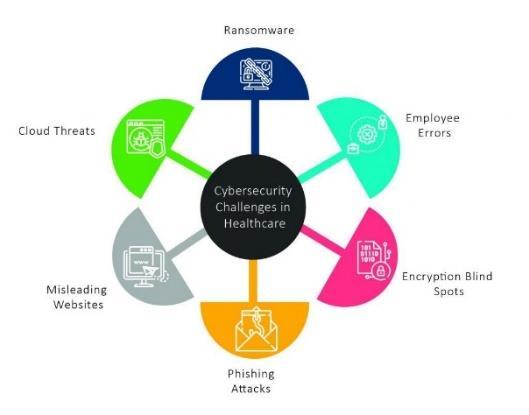
Fig2.1.Risksassociatedwiththehealthcareindustry[16]
The author emphasizes how crucial it is to consider elements like an organization's online presence, the kind of information it manages, and the scope of its patients. Theseelementsarecrucialindecidingthecost,conditions, and scope of cyber insurance plans. The dynamic and quickly changing nature of cyber threats makes customization even more difficult, so insurance providers must keep up with the most recent risks and vulnerabilities.Theinterdependenceofrisksandconcerns about moral hazard are two important aspects of cyber risk and insurance that [17] address to add to the conversation. The authors identify potential obstacles to the wider adoption of cyber insurance as the dependency and the correlation of cyber risks. Because many systems havesimilardesignsandsharecommoncomponents,they are vulnerable to similar kinds of losses, which leads to theirinterdependence.
Intentionalcyberattacksaresubjecttoacomplicatedlegal environment in the quickly developing world of cyberspace. The complexity of this environment is clarified by [3], who highlight the lack of an international body responsible for regulating cyberspace. When it comes to handling cyber threats that cut across national boundaries,thisgapinglobalgovernancepresentsserious difficulties. Payne draws attention to the idea of state authorization, pointing out that states can freely bind themselvestodutiesbyexpressorimplicitconsent.Inthe lack of a formal international legal body, legal obligations arise from both explicit consent signing a treaty, for example andimplicitconsent livinguptogenerallegal
and customary principles. In this framework, intentional cyberattacksarecompared toestablishedlegal principles, like the rule against using force and the non-intervention principle.Itiscomplicatedandfarfromstraightforwardto analyzethesecyberattacksconsideringthelawscurrently in place. Payne's research raises important questions regarding matters such as sovereignty over territory in digital spaces and highlights the difficulties in translating standard legal principles to the ambiguous world of the internet. In conclusion, the legal landscape surrounding cyberrisksisstillcomplex,withissuesstemmingfromthe lack of a centralized regulatory authority, the difficulty of applyingconventionallegalstandardstocyberattacks,and thechallengeofcontrollingtheglobalimpactofthedigital world. International organizations' efforts to bridge this regulatorygaphighlightthecontinuingsearchforastrong legal framework that can handle the complex aspects of cybersecurityinhealthcareglobally[3].
As with the growing adoption of IoT-based systems in healthcare systems, there is a need for research and investigation into security risks and privacy concerns. Medical equipment can be more secure and reliable through more focused research and briefly overlooked challenges and risks. Recent studies have conducted the healthcare technology and data privacy, which form an environment full of challenges ranging from both public policy to industry relations. [18] delve into the realm of intelligent healthcare systems and investigate the potential of deep learning methods to bolster their security. Deep learning, a subset of artificial intelligence, has proven to be an effective tool in identifying complex patternsandanomalieswithinvastdatasets.Byleveraging this technology, healthcare systems can more accurately detect and prevent security breaches, ultimately safeguarding sensitive patient information [18]. The goal ofThilagametal.'s[18]integrationofalgorithmsbasedon deep learning into healthcare frameworks is to improve thesystem'scapacitytoidentifyandstoppossiblesecurity breaches. Ali et al. [19] concentrate on the incorporation of blockchain-based technologies into intelligent healthcaresystemsinanadditionalway.
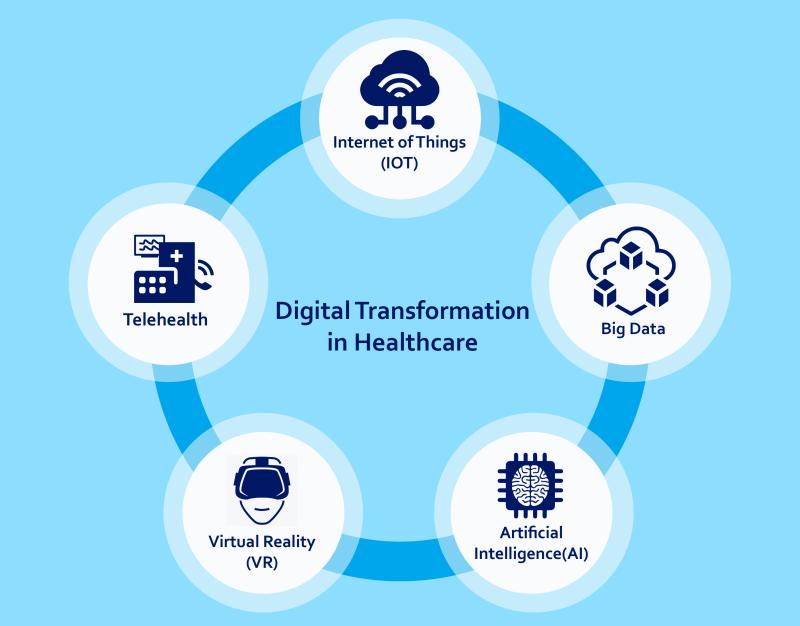
Fig2.2.DigitalHealthcareTransformation[26].
The rapid implementation of digital health services has beencatalyzedbythepandemic,underscoringthebenefits
International Research Journal of Engineering and Technology (IRJET) e-ISSN: 2395-0056
Volume: 11 Issue: 09 | Sep 2024 www.irjet.net p-ISSN: 2395-0072
for both healthcare providers and patients. However, this swift adoption has also increased the vulnerability of the healthcareindustrytocyberattacks.Withtheproliferation of digital health data on the dark web, cybersecurity threatshaveescalated,withransomwareattacksexpected to quadruple by 2021 [23]. Hospital administrators are realizing more and more howimportant itis to safeguard patient data, but in comparison to other industries, the healthcare sector invests very little money in cybersecurity. As cyberattacks pose serious operational risks, matching cybersecurity measures with healthcare system vulnerabilities is crucial for maintaining the integrity and resilience of global healthcare systems [24] [25].
The final section discusses new cybersecurity risks in the healthcare sector, emphasizing ransomware and malware's ability to infect the sector. Considering potential disruptions to patient care, disaster response, and public health protection, the review highlights the critical gap in preparedness for ransomware attacks. Realizing the seriousness of these new threats, it exhorts healthcare organizations to strengthen defenses against low-probability,high-impactevents.Theliteraturereview highlights the necessity for continued research and preventativemeasurestosecuresensitivehealthcaredata by offering an extensive overview of the complex issues and modern solutions in healthcare cybersecurity. However, there is a significant lack of research on how healthcare organizations can effectively tackle cybersecuritychallenges.Asaresult,thisstudyaimstofill this gap by exploring the role of cybersecurity in healthcare and suggesting practical strategies to mitigate cyber threats. By exploring key cybersecurity features, technologies, and responsibilities within the healthcare industry, the study seeks to provide insights into enhancing cybersecurity practices tailored to the unique needs of healthcare organizations. Furthermore, this research will focus on developing effective measures to addresstheinterdependenceofcyberrisks,thechallenges inunderwritingcyberinsurancepolicies,andthechanging legal environment related to ethical risks and cyber threats in healthcare. The main goal of this study is to improvecybersecuritypracticesinthehealthcareindustry by addressing the existing gaps. The study aims to safeguard sensitive healthcare data and provide recommendations for best security practices that can be implemented. The ultimate objective of this project is to contribute to the ongoing efforts to strengthen cybersecurityinthehealthcaresector.
In this section, we outline the various sources of secondary data utilized for the systematic literature review on cybersecurity within the healthcare sector. The dataanalysisinvolvessamplearticlesandresearchpapers
obtained from both general and specialized databases renowned for their extensive coverage of scholarly literatureincybersecurityandhealthcare.
3.1 General Databases:
Google Scholar: Google Scholar is a well-known
academic search engine. It also catalogs books, conference papers, and other scholarly works including articles. The Internet resource covers many disciplineslikecybersecurityandmedicalcare.
SCOPUS: SCOPUS is a multidisciplinary database covering patents, trade publications, conference proceedings, and scholarly journals. In this way, it offers extensive literature coverage in healthcare and cybersecurity facilitating comprehensive analysis of researchintheseareas.
3.2
JSTOR: JSTOR is an online resource that preserves
academic publications, books, and original materials fromvariousfields.Itprovidesaccesstoahugelibrary of peer-reviewed literature, which includes publicationsabouthealthcareandcybersecurity.
ERIC (Education Resources Information Centre): A popular database called ERIC indexes materials from journals, research reports, conference papers, and other sources that are relevant to education. ERIC covers research pertinent to cybersecurity awareness and training in healthcare education programs, despiteitsprimaryfocusbeingoneducation.
3.3 Bibliographic Databases
Thesearchstrategyinvolvedqueryingthreebibliographic databases known for their extensive coverage of healthcare-relatedliterature:
PubMed/MEDLINE: TheNationalLibraryofMedicine
maintainsPubMed,a freesearchenginethatprovides access to the MEDLINE database of biomedical literature. It offers thorough coverage of research on healthcare, including sections on cybersecurity problemsthathaveanimpactontheindustry.
The CINAHL, or Cumulative Index to Nursing and Allied Health Literature: Indexing publications on nursing and allied health, the CINAHL is one of the unique or specialized databases. It consists of articles from medical journals, nursing journals, and related fields that provide insightful data on cybersecurity problemsfacedbyhealthcareprofessionals.
Web of Science (WoS): The recognized literature in various disciplines is indexed by cross-disciplinary citationdatabaseWebofScience.Itprovidesscholarly resources, conference proceedings, and research papersofthebestquality,thusallowingustoexamine
International Research Journal of Engineering and Technology (IRJET) e-ISSN: 2395-0056
Volume: 11 Issue: 09 | Sep 2024 www.irjet.net p-ISSN: 2395-0072
in detail cyber security trends in the healthcare industry.
Eight different search strings were used throughout the chosen databases during the search process. For collaborative filtering, the search results have been exportedfromeachoftheplatformsandimportedintothe "Rayyan" platform. Rayyan provides features like blind review, which reduces the possibility of bias by guaranteeing that the results are hidden from other researcherswhiletheyarebeinganalyzed.Everyimported result from WoS, CINAHL, and PubMed was examined separately using the preset inclusion and exclusion standardslistedinthemethodologysection.
Thetechniquesofsearchappliedinthecurrentstudywere specifically designed to ensure that national and international cybersecurity healthcare states are fully comprehended. This study aimed to recognize the main tendencies and research directions by a systemic search throughseveralbibliographicdatabasesusingappropriate keywords and queries. The purpose of this method is to obtain an abundance of articles on cybersecurity in the current healthcare industry and to help readers get the overall picture of it. Eight different individual search queries were constructed for the search performed that were all distinct to select out the different sub-topics of the cybersecurity problem in the healthcare industry. They mentioned a wide range of subjects relatedthat needed to be covered, including organizational policies, socialengineering,cybersecurityawareness,anditsrisks.
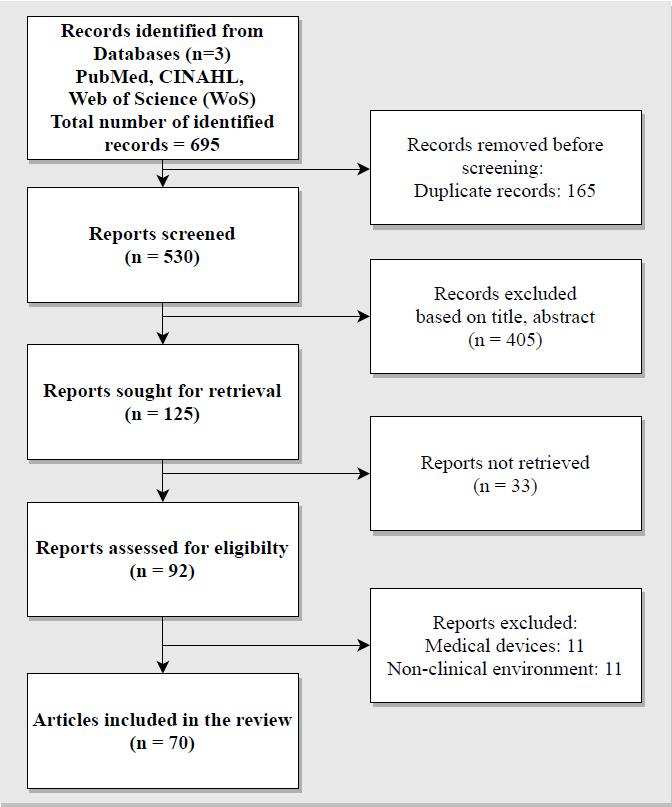
Fig3.1:ABriefOverviewoftheProcessofFinding Literature
Figure 3.1 shows a graphic depiction of the literature search procedure. This example shows how a methodical
approachwasusedtofind,evaluate,andchoosepertinent articlestoincludeinthesystematicreview.
Three well-known bibliographic databases were searched throughout: the Web of Science (WoS), CINAHL (Cumulative Index to Nursing and Allied Health Literature), and PubMed®/MEDLINE. A wider range ofmultidisciplinary research was accessible through the Web of Science, while PubMed and CINAHL were chosen dueto theirextensivecoverageoftheliteratureonhealth topics.
Theeightqueriesusedinthesearchwereasfollows:
Query 1: Human-related Cybersecurity Training
MeSHTerms:Human
Keywords: Cybersecurity, training, Information security awareness
Filters: Articles published from 2010 to 2021, English language
Search Strategy: MeSH term for "Human" combined with TIABsearchesforspecifiedkeywords.
Query 2: Human-related Cybersecurity Awareness
MeSHTerms:Humans
Keywords:Cybersecurity,securityawareness,Information securityawareness
Filters: Articles published from 2010 to 2021, English language
Search Strategy: MeSH term for "Humans" combined with TIABsearchesforspecifiedkeywords.
Query 3: Cybersecurity Awareness in Healthcare
Keywords: Cybersecurity, human-related awareness, healthcare
Filters: Articles published from 2010 to 2021, English language
Search Strategy: Combination of keywords related to "Cybersecurity,""human,""awareness,"and"healthcare."
Query 4: Social Engineering and Organizational Policy in Healthcare Cybersecurity
Keywords: Healthcare, social engineering, Organizational policy,cybersecurity
Filters: Articles published from 2010 to 2021, English language
Search Strategy: Combination of keywords related to "Healthcare,""socialengineering,""Organizationalpolicy," and"cybersecurity."
Query 5: Cybersecurity and Social Engineering in Healthcare
Keywords: Cybersecurity, social engineering, healthcare professionals
Filters: Articles published from 2010 to 2021, English language
Search Strategy: Combination of keywords related to "Cybersecurity," "social engineering," and "healthcare professionals."
International Research Journal of Engineering and Technology (IRJET) e-ISSN: 2395-0056
Volume: 11 Issue: 09 | Sep 2024 www.irjet.net p-ISSN: 2395-0072
Query 6: Cybersecurity Training and Awareness in Healthcare
Keywords: Cybersecurity, Healthcare, social engineering, training,awareness
Filters: Articles published from 2010 to 2021, English language
Search Strategy: Combination of keywords related to "Cybersecurity," "Healthcare," "social engineering," "training,"and"awareness."
Query 7: Healthcare Training and Awareness in Cybersecurity
Keywords:Healthcare,Cybersecurity,training,awareness Filters: Articles published from 2010 to 2021, English language
Search Strategy: Combination of keywords related to "Healthcare,""Cybersecurity,""training,"and"awareness."
Query 8: Comprehensive Search String
Keywords:Cybersecurity*,Awareness,Healthcare
Filters: Articles published from 2010 to 2021, English language
Search Strategy: Predefined search string combined with language and document type filters, conducted across multipleindexes.
These research questions were thoughtfully designed to ensure relevance to the study's goals while focusing on cybersecurity and healthcare concepts. The search sought toretrievearticlesthatmetthepredeterminedcriteria by utilizing TIAB (Title/Abstract) searches, MeSH (Medical SubjectHeadings)terms,andlanguageanddocumenttype filters.
The number of articles returned for each search query determined the variation in the search query results. For instance, query 2 yielded 217 articles while query 1 only produced 17. The most comprehensive search, query 8, yielded221articlesfromtheWebofSciencerepository.A totalof695articleswerereturnedforallqueries.
To conduct a systematic review, it is crucial to establish specific inclusion and exclusion criteria for selecting relevant literature. These criteria act as a filter, ensuring thatthestudiesincludedinthereviewmeettheobjectives andsignificantlycontributetotheevidencesynthesis.The study's inclusion and exclusion criteria were applied systematically and comprehensively to facilitate an organizedandthoroughfilteringprocess.
1) Inclusion Criteria:
1. Articles on Cyber Threats/Attacks: Studies that detail cyber threats or attacks directed towards hospitals and other clinical settings fall under this criterion. The nature and consequences of cybersecurity breaches in the healthcare industry are discussed in these articles, which add to our understanding of the difficulties that healthcare organizationsconfront.
2. Identification of Vulnerabilities: This criterion includes studies pinpointing weaknesses cybercriminals exploit. Comprehending these vulnerabilities is imperative to formulate efficacious cybersecurity tactics and alleviate hazards to patient informationandhealthcareinfrastructure.
3. Organizational Cybersecurity Risk Assessment: Research on organizational cybersecurity risk assessment in healthcare settings is included in this criterion.Thesestudiesprovideinsightfulinformation about the procedures and approaches used to evaluate and control cybersecurity risks, helping healthcareorganizationsdevelopbestpractices.
4. National Case Studies: This criterion includes articles that discuss national case studies focusing on cyber defense tactics. National case studies facilitate comparative analyses and the identification of broad trends by offering context-specific insights into cybersecuritychallengesandresponsesatthenational level.
2) Exclusion Criteria:
1. Irrelevance to Research Questions: Excluded studiesdonotdirectlyaddresstheresearchquestions thatformedtheframework forthesystematicreview. This criterion makes sure that the literature chosen for analysis closely matches the goals of the research, whichimprovesthereview'srelevanceandcoherence.
2. Language Limitation: Articles composed in languagesotherthanEnglisharenotconsidered.This criterion guarantees accessibility for the research team while facilitating effective data extraction and analysis.
3. Duplicate Studies: Excluded studies are those that have been published before to avoid duplication and expedite the review process. The analysis and apparent volume of evidence may be distorted by duplicate studies, jeopardizing the review's objectivity.
4. Lack of Relevance to Clinical Environments: Excluded from consideration are studies that have no direct connection to hospitals or other clinical settings. This criterion guarantees that the literature chosen for examination concentrates exclusively on cybersecurity issues and their resolutions in healthcareenvironments.
5. Focus on Medical Devices: Articlesthatonlyaddress medical device cybersecurity are not accepted. Although crucial, this review's focus is on more general organizational cybersecurity issues in the healthcare industry; it does not address the cybersecurityofmedicaldevices.
6. A Focus on Medical Device Patient Safety: Research that primarily addresses patient safety concerns with medical devices and relevant cybersecurity technologiesisnotconsidered. While patientsafetyis a critical component of healthcare cybersecurity,
International Research Journal of Engineering and Technology (IRJET) e-ISSN: 2395-0056
Volume: 11 Issue: 09 | Sep 2024 www.irjet.net p-ISSN: 2395-0072
articlesthatsolelyaddressthis topicarenotincluded inthisreview.
7. Technical Development without Healthcare Professional Involvement: Research that only discusses technological advancements (software, algorithms,etc.)withoutconsultingmedicalexpertsis notincluded.Byusingthiscriterion,itisensuredthat the literature chosen for analysis addresses cybersecurity challenges from the practitioner's perspective and is directly relevant to the healthcare context.
Cooperationamonghealthcarestakeholdersisparamount in solving cybersecurity issues and exchanging best practices. Healthcare companies should collaborate with government departments, business associates, cybersecurity suppliers, and universities to share lessons learned, exchange threat intelligence, and create cooperative projects aimed at enhancing cybersecurity resilience. Establishing industry-wide cybersecurity standards and certification programs ensures uniformity andinteroperabilityamonghealthcareorganizations.
3.3.1 Technical Recommendations:
Implement Robust Access Controls: Healthcare organizations need to implement a least-privilege accessmodel.Thismodelrestrictsuseraccesstoonly theresourcesanddata necessarytoperformtheirjob duties.Role-basedaccesscontrols(RBAC)canbeused to assign permissions based on defined roles and responsibilities.Thisensuresthatusersonlyhavethe necessary privileges to perform their duties. Additionally, advanced authentication mechanisms such as biometrics, smart cards, or token-based authenticationcanbeusedtoenhanceaccesscontrols andpreventunauthorizedaccesstosensitivesystems and data. Continuous monitoring and auditing of access logs can help in identifying and preventing unauthorized access attempts. This allows organizations to respond promptly to potential security incidents and minimize the risk of data breaches.
Encryption of Data: Healthcare organizations have a responsibility to protect sensitive data from unauthorizedaccessordisclosure.Onewaytodothis is by encrypting such data using strong encryption algorithms like AES (Advanced Encryption Standard) or RSA (Rivest-Shamir-Adleman), both at rest and in transit.Thisensuresthatevenifdataisinterceptedor compromised, unauthorized parties cannot read or use it. Additionally, organizations should implement key management practices to securely store and manage encryption keys, thereby ensuring that only authorized personnel can access and decrypt such data as needed. It is also important for organizations to conduct regular encryption audits and compliance checks to ensure that encryption policies and
procedures are being followed and that encryption mechanismsremaineffective.
The distribution of publications categorized by year of publicationisasfollows:
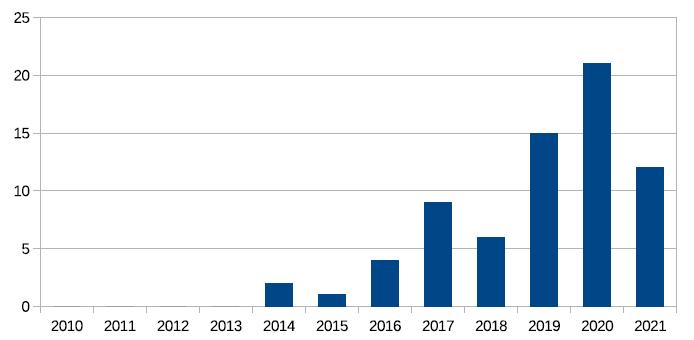
Fig4.1:Theselected70articlesgroupedbyyearof publication.
Percentage of published articles related to the Research
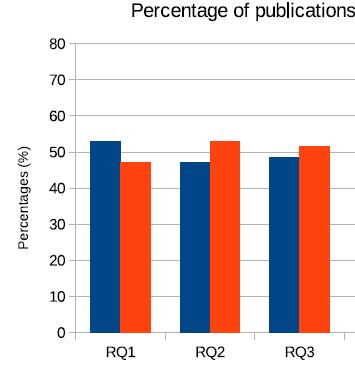
>60%relevance
<50%relevance
Fig4.2:Illustratestherelevanceofarticlesinaddressing theresearchquestions.
Afterdiscussingthedistributionofpublicationsbyyear,it is essential to examine the relevance of the articles in addressing the research questions posed in the study. Fig 4.2 provides a graphical representation of the percentage of published articles categorized based on their relevance totheresearchquestions.
Upon analysis of Fig 4.2, it is evident that a significant proportion of the published articles, over 60%, demonstrate high relevance to the research questions. This indicates that a substantial portion of the existing literature effectively addresses the key objectives and inquiries outlined in the study. These articles offer valuableinsights,analyses,andfindingsthatcontributeto advancing knowledge and understanding in the field of patient privacy and data security in healthcare. Conversely, there is a smaller percentage of articles, less than 50%, that exhibit lower relevance to the research questions. Overall, Figure 4.2 emphasizes the importance
International Research Journal of Engineering and Technology (IRJET) e-ISSN: 2395-0056
of determining the relevance of published articles in answering research questions. By identifying and prioritizing sources that are closely related to the study's objectives,researcherscanensurethequalityandrigorof their research findings, ultimately contributing to the advancementofknowledgeandunderstandinginthefield ofhealthcarecybersecurity.
Percentage of publication in journal/ conference includedinResearchreview.
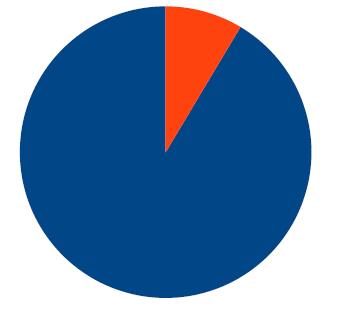
Journal(91.43%) Conferences(8.57%)
Fig 4.3: The distribution of article types among the 70 publications included in the systematic review consists of 6conferencepapersand64journalpapers.
In addition to determining the relevance of articles to researchquestions,itiscriticaltoexaminethedistribution of publication types among the articles included in the systematic review. Figure 4.3 depicts the percentage of journalandconferencepapersincludedinthereview.
AccordingtoFig4.3,themajorityofpublicationsincluded inthesystematicreviewarejournalpapers,accountingfor approximately 91.43% of the total. This indicates that a substantial portion of the literature relevant to the researchquestionsispublishedinpeer-reviewedjournals. Journal papers are often considered to undergo rigorous peer review processes, which enhance the credibility and reliability of the research findings presented in these publications.
Usingrankingmetricsmakesitpossibletoassessarticles' relevanceandcorrelationtothemaingoalsoftheresearch in a more sophisticated way. Using this method, the systematic literature review becomes more robust and reliable, and only highly relevant and influential research is incorporated into the analysis. Additionally, the application of ranking metrics makes the evaluation processtransparentandmethodical,allowingresearchers to recognize and rank the articles that have the greatest impactonthe bodyofknowledge regardingcybersecurity inhealthcare.
The healthcare sector is going through a major digital revolution, utilizing technology to increase operational effectiveness, improve patient care, and facilitate professional communication. However, this change has also made healthcare organizations more vulnerable to
various cybersecurity risks, compromising patient confidentialityandorganizational integrity. Our studyhas thoroughly examined the cybersecurity issues facing the healthcare industry, emphasizing how important it is to have strong cybersecurity defenses. Our thorough examination of published literature from reliable databases, including PubMed/MEDLINE, CINAHL, and Web of Science, has allowed us to recognize important patterns and weaknesses that healthcare organizations must deal with. The growing industry recognition of cybersecurity's importance is demonstrated by the increasing frequency of research publications about cybersecurity. Attacks using ransomware and phishing have become major concerns, highlighting thevulnerabilitiespresentinhealthcaresystems.
To protect patient data and organizational integrity, our research concludes that it is vitally important to advance cybersecurity measures in the healthcare industry. To create and execute successful cybersecurity strategies, stakeholders including technology vendors, legislators, and healthcare providers must work together. By addressingcurrentproblemsandleveragingtechnological advancements,healthcareorganizationscanlowertherisk ofcyberattacksandcontinueto providesafeand effective patientcareinthedigitalage.
[1]. Cartwright, A.J., 2023. The elephant in the room: cybersecurity in healthcare. Journal of Clinical MonitoringandComputing,pp.1-10.
[2]. Kiser, S. and Maniam, B., 2021. Ransomware: Healthcare industry at risk. Journal of Business and Accounting,14(1),pp.64-81.
[3]. Payne,B.K.,He,W.,Wang,C.,Wittkower,D.E.andWu, H., 2021. Cybersecurity, technology, and society: Developing an interdisciplinary, open, general education cybersecurity course. Journal of InformationSystemsEducation,32(2),pp.134-149
[4]. Nifakos, S., Chandramouli, K., Nikolaou, C.K., Papachristou, P., Koch, S., Panaousis, E. and Bonacina, S.,2021.Influenceofhuman factorsoncybersecurity within healthcare organizations: A systematic review. Sensors,21(15),p.5119.
[5]. Martin,G.,Martin,P.,Hankin,C.,Darzi,A.andKinross, J., 2017. Cybersecurity and healthcare: how safe are we? Bmj, 358
[6]. Garcia-Perez, A., Cegarra-Navarro, J.G., Sallos, M.P., Martinez-Caro, E. and Chinnaswamy, A., 2023. Resilience in healthcare systems: Cyber security and digitaltransformation.Technovation,121,p.102583.
Volume: 11 Issue: 09 | Sep 2024 www.irjet.net p-ISSN: 2395-0072 © 2024, IRJET | Impact Factor value: 8.315 | ISO 9001:2008 Certified Journal | Page916
International Research Journal of Engineering and Technology (IRJET) e-ISSN: 2395-0056
Volume: 11 Issue: 09 | Sep 2024 www.irjet.net p-ISSN: 2395-0072
[7]. Dameff,C.,Tully,J.,Chan,T.C.,Castillo,E.M.,Savage,S., Maysent, P., Hemmen, T.M., Clay, B.J. and Longhurst, C.A., 2023. Ransomware attack associated with disruptionsatadjacentemergencydepartmentsinthe US. JAMA Network Open, 6(5), pp.e2312270e2312270.
[8]. MacColl, J., Hüsch, P., Mott, G., Sullivan, J., Nurse, J.R., Turner,S.andPattnaik,N.,2024.Ransomware:Victim Insights on Harms to Individuals, Organisations and Society.
[9]. Kruse,C.S.,Frederick,B.,Jacobson,T.,&Monticone,D. K. (2017). Cybersecurity in healthcare: A systematic reviewofmodernthreatsandtrends.Technologyand health care: Official Journal of the European Society for Engineering and Medicine, 25(1), 1–10. https://doi.org/10.3233/THC-161263
[10]. Javaid, M., Haleem, A., Singh, R.P., & Suman, R. (2023).CyberSecurityandApplications.
[11]. Coventry, L. and Branley, D., 2018. Cybersecurity in healthcare: A narrative review of trends, threats andwaysforward.Maturates,113,pp.48-52.
[12]. Tully, J., Selzer, J., Phillips, J.P., O'Connor, P. and Dameff, C., 2020. Healthcare challenges in the era of cybersecurity.Healthsecurity,18(3),pp.228-231.
[13]. Pfleeger, S.L. and Caputo, D.D., 2012. Leveraging behavioral science to mitigate cyber security risk. Computers&Security,31(4),pp.597-611.
[14]. Schneier, B., CORPORATE SECURITY THREATS WITHIN THE COMMUNICATION ASPECT. Nauka i tehnologija,p.69.
[15]. Korpela, K., 2015. Improving cyber security awarenessandtrainingprogramswithdata analytics. Information Security Journal: A Global Perspective, 24(1-3),pp.72-77.
[16]. Biener, C., Eling, M. and Wirfs, J.H., 2015. Insurability of cyber risk: An empirical analysis. The Geneva Papers on Risk and Insurance-Issues and Practice,40,pp.131-158.
[17]. Baer, W.S. and Parkinson, A., 2007. Cyberinsurance in its security management. IEEE Security&Privacy,5(3),pp.50-56.
[18]. Geetha,R.andThilagam,T.,2021.Areviewonthe effectiveness of machine learning and deep learning algorithms for cyber security. Archives of Computational Methods in Engineering, 28, pp.28612879.
[19]. Ali, A., Rahim, H.A., Pasha, M.F., Dowsley, R., Masud, M., Ali, J. and Baz, M., 2021. Security, privacy, and reliability in digital healthcare systems using blockchain.Electronics,10(16),p.2034.
[20]. Kumar, S., Biswas, B., Bhatia, M.S. and Dora, M., 2021. Antecedents for enhanced level of cybersecurity in organisations. Journal of Enterprise InformationManagement,34(6),pp.1597-1629.
[21]. Kute, S.S., Tyagi, A.K. and Aswathy, S.U., 2022. Security,privacyandtrustissuesininternetof things and machine learning based e-healthcare. Intelligent Interactive Multimedia Systems for e-Healthcare Applications,pp.291-317.
[22]. Drew, J., 2012. Managing cybersecurity risks. JournalofAccountancy,214(2),p.44.
[23]. Williams, C.M., Chaturvedi, R. and Chakravarthy, K.,2020.Cybersecurityrisksinapandemic.Journalof medicalInternetresearch,22(9),p.e23692.
[24]. Morgan, G. and Gordijn, B., 2020. A care-based stakeholder approach to ethics of cybersecurity in business.Theethicsofcybersecurity,21,pp.119-138.
[25]. Weber, K. and Kleine, N., 2020. Cybersecurity in health care. The Ethics of Cybersecurity, 21, pp.139156.
[26]. Pranggono, B. and Arabo, A., 2021. COVID‐19 pandemic cybersecurity issues. Internet Technology Letters,4(2),p.e247.
[27]. Thamer, N. and Alubady, R., 2021, April. A survey of ransomware attacks for healthcare systems: Risks, challenges, solutions and opportunity of research. In 2021 1st Babylon International Conference on Information Technology and Science (BICITS) (pp. 210-216).IEEE.
[28]. Montasari, R., 2023. Cyber Threats and the Security Risks They Pose to National Security: An Assessment of Cybersecurity Policy in the United Kingdom.CounteringCyberterrorism:TheConfluence of Artificial Intelligence, Cyber Forensics and Digital PolicinginUSandUKNationalCybersecurity,pp.7-25.
[29]. Thomasian, N.M. and Adashi, E.Y., 2021. Cybersecurity in the internet of medical things. Health PolicyandTechnology,10(3),p.100549.
International Research Journal of Engineering and Technology (IRJET) e-ISSN: 2395-0056
Volume: 11 Issue: 09 | Sep 2024 www.irjet.net p-ISSN: 2395-0072
Appendix: LIST OF ABBREVIATION
PubMed PublicMedline
MEDLINE MedicalLiterature
AnalysisandRetrievalSystemOnline
CINAHL CumulativeIndextoNursingand AlliedHealthLiterature
IT InformationTechnology
DevOps DevelopmentOperations
DevSecOps DevelopmentSecurity Operations
ICT Informationand
CommunicationTechnology
AI ArtificialIntelligence
ML MachineLearning
NLP NaturalLanguage Processing
IoT InternetofThings
EDR EndpointDetectionand Response
COVID CoronavirusDisease
EHRs ElectronicHealth Records
U.S UnitedStates
HCA HealthcareAssistant
NHS NationalHealthService
HIPAA HealthInsurance PortabilityandAccountabilityAct
GDPR GeneralDataProtection Regulation
PHI ProtectedHealth Information
SCOPUS ScientificCitationIndex Expanded
JSTOR JournalStorage
ERIC EducationResources InformationCentre
WoS WebofScience
BIOGRAPHIES

Dr. Priyadarshini Pattanaik is currently a Lecturer at the Berlin SchoolofBusinessandInnovation, specializing in quantitative analysis and artificial intelligence. She is expert in deep neural networks for visual computing, with a focus on medical image analysis and disease detection. Conducted advanced research in France at IMT Atlantique and Telecom Sudparis on microscopy reconstruction and musculoskeletal joint analysis, collaborating with academic and industrial partners.Completed a Ph.D. in 2019, specializing in machinelearningforearlymalaria detectionusingbloodsmearimage classification. Authored numerous publications in high-impact SCI and Scopus-indexed journals and conferences.


Sapna Kumari, an IT enthusiast with a strong background in Computer Systems and a specialization in IT Security Management. She completed my bachelor’s in computer systems, whereshehonedtechnicalskillsin software development, system architecture, and networking. Recently, she has taken her passion for technology a step further by earning my Master's in IT Security Management, focusing on cybersecurity, risk assessment, andsafeguardingdigitalassets.