
International Research Journal of Engineering and Technology (IRJET) e-ISSN: 2395-0056
Volume: 11 Issue: 09 | Sep 2024 www.irjet.net p-ISSN: 2395-0072

International Research Journal of Engineering and Technology (IRJET) e-ISSN: 2395-0056
Volume: 11 Issue: 09 | Sep 2024 www.irjet.net p-ISSN: 2395-0072
Ar.Prashant Kumar Jatariya, Ar.Satyam Shukla, Dr.Anjali Patil
1Architect,Graduated from Bundelkhand University, Jhansi, UP, India
2 Architect and Urban Planner, Post Graduated from CEPT University, Ahmedabad
3 Architect and Urban Planner, Post Graduated from COEP Technological University, Pune, Maharashtra, India
Abstract - Theroleoftechnologyinthedevelopmentofsmart cities is transformative, driving innovation across various urbandomains.Byintegratingadvancedtechnologiessuchas the Internet of Things (IoT), artificial intelligence (AI), and data analytics, smart cities enhance efficiency, sustainability, and quality of life. Technology optimizes resource management, improves infrastructure, and facilitates realtime data-driven decision-making. It enhances public safety, streamlines transportation, and promotes environmental sustainability through smart grids, waste management systems,andenergy-efficientbuildings.Assmartcitiesevolve, addressing challenges related to privacy, security, and equitable access is crucial..
Key Words: SmartCities,Technology,SmartCityChallenges, SmartCityOpportunities.
1.INTRODUCTION
A smart city is a blend of Infrastructure and Technology playingtheirrespectiverolesincreatingacleanandenergy efficient place with quick and easy access to services and digitizationofinformation. Communication Technologiesto create communication network between the citizens and Government. ICT helps the Government analyzing the demand pattern of the state and thus creating a pool of resources to address the same online. The medium of communicationinacommunityhelpsincreatingacollective intelligencewhichcanbedeployedforresourceoptimization withthehelpofanalyticsanddeeplearning.
Promotingeconomicgrowth
Givingthecitizensa“smart”livingenvironment
Beinghighlyoperationalandefficient
Improvingtheoverallqualityoflifeofthecitizens.
1.1 National Scenario
IntheUnitedStates,thedevelopmentandimplementation ofsmartcitytechnologyvarywidelyacrossdifferentregions, reflectingadiversesetofprioritiesandresources.Here’san overviewofthenationalscenarioofsmartcitytechnologyin theU.S.:
Smart Grids: Utilities across the country, such as Pacific Gas and Electric (PG&E) and Con Edison, are deploying smartgridtechnologiestoenhanceenergydistributionand integraterenewableenergysources.
Energy-efficient Buildings: Cities like Boston and San Franciscohaveimplementedsmartbuildingtechnologiesto reduceenergyconsumptionandimprovesustainability.
Herearethekeyconcernsfortechnologyinsmartcities,
1. Privacy: Risks of personal data misuse and surveillance.
2. Security: Vulnerability to cyberattacks and data breaches.
3. Equity: Unequal access to technology, potentially wideningthedigitaldivide.
4. Data Management: Challenges in handling and protectingvastamountsofdata.
5. Interoperability: Difficulty integrating diverse systemsandtechnologies.
6. Cost: High initial investments and ongoing maintenanceexpenses.
2. Objective
Thegoalofthesmartcityinitiativeistoenhancesustainable andcleanenvironment bytheuseofsmartsolutionssuchas data-driven vehicular networks and intelligent lighting systems,amongothers.
ThefollowingarethebasicinfrastructuralaspectsofaSmart City:
1. Asufficientsupplyofwater
2. Uninterruptiblepowersupply
3. Sanitation,whichincludessolidwastemanagement, isimportant.
4. Publictransportationandefficienturban mobility
5. Affordablehousing,primarilyforthepoor
6. DigitalizationandstrongITconnection
7. E-governmentandpublicinvolvementareexamples ofgoodgovernance.
8. Environmental sustainabilityand citizen safety, particularlyforwomen,children,andtheelderly
International Research Journal of Engineering and Technology (IRJET) e-ISSN: 2395-0056
Volume: 11 Issue: 09 | Sep 2024 www.irjet.net p-ISSN: 2395-0072
9. Educationandhealth
10. The emphasis is on environmental and equitable development,tocreateareproduciblemodelthatmay serveasamodelforotheraspiringcommunities.
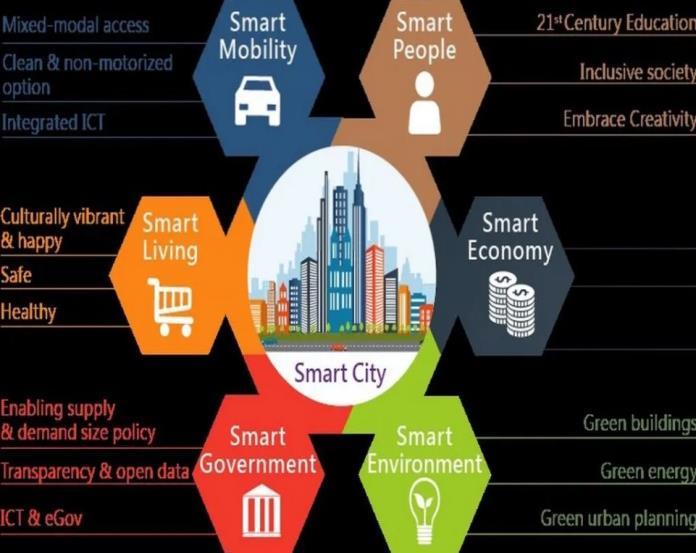
Millionsofpeopleinbigcitiesstartandendtheirworkdays byridingbusesorsittinginlongtrafficjamsintheircars.It’s a routine for many. Studies show that if commutes are longer,itcanleadtohigheranxiety,weightgain,andeven highbloodpressure.Thisiswhymakingutesbetterissuper importantforsmartcities.
3.Literature Review
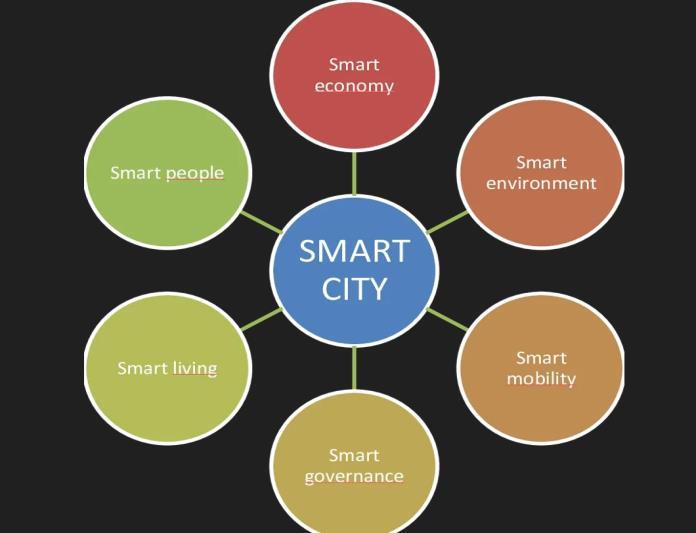
a) Smart City Dimensions
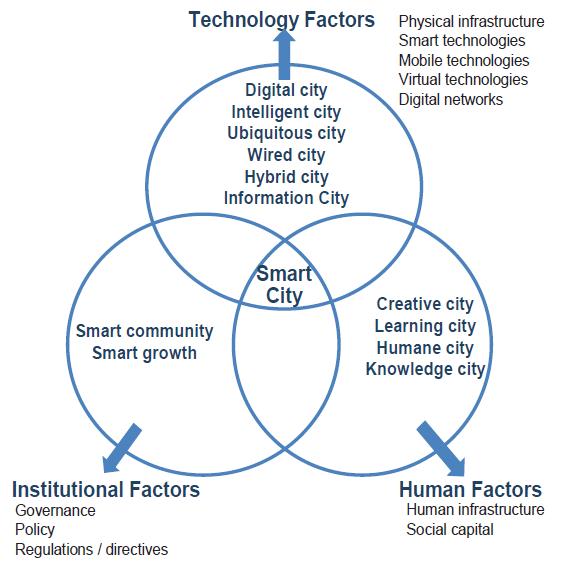
The presence of technology gives the Smart City an opportunitytohavemorecreativity,improvegovernanceand promotethequalityoflife.Thepeopledimensionsegment includesahumancity,aknowledgeablecity.
Thankstotechnology,smartcitiescanbemorecreativeand better at managing things. They’re also great at helping improve how people live. When we talk about people in these cities, we mean they focus on being friendly and knowledgeable cities. It’s all about making life easier and happierforeveryone!
This section discusses a set of factors which make a city smart according to the literature. From the discussion of conceptualvariantsofsmartcityintheprecedingsection,we identify and clarify key components of smart city, and recategorizeandsimplify themintothreecategoriesofcore factors: technology (infrastructures of hardware and software),people(creativity,diversity,andeducation),and institution(governanceandpolicy)
Governance encapsulates collaboration, cooperation, partnership, citizen engagement, and participation Successfulcitiespossessasetofcommonfeatures.Onekey thingisworkingtogether.Differentgroupslikegovernment, businesses, schools, and non-profits should all join forces. Theyalsoneedtocommunicatewellacrossdifferentareas withinaregion.
Thecitygovernmentmustshareideas likebrandingand promotionalidentities witheveryoneinvolved.Thismeans layingoutvisions,goals,andevenplansformakingthecity smarter.It’ssuperimportantthatkeyleaderstakecharge
Volume: 11 Issue: 09 | Sep 2024 www.irjet.net p-ISSN: 2395-0072
(theyreallyneedtochampionthissmartcityidea!)because theirstrongsupportcanhelpmakeeverythingwork.
Leadershipmattersalot,notjustwithinthegovernmentbut alsoinhowitconnectswithcitizens.Wheneveryoneison thesamepage,wonderfulthingscanhappen!
b) Smart Environment
In smart cities, a smart environment refers to the integration of advanced technologies to monitor, manage, andoptimizeurbanecosystems.Thisincludesusingsensors, IoT devices, and data analytics to enhance environmental quality, such as air and water quality, and to improve resourcemanagement,likeenergyandwaste.Thegoalisto create a more sustainable, efficient, and healthier urban environment.
c) Smart water management
Smart water management involves using advanced technologiestooptimizetheuse,distribution,andqualityof waterinurbanareas.Itincludes:
Sensors and IoT: Tomonitorwaterflow,pressure, andqualityinreal-time.
Data Analytics: For detecting leaks, predicting demand,andmanagingresourcesefficiently.
Automated Systems: Tocontrolwatertreatment, distribution,andconservationmeasures.
Smart Metering: For accurate billing and consumption tracking, encouraging water-saving behaviors.
d) Smart waste management
Managingwastesmartlyisreallycool!Withtherighttools, wecanseehowfulltrashbinsare.Whentheygetcloseto beingfull,alertscantellusit'stimetocollectthem.Thisis done by sensors on the bins. They can share waste levels rightaway howneatisthat?
Also, using the Internet of Things (IoT), cities can create apps.Theseappshelppeoplefindoutwhichtrashbinsare freeforthrowingawaytheirwaste.Thiscanmakeeveryday lifeeasierforeveryone.Plus,garbagecollectorswillhavea simplerjobsincetheywon’thavetodealwithoverstuffed binsanymore.It'sallaboutmakingthingsbetterusingIoT& ArtificialIntelligence!
e) Smart Transport systems
smart transportation! It means using different technologies like basic systems for car navigation and trafficlights.Therearealsocontainermanagementsystems and automatic number plate checkers. Don't forget speed camerasthathelpkeepussafe.
Thereareevenappsthatgatherliveinformationfrommany sourcestoimproveourtravelexperience!It’samazinghow allthesetechythingscometogethertomakegettingaround easierandsaferforeveryone!
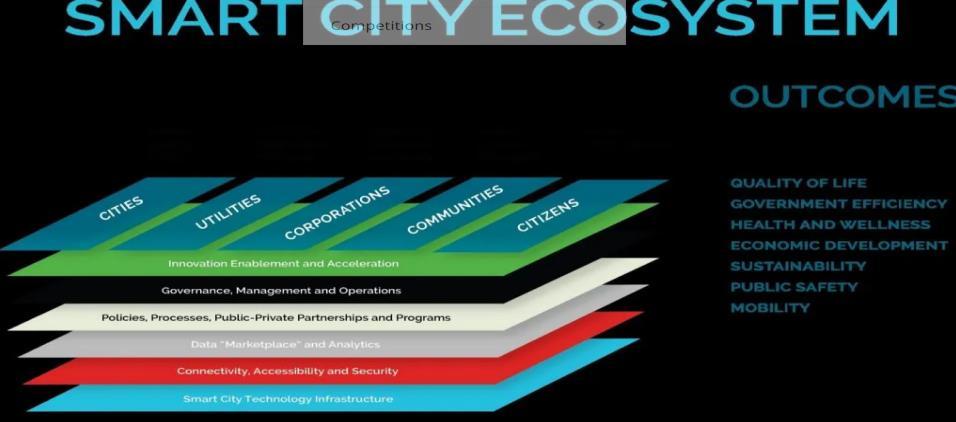
SmartCitiesfocusonwhatreallymatters.Theyaimimprove lifeforeveryone.Alotdifferentstrategiescomeintoplayto create this change. example, they use digital tools, smart planningforcities,working togetherwithbusinesses,and even changing some policies. There’s a big focus on being goodfortheenvironment&fairforallpeople.Theideaisto buildamodelthatothercommunitiescanlookatandlearn from.
Smart Cities Funding
The Smart City Mission would be run as a Centrally Sponsored Scheme (CSS), with the CentralGovernmentproposingtofundittothetuneofRs. 48,000croresoverfiveyears,orRs.100crorepercityeach year on average. The State/ULB would be required to provideanequivalentamountonamatchingbasis;hence,
International Research Journal of Engineering and Technology (IRJET) e-ISSN: 2395-0056
Volume: 11 Issue: 09 | Sep 2024 www.irjet.net p-ISSN: 2395-0072
almostRs.1lakhcroreinGovernment/ULBmoneywillbe accessibleforSmartCityconstruction
Ten Potential Characteristics for India’s Upcoming 100 Smart Cities
1. Information, communications, and technology (ICT)-enabled governance structures: IT-enabled administrationandgovernancewillfullyrulethesmart city. The implementation of integrated technology solutionsthatareeasilyavailableacrossmanydevices to promote access, transparency, speed, engagement, andredressinpublicservicesissometimesreferredto as“smartgovernment.”
2. Besidestechnology,there’salsotalkaboututilities. That includes things like energy, water, trash, & cleaning waste. In future smart cities, you’ll see smart meters, ways to save energy, collecting rainwater, using renewable energy sources, recyclingwastewater,&bettertrashsystems.
3. MeaningfulPPPs:Acrucialfeatureofthesmartcity ideaistheinnovativeuseofpublic-privatepartnerships (PPPs).PPPswillbeutilisednotjusttoprovidemuchneeded financing, but also to ensure that utilities are delivered efficiently and to agreed-upon service-level standards.PPPsmightcoverawiderangeofservices, rangingfromhealthcaretostreetlightingsystems.
4. It’s all about taking charge of their own futures! Being financially stable is super important here. Thisindependencemattersmost.Citiesneedtotap intomanywaystoearnmoney likepropertytaxes &ads andtheyshouldhavetheabilitytoborrow moneylong-termtoo;thinkmunicipalbonds.
5. To“takeresponsibilityfortheirdestinies”in terms offinancialsustainability.Financialfreedomisthemost crucial aspect of this. This is only achievable with a comprehensive and wide tap of all income streams, includingproperty.
6. Citizen-participativelocalgovernment:Encouraging residents to participate enthusiastically in local concerns necessitates careful design of electoral and participatoryprocessesforeverybody.
7. let’s chat about smart cities. A smart city needs sufficient social capital. Without enough social structures,likeschools,hospitals,parks,&shops,it justwon'twork.Itneedsaheartthatbeatsfordaily life! Plus, it needs a working brain and moving hands&feet.
8. Haveyouheardof“walk-to-work”?It’sagreatidea inplacesbuiltfortransit.Butit’snotjustthat!We also need well-connected public transit options. Thisincludesgettingtothestationeasilyandhaving
fewerpeoplewantingtousecars.Oh!Don’tforget aboutelectriccarsandbikepathstoo!
9. Lastly, let’s think green! Reducing the carbon footprintand caring forthe environment issuper important.Weneedparksandgreenspaces lotsof them! No pollution allowed! We should use renewable energy and focus on recycling & conservationaswell.
10. Indiahas5,545urbanagglomerations,whichmeet the minimum population criterion. Class 1 towns (sometimesknownascities)haveadensityof100,000 or more. For a smart city, this should be the minimal populationcut-off.
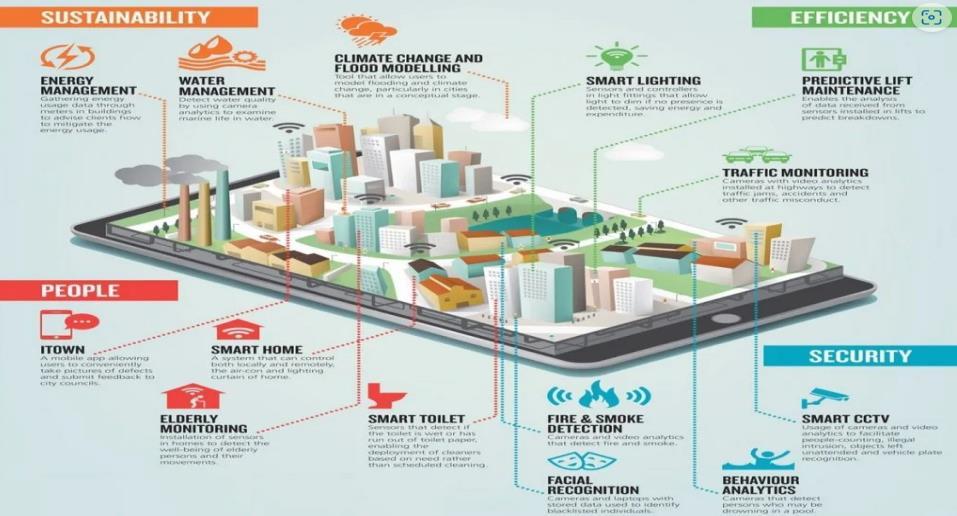
The impact of technology in smart cities is profound and multifaceted,influencingvariousaspectsofurbanlife.Here’s aconciseoverviewofitskeyimpacts:
1) 1. Improved Efficiency:
Resource Management: Technologyoptimizesthe use of resources like water, energy, and public services,reducingwasteandoperationalcosts.
Transportation: Real-time data andsmart traffic management systems enhance traffic flow and reducecongestion.
2) 2. Enhanced Quality of Life:
Safety and Security: Advanced surveillance and emergencyresponsesystemsincreasepublicsafety.
Health and Well-being: Telemedicineandhealth monitoring technologies improve access to healthcare services and personal health management.
3) 3. Sustainability:
Environmental Impact: Smarttechnologieshelpin monitoring and reducing pollution, conserving energy,andintegratingrenewableenergysources.
Waste Management: Smart bins and recycling technologies enhance waste collection efficiency andpromoterecycling.
4) 4. Economic Growth:
Innovation: Technology fosters innovation and attracts investment, creating new business opportunitiesandjobprospects.
Cost Savings: Efficient systems and automated processes lead to long-term cost savings for municipalitiesandresidents.
International Research Journal of Engineering and Technology (IRJET) e-ISSN: 2395-0056
Volume: 11 Issue: 09 | Sep 2024 www.irjet.net p-ISSN: 2395-0072
5) 5. Citizen Engagement:
Participation: Digital platforms and smart applications facilitate better communication betweenresidentsandlocalgovernments.
Access to Services: Improvedaccesstoinformation and services enhances overall citizen experience andsatisfaction.
6) 6. Resilience:
Disaster Management: Earlywarningsystemsand real-time data help in better managing and mitigating the impact of natural disasters and emergencies.
Adaptability: Technologies enablecitiesto adapt more quickly to changes and challenges, such as populationgrowthorenvironmentalshifts.
Cloud Technologies in Smart Cities
Appscanstreamlinetheprocessofmanagingdata.Theterm “cloudtechnologies”canalsomeancloudcomputingthatis thedeliveryofcomputingasaservice.
5G connectivity in smart cities
5Gissuperfast!Itcansenddataat20Gigabitspersecond. That’s100to1000timesquickerthan4G.Crazy,right?The responsetime,orlatency,for5Gwillbejust1millisecond.In contrast, 4G takes 20-30 milliseconds. So, downloading & uploadingloadsofdatawith5Gwillbewayquicker.
How to make implementing smart cities easier
Inthepublicsector,itisoftensafertodotodaywhatyoudid yesterday.Manygovernmentshaveeffectivelyadmittedas muchbyincubatinginnovationhubstochallengethestatus quo. Yet to lead change is to take risks and the media’s ruthless scrutiny of the public sector – which, in many countries,startswiththeassumptionthattaxpayers’money is being wasted – hardly encourages civil servants or politicianstothinkoutsidethebox.
5. CONCLUSIONS
SmartCitiescanreallyhelpwithbuildingabetterfuture.In thesecities,people&institutionswillstaysuperconnected! EverythinginaSmartCityworkstogetherlikeabigteam. Thismeanscitizenscangettogoodserviceswhentheyneed them rightaway.
The cool technologies powering Smart Cities are so important. But it’s not just about the tech; we also need smartfolks&caringcommunitiestomaketheseplacestruly special. For a Smart City to give real value to everyone, thoughtfulplanning&goodgovernancearekey.
Don’tforgetabouttransportsystems,wastemanagement,& healthcare!They’llallbemoreeffectiveandworkbetterfor everyonelivingthere.So,let’slookforwardtotheseamazing placeswherelifecanbeeasier
[1] Lea, Rodger. (2017). Smart Cities: An Overview of the TechnologyTrendsDrivingSmartCities.
[2] www.smartcities.gov.in
[3] www.india.gov.in
[4] www.smartcitiesworld.net
[5] Smart City Technology Trends & Examples (euristiq.com)
[6] Chaudhari, P. (2017). Role of Information CommunicationTechnology(ICT)intheDevelopmentof Smart City. International Journal of Engineering Research in Computer Science and Engineering (IJERCSE).Vol4.271-276.