
International Research Journal of Engineering and Technology (IRJET) e-ISSN: 2395-0056
Volume: 11 Issue: 09 | Sep 2024 www.irjet.net p-ISSN: 2395-0072

International Research Journal of Engineering and Technology (IRJET) e-ISSN: 2395-0056
Volume: 11 Issue: 09 | Sep 2024 www.irjet.net p-ISSN: 2395-0072
Shubham Sitaram Thete1 , Althafs Maiimoon Shaik2 , Pratik Khagesh Jadhav3 , Tapan Satyajit Deshmukh4
1BE Mechanical - SNJB's Late Sau Kantabai Bhavarlalji Jain College of Engineering, Chandwad, Maharashtra
2B.tech Mechanical - Gandhi Institute of Technology and Management, Visakhapatnam, Andhra Pradesh
3BE Mechanical - All India Shri Shivaji Memorial Society's College Of Engineering Pune Maharashtra
4BE Electronics and Telecommunications - Dr. D Y Patil Institute of Technology, Pune, Maharashtra ***
Abstract - Industry 4.0 represents the fourth industrial revolution and is the digital transformation ofproductionand the smart industry markets. In the era of Industry 4.0, emerging technologies such as the Internet of Things (IoT), cloud computing, big data, Blockchain, 5G and digital twins have emerged rapidly. Most of them are used in supply chain management processes, leading tothegrowthof digitalsupply chains. The most used technology is IoT. The most common applications are technologies. combined with IoT, cloud computing and big data analytics. Blockchain is a developing technology, while digital offers Chain twins are an integrated technology that includes simulation. Therefore, this review focuses on these four critical technologies. (e.g. IoT, big data, blockchain, and digital supply chain twins) to explore their principles, applications, andpotentialchallenges. inthedigital supply chain. Additionally, this review also compares the difference between digital supply chains and smart supply. chains and explains their relationship.
Key Words: Digitalsupplychain,smartsupplychain,IoT,big data,blockchainanddigitalsupplychaintwins.
Industry 4.0isa timeoftrulypopularcontent.Itwasfirst introduced in 2011 by a group of representatives from different sectors as part of an action to improve German competitiveness in manufacturing assiduity. Lately, the GermancivilgovernmenthasstatedthatAssiduity4.0will beanintegralpartofthe“High-TechStrategyforGermany 2020”.Assiduity4.0isthedigitalmetamorphosisofartificial demands with smart manufacturing currently at the forefront.Itrepresentsthefourthartificialrevolutioninthe chainofforces(SC),inlogisticsandinseparateandprocess production. Assiduity 4.0 has been verified by numerous experimenterstoprovidesimilarbenefitssuchasproduct stickiness, product diversification, quick response to requests,shorterdeliverytimes,bettercapacityapplication, andothers.IntheeraofAssiduity4.0,emergingtechnologies suchastheInternetofThings(IoT),pallcomputing,bigdata,
blockchain, 5G, and digital halves have rapidly emerged. mostof themare used in theoperational processesofthe forcechain.Assiduity4.0representsanintelligentproduct networkconceptinwhichmachinesandproductsinteract with each other without any mortal control. Industry 4.0 technology,accordingtoIvanovetal.(2019),opensupnew manufacturing strategies based on highly customised assembly systems with flexible manufacturing process design.Thesestrategiesmakeuseofcyber-physicalsystem concepts.Cyber-physicalsystemsmakecoherentjudgements by integrating components of material and informational subsystems. Eventually, SCs developed into dynamically structurednetworksandsystems.DigitalSCshavebecome more prevalent recently due to cyber-physical systems. Academicsandpractitionersarepayingattentiontoissues surrounding digital SC. Moreover, a large number of the technologiesintegratedandusedinIndustry4.0areapplied to agricultural rather than the industrial sector. The following research questions are hence the focus of this review:
Point1:Clearlydefine"digitalsupplychain"andexplainhow itdiffersfrom"intelligentsupplychain";
Phase 2: List the essential elements of the digital supply chain,togetherwithitsguidingprinciples,existinguses,and potentialobstacles. inthesupplychainassociatedwiththeagri-foodindustry.
It states that a digital supply chain (DSC) is made up of technologies (such as software, hardware, and communicationnetworks)thatfacilitateinteractionsacross internationally scattered organisations and coordinate the operations of SC participants. These actions include purchasing,manufacturing,storing,transporting,andselling a product. A DSC is described as a smart, value-driven network that combines innovative ideas with novel technology and analytics to produce new income and commercialvaluefororganisations.
International Research Journal of Engineering and Technology (IRJET) e-ISSN: 2395-0056
Volume: 11 Issue: 09 | Sep 2024 www.irjet.net p-ISSN: 2395-0072
Inhisconclusion,hedefinedDSCasanintelligentandideal technological system that supports and synchronises the interactionbetweenorganisationsthatdelivermorevaluable, accessible,andaffordableresultsthatareconsistentlyagile andeffective.Thissystemisbasedonbigdataanalysisand excellent cooperation and communication for hardware, software,anddigitalnetworks.Additionally,Buyukozkanand Gocer said that DSC involves the use of several new technologies, including Internet of Things (IoT), cloud computing,andunmannedaerialvehicles(UAVs),toregulate SCoperations.
Itwasmentionedthattheterm"smart"referstoanyhumancentered digital solutions that enhance SC process performance by combining networked and intelligent cooperation.SmartSCreferstotheenhancedSCperformance made possible by all human-centered digital technologies. Technicalsystemsbecomeintelligentandnetworkedviathe useofdigitaltechnology,asoutlinedbyKhanandKeramati. Cyber-physical systemsaredesignedsystems thatinteract withoneanothertocreatetheInternetofThings(IoT)and utiliseanalyticsandbigdatatomakeintelligent,autonomous, local choices. Simultaneously, astute organisations rely on analogousdigitaltechnologiestofacilitatesystemintegration through partner connectivity to extended value networks.
SmartSCisanadaptiveorganizationcapableofoptimizing SC. It features intelligent reaction capabilities, process visualization,on-demandcustomization,andapowerfulearly warning system. A smart supply chain is defined by three characteristics:collaboration,transparencyandvisualization. Intelligentsupplychainsaresystemsthatintegrateintelligent management with information technology. To realize intelligent, connected and automated trade between enterprises, intelligent supply chain management or intelligentSCisacomprehensiveandintegratedmanagement andtechnologysystemthatcombines Internet,technology andmanagementtheory,methodandtechnology.currentSC.
InordertoincreasetheoperationalefficiencyoftheSC,itis determinedthattheintelligentSCshouldbeasystemwith more symmetrical information and real-time connections between SC members conveniently in information flow, logistics, capital flow, and other areas. The primary distinctionbetweenintelligentandconventionalSCsisthat the former use computer networks as the foundation for informationtransferinsidetheirsystems.Everybusinesshas theabilitytolinkitssystemtotheintelligentSCinformation system, guaranteeing strong integration of the SC's informationflowandinformationinterchange.Consequently, sincedigitalSCoffersthetechnologicalcomponentofSC,we understand that digital SC is the foundation of smart SC. Smart SC, on the other hand, emphasises the better advantagesofdigitalapplication.
Accordingtothisdefinition,asmartsupplychainintegrates its partners, self-organises and automatically adjusts to changesintheenvironment,andmakeswisedecisionsthat maximise company objectives. A smart supply chain is describedasanewkindoflinkedbusinesssystemthatgoes beyondisolated,local,andsingle-companyapplicationsto includesystematicsmartimplementationsacrossthewhole supplychain.Itpresentsamulti-levelsmartSCframework by adhering to the notion of smart SC. The information communicationtechnology(ICT),artificialintelligence(AI)& machinelearning(ML),andothertechnologiesareusedto representthevariousphasesandscopesofSCmanagement throughfourlevels.
Level0consistsofsmarttechnologies,suchasICT, AIand ML,andothertechnologies,whichserveasthefoundation forsmartsupplychains.Bigdata,blockchain,cloud,IoTand 3D printing are included in ICT. Artificial intelligence, machinelearning,optimization,etc.allaredefinedasAI&ML. Other technologies are advanced manufacturing, robotics, digitaltwin,intelligenttransportation,drones,supplychain finance,banking4.0,etc.
ThefirstphaseofthesmartsupplychainiscalledLevel1, and it uses ICT and AI to enhance one specific function smart flow in the supply chain, such as material, information, and finance, with smart drivers pricing, inventory,transportation,facilities,andsourcing tomake smartdecisionsaboutstrategy,tactics,andoperations,such as smart logistics and intelligent inventory management systems. This level is characterised by optimisation, visibility,andreal-time.
In order to implement intelligent choices at all levels (i.e., operational,tactical,orstrategic)inallflows(i.e.,material, information, money), Level 2 represents all supply chain partners connected. This smart SC level possesses selforganising, intelligent, and linked qualities. In reaction to changes in the surrounding environment and in the objectives of the company, they can reorganise and selfoptimize the network. As a result, it is able to exhibit exceptional performance in every important area, such as sustainability, resilience, efficiency, and adaptability.
In order to match business strategy, facilitate the implementationofIndustry4.0,andultimatelyachievethe economic,environmental,andsocialgoals,SCsupportsLevel 3 smart businesses, systems, and industries. Examples of these include smart automotive manufacturing under Industry4.0,smartretailing,smarthealthcareservices,and evensmartcities.
International Research Journal of Engineering and Technology (IRJET) e-ISSN: 2395-0056
Volume: 11 Issue: 09 | Sep 2024 www.irjet.net p-ISSN: 2395-0072
2. The digital supply chain involves several technologies, their use, and challenges.
Smart SC employs new technologies to improve quality, performance, and decision-making. It demonstrated the technologiesusedinthesmartSC,suchasbigdataanalysis, InternetofThings(IoT),socialmedia,userinterface,robots, 3D printing, blockchain, augmented reality, GPS, RFID, simulation,cyber-physicalsystem,cybersecuritysystem,and cloudcomputing.ItevaluatedtheexistingliteratureonICT technologies under Industry 4.0 of smart SC management, andtheyadvisedthatfutureresearcherscaninvestigatethe connected concerns of smart SC using the relevant technology.Thus,weexaminethefundamentalsofimportant technologiesforsmartSCwithIoT,bigdata&IoT,blockchain, anddigitalSCtwins.
KevinAshtonfirstusedthephrase"InternetofThings" (IoT)in1999whenhedescribedhowsupplychainsmaybe connectedtotheInternetviaRadio-frequencyIdentification (RFID).TheInternetofThingsisacohesivesystemofcloud computing,bigdata,andwirelesssensornetworkscombined withintelligentinterconnectivity.IoTreferstotheprocessof connecting a network of "things" to the Internet or via it without the need for directhuman interaction. Any device that has sensors or actuators that are individually controllable, networked, and available online might be considered a "thing." IoT is a technological paradigm that conceivesofahugenetworkofequipmentandgadgetsthat are digitally connected. It was explained that in order to successfullyimplementIoT-basedgoodsandservices,there are five categories in which IoT technologies fall: cloud computing, middleware, RFID, wireless sensor networks (WSN),andIoTapps.
ItdemonstratedtheInternetofThings'four-layerdesign fortheindustrialframework.Informationisgeneratedusing sensors and identification devices in the first layer; it is transmittedthroughnetworkconstructioninthesecond;itis processedusingmanagementtechniquesinthethird;andit is applied using an integrated application in the fourth. In order to include the variety of technologies, protocols, standards,etc.used,itisoftenobservedintheliteraturethat thelayersoftheInternetofThingsarchitecturearedivided into three categories: device, network, and application. Physical items (things) with the ability to connect to the Internet,senseoract,andautomaticallyidentifythemselves make upthe devicelayer.Usingcommunication protocols, the network layer sends the data to a gateway (or proxy server) and subsequently the Internet (cloud). While informationiskeptandmadeavailabletotheenduserfor processingandanalysisattheapplicationlayer.
Therearetwodata(orinformation)processesinvolvedin the device layer's implementation. One is the data transmissionprocess,inwhichasensormeasuresaphysical parameter,suchasairtemperature,andconvertsitintoan analoguesignal,suchaselectricvoltageorcurrent,whichis then converted into a corresponding digital format by the interfacing circuit, known as an Analogue-to-Digital
Converter (ADC). Next, the microcontroller, such as microprocessorsorsingle-boardcomputers,receivesdigital datafromoneormoresensorsviaADCandtransfersittothe transceiver,awirelesscommunicationmodulethatsendsthe datatoagateway.Theotheristhereceptionprocess.When thetransceiverreceivesasignal,itiscommunicatedtothe microcontroller,whereitisconvertedtoananaloguesignal byaDigital-to-AnalogueConverter(DAC)oradigitalsignal by a Digital-to-Digital Converter, also known as the interfacingcircuit,beforebeinginterpretedbytheactuator andactingonthereceivedsignal.
Duringthenetworklayerimplementationphase,dataissent toanintermediaryplatform,theInternet(cloud),andthento theactuatorsthatarebeingused.Whendataistransmittedto theintermediateplatform,technologiessuchasNearField Communication(NFC),WSN,RFID,andothersareemployed. Theintermediateplatformisoftenaninternetgatewaynear thelinkeddevices,whichmaycontainaproxyserver.Datais collectedandprocessedonaregularbasistocommunicate information to the end user via the Internet via common protocolssuchasMQTT,HTML,orXMPP.
A user interfacesoftware program,data analytics,storage, and access to data via a suitable program Programming Interface (API) are among the significant services that are includedintheapplicationlayerimplementationprocedures. For interoperability, the middleware platform is also providedtomanageheterogeneousclouddata.Dependingon theapplicationandarchitecture,datastoragecanbecloudbased, meaning it can occur on one or more locally based serverswithdatasavedinvariousdatabases.Dataanalytics canbeaccomplishedbydistributedcomputing,suchasedge and fog computing, or cloud computing, which involves managing computer resources remotely to analyse data, frequently Big Data. IoT middleware solutions are particularly well-suited to address various IoT application issues,suchasinteroperability.IoTmiddlewaresystemsuse enablers,suchasstandardisedAPIsandprotocols,toattempt andsimplifycomplicatedcloudconnectivitythatresultsfrom theheterogeneityofdevices,communications,andnetworks.
Itwasmentionedthatmanagingsoftwaresystemsandthe increasingcostofsmartdevices,particularlyRFID,aretwoof themanyfinancialandenvironmentalobstaclesthattheIoTbased SC must overcome. It was mentioned that the food supplychainandindustryarestillintheveryearlystagesof developing IoT integration with business operations. For instance, the cross-functional organisations in the food supplychaincreategranulardataalignmentwhenbuilding anend-to-enddigitalthreadfromfarmtoconsumer,making dataexchangechallenging.Developedcountriesprocessraw commoditiesthatareoftensourcedfrompoornations.Itwill bedifficulttogatherallthedataneededfortheacquisition procedure.
International Research Journal of Engineering and Technology (IRJET) e-ISSN: 2395-0056
Volume: 11 Issue: 09 | Sep 2024 www.irjet.net p-ISSN: 2395-0072
According to Wikipedia, "big data" is described as "a fastgrowingamountofdatafromvarioussourcesthatpresentsa complexrangeofvalue-use,storage,andanalysisissuesto industrial organisations." International Data Corporation (IDC) defines five characteristics of big data: variety (V1), velocity(V2),volume(V3),veracity(V4),andvalue-adding (V5).Addo-TenkorangandHeloalsodiscussedsomeofthe most widely used "big data" operational technologies, includingascloudcomputing,masterdatabasemanagement systems, map-reduce, Apache Cassandra, Pentaho, and ApacheMahout.
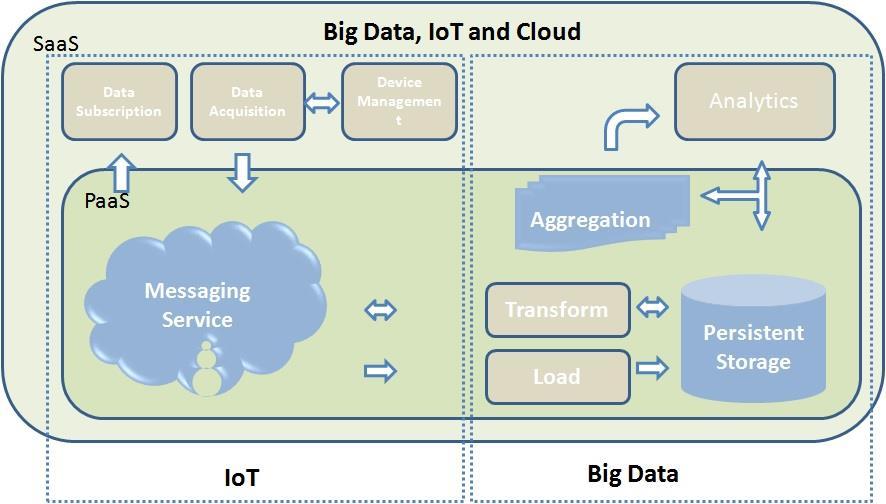
Hedelvedintotherelationshipbetweenbigdataandcloud computing, where big data relies on cloud computing to perform effective analytical processes. Cloud computing analytics offers enormous data processing and storage options.Furthermore,byusingparallelcomputingpowerto improvetheefficiencyofbigdataprocessingandacquisition, cloudcomputingvirtualstoragetechnologycanefficiently manageandanalyzehugevolumesofdata.Hefurtherstated thatbigdataandIoTshouldbedevelopedsimultaneously duetotheirinterconnection.Inotherwords,thewidespread adoption of IoT results in rapid growth in the volume of unstructuredandsemi-structureddata.IoTBigDataisonly useful if it is processed and evaluated to provide value.
The problems with big data and the Internet of Things:
Itwasstatedthatthedatasecurityelementsofbigdata/IoT maybeauthenticatedsincedataandinformationingeneral, andsupply-chainmanagementorindustrialoperationsdata in particular, are sensitive and secret. Furthermore, managingbigdataproblemsisdifficultandtime-consuming; effective data processing and analysis in an acceptable amountoftimerequiresasizablecomputerinfrastructure. Cloud computing is also a solution to this issue. However, relatedresearchusingcloudcomputingandbigdatainfood safetyisstillinitsearlystages.
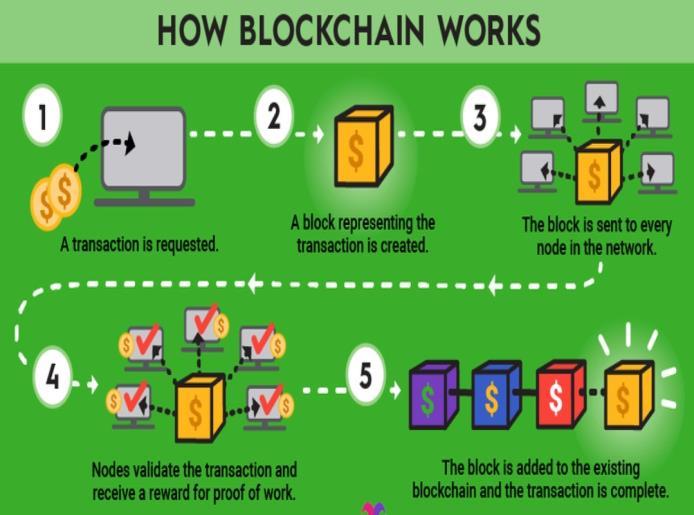
Blockchain technology has shown promise in the bitcoin space since its launch in 2008. The decentralised digital ledger technology of blockchain is well-known for doing away with the necessity for a reliable middleman in transactionalprocesses.Blockchainisessentiallyashared databaseofdocumentsthatarekeptuptodatebyallgroup membersin"blocks"thatareimmutable. Itwillalwaysbe available in the future. Therefore, it has been stated that blockchain technology offers various qualities including a decentralisedledger,smartcontract,consensus,provenance, immutable, and transparency to preserve trust and transparencyinacollaborativesettinglikethesupplychain ecosystem.Distributedledgertechnologyenablesdifferent entitiestoconnecttooneanotherinapeer-to-peernetwork withouttheuseofmiddlemen.Consensusreferstowhenall partiesengagedinatransactionagreeonitsexecution.The immutability(theimpossibilityofanyindividualtochangea transaction on the distributed ledger) is by far its most important characteristic. Because all transactions are recorded on a distributed ledger and made public to all network nodes or stakeholders, a provenance component canprovidetheabilitytofollowthewholehistoryofeach transaction. Asmartcontractisa computer program that, undercertainconditions,mayberunandcontainsthelogic ofacontractbetweentwoormoreparties.
Blockchaintechnologymaybeusedinthefoodsupplychain bydigitallyrecordinginformationsuchasfoodproduction data,origin,storageandtransportationtemperature,expiry date,andsooninadatabase,allowingforspeedydetection of an epidemic or the authenticity of food. Blockchain technologymaybeusedtokeeptrackofandmonitorfood goodsinordertoenforcefoodsafetyandintegrityprotocols, boostingsupplychainvisibilityandresponsibility.Themost prominent examples are Walmart and IBM. The practical application of blockchain in food safety tracking is highlighted. It should also be emphasised that when blockchain technology is extensively deployed, standardisationoftheprotocolsusedinblockchainisvital because of appropriate smart contracts for data sharing, blockchain with strong algorithms suited for data privacy andintegrationthroughartificialintelligencedesignedfor dataimmutability.
International Research Journal of Engineering and Technology (IRJET) e-ISSN: 2395-0056
Volume: 11 Issue: 09 | Sep 2024 www.irjet.net p-ISSN: 2395-0072
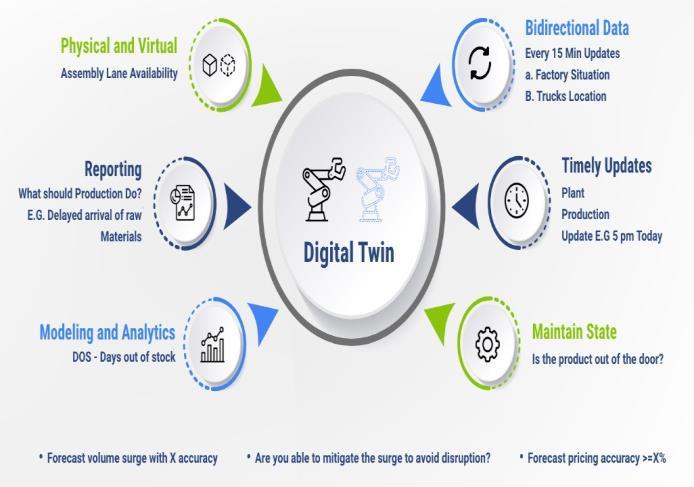
It was mentioned that a digital twin uses disruptive technology to combine real and virtual systems. A virtual model and thorough description of the system used to comprehendperformancemetrics,optimiseworkflows,and successfullyboostvalue-addedactivitiesiscalleda"digital twin."Adigitaltwinisasimulation-baseddigitalreplicaofa physical system that works with design systems and optimises them for increased efficiency. Based on the information gathered, the digital twin may replicate the production environmentandassisttheowner inselecting thebestcourseofactionforgreaterproductivity,accuracy, and economies of scale. With remarkable accuracy and agility,adigitaltwincanmanagemanufacturingoperations inresponsetoshiftingmarketdemands.Itwasmentioned thatseparate,customisedapplicationshavebeendeveloped using digital twin frameworks taking into account one or moreproductionsites.Theyareyetunabletocreateadigital twin as the system's primary technological component, though.Toputitbriefly,theconceptofvirtualequivalentsof physicalitemsisthebasisfortheimportanceofdigitaltwins inthemanufacturingbusiness.
Adigitalforcechaintwinisusedforadvancedforcechain modellingthatisbasedonreal-timepredictiveanalyticsand canproviderelevantcorrectivestepstoimproveforcechain optimisation.Athoroughliteratureanalysisrevealedthata digitalforcechaintwinisa criticalcomponentofcomplex force chains because it allows for dynamic allocation, aggregation, and integration of production resources. A "digital force chain twin" is another term for a clone of a virtual force chain made up of hundreds of real-world means, such as storages, fulfilment centres, and force locations. Regardingdigitalsupplychaintwins,wasfound that there was no agreement in the literature. The literature'sdefinitionofthedigitalsupplychaintwinvaries accordingtoitsintendeduse.Thus,itissuggestedtoprovide aconceptualexplanationforthedigitalsupplychaintwin.A digital dynamic simulation model of a real-world logistics
systemwiththefeaturesofalong-term,timely,bidirectional datalinktothatsystemisknownasadigitalsupplychain twinorlogisticstwin.Prescriptive,predictive,anddiagnostic techniques are made possible by the digital supply chain twin, which enhances logistical performance across the customerorder.
Digital supply chain twin challenges:
Thedigitaltwinhasagreatdealofpromisefortrackingand tracingitemstoenhanceefficiencyandquality.Nonetheless, anumberofissues,suchasexcessiveidletimeandenergy waste, need to be resolved. Unstructured data sources, cybersecurity,IPprotection,andtheproductlifecycleare the obstacles to creating an effective digital supply chain twin.
AI helps manufacturers optimize production processes, manageresources,andmakefaster,data-drivendecisions:
Supply Chain Optimization: AI-poweredsystems forecastdemand,optimizeinventorymanagement, andstreamlinelogistics.
Real-Time Quality Control: AIalgorithmsanalyze production data in real time to ensure product qualityandconsistency.
Process Automation: AI automates decisionmakingintaskslikeproductionscheduling,process control,andordermanagement.
Insummary,AIisintegraltothesuccessofIndustry4.0by driving automation, improving efficiency, enabling datadriven decision-making, and creating smarter, more adaptablesystemsacrossindustries.It’srevolutionizinghow manufacturing, logistics, and supply chains operate on a globalscale.
International Research Journal of Engineering and Technology (IRJET) e-ISSN: 2395-0056
Volume: 11 Issue: 09 | Sep 2024 www.irjet.net p-ISSN: 2395-0072
In order to address research question 1 (RQ1), the study provides a thorough analysis of the digital supply chain, concentrating on its definition and interactions with the smartsupplychain.focussesonfouressentialelementsof thedigitalsupplychain:
•Bigdata,blockchain,InternetofThings(IoT),anddigital supplychaintwin
The evaluation looks into the underlying ideas of these technologies,aswellastheapplicationscenariosandrelated difficulties, in order toanswer research question2 (RQ2). Belowisaquickrundownoftheoutcomes:
Indigitalsupplychains,theInternetofThings(IoT)isthe most widely used technology. To optimise data flow, it is frequently combined with big data analytics and cloud computing.
Smart contracts are noted as a key topic for further investigation, while blockchain is acknowledged as an emergingtechnology.
Acompletetechnologythatisprimarilyusedtosimulateand analysedifferentstrategicscenariosiscalledadigitalsupply chaintwin.
A number of other technologies are also highlighted, indicating the possibility for more study in the context of Industry4.0,includingrobots,drones,3Dprinting,virtual reality,andcyber-physicalsystems.
Theassessmentconcludesthattheproblemsrelatedtothese technologies vary as they advance and the range of applications they may be used for increases. As a result, researchontheseissuesisstillnecessary.
[1] https://www.whizlabs.com/blog/relationship-betweeniot-big-data-cloud-computing/
[2] https://pluto7.com/2022/06/27/utilizing-digitaltwins-for-supply-chains/
[3] https://www.fool.com/terms/b/blockchain/
[4] Blockchain Technologyby handramouli Subramanian (Author), Asha A George (Author), Abhilash K A (Author),MeenaKarthikeyan(Author)
[5] Internet of Things (IoT) by Dr Kamlesh Lakhwani (Author), Dr Hemant Kumar Gianey (Author), Joseph KofiWireko(Author),KamalKantHiran(Author)