
International Research Journal of Engineering and Technology (IRJET) e-ISSN: 2395-0056
Volume: 11 Issue: 09 | Sep 2024 www.irjet.net p-ISSN: 2395-0072

International Research Journal of Engineering and Technology (IRJET) e-ISSN: 2395-0056
Volume: 11 Issue: 09 | Sep 2024 www.irjet.net p-ISSN: 2395-0072
1PG Student Department of Civil Engineering, Veerappa Nisty Engineering College Shorapur
2PG Student Department of Civil Engineering, Veerappa Nisty Engineering College Shorapur
3Professor, Department of Civil Engineering, Veerappa Nisty Engineering College Shorapur
4Professor, Department of Civil Engineering, Veerappa Nisty Engineering College Shorapur
Abstract - This study investigates the use of industrial detergents and surfactants as foaming agents in concrete to develop lightweight, cost-effective, and sustainable building materials.Surfactantproportions(5%,10%,15%,and20%by weightofcement)wereanalyzedfortheirimpactonconcrete density, compressive strength, tensile strength, flexural strength, and water absorption. Results show that increasing surfactant content significantly reduced concrete density, making it suitable for non-load-bearing and insulation applications. However, this reduction in density led to decreasedcompressive,tensile,andflexuralstrengths,limiting load-bearing capabilities. Additionally, higher surfactant levels increased water absorption, raising concerns about durability in moisture-prone environments. Despite these trade-offs, the study highlights the feasibility of using industrial waste products inconcrete, promoting sustainable construction by reducing environmental impact and supportingresourcerecycling.Thesefindings offera basis for optimizinglightweightconcreteformulationstomeetspecific constructionrequirements while balancingperformance and sustainability.
Key Words: Industrial detergents, foaming agents, lightweight concrete, concrete density, compressive strength, tensile strength, flexural strength, water absorption, etc
Concreteisuniqueoftheutmostwidelyusedconstruction materialsintoworld,prevalentduetoflexibility,strength, anddurability.Lightweightconcreteisaspecializedtypeof concrete that is designed to be lighter than conventional concrete. Usage of lightweight concrete can also facilitate easier handling and faster construction processes. The combination of industrial detergents and surfactants in concrete production is an advanced technique which received focus in past years. Surfactants and detergents, which are typically used to lower the surface tension of liquidsandcreatefoam,canbeutilizedasfoamingagentsin concretetoproducefoamedconcrete.
Usage of industrial detergents and surfactants as foaming material or agents in concrete offers several benefits.Onesignificantadvantageiscostreduction,as these materials can often be sourced as by-products fromotherindustries,makingthemfeasiblesubstitutes against traditional foaming agents. The resultant foamedconcretebenefitsfromreduceddensity,which translates to lower overall weight & enhance main thermal insulating characteristics. This can main to energy savings in building operations and reduced structural loadonsupportingelements. Furthermore, using waste or by-product materials aligns with sustainability goals by recycling industrial waste and minimizingenvironmentalimpact.Nevertheless,careful evaluationandtestingarenecessarytoconfirmthatthe use of these ingredients does not undesirably affect concrete’sefficacy.
Evaluate efficacy of Industrial Detergents and SurfactantsasFoamingAgentsAssesstheabilityof various industrial detergents and surfactants to generateandstabilizefoaminconcretemixtures.
DeterminetheImpactonConcreteDensityMeasure and compare the density of concrete made with different industrial detergents and surfactants to optimizelightweightproperties.
AssessMechanicalPropertiesofFoamedConcrete Evaluate the compressive strength, flexural strength, and tensile strength of foamed concrete incorporatingindustrialdetergentsandsurfactants.
ConductaSimpleDurabilityStudyPerformabasic durability test to evaluate water absorption and freeze-thaw resistance of foamed concrete made withindustrialsurfactants.
International Research Journal of Engineering and Technology (IRJET) e-ISSN: 2395-0056
Volume: 11 Issue: 09 | Sep 2024 www.irjet.net p-ISSN: 2395-0072
MixDesignforConcreteIncorporatingIndustrialDetergents andSurfactants(IS10262:2019).
To design concrete mixes incorporating industrial detergents and surfactants as foaming agents at varying proportions(5%,10%,15%,and20%byweightofcement) followingIS10262:2019guidelines.
Table -1 mixproportions
Table -2 DensityResult
Aggregate
2.1 Experimental Study of Density and Mechanical Properties for Concrete Mixes with Industrial Detergents and Surfactants
The objectiveof this experimental researchfor evaluating density and mechanical characteristics of concrete mixes incorporating industrial detergents and surfactants at variousproportions(5%,10%,15%,and20%byweightof cement). This study aims to assess the impact of these surfactantsontheperformancecharacteristicsofconcrete, includingdensity,compressivestrength,andworkability.
A. Density
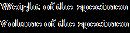
Density=
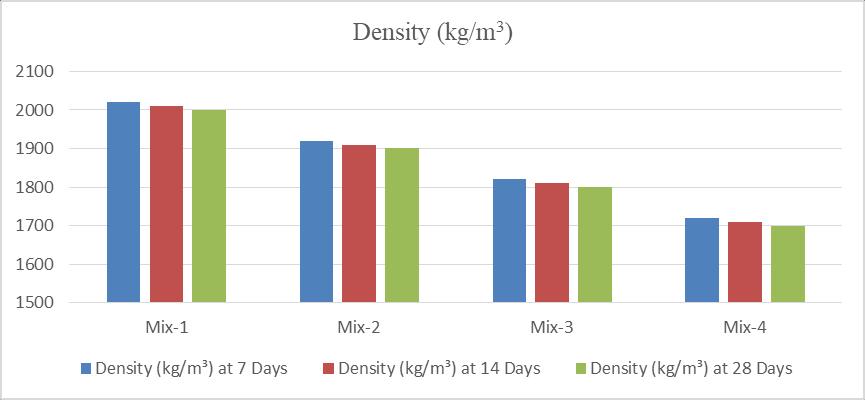
Graph-1 Density(kg/m3)
B. Mechanical properties
i. Compressivestrength
CompressiveStrength=
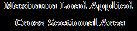
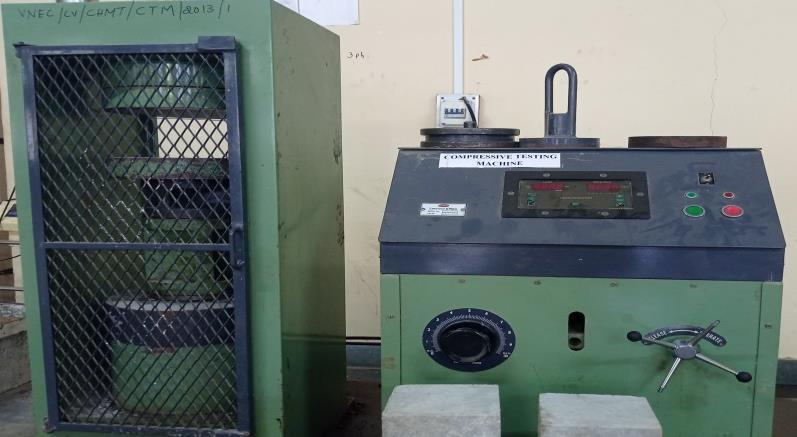
Fig -2:compressivestrengthmachine
Table -3CompressiveStrengthResult
International Research Journal of Engineering and Technology (IRJET) e-ISSN: 2395-0056
Volume: 11 Issue: 09 | Sep 2024 www.irjet.net p-ISSN: 2395-0072
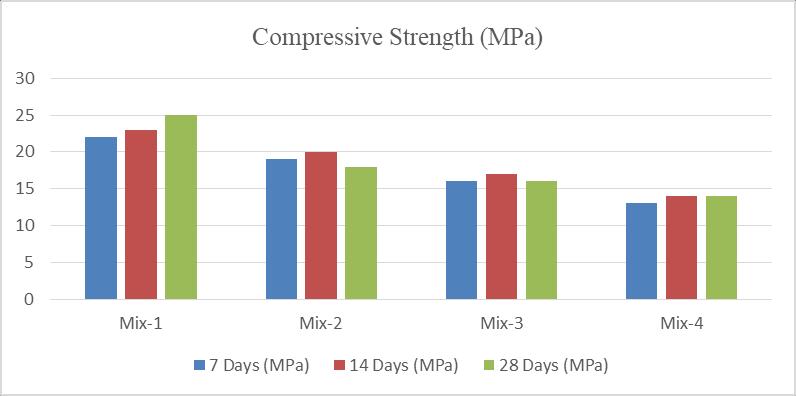
Graph-2 CompressiveStrength(MPA)
ii. Tensilestrength
TensileStrength=
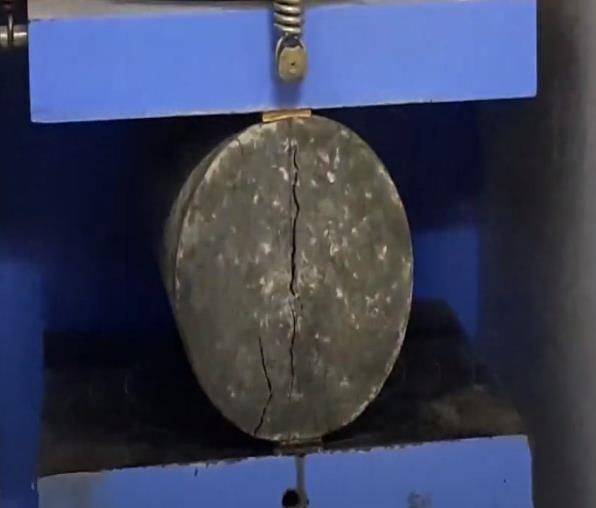
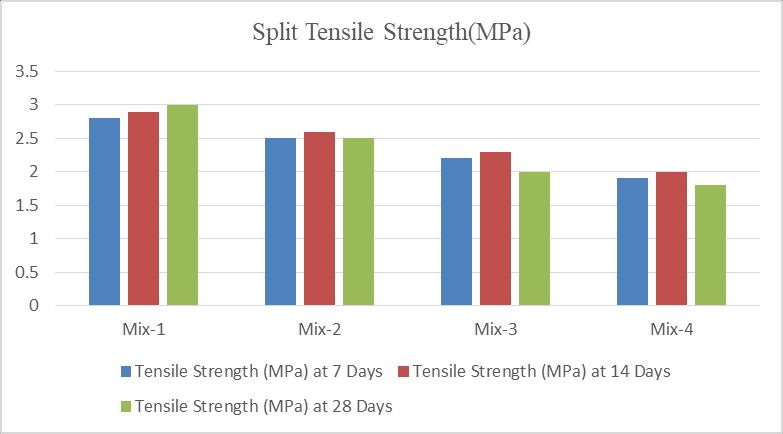
Graph-3 SplitTensileStrength iii. FlexuralStrengthResult
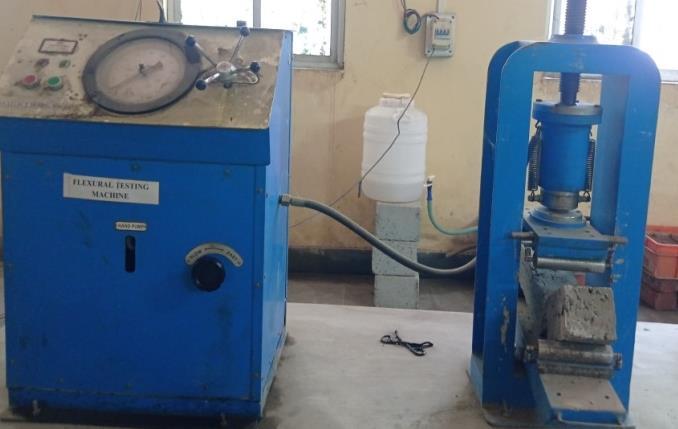
FlexuralStrength=
International Research Journal of Engineering and Technology (IRJET) e-ISSN: 2395-0056
Volume: 11 Issue: 09 | Sep 2024 www.irjet.net p-ISSN: 2395-0072
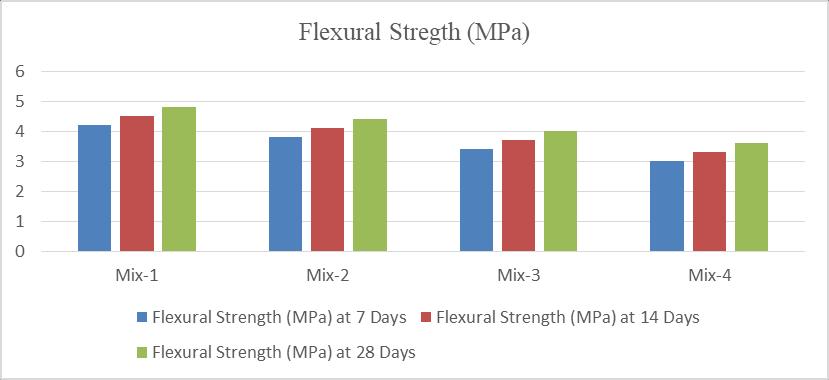
Graph-4 FlexuralStrength
iv. Water absorption
WaterAbsorption(%)=

Table -6 waterabsorption
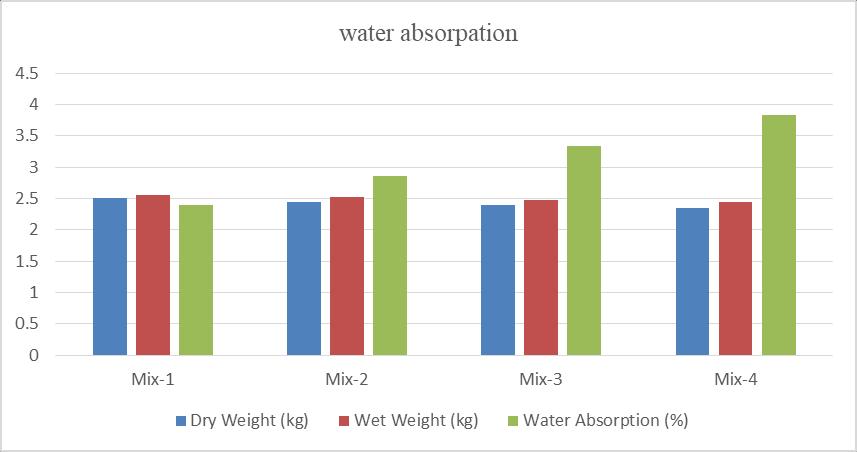
Graph-5 waterabsorption
3. Result and Discussion
Density
Observations:
The density of the concrete decreases as the surfactantcontentincreases.
ForMix-1(5%surfactant),thedensityat28daysis 2000kg/m³,whereasforMix-4(20%surfactant),it is1700kg/m³.
Discussion:
The reduction in density with higher surfactant content is attributed to the increased air voids introducedbythefoamingactionofthesurfactants.
Lower density can be beneficial for applications wherelightweightconcreteisdesirable,suchasin non-load-bearingstructuresorinsulationpurposes.
Observations:
Compressive strength decreases as the surfactant contentincreases.
At28days,thecompressivestrengthforMix-1(5% surfactant) is 25 MPa, while for Mix-4 (20% surfactant)itis14MPa.
Discussion:
The decline in compressive strength with higher surfactantcontentisduetotheincreasedporosity andreduceddensity.
Thissuggestsatrade-offbetweenweightreduction andload-bearingcapacity,wherehighersurfactant content might not be suitable for structural applicationsrequiringhighcompressivestrength.
Strength
Observations:
Tensile strength follows a similar trend to compressive strength, decreasing with higher surfactantcontent.
At28days,Mix-1(5%surfactant)showsatensile strengthof3.0MPa,whileMix-4(20%surfactant)is at1.8MPa.
Discussion:
Thereductionintensilestrengthisconsistentwith theincreasedairvoidcontentandreduceddensity.
This further emphasizes the need to balance the amount of surfactant used to maintain adequate tensile properties for applications where tensile strengthiscritical.
International Research Journal of Engineering and Technology (IRJET) e-ISSN: 2395-0056
Volume: 11 Issue: 09 | Sep 2024 www.irjet.net p-ISSN: 2395-0072
Flexural Strength
Observations:
Flexural strength decreases with the increase in surfactantcontent.
ForMix-1(5%surfactant),theflexuralstrengthat 28daysis4.8MPa,comparedto3.6MPaforMix-4 (20%surfactant).
Discussion:
Similar to compressive and tensile strength, the reductioninflexuralstrengthwithhighersurfactant contentcanbeattributedtotheincreasedporosity andreduceddensity.
Lower flexural strength indicates that higher surfactantcontentconcretemaybelesssuitablefor applicationsrequiringhighbendingresistance.
Water Absorption
Observations:
Water absorption increases with the increase in surfactantcontent.
Mix-1(5%surfactant)hasawaterabsorptionrate of2.40%,whereasMix-4(20%surfactant)showsa rateof3.83%.
Discussion:
The higher water absorption with increased surfactantcontentisduetotheincreasedporosity.
Higher water absorption rates may lead to lower durability,astheconcretemaybemoresusceptible towateringress,freeze-thawcycles,andchemical attacks.
This necessitates careful consideration of the surfactantdosage,particularlyforconcreteexposed toharshenvironmentalconditions.
4. CONCLUSIONS
Density Reduction
The use of industrial detergents and surfactants significantlyreducesthedensityof concrete,making itsuitableforlightweightapplications.
Compressive Strength
Increasing surfactant content decreases the compressivestrengthofconcrete,limitingitssuitability
forstructuralapplicationsrequiringhighload-bearing capacity.
Tensile Strength
Higher surfactant content leads to a reduction in tensile strength, affecting the concrete's performance undertension.
Flexural Strength
Flexural strength decreases with increasing surfactantcontent,indicatinglowerbendingresistance.
Water Absorption
The incorporation of surfactants increases water absorption, suggesting higher porosity and potential durabilityconcerns,especiallyinenvironmentsexposed tomoistureandfreeze-thawcycles.
Application-Specific Considerations
o Lightweightconcretewithsurfactantsmay besuitablefornon-load-bearingstructures, insulation,andapplicationswherereduced weightisapriority.
o For structural applications, careful consideration of surfactant dosage is necessary to maintain adequate strength anddurability.
Environmental Impact
Utilizing industrial detergents and surfactants as foamingagentscontributestosustainableconstruction practicesbyrecyclingindustrialwasteproducts
[1]Agarwal,P.,Singh,R.,&Sharma,A.(2023)."Sustainable PracticesinConcreteProduction: RecyclingIndustrial By-products." Journal of Sustainable Construction Materials,15(2),143-156.
[2] Bui, D., Le, T., & Tran, M. (2023). "Performance Characteristics of Lightweight Concrete: Recent AdvancesandApplications." ConstructionandBuilding Materials,345,152-165.
[3] Gomez, R., Alvarado, C., & Garcia, M. (2023). "Thermal andStructuralPropertiesofLightweightConcretewith Expanded Aggregates." Materials Science and Engineering,42(7),78-89.
[4] Kumar, S., Gupta, N., & Patel, R. (2023). "Utilization of SurfactantsfromIndustrialWasteasFoamingAgentsin
International Research Journal of Engineering and Technology (IRJET) e-ISSN: 2395-0056
Volume: 11 Issue: 09 | Sep 2024 www.irjet.net p-ISSN: 2395-0072
Concrete." JournalofEnvironmentalManagement,260, 110-123.
[5]Nguyen,H.,Lee,J.,&Park,S.(2024)."EffectofIndustrial Detergents on the Properties of Foamed Concrete." InternationalJournalofConcreteTechnology,58(1),3345.
[6]Patel,K.,Kumar,R.,&Mehta,S.(2024)."Evaluatingthe Long-term Performance of Foamed Concrete with IndustrialSurfactants." ConstructionMaterialsJournal, 66(3),289-302.
[7] Singh, J., Khan, M., & Yadav, P. (2024). "Cost and SustainabilityBenefitsofUsingSurfactantsinConcrete Production." Sustainable Construction Review, 19(4), 202-215.
BIOGRAPHIES


NINGAMMA
M.Tech(CSE)
DepartmentofCivilEngineering VeerappaNistyEngineeringCollege Shorapur-585224.
SHREELATA PATIL
M.Tech(CSE)
DepartmentofCivilEngineering VeerappaNistyEngineeringCollege Shorapur-585224.