
International Research Journal of Engineering and Technology (IRJET) e-ISSN: 2395-0056
Volume: 11 Issue: 09 | Sep 2024 www.irjet.net p-ISSN: 2395-0072

International Research Journal of Engineering and Technology (IRJET) e-ISSN: 2395-0056
Volume: 11 Issue: 09 | Sep 2024 www.irjet.net p-ISSN: 2395-0072
Panchami B R, Dr Prasad G R
Department of CSE, BMS College of Engineering, Bengaluru, India
Professor, Department of CSE, BMS College of Engineering, Bengaluru, India
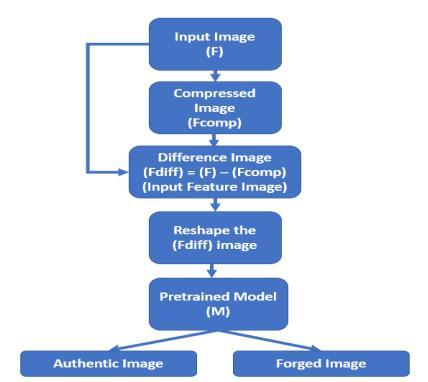
Abstract - In today's digital age, images shared on social media have become a primary means of communication. However, the rise ofsophisticatedmalicious software capable of falsifying images has made it essential to identify such forgeries. Existing research in this field often focuses on detecting a single type of forgery, such as image splicing or copy-move, which may not be applicable to real-world scenarios. This paper introducesanovelmethodforenhancing digital image forgery detection by leveraging deep learning techniques andtransferlearning.Theproposedapproachaims to identify two types of image forgery simultaneously by examiningthe compressedqualityvariationsinforgedregions compared to the rest of the image. The method involves creating a feature image from the difference between the original and compressed versions of the image. This feature image is then usedto traina pre-existingdeeplearningmodel, which has had its original classifier removed and replaced with a new, fine-tunedone. The studyevaluates eightdifferent pre-trained models adapted for binary classification. The experimentalfindings demonstratethattheproposedmethod, whenappliedto these eight models, significantlyoutperforms current state-of-the-art techniques, as evidenced by various evaluation metrics, charts, and graphs. Notably, the DenseNet121 model achieved the highest detection accuracy (approximately 98%) with fewer training parameters, resulting in a quicker training process.
Key Words: Detect forgery, Deep learning, DenseNet121, MobileNetV2, Image Forgery, CNN, Transfer Learning etc.
In the current digital era, image forgery has become a significant issue, particularly with the widespread use of social media and online platforms. The manipulation of images has become increasingly prevalent, leading to concernsaboutmisinformationandthespreadoffakenews. This underscores the critical need for effective forgery detection methods to address these challenges. Advanced editing tools have made it easier to alter images, complicatingthetaskofidentifyingvariousformsofforgery. As a result, developing robust detection techniques is essentialforensuringtheintegrityofvisualinformationand combatingthenegativeeffectsofdigitaldeception.
The objectives section details the aims and targets of the researchendeavor.Itoutlineskeygoalssuchasadvancing the methods for detecting image forgery, enabling the simultaneousidentificationofvarioustypesofforgery,and applyingdeeplearningtechniquestoboostaccuracy.
Additionally,thissectionspecifiesthegoalofcomparingthe performance of different pre-trained models to gauge theireffectivenessindetectingforgeries.Italsoemphasizes theobjectiveofdemonstratingthebenefitsofincorporating theseadvancedtechniquesintoforgerydetectionstrategies.
In reference [1], the authors introduced an innovative method for detecting Copy-Move Forgeries (CMFD) by integrating deep learning techniques, specifically using a combinationofConvolutionalNeuralNetworks(CNNs)and Convolutional Long Short-Term Memory (ConvLSTM) networks.Theirapproachinvolvesextractingfeaturesfrom images through a sequence of convolutional layers, ConvLSTM layers, and pooling operations, followed by a featurematchingprocesstoidentifyforgeries.Themethod wasevaluatedusingfourpublicdatasets:MICC-F220,MICCF2000, MICC-F600, and SATs-130, which were merged to formnewdatasetsaimedat improvinggeneralization and reducing overfitting. Additionally, the performance of a ConvLSTM-only model was assessed to compare with the hybrid ConvLSTM-CNN model. The results demonstrated that the proposed method achieved exceptional accuracy, reaching up to 100% on some datasets, with processing times as brief as 1 second, thereby surpassing the performanceofpreviousmethods.
In reference [2], the authors present a technique for identifying both copy-move and splicing image forgeries usingConvolutionalNeuralNetworks(CNNs) andthree distinct models: Error Level Analysis (ELA), VGG16, and VGG19.Theirmethodincludesapre-processingphasewhere imagesarecompressedtoaparticularqualitylevelbefore beingusedtotrainthemodels.Oncetrained,thesemodels are employed to classify images as either genuine or manipulated. The experimental findings indicate that the proposed approach yields accuracy rates of 70.6% with ErrorLevelAnalysis(ELA),71.6%withVGG16,and72.9% withVGG19,whentestedonimagesfromtheCASIA2.0and NC2016datasets.
International Research Journal of Engineering and Technology (IRJET) e-ISSN: 2395-0056
Volume: 11 Issue: 09 | Sep 2024 www.irjet.net p-ISSN: 2395-0072
In reference [3], the authors introduce a compact ConvolutionalNeuralNetwork(CNN)designedforreal-time splicingimageforgerydetection,combininghighaccuracy withaminimalnumberofparameters.Themodelfeatures four convolutional layers and four max-pooling layers, making it well-suited for environments with limited resources.Athoroughcomparisonwithothermodelsreveals that this approach achieves notable sensitivity and specificity.Itrecordedaccuraciesof99.1%ontheCASIA1.0 dataset,99.3%ontheCASIA2.0dataset,and100%onthe CUISDEdataset.Itshighperformanceandefficiencymakeit aneffectivetoolforautomated,real-timeforgerydetection.
In reference [4], the authors present an automated deep learning-based fusion model called DLFM-CMDFC for the detection and localization of copy-move forgeries. This approach integrates Generative Adversarial Networks (GANs)withDenselyConnectedNetworks(DenseNets).The combined outputs are then processed by an Extreme LearningMachine(ELM)classifier,withitsweightandbias parameters optimized through the Artificial Fish Swarm Algorithm (AFSA). This fusion technique is used to detect inconsistenciesbetweentheinputandtargetregionswithin images. The model's effectiveness was tested on two benchmarkdatasets,demonstratingsuperiorperformance compared to recent methods, with a precision of 97.27%, recallof96.46%,andF-scoreof96.06%.
Inreference[5],theauthorsdevelopacomprehensivefully convolutionalneuralnetworkdesignedfordetectingimage forgery. This model integrates multi-resolution hybrid featuresfrombothRGBandnoisechannelstodetectvisual and compression inconsistencies in altered images. It includesatamper-guideddualself-attention(TDSA)module thattargetsandsegmentstamperedregionsbyidentifying discrepancies between altered and unaltered areas. Extensivetestingdemonstratesthatthisapproachprovides enhanced pixel-level forgery localization and image-level detectionaccuracycomparedtoexistingmethods,exhibiting improvedprecisionandrobustness.
In reference [6], the authors introduce SD-Net, a novel approachaimedatovercomingthelimitationsofmanyCNNbased methods for copy-move forgery detection (CMFD), which often suffer from low accuracy. SD-Net employs super-BPD segmentation technology to enhance edge detection and leverages a Deep Convolutional Neural Network(DCNN)tobolsterrobustness.Experimentalresults reveal that SD-Net achieves precise edge localization and performs effectively in identifying large-scale forgeries. However,theadditionofthesegmentationmoduleanddualbrancharchitectureaddscomplexitytothemethod.Future researchisrecommendedtosimplifythiscomplexitywhile preserving accuracy and to further investigate forgery detection in cases where altered regions are similar to genuineones.
Inreference[7],theauthorsinvestigatetwocriticalaspects ofutilizingdeepconvolutionalneuralnetworks(CNNs)for detecting image forgeries. The first aspect focuses on analyzing various pre-processing techniques alongside differentCNNarchitectures.Thesecondaspectassessesthe efficacy of transfer learning by fine-tuning pre-trained ImageNet models on the CASIA V2.0 dataset. The study involvesimplementingand evaluatingseveral modelsand theircombinations,highlightingtheeffectsofpre-processing andtransferlearning.Notably,theCNNmodelincorporating sharpening and Error Level Analysis (CNN_Sharpen_ELA) achievesatrainingaccuracyof97%withaminimaltraining lossof0.1%.Incontrast,theResNet50modelattainsatest accuracyof95%withalowtestlossofapproximately0.4%.
Inreference[8],theauthorspresentadigitalimageforgery detection system utilizing the ResNet50v2 deep learning architecture. This model processes image batches and integrates YOLO CNN weights within the ResNet50v2 frameworktoenhanceperformance.Thesystemwastested ontheCASIA_v1andCASIA_v2benchmarkdatasets,which containbothauthenticandforgedimages,todetectimage splicing.Thedatasetsweredividedwith80%allocatedfor training and 20% for testing. A comparison with other methodsrevealedthatthemodel,whenfine-tunedthrough transfer learning, achieved an accuracy of 99.3% on the moreextensiveCASIA_v2dataset.Incontrast,theaccuracy droppedto81%withouttheuseoftransferlearning.These findings highlight the effectiveness and advantages of the proposedsystem.
Inreference[9],theauthorsintroduceastreamlinedmodel, combining Mask R-CNN with MobileNet V1, designed for detectingandidentifyingbothcopy-moveandimagesplicing forgeries. The model was assessed using several standard datasets,includingCOVERAGE,CASIA2.0,MICCF220,MICC F600,MICCF2000,COLUMBIA,andCASIA1.0.Comparedto ResNet-101,theproposedmodelachievedsuperiorresults, withanF1-scoreof70%forcopy-moveforgeryontheMICC F600datasetand64%forimagesplicingforgeryonCASIA 1.0.Italsorecordedanaverageprecisionof90%forcopymoveforgeryonbothMICCF2000andCOVERAGEdatasets, and90%forimagesplicingontheCOLUMBIAdataset.The model offers a more efficient computational performance than ResNet-101, providing a good balance between efficiencyandcomputationalcost.Additionally,itiscapable ofestimatingthepercentageofforgerypresentindifferent regionsofanimage.
Inreference[10],theauthorsinvestigatetheapplicationof two deep learning models, Smaller VGGNet and MobileNetV2,fordetectingcopy-moveimageforgery,witha focus on post-processed attacks. These models are engineered to be both time-efficient and resourceconservative, making them ideal for deployment on embeddedsystems.Throughcomprehensiveanalysis,itwas determined that a modified version of MobileNetV2 is particularlyeffectiveindetectingcopy-moveforgeriesand
International Research Journal of Engineering and Technology (IRJET) e-ISSN: 2395-0056
Volume: 11 Issue: 09 | Sep 2024 www.irjet.net p-ISSN: 2395-0072
managing post-forgery alterations such as changes in brightness,blurring,noiseaddition,cropping,androtation. Experimental results demonstrate that the MobileNetV2basedmodelachievesan84%TruePositiveRate(TPR)and a14.35%FalsePositiveRate(FPR)whenidentifyingdigital imageforgeriesafterundergoingmultiplepost-processing attacks.
3.1 Importing Required Libraries
Thescriptstartsbyimportingkeylibrariesnecessaryfor dataprocessing,visualization,andmodelbuilding.This includes modules like os, random, glob, numpy, matplotlib,PIL,sklearnandtensorflow.keras
3.2 Loading the Dataset
The dataset is located in the directory 'data/CASIA2.0_revised/data_new'.Thescriptloadsthe contents from this directory and tallies the number of imagespresentineachofitssubdirectories.
3.3 Exploratory Data Analysis
Some exploratory data analysis is performed, which includes:
Showing Sample Images: Randomly display images from the dataset along with their metadata, including details such as file path, dimensions, color mode, and format.
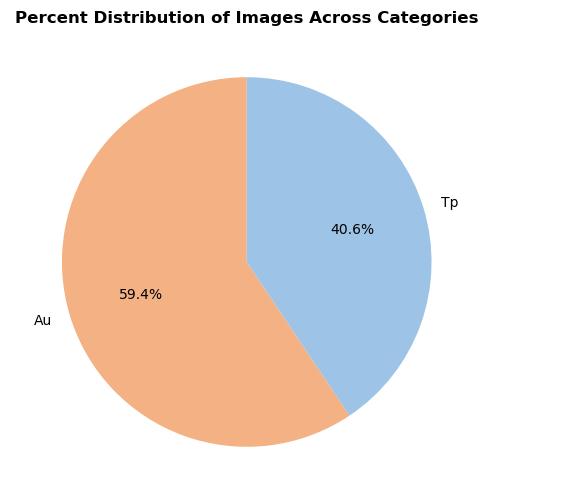
Visualizing Image Distribution: Generatebarchartsto depict the count of images in each category and pie charts to represent the proportional distribution of imagesamongvariouscategories.
3.4 Splitting the Dataset
Thesplit folders libraryisutilizedto partition the dataset intotraining,validation,andtestsets,allocating70%ofthe datafortraining,10%forvalidation,and20%fortesting.
3.5 Importing Required Libraries
Image data undergoes preprocessing and augmentation using ImageDataGenerator. This process involves transformations such as rotation, shifting, brightness adjustment,zooming,andhorizontalflipping.Furthermore, thedata isnormalizedwiththe preprocess_inputfunction fromtensorflow.keras.applications.densenet
3.6 Model Construction
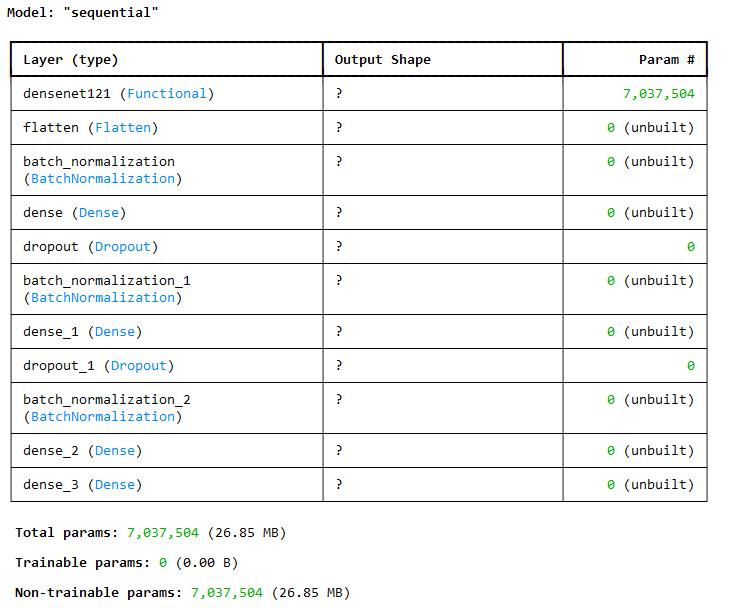
TheDenseNet121modelisusedasthefoundationalbasefor featureextraction,incorporatingpre-trainedweightsfrom ImageNet.Thebasemodel'slayersarekeptfrozentoensure they are not updated during the fine-tuning process. Additionallayersareaddedtothemodel,including:
Aflatteninglayer
Batchnormalizationlayers
DenselayerswithReLUactivationfunctions
Dropoutlayersforregularization
AfinalDenselayerwithasoftmaxactivation functionforclassification
3.7 Model Compilation
The model is compiled with the Adam optimizer and configured to use categorical cross-entropy as the loss function. It evaluates performance using metrics such as categoricalaccuracy,precision,andrecall.
3.8 Training the Model
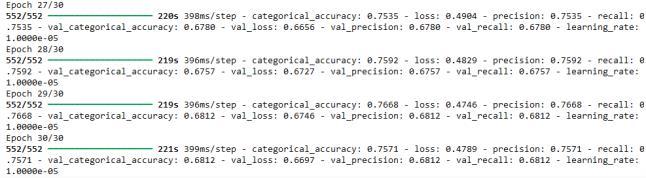
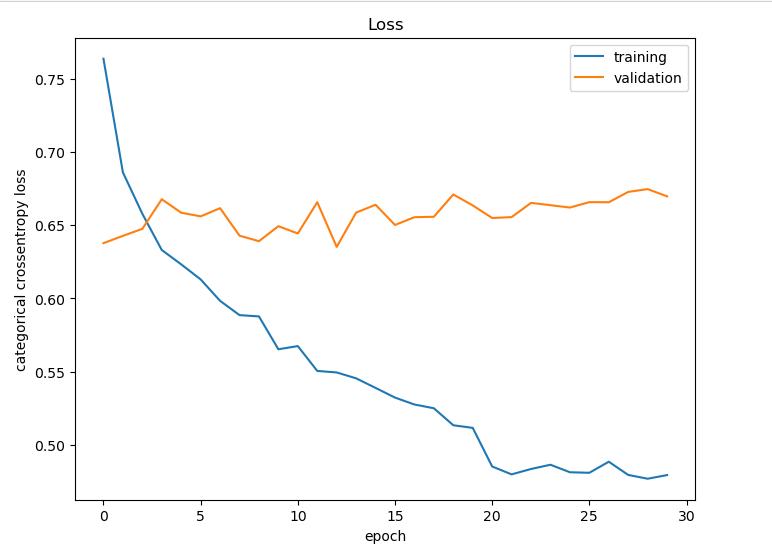
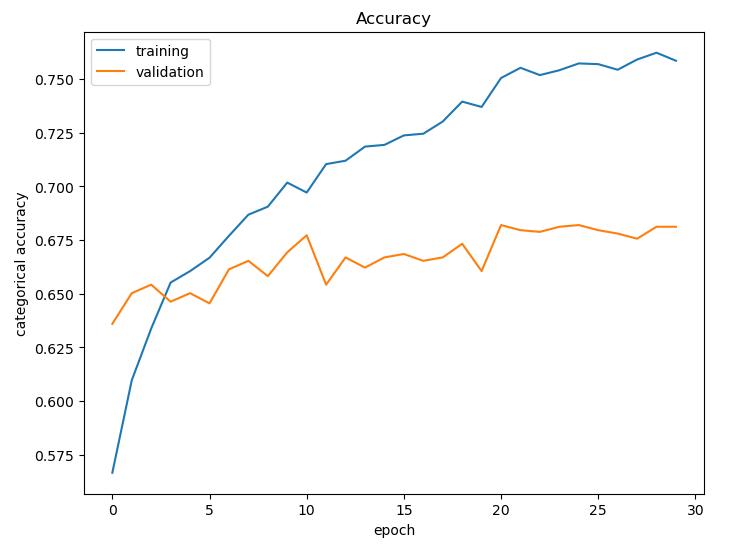
Alearningrateschedulerissetuptodynamicallyadjustthe learningratethroughoutthetrainingprocess.Themodelis trainedonthetrainingdataset,incorporatingclassweights to address class imbalance, and is validated using the validationdataset.
3.9 Evaluating the Model
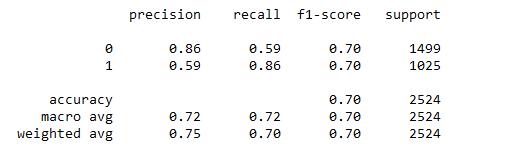
Themodel'sperformanceisevaluatedonthetestset,with keymetricsincludingcategorical accuracy,loss,precision, andrecallbeingreported.Additionally,aconfusionmatrix and a classification report are created and visualized to providefurtherinsight.
3.10 Saving the Model
Theweightsandarchitectureofthetrainedmodel aresaved forfuturereferenceanduse.
3.11 Loading the Model
The model is loaded from the file densenet121.hdf5 for makingpredictionsorconductingadditionalevaluations.
International Research Journal of Engineering and Technology (IRJET) e-ISSN: 2395-0056
Volume: 11 Issue: 09 | Sep 2024 www.irjet.net p-ISSN: 2395-0072
Theproposedsystemaimstoovercomethelimitations of current forgery detection methods by employing advanced deep learning techniques, particularly convolutional neural networks (CNNs) and transfer learning.Keyaspectsofthesysteminclude:
1. Deep Learning Framework: The system leverages deeplearningarchitectures,specificallyCNNs,forboth featureextractionandclassification.ByutilizingCNNs' ability to learn hierarchical representations, the system can automatically extract pertinent features fromimages,minimizingtheneedformanualfeature extraction.
2. Transfer Learning: The system utilizes transfer learningbyadaptingpre-trainedCNNmodels,suchas VGG16, VGG19, ResNet, and MobileNet, which have been trained on extensive image datasets like ImageNet. Fine-tuning these models for forgery detection tasks allows the system to leverage previouslyacquiredknowledge,improvingitsability togeneralizeandperformeffectively.
3. Advanced Forgery Detection Methods: Thesystem incorporates innovative techniques for detecting varioustypesofimageforgeries,suchascopy-move and splicing forgeries. By examining differences in compression quality, it identifies inconsistencies between genuine and altered image areas, thereby enhancingdetectionaccuracy.
4. Model Evaluation and Comparison: A thorough comparativeanalysisofdifferentpre-trainedmodels is conducted to assess their performance in forgery detection.Metricssuchasaccuracy,precision,recall, andF1-scoreareusedtoevaluatetheeffectivenessof eachmodelinidentifyingimageforgeries.
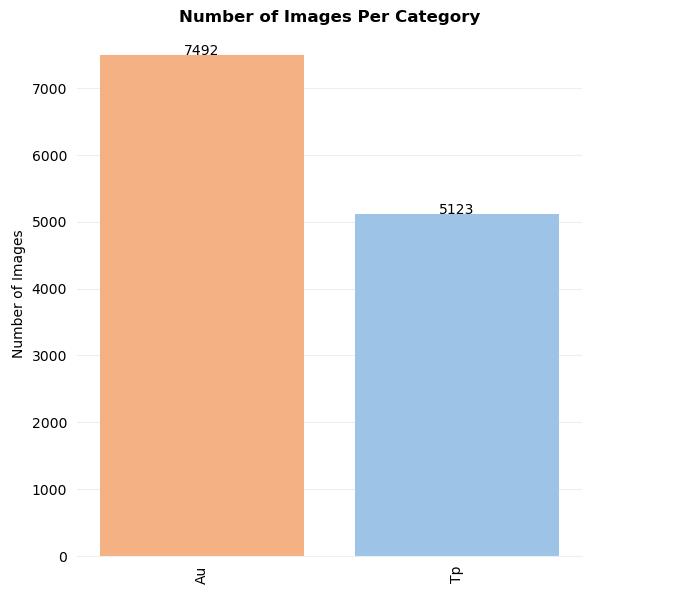
Fig -1:Nameofthefigure
International Research Journal of Engineering and Technology (IRJET) e-ISSN: 2395-0056
Volume: 11 Issue: 09 | Sep 2024 www.irjet.net p-ISSN: 2395-0072
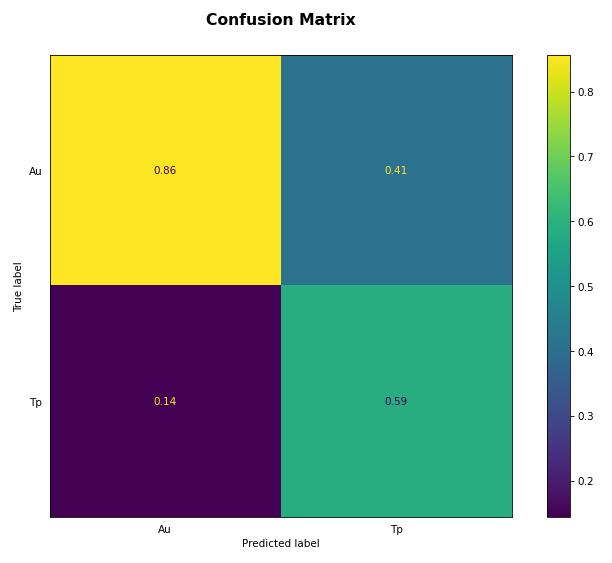
Withtheriseinaccessibilitytoimageeditingtoolscapableof producing forgeries, image forgery detection techniques have become increasingly vital. This paper introduces a detectionmethodleveragingdeeplearning,specificallyusing a pre-trained model and transfer learning. The proposed method examines the discrepancies between an original imageanditscompressedversiontogenerateafeaturemap, which is then fed into a pre-trained model to enhance detection accuracy. The technique was evaluated across eight different pre-trained models adapted for binary classificationandcomparedtostate-of-the-artmethods.
Theexperimentalresultsindicatethatutilizingpre-trained models can significantly improve detection accuracy comparedtotraditionalCNN-basedapproaches.Amongthe
eight models tested, MobileNetV2 achieved the highest detection accuracy, around 95%, with fewer training parameters. This led to faster training times, reduced computational costs, and lower system complexity and memoryusage.Consequently,MobileNetV2isrecommended as a robust backbone for image compression techniques, effectively detecting both image splicing and copy-move forgerieswithpromisingresults.
Despite its high performance, the proposed model has several limitations. It struggled with data generalization, performingwellontrainingdatabutfailingtogeneralizeto new, unseen data. It also faced challenges in detecting certaintypesofimageforgeries,includingnoveltechniques. Additionally,themodel didnotaddresslocalizationofthe forged areas and required significant computational resourcesand timefor both trainingandinference,which couldbeadrawbackinresource-constrainedenvironments.
1] Deep learning-based algorithm (ConvLSTM) for Copy Move Forgery DetectionMohamed A. Elaskilya, Monagi H. Alkinanib,AhmedSedikcandMohamedM.DessoukyMarch 2021
2] CopyMoveandSplicingImageForgeryDetectionusing CNNDevjaniMallick,MantashaShaikh,AnujaGulhaneand TabassumMaktum2022
3] A New Method to Detect Splicing Image Forgery Using ConvolutionalNeuralNetworkKhalidM.Hosny,AkramM. Mortda,NabilA.Lashin andMostafaM.FoudaJanuary2023
4]DesignofAutomatedDeepLearning-BasedFusionModel for Copy-Move Image Forgery Detection N. Krishnaraj, B. Sivakumar,RamyaKuppusamy, YuvarajaTeekaraman and AmruthRameshThelkar2022
5]ImageForgeryDetectionUsingTamper-GuidedDualSelfAttention Network with Multiresolution Hybrid Feature FengyongLi,ZhenjiaPei,WeiminWei,JingLi,andChuanQin 2022
6]Imagecopy-moveforgerydetectionandlocalizationbased on super-BPD segmentation and DCNN Qianwen Li, ChengyouWang,XiaoZhou&ZhiliangQin2022
7] Image forgery detection using Deep Neural Network AnushkaSingh,JyotsnaSinghJan2022
8] Deep Learning-Based Digital Image Forgery Detection System Emad Ul Haq Qazi , Tanveer Zia and Abdulrazaq AlmorjanMarch2022
9]EfficientApproachtowardsDetectionandIdentificationof CopyMoveandImageSplicingForgeriesUsingMaskR-CNN withMobileNetV1KalyaniDhananjayKadam, SwatiAhirrao ,andKetanKotechaJan2022.
International Research Journal of Engineering and Technology (IRJET) e-ISSN: 2395-0056
10]LightweightDeepLearningModelforDetectionofCopymove Image Forgery with Post-processed Attacks Muhammad Naveed Abbas, Mohammad Samar Ansari, MamoonaNaveedAsghar,NadiaKanwal,TerryO`NeBrian Lee
Volume: 11 Issue: 09 | Sep 2024 www.irjet.net p-ISSN: 2395-0072 © 2024, IRJET | Impact Factor value: 8.315 |