
International Research Journal of Engineering and Technology (IRJET) e-ISSN: 2395-0056
Volume: 11 Issue: 09 | Sep 2024 www.irjet.net p-ISSN: 2395-0072

International Research Journal of Engineering and Technology (IRJET) e-ISSN: 2395-0056
Volume: 11 Issue: 09 | Sep 2024 www.irjet.net p-ISSN: 2395-0072
Piyush Kumar1, Dipti Ranjan Tiwari2
1Master of Technology, Computer Science and Engineering, Lucknow Institute of Technology, Lucknow, India
2Assistant Professor, Department of Computer Science and Engineering, Lucknow Institute of Technology, Lucknow, India
Abstract - Road accidents represent a prominent cause of fatalities on a global scale, underscoring the need for advancedtechnologies to promptlydetectandrespondtosuch incidents. This comprehensive review delves intotheevolution and implementation of Safe Road AI, a cutting-edge real-time accident detection system that harnesses multi-angle crash videos. Through meticulous analysis of footage from diverse viewpoints, Safe Road AI utilizes state-of-the-art computer vision techniques and deep learning algorithms to precisely identify and categorize traffic accidents as they unfold. The system's capacity to process intricate visual data instantaneously confers a notable advantage in diminishing emergency response times andenhancing overall road safety. This paper conducts a thorough evaluation of existing methodologies in accident detection, shedding light on the obstacles and breakthroughs in multi-angle video analysis. Furthermore, it delves into the ramificationsofSafeRoadAIin fortifying road safety measures, influencing policy-making endeavors, and delineating future research paths within the realm of intelligent transportation systems.
Key Words: Safe Road AI, real-time accident detection, multi-angle crash videos, computer vision, deep learning, trafficsafety,intelligenttransportationsystems,emergency response,roadsafetytechnology.
"Safe Road AI" is an innovative technology crafted to heighten road safety by employing real-time accident detectionthroughthescrutinyofmulti-anglecrashvideos. The genesis of this technology can be attributed to the escalatingglobalapprehensionregardingroadsafety,with myriadaccidentstranspiringannually,oftenculminatingin fatalities or severe injuries. Conventional methods of accidentdetectionheavilyleanedoneyewitnesstestimonies, surveillance cameras with restricted angles, or tardy responses from emergency services, frequently leading to prolonged rescue durations and inadequate accident evaluations.
The inception of "Safe Road AI" materialized in the latter partofthe2010sasadvancementsinartificialintelligence (AI),machinelearning,andcomputervisionbegantoexhibit
potential in the realm of real-time image and video processing. Scholars and technologists acknowledged the transformative capabilities of these technologies in enhancingroadsafetythroughpromptandpreciseaccident detection, facilitating expedited response times and comprehensivedatacollectionforanalysis.
The preliminary phase of development entailed the aggregation of extensive datasets from diverse origins, encompassingtrafficsurveillancecameras,dashcams,and variousvideorecordingapparatuses,totrainAImodels.The primaryfocusrevolvedaroundformulatingalgorithmswith theabilitytoconcurrentlyscrutinizemultipleperspectivesof collisionfootage,discernrecurringpatterns,andpromptly identifyaccidentsastheyunfold.Thisendeavornecessitated the utilization of sophisticated machine learning methodologies,notablydeeplearning,toeffectivelyanalyze anddeciphertheintricatedatafromvariedvantagepoints.
Bytheearly2020s,theinitialprototypesof"SafeRoadAI" were developed. These prototypes underwent testing in controlledenvironmentsandlaterinreal-worldscenarios. Thesystemwascraftedtoseamlesslyintegratewithexisting infrastructure,suchastrafficsurveillancecameras,andhad thecapabilitytobeincorporatedintosmartcityframeworks. TheAIwasmeticulouslytrainedtoidentifyvarioustypesof accidents,rangingfromminorcollisionstoseverecrashes, throughreal-timeanalysisofvideofeeds.
A significant challenge encountered during this phase revolvedaroundensuringtheprecisionanddependabilityof the system. The AI needed to exhibit the capacity to differentiatebetweengenuineaccidentsandothersimilarlooking events, such as sudden braking or unexpected maneuvers.Continuousenhancementswereimplementedto thealgorithms,whichincludedaugmentingtheAI'saptitude toassimilatenewdataandrefiningitsadaptabilitytodiverse environmentalconditions,suchasvaryingweatherpatterns andlightingscenarios.
"Safe Road AI" was progressively implemented in various urban centers globally by the mid-2020s. Its introduction
International Research Journal of Engineering and Technology (IRJET) e-ISSN: 2395-0056
Volume: 11 Issue: 09 | Sep 2024 www.irjet.net p-ISSN: 2395-0072
signifiedanotableachievementintherealmofroadsafety, offering authorities a potent tool for real-time accident monitoringandresponse.Thesystem'scapacitytoscrutinize multi-angle collision footage facilitated a more comprehensive comprehension of accidents, enabling emergencyservicesandtrafficmanagementauthoritiesto makewell-informeddecisions.Theimpactof"SafeRoadAI" hasbeenprofound,notablydecreasingtheresponsetimeof emergencypersonneltoaccidentsites,potentiallymitigating fatalities and lessening injury severity. Furthermore, the dataamassedbythesystemhasprovedinvaluablefortraffic analysisandtheenhancementofsaferroadinfrastructures. Additionally, insurance firms have reaped the benefits of morepreciseandimpartialaccidentassessments,resulting infairerclaimsadjudication.
In recent times, the escalating number of vehicles on the roads has resulted in a substantial increase in traffic accidents on a global scale. Prompt identification and response to these accidents are imperative for preserving lives, minimizing injuries, and averting subsequent collisions. Conventional approaches to accident detection often depend on delayed testimonies from bystanders or emergency services, leading to crucial time lapses. With technologicaladvancements,thereisaburgeoninginterest in harnessing artificial intelligence (AI) to augment road safetythroughreal-timeaccidentdetection.
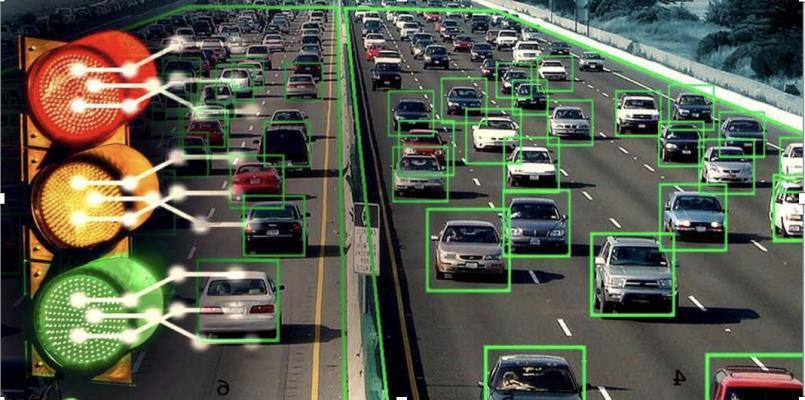
TheemergenceofAI-drivensystemshaspavedthewayfor tackling the complexities of road safety. One promising strategyinvolvesutilizingmulti-anglecrashvideos,obtained from a variety of sources such as surveillance cameras, dashcams,anddrones,forreal-timeaccidentdetection.This approach enables a thorough examination of incidents, offeringvaluableinsightsthatcanenhanceresponsetimes andpotentiallyavertfutureaccidents.
SAFEROADAIisaninnovativesystemcraftedtoleverage the capabilities of AI for instantaneous accident identification. Through the analysis of multi-angle crash videos, this system strives to recognize accidents as they occur,issuingimmediatealertstoemergencyservicesand
traffic management centers. The capacity to process and scrutinize data from diverse perspectives heightens the precisionofdetection,renderingSAFEROADAIavaluable instrumentinthepursuitofsaferroads.
Thisanalytical paper delves into the existinglandscape of research and development in AI-based accident detection systems, focusing on the utilization of multi-angle video analysis. It furnishes a comprehensive overview of the methodologiesemployed,theobstaclesencountered,andthe potentialadvantagesofdeployingsuchsystemsonalarge scale. Furthermore, the paper deliberates on the future potential of SAFE ROAD AI and analogous technologies in transformingroadsafetyandaccidentmanagement.
2.1.Importance of leveraging AI and multi-angle video data for enhancing road safety.
Leveragingartificialintelligence(AI)andmulti-anglevideo data is imperative for enhancing road safety as it enables moreprecise,real-timedetectionandanalysisofaccidents. AI algorithms, particularly in the field of computer vision, canefficientlyprocessvideodatafromvariousperspectives, ensuring the accurate identification of incidents while minimizing false alarms and missed detections. This capability facilitates prompt responses, which are vital in saving lives and reducing injuries. Moreover, multi-angle viewpoints offer a comprehensive outlook on accidents, empowering AI systems to examine crucial factors like impact angles and vehicle velocities. This leads to deeper insights into the causes of accidents and facilitates more informeddecision-making.Additionally,thescalabilityofAI systemsallowsfortheefficientmonitoringofextensiveroad networks, offering a proactive approach to accident preventionbyidentifyingandmitigatingrisksbeforethey escalate into collisions. The fusion of AI with multi-angle video data establishes a more precise, responsive, and efficientroadsafetyframework.
2.2.Focus on AI-based methodologies for real-time accident detection using multi-angle crash videos.
FocusingonAI-drivenmethodologiesforreal-timeaccident detectionusingmulti-anglecrashvideosisimperativeasit harnessesadvancedtechnologiestoenhancethespeedand precision of identifying road incidents. AI algorithms, especially those within machine learning and computer visiondomains,havethecapabilitytoanalyzevideostreams fromdiverseanglesconcurrently,enablingamorethorough andintricatecomprehensionofanaccidentasittranspires. This multi-angle strategy ensures that the AI system captures all crucial elements of the crash, including the sequence of events, vehicle dynamics, and the precise locationofimpact,therebyaugmentingthereliabilityofthe detectionprocess.Byprocessingthisdatainstantaneously, AIsystemscanpromptlydetectaccidents,facilitatingswifter emergencyresponsetimesanddiminishingthepotentialfor further harm. This emphasis on AI-facilitated, real-time
International Research Journal of Engineering and Technology (IRJET) e-ISSN: 2395-0056
Volume: 11 Issue: 09 | Sep 2024 www.irjet.net p-ISSN: 2395-0072
scrutiny of multi-angle crash videos signifies a notable progression in road safety, amalgamating state-of-the-art technology with comprehensive video data to formulate a highlyproficientandeffectiveaccidentdetectionsystem.
2.3.multiple viewpoints improve analysis and decision-making.
Multiple perspectives significantly enhance analysis and decision-making by offering a more comprehensive and nuanced understanding of an incident, such as a traffic collision. When an event is captured from various viewpoints, each perspective unveils distinct details that could be overlooked if only a single vantage point was available.Forexample,onecameraanglemightcapturethe precisemomentofimpact,whileanotheranglerevealsthe events leading up to the crash, including the velocity and actions of the involved vehicles. By amalgamating these diverse perspectives, artificial intelligence systems can constructamorepreciseandintricatereconstructionofthe incident,resultinginsuperioranalysis.Thisholisticoutlook facilitatesmorewell-informeddecision-making,whetherit involvesidentifyingtherootcauseoftheaccident,evaluating itsseverity,ordeterminingthemostappropriateemergency response.Ultimately,multipleviewpointsenableaprofound comprehension, diminishing the probability of errors and enhancingtheoverallefficacyoftheanalysisandsubsequent decisions.
AItechniquesforaccidentdetectionencompassafusionof sophisticated algorithms and methodologies crafted to scrutinizevideodata,pinpointpotentialaccidents,andoffer real-timeresponses.Hereisanintricateexaminationofthe principalAItechniquesemployedinthisrealm:
Computer vision is the foundation of AI-based accident detection, allowing systems to interpret and understand visualdatafromvideofeeds.Severalspecifictechniquesare involved:
3.1.1.Object
AI models, particularly Convolutional Neural Networks (CNNs), play a vital role in the realm of video analysis by being trained to identify and categorize various objects present in a video feed. These objects can range from vehiclesandpedestrianstotrafficsignsandroadlanes.For instance, in the context of autonomous driving, AI models utilizingCNNscaneffectivelydistinguishbetweendifferent elementsontheroad,enablingthevehicletomakeinformed decisions. Object detection, which is a fundamental task performedbytheseAImodels,isessentialforrecognizing the key components involved in potential accidents and ensuringthesafetyofbothpedestriansanddriversalike.By
accuratelydetectingobjectsinreal-timevideostreams,these AImodelscontributesignificantlytoenhancingtheoverall safety and efficiency of various applications, such as surveillancesystemsandautonomousvehicles.
Onceobjectsaredetected,motiontrackingalgorithms,often basedonKalmanfiltersoropticalflowtechniques,followthe movement of these objects across frames. This helps in understanding the dynamics of the accident, such as the speedanddirectionofthevehiclesinvolved.
Inpracticalterms,considerascenariowhereasurveillance cameracapturesatrafficintersection.Whenacarentersthe frame, the motion tracking algorithm can identify it and monitor its path as it moves through the intersection. By analyzingthedatacollectedfromthealgorithm,authorities canreconstructtheeventsleadinguptoacollision.
Motion tracking algorithms play a crucial role in various fieldsbeyondtrafficanalysis.Forinstance,insports,these algorithmsareusedtotrackthemovementofplayersonthe field,providingvaluableinsightsforcoachesandanalysts. Similarly, in robotics, motion tracking is essential for ensuring precise and coordinated movements of robotic systems.
ByleveragingadvancedtechnologieslikeKalmanfiltersand optical flow techniques, motion tracking algorithms have becomeindispensabletoolsforanalyzingdynamicsystems. Theyenableresearchersandpractitionerstodelvedeeper into the behavior of moving objects, paving the way for improved understanding and decision-making in a wide rangeofapplications.
AI systems are extensively trained to analyze and understand normal traffic patterns and behaviors. For instance, these systems can distinguish between a vehicle moving steadily in a lane and a vehicle abruptly changing laneswithoutsignaling.Thislevelofsophisticationenables AI algorithms to detect anomalies effectively. When an abnormal event like a sudden stop, collision, or a vehicle swerving unexpectedly is detected, anomaly detection algorithmspromptlyflagitasapotentialaccident,thereby enhancingroadsafety.
To achieve this, anomaly detection algorithms employ varioustechniquessuchasSupportVectorMachines(SVMs) and Autoencoders. Support Vector Machines (SVMs) are particularly useful in identifying outliers in the data by creatingahyperplanethatbestseparatesdifferentclassesof datapoints.Ontheotherhand,Autoencodersareadeptat learningcomplexpatternsandfeaturesfromtheinputdata, makingthemvaluableindetectinganomaliesthatmaynot beeasilydiscerniblethroughtraditionalmethods.
International Research Journal of Engineering and Technology (IRJET) e-ISSN: 2395-0056
Volume: 11 Issue: 09 | Sep 2024 www.irjet.net p-ISSN: 2395-0072
Deep learning enhances the capabilities of AI in accident detectionby enablingmore complexandaccurate pattern recognition:
3.2.1.Convolutional
ConvolutionalNeuralNetworks(CNNs)haveproventobe highly effective in the realm of image and video analysis. Theirabilitytoautomaticallylearnandextractfeaturesfrom datasetsthemapart,especiallyintaskslikeidentifyingand classifyingobjectsandscenesincrashvideos.Forexample, inthecontextofautonomousdrivingsystems,CNNsplaya crucial role in detecting potential accidents by analyzing real-timevideofeedsfromcamerasmountedonvehicles.By processingthesevisualinputs,CNNscanaccuratelypinpoint criticaleventsontheroad,suchassuddenlanechangesor pedestriancrossings.
Furthermore, CNNs excel in recognizing patterns and nuances within images and videos, leading to improved accuracyinaccidentdetection.Thisenhancedcapabilityis particularlyvaluableinscenarioswherehumanperception maybelimitedorpronetoerror.Considerasituationwhere a surveillance camera captures a complex traffic incident involvingmultiplevehicles.ACNNcandiligentlyanalyzethe footage, identify relevant objects and movements, and providevaluableinsightstoaidinaccidentinvestigationand reconstruction.
Inessence,theversatilityandefficiencyofCNNsmakethem indispensable tools for enhancing safety and security in variousdomains.Whetherit'smonitoringtrafficconditions, analyzing surveillance footage, or assisting in forensic examinations,CNNscontinuetopushtheboundariesofwhat is possible in image and video analysis. Their adaptability andprecisionpavethewayforinnovativeapplicationsthat prioritizeaccuracyandreliabilityinaccidentdetectionand prevention.
Thesemodels,suchasLongShort-TermMemorynetworks (LSTMs),arespecificallycraftedtohandlesequentialdata, making them well-suited for analyzing video frames over time. LSTMs, a type of recurrent neural network, excel at capturingtemporaldependencies,whichplayacrucialrole inunderstandingtheprogressionofeventsthatmayleadto anaccident.
For instance, in the context of monitoring traffic intersections, LSTMs can track the movement of vehicles frame by frame, allowing for the detection of potentially dangerouspatternslikesuddenlanechangesorrunningred lights.Byanalyzingthesequentialnatureofvideodata,these
modelscanpredictthelikelihoodofaccidentsbeforethey occur,enablingproactiveinterventiontopreventthem.
LSTMs have been successfully applied in various fields beyondaccidentprevention.Intherealmofnaturallanguage processing, they are used to generate coherent and contextuallyrelevanttextbyconsideringtheorderofwords ina sentence. Thisapplicationhighlightstheversatility of LSTMs in capturing sequential patterns not only in video databutalsointextualinformation.
The ability of LSTMs to capture temporal dependencies makestheminvaluabletoolsforanalyzingsequentialdata, whether it be in the form of video frames or textual information.Bydelvingintothesequentialnatureofdata, these models offer insights that can enhance safety measures, improve predictive capabilities, and drive advancementsinvariousdomains.
Real-time processing is essential for timely accident detectionandresponse:
Toachievereal-timeperformance,AIsystemsoftenutilize edgecomputing,astrategywheredataprocessingoccursin proximity to the data source, such as on local devices or nearby servers, rather than being transmitted to a centralizedcloudserver.Thisapproachsignificantlyreduces latency, the delay between data input and output, and facilitatesquickerdecision-makingprocesses.
One practical example of edge computing in action is in autonomousvehicles.Thesevehiclesrelyonreal-timedata processingtomakesplit-seconddecisionswhileontheroad. By processing data on-board or through nearby edge servers,autonomousvehiclescanreactswiftlytochanging roadconditions,ensuringpassengersafety.
Additionally,edgecomputingisincreasinglybeingadopted inthehealthcareindustry.MedicaldevicesequippedwithAI capabilities can analyze patient data locally, allowing for immediateinsightsandfasterdiagnosiswithouttheneedto transfersensitiveinformationtoexternalservers.Thisnot only enhances patient privacy but also expedites critical healthcaredecisions.
EdgecomputingplaysacrucialroleintheInternetofThings (IoT)ecosystem.Smarthomedevices,suchasthermostats andsecuritycameras,leverageedgecomputingtoprocess datalocallyandrespondpromptlytousercommands.This decentralized approach enhances user experience by reducing response times and ensuring seamless device operation.
Edgecomputing'sabilitytoprocessdataclosertothesource, whetherinautonomousvehicles,healthcaredevices,orIoT
International Research Journal of Engineering and Technology (IRJET) e-ISSN: 2395-0056
Volume: 11 Issue: 09 | Sep 2024 www.irjet.net p-ISSN: 2395-0072
applications, is instrumental in achieving real-time performance,reducinglatency,andenablingfasterdecisionmakingacrossvariousindustries.
3.3.2.Parallel Processing
AImodels,especiallydeeplearningmodels,relyheavilyon substantialcomputationalpowertofunctioneffectively.This computational power is essential for handling complex algorithmsandprocessingvastamountsofdataefficiently. In particular, the utilization of parallel processing techniques,suchasGPUsorspecializedhardwarelikeTPUs, playsacrucialroleinenhancingtheperformanceofthese models.
For example, when analyzing video data for real-time accident detection, the ability to utilize GPUs or TPUs enables AI models to process frames rapidly and identify potential hazards promptly. This speed and efficiency are paramountincriticalsituationswhereimmediateactionis required.
TheparallelprocessingcapabilitiesprovidedbyGPUsand TPUsallowAImodelstodistributetaskseffectively,leading to optimized performance and faster computations. By harnessingthepowerofparallelprocessing,AIsystemscan handle intricate calculations and data manipulations with ease,resultinginmoreaccurateandtimelyinsights.
TheintegrationofparallelprocessingtechnologiesintoAI systems significantly enhances their capabilities, enabling themtoanalyzedata more swiftlyandaccurately.This,in turn,contributestotheoveralleffectivenessandreliability of AI applications in various domains, including real-time accidentdetection.
3.4.Multi-Modal
Accurateaccidentdetectionoftenrequirestheintegrationof datafrommultiplesources:
3.4.1.Sensor
Combining video data with other sensor inputs, such as radar,LiDAR,orGPS,cansignificantlyimprovetheaccuracy ofaccidentdetection.Byintegratingdifferenttypesofsensor data, a more comprehensive understanding of the surrounding environment can be achieved. For instance, radar data can offer precise details about the speed and distanceofvehiclesinvolvedinanaccident.Whenthisradar informationiscoupledwithvideoanalysis,amoredetailed andcompletepictureoftheincidentcanbeobtained.
In practical terms, imagine a scenario where a vehicle suddenlyswervesonahighway.Throughtheuseofradar, theexactspeedandproximityoftheswervingvehiclecanbe accurately determined. Concurrently, video footage from nearbycamerascancapturethevisualcontextoftheevent,
such as road conditions and surrounding traffic. By combining these two sources of information, it becomes easiertoreconstructthesequenceof eventsleadingup to theaccident.
TheintegrationofLiDARtechnologycanaddanotherlayer ofdepthtoaccidentdetection.LiDAR sensorscanprovide detailed 3D mapping of the environment, including the position of objects and obstacles in real-time. When synchronized with video data, this can offer a more comprehensive understanding of the spatial dynamics during an accident. Additionally, GPS data can be used to track the precise location and movement patterns of vehicles, further enhancing the accuracy of accident reconstruction.
Thefusionofvideodatawithradar,LiDAR,andGPSinputs presentsapowerfulsynergythatcanrevolutionizeaccident detectionandanalysis.Byleveragingthestrengthsofeach sensortechnology,amoreholisticanddetailedperspective ofaccidentscanbeachieved,ultimatelyleadingtoimproved safetymeasuresandpreventionstrategiesontheroad.
AIsystemsplayacrucialroleinmodernaccidentanalysisby integrating and synchronizing video feeds from various angles. This process ensures that every aspect of the accident is captured comprehensively, providing investigatorswithadetailedunderstandingoftheevent.For instance,whenacarcollisionoccurs,theseAIsystemscan combinefootagefrommultiplecamerastoreconstructthe sequenceofeventsaccurately.
One of the techniques utilized in this process is 3D reconstruction, where the AI system creates a threedimensionalmodeloftheaccidentscene.Thismodelallows investigatorstovirtuallyexplorethescene,analyzedifferent perspectives,andgathermoreinsightsintowhattranspired. Additionally,stereovision technologycan be employed to enhance the depth perception of the footage, providing a morerealisticrepresentationoftheaccident.
By utilizing these advanced technologies, the accuracy of accidentanalysisissignificantlyimproved.Investigatorscan delve deeper into the details of the incident, identify potential causes more effectively, and ultimately enhance safetymeasurestopreventsimilaraccidentsinthefuture. TheintegrationofAIsystemsinaccidentanalysisnotonly streamlinestheinvestigationprocessbutalsoenhancesthe overallunderstandingofcomplexevents.
Once an accident is detected, AI systems use machine learning to assess the severity of the incident and make decisions:
International Research Journal of Engineering and Technology (IRJET) e-ISSN: 2395-0056
Volume: 11 Issue: 09 | Sep 2024 www.irjet.net p-ISSN: 2395-0072
Afterdetectinganaccident,classificationalgorithmsplaya crucialroleincategorizingitbasedonseverity,whichcan rangefromminortomoderatetosevere.Forinstance,inthe case of a minor accident, it could involve a fender bender with minimal damage to vehicles and no injuries. On the other hand, a severe accident may result in significant damage,multipleinjuries,orevenfatalities.
The classification process is essential as it assists in prioritizing emergency response efforts and allocating resourceseffectively.Forexample,ifanaccidentisclassified as severe, emergency medical services and rescue teams would be dispatched promptly to the scene to provide immediateassistance.Incontrast,aminoraccidentmaynot require as urgent of a response, allowing resources to be allocatedtomorecriticalsituations.
By categorizing accidents based on severity, classification algorithmsenableauthoritiestomakeinformeddecisionson howtobestmanageandrespondtoeachincident.Thisnot onlyenhancestheefficiencyofemergencyservicesbutalso improvesoverallsafetyontheroads.Inconclusion,therole ofclassificationalgorithmsincategorizingaccidentseverity isparamountinensuringtimelyandappropriateemergency responses.
3.5.2.Predictive
AInotonlyhasthecapabilitytopredictpotentialoutcomes or consequences of an incident, such as likely injuries or disruptionsintrafficflow,butitcanalsoplayacrucialrolein preparing and implementing appropriate emergency responses.Predictivealgorithms,whichareoftenbasedon historicaldata,areinstrumentalinthisprocess.Forexample, in the case of a natural disaster like a hurricane, AI can analyze various factors such as wind speed, precipitation levels,andgeographicaldatatopredicttheareasmostatrisk andthepotentialimpactoninfrastructureandcommunities. Thisinformationisinvaluableforauthoritiestoproactively planevacuationroutes,allocateresources,andcoordinate rescue efforts. By leveraging AI technology, emergency responderscanenhancetheirpreparednessandefficiencyin managingcriseseffectively.
In addition to visual data, AI systems may use NLP techniquestogeneratealertsandreports:
3.6.1.Automated
After detecting an accident, NLP algorithms play a crucial roleingeneratingdetailedreportsthatsummarizethekey eventsandobservationseffectively.Thesereportsserveas essentialtoolsinprovidingcomprehensiveinformationto
relevant authorities and enhancing overall traffic management systems. For instance, imagine a scenario whereacarcollisionoccursatabusyintersection.TheNLP algorithms can swiftly analyze the sequence of events leading up to the accident, including the speed of the vehicles, the timing of the collision, and any contributing factorslikeweatherconditionsorroadobstructions.
Byincorporatingsuchspecificdetails,thegeneratedreports offeraclearandconciseoverviewoftheaccident,enabling authoritiestotakeappropriateactionspromptly.Moreover, these reports can be automatically disseminated to traffic control centers, enabling real-time updates on road conditionsandpotentialhazards.Thisseamlessintegration of NLP technology not only streamlines the reporting process but also enhances the overall efficiency of traffic managementoperations.
3.6.2.Voice-Based Alerts
In some systems, NLP is used to create voice alerts for drivers or emergency responders, providing real-time informationabouttheaccidentandnecessaryactions.
3.7.Reinforcement Learning for System Optimization
Reinforcement learning can be employed to continuously improve the performance of AI-based accident detection systems:
3.7.1.Adaptive Learning
Byinteractingwiththeenvironmentandreceivingfeedback, reinforcementlearningmodelscanoptimizetheirstrategies for accident detection, learning from past successes and failurestoenhancefutureperformance.
3.7.2.Traffic Management Integration
AIsystemscanusereinforcementlearningtooptimizetraffic flowandreducethelikelihoodofaccidents,bydynamically adjustingtrafficsignals,reroutingvehicles,orimplementing othertrafficmanagementmeasuresinrealtime.
3.8.Ethical AI and Fairness
Ensuring that AI systems for accident detection are fair, transparent,andethicaliscritical:
3.8.1.Bias Mitigation
AI models must be trained on diverse datasets to avoid biases that could lead to unequal treatment of different populations or inaccurate accident detection in certain scenarios.
International Research Journal of Engineering and Technology (IRJET) e-ISSN: 2395-0056
Volume: 11 Issue: 09 | Sep 2024 www.irjet.net p-ISSN: 2395-0072
It is essential to ensure that AI decisions, especially those related to accident detection, are explainable and transparent,allowingforaccountabilityincaseoferrorsor misjudgments.
Inthesectionoftheliteraturesurvey,wehavestudiedthe previousresearchpaperrelated tothe accidentdetectionof videos by using different mathod, the summary of the previouspaperaregivenbelow:
Christophe et al. This paper describes the real time implementation of a simple and robust motion detection algorithmbasedonMarkovrandomfieldmodeling,basedon ahybridarchitecture,associatingpipelinemoduleswithone asynchronousmoduletoperformthewholeprocess,from videoacquisitiontomovingobjectmasksvisualization.Realtime motion detection using MRF modeling with hybrid architecture. Achieved processing rate of 15 images/s, validating the approach. MRF-based motion detection algorithm with hybrid architecture proposed. Real-time implementationachievedwith15images/sprocessingrate.
Romuald et al. A new method that allows to accurately detersigned to detect and track the road lane of a vehicle minethepositionoftheroadsidesintheimagebasedonthe exploitation of a statistical model of the lanes and the management of the number of lanes is described. Method detects and tracks road lanes using statistical model. Implemented on experimental vehicle VELAC, showing robustnessandprecision.Precisioninlanedetectiondespite shadows or sunlight interference. Method can manage multiplelanesandworksonmarked/unmarkedroads.
Margrit et al. Real-timesystemdetectsandtracksvehicles onhighways.Usescolor,edge,motioninfoforrecognition and tracking. Real-time system detects lanes, boundaries, and vehicles on highways. Works well under various conditions,exceptincongestedcitytraffic.
Dawn. AMathematicalModelforComputerizedCarCrash DetectionusingComputerVisiontechniquesandaPoisson distribution that predicts the number of accidents in an intersectionperweekarepresented. Automaticcarcrash detectionusingcomputervisiontechniques.Mathematical model based on Poisson distribution for crash prediction. Computervisionaidsinaccidentdetectionatintersections. Potentialtosavelivesbyquickeremergencyresponse.
Fekri. The results show that the proposed scheme guaranteesrecordthevehicleaccidentintheITSserverand has better results in comparison with full time video recordingscheme.Novelreal-timevideoanddatacapturein Intelligent Transportation System. Solves storage issue, recordsaccidentefficiently,betterthanfull-timerecording.
Proposed scheme efficiently captures and saves vehicle accidentdata.Outperformsfull-timevideorecordingscheme inITSserver.
Murat et al. Apreliminaryreal-timeautonomousaccidentdetection system based on computational intelligence techniques is proposed and the results indicate that even though the number of false alarms dominates the real accident cases, the system can still provide useful informationthatcanbeusedforstatusverificationandearly reactiontopossibleaccidents.Real-timeaccidentdetection modelusingcomputationalintelligencetechniques.Bigdata processing for Istanbul City traffic data in 2015. System providesusefulinformationforstatusverificationandearly reaction. Number of false alarms dominates real accident cases.
Ankit et al. This special issue concerns computer vision subjectsinautomatedsolutionsforroadsafety,butalsofor thecaseswherethehumanfactorinvolvedintransportation andsafetysystemsplaysasignificantrole.Computervision enhancesroadsafetyandtrafficmanagement.Paperscover driver behavior, vehicle detection, and safety systems. Outcomebringsstate-of-the-artpapersinroadsafety.Many questionsstillunanswered,furtherresearchneeded.
Bhalerao et al. ADISisasmartsystemwhichinformstothe emergencycontactsthroughtextmessageswhenthereisa changeinacceleration,rotationandforcewhichisdetected by different sensors which are connected to the central systemofthecar.ADISinformsemergencycontactsviatext afterdetectingcarchanges.Fuzzylogicdecidesifanaccident has occurred. ADIS system detects accidents and notifies emergencycontactsimmediately.FuzzylogicinADISdecides ifanaccidenthasoccurred.
Hao et al. This paper combines the model with local normalizedpixel-valuedifferencing(NPD)features,trained AdaBoostmodelbypolymorphiccomplexanglesamples,and shows that the method has better detection performance and lower failure rate, and can meet the requirements of real-time vehicle detection in actual scene. Multi-angle vehicle detection method using micro cascading neural network.ImprovedAdaBoostmodelwithlocalNPDfeatures forbetterdetection.Improvedmulti-anglevehicledetection method with micro cascading neural network. Achieved 89.47%detectionrateand199msdetectiontime.
Lakshmipraba. An electronic system which is based on embeddedandInternetofThings(IoT)withsensorstotake actions under emergency conditions and to communicate through wireless protocol is presented. Smart highway systems using IoT for accident prevention. Innovative projectusingsensorsandwirelesscommunicationforroad safety.SmartsystemforaccidentpreventionusingIoTand sensors.Innovativeelectronic systembasedonembedded technologyandIoT.
International Research Journal of Engineering and Technology (IRJET) e-ISSN: 2395-0056
Volume: 11 Issue: 09 | Sep 2024 www.irjet.net p-ISSN: 2395-0072
Noor et al. The proposed approach to combine timedomain, frequency- domain, and joint time-frequency features extracted from a class of quadratic timefrequenciesdistributions(QTFDs)todetecteventsonroads through audio analysis and processing conforms to the effectivenessoftheproposedapproach.Audiosurveillance system detects hazardous events on roads using audio processing.Combinationoftime-domain,frequency-domain, and joint time-frequency features improves accuracy. Proposedapproachimprovesaccuracyrateby7%compared toothermethods.Combinationoftime-domain,frequencydomain, and joint time-frequency features enhances detectionaccuracy.
Lijun et al. In this paper, a 3D reconstruction of the road planeandpredictionoftrajectoriesisusedtoidentifyand predictcarcrashesfromtrafficsurveillancecameras,which canaccuratelymonitortheroad,withmeanerrorsof1.80% fordistancemeasurement,2.77%forspeedmeasurement, 0.24mforcarpositionprediction,and2.53km/hforspeed prediction.Trafficdangerrecognitionmodelforcarcrashes without training data. Utilizes 3D reconstruction and trajectory prediction for surveillance cameras. Model accuratelypredictscarcrasheswithoutlabeledtrainingdata. Real-timesafetychecksforspeedsanddistancesintraffic.
Hadi et al. Inthisarticle,anintegratedsafetysystemthat continuously monitors the driver's attention and vehicle surroundings, and finally decides whether the actual steering control status is safe or not, is proposed. Development of an integrated safety system for semiautonomous vehicles. System monitors driver's attention andsurroundingstopreventaccidentscausedbyfatigueand distraction.Thepaperproposesanintegratedsafetysystem for semi-autonomous vehicles. The system continuously monitorsthedriver'sattentionandvehiclesurroundings.
Dae. The safety of boarding is improved by checking the signal from the electronic chip, up to "recognition of the emotion from residence time in the sensing area" to the biological electronic chip in a study to secure safety in autonomous vehicles. Study on AI and linkage system for safetyinautonomousdriving.Focusonminimizinginjuries and ensuring safety in autonomous vehicles. Enhancing safety in autonomous vehicles through AI and biochips. FuturefocusonAIsystemsandbiochipsforroadsafety.
Jaidev et al. ArtificialIntelligence(AI)canhelpinimproved awareness of road conditions, driving behaviour of the peopleandcanavoidaccidentswiththehelpofimproved active safety and improved traffic condition. AI used to predictaccidentsandimproveroadsafetymeasures.Focus on detecting unsafe driving patterns and maintaining car health.
Xiao et al. This paper presents an integrated system that accuratelydetects,tracks,andclassifiesvehiclesusingonline traffic-camera feed, and focuses on the problem of the
automaticdetectionofanomalousdrivingbehaviorsbyusing the traffic- camera feed that is available online. Real-time trafficmonitoringfordetectinganomalousdrivingbehaviors usingcameras.Focusonautomaticdetectionofspeedingor stoppingonbikelanes.
Earnest et al. ThisframeworkcapitalizesonMaskR-CNN for accurate object detection followed by an efficient centroid based object tracking algorithm for surveillance footage to achieve a high Detection Rate and a low False Alarm Rate on general road-traffic CCTV surveillance footage. Proposed framework for computer vision-based accidentdetection.UtilizesMaskR-CNNforobjectdetection andcentroid-basedtrackingalgorithm.
Supriya et al. An intelligent accident detection, location tracking and notification system that detects an accident immediately when it takes place and sends a notification messagetothenearestpolicecontrolroomandhospitalso thattheycanvisitthelink,findouttheshortestrouteofthe accident spot and take initiatives to speed up the rescue process.Intelligentsystemdetectsaccidents,trackslocation, notifiesauthoritiesimmediately.GPSandGSMtechnologies used for efficient accident response system. Intelligent system detects accidents, notifies police and hospitals immediately.GPSandGSMtechnologiesused foraccurate accidentlocationtracking.
Shoaib et al. The main persistence of this system is to identifyanaccidentandfindthelocationoftheuser,which willhelptheusersinsavingtheirliveswithinminimaltime. IoTframeworkforaccidentdetectionanddisasterresponse. System locates accidents, alerts hospitals, and sends emergency messages. IoT can be utilized for accident detection and disaster response. The system helps in identifying accident location and providing immediate assistance.
Lattanzi et al. Thisworkinvestigatedthefusionofdifferent externalsensors,suchasagyroscopeandamagnetometer, with in-vehicle sensors, to increase machine learning identification of unsafe driver behavior. Machine learning usedtoidentifyunsafedriverbehavior.Fusionofexternal andin-vehiclesensorsimprovesaccuracy.
Lu et al. The proposed model is a promising video-based urbantrafficcrashdetectionalgorithmthatcouldbeusedin practiceinthefutureandcoulddetectcrashesmuchfaster thanotherfeaturefusion-basedmodels(e.g.,C3D).Videobased crash detection with feature fusion deep learning framework. Balances speed and accuracy for urban traffic crashdetection.Proposedmodelachievesbalancebetween accuracyandspeed.ResNetwithattentionmodulescaptures localizedappearancefeatures.
Sehyun et al. The approach of combining AI and HD map techniques is the main contribution of this study, which showsahighchanceofimprovingcurrenttrafficmonitoring
International Research Journal of Engineering and Technology (IRJET) e-ISSN: 2395-0056
Volume: 11 Issue: 09 | Sep 2024 www.irjet.net p-ISSN: 2395-0072
systems.AI-basedsystemforvehicledetectionandtracking at intersections. YOLOv4 used for vehicle detection and trajectoryestimation.
Thereviewof"SAFEROADAI:Real-TimeAccidentDetection from Multi-Angle Crash Videos" highlights the significant advancements in the application of AI technologies for enhancingroadsafety.Byleveragingreal-timevideoanalysis frommultipleangles,theproposedsystemoffersa robust solution for the rapid detection and response to road accidents. The integration of AI in accident detection not onlyimprovesthespeedandaccuracyofincidentreporting but also has the potential to reduce emergency response times,ultimatelysavinglives.
Whilethetechnologyispromising,thereviewalsoidentifies severalchallengesthatneedtobeaddressedforwidespread adoption.Theseincludetheneedforextensivedatasetsto trainAImodels,potentialprivacyconcernsrelatedtovideo surveillance,andtherequirementforseamlessintegration withexistingtrafficmanagementsystems.Futureresearch shouldfocusonovercomingthesechallengesandexploring ways to enhance the scalability and reliability of AI-based accidentdetectionsystems.
"SAFEROADAI"representsasignificantstepforwardinthe questforsaferroads.Itsabilitytodetectaccidentsinrealtime from multi-angle videos holds great promise for reducingroadfatalitiesandimprovingoveralltrafficsafety. With continued development and refinement, AI-driven accidentdetectionsystemshavethepotentialtobecomea critical component of modern traffic management and emergencyresponsestrategies.
1. A,B.H.,J,J.S.,&B,J.S.(2017).Accidentdetectionbyan intelligent system. IJARCCE, 6(5), 264–268. https://doi.org/10.17148/ijarcce.2017.6547
2. Abduljalil, F. M.(2014). A novel Real-Time video and data capture of vehicular accident in intelligent transportation systems. International Journal of ComputerNetworks&Communications,6(2),49–60. https://doi.org/10.5121/ijcnc.2014.6205
3. Aboah, A. (2023). AI-based framework for automatically extracting high-low features from NDS data to understand driver behavior. https://doi.org/10.32469/10355/94205
4. Almaadeed,N.,Asim,M.,Al-Maadeed,S.,Bouridane,A., & Beghdadi, A. (2018). Automatic detection and classification of audio events for road surveillance applications. Sensors, 18(6), 1858. https://doi.org/10.3390/s18061858
5. Arya,D.,Ghosh,S.K.,&Toshniwal,D.(2022).AI-Driven Road Condition Monitoring across Multiple Nations. Proceedings of the AAAI Conference on Artificial Intelligence, 36(11), 12868–12869. https://doi.org/10.1609/aaai.v36i11.21571
6. Betke,M.,Haritaoglu,E.,&Davis,L.S.(2000).Real-time multiplevehicledetectionandtrackingfromamoving vehicle.MachineVisionandApplications,12(2),69–83. https://doi.org/10.1007/s001380050126
7. Bibi,R.,Saeed,Y.,Zeb,A.,Ghazal,T.M.,Rahman,T.,Said, R.A.,Abbas,S.,Ahmad,M.,&Khan,M.A.(2021).EdgE AI-Basedautomateddetectionandclassificationofroad anomalies in VANET using Deep Learning. ComputationalIntelligenceandNeuroscience,2021,1–16.https://doi.org/10.1155/2021/6262194
8. Chaudhary,A.,Klette,R.,Raheja,J.L.,&Jin,X.(2017). Introductiontothespecialissueoncomputervisionin roadsafetyandintelligenttraffic.EURASIPJournalon Image and Video Processing, 2017(1). https://doi.org/10.1186/s13640-017-0166-5
9. Choi, J. G., Kong, C. W., Kim, G., & Lim, S. (2021). Car crash detection using ensemble deep learning and multimodal data from dashboard cameras. Expert Systems With Applications, 183, 115400. https://doi.org/10.1016/j.eswa.2021.115400
10. Dumontier,C.,Luthon,F.,&Charras,J.P.(1999).RealtimeDSPimplementationforMRF-basedvideomotion detection. IEEE Transactions on Image Processing, 8(10),1341–1347.https://doi.org/10.1109/83.791960
11. Gudemupati,S. S. R.,Chao, Y.L.,Kotikalapudi,L.P.,& Ceesay, E. (2022). Prevent car accidents by using AI. arXiv (Cornell University). https://doi.org/10.48550/arxiv.2206.11381
12. Hassan,S.U.,Chen,J.,Mahmood,T.,&Akbar,A.(2020). AccidentDetectionandDisasterResponseFramework utilizing IoT. International Journal of Advanced Computer Science and Applications, 11(3). https://doi.org/10.14569/ijacsa.2020.0110348
13. Ijjina, E. P., Chand, D., Gupta, S., & K, G. (2019). Computer Vision-based Accident Detection in Traffic Surveillance. IEEE. https://doi.org/10.1109/icccnt45670.2019.8944469
14. Khojasteh, H. H. K. A., Alipour, A. A., Ansari, E., & Razzaghi, P. (2020). An intelligent safety system for Human-Centeredsemi-autonomousvehicles.InLecture notes on data engineering and communications technologies (pp. 322–336). https://doi.org/10.1007/978-3-030-37309-2_26
International Research Journal of Engineering and Technology (IRJET) e-ISSN: 2395-0056
Volume: 11 Issue: 09 | Sep 2024 www.irjet.net p-ISSN: 2395-0072
15. Lattanzi, E., Castellucci, G., & Freschi, V. (2020). Improving machine learning identification of unsafe driver behavior by means of sensor fusion. Applied Sciences, 10(18), 6417. https://doi.org/10.3390/app10186417
16. Li, H., Su, J., & Lian, J. (2017). A rapid Multi-Angle vehicledetectionmethodincomplexscenario.DEStech TransactionsonEngineeringandTechnologyResearch, iceeac.
https://doi.org/10.12783/dtetr/iceeac2017/10706
17. Lu, Z., Zhou, W., Zhang, S., & Wang, C. (2020). A new Video-BasedCrashDetectionmethod:balancingspeed and accuracy using a feature fusion deep learning framework.JournalofAdvancedTransportation,2020, 1–12.https://doi.org/10.1155/2020/8848874
18. Ozbayoglu, M., Kucukayan, G., & Dogdu, E. (2016). A real-time autonomous highway accident detection modelbasedonbigdataprocessingandcomputational intelligence. IEEE. https://doi.org/10.1109/bigdata.2016.7840798
19. Razi,A.,Chen,X.,Li,H.,Wang,H.,Russo,B.,Chen,Y.,& Yu, H. (2022). Deep learning serves Traffic Safety Analysis: A forward-looking review. arXiv (Cornell University).
https://doi.org/10.48550/arxiv.2203.10939
20. Rueß, H., & Burton, S. (2022). Safe AI How is this Possible? arXiv (Cornell University). https://doi.org/10.48550/arxiv.2201.10436
21. Sarker, S., Rahman, M. S., & Sakib, M. N. (2019). An Approach Towards Intelligent Accident Detection, Location Tracking and Notification System. IEEE. https://doi.org/10.1109/ictp48844.2019.9041759
22. Seo, D. (2019). A study on the application of AI and linkage system for safety in the autonomous driving. JournaloftheKoreanChemicalSociety,10(11),95–100. https://doi.org/10.15207/jkcs.2019.10.11.095
23. Strianese, D. M. (2008). A mathematical model for computerized car crash detection using computer vision techniques. University of Nevada, Las Vegas. https://doi.org/10.25669/ye7b-dra3
24. Tak,S.,Lee,J.,Song,J.,&Kim,S.(2021).Developmentof AI-BasedVehicleDetectionandTrackingSystemforCITS Application. Journal of Advanced Transportation, 2021,1–15.https://doi.org/10.1155/2021/4438861
25. Yu, L., Zhang, D., Chen, X., & Hauptmann, A. (2018). TrafficDangerRecognitionWithSurveillanceCameras Without Training Data. IEEE. https://doi.org/10.1109/avss.2018.8639166
26. Zhang, Y., & Sung, Y. (2023). Hybrid traffic accident Classification models. Mathematics, 11(4), 1050. https://doi.org/10.3390/math11041050
27. Zheng, X., Wu, F., Chen, W., Naghizade, E., & Khoshelham,K.(2019).Showmeasaferway:detecting anomalousdrivingbehaviorusingonlinetrafficfootage. Infrastructures, 4(2), 22. https://doi.org/10.3390/infrastructures4020022