
International Research Journal of Engineering and Technology (IRJET) e-ISSN: 2395-0056
Volume: 11 Issue: 08 | Aug 2024 www.irjet.net p-ISSN: 2395-0072

International Research Journal of Engineering and Technology (IRJET) e-ISSN: 2395-0056
Volume: 11 Issue: 08 | Aug 2024 www.irjet.net p-ISSN: 2395-0072
1Manager, Central Institute of Petrochemical Engineering Technology, CIPET, Mysuru. 2MTech Scholar, Government Tool Room and Training Centre, GTTC, Mysuru.
Abstract - The project, titled "Design, Development, and Analysis of Pad Main Rotor Head Grip for Helicopters,"aims to convert metal components to PEEK using advanced injection molding to enhance performance and reduce weight, while ensuring structural integrity and durability meet aerospace standards. It involves design optimization, rigorous material selection, and thedevelopment ofsophisticated manufacturing processes, including structural analysis using Mold flow simulation. The focus is on evaluating mechanical properties such as strength, stiffness, and fatigue resistance to comply with aerospace requirements. This study contributes to lightweight design strategies in rotorcraft applications and advances efficiency and sustainability in aviation technology.
Key Words: Pad Main Rotor Head Grip, helicopter, PEEK (Polyether Ether Ketone), Mold flow simulation, injection molding,lightweightdesign,aerospaceengineering
1. INTRODUCTION
In aerospace engineering, optimizing materials for lightweightandhigh-performancecomponentsiscrucialfor enhancing aircraft efficiency. This project focuses on transforming the main rotorhead gripof helicopters from metaltoadvancedplasticmaterials,specificallyPolyEther Ether Ketone (PEEK), using innovative injection molding techniques.Thegoalistoreduceweightwhilemaintainingor improvingstructuralintegrityandperformancestandards. By employing advanced design and simulation tools, this projectwillcomparetheplasticgripwithtraditionalmetal versions to assess the feasibility and benefits of PEEK in aerospace applications. The initiative aims to advance lightweightdesignandmanufacturingefficiencyinrotorcraft technology.
Methodology serves as the structured framework that outlinesthesystematicapproachtoachievingtheobjectives oftheproject,whilealigningwithitsscopeandrequirements.
(a) Identification of Problem: The initial step involves thoroughresearchanddatacollectiontoidentifyanddefine the problem statement accurately. This process ensures a clear understanding of the challenges associated with convertingthemainrotorheadgripfrommetaltoplastic.
(b)ObjectiveofProject:Theprojectobjectivesaredefinedto establishthedesiredoutcomesandmilestonestobeachieved byitsconclusion.Theseobjectivesarestructuredtobalance thedimensionsoftheprojectmanagementtriangle:quality, time,andcost.
(c)LiteratureSurvey:Acomprehensiveliteraturesurveyis conducted to review existing research and developments relevant to plastic components in aerospace applications. This section synthesizes various analyses and research findings, providing a foundation for informed decisionmakingandinnovation.
(d) Identification of Process Parameters: Critical process parameters such as press tool clearance, tolerance levels, material properties, and cost factors are identified and defined.Theseparametersplayapivotalroleinshapingthe design and manufacturing processes to ensure optimal performanceandcost-effectiveness.
(e)TrialRunstoEstablishRangeofParameters:Conducting trial runs is essential to validate and establish the optimal rangeofprocessparameters.Thesetrialsenablefine-tuning and adjustment of parameters to meet specified quality standardsandperformancecriteria.
(f) Design Optimization: Design optimization employs engineeringmethodologiestomathematicallyformulateand evaluatedesignalternatives.Thisiterativeprocessaimsto enhancetheefficiency,functionality,andmanufacturabilityof the main rotor head grip in plastic while meeting project objectivesandconstraints.
(g)ProductionofPlasticComponents:Theproductionphase involvesutilizinginjectionmoldingprocessestomanufacture the main rotor head grip from Poly Ether Ether Ketone (PEEK). This phase includes mold design and fabrication, ensuring that the plastic components meet stringent aerospacestandardsforperformanceanddurability.
(h)ResultAnalysis:Analysisofresultsfromproductionand testingphasesisconductedtoassessperformancemetrics and validate against project requirements. If the rejection rate exceeds acceptable levels, design rectifications are implemented, followed by further trials to verify improvements.
International Research Journal of Engineering and Technology (IRJET) e-ISSN: 2395-0056
Volume: 11 Issue: 08 | Aug 2024 www.irjet.net p-ISSN: 2395-0072
This methodological approach ensures a systematic and rigorousexplorationofthe"Design,Develop,Analysis,and Manufacturing of a Pad Main Rotor Head Grip for a Helicopter" project, integrating advanced materials, innovativedesignpractices,andrigoroustestingprotocolsto achieveoptimizedoutcomesinaerospaceengineering.
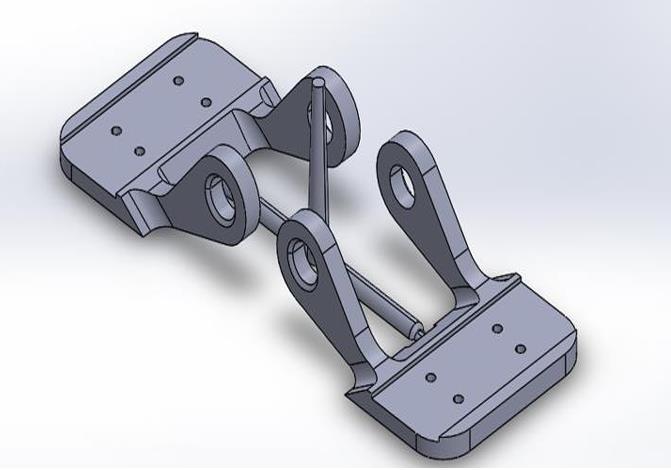
ThisprojectfocusesonoptimizingtheMainRotorHeadGrip in helicopters, a key component of the rotor system that provides lift and thrust. The goal is to reduce the grip's weightandmanufacturingcostsbyusingmaterialslikeBS4S 97andPolyetherEtherKetone(PEEK).ANSYSsoftwarewill beusedforsimulationtostudydynamicforcesandvalidate results. The project aims to improve performance and efficiency through advanced material selection, design optimization,andrigorouscomputationalvalidation.
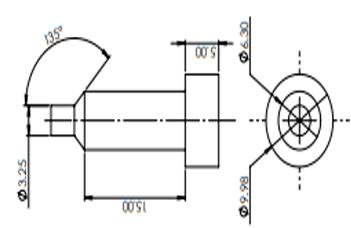
Cavity Pins add precise surface features such as holes or indentstomoldedparts.Theycanbefixedormovable,with movable pins assisting in ejection and creating detailed impressions.
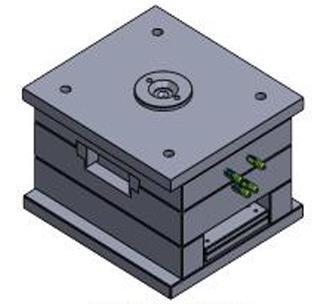
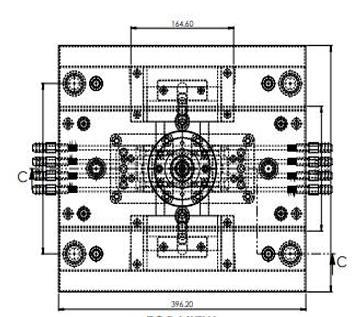
An injectionmold isa precision tool usedtoshapemolten materialintoafinalproductthroughtheprocessofinjection molding.Thedesignandfunctionalityofthemoldarecritical to producing high-quality, consistent parts. Here’s a comprehensivelookatthedifferentaspectsofmolddesign andoperation:
International Research Journal of Engineering and Technology (IRJET) e-ISSN: 2395-0056
Volume: 11 Issue: 08 | Aug 2024 www.irjet.net p-ISSN: 2395-0072
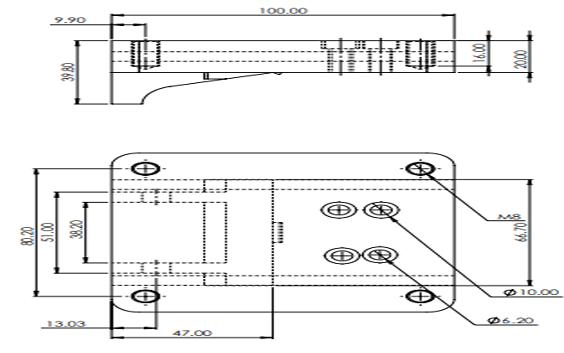
Cavity Inserts define the external shape and contours of a moldedpart,includingfeaturesliketexturesorlogos.They are interchangeable and form the outer surface as molten materialfillsthespaceandcools.
4.3 CORE INSERT
CoreInsertscreateinternalfeatureslikethreadsorhollow sectionsinamoldedpart.Theyarecomplex,oftenincluding coolingchannels,andareremovabletoaidinpartejection andmoldmaintenance.
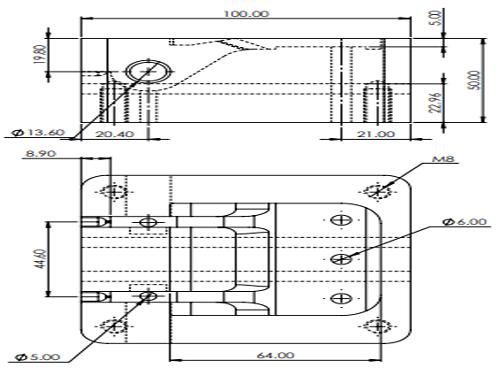
-6:CoreInsert
5 CALCULATION OF INJECTION MOULDING PARAMETERS:
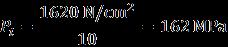
1. ClampingForceCalculation
Pi=162×10=1620N/cm²:






Calculation








Squareofthenaturallogarithmvalue:


4. InjectionPressureCalculation
Calculatetheinjectionpressure:


5. CycleTimeCalculation
Calculatethecycletime:

International Research Journal of Engineering and Technology (IRJET) e-ISSN: 2395-0056
Volume: 11 Issue: 08 | Aug 2024 www.irjet.net p-ISSN: 2395-0072
6. VolumetricShrinkageCalculation
Calculatethevolumetricshrinkage:




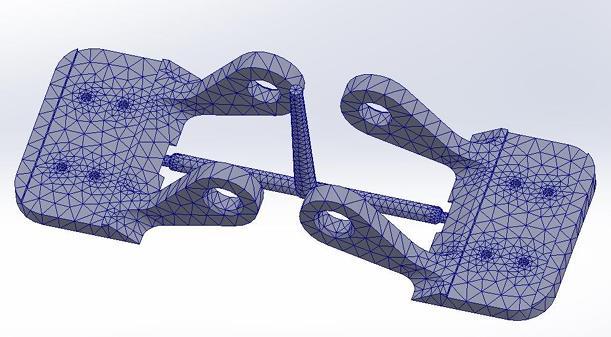
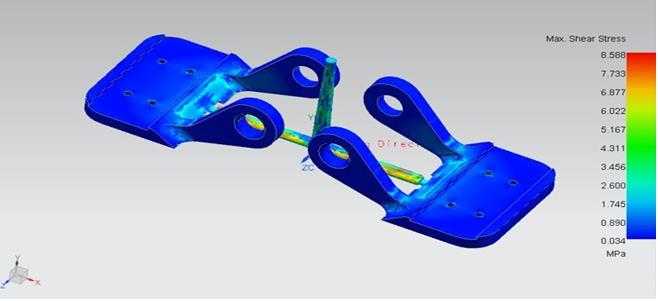
6.1 Meshing
MeshinginNXdividesdesignsintosubdomainsusing Midplane,DualDomain,or3DTechnologyfor detailedanalysis.
6.3 Average Velocity
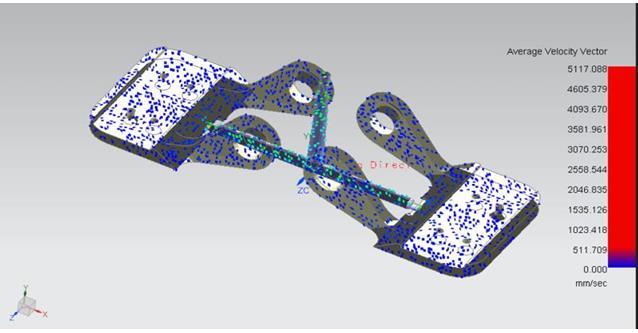
Fig -9:AverageVelocity
6.4 Volumetric shrinkage:
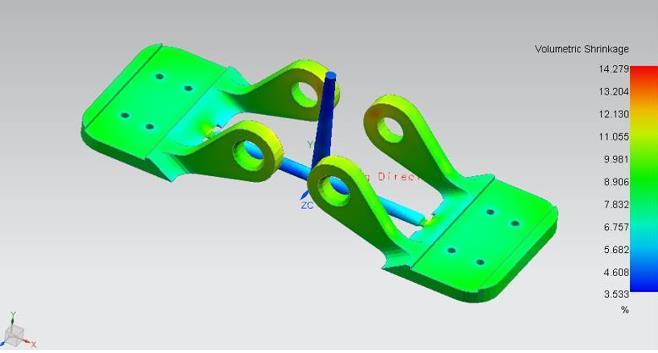
Fig -10:Volumetricshrinkage
6.5 Bulk Temperature:
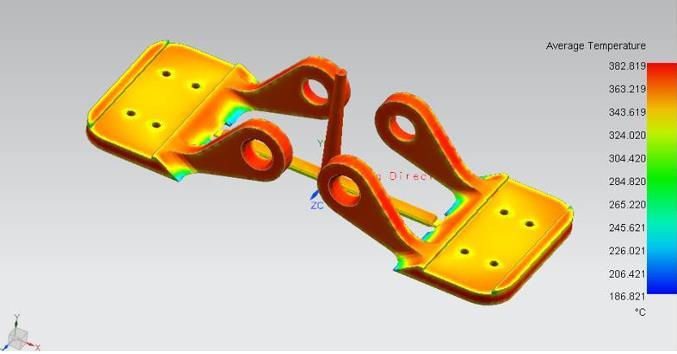
Fig -11:BulkTemperature
2024, IRJET | Impact Factor value: 8.315 | ISO 9001:2008
International Research Journal of Engineering and Technology (IRJET) e-ISSN: 2395-0056
Volume: 11 Issue: 08 | Aug 2024 www.irjet.net p-ISSN: 2395-0072
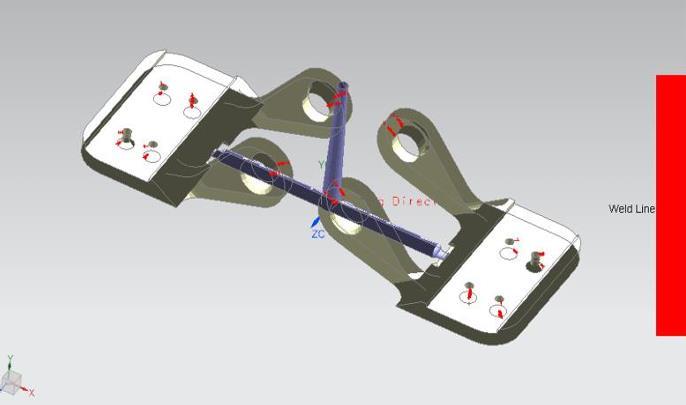
Therotorheadpad,designedusingCADandanalyzedwith CAE, showed that PEEK's ultimate strength of 87 MPa is suitableforitsrequirements.Weightwasreducedby80%, from 160 grams to 26 grams, by switching from metal to PEEK. Mold Flow analysis optimized injection molding parameters,enhancingqualityandefficiency.Atwo-cavity mold increased productivity, while manufacturing costs were justified by lower per-part expenses. Overall, the conversiontoplasticimprovedperformance,durability,and cost-effectiveness.
[1] Shah Rutvik,, C. Timbadiya Prayag,Et..Al published a paperon“DesignandAnalysisofHelicopterTailUsing Composite Materials” in Journal of Materials EngineeringandPerformance,2023.
[2] G.Dhananjayulu, D.R.Parthasarathi Et.Al published a paperon“DesignAndOptimizationOfHelicopterRotor BladeUsingDifferentMaterials”inJournalofEmerging TechnologiesandInnovativeResearch,2018.
[3] Weidong Wu , Junzhe Xin, Et.Al published a paper on “Achieving Injection Molding Interlayer Strength Via Powder Assisted Hot Isostatic Pressing In Material Extrusion Polyetheretherketone” in Additive Manufacturing,2023.
[4] JacquesYachouh,Vale´rieOrti,Et.Alpublishedapaper on “Polyetheretherketone (PEEK) For Medical Applications”inJournalofMaterialsScience:Materials inMedicine,2016.
[5] Ying Li , Ziyang Wang Et.Al published a paper on “Tribological Properties of PEEK and Its Composite MaterialunderOilLubrication”inGoogleScholar,2024.
[6] A. Siddiq, A.R. Kennedy published a paper on “Compressionmouldingandinjectionovermouldingof porousPEEKcomponents”inJournaloftheMechanical BehaviorofBiomedicalMaterials,November2020. M. Young, The Technical Writer’s Handbook. Mill Valley, CA:UniversityScience,1989.