
International Research Journal of Engineering and Technology (IRJET) e-ISSN: 2395-0056
Volume: 11 Issue: 08 | Aug 2024 www.irjet.net p-ISSN: 2395-0072

International Research Journal of Engineering and Technology (IRJET) e-ISSN: 2395-0056
Volume: 11 Issue: 08 | Aug 2024 www.irjet.net p-ISSN: 2395-0072
Sayan Guha1
Associate Director & Principal Architect, AI & Analytics Practice, Cognizant Technology Solutions, West Bengal, India
Abstract – Maintaining a standard in writing prompts to interact with Language models requiresadisciplinedlearning and approach on the acceptable precision, conciseness and brevity of the prompts which effectively produces results better in cases where such standards are maintained as compared to the situations where it is not maintained. The prompt engineering practice guidelines states to have only actions which relevant and which can produce precise results as compared to incidents wherestandardsarenotmaintained. The manual process of prompt design could be accelerated by a system which includes Viterbialgorithm-basedPathPruning which would accept raw English language input and would prune the path which is most relevant and would discard the paths which have lower probabilities. In this process, the Viterbi algorithm would identify the key elements in Parts of Speech tagging and will align and assemble the natural language to fit a prompt template in the order expectedbythe Large Language model and in the right practice of prompt design.
Key Words:PromptEngineering,ViterbiAlgorithm, PathPruning,Promptdesign,FewShotprompting,Natural Language, Parts of Speech (POS) Tagging, RTF (Role Task Format), Generative AI, Large Language Model (LLM), Artificial Neural Network (ANN), Hidden Markov Model (HMM)
In today’s rapidly evolving technological landscape around prompt engineering practice evolved as a major componentforGenerative-AIdrivensolutionstheabilityto design effective prompts remains a critical challenge, especially when dealing with raw, unstructured English inputs. To address this, I propose leveraging the Viterbi algorithm to identify the optimal prompt while discarding loweffectiveoptionsthroughpathpruning.Thisapproach aimstoautomateandstreamlinethepromptdesignprocess, makingitmoreaccessibleandtime-efficientforindividuals who may lack expertise in standard prompt writing techniques.Inthispaper,Iwillexplorehowthismethodcan facilitate the creation of high-quality prompts, thereby enhancingproductivityandensuringconsistencyinvarious applications
Mymotivationforwritingthispaperistoaccelerateand simplify the process of prompt engineering, making it accessibletoabroaderaudience,includingthosewhomay not be skilled in writing prompts according to standard practices. By leveraging the Viterbi algorithm, I aim to transform raw, unstructured inputs into effective and suitable prompts. This approach not only streamlines the prompt design process but also ensures that high-quality promptscanbegeneratedefficiently.ThesystemIpropose willtakerawpromptsasinput,applytheViterbialgorithmto identifythebestpossibleprompt,anddiscardless-effective optionsthroughpathpruning.Thismethodwillfacilitatean automated,time-efficientsolution,empoweringindividuals to create effective prompts without needing extensive expertise in prompt engineering. Ultimately, this research seekstoscalethepracticeofpromptengineering,makingit moreinclusiveandefficient.
The aim of this paper is to develop a novel approach to efficientcraftingofpromptsthatacceleratesandsimplifies the process, making it accessible to a broader audience, includingthosewithoutspecializedskillsinwritingprompts according to standard practices. By leveraging the Viterbi algorithm,thisresearchseekstotransformraw,unstructured inputs into effective and suitable prompts. The proposed system will take raw prompts as input, apply the Viterbi algorithmtoidentifythebestpossibleprompt,anddiscard less-effective options through path pruning. This method aimstostreamlinethepromptdesignprocess,ensuringthe efficientgenerationofhigh-qualityprompts.Ultimately,this research endeavors to scale the practice of prompt engineering,makingitmoreinclusiveandefficient,thereby empoweringindividualstocreateeffectivepromptswithout needingextensiveexpertiseinthefield.
A literature review was undertaken encompassing few academicandindustrypapers.ThissectionreviewsPrompt engineeringbestpracticesasundertakenbyorganizations& thekeyaspectofpromptdesigncanbeachievedusingViterbi algorithm.
International Research Journal of Engineering and Technology (IRJET) e-ISSN: 2395-0056
Volume: 11 Issue: 08 | Aug 2024 www.irjet.net p-ISSN: 2395-0072
In [1], the authors highlight the progression from simple probabilisticframeworkstosophisticatedneuralnetworks like the Generative Pre-trained Transformer (GPT) series. Theseadvancementshavesignificantlyenhancedmachine understanding and the generation of human-like language.The authors also observed Prompt engineering customizes language models for specific tasks, improving human-AI interaction and hence prompt engineering as the de-facto approach to interact with language models in the fundamentalpremiseofmyresearch.Wealsoobservethat theauthorsconsideredthebasicunderstandingthatabilityto understand contextual Relationships in case of Modern languagemodels,suchasGPT,learncontextualrelationships betweenwordsfromextensivetextcorpora
In [2], the authors have discussed self-consistency as a significantconceptoneffectivepromptdesign.Forcomplex reasoning tasks with multiple valid paths, self-consistency generates diverse reasoning chains by sampling from the language model’s decoder. It then identifies the most consistent final answer by marginalizing these sampled chains. The authors also observed the ability to perform logicalreasoningiscriticalforLLMstosolvecomplex,multistepproblemsacrossdiversedomains.
Furthertothisasstudiedin[3],theauthorhaselaborately talkedaboutin-depthanalysisofvariouspromptengineering techniques,includingtheuseofpartsofspeechinChain-ofThoughtprompting.Referringthestudydonebytheauthor wecanbuildthefollowingtabletosummarizethePartsof Speech and their need to maintain the consistency and coherenceofthePrompts
Table -1: PartsofSpeechConstructinPromptDesign
Part of Speech Construct Purpose
Nounsand Pronouns Identifyentities Maintain coherencein reasoning
Verbs Describingactions Sequential Reasoning
Adjectivesand Adverbs Providesadditional contexttoentities Specificityto Prompts
Prepositions& Conjunctions Connectpartsof reasoning Logicalflowand coherence
TheabovetableofPartsofSpeechconstructandpurposehas been derived from the work in [3] and the remarkable deductiononthecoherencehasbeendiscussedindetailin herwork
In the literaturetohave even a new perspective in [4] the authorilluminatesusonthewaypartsofspeechinprompt design can significantly enhance the effectiveness of educational prompts. It emphasizes the importance of
understandinggrammaticalstructurestocreatepromptsthat are clear, engaging, and tailored to specific learning objectivesandhencethereareamplestudiesandliteratureI have studied and adhered to my own industry experience that prompts structuring, coherence and part of speech construct in a consistent manner lays the foundation for effectivewayofinteractiontoexploitthebestfromLLMs
In the next set of literatures to follow, I have studied the existing work of the researchers on POS (Parts of Speech tagging)leveragingViterbialgorithmsfromtheviewpointof its advantages over other auto tagging algorithms. The studies made by the authors in [5] talks about various approaches on auto tagging. Considering rule-based approach, Artificial Neural Network and Hidden Markov model-basedapproachleadingtoViterbialgorithmapproach forthelater,thebelowtableprovidesthefindingsfromall the three different approaches which makes me pursue ViterbialgorithmforPOStaggingformyscenariowhereraw English input is structured with POS tagging and further constructedaspertheexpectationsofpromptdesign.
Table -2: ComparisonofalgorithmsonPOStagging
Algorithm Approach
Observations obtained from literature
RuleBased Linguisticfeature classification Time consumingand experthelp requiredon linguistics classification
Artificial Neural Network (ANN)
HiddenMarkov Model(HMM)& Viterbialgorithm
Anassortmentof anenormous numberof interconnected handlingneurons Pre-processing activitybefore workingonthe actualANNbasedtagger
Markovmodelbasedtagger framework-Viterbi algorithmisused utilizingtheHidden MarkovModel
Comparatively moreaccurate, addressing stochasticity andlesstime consuming
In [6], the author has taken a detailed view of Viterbi’s performanceandconsideredViterbiwiththecombinationof partialprobabilities(δ),backpointers(ψ),andbacktracking, which finds the globally best path, provides the highest accuracy gain compared to that of Unigram model with probabilitiesofsinglewordscontributetheleasttoaccuracy, astheydon’taccountfordependenciesbetweenwords.
Furthermore, the authors in [7], concluded through their experimentthatViterbimethodusesdynamicprogramming
International Research Journal of Engineering and Technology (IRJET) e-ISSN: 2395-0056
Volume: 11 Issue: 08 | Aug 2024 www.irjet.net p-ISSN: 2395-0072
tocomputethelikelihoodofawordineveryconceivablePOS andchoosethebestoneasthefinalPOStagger.
There could be possibilities of many business scenarios wherethesolutionfitsinandaddsvalue.Forthesakeofthe experiment,Ihavelimitedmyexperimentfortwostandard usecasesscenarios,evaluationofwhichtobediscussedin Section-5tofollow
IhavenotconsideredverycommonscenarioslikeAI-Driven CustomerSupportsystembotorProductRecommendation engines to keep the originality of this work and for the reason,Viterbialgorithmandvariousexperimentsonusing thesameorbymeansofHiddenMarkovModelshavebeen alreadyaccomplishedbymanyoftheresearchersinthepast.
Ihavechosenthesubjectsofbusinessscenarioasbelow:
1. StockEnquiry(InventoryAvailability)
2. WarrantyEnquiryautosupport
3.1 Stock Enquiry / Inventory Availability System
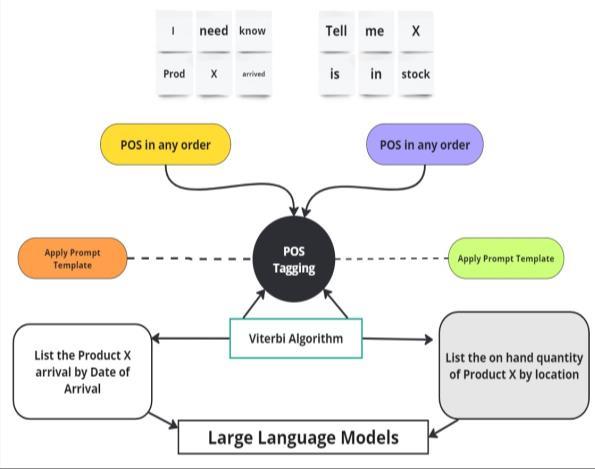
Business Scenario: Ensuring about the availability of a particularproductinthestockthroughchatwindowinany order
Solution Construct:
POStaggingofthechatusingViterbialgorithm
Applypre-configuredprompttemplate
Populatetheprompttemplate
Generate LLM response in user interactive contextualmanner
Delivertheresponsebacktotheuser
Business Value: Ensuring the accurate information about stockinhandandinventorymanagementleadingtobetter salesoverperiod
3.2 Warranty Enquiry auto support
Business Scenario: Ensuring about the availability of a particularproductinthestockthroughchatwindowinany order
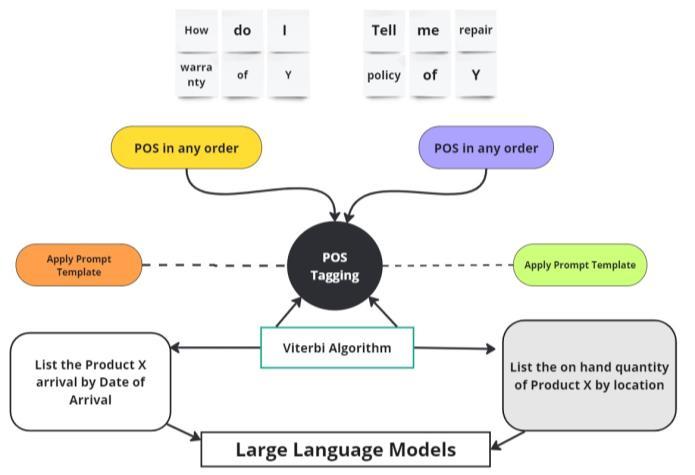
Fig. 1: Sequenceflowdiagram(WarrantyEnquiry)
Solution Construct:
POStaggingofthechatusingViterbialgorithm
Applypre-configuredprompttemplate
Populatetheprompttemplate
Generate LLM response in user interactive contextualmanner
Delivertheresponsebacktotheuser
Business Value: Ensuring the accurate information about stockinhandandinventorymanagementleadingtobetter salesoverperiod
3.3 Further Study
Tointeractwiththelargelanguagemodel,weneedtohave very concise prompts with certain predefined structure, regardlessoftheinputwearegettingfromusertext.Wecan referto[8]andunderstandthecoreconceptssurrounding efficient prompt design pertaining to the interaction with LLM. The author describes the fundamental principles of promptdesign,includingtheimportanceofclearandconcise instructionstoguidethemodel’soutput.
Furthertothisitisworthmentioningtheworkoftheauthors intheresearchpaper[9]whereChain-of-ThoughtPrompting inLLMsgeneratingaseriesofintermediatereasoningsteps to improve the performance of large language models on complex tasks however aligning to precise steps, hence a generalrecommendationwouldbestructuringtheprompt usingPrompttemplates
International Research Journal of Engineering and Technology (IRJET) e-ISSN: 2395-0056
Volume: 11 Issue: 08 | Aug 2024 www.irjet.net p-ISSN: 2395-0072
The key design considerations for the using the Hidden Markov model-based Viterbi algorithm in the use case of structuringthepromptintheexpectedformatare:
The prompt engineering standards of Role-Task Format which I have discussed in the subsequent section4.2isnotknowntothegreatercommunity andhencethereisaflexibilitytoenterdatainany formwhichmaynotbesyntacticallycorrect.
The user query is also taken as a separate input which is subject to produce a response from LLM usingAPIcall
HiddenMarkovModelbasedViterbialgorithmcan automatically structure the Parts of Speech by tagging into multiple allowable possibilities and wouldconsidertheprovisionedprompttemplateto come up with the structured prompt using path pruningtechnique(discussedfurtherinsection4.3).
The produced structured prompt is now automatically triggered using an event driven serverlessarchitecturetointeractwiththeLLMand produceresponseontheuserquery
4.1 Architecture Solution
Ihavegonethrough[10],inwhichagroupofauthorshave collaboratively presented their work on which they have discussedtheintersectionoflargegenerativeAImodelsand cloudnativearchitecturesandtheyhavedeeplyinvestigated the concepts of “containerization” and “orchestration” are major building solution tenets for architectural solution involvingGenerativeAIsolutionandtheauthorsfindsthatit isimperativethatwestaytothestandardsofcloudnative solution.
ThesolutionIhaveconsideredshallthereforealigntothe following:
ItshouldbeabletoconsiderrawEnglishinputand applyPOStaggingandautomatedpathpruningto generate the structured prompt in Role-TaskFormatspecification
It should at the same time consider user input whichwillpasstheuserdataandpromptgenerated above to the large language model which will generatetheresponsebacktotheuser
Cloud native serverless solution is our go to approachtohavecosteffectivityoftheLLMsusing eventdriventriggeroftheLLMsonlywhenneeded. TheViterbialgorithmswillbetrainedoutsidethis solution and deployed in the solution on Cloud platform
The solutions show the generic Cloud native services providingtheabilityofreusabilityofsolutionacrossmajor publiccloudsolutions.
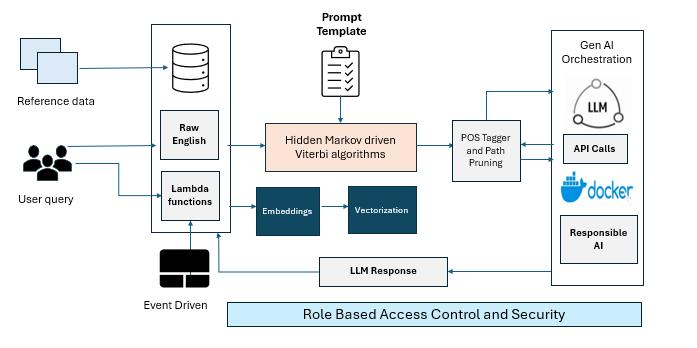
3: SolutionArchitecture(Cloudnativebutplatform agnostic)
Theabovearchitecturecontainsthebelowbuildingblocks:
Data Sources: Thepointoforiginfromwhereuser entersthedataintothesystemsasuserqueries.For now,consideredonlytextualdata(Ifothermodesof dataareconsiderede.g.audio,imagesetc.thenthe architecture need to modify for requisite image processingoraudiotranscriptslayers)
Event Driving layer: The data entered as user query; user may also include the data for raw Englishasinputforthepromptdesign.Thiswillshift thecontrolofthepromptengineeringfromtheAI engineertotheenduser
Viterbi layer: Raw English is considered Hidden Markovstatetransitionsystem,considerationofthe transition and emission probabilities in Markov process followed by possible types of POS tagged statements using the POS tagger. The prompt templatewillhelptorealignthePOStaggedoutput into the expected prompt required for LLM interaction.Thewholesolutionwillbeeventdriven andhenceisautomated
LLM Orchestration:LLMresponsegeneratedusing API calls, LLM orchestration is deployed using dockercontainersensurestheservicebasedloosely coupledarchitecturaladherence
The whole solution is governed by cloud platform-based contentfiltering,datasecurityandrole-basedaccesscontrol principles.
With this solution I ensure a digital cloud native yetcloud platform agnostic well governed solution, which is loosely coupled,servicebasedandatthesametimeIhaveapplied Viterbi algorithm-based POS tagger to generate multiple semantically and syntactically correct prompts which are further tailored using Prompt templates and thereby ensuringtheentireprocessiseventdrivengivingimportance toserverlessservicesandautomatedpromptengineeringfor LLMinteractions.
Volume: 11 Issue: 08 | Aug 2024 www.irjet.net
ThestandardpromptexpectedshouldbeinclusiveaRoleTask–Formatstandardconnotations.Inthispieceofwork,I have explored how a raw English can be POS tagged into multiplepossibleinputandusingpathpruningshortlisted intotherightPOStaggingwithrespecttothecontext.
Few of the language models, with which I have interacted withareGPT4(OpenAI),Bloom(HuggingFace),Llama3.1 andhavefoundastandardRTFformatworksasexpected. Hence the POS tagged English prompt I found from the output of my Viterbi layer when contextualized with standardprompttemplatesproducedthedesiredRoleTask Formatspecifiedpromptsuitableforthepurpose
Studyingtheworkin[11],theauthorshavestandardizedthe approachoffoundationalprinciplesofpromptengineering, suchasrole-prompting,one-shot,andfew-shotprompting, aswellasmoreadvancedmethodologiessuchasthechainof-thoughtandtree-of-thoughtsprompting.
Inthecontextofthe2businessscenarios1)StockEnquiry and2)WarrantySupportasdiscussedearlierinmyarticlein Section 3.1 and Section 3.2. below are my findings of accuracyofresponsesintermsoftheexpectedresponsefor the3LLMsIhaveconsidered.
Table -3: LLMAccuracyonStructuredRTFprompt
GPT4(Open AI)
Bloom(Hugging Face)
Llama3.1(Meta)
Herearefewexamplesofpromptswhichwerestructuredin RoleTask Formatfrom the outputofViterbilayerand recastedusingstandardprompttemplates
Table -4: PromptexamplesinRTF
Prompt Stock Enquiry queries Warranty Support queries
One Shot Role:Inventory Manager
Task:Providethe currentstock levelsforallitems inthewarehouse.
Prompt: As an Inventory Manager, your task is to provide the current stock levels for all items in the warehouse for location X Please list each item along with its quantity
Few Shot As an Inventory Manager, your task is to provide the current stock levels for specific items and suggest restocking if necessary. Here are a few examples:
Example 1:
-Item: X
- Current Stock: 15
- Restock Suggestion: Yes, reorder 10 units
Example 2:
Item: Y
Current Stock: 50
- Restock Suggestion: No, sufficient stock
Now, provide the stock levels and restocking suggestions for the following items:
- Item: X
- Item: Y
Role:WarrantySupport Specialist
Task:Providethewarranty statusforaspecificproduct
Prompt: As a Warranty Support Specialist, your task is to provide the warranty status for a specific product. Please include the warranty period, expiration date, and any coverage details
As a Warranty Support Specialist, your task is to provide the warranty status for multiple products and suggest next steps if the warranty has expired. Here are a few examples:
Example 1:
- Product: X
-Warranty Period: 2 years
- Expiration Date: 2024-08-15
- Coverage Details: Parts and labor
Example 2:
- Product: Y
-Warranty Period: 3 years
- Expiration Date: 2024-08-31
- Coverage Details: Parts
Now, provide the warranty status and coverage for the following products:
- Product: A
- Product: B
International Research Journal of Engineering and Technology (IRJET) e-ISSN: 2395-0056
Volume: 11 Issue: 08 | Aug 2024 www.irjet.net p-ISSN: 2395-0072
With the business scenario examples taken in Section 3.2 withtheexamplebelowaremystep-by-stepapproachtothe workflow
Step 1: Raw Input Processing:
Theinitialstepinvolvescapturingtherawnaturallanguage inputfromtheuser.Forexample:
Tell me the repairing policy of Product Y.
Step 2: POS Tagging with Viterbi Algorithm:
TheViterbialgorithmisemployedtoperformPOStaggingon the input, identifying the grammatical categories of each word.Theoutputfortheexampleinputis:
Tell/VB me/PRP the/DT repairing/VBG policy/NN of/IN Product/NN Y/NN./.
Step 3: Path Pruning:
PathpruningsimplifiesthePOStaggingoutputbyfocusing on the most relevant parts of the sentence for the task at hand.Theprunedoutputfortheexampleinputis
Tell/VB repairing/VBG policy/NNProduct/NNY/NN
Step 4: Mapping to Prompt Template:
Theprunedoutputisthenmappedtoapredefinedprompt template. The template is designed to structure the input intoaRoleTaskFormat(RTF)prompt.Thetemplateusedis:
As a Warranty Support Specialist, your task is to provide the repairing policy for specific products. Please include the repair coverage, process, and any associated costs.
Provide the repairing policy for the following product:
- Product: [Product1]
Step 5: Automatic Prompt Generation:
Theprunedoutputisusedtofillintheplaceholdersinthe prompt template, resulting in the following structured prompt:
As a Warranty Support Specialist, your task is to provide the repairing policy for specific products. Please include the repair coverage, process, and any associated costs.
Provide the repairing policy for the following product:
- Product: Product Y
Intheexperiment,Ihaveperformedthefollowing
o Validated the accuracy of POS tagging & grammatical ambiguity using Viterbi algorithmsforabulkof100+rawEnglish input
o With the prompt generated from the previousstep,validatetheaccuracyofthe responsefromtheLLMcomparingthesame with accuracy of manual prompt engineering
AsIobserved,thewayIhavedefinedbeforeinsection4.3 and considering various research study, the POS tagging outcomefor100promptscomeswithlessthan1%marginof error and less 2% of the cases where grammatical ambiguities were observed making Viterbi algorithm a perfectcandidateforthepurpose
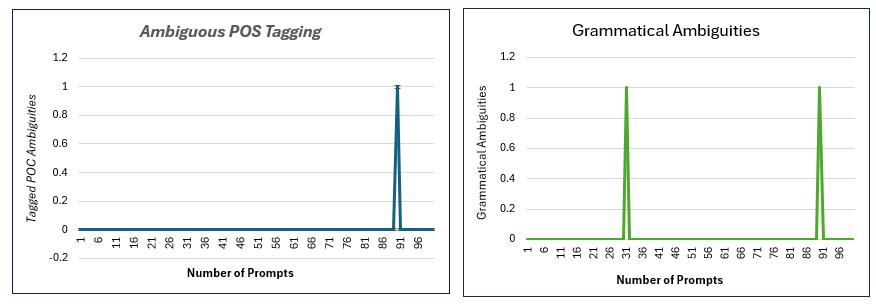
Fig. 4: MarginoferroronGeneratedprompts (POSTaggingambiguitiesandGrammaticalambiguities)
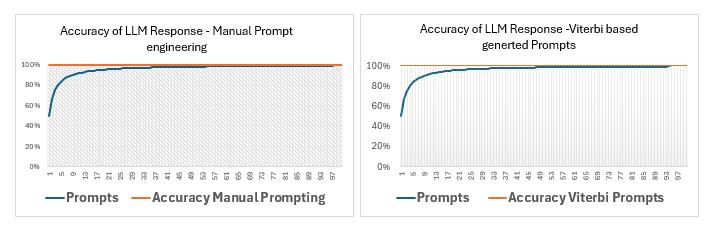
Fig. 5:AccuracyofLLMresponse (ManualPromptandViterbigeneratedprompt)
The accuracy of prompts was measured by comparingtheresponsegeneratedcomparingwith accuracygeneratedbymanualpromptengineering practiceforgamutof100promptcasesand95cases out of 100 in our experiment yielded the same accuracyas97outof100whenweresorttomanual promptengineeringpractices.Hence,Iconcludethat theexperimentprovidesenoughevidencetoinfer thatthismethodologycouldbeleveragedforgreater numberofsimilarusecasesinfuture.
International Research Journal of Engineering and Technology (IRJET) e-ISSN: 2395-0056
Volume: 11 Issue: 08 | Aug 2024 www.irjet.net p-ISSN: 2395-0072
Iexpectthatmyworktoaugmenttotheexistingresearch workinthefieldofexplorationofautomatedgenerationof promptutilizingthepowerofViterbialgorithmfortagging PartofSpeechfromarawEnglishstatementandassociating theprompttemplatestogeneratepromptswhichissuitedto the expected format and structure of prompts suited for interactionwithLargeLanguagemodels
Ihaveobservedthepromptdesignautomationincoupleof businessscenariosobtainedfromareal-lifeexperiencefor Stock availability enquiry system and Warranty support system andthe responsebehaviors onthreeleadinglarge language models in terms of the accuracy generated. I acknowledgethispieceofworktoyieldaccuracyasmanual generated prompt would need more intelligence into the system but within the scope of my work observed the accuracyandmarginoferrorforbothoneshotandfewshot promptminimalascomparedtothemanualtime-consuming approach of prompt design. My work will fit in scenarios where analysis of the data is accomplished prior and the ViterbialgorithmwillfitintothePOStaggingofrawEnglish input,deepercomplexityofpromptdesigncanbeexplored fromhereon
I,trustthisworkwillmotivateupcomingavenuesoffuture research where data input of the request can come from peoplewhoarenotexpertsinpromptengineeringandthe practicesandwouldalleviatetheirpainwithworkingwith Large Language models since the restructuring and reformatting can be taken care of by the solution. The solutioncanactasanalternatethoughtprocessofprompt design where design is taken care of with automated algorithm-based approach to get fruitful response from LargeLanguagemodels.
[1] Izzul Fatawi, Muhammad Asy'ari, H. Hunaepi, Taufik Samsuri,MuhammadRoilBilad"EmpoweringLanguage Models Through Advanced Prompt Engineering: A ComprehensiveBibliometricReview",pp-442-444
[2] PranabSahoo,AyushKumarSingh,SriparnaSaha,Vinija Jain, SamratMondal andAmanChadha,"ASystematic Survey of Prompt Engineering in Large Language Models:TechniquesandApplications",pp2-3
[3] AarushiKansal, " PromptEngineeringTechniques" pp 24-28
[4] William Cain, "Prompting Change: Exploring Prompt Engineering in Large Language Model AI and Its PotentialtoTransformEducation”
[5] Alebachew Chiche, Betselot Yitagesu, “Part ofspeech tagging: asystematic review ofdeep learning andmachinelearningapproaches”,pp-5-6
[6] Jana Diesner, Part of Speech Tagging for English Text Data”,pp3-4
[7] N. Jahnavi, P.V. Parimala, Venkata Vardhan, K. Uday Kishore,L.RavinandanandG.RajendraKumar,“Partsof SpeechTaggingUsingViterbialgorithm,pp-69-70,May 2022
[8] Xavier Amatriain, “Prompt Design and Engineering: IntroductionandAdvancedMethods”,2024,pp-2-3
[9] Jason Wei, Xuezhi Wang, Dale Schuurmans, Maarten Bosma, Brian Ichter, Fei Xia, Ed Chi, Quoc Le, Denny Zhou: “Chain-of-Thought Prompting Elicits Reasoning in Large Language Models”, Jan 2022, pp-3.
[10] YaoLu,SongBian,LequnChen,YongjunHe,YulongHui, MatthewLentz,BeibinLi,FeiLiu,JialinLi,QiLiu,RuiLiu, XiaoxuanLiu,LinMa,KexinRong,JianguoWang,Yingjun Wu,YongjiWu,HuanchenZhang,MinjiaZhang,Qizhen Zhang,TianyiZhou,DanyangZhuo:“Computinginthe EraofLargeGenerativeModels:FromCloud-Nativeto AI-Native” , Jan 2024, pp- 3
[11] Banghao Chen, Zhaofeng Zhang, Nicolas Langren´e , Shengxin Zhu, “Unleashing the potential of prompt engineeringinLargeLanguageModels:acomprehensive review”Jun2024,pp4-7
BIOGRAPHY

SayanGuhacompletedhisBachelors in Electronics & Communication Engineeringin2006. Heiscurrently pursuing his Masters in Artificial Intelligence. He has been serving Information Technology industry supportingArtificialIntelligence,Data & Analytics Space and Data Architectureacrossbusinessdomains of Retail, Banking, and Insurance & Telecom.Heiscurrentlyworkingwith leading IT service provider and his area of interests are in the fields of ArtificialIntelligence,CloudSolution architecture, Big Data Integration, Data Modeling, and Information Architecture.