
International Research Journal of Engineering and Technology (IRJET) e-ISSN: 2395-0056
Volume: 11 Issue: 08 | Aug 2024 www.irjet.net p-ISSN: 2395-0072

International Research Journal of Engineering and Technology (IRJET) e-ISSN: 2395-0056
Volume: 11 Issue: 08 | Aug 2024 www.irjet.net p-ISSN: 2395-0072
Jayshri S. Sirsat1 , Prof. D. M. Pandit2
1M-TECH student, Department of Civil Engineering, CSMSS Chh. Shahu College of Engineering, AURANGABAD 431005, MAHARASHTRA, INDIA
2Assistant Professor, Department of Civil Engineering, CSMSS Chh. Shahu College of Engineering, AURANGABAD.431005, MAHARASHTRA, INDIA
Abstract - P-Delta is a non-linear effect that occurs in every structure where elements are subject to axial load. Due to little knowledge of P-Delta and complexity of analysis, architectures and structural engineers are tempted to perform linear static analysis, which may cause sudden collapse of the structure. To study these effect on multistorey building we are adding shear wall in the structure. With the help of shear wall what are parameter changes in structure we will check. For this topic we made model in ETAB of having shear wall and without shear wall. The objective of this work is to find out the effect of P-Delta analysis (Second-order effects) upon the responses of the structures such as displacement, bending moment, shear forces against the linear static analysis. Also, to study the ues of shear wall in reducing the P-Delta effect.
Key Words: P-Delta, Shear wall, Displacement, Storey drift, ETAB, Base shear.
The first order analysis is used to analyze buildings using linearelasticmethods.Inafirstorderanalysisdisplacements andinternalforcearecalculatedinrelationtothegeometric undeformed structure. It does not consider buckling and materialyielding.Inthecaseoffirstorderelasticanalysis, thestructure'sdeflectionisnotassessedbythefirstorder linearanalysis.Thiskindofgeometricnon-linearitycanbe examinedbyiterativeprocedures,whichcanonlybecarried outwiththeaidofcomputerprograms.Itisgenerallyknown as second order analysis. In this type of analysis, the deformationsandinternalforcesarenotproportionaltothe appliedloads.
Theequilibriumisdefinedintermsofthegeometryofthe unreformed structure in conventional first order analysis. Here, it is assumed that every property of the material is constant. The relationship between displacement and an externalforceisproportionateinthecaseofalinearlyelastic structure.Inadditional,thematerial'srelationshipbetween stressandstrainislinear.Thistechniquesoexcludesnonlinearity by definition, yet it generally accurately captures servicedemandcircumstances.
Responses to the building are time-independent in linear static analysis. We may examine the minor deflections, bendingmoments,andshearforcesfortheappliedloadon thestructureinthisanalysis.
In equivalent static method seismic analysis of most structuresiscarriedoutontheassumptionthatthelateral (horizontal)forceissimilartotheactual(dynamic)loading. Inthismethodwehavetomakelesseffortbecause,wedon’t need to calculate the fundamental period, and shapes of higher natural modes of vibration are not required. The accelerationcoefficientandlumpmassofthestructureare multipliedtodeterminethebaseshear,whichistheentire horizontalmassofthestructure.
Calculatingfundamentaltimeintervalsandcreatingformsis also necessary. We can calculate the overturning moment, displacement, torsion, bending moment, and shear forces. Thebaseshearcanbedispersedalongthemember,andthe total distributed forces cannot increase the base shear. In ordertosavetime,wenowusecomputationalprogramsto determinethefundamentaltimeperiodandbaseshear.
Theadditionaldisplacements,forces,andmomentscreated byutilizingoperationsonadeflectingstructurecanoftenbe used to explain second order effects. The term "secondorder effects" refers to them. In certain circumstances, a first-orderanalysismaybe usedtogaugetheimpactsofa second-order analysis via method that is appropriate for computer- based elastic frame analysis. Additional deflections,moments,andforcesbeyondthosepredictedby first-orderanalysisareintroducedbysecondordereffects. The design should take this into account. The “BeamColumn”component,whichissubjectedtobothbendingand axialcompression,iswheretheproblemprimarilymanifests itself.
International Research Journal of Engineering and Technology (IRJET) e-ISSN: 2395-0056
Volume: 11 Issue: 08 | Aug 2024 www.irjet.net p-ISSN: 2395-0072
P-Delta is a geometrical non-linearity and it give the additionalshearforcesandbendingmomenttothestructure duetotheappliedforceP,whereasPistheloadanddeltaisa lateraldeformation.Actually,P-Deltaisjustoneofseveral second-ordereffects.Itisarealeffectthatisconnectedtoa displacement(delta)andthesizeoftheappliedaxial load (P). The analysis of a building system subjected to lateral displacementsproducessecond-orderoverturningmoments in P-delta effects when the structural mass is moved to a deformedposition.Thesemomentsaretypicallyignoredin staticanddynamicanalysis.Thissecond-orderbehaviorhas been termed the P-delta effect since the additional overturningmomentsonthebuildingareequaltothesumof storeyweight“P”andthelateraldisplacement“Delta”
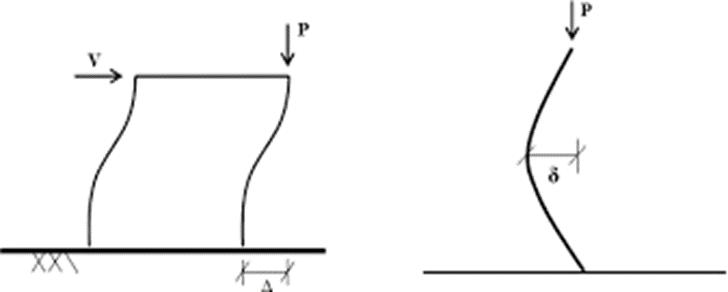
Fig-1: P-Δ Effect
:
2.1.1 P-Δ Effect (P-Big Delta):
For instance, when a structure is subjected to wind or earthquake forces (V), the displaced structure is simultaneouslysubjectedtoverticalgravityloads(P).The total vertical load P multiplied by the structural displacement (∆) causes secondary moments to be producedintothestructure.
2.1.2 P-δ Effect (P-Small Delta):
P-δreferstotheconsequencesofanaxialloadonasingle memberthatisdeflected(curved)betweenitsendpoints. Forinstance,acolumnthathasacurvaturecausedbythe connectioncircumstancesofsupportedbeamsissubjectto columnloads(P)fromgravity,wind,and/orseismicforces. AxialloadPtimesmemberdeflectionδcausemomentstobe inducedinthemember.
3. METHODOLOGY
3.1General
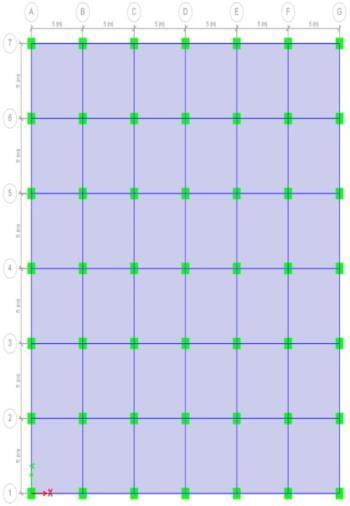
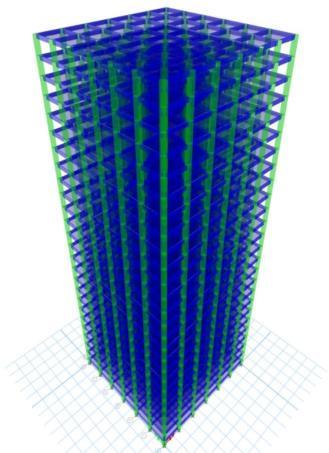
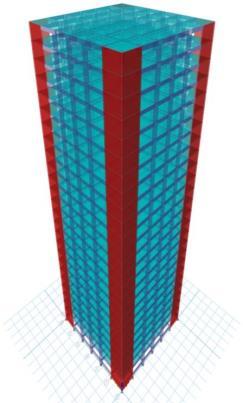
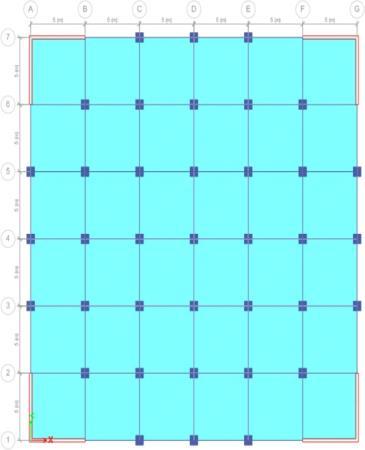
AG+24storeybuildingwitha3mstoreyheightisanalyzed usingETABSbytakingintoaccountthep-deltaeffectandthe absenceoftheeffect.Additionally,themodelswereanalyzed byincludingshearwallswithandwithoutthep-deltaeffect.
3.2 Sharp edges at the Corners of building
4.RESULTS
4.1General
Thischaptergivesthetabulationofresultsofanalysis.For eachcaseofanalysisresultsarenoted.Theparameterstaken inthisanalysisincludes,
1.StoreyDisplacement
2.Storeydrift
3.Baseshear
4.Overturningmoments.
International Research Journal of Engineering and Technology (IRJET) e-ISSN: 2395-0056
Volume: 11 Issue: 08 | Aug 2024 www.irjet.net p-ISSN: 2395-0072
LSAandP-Deltaanalysisalsowithandwithoutshearwall models.Thevariationofdisplacement,drift,baseshearand overturning moments are derived from LSA and P-Delta analysis and are plotted in graphs. The results and discussions given are considered in detail with reference figures.
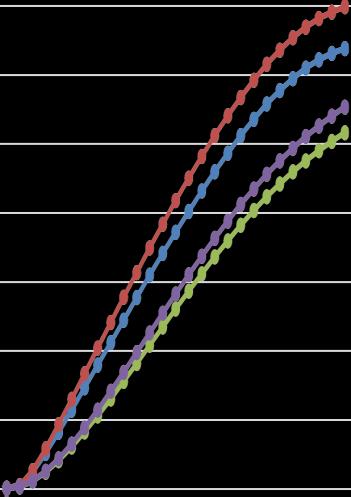
Chart -1:StoreyDisplacementinX-Direction
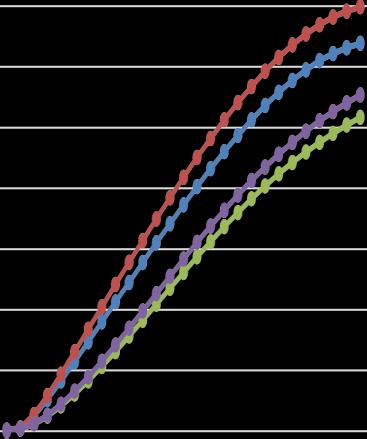
Chart -2:StoreyDisplacementinY-Direction
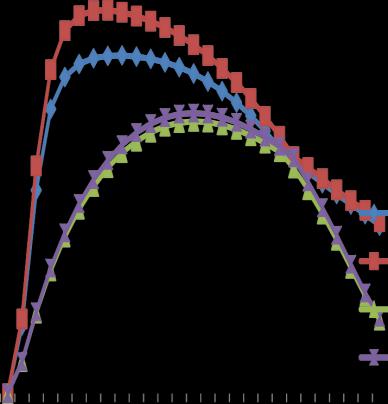
Linear
Chart -3:StoreyDriftinX-Direction
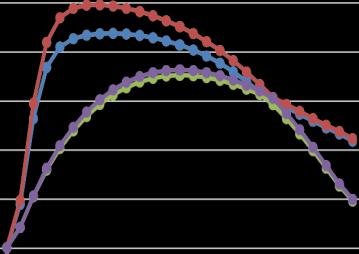
eqy
Chart -4:StoreyDriftinY-Direction
eqy Linear with shear wall eqy P-delta with shear wall
Chart -5:BaseShearinbothdirections
International Research Journal of Engineering and Technology (IRJET) e-ISSN: 2395-0056
Volume: 11 Issue: 08 | Aug 2024 www.irjet.net p-ISSN: 2395-0072
[2] SBhavanishankar&PatilRita(2021),“P-DeltaAnalysis ofMulti-storeybuilding”,InternationalResearchJournal of Modernization in Engineering Technology and Science.Volume03,Issue5.
[3] PhaniKumar.V, M.Deepthi, Saikiran K, R.B.N. Santhosh (2019), “Behavior of P-Delta Effect in High-rise BuildingswithandWithoutShearWall”,International JournalofRecentTechnologyandEngineering.Volume 8,Issue2.
[4] DeekshithaYL,KiranKuldeepKN(2018),“LinearAnd Non-Linear Dynamic Analysis Of Multi Storied R.C Frame Buildings With Plan And Vertical Irregularities Using Etabs”, International Research Journal of EngineeringandTechnology,July.Volume5,Issue7.
Chart -6:Overturningmomentinbothdirections
1.Fromtheabovemodel resultsitcanbeseen thatlinear staticanalysisconsideronlyfirstorderloadingeffectthatis notrealisticfortallbuildingstructures,butP-deltaanalysis issuitableforgettingiterativeactionasitconsidersecond orderloadingeffectafterthefirstordereffects.
2.Thedisplacementvaluesofconventionalbuildingmodel (without P- Delta) are less when compared with building modelwithP-Delta.Obtainedstoreydisplacementvaluesare withinpermissiblelimit.
3. Storey drift is found maximum in near about middle storey’sinthestructure.
4. By comparison all the cases, shear walls are highly efficientinresistinglateralloads.
5. No significant amount of variation base shear and overturningmomentsduetoshearwalls.
6. It is necessary to check the results of analysis with and without considering P-delta effect for a multistoried building.
7.P-deltaeffectcanbeseenonlyinhighrisebuildings.
REFERENCES
[1] WagnerAlmeidaFerreiraa,JefferRoussellCordovaDe La Cruza (2022), “Modal P-Delta simplified geometric nonlinearmethodbyusingmodalandbuclinganalysis”, IBRACONStructuresandmaterialsjournal.Volume16, Issue2.
[5] VijayalakshmiR,BinduNByadgi,Vahini(2017),“Effects of P-Delta on High RiseBuildings Located In Seismic Zones” International Research Journal of Engineering andTechnology(IRJET).Volume4,Issue8.
[6] ManikRao,RajendrakumarSHarsoor(2016),“Effectof P-delta in seismic analysis of multi-storey buildings”, International Journal of Research in Engineering and Technology.Volume5,Issue11.
[7] PushparajJ.Dhawale(2016),“AnalysisofP-deltaeffect on High Rise Buildings”, International Journal of EngineeringResearchandGeneralScience.Volume4, Issue4.


Jayshri Shrirang Sirsat Student of M-TECH (CSMSS Chh Shahu College of Engineering, Aurangabad)
Prof.D.M.Pandit Assistant Professor (CSMSS Chh. Shahu College of Engineering, Aurangabad)