
International Research Journal of Engineering and Technology (IRJET) e-ISSN: 2395-0056
Volume: 11 Issue: 08 | Aug 2024 www.irjet.net p-ISSN: 2395-0072

International Research Journal of Engineering and Technology (IRJET) e-ISSN: 2395-0056
Volume: 11 Issue: 08 | Aug 2024 www.irjet.net p-ISSN: 2395-0072
Sukanya Konatam1 , Venkata Naga Murali Konatam2
1Senior Manager of Enterprise Data Governance and Data Science, IT Department, Vialto Partners, Texas, USA 2Data Architect, IT Department, Capital One, Texas, USA
Abstract - Thispaperexaminestheintegrationofartificial intelligence (AI) and machine learning (ML) in the criminal justice system, highlighting both the potential benefits and significant concerns related to bias. AI and ML are being employed to enhance various aspects of criminal justice, including crime prediction, tracking, and judicial decisionmaking.However,thesetechnologiesaresusceptibletobiases inherent in the historical data they rely on, which can perpetuate and amplify existing disparities within the justice system. The article delves into the historical context of AI advancements in criminal law, from early digitization efforts to the current deployment of sophisticated AI
applications. It explores notable AI and ML technologies used in criminal justice, such as risk assessment tools, predictive policing algorithms, and facial recognition systems. The discussion emphasizes the ethical implications of AI bias, particularly its impact on marginalized communities. To addresstheseissues,thearticleproposesvariousstrategiesfor detecting and mitigating biases in AI/ML systems, including bias detection tools, data pre-processing techniques, and the importance of transparency and accountability. By scrutinizing these technologies and their applications, the article aims to contribute to the development of fairer and more equitable AI systems in criminal justice.
Key Words: BiasinJudicialAI,EthicalAIinCriminalLaw, Bias in Artificial Intelligence, Machine Learning Accountability,MLBiasinCriminalJustice
Artificial intelligence (AI) and machine learning (ML) algorithms are increasingly being adopted within the criminaljusticesystemtotacklevariouschallenges,suchas predictingandtrackingcrimesandcriminalsandassistingin criminalcourtproceedings.[1]Thesetechnologiesholdthe potential to enhance efficiency and effectiveness in crime preventionandinvestigationefforts.However,theuseofAI and ML in criminal justice also raises significant concerns regardingpotentialbiasesandprivacyinfringements.These modelsarebuiltonhistoricaldata,whichoftenreflectand perpetuateexistingsocietalbiases.[1] BiasesinAIandML systemscaninfluencevariousstagesofthecriminaljustice process, from arrest and bail decisions to sentencing and
parole. [1] Addressing these biases is crucial to ensure fairness and justice in AI and ML applications in criminal justice.Thisinvolvesscrutinizingthedatausedtotrainthese models,implementingrobustbiasdetectionandmitigation techniques,andensuringtransparencyandaccountabilityin AI decision-making processes. [1] As we continue to integrate AI and ML into the criminal justice system, it is essentialtoremainvigilantaboutthepotentialforbiasand to develop strategies to counteract it, ensuring these technologies contribute positively to the criminal justice systemratherthanreinforcingexistingdisparities.[1]
TheintegrationofArtificialIntelligence(AI)andMachine Learning (ML) into the criminal justice system has been a gradualprocess,markedbykeyadvancementsoverthepast fewdecades.[3]Intheearly2000s,thedigitizationofcourt filingsandprocessessetthestagefortheinitialadoptionof AI-poweredtoolstoassistinpartialcriminalcourtdecisions. [4] This was followed by the emergence of online dispute resolution(ODR) asanalternative to traditional in-person courtproceedings,furthershowcasingthepotentialofAIto transform the judicial landscape. [4] The 2010s saw a significantsurgeinthedevelopmentanddeploymentofmore sophisticated AI applications within the criminal justice domain. [3] Algorithmic risk assessment tools were introducedtoinformbail,sentencing,andparoledecisions, leveraging predictive analytics to assist human decisionmakers.[4]JurisdictionssuchastheUnitedStatesandthe European Union began exploring the use of AI-powered digital tools to streamline various legal processes and supporttheworkofjudgesandlawenforcement.[4]More recently,inthelate2010sandearly2020s,thelegalsector haswitnessedtheemergenceofAI-drivensolutionsthatcan potentiallyautomatecertainadjudicativefunctions,raising complex ethical and legal questions about the role of technology in judicial decision-making. [2] As these advancementscontinuetounfold,thecriminaljusticesystem isgrapplingwiththechallengesandopportunitiespresented by the integration of AI and ML, seeking to harness the benefitswhileensuringtheprotectionoffundamentalrights andtheruleoflaw.[5]
International Research Journal of Engineering and Technology (IRJET) e-ISSN: 2395-0056
Volume: 11 Issue: 08 | Aug 2024 www.irjet.net p-ISSN: 2395-0072
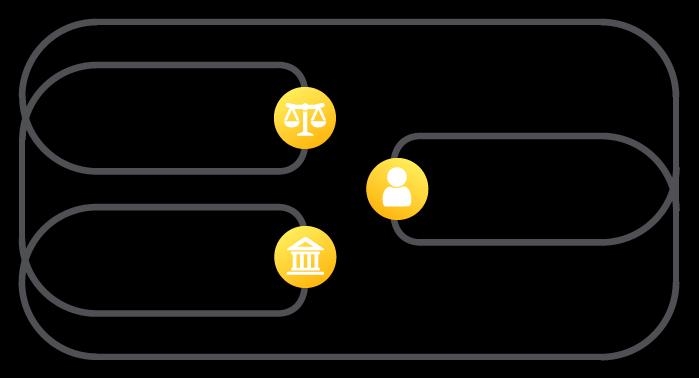
Chart -1:This image represents the flow of online dispute resolution (ODR) as a transformative alternative to traditional courtproceedings.ODRleveragestechnologytofacilitatejudicial processes,allowingforefficient,accessible,andoftenmorecosteffectiveresolutions.TheintegrationofAIwithinODRplatforms exemplifies the ongoing evolution of the judicial landscape, demonstrating how digital tools can enhance the efficiency and accessibilityofjusticeinthemidtolate2000sandbeyond.
SeveralAIandmachinelearningalgorithmsandmodelshave beenintegratedintothecriminaljusticesystemtoaidvarious processes. One prominent example is the use of risk assessment tools, such as the Correctional Offender Management Profiling for Alternative Solutions (COMPAS) and the Public Safety Assessment (PSA), which leverage algorithms to predict an individual's potential for future misconduct, informing crucial decisions like pretrial incarceration.[6]Thesetoolsassessfactorslikeage,criminal history, and past misconduct to generate risk scores that judges utilize to set release conditions. [6] Additionally, predictivepolicingalgorithmsanalyzehistoricalcrimedatato identify areas and times where crimes are most likely to occur, enabling law enforcement agencies to allocate resourcesmoreeffectively.
[7]FacialrecognitiontechnologyisanotherAIapplication in the criminal justice sector, used to assist intelligence analysts in establishing an individual's identity and whereaboutsbyautomatingtheanalysisoflargevolumesof visual data. [8] These AI-driven tools promise enhanced consistency,accuracy,andtransparencyinjudicialdecisionmaking and law enforcement operations. [6] [7] However, concernshavebeenraisedaboutthepotentialforbias,lackof individualization, and issues of transparency in these AI systems.[6]
A. Popular Types of AI Biases found in Criminal Law Industry
• Racial Bias-RacialBiasintheCriminalJusticeSystem Racialbiasisaprevalentissuethatpermeatesthecriminal justicesystemintheUnitedStates.Studieshaveshownthat AfricanAmericansaredisproportionatelymorelikelytobe arrested,convicted,andgivenharshersentencescompared totheirwhitecounterparts,evenforsimilarcrimes.[12] This disparity can be attributed to factors such as discriminatorypolicingpractices,biaseddecision-making by prosecutors and judges, and the legacy of systemic racism.[12]Forexample,theCOMPASalgorithm,widely used in the U.S. criminal justice system, was shown to falsely flag Black defendants as being at a higher risk of recidivismcomparedtotheirwhitecounterparts.[13] Such biases have the potential to perpetuate structural inequalities and exacerbate existing racial disparities withinthecriminaljusticesystem.Thesefindingshighlight thedeep-rootedracial biasesthatcontinuetoplaguethe criminal justice system, with severe consequences for individualsandcommunitiesofcolor.
• Socioeconomic Bias- Socioeconomic Bias in the Criminal Justice System Socioeconomic bias is another pervasive issue in the criminal justice system, where individuals from lower socioeconomic backgrounds are more likely to face harsher treatment and outcomes comparedtothosefrommoreaffluentbackgrounds.[11] [12] This bias manifests in various ways, such as the inability to afford adequate legal representation, the increasedlikelihoodofbeingdetainedpre-trialduetoan inabilitytopostbail,andtheimpositionoffinesandfees thatperpetuatethecycleofpoverty.[11][12]ForInstance, researchonThePublicSafetyAssessment(PSA)hasshown that evenostensibly"objective" factorslike priorarrests andconvictionscanreflectunderlyingbiasesandinequities in policing and prosecution, which disproportionately target individuals from disadvantaged socioeconomic backgrounds.[15]Asaresult,thePSA'sriskassessments may still perpetuate socioeconomic disparities, with defendantsfrompoorerneighborhoodsorlowerincome levels more likely to be labeled as high-risk, even when controlling for their actual criminal histories. [14] This
TheintegrationofAIandmachinelearningtechnologies into the criminal justice system has raised significant concernsregardingthepotentialforbiasanddiscrimination. [9] These advanced algorithmic systems are increasingly beingemployedforcriticaldecision-makingprocesses,such as risk assessment, predictive policing, and sentencing recommendations. [9] [10] However, the reliance on historicaldata,whichoftenreflectsthebiasesinherentinthe criminal justice system, can lead to the perpetuation and amplificationofthesebiaseswithinthealgorithms.[9][10] Thelackoftransparencyandaccountabilitysurroundingthe development and deployment of these AI systems further exacerbates the risk of biased outcomes, undermining the principlesoffairnessandjustice.[10]
International Research Journal of Engineering and Technology (IRJET) e-ISSN: 2395-0056
Volume: 11 Issue: 08 | Aug 2024 www.irjet.net p-ISSN: 2395-0072
demonstrates how the use of historical data in AI/ML criminal justice tools can entrench systemic inequities, underscoring the importance of carefully examining the data sources and design of these algorithms. These socioeconomic disparities within the criminal justice system further exacerbate the challenges faced by marginalizedcommunities,perpetuatingacycleofinjustice andinequality.
(2)
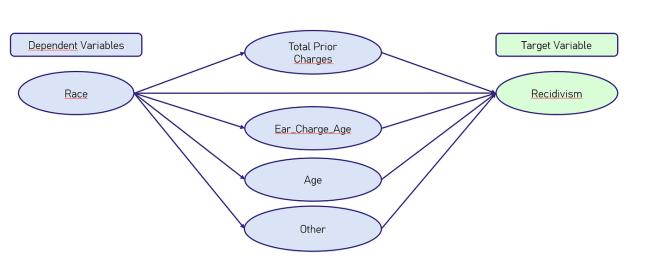
Chart -2:Thisdiagramillustratesthedependentvariablesusedby the COMPAS (Correctional Offender Management Profiling for Alternative Sanctions) algorithm to predict the likelihood of recidivism.Thevariablesincluderace,age,totalpriorcharges,age atfirstcharge,andotherrelevantfactors.Themodelshowshow these variables influence the target variable, recidivism. Studies andcritiquesoftheCOMPASalgorithmhighlightconcernsabout biases, particularly the disproportionate impact of race on the predictedoutcomes,raisingquestionsaboutfairnessandaccuracy inthecriminaljusticesystem.
B. Ethical implications of bias in Criminal Justice Artificial Intelligence & Machine Learning
The use of AI and machine learning (ML) systems in the criminal justice system raises significant ethical concerns regardingbiasandfairness.[16]Thesealgorithmsareonlyas unbiasedasthedatausedtotrainthem,andifthetraining datacontainsinherentbiases,thealgorithmscanperpetuate oramplifythosebiases,leadingtodiscriminatoryoutcomes for marginalized groups. [16] This can result in unfair sentencing,reinforcesystemicracism,andperpetuateunjust practices within the criminal justice system. [17] Furthermore,thecomplexityofthesealgorithmscanmakeit challenging to explain how decisions are reached, undermining transparency and accountability. [16] Protectingtheprivacyandsecurityofthepersonaldataused bythesesystemsisalsocrucialtomaintainpublictrustand preventmisuse.[16]Addressingtheethicalimplicationsof AI/ML in criminal justice requires prioritizing fairness, transparency, and accountability in the development and deploymentofthesetechnologies.[17]
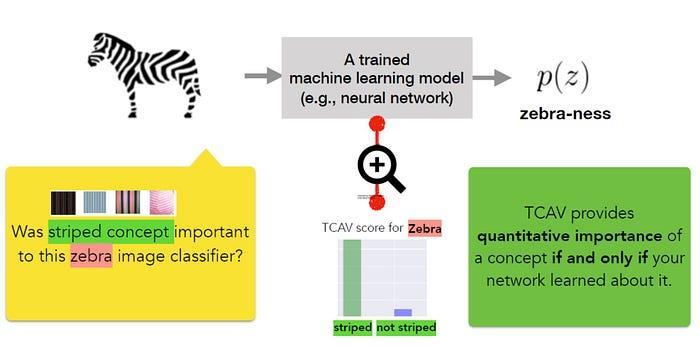
Chart -3:This diagram demonstrates the application of TCAV (Testing with Concept Activation Vectors) to determine the significanceofspecificconcepts,suchas"striped"forrecognizing zebras,withinmachinelearningmodels.TCAVallowsresearchers to quantitatively assess the importance of a concept, revealing whetherthemodelhaslearnedaboutit.Suchtoolsarecrucialinthe criminal justice sector to detect and mitigate biases in AI/ML systems.Byvisualizingandunderstandingtheinternalworkingsof these models, stakeholders can ensure fair and accurate predictions, promoting justice and equity in criminal justice systems.
C. Strategies for Detecting Biases in the System of Criminal Justice AI/ML.
Various approaches and techniques are employed to identify and detect biases in AI/ML systems within the criminal justice sector. These include the use of tools like TCAV and What-If Tool to visualize the internal representationsofmachinelearningmodelsandexplorehow different inputs affect the model's predictions. [18] Additionally, techniques such as data pre-processing, fairness-aware machine learning algorithms, and biascorrection algorithms are utilized to mitigate biases. [18] However, effectively detecting biases in these systems remainschallengingduetoissueslikebiasedtrainingdata, lackoftransparencyinAIdecision-making,andthepotential for the AI systems themselves to perpetuate and amplify biases.[18]
D. D. Detection of Famous Forms of Biases found in Criminal Justice AI
• Discovering Racial Bias- Racial bias in the criminal justicesectorisperpetuatedbyalgorithmsthatreplicateor amplify historical biases, leading to discriminatory practices in areas such as predictive policing and sentencing. [19] To detect racial bias, researchers have employed methods like algorithmic bias detection and mitigation, implicit bias testing, and the examination of racial and ethnic disparities in discretionary criminal justice decisions. [19] [20] For example, a landmark investigation by ProPublica in 2016 revealed the racial biasespresentinanalgorithmicriskassessmenttoolused incriminal justicesystemsacrosstheUnitedStates.[23]
International Research Journal of Engineering and Technology (IRJET) e-ISSN: 2395-0056
Volume: 11 Issue: 08 | Aug 2024 www.irjet.net p-ISSN: 2395-0072
Theresearchersobtaineddataonriskscoresassignedto over 10,000 defendants inBroward County, Florida, and trackedwhichofthoseindividualswerechargedwithnew crimes within two years.[23] Through detailedanalysis, they found that Black defendants were twiceaslikelyas whitedefendantstobeincorrectlylabeledashigherrisk, evenwhencontrollingforfactorslikecriminalhistory,age, andgender.[23]ProPublicaemployedarangeofanalytical techniques, including subgroup comparisons, logistic regression modeling, and visualization methods, to rigorously detect and quantify the algorithmic bias. [22] This groundbreaking investigation demonstrated the critical importance of comprehensive, data-driven evaluations to uncover and address racial disparities embedded within criminal justice technologies. In summary, ProPublica's work highlighted the need for robustbiasdetectionapproachestoensurethefairnessand accountabilityofAI/MLsystemsdeployedinhigh-stakes domains like criminal justice. One key approach to detectingracialbiasistoscrutinizethetrainingdataused to develop risk assessment algorithms, as biases in historical crime data can lead to algorithms disproportionatelyflaggingminoritygroupsashigh-risk. [19] [20] Techniques such as undersampling crime data involving certain demographics and oversampling data related to others can help address this issue. [20] Additionally,ensuringtransparencyaroundthealgorithms' innerworkingsandenablingindependentauditsarecrucial foridentifyingandmitigatingracialbiases.[20]Meaningful communityengagementinthedesignanddeploymentof these tools is also important to build trust and accountability.[20][21]
• Identifying Socioeconomic Bias- Socioeconomic bias inthecriminaljusticesectorreferstotheunfairadvantage or disadvantage faced by individuals based on their socioeconomicstatus,whichcanbeperpetuatedbyAI/ML systems. [19] [20] To detect socioeconomic bias, researchershaveexploredmethodslikeprocessingtraining data to achieve balanced representation, adjusting algorithmstoassignlessweighttodatapointsrelatedto certain demographics, and implementing continuous monitoring and evaluation of model outputs. [20] For example, A study by researchers at the University of Chicago developed a crime prediction algorithm that revealedsignificantbiasesinpoliceenforcement.[24]The studyfoundthatwhilethealgorithmwasabletopredict crimes one week in advance with 90% accuracy, it also highlighteddisparitiesinpoliceresponse.[24]Crimesin wealthierareasresultedinmorearrests,whilearrestsin disadvantaged neighborhoods dropped, suggesting inherent bias in how law enforcement resources were allocatedandutilized.[24]Thisinvestigationdemonstrates how advanced analytical techniques and tools can be employedtouncoversystemicbiasesinthecriminaljustice system, particularly around socioeconomic factors that disproportionatelyimpactmarginalizedcommunities.[25]
Ultimately,thesefindingsunderscorethecritical needto addressthesocietalbiasesthatbecomeembeddedwithin the data and algorithms used in predictive policing applications. The lack of transparency from companies developingriskassessmenttoolsisasignificantchallenge indetectingsocioeconomicbias.[20]Algorithmichygiene, which involves surfacing and responding to algorithmic bias upfront, as well as proactive addressing of factors contributingtobias,iscrucialfordetectingandmitigating socioeconomicbiasinthecriminaljusticesector.[20]
Theintegrationofartificialintelligence(AI)andmachine learning(ML)intothecriminaljusticesystemrepresentsa transformativeshiftwiththepotentialtoenhanceefficiency and effectiveness across various processes, from crime predictiontojudicialdecision-making.Despitethepromising advancements, the deployment of these technologies has exposedcriticalconcernsaboutbiasandfairness.AIandML systems,oftenreliantonhistoricaldata,canperpetuateand even exacerbate existing inequalities within the justice system. The biases embedded in these models pose significant challenges, influencing outcomes in arrest decisions, risk assessments, and sentencing, which can underminetheprinciplesofjusticeandequity.
Thisarticle has explored the evolution of AI andML in criminal justice, identifying key technologies and their applications.Ithasalsohighlightedtheethicalimplicationsof AI bias, emphasizing the need for vigilance and proactive measures to address these issues. Effective strategies for detectingandmitigatingbiasarecrucialtoensurethatAIand MLsystemsdonotreinforcesystemicdisparitiesbutinstead contributetoamoreequitableandjustlegalframework.
Onepromisingapproachtoaddressingthesechallengesis theuseofLargeLanguageModels(LLMs).LLMscanenhance transparency and accountability in AI decision-making by providingmorenuancedandinterpretableexplanationsof algorithmicprocessesandoutputs.Theycanbeemployedto analyzeandinterpretcomplexdata,identifypatternsofbias, andsuggestadjustmentstoalgorithms.Additionally,LLMs can facilitate the development of more inclusive and representativedatasets,improvingthefairnessofAIsystems.
AsthecriminaljusticesystemcontinuestointegrateAI and ML technologies, it is imperative that stakeholders prioritize transparency, accountability, and fairness. By leveraging LLMs and other advanced tools, and fostering ongoingdialogueabouttheethicalimplicationsofAI,wecan worktowardsharnessingthebenefitsofthesetechnologies while safeguarding the fundamental principles of justice. Future research and policy development should focus on refining these technologies and establishing robust frameworkstoensuretheirresponsibleandequitableusein thecriminaljusticedomain.
International Research Journal of Engineering and Technology (IRJET) e-ISSN: 2395-0056
Volume: 11 Issue: 08 | Aug 2024 www.irjet.net p-ISSN: 2395-0072
References
1. AIApplicationsintheCriminalJusticeSystem:TheNext Logical Step or Violation of Human Rights, https://jolets.org/ojs/index.php/jolets/article/downloa d/124/67
2. Justice Augmented: Navigating the Ethical and Legal Terrains of AI Integration in International Criminal Proceedings, https://www.dmejournals.com/index.php/DMEJL/articl e/download/300/147
3. AlgorithmicDecisionMaking:CanArtificialIntelligence andtheMetaverse Provide Technological Solutionsto Modernise the United Kingdom’s Legal Services and Criminal Justice?, https://lifescienceglobal.com/pms/index.php/FIA/artic le/download/9582/5010
4. Exploring the impact of reporting medium on online crimereportingexperiences:comparinglivechatwith human and AI operators, https://www.semanticscholar.org/paper/47cae47d70e 91465409d35eaec6c7e85c1457abc
5. Technical Solutions for Legal Challenges: Equality of Arms in Criminal Proceedings, https://www.semanticscholar.org/paper/ca6744ca37b 940fa742ee6d40130f6f9c6548b4d
6. AI in Criminal Justice: Shaping the Future of Law and Order - Plat.AI, https://plat.ai/blog/ai-in-criminaljustice/
7. Predictive Policing using Machine Learning (With Examples), https://www.cogentinfo.com/resources/predictivepolicing-using-machine-learning-with-examples
8. UsingArtificialIntelligencetoAddressCriminalJustice Needs, https://nij.ojp.gov/topics/articles/usingartificial-intelligence-address-criminal-justice-needs
9. AI in Criminal Justice: How it Can Become BiasedInspirit AI, https://www.inspiritai.com/blogs/aistudent-blog/ai-in-criminal-justice-how-it-can-becomebiased
10. GenderandSexualityBiasintheApplicationofArtificial Intelligence ..., https://www.linkedin.com/pulse/gender-sexualitybias-application-artificial-systems-justice-angiey-6fouf
11. 5 steps to help eliminate socio-economic bias, https://www.americanbar.org/news/abanews/publicat ions/youraba/2019/march-2019/5-steps-to-helpeliminate-socio-economic-bias/
12. ReporttotheUnitedNationsonRacialDisparitiesinthe U.S. ..., https://www.sentencingproject.org/reports/report-tothe-united-nations-on-racial-disparities-in-the-u-scriminal-justice-system/
13. FairnessDeconstructed:ASociotechnicalViewof'Fair' Algorithms in Criminal Justice, https://www.semanticscholar.org/paper/525a9e9688e b734e6c1bea2afe60eb367f79b77c
14. Artificial Intelligence (AI) & Criminal Justice SystemPixelPlex, https://pixelplex.io/blog/artificialintelligence-criminal-justice-system/
15. AI in the Criminal Justice System - Epic.org, https://epic.org/issues/ai/ai-in-the-criminal-justicesystem/
16. TheEthicalImplicationsofAIinCriminalJustice-Alexi, https://www.alexi.com/post/the-ethical-implicationsof-ai-in-criminal-justice
17. TheEthicalImplicationsofAI-PoweredCriminalJustice - LinkedIn, https://www.linkedin.com/pulse/ethicalimplications-ai-powered-criminal-justice-can-biasedpathak
18. NavigatingtheAIBias:ExploringToolsandTechniques, https://arunapattam.medium.com/navigating-the-aibias-exploring-tools-and-techniques-c42b0f26fd29
19. Algorithmicbiasdetectionandmitigation:Bestpractices and policies ..., https://www.brookings.edu/articles/algorithmic-biasdetection-and-mitigation-best-practices-and-policies-toreduce-consumer-harms/
20. Fairness and Bias in Artificial Intelligence: A Brief Survey of Sources ..., https://www.mdpi.com/24134155/6/1/3
21. Racial bias in AI: unpacking the consequences in criminaljustice...,https://www.irissd.org/post/racialbias-in-ai-unpacking-the-consequences-in-criminaljustice-systems
22. BiasinCriminalRiskScoresIsMathematicallyInevitable ...,https://www.propublica.org/article/bias-in-criminalrisk-scores-is-mathematically-inevitable-researcherssay
23. ProPublicaRespondstoCompany'sCritiqueofMachine Bias Story, https://www.propublica.org/article/propublicaresponds-to-companys-critique-of-machine-bias-story
International Research Journal of Engineering and Technology (IRJET) e-ISSN: 2395-0056
Volume: 11 Issue: 08 | Aug 2024 www.irjet.net p-ISSN: 2395-0072
24. [PDF]PredictingPoliceMisconduct-TheUniversityof Chicago, https://bfi.uchicago.edu/wpcontent/uploads/2024/05/BFI_WP_2024-62.pdf
25. Predictive Policing using Machine Learning (With Examples), https://www.cogentinfo.com/resources/predictivepolicing-using-machine-learning-with-examples
26. (1) [Chart -1] Online Dispute Resolution Diagram Making Justice Effortless and Accessible Online Dispute Resolution, Imagesoft, https://imagesoftinc.com/courts/online-disputeresolution/.
27. (2) [Chart -2] Eger, Felix. COMPAS Directed graph displayingpotentialcausaleffectsofthefeatures.20Apr. 2022. FairnessinAmericanCourts:AnExplorationofthe COMPAS Algorithm, Medium, https://medium.com/@felix.eger17/fairness-inamerican-courts-an-exploration-of-the-compasalgorithm-415a23affb39.Accessed22June2024.
28. (3) [Chart -3] Rahimi,Reza.TCAVToolDiagram.29July 2022. Google AI Open-Sourced a New ML Tool for ConceptualandSubjectiveQueriesoverImages,Infoq, https://www.infoq.com/news/2022/07/google-aitcav/.Accessed22July2024.
BIOGRAPHIES

SukanyaKonatamistheprincipalauthor of the research, leading the idea of writing a comprehensive literature surveyjournalonAIandMLbiases With over 18+ years of experience in the IT industry, enriched by five years dedicated to specializing in AI and AI Governance Her expertise spans a comprehensiverangeofITdisciplines, underscored by a profound depth of knowledgeinthegovernanceofartificial intelligence.Thisuniquecombinationof experience positions her as a leading figureinthefield,adeptatnavigatingthe intricacies of AI technology with a strategic and ethical approach.She has implemented data centric solutions for several industries including banking & financials, telecom, health care, automobile, criminal justice and many more
Her significant contributions to the paper included an in-depth analysis of biasesintheCriminalJusticesystem,as well as authoring the abstract,

conclusion, and ensuring overall grammaticalaccuracy.Sukanya’srobust background in data governance, data warehousing,machinelearning,andAI, combined with her proficiency in AI Governance made her instrumental in identifying and proposing mitigation strategiesforAIbiases.Additionally,she holds a postgraduate degree in Data Science,MachineLearning,andArtificial Intelligence.
VenkatKonatam,asecondaryauthorof thisliteraturesurvey,playedakeyrole ininvestigatingartificialintelligenceand machinelearningbiaseswithinthe Criminal Justice system. With over 25 years of experience in IT, Venkat has excelled in constructing resilient data platformsanddeliveringimpactfuldata products. His expertise lies in data architecture, database design, and performanceoptimization,withastrong focusonAIandMLapplications.
Venkat is currently pursuing a postgraduate program in data science, machine learning, and artificial intelligence