
International Research Journal of Engineering and Technology (IRJET) e-ISSN: 2395-0056
Volume: 11 Issue: 08 | Aug 2024 www.irjet.net
p-ISSN: 2395-0072

International Research Journal of Engineering and Technology (IRJET) e-ISSN: 2395-0056
Volume: 11 Issue: 08 | Aug 2024 www.irjet.net
p-ISSN: 2395-0072
S G Srivani1 , V Srinivasulu2
1Electrical and Electronics, RV College of Engineering, Bengaluru, India
2Electrical and Electronics, RV College of Engineering, Bengaluru, India
Abstract - Hybrid Electric Vehicles (HEVs) are revolutionizing electromobility, merging advanced tech with eco-consciousdesign.Asleadersinsustainabletransport,they drive decarbonization and break free from fossil fuel dependence. The orchestrated amalgamation of energy from electrochemical batteries, Fuel cells, Internal Combustion Engines (IC’s), EDLC’s and regenerative braking systems, the vehicles attain unprecedentedlevels of energy autonomy and adaptability.Leveragingsophisticatedpowertrainmodulation techniques and intricate energy optimization algorithms, HEVs navigate a myriad of dynamic driving terrains, optimizing energy flux while mitigating adverse environmental impacts. By harnessing cutting-edge flux additive converters, High current density DC-DC converters and Bi-directional converters, the system efficiently manages power flow, this seamless integration enhances overall performance,enablingmoreeffectivecontrolofhybridpower sources.theFieldorientedcontrol(FOC)algorithmisusedfor controlling the BLDC motor, this study serves as a guiding beacon,illuminatingthetransformativepotentialinherentin the amalgamation of IC engine with Fuel cell. This propels HEVs into an epoch characterized by unparalleled efficiency andsustainability,thusheraldingasignificantparadigmshift in the automotive landscape towards a greener and more sustainablefuture. Thispostulateissubstantiatedthroughan intricate simulation conducted by utilizing the MATLAB environment
Key Words: Hybrid Electric Vehicle(HEV), Lithium-ion battery, EDLC, Flux-additive DC-DC converter, IC engine, High-FluxadditiveDC-DCconverter,BLDCmotor.
Electrifyingtheroadaheadinvolvesaquestforsustainable mobilitythroughElectricVehicles(EV’s)andHybridElectric Vehicles (HEV’s). Amid a world grappling with the environmental toll of traditional transportation. Electric Vehicles(EVs)andHybridElectricVehicles(HEVs)standas beaconsofinnovationandsustainability[1],[2].Withtheir silent engines and zero-emission promise, EVs lead the chargetowardsacleaner,greenerfuture,whileHEVsoffera seamless transition, blending electric power with conventional engines for enhanced efficiency. Electric vehicles (EVs) harness electric motors fuelled by rechargeablebatteries,presentingasustainablealternative
totraditionalcombustionenginevehicles,therebymitigating environmentalimpactandadvancingenergyefficiencyinthe transportationlandscape[3].
Thedemandforelectricvehiclesarisesfromtheircapability tomitigateemissions,decreasedependencyonfinitefossil fuels,fostertechnologicalinnovation,andharmonizewith globalinitiativestocombatclimatechange.Together,they representatransformativeforcereshapingtheautomotive landscape and driving us towards a more sustainable tomorrow.Intoday'sworld,personaltransportationisthe lifebloodofeconomicandsocialdevelopment,withmillions ofvehiclestraversingtheglobedaily.Yet,thisconvenience comesatacost–aheavyrelianceonfossilfuels.Withover 800millioncarsworldwideandastaggering250millionin the United States alone, the strain on Earth's resources is undeniable.AsChinasurpassestheUnitedStatestobecome theworld'slargestautomarket,thetrajectoryofpersonal vehicleownershipissetonanunstoppablecourse.However, thepathwe'vechosenisfraughtwithchallenges.
The system has been implemented with multi-energy sources,theinternal combustion engineiscombined with the battery, fuel cell and EDLC (Electric double layer capacitor) system, the EDLC has been integrated with a bidirectional converter, the High flux density and fluxadditiveDC-DCconvertersareunidirectionalconverters,the EDLC has been specifically connected to a bidirectional converter so that it can get recharged quickly since the powerdensityoftheEDLCishigh,around10 KW/kg.The battery system does not undergo charging during regenerativebrakingactionsinceithaslowpowerdensity, around2KW/Kg,buthashighenergydensity,around170 Wh/Kg,henceitisusedasanenergystoragesystem[4]-[5]
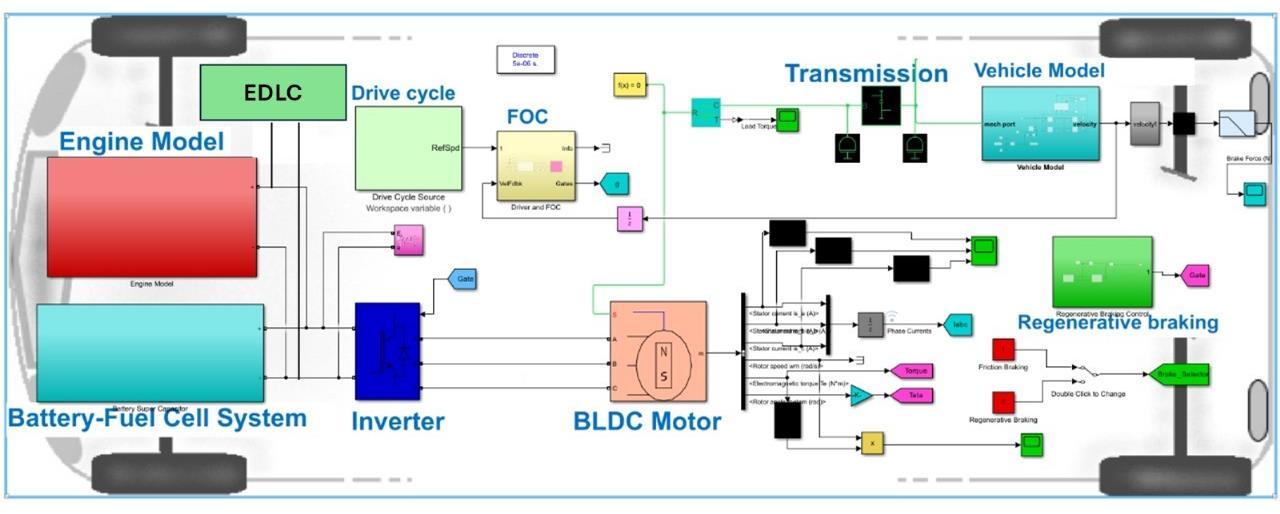
The Brushless DC (BLDC) motor is controlled by Fieldorientedalgorithm technique,theIndiandrivecycle(IDC) has been designed to test the proposed system, the IDC provides the reference velocity to the longitudinal driver, whichgeneratestheaccelerationcommand,theacceleration command is the Iref to the FOC controller, the pulses generatedbytheFOCcontrollerisfedtotheIGBTswitches ofthethreephase-inverter.
TheFOCalgorithm'sprincipalfunctioninvolvescomparing Iq* with the instantaneous I stator quadrature (Iq) value necessitating an accurate computation of the latter. This computationisfacilitatedbythetransformationofthethree-
International Research Journal of Engineering and Technology (IRJET) e-ISSN: 2395-0056
Volume: 11 Issue: 08 | Aug 2024 www.irjet.net p-ISSN: 2395-0072
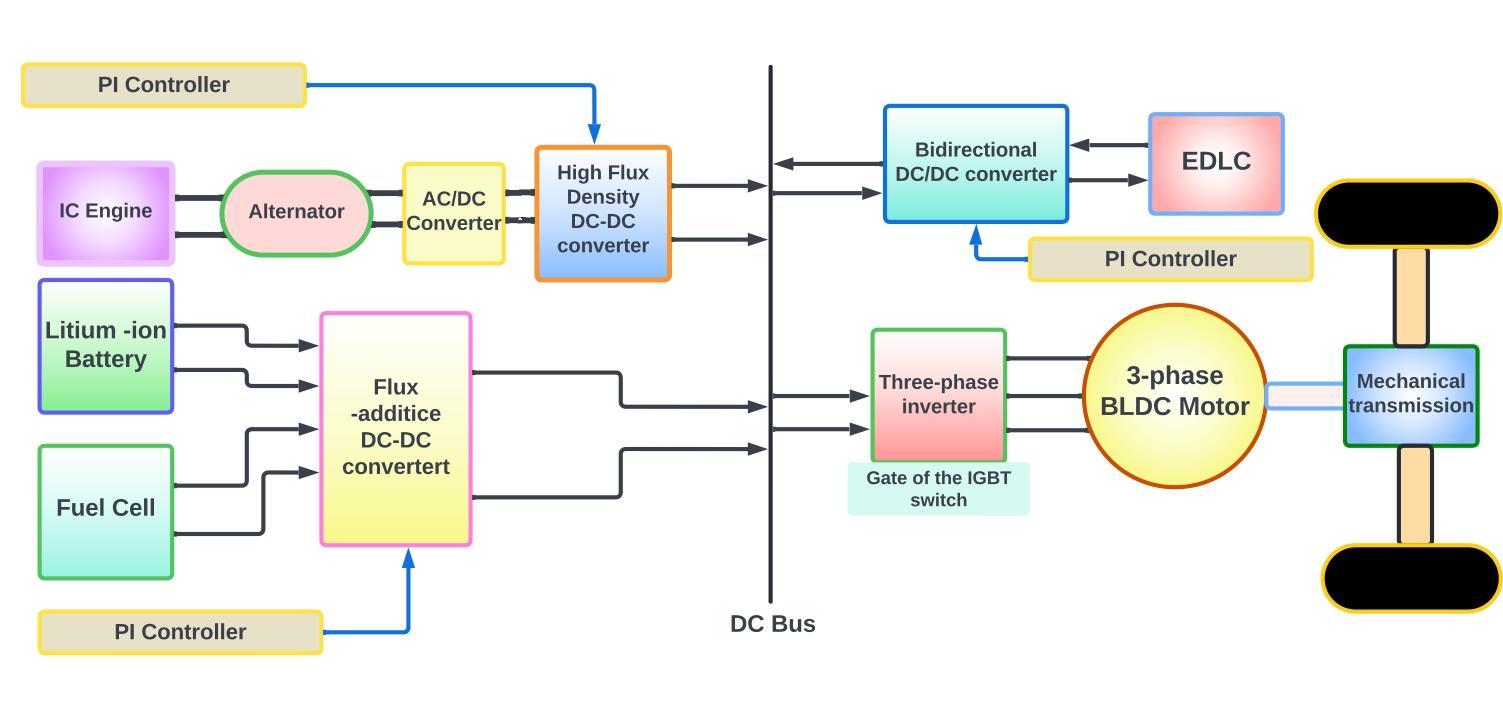
phase stator currents (Iabc) into a two-phase orthogonal stationaryreferenceframe(Iαβ)via theClarketransform, Subsequently,theParktransformisemployedtotranspose the Iαβ components into the rotating reference frame currents (Idq). This intricate control methodology meticulously synchronizes the motor's electrical and mechanical subsystems, fostering optimal performance acrossbothdynamicandsteady-stateoperationalregimes. Hybrid Electric vehicles (HEVs) epitomize a disruptive paradigmshiftintransportation,leveragingelectricmotors and rechargeable EDLCs to supplant the conventional reliance on fossil fuels inherent in internal combustion enginevehicles Ultimately,thisexhaustiveinquiryfurnishes criticalinsightsforpolicymakers,industrystakeholders,and consumers,guidingstrategicdecision-makingprocessesand chartingacoursetowardsasustainableandresilientelectric mobility paradigm. The architectural blue print of the proposedsystemhasbeenillustratedinFigure1.
2. Flux-additive DC-DC converterintegrating Li-ion battery and fuel cell to the DC bus
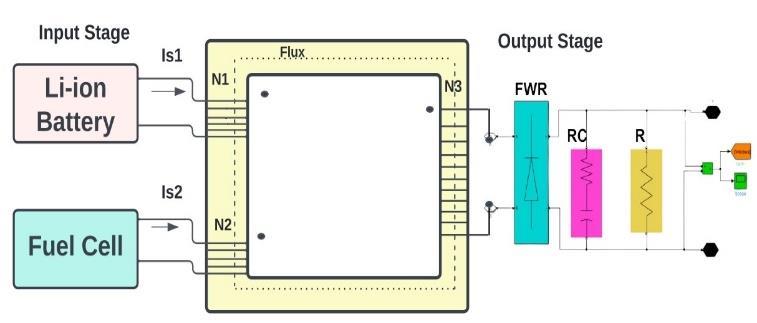
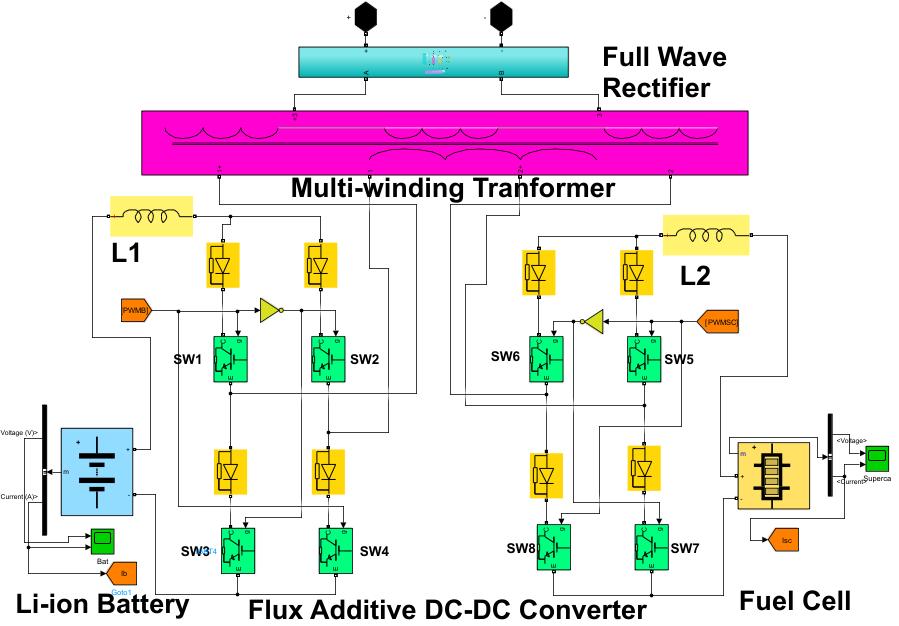
Thearchitecturalschematicofthemulti-inputfluxadditive DC-DC converter, as delineated in Figure 2, integrates a plethora of indispensable elements, each pivotal to the converter'sfunctionality.
2.1 Initial Input-Stage Circuit
Thisphaseencompassestheprimarywindingoftransformer T1, characterized by N1 turns. The current Is1 traversing thiswindinggenerates a magneticflux Φ1, resulting from theintricateinterplaybetweentheelectricalcurrentandthe winding'sinherentmagneticfield.
2.2 Secondary Input-Stage Circuit
This segment incorporates the primary winding of transformer T2, consisting of N2 turns. The current Is2 flowingthroughthiswindingengendersamagneticfluxΦ2, following the fundamental principles of electromagnetic induction.
The current Is3 passing through this winding produces magneticfluxΦ3,whichiscrucialfortheconverter'senergy transfermechanism.
2.4 Transformer
AscurrenttraversestheprimarywindingwithN1turns,it establishes a magnetic flux that induces an electromotive force (emf) in the secondary winding with N2 turns, in accordance with Faraday's Law. The schematic block diagramisdepictedinfigure2.
International Research Journal of Engineering and Technology (IRJET) e-ISSN: 2395-0056
Volume: 11 Issue: 08 | Aug 2024 www.irjet.net p-ISSN: 2395-0072
Table -1: Designspecificationsofcutting-edgefluxadditive DC-DCconverter
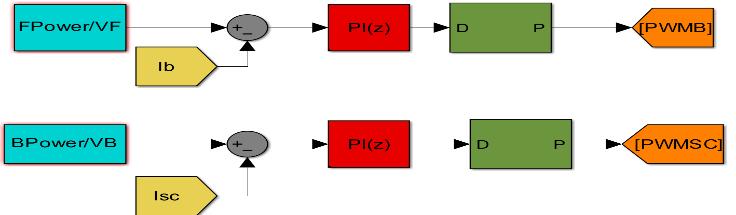
PIcontrollerforoptimizingperformanceoftheflux additiveDC-DCconverter.
Figure 4 shows a high flux density DC-DC converter connectinganICenginetoathree-phaseinverterforanEV. The LCL network filters power and reduces THD, while diodesD5andD6regulateACflow,producingarefinedDC output.MOSFETsM1toM4controlvoltage,withL1,L2,and C1ensuringefficientenergystorageanddelivery.
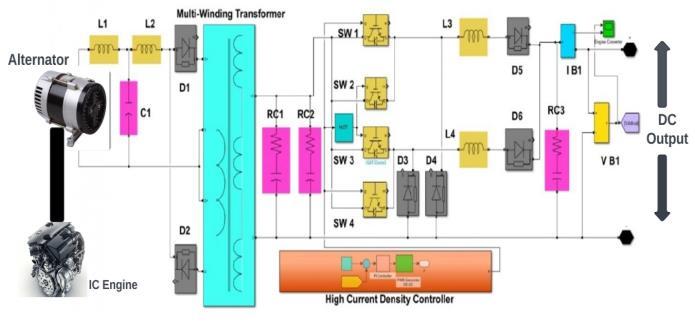
-5: Simulink diagram of High current density DC-DC converterDC-DCconverterinterfacedwithICengine
TheHighDC-DCconverterexhibitsfouroperationalmodes:
3.1 Mode 1 (0 < t < DTs): IGBTs1and3areinconduction, whileIGBTs2and4,alongwithDiodesD3andD4,remain non-conductive. The corresponding inductor voltages are expressedasVL1=V2-VoandVL2=V2-Vo.
3 2 Mode 2 (DTs < t < Ts): AllIGBTs(1,2,3,and4)arein non-conduction, whereas Diodes D3 and D4 engage in conduction.TheinductorvoltagesinthismodeareVL1=-Vo andVL2=-Vo.
3.3 Mode 3 (Ts < t < 2DTs): IGBTs2and4transitioninto conduction,whileIGBTs1and3,alongwithDiodesD3and D4,remainnon-conductive.
3.4 Mode 4 (2DTs < t < 2Ts): All IGBTs remain nonconductive, with Diodes D3 and D4 assuming conduction mode.
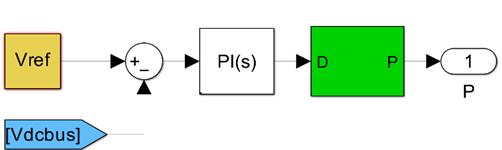
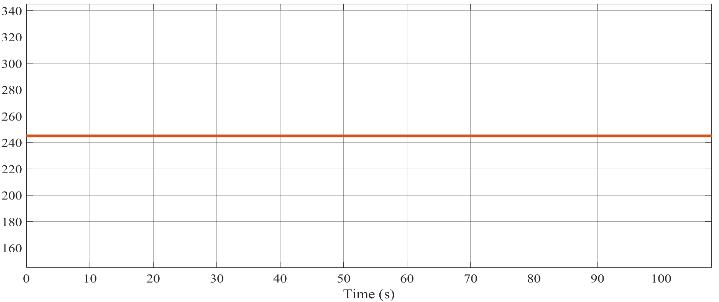
Thefigure4showsthePI controllerfor regulatingthe DC busvoltageat245V.
Table -2: DesignspecificationsofHighcurrentdensityDCDCConverter
4. HIGH-EFFICIENCY BIDIRECTIONAL CONVERTER
The bidirectional converter for Electric Double-Layer Capacitors (EDLCs) is crucial for sophisticated energy modulation during BLDC motor acceleration and deceleration. In acceleration, it precisely transmits stored electrostaticenergytoamplifymotorperformance,whilein braking, it efficiently recaptures kinetic energy into the EDLCs,significantlyoptimizingsystemenergyefficiency.
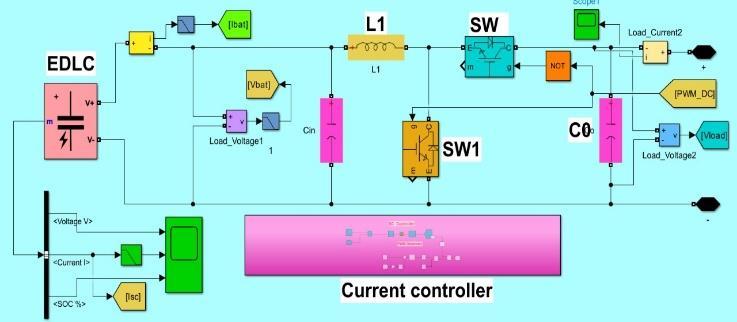
Fig -7: SchematicoftheBidirectionalConverterfor RegenerativeBrakingandChargingEDLC’s
International Research Journal of Engineering and Technology (IRJET) e-ISSN: 2395-0056
Volume: 11 Issue: 08 | Aug 2024 www.irjet.net p-ISSN: 2395-0072
Table -3: DesignspecificationsofBDLCbank
S.NO Parameter Value
1
2
3
4
5
6
7
Table -4: DesignspecificationsoftheBatterysystem S.NO
1
Table -5: Designspecificationsoffuelcell
1 ModelAFC 2.4KW,48V
3
4
5. DYNAMIC MODELLING OF VEHICLE SYSTEM AND FOC CONTROLLER WITH REGENERATIVE BRAKING
The vehicle model is meticulously constructed within MATLABSimulink,incorporatinganadvancedlongitudinal driver algorithm. This driver synchronizes with reference velocity profiles derived from Indian drive cycle data, enabling precise, real-time feedback integration with the vehicledynamics.ThetransmissionsystemisseamlesslyFig-
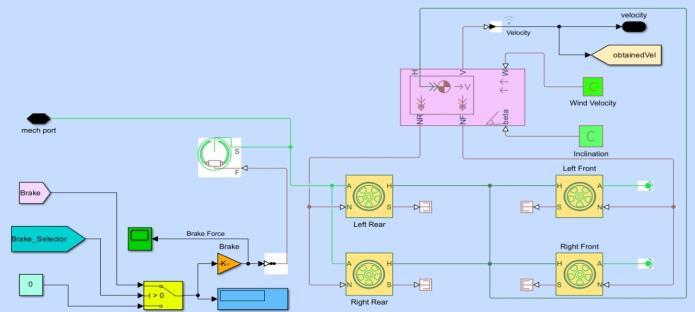
coupled to a Brushless DC (BLDC) motor, facilitating the efficienttransferofgeneratedtorquetopropelthemotor, ensuring optimal performance and propulsion. The clarke andinverseClarketransformationisillustratedas,
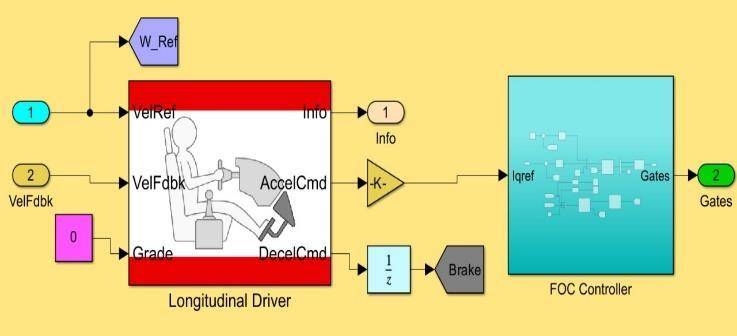
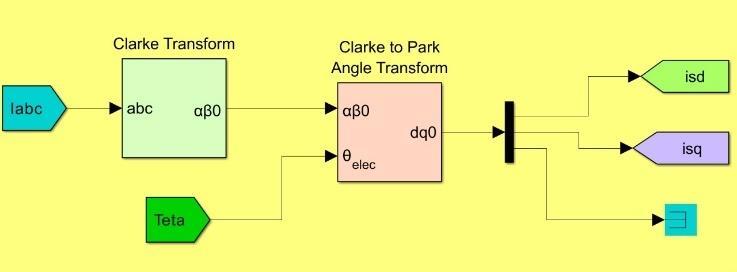
Fig -10: ThetransformationprocessofIabcintotheIdq rotatingreferenceframeisdelineatedcomprehensively.
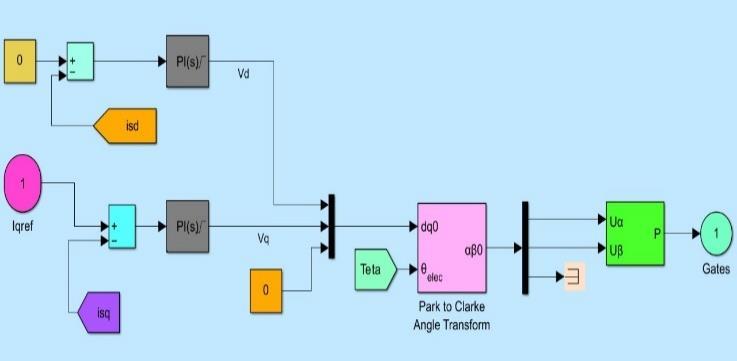
Fig -11: SimulinkschematicexemplifyingtheField OrientedController(FOC)forregulatingtheBLDCmotor
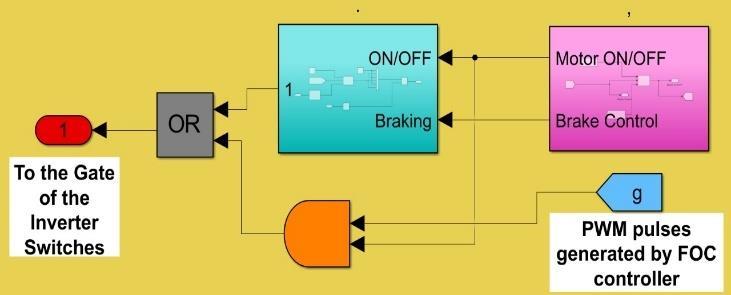
Fig -12: TheSimulinkdiagramoftheregenerativebraking systemforchargingtheEDLCduringbrakingaction.
International Research Journal of Engineering and Technology (IRJET) e-ISSN: 2395-0056
Volume: 11 Issue: 08 | Aug 2024 www.irjet.net p-ISSN: 2395-0072
6. RESULTS AND ANALYSIS



International Research Journal of Engineering and Technology (IRJET) e-ISSN: 2395-0056
Volume: 11 Issue: 08 | Aug 2024 www.irjet.net p-ISSN: 2395-0072
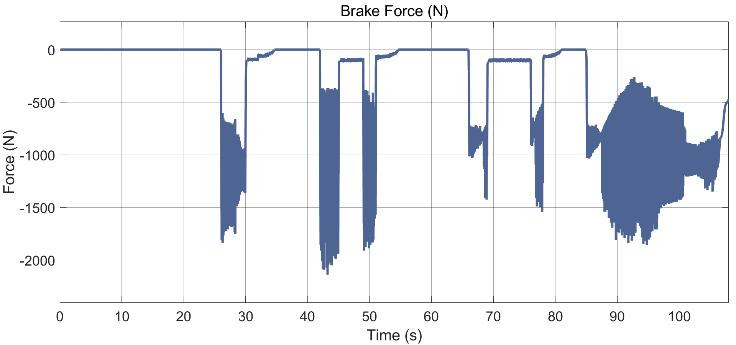
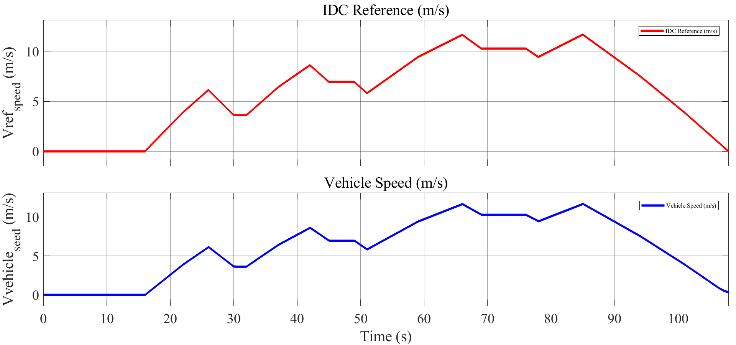
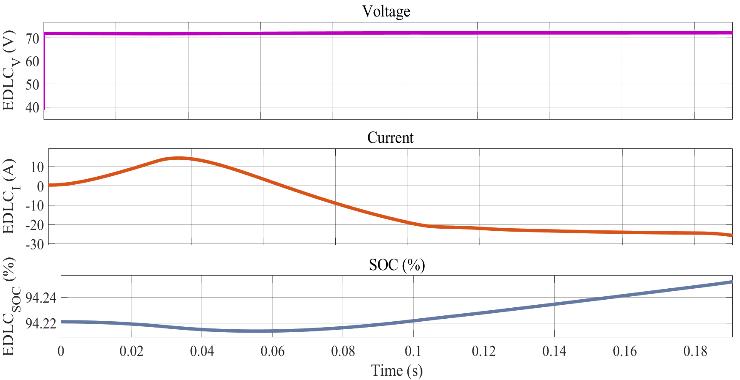
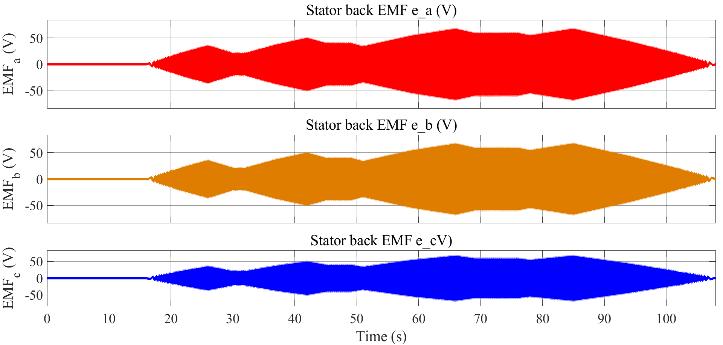
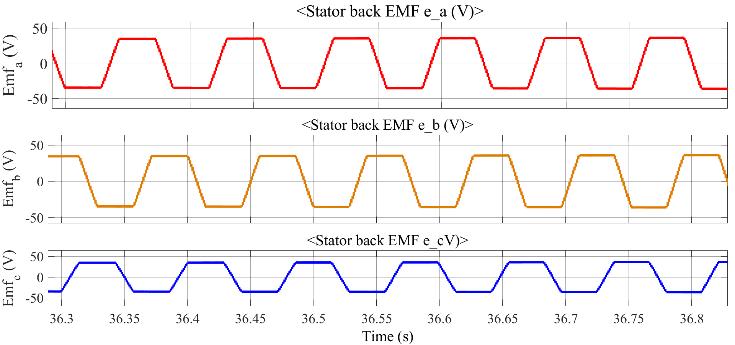
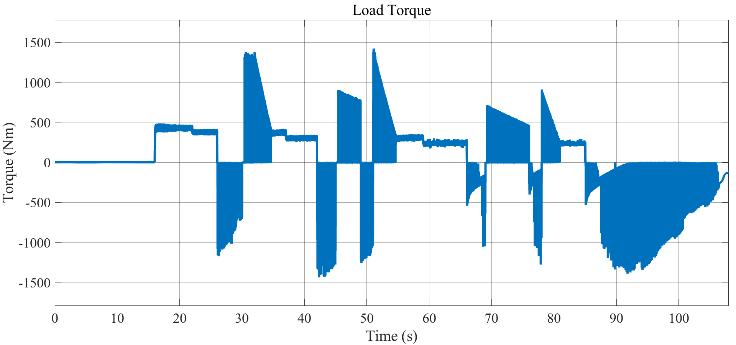
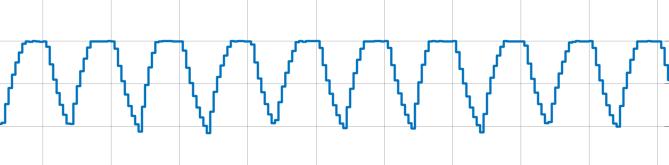
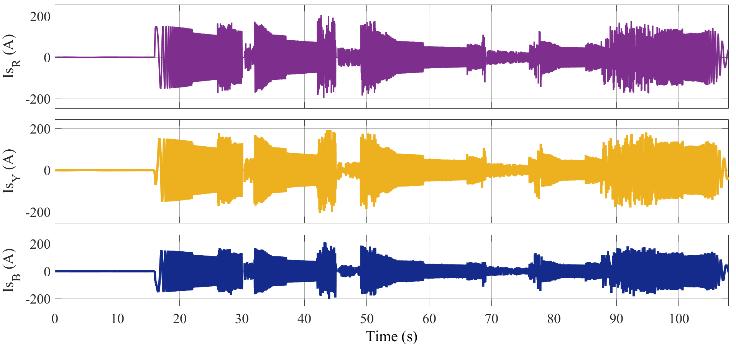
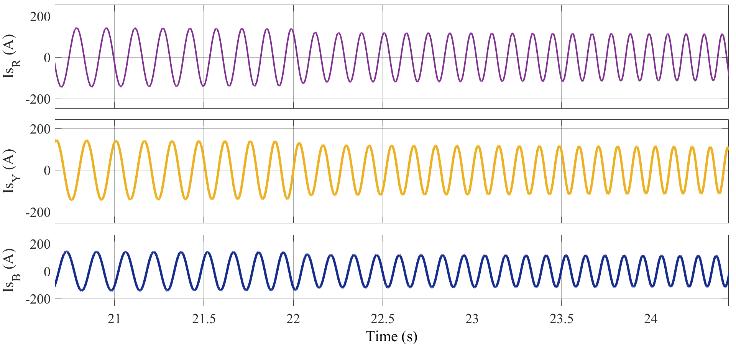
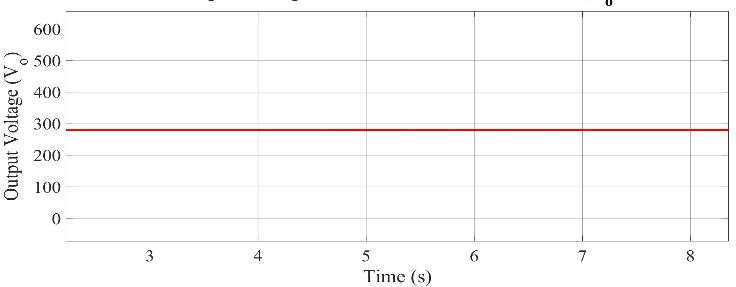
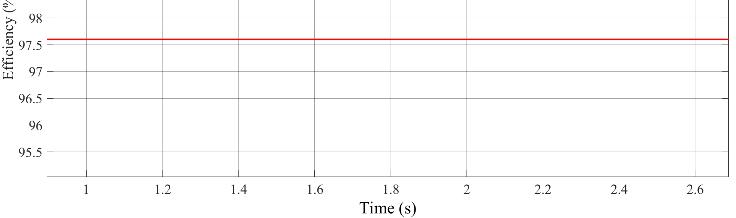
TheDCbuslinkismaintainedat245V,thestatorcurrentsis depicted in figure 17. The motoring efficiency of 97.5% is obtained as depicted in figure 19, the vehicle speed is depicted in figure 21, the back emf in figure 23. During braking action, the EDLC system charges and stores the energygeneratedduringregenerativebraking.
HEVsrevolutionizeelectromobilitybycombiningadvanced technologies with eco-friendly design, enhancing energy autonomy and reducing fossil fuel use. Leveraging sophisticatedconverterssuchasfluxadditiveDC-DC,High current density DC-DC converters and optimization algorithms in maximising the efficiency of the system, the proposedsystemofHEVsachievesuperiorperformanceand sustainability,asdemonstratedbyMATLABsimulations.
[1] J.A.Sanguesa,V.Torres-Sanz,P.Garrido,F.J.Martinez, andJ.M.Marquez-Barja,“Areviewonelectricvehicles”: Technologiesandchallenges,SmartCities,vol.4,no.1, pp.372404,Mar.2021
[2] T. Payarou and P. Pillay, "Integrated Multipurpose Power Electronics Interface for Electric Vehicles," in IEEETransactionsonTransportationElectrification,vol. 9, no. 2, pp. 2429-2443, June 2023, doi: 10.1109/TTE.2022.3209098.
[3] C.Liu,K.T.Chau,D.WuandS.Gao,"Opportunitiesand challenges of vehicle-to-home, vehicle-to-vehicle, and vehicle-to-gridtechnologies,"in ProceedingsoftheIEEE, vol. 101, no. 11, pp. 2409-2427, Nov. 2013, doi: 10.1109/JPROC.2013.2271951.
[4] D.Wu,D.C.AliprantisandK.Gkritza,"ElectricEnergy andPowerConsumptionbyLight-DutyPlug-InElectric Vehicles," in IEEE Transactions on Power Systems, vol. 26, no. 2, pp. 738-746, May 2011, doi: 10.1109/TPWRS.2010.2052375
[5] M. R. Haque, K. M. A. Salam and M. A. Razzak, "A ModifiedPI-ControllerBasedHighCurrentDensityDC–DC Converter for EV Charging Applications," in IEEE Access, vol. 11, pp. 27246-27266, 2023, doi: 10.1109/ACCESS.2023.3258181.

S G SRIVANI (Senior Member, IEEE)receivedtheMEdegreefrom Bangalore University and Ph. D degree from NITK, Surathkal, is currentlytheProfessorandHODof EEE,RVCollegeofEngineering, Bengaluru.
International Research Journal of Engineering and Technology (IRJET) e-ISSN: 2395-0056
Volume: 11 Issue: 08 | Aug 2024 www.irjet.net p-ISSN: 2395-0072

V Srinivasulu received the B.E degree in EEE from Visvesvaraya TechnologicalUniversity,Belagavi, He is currently pursuing his M Tech in Power Electronics in RV CollegeofEngineering,Bengaluru.
© 2024, IRJET | Impact Factor value: 8.226 | ISO 9001:2008 Certified Journal | Page455