
International Research Journal of Engineering and Technology (IRJET) e-ISSN:2395-0056
Volume: 11 Issue: 08 | Aug 2024 www.irjet.net p-ISSN:2395-0072

International Research Journal of Engineering and Technology (IRJET) e-ISSN:2395-0056
Volume: 11 Issue: 08 | Aug 2024 www.irjet.net p-ISSN:2395-0072
G Mohana1, M Umamaheswari2
1 Research Scholar, Department of Mathematics, INFO Institute of Engineering Kovilpalayam, Coimbatore, Tamil Nadu, India
2 Assistant Professor, Department of Mathematics, INFO Institute of Engineering Kovilpalayam, Coimbatore, Tamil Nadu, India.
Abstract
In this paper introduces the new shape of fuzzy numbers is developed and named as Reverse order Heptadecagonal Fuzzy Numbers. This paper defines membership functions and Arithmetic Operations for Reverse order Heptadecagonal Fuzzy Numbersusingan interval of Alpha cuts.Some prepositions for instance maximumand minimum OperationsonFuzzyequations;alphacutsandReverseorderFuzzynumbershavebeenintroducedandproved.Numerical examplesforthisArithmeticOperationsarealsogiven.
Keywords: Fuzzy Number, Heptadecagonal Fuzzy Number, Reverse Order Heptadecagonal Fuzzy Number, Fuzzy ArithmeticOperations,Alpha–cut.
Inmodernworldwemaycomeacrossmanyuncertaintycases.Thefuzzysettheoryistofindoutthebestsolution to the real-world problems where available data and information are not exact, in that situation fuzzy numbers can be appliedinmanyfieldssuchascontrol system,decisionmakingandoperationresearchetc
ThispaperintroducesReverseorderHeptadecagonal,RoHDFNwithitsmembershipfunctions.Ithasgotseveral applications in real life. In case of Heptadecagonal fuzzy number one is the maximum characterizing supporting interval butincaseofdecagonalwehaveaflatsegmentofά=1whichisthecharacterizingsupportinginterval.Theclassificationof fuzzy numberand propertiesrelatedto it, have paved the wayfordeveloping new notions VipinBala,JitenderKumar* andM.S.KadyanintroducesHeptadecagonalFuzzyNumbers.Inthebeginning,Zadeh(1965)studiedtheideaoffuzzyset theory. Ruth Naveena and Rajkumar (2019) discussed reverse order pent decagonal, nanogonal and decagonal fuzzy numberswiththeirarithmeticoperations.
The introduction section offers specification for the present work by addressing the limitations of traditional fuzzy number representations and the need for more nuanced and flexible approaches. It establishes the significance of introducing Reverse order Heptadecagonal Fuzzy Numbers and their utility in addressing complex and ambiguous uncertainty scenarios. This section also sets the stage for the innovative aspects of the research by highlighting the limitationsofexistingmethodsandthemotivationforexploringnewterritory.
Definition 2.1
A fuzzy set is characterized by a membership function maps elements of a given universal set X to the real numbers in [0,1].
AfuzzysetÑinuniversalsetYisdefinedasÑ={(y,ΩÑ(y))/y Y}. ΩÑ:Y [0,1].ΩÑ(y)iscalledthemembershipvaluey YofinthefuzzysetÑ.
International Research Journal of Engineering and Technology (IRJET) e-ISSN:2395-0056
Volume: 11 Issue: 08 | Aug 2024 www.irjet.net p-ISSN:2395-0072
Definition 2.2
AFuzzynumberÑisafuzzysetonthereallineR,mustsatisfythefollowingconditions i) ΩÑ(y)ispiecewisecontinuous. ii) Thereexistatleastoney RsuchthatΩÑ(y)=1 iii) Ñmustbenormalandconvex.
Definition 2.3
The -cut of fuzzy set Ñ is a set consisting of those elements of the universe Y whose membership values exceeds the thresholdlevel Ñ ={y/ΩÑ(y) }.
Proposition 2.4
ÑisaReverseOrderFuzzyNumberiffthefollowingconditionshold. i) Ñisdown-normal. ii) Ñ> isaunionoftwodisjointunboundedopenintervalsforeach [0,1). iii) ThelevelsetÑ=1isunboundedandÑ<1 isbounded.
Definition 2.5
LetĢhdandĶhd beanytwofuzzynumbers.ThenMin(ĢhdĶhd)andMax(ĢhdĶhd)arefuzzynumbers,definedby Min(ĢhdĶhd)(y)=Sup{Min{Ģhd(p),Ķhd(q)}:z=Min(p,q)}. Max(ĢhdĶhd)(y)=Sup{Max{Ģhd(p),Ķhd(q)}:z=Max(p,q)}.
Definition 2.6
LetĢhd+Y=H,Ģhd*Y=H,whereĢhdandĶhd areFuzzyNumbers,andYisanunknownFuzzyNumberforwhicheitherofthe equationsistobesatisfied.
Definition 2.7
It is a fuzzy number represented with three points as follows: A = (a1, a2, a3)This representation is interpreted as membershipfunctions(Fig) A(x)= {
Nowifwegetcrispintervalby cutoperation,interval shallobtainedasfollows [0,1].


International Research Journal of Engineering and Technology (IRJET) e-ISSN:2395-0056
Volume: 11 Issue: 08 | Aug 2024 www.irjet.net p-ISSN:2395-0072
Weget =(a2 –a1) +
II.REVERSE ORDER HEPTADECAGONAL FUZZY NUMBER
Definition 3.1 Reverse orders Heptadecagonal Fuzzy Number:
ReverseordersHeptadecagonalFuzzyNumberHDFN HD isdefinedby HD=( , , , , , , , ,0 , , , , , , , , ) and membershipfunctionis
International Research Journal of Engineering and Technology (IRJET) e-ISSN:2395-0056
Volume: 11 Issue: 08 | Aug 2024 www.irjet.net p-ISSN:2395-0072
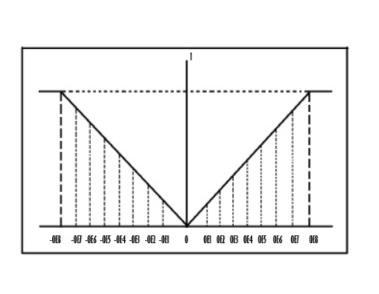
2: Reverse order Heptadecagonal Fuzzy Number
Example 3.2
LettheReverseorderHeptadecagonalFuzzyNumber HD
Ω HD(y)=(-10,-9,-8,-7,-5,-4,-3,-2,0,1,3,4,5,7,8,9,10)anditsmembershipfunctionisgivenby
International Research Journal of Engineering and Technology (IRJET) e-ISSN:2395-0056
Volume: 11 Issue: 08 | Aug 2024 www.irjet.net p-ISSN:2395-0072
Ω HD(y)=
3.3 Arithmetic Operations of Reverse order Heptadecagonal fuzzy Number (HoHDFN) on Alpha Cut and its Membership Function AReverseorderHeptadecagonalfuzzyNumbers(HoHDFN)canbedefinedas
andsoon.....
Ω HD(y)=[-( ,-( ,-( ,-( ,-( ,-( ,-( ,-( ,, , ( , ( , ( ,( ,( ,( ,( ].
When( wegetΩ HD(y)=[-9.5,-8.5,-7.5,-6,-4.5,-3.5,-2.5,-1.5,-0.5,0.5,2,3.5,4.5,5.5,7.5,8.5,9.5]
When( wegetΩ HD(y)=[-10,-9,-8,-7,-5,-4,-3,-2,-1,0,1,2,3,4,5,7,8,9,10]
Thegraphical representationof - cutofReverseorder HeptadecagonalFuzzy Numberfortheaboveexampleisshown below © 2024, IRJET | Impact Factor value: 8.226 | ISO 9001:2008
International Research Journal of Engineering and Technology (IRJET) e-ISSN:2395-0056
Volume: 11 Issue: 08 | Aug 2024 www.irjet.net p-ISSN:2395-0072
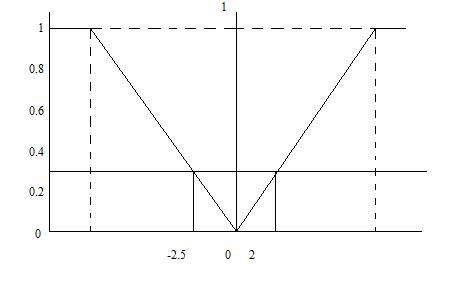
3Graphical
3.4 Conditions on the Reverse order Heptadecagonal Fuzzy Number (RoHdFN)
TheConditionfortheReverseorderHeptadecagonalFuzzyNumber HD :
1. Intheinterval[0,1],Ω HD(y)iscontinuous.
2. Ω HD(y)isadecreasingstrictlyandthefunctioniscontinuousontheinterval[ ,0].
3. Ω HD(y)isaincreasingstrictlyandthefunctioniscontinuousontheinterval[0, ].
IV.ARITHMETIC OPERATIONS OF REVERSE ORDER HEPTADECAGONAL FUZZY NUMBER (RoHDFN)
4.1 Addition of two Reverse order Heptadecagonal Fuzzy Numbers
ConsidertwoReverseorderHeptadecagonalFuzzyNumbers
The addition of two Reverse order Heptadecagonal Fuzzy Numbers is given by
Example 4.1
LetusconsidertwoReverseorderHeptadecagonalfuzzyNumbers
ČHD=(-29,-28,-27,-26,-25,-23,-22,-21,0,10,11,12,13,14,17,18,19).
HD=(-19,-17,-15,-13,-11,-9,-7,-5,0,12,14,15,16,18,19,20,21).
ČHD HD=(-48,-45,-42,-39,-36,-32,-29,-26,0,22,25,27,29,32,36,38,40)
IRJET
International Research Journal of Engineering and Technology (IRJET) e-ISSN:2395-0056
Volume: 11 Issue: 08 | Aug 2024 www.irjet.net p-ISSN:2395-0072
4.2 Subtraction of two Reverse order Heptadecagonal Fuzzy Numbers
ConsidertwoReverseorderHeptadecagonalFuzzyNumbers
ThesubtractionoftwoReverseorderHeptadecagonalFuzzyNumbersisgivenby
Example 4.2
LetusconsidertwoReverseorderHeptadecagonalfuzzyNumbers
ČHD=(-9,-8,-7,-6,-5,-3,-2,-1,0,9,1,2,3,4,7,8,9).
HD=(-1,-7,-5,-3,-2,-9,-7,-5,0,2,4,5,6,8,9,2,3).
ČHD- HD=(-8,-1,-2,-3,-3,6,5,4,0,7,-3,-3,-3,-4,-2,6,6).
4.3 Multiplication of two Reverse order Heptadecagonal Fuzzy Numbers
ConsidertwoReverseorderHeptadecagonalFuzzyNumbers
ThesubtractionoftwoReverseorderHeptadecagonalFuzzyNumbersisgivenby
Example 4.3
LetusconsidertwoReverseorderHeptadecagonalfuzzyNumbers
ČHD=(-9,-8,-7,-6,-5,-3,-2,-1,0,9,1,2,3,4,7,8,9).
HD=(-1,-7,-5,-3,-2,-9,-7,-5,0,2,4,5,6,8,9,2,3).
ČHD HD=(9,56,35,18,10,27,14,5,0,18,4,10,18,32,63,16,27).
4.4 Division of two Reverse order Heptadecagonal Fuzzy Numbers
ConsidertwoReverseorderHeptadecagonalFuzzyNumbers
ThedivisionoftwoReverseorderHeptadecagonalFuzzyNumbersisgivenby
Example 4.4
LetusconsidertwoReverseorderHeptadecagonalfuzzyNumbers
ČHD=(-9,-8,-7,-6,-5,-9,-14,-10,0,10,12,25,36,40,18,8,9).
HD=(-1,-2,-7,-3,-5,-9,-7,-5,0,2,4,5,6,8,9,2,3).
ČHD / HD=(9,4,1,2,1,1,2,2,0,5,3,5,6,5,2,4,3).
© 2024, IRJET | Impact Factor value: 8.226 | ISO 9001:2008
International Research Journal of Engineering and Technology (IRJET) e-ISSN:2395-0056
Volume: 11 Issue: 08 | Aug 2024 www.irjet.net p-ISSN:2395-0072
Triangular fuzzy numbers aidsus finding solutionand managing uncertainty indifferentreal lifeapplications. Below the examplestellsustriangularfuzzynumbershowitisbeingappliedinpracticalscenarios
A. Wheather forecasting: We can predict and find out wheather forecasting Possibilities for temperature, Precipitins, wind speed and other meteorological variables, it can also supports meteorologists to analyze forecast un-certainty effectively.
B. Financial wise analysis: Triangular fuzzy numbers widely using in financial sectors and risk analysis to understand uncertain parameters like Interest rates, stock prices and exchange rates, also supports financial analysis, that making informeddecisionsinvolatilemixed.
C. Environmental mentoring: Triangularfuzzynumbersalsobeenusinginenvironmentalmonitoringbycollectingdata’s from environmental seasons to overcome uncertainty in measurements, it will gives us the accuracy in pollution levels waterqualityoranyenvironmentalvariable.
D.Supply Chain Managements: Inthismanagementtriangularfuzzynumberssupportsdemandforecastsandleadtimes which may be vary most of the time and it represents the variables in these parameters and provides better Inventory managementandproductionplanning.
E.Medical Diagnosis: In Medical diagnosis it helps in tests that associated with uncertainty , patient’s symptoms or treatmenteffectiveness.Thishelpsdoctorsfordecisionmakingandbecautious.
F.Traffic Management: Triangular fuzzy numberscanbeusedintrafficflowproductionandcongestion management;It helpsforroutePlanningandtrafficcontrolsystems.
G. Energy Managements: It can be used in energy forecasting and optimization. It helps in uncertain factors such as energydemand,energygenerationandfuelpricesforeffectiveenergydistributionandmanagement.
H. Quality Control: Ithelpsinmanufacturingproductsindeliveringproductsqualitybecausetheremaybeuncertaintyin qualitymeasurements,assistinginqualitycontrol,anddefeatdetection.
I. Profit Managements: Uncertainty will be occurring in scheduling the profits and in resource allocation. Triangular methodcanhelpusprofittimelinessandresourceswhatweneedeffectively.
J. Market Research: There is a gap in Interpretation while conducting market research. Triangular method supports in surveyingdata,againstuncertaintyandmakingeasyaccesstoconsumer’spreferencesandmarkettrends.
VI. MODELLING RISKINESS IN SNOWFALL AND TEMPERATURE MEASUREMENTS WITH TRIANGULAR FUZZY NUMBERS
Let us create a clarified real-life numerical example using two Triangular Fuzzy Numbers ČHD and HD to represent uncertainquantities.Inthisexample,wewillconsiderasummaryinvolvingsnowfallandtemperaturemeasurements.We willuseTriangularFuzzynumberstorepresentstheriskinessintheseestimationovera17-daysperiodvalueofMinimum toMaximumtemperature.
Numerical Examples:
LetusconsiderTriangularfuzzyNumber
ČHD=(-12.9,-12.8,-11.7,-11.2,-10.5,-9.3,-8.2,-7.1,0,11.2,9.3,8.4,7.5,6.2,5.4,5.1,4.1).
ThisTriangularFuzzyNumberrepresentsthedailysnowfall incmforamonth.Itindicatesthat,foreachday,the lowerboundofsnowfallis-7.1cm,andtheupperboundis11.2cm
LetusconsiderTriangularfuzzyNumber
HD=(-4.9,-48,-3.7,-3.5,-2.8,-2.4,-1.3,-1.2,0,19.2,18.3,17.3,16.1,15.2,15,14.1,13.1).
© 2024, IRJET | Impact Factor value: 8.226 | ISO 9001:2008 Certified Journal | Page344
International Research Journal of Engineering and Technology (IRJET) e-ISSN:2395-0056
Volume: 11 Issue: 08 | Aug 2024 www.irjet.net p-ISSN:2395-0072
This Triangular Fuzzy Number represents the daily temperature in degree Celsius for a month. It indicates that, foreachday,thelowerboundoftemperatureis-1.2 degreeCelsius,andtheupperboundis19.2 degreeCelsius.
Using Triangular Fuzzy Numbers allow us to represent the riskiness in daily snowfall and temperature measurements.Forexample,onaparticularday,theactualsnowfallcouldbeanywherewithintherangespecifiedbyČHD, andthetemperaturecouldbewithintherangespecifiedby HD
In this paper the new shape of Reverse order Heptadecagonal Fuzzy Numbers is developed and named as RoHDFN.This RoHDFN will be very useful for many researchers and helps in pertaining the solution to Real life Problems. The incorporationofAlphacutsprovidesaPreciseandsystematicapproachtoquantifythedegreeofriskinessassociatedwith these Fuzzy Numbers. The results indicate that Reverse order Heptadecagonal Fuzzy Numbers are not only compelling from a theoretical standpoint but are also highly practical for tackling real world issues across a wide range of domains. These tools offer a fresh perspective on decision support systems, significantly enhancing the accuracy of the decisionmakingprocessinscenarioscharacterizedbyuncertainty
Theauthorsalsoliketothanktheanonymousrefereeforgivingmanyhelpfulsuggestionsontherevisionofpresentpaper
1) Pourabdollah A,Mendel Jm,John RI.Alpha-cut representation used for defuzzification in rule-based systems.FuzzySetsandSystems.2020;399:110-132.Availablefromhttps://doi.org/10.1016/j.fss.2020.05.008.
2) Gowri D,Santhiya S.A Note on Arithmetic Operations of Fuzzy Numbers Using -Cut Method.Journal of Algebric Statistics.2022;13(2):2223-2228.Available from :https://publishosa.com/index.php/journal/article/view/410.
3) Kalaiarasi K,Swathi S(2023)Arithmetic Operations of Trigonal Fuzzy Numbers Using Alpha cuts:A flexible ApproachtoHandlingUncertainty.IndianJournalofScienceandTechnology16(47):4585-4593.Availblefrom :https://doi.org/10.17485/IJST/v16i47.2654.
4) Ruth Naveen, N.and A.Rajkumar(2019).A New Reverse Order Pentadecagonal,Nanogonal and Decagonal Fuzzy Number With Arithmetic Operations,International Journal of Recent Technology and Engineering (IJRTE),8(3),7937-7943.
5) Vipin Bala, Jitender Kumar* and M. S. Kadyan (2021) introduces Heptadecagonal Fuzzy Numbers and their fuzzy Arithmetic operations Int.J.Stat.Sci vol.17,No. 1,pp.237-247,2021.Available from:https://connectjournals.com/03899.2021.17.237.
6) C. Notarnicola introduces Overall negative trends for snow cover extent and duration in global mountain regions over 1982–2020, EURAC Research, Bolzano, Italy. Email: claudia.notarnicola@eurac.edu, Scientifc Reports|(2022)12:13731.Availablefrom:https://doi.org/10.1038/s41598-022-16743-w
7) Zadeh LA. Fuzzy sets*. Information and Control. 1965;8 (3):338–353. Available from: https://doi.org/10.1016/S0019-9958(65)90241-X.
8) Ahmad M, Cheng W. A Novel Approach of Fuzzy Control Chart with Fuzzy Process Capability Indices Using Alpha Cut Triangular Fuzzy Number. Mathematics. 2022;10 (19):1–15. Available from: https://doi.org/10.3390/math10193572.
9) KumarR,KheparJ,YadavK,KareriE,AlotaibiSD,ViriyasitavatW,etal.ASystematicReviewonGeneralized Fuzzy Numbers and Its Applications: Past, Present and Future. Archives of Computational Methods in Engineering.2022;29(7):5213–5236.Availablefrom:https://doi.org/10.1007/s11831-022-09779-8.