
International Research Journal of Engineering and Technology (IRJET) e-ISSN: 2395-0056
Volume: 11 Issue: 08 | Aug 2024 www.irjet.net p-ISSN: 2395-0072

International Research Journal of Engineering and Technology (IRJET) e-ISSN: 2395-0056
Volume: 11 Issue: 08 | Aug 2024 www.irjet.net p-ISSN: 2395-0072
Manpreet Singh Bains1, Prof. Yuvraj Singh2, Prof. Harvinder Singh3
1PG Student, Guru Nanak Dev Engineering College, Ludhiana, Punjab, India
2Assistant Professor, Guru Nanak Dev Engineering College, Ludhiana, Punjab, India
3Professor, Guru Nanak Dev Engineering College, Ludhiana, Punjab, India
Abstract - The durability of reinforced concrete (RC) structures is significantly compromised by the corrosion of reinforcement bars (rebars), which poses a serious threat to their performance and longevity. Corrosion leads to an increase in rebar volume, induces crack formation, and reduces the cross-sectional area of the reinforcement. These changes weaken the bond between concrete and rebar, resulting in increased slippage and a substantial reduction in the flexural strength of RC beams. Consequently, the loadcarrying capacity, ductility, andservicelifeofthestructureare reduced, raising concerns about its safety. Corroded beams often exhibit behaviour contrary to their design intentions, with early failure occurring due to the rupture of weakened rebars. Understanding the effects of corrosion on RC beams at various stages of degradation is therefore critical. Thisreview synthesizes research findings on the flexural response of corroded RC members, highlightingthekeyfactorsinfluencing their degradation and the resulting structural outcomes.
Key Words: Flexural strength, rebar corrosion, residual capacity,RCmembers,structuraldegradation
1. INTRODUCTION
Concreteisamajorconstructionmaterialusedthroughout the world. It is well known for its compressive strength, durability and can be moulded to any required shape. It deteriorateswithtimeandrequireshugecostsforitsrepairs andmaintenance.Therefore,itbecomesessentialtoconsider the problems associated with the use of concrete, when usingitforaspecificpurpose.Strength,servicelife,losses, cost-effectiveness, and environmental impacts are the factors considered before using it for respective purposes [1],[2].Besidesitsapplications,ithassomelimitationstoo. Itisweakintension,formationofwidecracks,brittleness, shrinkage,andcreep.
To impart the tensile strength to concrete, steel reinforcementbarsareembeddedintoit.[3].Plainconcrete ismuchmoreresistanttomarineenvironmentswhereasthe reinforcement bars in reinforced concrete undergo selfdamages,whichadverselyaffectsthepropertiesofconcrete [4],[5].Reinforcementbarsaresusceptibletocorrosiondue to the aggressive environment in which the members are present [6]. Marine structures are mostly affected by the corrosionofreinforcementbars[7],[8].Steelreinforcement bars have a passive layer of concrete around them, which
protects the rebars from corrosion. The passive layer is destroyed by the ingressof chlorine ionsandcarbonation attackfromthesurroundingenvironment.Therustproducts formedduetocorrosionhavea muchhighervolume than theoriginalvolumeofrebar,whichleadstothecrackingof theconcretecover[9],[10],[11],[12].
CorrosiondegradesthepropertiesofRCmembers.Itresults in reduced load-carrying capacity, compromised ductility, concrete-rebar bond deterioration, crack origination and propagation,andspallingoftheconcretecover.Thecracks and spalling provide space for moisture to enter the concrete, further making it more prone to corrosion [12]. Thecorrosioncanbedividedintotwotypes,namelyuniform corrosion,andpittingcorrosion.Thecorrosionoftherebars throughout its length is known as uniform corrosion. Pits formonsurfaceofrebaratrandomlocations,suchthatthe rebarcannotbeclassifiedintocategoryofuniformcorrosion is known as pitting corrosion. Pitting corrosion is much severe than uniform corrosion. Flexural strength is the resistantofmemberstofailureinbending.Beamsandslabs arespeciallydesignedtosustainbendingstresses.Damage causedbycorrosionmayalsohaveanegativeimpactonload bearing behavior of members throughout their lifespan. Depending on the level of exposure and the level of the protection,thedeteriorationprocessbeginsatthebeginning and continues at a corrosion rate. Since corrosion cannot always be prevented, it is important to make sure that structural performances are preserved and do not deteriorate because of corrosion [13]. Accurate data regarding the serviceability and load carrying capacity of corroded reinforcing steel beams is crucial and a topic of extensiveresearch[14].
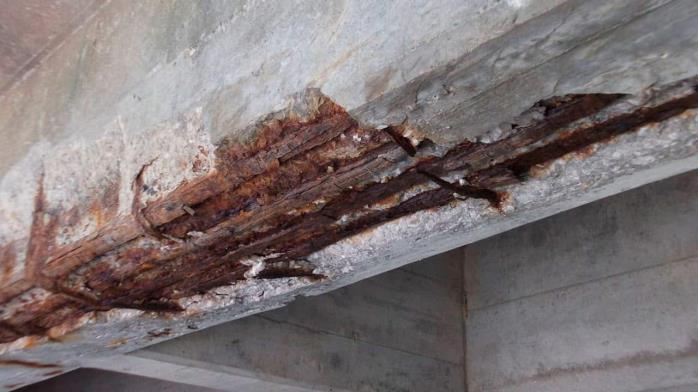
Innaturalenvironments,reinforcementcorrosionisaslow processthatisinfluencedbyanumberofvariables,including moisture,humidity,oxygen,aggressiveconditions,concrete quality, and the ratio of reinforcement to concrete. It can takeyearstonoticethefirstcorrosioncrackonaconcrete surfaceundertypicalexposureconditions,whichmakesit challenging to quickly examine the detrimental effects of reinforcementcorrosiononthestructuralperformancesof RC structures. Therefore, to achieve a target amount of reinforcement corrosion in a short duration of time, the corrosion process is accelerated [15] Fig-1 presents a deterioratedconcretebeam.
International Research Journal of Engineering and Technology (IRJET) e-ISSN: 2395-0056
Volume: 11 Issue: 08 | Aug 2024 www.irjet.net p-ISSN: 2395-0072
Corrosionofsteelreinforcementbarsisaslowprocess.In thisprocess,anodicandcathodicreactionstakeplaceonthe same rebar. Corrosion occurs due to chlorination and carbonation. Both phenomena can either be initiated individually or at the same time. The corrosion becomes severewhenthesemechanismsoccursimultaneously[17]. Chlorination involves the ingress of chloride ions into the concrete.Thesechlorideionsde-passivisethesteel,ironis oxidizedanditlosetwoelectrons.Thefreeelectronsfrom ironreactwithmoistureandoxygentoformHydroxideions.
Ferrous Hydroxide Fe(OH)2 is formed, which is a rust product. Carbonation is defined as the reaction ofCalcium Hydroxide and Calcium Silicate Hydrate gel with carbon dioxidefromtheenvironment.ItformsCalciumCarbonate which lowers the pH of concrete and the embedded reinforcement bar becomes prone to the corrosion in presence of water and oxygen.[18] Equation 1,2 and 3 presentsthecorrosionformationprocess.

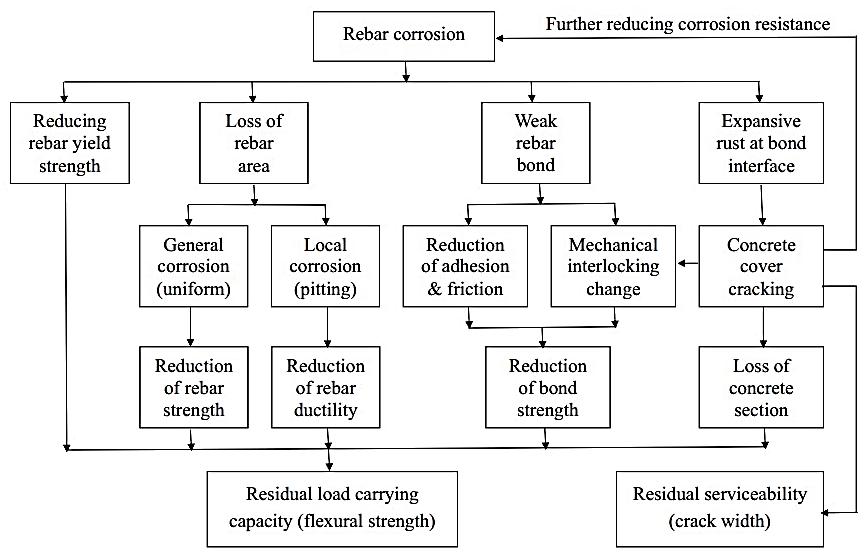
Themajoreffectofcorrosionisthereductioninthecrosssectionalareaofreinforcementbars.Thisfurthertends to affect other properties of the concrete and the reinforcement.Theformationofnon-uniformpitschanges the cross-sections at certain regions. The bond strength reducesduetotheformationofrustproducts.Theformation ofrustproductsonthesurfaceofrebarsleadstotheincrease in volume up to six times the initial volume of rebar. The formation of cracks at concrete surfaces reduces the concretestrength[12],[19],[20],[21].Thecorrodedbeams
failsuddenly,withoutshowinganywarningsignbeforeits failure. The serviceability of those structures gets compromised [6]. Fig-2 includes the major effects of corrosionofsteelreinforcementbars.
Researchers investigated the effect of corrosion and its responseontheflexuralresponseofRCbeams.Theresearch conducted on beams included artificial corrosion. To understandtheexactbehaviourandchangeinpropertiesdue tocorrosion,researcherscreatedasimilarenvironmentto thatofnaturalconditions[14],[22],[23],[24],[25].Tofasten thecorrosionprocesswithastudypointofview,accelerated corrosion methods have been used in most of the current studies[9],[13],[15],[16],[26],[27],[28],[29],[30],[31], [32],[33],[34],[35].Theconcrete-rebarbonddeterioration and the loss of cross-sectional area of reinforcement bars reducetheflexuralstrengthofcorrodedRCbeams[15],[26], [32],[35].Thestudiespointedoutthatthecorrodedbeams showedbrittlefailureafteracertainlossofrebars[6],[13], [28],[33],[34],[36].
Differentresponseswerediscoveredfordifferentcorrosion levels. Higher the corrosion level in reinforcement bars, lower the peak load, cracking load, and displacement. The corrodedbeamsfailedearlierduetocrackingintheconcrete coverduetoexpansionoccurringduringcorrosion.Similar strengthreductionswereobservedforentirereinforcement area corrosion and corrosion at rebars at the mid-span of beam i.e. constant moment area while corrosion in rebars near supports i.e. constant shear area had less effect on ultimateflexuralstrength[6],[27].Forcorrosionlevelsof710% and lesser, the corroded beams failed in a ductile manner,whichwassimilartothemodeoffailureobserved foruncorrodedbeams[26],[28].Thefailuremodechanged from ductile to brittle after 30% of the average crosssectionallossor18%gravimetriclossofrebars[13],[28].
International Research Journal of Engineering and Technology (IRJET) e-ISSN: 2395-0056
Volume: 11 Issue: 08 | Aug 2024 www.irjet.net p-ISSN: 2395-0072
A percent of cross-sectional loss in the reinforcement bar leads to 1-2% loss of the ultimate carrying capacity of the beam[13],[22],[35].Theload-deflectioncurvesforcorroded anduncorrodedbeamshadnodifferenceupto60%ofthe load. Average crack widths hold a good relation with the flexural strength of corroded RC beams. Lower flexural strengthofbeamswasobservedforbeamswithwidercracks [32],[35].Corrodedbeamswith5-7%masslossexperience increasesflexuralstrengthduetotheformationofrustonthe surface,enhancingthefrictionbetweenconcreteandrebar. Corrosionnotonlyreducesthestrengthbutalsoreducesthe formationofwarningsignsintheformofcracks.Corroded beams failed suddenly with minimum signs of failure. The flexural strength of corroded RC beams is not majorly affectedbytheyieldstrengthofthereinforcementbar,but instead by the cross-sectional loss of rebar. The reduced cross-sectionalarealowersthebondstrengthoftherebar[6], [30]. The flexural strength of beams reduces due to the corrosion process. The net strength of beams due to the corrosion is stated as residual strength. In the literature, researchesproposeddifferentmodelstopredicttheresidual strengthofbeams.
ThemodelsforresidualstrengthofcorrodedRCbeams available in the literature are mentioned in Table 1. With known cross-sectional loss or the mass loss, the residual strengthofcorrodedRCbeamscanbecomputed.Mostofthe modelsavailableintheliteratureprovidealinearmodelfor predictionoftheresidualstrengthofcorrodedbeams.The study by Ahmad et al. (2022) provides a generic model including the effective yield strength and effective crosssectional area of rebar [15]. It is the only model among others, which has been derived from forces acting in a RC beam.Theothermodelsarebasedontheplotsfromresidual strengthandthesteelloss.
Table -1: Modelsforresidualstrengthofbeams
Literature Model
Dasaretal.(2022)[22]
Ahmadetal.(2022)[15]
Hansapinyoetal.(2021) [13]
Xiaetal.(2012)[31]
Nasseretal.(2021)[35]

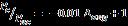


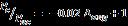
Pc →Ultimateloadvalueforcorrodedbeam
Puc →Ultimateloadvalueforuncorrodedbeam
Mc →Momentcarryingcapacityforcorrodedbeam
Muc →Momentcarryingcapacityforuncorrodedbeam
∆avg →Averagecross-sectionallossofrebar
m →Masslossofrebar
3.1 Bond strength
TheflexuralstrengthofRCbeamsreducesduetobond failure. In the case of deformed bars, the mechanical interlockingbetweentherebarandthesurroundingconcrete isjustasimportantasadhesionandfrictionindetermining the bond strength. The ribs of deformed rebar undergo a changeinshapeandangleduetoreinforcementcorrosion, which alters the bond properties. Due to accumulation of corrosion products, corrosion also affects the mechanical interlockingattherebarbondinterfacebyloweringadhesion andfrictional force.Theloadcarryingcapacityofconcrete structuresofthecorrodedconcretebeamsreducesasaresult of the corrosion-induced loss of rebar bond strength. The failure mode corroded RC beams can change due to insufficient rebar bond strength. Tensile rebars fails by yieldingatlowercorrosionextends,whiletheanchorageslip is experienced by rebar for mild corrosion. Extreme corrosions cause rupture failure of rebars, without neck formationbeforefailure.However,forcorrodedbeams,the cross-sectional area decreases steel bar's contact surface reductionandimproperrebar-concretebond.Becauseofthis poorforcetransferbetweenrebarandconcrete,slipoccursin the reinforced concrete beam. A lower displacement is experiencedbysuchmembers[34].
Crack widening indicates that the bond between the concreteandrebarhasalreadybeenreducedordestroyed. Thebondbetweentherebarsandconcretegetsdestroyedat 10-15% of rebar loss [15], [27], [28]. As the rebar crosssectionreduces,thecracksappearandwidenup.Therebars get separated from the concrete, causing the bond failure [26],[30],[33].Therefore,alessernumberofcracksappear inthecaseofcorrodedRCbeams[35].
The origination of longitudinal cracks along the longitudinal reinforcement reduced the moment-carrying capacityofcorrodedRCbeams[27].Therearethreegeneral phasestotheprocessofconcreteperformancedeterioration caused by corrosion in the steel reinforcement: the crack initiation phase, the crack propagation phase, and the residuallifephase.Thephaseofcrackinitiationcommences during construction and ends when corrosion-induced cracking at the interface between the concrete bond and rebar begins. Bond strength of rebars reduces due to the
International Research Journal of Engineering and Technology (IRJET) e-ISSN: 2395-0056
Volume: 11 Issue: 08 | Aug 2024 www.irjet.net p-ISSN: 2395-0072
crackinitiationphase,whichcausesaprogressivereduction in load carrying capacity as cover concrete cracking advances.Concretecracksgetwiderassteelrebarcorrodes more, and eventually the corroded concrete structures becomeunserviceable[34].
Morecrackswithlessercrackwidthwereobservedfor uncorrodedRCbeams.Thecrackspacinganalysedfromthe literaturewasmoreinuncorrodedbeams.Bondreduction lowers the possibility of stress transfer from concrete to steel.Concreteitselfhaslowtensilestrength.Hence,fewer cracksdevelopandconcretefailsincrushing[26],[28],[36]. Uncorroded beams sustained much higher loads than the designloads.Thebeamswerestillabletowithstandloads, byshowingflexuralcracksandwidenedshearcracks.The crackwidthsfollowthesamepatternofcorrosionpitdepths. Thedeeperthepitsontherebarsurface,thegreatertherust productsandwidercrackwidthsatthoserespectivepoints [28].Concretebeamswithlowerconcretecoverhadmore cracks at short distances [29]. Lesser crack widths were noticed when the concrete cover was greater and the diameterofthereinforcementbarwassmaller[31].
Few pits were observed for reinforcement bars with averagepercentagemassloss upto20%andmorepits in longitudinalbarsbeyond30%averagepercentagemassloss when rebars were extracted from corroded beams [15]. Pittingcorrosionlocationbecomesthegoverningfactorfor the type of failure in corroded beams. The reduction in flexuralstrengthdependsuponthecross-sectionallossand thelocationofcorrosion.Averagecross-sectionallossesin rebar cannot define the load-deflection behaviour of the corrodedbeams.Beamsfailedrelativelyatlowerloadvalues forcorrosiononrebaratmid-span.Thecorrodedrebarscan have minimum cross-sectional area, even less than the average cross-sectional area at the point of maximum bending moment i.e. mid-span. Therefore, the maximum cross-sectionallossofrebaratthecriticallocationbecomes theworst-casescenario.Theminimumcross-sectionofthe corrodedreinforcementbarshouldbekeptinconsideration insteadofaveragecross-sectionallosswhileaccessingthe residualstrengthofcorrodedbeams[6].
The early failure of corroded beams occurs due to a reduction in the cross-sectional area of tensile reinforcement, which then changes the failure mode from ductiletobrittle[14],[23],[24],[36].Thecorrosionofribsat longitudinalandtransversereinforcementhasnomajorrole instrengthreduction[24].Lesserpitdepthswereobserved atlocationsofstirrups,whichstatesthatstirrupsreducethe formationofmajorpitsatthejunctionpointoflongitudinal and transverse reinforcement [36]. The small diameter reinforcement bars have a more negative impact on the residual strength of corroded beams [29]. The corrosion levelsachievedduringacceleratedcorrosionvaryfromthe
calculatedtargetpercentagemasslossofreinforcementdue to different chemical compositions of reinforcement bars, theresistivityofconcreteandcrackdevelopment[15].The beams with the same corrosion time can have different corrosionlevelsevenwithinthesamebeamspecimen[28].
Thecoverplaysanimportantroleindecidingthefailure modeoftherebar.Concretewithalowerconcretecoveris moresusceptibletorebarcorrosion.Thebeamwithgreater covermadebeamsfailinaductilemannerwhereasthebeam withlowerconcretecoverexperiencedbrittlefailureunder the same corrosion conditions [22]. Cracks appear on the interfaceofconcreteandthereinforcementbarsduetothe corrosionproducts.Thebondstrengthandtheloadcarrying capacity starts reducing with widening of cracks. Rebars with smaller diameters has an adverse effect on concrete cracking.Thesmallerthediameteroftherebar,thegreater thenumberofcracksthatoriginate[29].Thesecrackswiden upsomuchthatbecomesatopicofconcernandmembers becomeunserviceable[34].Since,thecracksaremeasured from the surface of concrete, the beams with greater concrete cover will have wider cracks [31]. Beams with greaterconcretecoverdelaythecorrosionprocess,whichis animportantparameterfordesigningaRCmemberwitha lifespanofmorethan50years[22].Thedesigncodesalso mentiontheminimumconcretecovertobeprovidedwith respecttoenvironmentalconditions.
The beams degrade due to a reduction in the tensile strength of the rebar and the concrete-rebar bond. The percentage loss of moment carrying capacity is approximately equal to the percentage loss of tensile strength of the reinforcing bar [22]. Corrosion causes a reductionintheultimatetensilestrengthofreinforcement barsandthefailureoccursinabrittlemanner[6],[36].The tensile reinforcement fails at the location of maximum pitting for corroded beams and failure occurs at random locations within the bar for uncorroded beams [36]. The post-yieldresponsestress-straincurveforcorrodedrebars had a steeper slope than for the control samples. This suggests that after reaching the yielding point, the strain hardening modulus ofcorrodedrebarsisgreaterthanthe controlbars.[24]
The ductility of corroded RC beams reduces with the amount of corrosion [6], [23], [24], [28]. Due to localised corrosion,pitsformonthesurfaceofrebars,whichcausesa reductioninthecross-sectionofrebarsandfailureoccursat theweakestpoint[6],[30],[36].Duetotheformationofpits, stressconcentratesontherespectiveareaandbrittlefailure occurswithout theformationofneck [23] Theductility of
International Research Journal of Engineering and Technology (IRJET) e-ISSN: 2395-0056
Volume: 11 Issue: 08 | Aug 2024 www.irjet.net p-ISSN: 2395-0072
corroded RC beams reduces when the average crosssectional loss of rebar is more than 30% [13]. Loss of ductility is more prominent for reinforcement bars with smaller diameters, whereas rebars with large diameters have minimal ductility reduction [14]. The corroded bars wentthroughahardeningstageaftertheyieldstressanddid notexhibitayieldplateau.Ultimatestrainandtheductility byreducedbyreachingtheultimatestrengthfarsoonerthan thenon-corrodedrebar.Itclarifiesthatcorrosionaltersthe stress-straincurveofcorrodedRCbeams[24].
Basedontheresultsobtained,thefollowingconclusionscan bedrawn:
The load-carrying capacity of RC beams decreases as therebar'scross-sectionalareaormasslossincreases duetocorrosion.
Corroded beams with a rebar mass loss of 7-10% exhibit similar behavior to uncorroded beams. Interestingly, an increase in flexural strength is observedata5-7%massloss,likelyduetoenhanced bondstrengthbetweentheconcreteandrebar.
The corrosion of reinforcement bars within the pure flexural zone is identified as the most critical factor affectingtheperformanceofcorrodedRCbeams.
The tensile strength of corroded rebars and the ductilityofcorrodedRCbeamsdecreaseasthelevelof corrosion increases. Greater concrete cover helps mitigatetheriskofreinforcementcorrosion.
Severelycorrodedbeams,withmorethana30%lossin rebar cross-sectional area, failed without exhibiting warningsigns,shiftingthefailuremodefromductileto brittle.
[1] N. Faris, T. Zayed, E. M. Abdelkader, and A. Fares, ‘Corrosionassessmentusinggroundpenetratingradar in reinforced concrete structures: Influential factors and analysis methods’, Autom Constr, vol. 156, p. 105130,Dec.2023,doi:10.1016/j.autcon.2023.105130.
[2] Q. Li and X. Ye, ‘Surface deterioration analysis for probabilistic durability design of RC structures in marineenvironment’,StructuralSafety,vol.75,pp.13–23,Nov.2018,doi:10.1016/j.strusafe.2018.05.007.
[3] S. Sadati, M. Arezoumandi, and M. Shekarchi, ‘Longtermperformanceofconcretesurfacecoatingsinsoil exposureofmarineenvironments’,ConstrBuildMater, vol. 94, pp. 656–663, Sep. 2015, doi: 10.1016/j.conbuildmat.2015.07.094.
[4] H. Van Damme, ‘Concrete material science: Past, present, and future innovations’, Cem Concr Res, vol. 112, pp. 5–24, Oct. 2018, doi: 10.1016/j.cemconres.2018.05.002.
[5] P.E.Smith,‘Designandspecificationofmarineconcrete structures’, in Marine Concrete Structures, Elsevier, 2016, pp. 65–114. doi: 10.1016/B978-0-08-1000816.00003-9.
[6] Y. Du, M. Cullen, and C. Li, ‘Structural effects of simultaneousloadingandreinforcementcorrosionon performance ofconcrete beams’,inConstructionand Building Materials, 2013, pp. 148–152. doi: 10.1016/j.conbuildmat.2012.05.006.
[7] S. Meet, C. Trishna, and K. Naveen, ‘Investigating the nonlinearperformanceofcorrodedreinforcedconcrete beams’, Journal of Building Engineering, vol. 44, p. 102640,Dec.2021,doi:10.1016/j.jobe.2021.102640.
[8] S. Sadati, M. Arezoumandi, and M. Shekarchi, ‘Longtermperformanceofconcretesurfacecoatingsinsoil exposureofmarineenvironments’,ConstrBuildMater, vol. 94, pp. 656–663, Sep. 2015, doi: 10.1016/j.conbuildmat.2015.07.094.
[9] G.Malumbela,M.Alexander,andP.Moyo,‘Variationof steellossanditseffectontheultimateflexuralcapacity ofRCbeamscorrodedandrepairedunderload’,Constr BuildMater,vol.24,no.6,pp.1051–1059,Jun.2010, doi:10.1016/j.conbuildmat.2009.11.012.
[10] A.A.Torres-Acosta,S.Navarro-Gutierrez,andJ.TeránGuillén, ‘Residual flexure capacity of corroded reinforcedconcrete beams’, EngStruct,vol.29,no.6, pp. 1145–1152, Jun. 2007, doi: 10.1016/j.engstruct.2006.07.018.
[11] F.PedrosaandC.Andrade,‘Corrosioninducedcracking: Effect of different corrosion rates on crack width evolution’,ConstrBuildMater,vol.133,pp.525–533, Feb.2017,doi:10.1016/j.conbuildmat.2016.12.030.
[12] R.K.Biswas,M.Iwanami,N.Chijiwa,andK.Uno,‘Effect of non-uniform rebar corrosion on structural performance of RC structures: A numerical and experimental investigation’, Constr Build Mater, vol. 230, p. 116908, Jan. 2020, doi: 10.1016/j.conbuildmat.2019.116908.
[13] C. Hansapinyo, V. Vimonsatit, M. Matsushima, and S. Limkatanyu,‘Critical amountofcorrosionandfailure behaviorofflexuralreinforcedconcretebeams’,Constr Build Mater, vol. 270, pp. 1–13, Feb. 2021, doi: 10.1016/j.conbuildmat.2020.121448.
[14] V.H.DangandR.François,‘Predictionofductilityfactor ofcorrodedreinforcedconcretebeamsexposedtolong term aging in chloride environment’, Cem Concr Compos, vol. 53, pp. 136–147, 2014, doi: 10.1016/j.cemconcomp.2014.06.002.
[15] S.Ahmad,M.A.Al-Huri,M.A.Al-Osta,M.Maslehuddin, and A. H. Al-Gadhib, ‘An Experimental Approach to Evaluate the Effect of Reinforcement Corrosion on FlexuralPerformanceofRCBeams’,Buildings,vol.12, no. 2222, pp. 1–21, Dec. 2022, doi: 10.3390/buildings12122222.
[16] J.S.Jung,B.Y.Lee,andK.S.Lee,‘ExperimentalStudyon theStructuralPerformanceDegradationofCorrosionDamaged Reinforced Concrete Beams’, Advances in
International Research Journal of Engineering and Technology (IRJET) e-ISSN: 2395-0056
Volume: 11 Issue: 08 | Aug 2024 www.irjet.net p-ISSN: 2395-0072
Civil Engineering, vol. 2019, pp. 1–14, 2019, doi: 10.1155/2019/9562574.
[17] J.A.Gonzalez,J.S.Algaba,andC.Andrade,‘Corrosionof Reinforcing Bars in Carbonated Concrete’, British CorrosionJournal,vol.15,no.3,pp.135–139,Jan.1980, doi:10.1179/bcj.1980.15.3.135.
[18] K.Y.Ann,S.-W.Pack,J.-P.Hwang,H.-W.Song,andS.-H. Kim, ‘Service life prediction of a concrete bridge structuresubjectedtocarbonation’,ConstrBuildMater, vol. 24, no. 8, pp. 1494–1501, Aug. 2010, doi: 10.1016/j.conbuildmat.2010.01.023.
[19] G. Campione, F. Cannella, and L. Cavaleri, ‘Shear and flexural strength prediction of corroded R.C. beams’, ConstrBuildMater,vol.149,pp.395–405,Sep.2017, doi:10.1016/j.conbuildmat.2017.05.125.
[20] C. Fang, K. Lundgren, L. Chen, and C. Zhu, ‘Corrosion influenceonbondinreinforcedconcrete’,CemConcr Res, vol. 34, no. 11, pp. 2159–2167, Nov. 2004, doi: 10.1016/j.cemconres.2004.04.006.
[21] A. Chen, Z. Pan, and R. Ma, ‘Mesoscopic simulation of steel rebar corrosion process in concrete and its damagetoconcretecover’,StructureandInfrastructure Engineering,vol.13,no.4,pp.478–493,Apr.2017,doi: 10.1080/15732479.2016.1164730.
[22] A. Dasar, D. Patah, H. Hamada, D. Yamamoto, and Y. Sagawa, ‘Life performance of 40-year-old RC beams with different concrete covers and bar diameters in naturalcorrosionenvironments’,Structures,vol.46,pp. 2031–2046, Dec. 2022, doi: 10.1016/j.istruc.2022.11.033.
[23] I. Khan, R. François, and A. Castel, ‘Structural performance of a 26-year-old corroded reinforced concrete beam’, European Journal of Environmental and Civil Engineering, vol. 16, no. 3–4, pp. 440–449, 2012,doi:10.1080/19648189.2012.667992.
[24] R.François,I.Khan,andV.H.Dang,‘Impactofcorrosion onmechanicalpropertiesofsteelembeddedin27-yearoldcorrodedreinforcedconcretebeams’,Materialsand Structures/Materiaux et Constructions, vol. 46, no. 6, pp. 899–910, Jun. 2013, doi: 10.1617/s11527-0129941-z.
[25] W.Zhu,R.François,D.Coronelli,andD.Cleland,‘Effect of corrosion of reinforcement on the mechanical behaviourofhighlycorrodedRCbeams’,EngStruct,vol. 56, pp. 544–554, Nov. 2013, doi: 10.1016/j.engstruct.2013.04.017.
[26] N.N.TanandN.D.Nguyen,‘Anexperimentalstudyon flexural behavior of corroded reinforced concrete beams using electrochemical accelerated corrosion method’, Journal of Science and Technology in Civil Engineering(STCE)-NUCE,vol.13,no.1,pp.1–11,Jan. 2019,doi:10.31814/stce.nuce2019-13(1)-01.
[27] H.Kim,S.Yang,T.Noguchi,andS.Yoon,‘AnAssessment of the Structural Performance of Rebar-Corroded ReinforcedConcreteBeamMembers’,AppliedSciences, vol. 13, no. 19, pp. 1–17, Oct. 2023, doi: 10.3390/app131910927.
2024, IRJET | Impact Factor value: 8.226 |
[28] F. Di Carlo, A. Meda, and Z. Rinaldi, ‘Structural performanceofcorrodedR.C.beams’,EngStruct,vol. 274, pp. 1–16, Jan. 2023, doi: 10.1016/j.engstruct.2022.115117.
[29] L. Wang, Y. Ma, W. Ding, J. Zhang, and Y. Liu, ‘ComparativeStudyof Flexural BehaviorofCorroded Beams with Different Types of Steel Bars’, Journal of Performance of Construction Facilities, 2014, doi: 10.1061/(ASCE)CF.1943-5509.0000661.
[30] C. Jiang, H. Ding, X. L. Gu, and W. P. Zhang, ‘Failure mode-based calculation method for bending bearing capacities of normal cross-sections of corroded reinforcedconcretebeams’, EngStruct,vol.258,May 2022,doi:10.1016/j.engstruct.2022.114113.
[31] J.Xia,W.L.Jin,andL.Y.Li,‘Effectofchloride-induced reinforcingsteelcorrosionontheflexuralstrengthof reinforced concrete beams’, Magazine of Concrete Research, vol. 64, no. 6, pp. 471–485, Jun. 2012, doi: 10.1680/macr.10.00169.
[32] H. Naderpour, F. Ghasemi-Meydansar, and M. Haji, ‘ExperimentalstudyonthebehaviorofRCbeamswith artificiallycorrodedbars’,Structures,vol.43,pp.1932–1944,Sep.2022,doi:10.1016/j.istruc.2022.07.005.
[33] J.Sun,Q.Huang,andY.Ren,‘Performancedeterioration of corroded RC beams and reinforcing bars under repeatedloading’,ConstrBuildMater,vol.96,pp.404–415, Aug. 2015, doi: 10.1016/j.conbuildmat.2015.08.066.
[34] H.-P. Chen, ‘Residual Flexural Capacity and Performance Assessment of Corroded Reinforced ConcreteBeams’,JournalofStructuralEngineering,vol. 144, no. 12, Dec. 2018, doi: 10.1061/(asce)st.1943541x.0002144.
[35] H. Nasser, C. Van Steen, L. Vandewalle, and E. Verstrynge,‘Anexperimentalassessmentofcorrosion damage and bending capacity reduction of singly reinforced concrete beams subjected to accelerated corrosion’,ConstrBuildMater,vol.286,pp.1–14,Jun. 2021,doi:10.1016/j.conbuildmat.2021.122773.
[36] W.ZhuandR.Francois,‘Corrosionofthereinforcement anditsinfluenceontheresidualstructuralperformance ofa26-year-oldcorrodedRCbeam’,ConstrBuildMater, vol. 51, pp. 461–472, 2014, doi: 10.1016/j.conbuildmat.2013.11.015.