
International Research Journal of Engineering and Technology (IRJET) e-ISSN: 2395-0056
Volume: 11 Issue: 08 | Aug 2024 www.irjet.net p-ISSN: 2395-0072

International Research Journal of Engineering and Technology (IRJET) e-ISSN: 2395-0056
Volume: 11 Issue: 08 | Aug 2024 www.irjet.net p-ISSN: 2395-0072
Aditya Kumar1
1Student, Bachelor of Technology (Computer Science and Engineering)
3Lovely Professional University Phagwara, Punjab India.
Abstract - A combination of technology and a set of beliefs form the foundation of Natural Language Processing (NLP), an automated method of text analysis. Furthermore, as this is a field of intense research and growth, there isn't a single definition that has been agreed upon by all parties that would satisfy them all. However, there are several elements that any competent person's description would include. In addition to explaining how to apply these distinct algorithms, the paper mentions gap analyses between different techniques. Though it hasn't reached perfection yet, natural language processing is getting close to it with continued advancements. Various artificial intelligence systems currently employ natural language processing techniques to identify and handle user voice commands. Nowadays, there is a lot of discussion and study on natural language processing. Since it is one of the more established areas of machine learning research, it finds application in important domains like text processing, speech recognition, and machine translation. AI and computation have advanced significantly as a result of natural language processing. Recurrent neural networks are the foundation of many natural language processing methods. This review paper discusses various text and audio processing algorithms and provides examples to illustrate how they operate. The results of different algorithms demonstrate the advancements made in this subject over the last ten or so years. We have attempted to distinguish between different algorithms as well as the potential directions for further research.
Key Words: Syntactic, Symantec, Pragmatic, Discourse Integration, Morphological, Lexical, Linguistics, Generation, and Machine Learning are terms related to naturallanguageprocessing(NLP).
Naturallanguageprocessing,whichaimstoachievehumanlike language processing for a variety of tasks or applications, is a theoretically justified set of computer approachesforanalyzingandmodelingnaturallyoccurring texts at one or more levels of linguistic analysis. The languages that individuals speak naturally are those that they speak. Everything a computer needs to comprehend andproducenaturallanguageisincludedinnaturallanguage processing. Making computers comprehend sentences or wordswritteninhumanlanguagesisthegoaloftheartificial intelligence and linguistics branch of natural language processing. a language used by individuals (humans) for general-purposecommunicationthatisnatural,alsoreferred to as ordinary language. Natural language was created to
accommodatemanagersandyoungpeoplewholackthetime toacquire newlanguagesor becomeproficientinthem.It wascreatedbecauseitwasnotpossibletocompelusersto learnmachine-specific languagesin order tointeractwith computers.
Inafewyears,researchgotunderwayatanumberofUS research facilities. Early MT research adopted the oversimplifiedstancethatthemaindistinctionsacross languages were found in their word lists and allowed word sequences. Without accounting for the lexical ambiguity present in real language, systems created fromthisperspectiveonlyemployeddictionarylookups to find suitable terms for translation and then rearranged the words to match the destination language's word-order norms. This did not yield very goodresults.Theendeavorwasfarmoredifficultthan theresearchershadthought,andtheirseemingfailure ledthemtoconcludethattheyrequiredamoresuitable theory of language. Since the late 1940s for several decades, natural language processing has been the subject of research. Thefirstnatural language-related computer application was machine translation (MT). Weaver's memorandum from 1949 is often credited with popularizing the concept of machine translation (MT)andinspiringseveral efforts,eventhoughBooth and Weaver launched one of the first MT projects in 1946oncomputertranslationbasedonexperiencein crackingenemycodesduringWorldWarII.Heproposed totranslatelanguagesusingconceptsfrominformation theoryandcryptography.
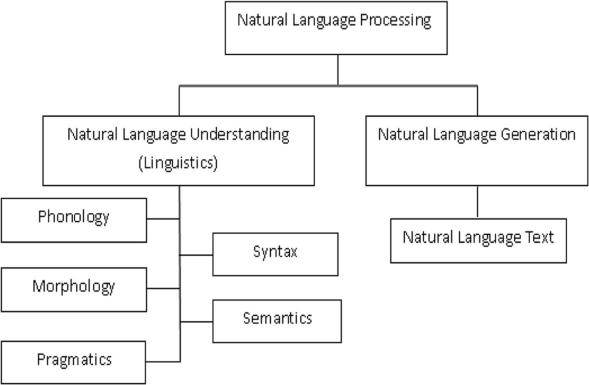
NaturalLanguageProcessing(NLP)maybedividedinto twocategories:naturallanguagegenerationandnatural languageunderstanding.NLPadvancestheprocessesof text generation and comprehension. This section providesageneraloverviewofNLPclassification.
As mentioned above, "to attain human-like language processing" is the aim of NLP. The term "processing" was carefully chosen, and it shouldn't be substituted with"Comprehending"
International Research Journal of Engineering and Technology (IRJET) e-ISSN: 2395-0056
Volume: 11 Issue: 08 | Aug 2024 www.irjet.net p-ISSN: 2395-0072
1. Rephraseatextthatisentered.
2. Putthetextinanotherlanguagebytranslatingit.
3. Respond to inquiries concerning the text's substance.
4. Deduceconclusionsfromthetext
3. Literature Review:
The natural language processing research project has received more attention in recent years. The automatedmethodofnaturallanguageprocessing is text analysis, being a burgeoning field of study, and growth. Literature makes a distinction about the primary use concerning natural language processingandthetechniquesusedtodefineit.
Processing natural language for speech synthesis: Thetextdataisthefirstinputintothe systemintext-tospeech conversion, or TTS, which is the basis for this. It makes use of advanced speech synthesis modules. It makes advantage of sentence segmentation, a straightforward decision tree method for handling punctuation.
Speech recognition systems that are automatic utilizenaturallanguageprocessing,whichisbased ongrammars.Itmakesuseofwiththespotlighting addition of automatic summarization, including indexing,whichextractstheessenceofthespeech transcriptions in order to deal with information retrieval and dialogue system issues, the contextfreegrammarsforrepresentingthesyntaxofthat languageofferawaytodealwithspontaneous.
4. Applications for Natural Language Processing:
For many applications, natural language processing offersboththeoreticalandpracticalsolutions.Actually, NLPmaybeappliedtoanyapplicationthatusestext.
Information extraction (IE): is a more modern applicationfieldthatfocusesontheidentification, labeling, and extraction of important information elements suchaspeople,businesses,places,and organizations frombigcompilationsoftext.Then, a variety of uses, such as data mining, questionanswering,andvisualization,canmakeuseofthese extractions.
Question-Answering (QA): In contrast to Information Retrieval, which responds to a user's querywithalistofdocumentsthatmayberelevant, question-answering gives the user either the answer text in its entirety or excerpts from the answer.
Summarization: HigherNLPlevels,especiallythe discourselevel,cansupportanimplementationthat condenses a longer text into a more succinct, yet highlyconstructed,narrativerepresentationofthe sourcematerial.
Machine Translation (MT): systems have employed several NLP levels, spanning from the "word-based" approach to advanced analytical applications.ItisconceivablethatMTsystemsare themostancientNLPapplications.
Dialogue systems (DS): systemarepotentiallythe ubiquitousapplicationsofthefuture,foundinthe systemsthatmajorend-userapplicationproviders foresee.Dialoguesystemsnowusethephoneticand lexicallevelsoflanguage;theyareoftenfocusedon atightlyspecifiedapplication(e.g.,yourrefrigerator orhomesoundsystem).Itisthoughtthatcreating reallylivablediscussionsystemsmightbeachieved by utilizing all of the language processing layers describedabove.
Random, probabilistic, and statistical techniques in statisticalnaturallanguageprocessingcanresolvesome oftheissues,particularlythosearisingfromthefactthat longer phrases are more ambiguous when processed using actual grammars. All quantitative methods fall underNLP.
Lexical and Morphological Analysis: Alanguage's vocabulary,whichcomprisesitstermsandphrases, isknownasitslexicon.Morphologyisthestudyof theanalysis,identification,anddescriptionofword structures.
Syntactic Analysis: Thisisdissectingasentence's words to show how the phrase is put together grammatically.Thewordsarechangedtocreatea framework, such as "the girl goes to the school," that demonstrates the relationships between the terms.TheEnglishsyntacticanalyzerwouldmost likelyrejectthis.
Analysis of Semantics: Thisremovestheprecise meaning from context or the meaning from a dictionary.Thesyntacticanalyzergivesmeaningto the structures it creates. A correspondence exists between the task domain objects and syntactic constructs. For instance, "colorless blue thought." Theanalyzerwouldrejectthisascolorlessblueand whitedon'tmakesensewhencombined.
International Research Journal of Engineering and Technology (IRJET) e-ISSN: 2395-0056
Volume: 11 Issue: 08 | Aug 2024 www.irjet.net p-ISSN: 2395-0072
Discussion Integration: Any given sentence's meaning is influenced by the phrases that come beforeitandbythesentencesthatcomeafterit.For example,inthesentence"shedesiredit,"theword "it" relies on the context of the previous conversation.
Pragmatic Analysis: It entails taking the intentional use of language and abstracting it, especiallyfromthosecontextswhereitisnecessary tohavepriorknowledgeofthesubjectmatter.The basicideaistoreinterpretwhatwassaidinlightof itstruemeaning.Forexample,"closethewindow?" shouldhavebeenseenasarequestasopposedtoa directive.

4.3 Area of NLP:
NLP is the study of using natural language and human comprehension to enable computer systems to carry out meaningfulactivities.Naturallanguageprocessingiscritical tothefuturebecauseitenablesthedevelopmentofmodels andproceduresthatacceptinputintheformoftext,speech, orbothandalteritaccordingtocomputeralgorithms.Both writtentextandspeechcanbehandledbyanNLPsystem. Thefollowingaresomeoftheseveralalgorithmsthathave been created to improve the effectiveness of textual languageprocessing:
Entity Recognition Model is the name of the sequence-to-sequencemodel.
Modelofuserpreferencegraph
Modelofwordembedding.
Fuzzy inference rules for feature-based sentence extraction.
Automated text summarization using a templatebasedapproach
Extendedshort-termmemory.
Languageprocessingisalsopossibleevenwithspeechinput. Manyalgorithmsarecreatedforthatpurpose,andthemost effectiveonesare:
Acoustic modeling, word recognition, and connectedtemporalcategorization
Translationusingphase-basedmethods
Translationusingneuralnetworks
NeuralmachinetranslationonGoogle.
4.3Main NLP Tasks:
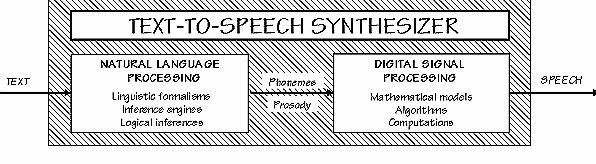
Fig 1.3 text to speech synthesizer
A selection of several NLP research projects.
(A)Automated synthesis It generates the comprehensiblesynopsisofacollectionoftexts.Its purpose is to offer condensed or comprehensive informationontextsofacertainkind.
(B)Resolution of references Itfindsthewordsthat relatetothesameitemsinaphraseoralonger passageoftext.Asanillustration,considerthe taskofmatchingpronounstothenounsornames theyreferto.
(C)Analysis of discourse Finding the related text's discourse structure, or the types of discourse relationships(elaboration,explanation,contrast) between sentences is the work at hand. Recognizingandcategorizingspeechacts suchas yes-or-noinquiries,contentqueries,declarations, assertions,andsoon inasizablecorpusoftextis anotherpotentialchallenge.
(D) Automated translation translates text automatically between human languages. Segmentation morphologically. Sort words into
International Research Journal of Engineering and Technology (IRJET) e-ISSN: 2395-0056
Volume: 11 Issue: 08 | Aug 2024 www.irjet.net p-ISSN: 2395-0072
theirconstituentmorphemesandnotewhichclass each morpheme belongs to. The intricacy of the language's morphology, or word structure, has a significantimpactonhowtoughthisendeavoris.
(E)Recognition of named entities (NER) It takes a text stream and identifies the proper names (people, places, etc.) that each item in the text refersto,alongwiththetypeofplaceorperson.
(F)Understanding natural language Capable of transformingmassivetextualcollectionsintomore formal representations like first-order logic structures that make natural language notions easier for computer programs to use are the results.
5. CONCLUSIONS:
Naturallanguagehasapoweredgeoverkeyword andkeyphrasestrategieswhenitcomestoquery formulation and retrieval. They believe that our systemisnotonlycapableofabstractingphotosbut alsoofabstractingothertypesofmultimediadata orinputstreams(text,video,audio,etc.).
Natural language fact abstraction as opposed to complete natural language fact abstraction is a less time-consuming endeavor when it comes to multimediadataabstraction.
NLPisarelativelynewfieldofstudyandapplication in comparison to other information technology methodologies, there have been enough achievements to yet indicate that NLP-based information access technologies will remain a prominentareaofinformationtechnologyresearch anddevelopment.
6.
AIadvancementswillhaveasignificantimpacton natural language processing (NLP). As natural language understanding and reading improve, computers,robots,andotherdeviceswillbeableto learn from the content on the internet and apply what they have learned in the real world. Computerswillbecomemoreandmorecapableof receivingandsendingintelligent,usefulinformation astheydevelopnaturallanguage.
Human-level,orhuman-readablenaturallanguage processing is an AI-complete problem. It is equivalent to addressing the core objective of artificialintelligence,whichistocreatecomputers that are more intelligent than people in order to allowthemtothinkandsolveproblemslikepeople,
perform activities that people are unable to perform,andbemoreproductivethanpeople.
7 REFERENCES:
1. AbhimanyuChopra,AbhinavPrashar,ChandreshSain “NaturalLanguageProcessing”.
2. Andrea Galassi, Marco Lippi, and Paolo Torroni “AttentioninNaturalLanguageProcessing”.
3. Diksha Khurana & Aditya Koli & Kiran Khatter & Sukhdev Singh “Natural languageprocessing:state of theart,currenttrendsandchallenges”.
4. Aditya Jain, Gandhar Kulkarni, Vraj Shah “Natural LanguageProcessing”.
5. PrakashMNadkarni,LucilaOhno-Machado,WendyW Chapman “Natural language processing: an introduction”.
6. Prof. Alpa Resham Wala Prof. Dhirendra Mishra Prajakta Pawar Dept. Of computer Engineering “REVIEWONNATURALLANGUAGEPROCESSING.