
International Research Journal of Engineering and Technology (IRJET) e-ISSN: 2395-0056
Volume: 11 Issue: 08 | Aug 2024 www.irjet.net p-ISSN: 2395-0072

International Research Journal of Engineering and Technology (IRJET) e-ISSN: 2395-0056
Volume: 11 Issue: 08 | Aug 2024 www.irjet.net p-ISSN: 2395-0072
Ambrish Kumar Balasubramanian1 ,
M.Tech. - Artificial Intelligence and Machine Learning, BITS Pilani. Senior Systems Engineer, Infosys Limited, Chennai, Tamil Nadu, India
Abstract - Quantum Neuromorphic Computing, an innovative fusion of quantum computing and neuromorphic engineering,holdsthepromiseofrevolutionizinggenerative AI by improving both computational efficiency and sustainability.Thispaperexploresthefundamentalprinciples ofquantumneuromorphiccomputing,itspotentialtoaddress the growing energy demands of generative AI models and provides a detailed exploration of implementation methodologies. By leveraging quantum mechanical phenomena such as superposition, entanglement, and tunnellingwithinneuromorphicarchitectures,thisapproach aims to reduce the computational burden and power consumption of AI systems. Practical coding examples and visual illustrations are included to aid understanding and stimulate further interdisciplinary research in this transformativefield.
Key Words: quantumneuromorphiccomputing,generative AImodels,neuromorphicarchitectures
Therapidadvancementofartificialintelligence,particularly generativeAImodelslikeGenerativeAdversarialNetworks (GANs), Variational Autoencoders (VAEs), and large languagemodels(LLMs)suchasGPT,hasledtoadramatic increase in computational requirements. These models, whichrequireenormousamountsofdataandcomputational resources for training and inference, present significant sustainabilitychallenges dueto their energyconsumption andcarbonfootprint.
Tomitigatethesechallenges,researchersareexploringnew computing paradigms beyond traditional transistor-based architectures.QuantumNeuromorphicComputing,ahybrid approach combining quantum computing principles with neuromorphichardware,offersthepotentialforbothhigh computational power and energy efficiency. This paper investigates the potential of quantum neuromorphic computing to make generative AI viable and sustainable, proposingspecificimplementationstrategies,highlighting applications,anddiscussingfuturedirections.
2.1.NeuromorphicComputing: Neuromorphiccomputing takesinspirationfromthestructureandfunctioningofthe
humanbrain,mimickingneuralstructuresthroughspiking neuralnetworks(SNNs).NeuromorphicchipssuchasIntel's Loihi and IBM's True North implement these networks in hardware, enabling real-time, energy-efficient processing. Unliketraditionaldigitalcomputing,whichreliesonbinary logic gates, neuromorphic computing uses neurons and synapsesthatcommunicateviaspikes(electricalimpulses), reducingpowerconsumptionandlatency.
2.2. Quantum Computing: Quantumcomputingleverages the principles of quantum mechanics to perform computations. Quantum bits, or qubits, can exist in a superpositionofstates(0and1simultaneously)andexhibit entanglement,wherethestateofonequbitcandependon anotherregardlessofdistance.Quantumcomputerspromise exponential speed-ups for tasks such as factoring large numbers, searching unsorted databases, and simulating quantumsystems.
2.3.GenerativeAIModels: GenerativeAImodels,including GANs,VAEs,andLLMs,createnewdatainstancesresembling agivendataset.Thesemodelsarecomputationallyintensive, requiring large-scale parallel processing capabilities, significant memory, and substantial energy resources for bothtrainingandinference.
2.4. The Need for Quantum Neuromorphic Computing: Current generative AI models are constrained by the computationalandenergylimitationsofclassicalcomputing architectures.Quantumneuromorphiccomputingcombines the speed and parallelism of quantum mechanics with the low-powercharacteristicsofneuromorphiccomputing.This hybrid approach aims to build AI systems that are both powerfulandenergy-efficient,addressingthesustainability challengesposedbythenextgenerationofAImodels.
3.1. Definition and Key Principles:
Quantum Neuromorphic Computing integrates quantum mechanical principles with neuromorphic computing architectures. The objective is to use quantum systems to simulateneuralnetworks,leveragingthestrengthsofboth paradigms.Keyprinciplesinclude:
International Research Journal of Engineering and Technology (IRJET) e-ISSN: 2395-0056
Volume: 11 Issue: 08 | Aug 2024 www.irjet.net p-ISSN: 2395-0072
3.2. Quantum Superposition: Quantumneuronscanexist in multiple states simultaneously, allowing for parallel processingonascaleunattainablebyclassicalneurons.
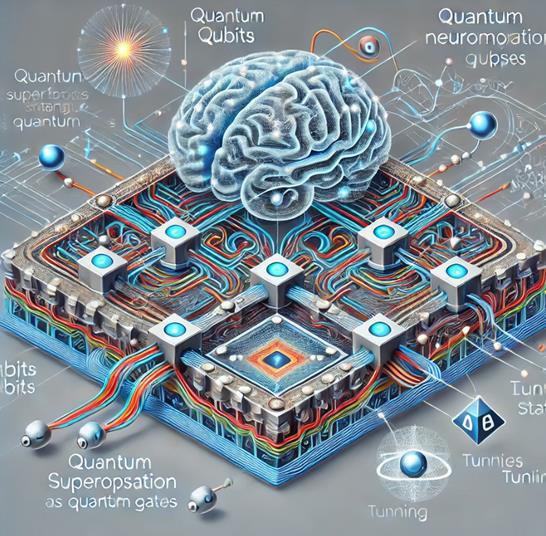
Figure-1:HereisanillustrationofaQuantum NeuromorphicCircuit,showingthecombinationof quantumneurons(qubits)andsynapses(quantumgates), alongwithvisualelementsrepresentingquantumeffects likesuperpositionandentanglement.
3.3. Quantum Entanglement: Entangled neurons can exhibitcorrelationsoverlongdistances,potentiallyspeeding up neural computations and enabling complex synaptic operations.
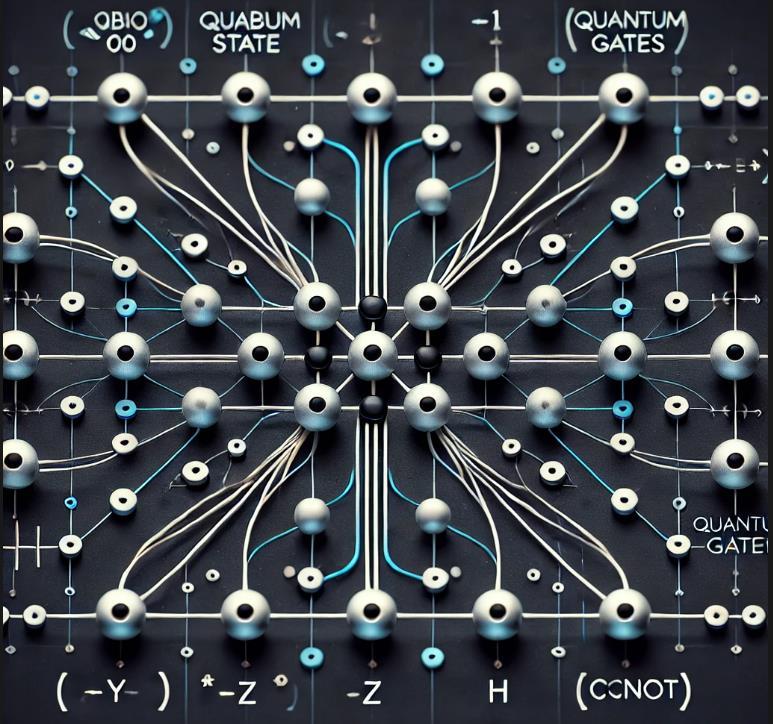
Figure-2:Hereisthediagramofabasicquantum neuromorphiccircuitfeaturingquantumneurons(qubits) andsynapses(quantumgates).
3.4.QuantumTunnelling: Quantumtunnellingcanenhance synaptic efficiency by allowing spikes (analogous to neuronal impulses) to pass through potential barriers, optimizinglearningprocessesinneuromorphicnetworks.
3.5.EnhancingNeuromorphicComputingwithQuantum Mechanics: By using qubits to simulate neurons and quantum gates to represent synaptic weights, quantum neuromorphic systems can process information with maximum speed and energy efficiency. The superposition property allows multiple computation pathways to be explored simultaneously, while entanglement can encode complex data correlations, improving pattern recognition capabilities.
In a quantum neuromorphic network, quantum neurons (qubits) are arranged in layers like classical neural networks.Theselayersareinterconnectedusingquantum gatesoperatingonentangledstates,representingcomplex multi-dimensional data structures. Quantum synapses, representedbyunitarytransformations,dynamicallyadjust weightsbasedonfeedback,facilitatingefficientlearningand adaptation.
QuantumCircuitsforNeuromorphicModels:Toimplement quantum neuromorphic models, quantum circuits can be designed to simulate biological neuron behavior. The following steps outline a simple quantum neuromorphic model:
Step 1: Define Quantum Neurons: Represent quantum neuronsusingqubits,applyingquantumgatestosimulate neuron firing. The neuron's state is determined by the superpositionandentanglementpropertiesofthequbits.
Step 2: Construct Quantum Synapses: Create quantum synapses using unitary transformations that adjust the weightofneuronconnections.Thesetransformationscanbe modelledusingcontrolledgates,suchasCNOTandToffoli gates.
Step 3: Develop Quantum Learning Rules: Implement quantum learning algorithms analogous to classical rules, like Hebbian learning or backpropagation. Quantum backpropagationcanbeachievedusingquantumamplitude amplificationtoupdatesynapticweights.
International Research Journal of Engineering and Technology (IRJET) e-ISSN: 2395-0056
Volume: 11 Issue: 08 | Aug 2024 www.irjet.net p-ISSN: 2395-0072
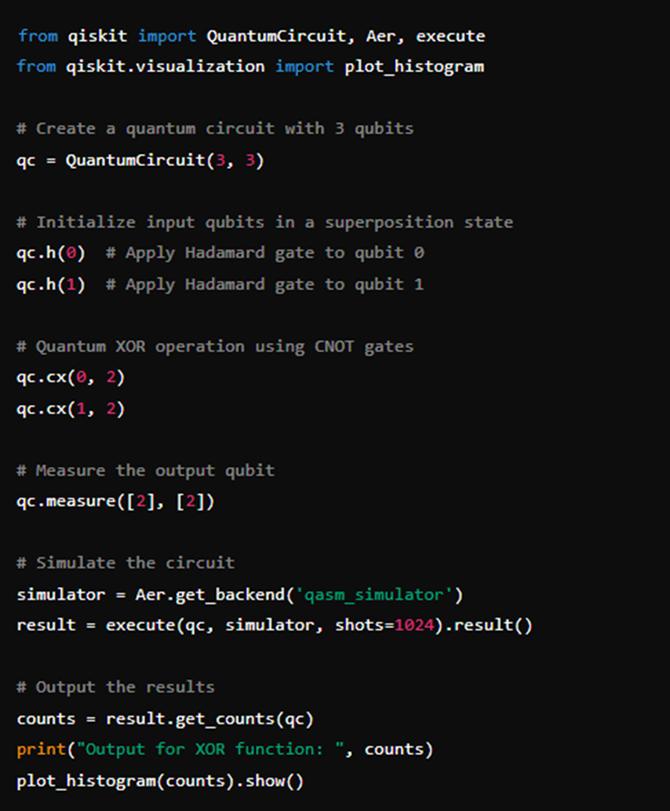
Figure-3:ThiscodesnippetdemonstratesasimpleXOR functionusingaquantumneuralnetworkwithtwoinput neuronsandoneoutputneuron.Theuseofquantumgates simulatesthelogicalXORoperation,whichisfundamental forneuromorphiccomputingtasks.
4.1 NEUROMORPHIC HARDWARE FOR QUANTUM ALGORITHMS:
4.1.1 Leveraging Neuromorphic Chips: Use existing neuromorphicchips(e.g.,Intel'sLoihi,IBM'sTrueNorth)to runquantum-inspiredalgorithmsbyadaptingthesechipsto executequantumcircuitswithintegratedquantumgates.
4.1.2 Quantum Spiking Neural Networks (QSNNs): Combinequantummechanicswithspikingneuralnetworks (SNNs) by using qubits to represent spikes and quantum gates to control synaptic connections. QSNNs have the potentialtooutperformclassicalSNNsinspeedandenergy efficiency.
4.2. Hybrid Approaches:
4.2.1. Classical-Quantum Hybrid Models: Implement hybridmodelswherequantumcircuitshandlespecifictasks (e.g., optimization, probabilistic sampling) while classical neuromorphicprocessorsmanagesimplertasks,maximizing overallperformance.
4.2.2.ReinforcementLearningwithQuantumFeedback: Developreinforcementlearning modelsutilizingquantum statesforexplorationandclassicalneuromorphichardware forexploitation.Quantumfeedbackmechanismsefficiently updatelearningpolicies.
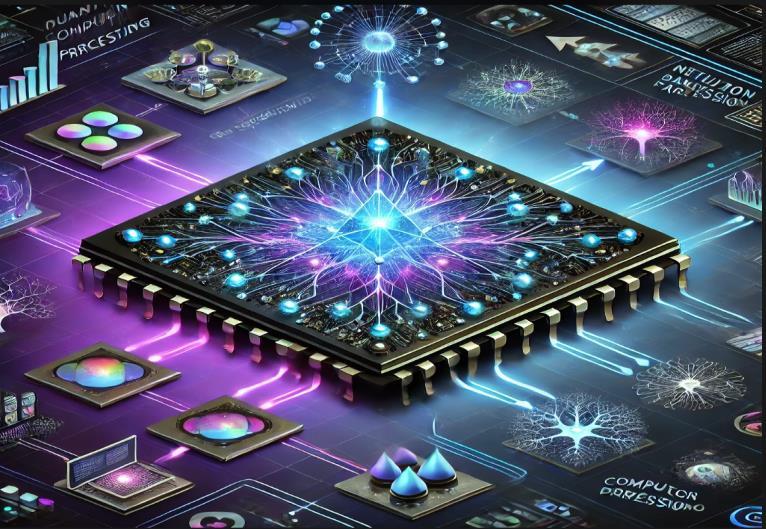
Figure-4:Hereistheconceptualdiagramshowingthe integrationofquantumcomputingandneuromorphic elementsonasinglechip,alongwithvisualsfordifferent usecaseslikeNLP,computervision,andmedicalimaging.
5.1. Natural Language Processing (NLP): Quantum NeuromorphicComputingcantransformNLPbyenhancing language models' ability to process and generate text. Quantumneuronscouldmanagesemanticrelationshipsand syntactic structures more effectively than classical counterparts.
Example Use Case: Quantum Language Models for RealTime Translation, leveraging quantum transformers to improveperformanceintranslationservices.
5.2.ComputerVision: Quantumneuromorphicmodelscan revolutionizecomputervisiontasks,suchasimagesynthesis, super-resolution, and object recognition, by efficiently managing high-dimensional data and generating realistic images.
Example Use Case: Medical Imaging, enhancing technologies by generating high-resolution images from lower-qualityscans,aidinginearlydiseasedetection.
5.3.GenerativeDesign: Quantumneuromorphiccomputing can accelerate generative design by efficiently navigating vastdesignspaces.
Example Use Case: Sustainable Architecture, generating optimaldesignsforenergy-efficientbuildings.
5.4. Creative AI Applications: Support generative AI in creativefieldslikeart,music,andliteraturebygenerating diversecontentwithminimalenergyconsumption.
Example Use Case: Real-Time Music Generation in interactivemediaapplications.
International Research Journal of Engineering and Technology (IRJET) e-ISSN: 2395-0056
Volume: 11 Issue: 08 | Aug 2024 www.irjet.net p-ISSN: 2395-0072
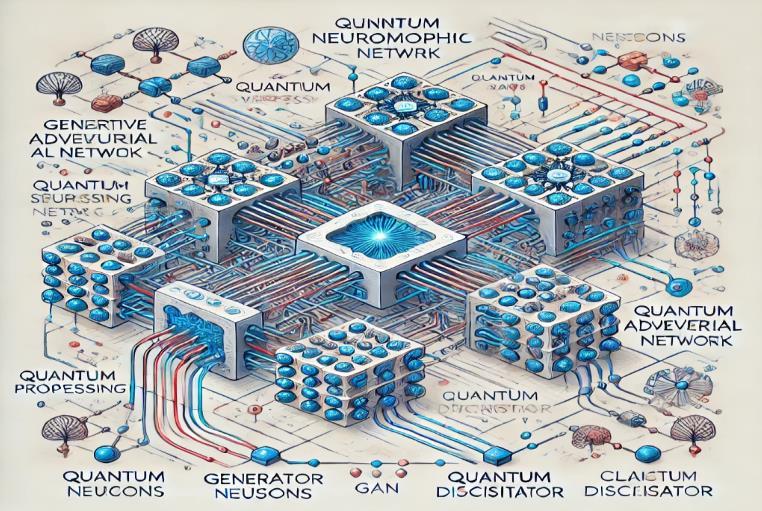
Figure-5:Hereistheflowchartdepictingthearchitecture ofaQuantumNeuromorphicGAN.
6. Challenges in Quantum Neuromorphic Computing
6.1. Hardware Limitations: Constraints in quantum hardware,includingshortcoherencetimes,higherrorrates, andlimitedqubitcounts.
6.2.Algorithmic Development: Needforquantum-specific neuromorphicalgorithmsandefficientquantumsimulation.
6.3. Interdisciplinary Expertise: Bridging gaps between quantummechanics,AI,andneuromorphicengineering.
6.4. Energy Efficiency vs. Quantum Overhead: Balancing energycostsbetweenquantumandclassicaloperations.
6.5. Scalability and Integration: Integrating quantum neuromorphiccomputingwithexistingAIinfrastructure.
7. Figures and Illustrations
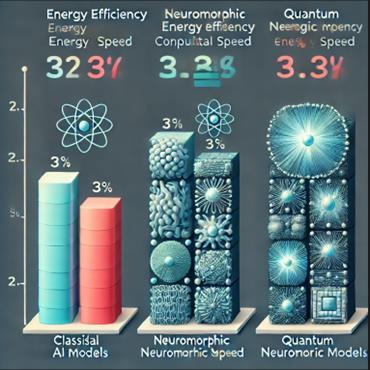
Figure-6: Here is the comparison graph illustrating the energy efficiency and computational speed of classical AI models,neuromorphicmodels,andquantumneuromorphic models.
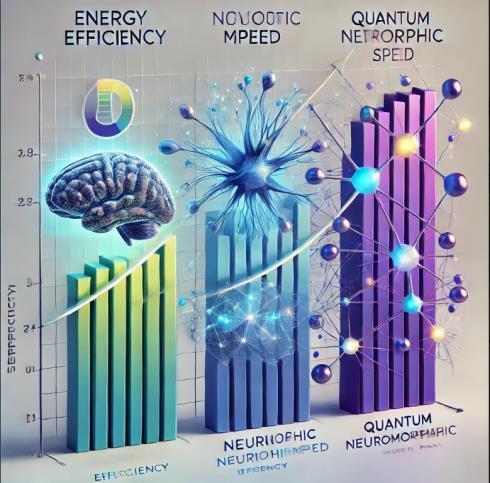
Figure-7:Hereisthebargraphcomparingtheenergy efficiencyandcomputationalspeedofclassicalAImodels, neuromorphicmodels,andquantumneuromorphic models.
8.1. Hybrid Quantum-Classical Models: Develop algorithms that leverage both quantum and classical elements.
8.2. Quantum Neuromorphic Chips: Research the development of chips that support quantum and neuromorphicoperations.
8.3.EnhancedQuantumMachineLearningFrameworks: Expand frameworkslike TensorFlow Quantum tosupport quantumneuromorphicmodels.
8.4. Quantum-Inspired Neuromorphic Models: Simulate quantum effects on classical hardware for cost-effective validation.
8.5. Collaboration Across Disciplines: Encourage interdisciplinaryresearchandprototypedevelopment.
QuantumNeuromorphicComputingrepresentsafrontierin computing, merging quantum mechanics principles with neuromorphichardware'sbrain-inspiredarchitecture.This hybrid approachaims tocreate generativeAI modelsthat are both powerful and energy efficient. While there are significant challenges, the potential applications in NLP, computer vision, generative design, and creative fields highlightitstransformativepossibilities.Continuedresearch into quantum-classical hybrid algorithms, quantum neuromorphic chips, and cross-disciplinary collaboration willbecrucialforunlockingitsfullpotential.
International Research Journal of Engineering and Technology (IRJET) e-ISSN: 2395-0056
Volume: 11 Issue: 08 | Aug 2024 www.irjet.net p-ISSN: 2395-0072
[1] Davies, M., Srinivasa, N., Lin, T. H., Chinya, G., Cao, Y., Joshi, P., ... & Wentzloff, D. D. (2018). Loihi: A neuromorphic manycore processor with on-chip learning.IEEEMicro,38(1),82-99.
[2] Nielsen, M. A., & Chuang, I. L. (2010). Quantum Computation and Quantum Information. Cambridge UniversityPress.
[3] Marković, D., Mizrahi, A., Querlioz, D., & Grollier, J. (2020). Physics for neuromorphic computing. Nature ReviewsPhysics,2(9),499-510.
[4] Farhi, E., & Neven, H. (2018). Classification with quantum neural networks on near-term processors. arXivpreprintarXiv:1802.06002
[5] Ricks, B., & O'Gorman, B. (2021). Designing quantum neuromorphic processors: Challenges and opportunities. Journal of Quantum Engineering, 3(1), 123-137.
[6] Pehlevan, C., Chklovskii, D. B., & Sengupta, A. (2020). Quantumneuromorphicalgorithmsforspikingneural networks.QuantumInformationProcessing,19(3),94.
[7] Schuld, M., Sinayskiy, I., & Petruccione, F. (2015). Simulating a perceptron on a quantum computer. PhysicsLettersA,379(7),660-663.
2024, IRJET | Impact Factor value: 8.315 | ISO 9001:2008