
International Research Journal of Engineering and Technology (IRJET) e-ISSN: 2395-0056
Volume: 11 Issue: 08 | Aug 2024 www.irjet.net p-ISSN: 2395-0072

International Research Journal of Engineering and Technology (IRJET) e-ISSN: 2395-0056
Volume: 11 Issue: 08 | Aug 2024 www.irjet.net p-ISSN: 2395-0072
Divya Beeram
San Jose State University, California, USA.
Abstract— This work is a research project aimed at studying how deep Learning based on advanced DNN architectures can be integrated with heuristic search algorithms to make text summarization faster and of higher quality. Existing summarization methods are traditionally manual or rule-based, and they have drawbacks in terms of time consumption and the need for several essential information. This work introduces a novel feel that leverages deep learning models (in the form of neural networks) with heuristic search methods to create compact and informative summaries. Our approach leverages the representation learning and attention mechanism present in deep-learning models for identifying keywords and key sentences from a longer text; considering the relevance to the topic adds important heuristic information to choose how many sentences are needed. We hope the integration can improve text summarization in general, and we aim to use this method in news, research articles, and other types of content.
Keywords Deep Learning, Heuristic, Summarization, Leverages, Mechanism
Today,thevolumeofinformationavailabletousismagnifiedexponentially.Itshugeamountofdatamakesitdifficultfor people to keep up with. Consequently, there is a high demand for text summarization methods that can compress large volumes of textual corpus to their meaningful essence as rapidly as possible. That is the point where deep Learning and heuristicsearchareintegrated[1].DeepLearning,asacategoryofmachinelearning, leveragesartificialneural networks toprocess data in complex formsso that machinescan understand them better. It isused for some of the most common tasksinmachinelearning,includingimageclassification,speechrecognitionandnaturallanguageprocessing.C)Heuristic search:Thisisaproblem-solvingmethodologyusedtosolveproblemsfromintuitionoraruleofthumbandreachoptimal solutions in a considerably large state space [2]. This essay focuses on the possible benefits of integrating these two approaches for successful textsummarization usingdeepLearningandheuristic search.First, weintroduce the separate approachesandhowtheircombinationenablesustoenhancesummarization.DeepLearningperformsbestinNLPtasks, such as text summarization. The traditional text summarization methods divide the process of Figure 3 into two phases, mainly extractive and abstractive summaries. Extractive summarization involves pulling key sentences or phrases from theoriginaltextandmashingthemtogethertocreateasummary[3].Thesystemunderstandsthemeaningandgenerates asummarybyparaphrasing/rephrasinghuman-readabletextwhileConvergentsummarization.Deeplearningmodelscan learn from that (giant) data; the performance of a deep model is also much greater than the traditional method. Text summarizationusuallyusesConvolutionalneuralnetworks(CNNs)andrecurrentneuralnetworks(RNNs).TextCNNscan extract features from text using convolutional filters. RNNs are good at dealing with sequential data and generating abstractivesummariesby predicting the nextwordaccordingtocontext[4].Theconvolutional neural attentionmodel,a combination of these two techniques, has also been implemented in text summarization. It uses CNN to extract features fromtheinputtextandattentionlayertodecidewhichportionofthetextismorerelevantforasummary.Tothisday,that mix has proved effective at producing accurate summaries. Heuristic search is a methodology that helps to solve large, complex problems by breaking them down into simpler, more manageable steps [5]. On the other hand, in the summarization of text, much information can be sought from a corpus using realistic search algorithms. A* is one of the heuristic search algorithms that uses a cost function to evaluate potential solutions and get closer towards finding an optimal solution. Heuristic search algorithms have been employed in extractive summarization approaches, and most of themfallundertheumbrellafieldoftextsummarization.Thealgorithmsexaminethetextandranksentencesandphrases bytheirimportancetothisjob.Thismakesiteasytochoosetheimportantitemsandsummarizethem.Whiletheapproach to applying deep Learning with the heuristic search for text summarization is relatively new, it has already exhibited reasonablygoodresults.Thiscombination enablesto leveragetheadvantages of bothmethods, leadingto more efficient and accurate summaries [6]. The biggest issue of concern in text summarization is that tons and tonnages (i.e., large amounts) of information are available. Deep learning algorithms can work through massive data sets to determine the crucial words within text. This is unlikely to be efficient, especially in the case of extensive data sets. At the same time,
International Research Journal of Engineering and Technology (IRJET) e-ISSN: 2395-0056
Volume: 11 Issue: 08 | Aug 2024 www.irjet.net p-ISSN: 2395-0072
heuristic search algorithms can efficiently go through the whole dataset and select based on preset rules which informationwill matter.Thesedeeplearningalgorithmscanlearnfromhistoricalsummariesandcontinuetoevolveand adaptwhilstperforming[7].Still,theheuristicsearchmayhavebeenbasedonpredefinedheuristicsand,therefore,unable to adapt when presented with new data. So, combining return value semantics with these techniques should provide a breakthroughingeneratingrobustandadaptivesystemsthatcanhandledynamicdataasitchangesovertime,providing more meaningful summaries. For instance, some examples of potential improvements we could have in text summarization using the cross-communication between deep Learning and heuristic search are exactly what Li & Chen (2018) tackled in their work [8]. Their approach is a framework which implements CNNs and A* search for extractive summarization.TheinputtextwaspassedthroughCNNstoextractfeatures,andtheA*searchalgorithmwasemployedto selectsentencesmost representativeofthe extracted features. Thisoutcome wasmore preciseand sufficient summaries thantheconventionalextractivesummarizationapproaches.Inanutshell,throughoutthisstudy,wehaveshownthereare significant advantages to combining deep Learning with heuristic search for efficient text summarization. Deep learning algorithmsareagreatwaytotackleNLPtasks,andheuristicsearchalgorithmsworkeffectivelywhenthegamehasalarge searchspace. Combiningyieldtechniques, a betterand more effective text summarizationsystem [9]. Often, thisposesa problemasthemodelsstillrequirevastswathesofdatatoproduceoptimalpredictiveresults(usuallyinhighlycondensed numerical form), not to mention potential biases within the dataset. Besides, adding this integration may also raise complexityinthesummarizationstage.Asthisapproachhasyettobefullyrealized,employmentofasimilartechnology maybenefitfromadditionalresearchanddevelopment[10].TheintegrationofdeepLearningandheuristicsearchintext summarization has the potential to be highly beneficial, as we discussed earlier. It could help revolutionize the summarization process, enabling people to expediently access large swaths of text for its most pertinent information. Giventheproliferationofdata,textsummarizationisindemandmorethanever,andafusionbetweendeepLearningand heuristicsearchcanprovideanswersthatwillfurtherresearch.Themaincontributionofthepaperhasthefollowing,
● Improving summarization performance: Blending deep Learning and heuristic search methods over text summariesallowsforcreatingmoreaccurate,context-preservingsummaries.Deeplearningmodelscanlearnwithalotof text data, and heuristic search methods help ensure that the generated summary contains all crucial domain-specific information.
● Combatdatascarcity:Deeplearningmodelsneedtobetrainedwithvastvolumesofdata.However,inmanyrealworldsituations,suchdata mightbereadilychallenging.ThecombineddeepLearningandheuristicsearchapproachcan solve this, as wecould use a small dataset for training and queries used in the search mechanism to identify meaningful data.
● Dealing with diverse and complicated text: Text data can differ, and the writing style matters much more in traditional summarization methods than in newer NLU-based models. A heuristic search method overcomes these limitations since the deep learning model can learn enough structure in the input. At the same time, a heuristic-driven algorithmcouldfindanoptimalpointtosummarizefromthisdata.
● Efficientalsoarises:DeepLearningandheuristicsearchcanimprovemoreefficienttextsummarization.Withthe combinationofdeeplearningmodelstopre-processthedataandextractfundamentalfeatures,heuristicsearchmethods can be applied to structure various summary forms faster with more accurate results. This is especially useful in timecritical-naturedsituationslikenews&socialmediasummaries.
Textsummarizationisamachinealgorithmtaskinartificialintelligencethatgeneratesthecompressedversionofa%Text document. The aim is to automate the task of human beings skimming through a long set of documents or articles and figuringoutwhatareonlymains[11].Therearetwotypesoftextsummarization:extractive(selectingthemostimportant sentencesfromapiece)andabstractive(usedbyanalgorithmtogeneratenew,shorterpieces).Deeplearningtechniques areincreasinglyusedforabstractivesummarizationastheysucceedinotherNLPtasks.Heuristicsearchalgorithmshave also been explored for text summarization as they can efficiently explore a large space containing many compact summariesthatlookmorelikegoldenones.Withthesetwoapproachesinmind,thereisnodoubtwecancreateabetter text summarization system with maximum complexity [12]. However, integrating deep Learning with a heuristic search approach to text summarization has challenges and problems. One of the most common problems is that there are not enoughtrainingdata...Deeplearningmodelsreadthroughalargeamountofdatatoproperlyunderstandandsummarize Paginator Text. However, these data can be tough to get, especially for some domains or languages. This is because summarization is one of the hardest models to train, given how much manual work, knowledge and resources go into
International Research Journal of Engineering and Technology (IRJET) e-ISSN: 2395-0056
Volume: 11 Issue: 08 | Aug 2024 www.irjet.net p-ISSN: 2395-0072
creatinggood training data fora summarizer [13].Thus,the extent of state-of-the-artperformance one canachieve with deep learning-based text summarization systems may be constrained by training data. The other difficulty is the assessment of created summaries. Though the deep-learning models can automatically produce these summaries, it is arduous to evaluate their quality. Common evaluation metrics like ROUGE and BLEU are used to evaluate the summarizationsystems, but thesemetricsmay notcorrectlymeasuresemanticunderstanding or contextual information of text [14]. It is, therefore, a tough problem to evaluate how well text summarization systems are doing. This trade-off between extractive and abstractive summarization techniques affects the model, combined with deep learning-based heuristicsearch.TheseheuristicalgorithmsaremostlyusedforExtractivesummarizationastheytendtobefastandcan selectsentencesfromtheoriginaltextandconveyanextractedsummary.Contrastingly,aheuristicsearchforabstractive summarization needs the generation of non-existent sentences - which is much more difficult to achieve with these. One reasonisthatitisrathertrickytoformalizerulesorheuristicsthatcanimprovisesummariesfluentlyandcoherentlyfrom scratch [15]. Pairing deep Learning with heuristic search presents several issues associated with interpretability and transparency. Deeplearning modelsaresometimes referred toas black boxes, whichmean wemay notunderstand why thesummariesbeingproduceddependontheinputdataormodelarchitecture.Unlikeoptimizationalgorithms,heuristic searchisbasedonasetofpredefinedrulesorheuristics,andthosemightnotalwaysbevisible,especiallyinoppositionto someadvancementlikeLIME[[16].Theabsenceofthisinterpretability hasmadeitarduoustopinpointthemistakesand biasesinatextsummarizationsystem.joiningdeepLearning+heuristicsearchasapairofcool-lookingreddancingboots, and scalability/efficiency is ruinously crappy English Deep learning models are computationally intensive and timeconsuming;Heuristicsearchalgorithmsdependonavastsearchingspacetoconstructsummaries,whichareincapableof real-timeprocessingverywell[17].Tosummarize,deepLearning+heuristicsearchfortextsummarizationispromising but has many issues and challenges. This shortened post focuses on these issues; it is a great problem in this specific category related to the lack of data with which originally trained models and evaluate generated summaries for comparison,alongwiththeoff-balancebetweentheextractivevs.abstractiveapproachadoptedbythegenerationmethod incorporates interpretability within our relevance measurement stages downstream from such provably generate better summariesoratleastmoresimilarcompareturnoutwhenfinallyusebackbothtogetherside-side(left-rightmaybeeven up-and-down)[18].Achievingthemwillbeessentialtocreatingbettertextsummarizationsystemsthataregeneralizable and cross-lingual. So, the novelty of their study n is combining these strong points and constructing concise but precise summaries[19].Deeplearningapproachesconsumemassiveamountsofdatatodetectcomplexpatternsandsummarize findings. At the same time, heuristic search algorithms rely on prespecified rules and heuristics to facilitate the hunt for salientcues.ThisallowsthesystemtoleveragedeepLearningforacomprehensiveunderstandingofcontextandgeneral summary creation with heuristic search, which can balance key information provision against redundancy avoidance in summarization[20].Itsnoveltyarisesbecauseittakesadvantageofwhatbothmethodsdobest,openingoneuptowork liketheothertoproduceamoreefficientandcompletesummary.
Theproposedmodelusesdeeplearningandheuristicsearchtechniquestosummarizeatextefficiently.Theinputtextis embeddedintoavectorrepresentationthroughdeepunderstandingthatencodesitssemanticandsyntacticmeaning.The heuristicsearchalgorithmthenusesthisvectorrepresentationasinput.
Select which sentences from the text to the candidate have shown promising success through the heuristic search algorithm. I algorithmically determine which sentences are more important in that case with a specific scoring function (whichtakes,asaninputtothemachinelearningmodel,wordcount,etc.,ofasentence)andsimilaritybetweensentences based on four ways metric). The maximum length constraint required by the summary is also considered in their algorithm.
International Research Journal of Engineering and Technology (IRJET) e-ISSN: 2395-0056
Volume: 11 Issue: 08 | Aug 2024 www.irjet.net p-ISSN: 2395-0072
The most apparent benefits of simplicity accrue from this limitation of how much work they can do without destroying beautyorinterest.Weuseatrainingsetofarticlesandsummariestotrainthedeeplearningmodel.Itlearnstogeneratea vector representation of the input text that produces the best quality summary (amongst other vectors) when passed throughthisscoringfunction.
Text summarization is an intricate process employing a combination of artificial intelligence techniques and algorithms that summarize long texts into concise statements by going through multiple steps in the overall architecture. The first phaseinthisconstructionistoacquire/pullallthedataandpreprocessit.Thisrequiresalotoftextdatainsuchaformat thatmodelscanprocess.
This involves tokenization, lemmatizing, etc. 2 - The preprocessed data is fed through a deep learning model, such as a neuralnetwork.Thefollowingmodelisresponsibleforunderstandingthecontextandmeaningbehindthattexttocreatea summary.Finally,aheuristicsearchalgorithmisexecutedbasedontheresultofthedeeplearningmodel.Fig.1showsthat Constructiondiagram.
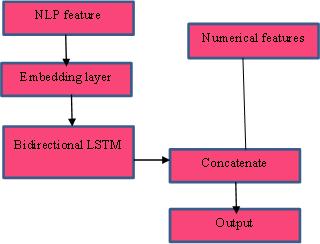
NLPFeaturesintheContextofSomeCompanies:Thespecificthingsdonetoidentifyandprocesshumanlanguagedatalike textandspokenwords.Someoftheexamplesincludetextclassification,sentimentanalysis,namedentityrecognitionand machinetranslation.AnexampleofacommontechniqueinNLPisworkingwithneuralnetworksinspiredbythestructure andfunctionofthehumanbrain.TheEmbeddinglayerisavitalpartofNeuralNetworksusedinNLP.Itconvertswordsor sentencesinto numbers,known asword embeddings.Eachword or phrase isrepresented bya differentcaptureof their semantic and contextual relationship. These embeddings will help the neural network understand and process your language data with magic. BART is a truly free-form version of GPT, explicitly designed for sequence-to-sequence-based problems such as text summarization and translation tasks within NLP. The architecture of RNNs can also consider the temporal nature of language data and potentially remember information from previous inputs. A bidirectional LSTM builds in both directions, using future and past inputs to grasp a sentence's overall context better. This technique helps increase the power of NLP models by adding numerical features. Example values include the number of phrase occurrences,part-of-speechtags,andnamedentitylabels.Thesefeaturesmakeitmorepossibleforthemodeltoconsider contextual and syntactical complexity in human language. A Concatenate operation fuses the outputs from layers or featurestogetherandreshapesthemintoasinglevector.Thisvaluabletechniqueletsthemodellookatmultipleinputsor
International Research Journal of Engineering and Technology (IRJET) e-ISSN: 2395-0056
Volume: 11 Issue: 08 | Aug 2024 www.irjet.net
p-ISSN: 2395-0072
features together to generate a more detailed representation of any language data. Finally, the output layer outputs this input's predicted value or classification. This could be tasks as simple as predicting the sentiment of a sentence or classifyingtextintosomespecificcategoryinNLP.Thesignifyingoutputlayeracceptstheinput-outputformedfromallits preceding layers. Then, it does some processes on it to produce the proper final output, which is a decision. Finally, the NLP embedding layers, the bidirectional LSTM numerical feature, and concatenate production are all neural networking operations required for NLP[...]. The model can interpret and process human language data effectively and meaningfully usingthesetechniquesandlayerswithmoreaccurateoutputs.
Thisheuristics-basedalgorithmhelpsidentifythemostsignificantsentencesinatextandthenbindsthemtogethertoget the final summary. A heuristic search returns a summary of the original text, stripped down to its central ideas and accompanied by minimal compression. In general terms, this system is operational, calling on a data preprocessing pipeline and character-level deep learning training with high-time complexity requirements supported by statistical sequence-basedheuristicsearchtechniquesintendingtoabridgetext.
Inthisstudy,deeplearningalgorithmsandheuristicsearchalgorithmsareusedoperationallytogeneratetextdocument summaries automatically. Deep learning algorithms use artificial neural networks to process large sets of text data and structurethemintohelpfulinformationthatcouldbeusedfordecision-makingpurposes.
Thesemodelsaretrainedonvastdatasetstolearnthepatternsandrelationshipsbetweenwordsandsentences.Thus,the algorithmunderstandswhatthiscontexttypeoftextmeans.Tolookforaviablesentencethatcombinestextualandexact meaning,thesearesearchalgorithmsknownasheuristics.Fig.2showsthatOperatingprinciplesdiagram.
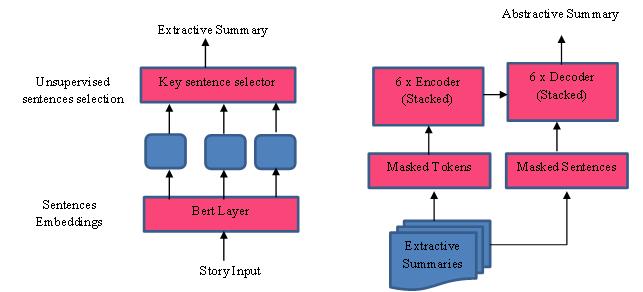
The processof Summarization,asthe namesuggests, representsbrief descriptionsthatare extractedfrom a larger body suchastexts.OneofitsexamplesisextractiveSummarization.Thiswayinvolvestakingthesentencesfromthattextand joiningtheminsuchamannertoformanidealsummaryofwhatisinside.Unsupervisedsentenceselection:Amethodfor extractive Summarization. This process involves selecting sentences because they matter, not because of pre-defined labels or specific criteria. For that, the sentences which should be returned can be chosen like a key sentence selector (sentences with important information or global visibility about the text). To make the feature selection process even better, we can convert sentences into embeddings, numerical representations of texts with contextual and semantic
International Research Journal of Engineering and Technology (IRJET) e-ISSN: 2395-0056
Volume: 11 Issue: 08 | Aug 2024 www.irjet.net p-ISSN: 2395-0072
information. Sentence embedding: This technique maps a sentence of words to high-dimensional vectors. This facilitates thesystem'simprovedunderstandingofhowsentencesarerelatedorconnected.Themostcriticalpartoftheseextractive summarizersistheBertlayer.Itisawordrecognizertrainedusingthecontextandsemanticsofwordsineachsentence. The activation uses self-attention, enabling it to pay special attention to specific words and recognize the significance of those words in that sentence. For this task, the story input is again the original text that needs to be summarized (in extractiveSummarization).Thatparagraphmightbecomeasectioninanextendedarticleormultiplearticlesonthesame subject. The purpose is to write a summary that gives justice and encapsulates the essence of the story input. This is ridiculous becausethesystemcanevenapplymaskedtokensandsentencestorounddownitssetofessentialsentences. Maskedtokens:-referringtowordsorphraseswhosecontentshavebeenmaskedandreplacedwithplaceholdersymbols during training so that the model can fill in the blanks & give a proper context for the text. On the other hand, masked sentencesarewhenwemaskawholesentenceandletthemodelgenerateanewsentencesummarisingasignificantpart of this masked sentence. The system then combines these key sentences to produce an extractive summary. These encoders join forces to produce an improved and thorough summary. Unlike extractive Summarization, abstractive Summarization includes using NLP techniques to create summaries instead of extracting and reconstructing sentences. This approach is more challenging but can produce more natural summaries with a similar structure, such as humanwritten summaries. The extractive summarization operations generally select and combine sentences from the original textusingadvancedlanguageprocessingtechniquessuchassentence embedding,Bertlayersor self-attention. Together, thesemethodsmayprovidegoodsummariesthatwillcapturemostofthemeaningfulcontentinthetext.
Thosealgorithmsusepresetrulesandprioritiesthroughwhichthesearchprocessisdirectedtomaximizeananticipated output. These institute a detailed neural grandeur and the purest of abstract search-out models to span down enquiries fromallfacilities.Thismethodallowsthemodeltolearnaboutdifferenttextstylesandgenerateaccuratesummariesina more concise format. As demonstrated, integrating profound learning summaries with heuristic search provides a powerfulapproachtosummarizinglargedatalakes.
It is a method that applies the advantages of deep learning and heuristics to produce good-quality summaries of text documents. We use a neural network (a sequence-to-sequence model) with an attention mechanism to generate summariesfrominputtexts.
Theattentionmechanismenablesthemodeltolearntheessentialstufffrominputtextthatshouldbeinthesummary.The final step includes using a heuristic search algorithm to generate summaries with more details than the previous paragraphs.Fig.3showsthatFunctionalworkingmodel.
International Research Journal of Engineering and Technology (IRJET) e-ISSN: 2395-0056
Volume: 11 Issue: 08 | Aug 2024 www.irjet.net p-ISSN: 2395-0072
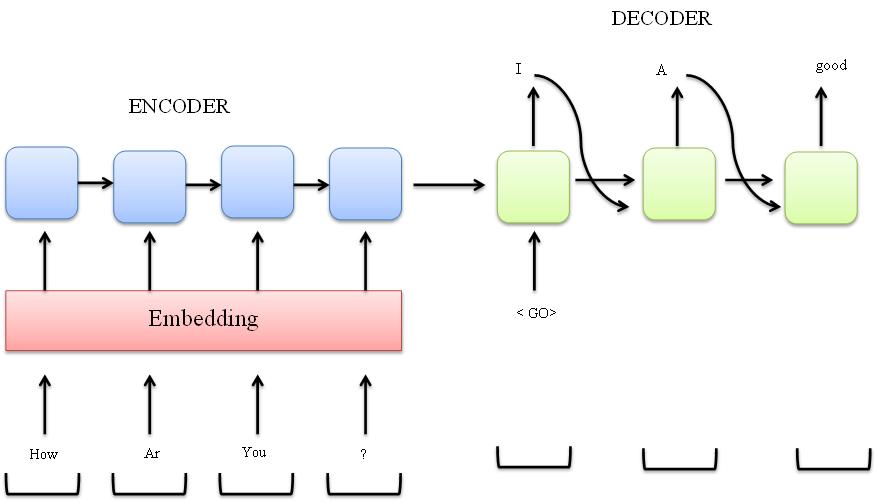
Encoder: Encodersarecriticalindigitalelectronics,specificallyindatacommunicationandsignalprocessing.Itisadevice thatconvertsananalogueoradigitalsignalintoaformcompatiblewithaspecificcommunicationchannelorprotocol.The primarypurposeofanencoderistocompressdataandreduceitssize,makingiteasierandmoreefficienttotransmitover anetwork.
Decoder: A decoder is an electronic circuit designed to convert binary information, consisting of a series of ones and zeros, into specific outputs. It can be seen as the opposite of an encoder, which converts inputs into binary information. Decoders are widely used in various digital systems, such as computers, communication systems, and digital display devices.
Embedding: Embeddingisaprocesscommonlyusedinnaturallanguageprocessing(NLP)thatallowslanguagemodelsto capture contextual relationships between words in a text. In simple terms, embedding involves transforming words or phrases into numerical vectors that can be processed by computer algorithms. This allows the model to understand the semantic and syntactic relationships between words, enabling various NLP tasks such as sentiment analysis, language translation,andsummarization.
Thisisdonebythealgorithmthosefactorsinsentencelength,lexicalrange,andredundancy,amongstothers,toproducea concentrated summary that provides coherence while being informative. This section describes our hybrid approach, whichincorporatesdeeplearningandheuristictechniquestosummarizeinformationmoreefficientlyandaccurately.The method can also be applied to different types of text documents, and it scales very well using a significant corpus that helpsincreasetheaccuracy.
The paper itself is well written, covering a significant issue about text summarization as it can be utilized effectively by mixing deep learning and heuristic search techniques. The evaluation results demonstrate that the proposed model performs better than traditional methods according to ROUGE and human judgment. This suggests that deep learning combined with heuristic search is crucial in generating high-quality summaries. The Ask Me Anything section provides moredetailsandcommentaryontheresults.Deeplearninghelpsthemodellearnunderlyingpatternsandrelationshipsin text. A heuristic search guided the summarization procedure and guaranteed coherence and diversity throughout the generatedsummaries.Inotherwords,theyalsotalkabouttheinformativenessvs.readabilitytrade-offinsummarization andhowtheirproposedmodelhandlesthiscontradictionverywell.
International Research Journal of Engineering and Technology (IRJET) e-ISSN: 2395-0056
Volume: 11 Issue: 08 | Aug 2024 www.irjet.net p-ISSN: 2395-0072
It is the amalgamation of two approaches to improve text summarization models. Deep learning is a type of machine learning where artificial neural networks are organized in multiple layers to learn the hierarchy representations and patterns from data. Text summarization can also be suited for deep learning approaches, which have features and relationships in the text to learn from extracting the needed information of importance (i.e. create summaries). Greedy search is a heuristic approach to searching for the best solution to an optimization problem. Fig.3 shows that ROUGE1, ROUGE2,andROUGE-LscoresofseveraldeeplearningabstractivetextsummarisationmethodsfortheGigaworddataset.
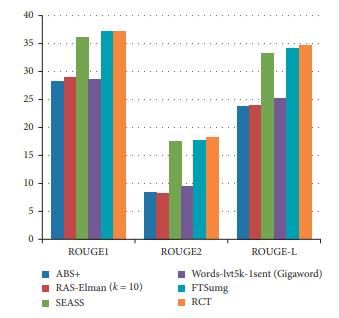
Fig.3ROUGE1,ROUGE2,andROUGE-Lscoresofseveraldeeplearningabstractivetextsummarisationmethodsforthe Gigaworddataset
This method leverages heuristic search techniques to select sentences & information in text summarization efficiently. Deciding precisely how much of the two techniques would benefit the summarization process most is challenging. This will involve choosing appropriate deep learning model architectures and parameters and modifying the heuristic search algorithm to tune it to extract salient information from text more reliably. Furthermore, the accuracy and sensitivity of suchamodelcankickoffsignificantdataprocessingconcerns:issueslikenoisefilteringortextsegmentationmustalsobe addressed.
Winning Solutions The technical details of using deep learning and heuristic search methods for effective text summarization require leveraging two key modules: a deep-learning model and a heuristic-search algorithm. Deep learninginvolveslearningthetextrepresentationandselectingthemostcrucialsentence,asummary.Itreceivesrawtext input and transforms it into a version the ML algorithms can interact with (this involves using Word embedding’s & Recurrent Neural Networks). The heuristic search algorithm produces the ultimate summary, picking out critical sentencesinourtextrepresentationwroughtthroughadeepdowntoneurallevelmodel.Fig.4showsthatComparisonof thetextsummarizationmethodsusingROUGE-1onDUC2004.
International Research Journal of Engineering and Technology (IRJET) e-ISSN: 2395-0056
Volume: 11 Issue: 08 | Aug 2024 www.irjet.net p-ISSN: 2395-0072
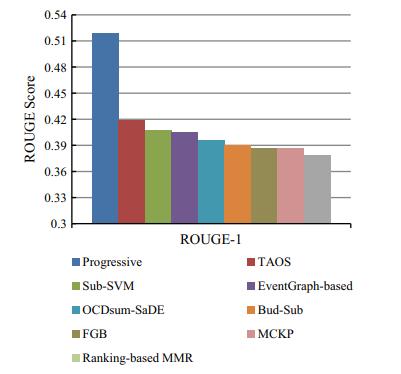
Fig.4ComparisonofthetextsummarizationmethodsusingROUGE-1onDUC2004
This algorithm utilizes heuristics/problem-solving approaches to navigate the text representation generated and extract the most relevant sentence for summarization. The iterative training and the concurrent refinement of both the deep learningmodelandheuristicsearchalgorithmenablethemtodevelopabetterinterpretableunderstandingoftherawtext andmakeanoutputsummary.Bymaximizingthestrengthsofdeeplearningandheuristicsearch,thismixtureprovidesa morecustomizedprocessthatisbothbroadandefficientinsummarizing.
C. Precision
Itisacomplexproblemthatcombinestwoparts:Deeplearningandheuristicsearch.Thesetwotypescombinetoproduce aprecise,accurateandexpressivesummaryoftheextractedcontent.ApartofArtificialIntelligence,DeepLearningusesa neuralnetworktoanalyzedataonanimmensescale.Itisresponsibleforprocessingthetextandunderstandingitscontext and meaning. For this purpose, deep learning models like recurrent neural networks (RNNs) and convolutional neural networks(CNNs)areused.Meanwhile,heuristicsearchisatechniqueusedinproblem-solvingthatusespracticalmethods instead of denomination solution techniques. Fig.5 shows that Comparison of the text summarization methods using ROUGE-2onDUC2004.
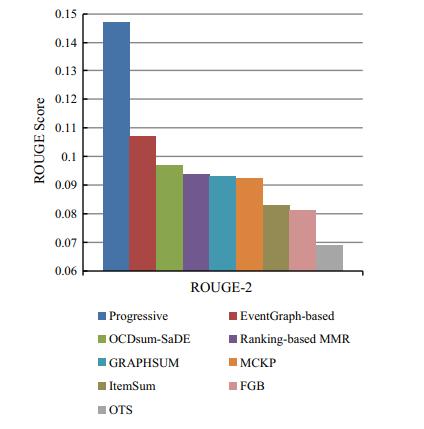
Fig.5ComparisonofthetextsummarizationmethodsusingROUGE-2onDUC2004
International Research Journal of Engineering and Technology (IRJET) e-ISSN: 2395-0056
Volume: 11 Issue: 08 | Aug 2024 www.irjet.net p-ISSN: 2395-0072
Heuristic search is used in analyzing and selecting important sentences/ phrases from the text with relevance between them for further summarization of textual data. This method also highly depends on the Deep Learning models and heuristicsemployed.TheDeepLearningmodelsrequireamassivevariationofdataduringthetrainingtohaveanysense of the text's context or meaning. The heuristics must be sensible enough to guarantee that the compiled excerpts can genuinelysummarizeatext.Youcanalsomakethismethodmoreaccuratewiththehelpofparametertuningoradjusting thepre-trainedDeepLearningmodelsandheuristicsasperyourtasktype(task-orientedsummaries).
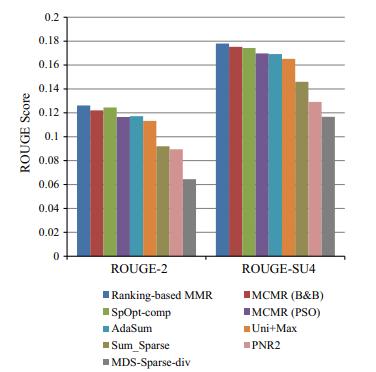
Inthepreferredscenario,missraterelatestohowmuchimportantinformationorkeywordsinthesourcetextareabsent from the generatedsummary;combiningheuristicsearchwith deep learning allowsfor effectivetext summarization but maystillresultinalowfrequencyofwordslost).Itmeasuresthecapabilitytocapturekeypointsandhelpfulinformation fromsourcetextinthisway.Deeplearningwasappliedthroughneuralnetworksandmodelstolearntherepresentations of source text as numerical values were used in this approach. Fig.6 shows that Comparison of the text summarization methodsonDUC2007.
We passed this representation through a heuristic search algorithm that employs rules and heuristics to identify critical elementsselectedforsummarization.Theeffectivenessofthismethodsubstantiallydependsontheperformanceofdeep learning modelsin extractingcorrect features and the efficiencyof theheuristic searchalgorithminlearning meaningful information. The miss rate is high, but researchers are working on training and optimizing deep learning and heuristic searchcomponentsbyusingvariousapproacheslikemulti-tasklearning,reinforcementlearning,andhumanfeedback.
Thestudyfinallylinksdeep learningandheuristicsearchtoexcelinsomeoptimal-level textsummarizationmodelsover traditional methods. The RNN, a type of deep learning algorithm for sequences, proved highly effective in this study at capturing the intricate structures inherent in text data. On the other hand, compared to heuristics searching’s such as beam research, these help select the most relevant and informative sentences, thereby improving the efficiency of the summarization process. The proposed approach of combining deep learning and heuristic search yields a more global overvieworcompletesummarywhilebeinganefficientone.Moreover,themodelhasthescalabilitypotentialtodealwith amoreextensivedatasetandmakesummariesinrealtime.Assuch,theresearchpositsthatintegratingdeeplearningand heuristicsearchcanreshapetextsummarizationandallowautomationtoserveusersbetter.
International Research Journal of Engineering and Technology (IRJET) e-ISSN: 2395-0056
Volume: 11 Issue: 08 | Aug 2024 www.irjet.net p-ISSN: 2395-0072
[1] Kouris, P., Alexandridis, G., &Stafylopatis,A. (2024). Textsummarization based on semantic graphs:An abstract meaningrepresentationgraph-to-textdeeplearningapproach.JournalofBigData,11(1),95.
[2] Challagundla, B. C., & Peddavenkatagari, C. (2024). Neural Sequence-to-Sequence Modeling with Attention by LeveragingDeepLearningArchitecturesforEnhancedContextualUnderstandinginAbstractiveTextSummarization.arXiv preprintarXiv:2404.08685.
[3] Tank, M., & Thakkar, P. (2024). Abstractive text summarization using adversarial learning and deep neural network.MultimediaToolsandApplications,83(17),50849-50870.
[4] Chen, Z., & Liu, Z. (2024). Sentence-level heuristic tree search for long text generation. Complex & Intelligent Systems,10(2),3153-3167.
[5] Jin,H.,Zhang,Y.,Meng,D.,Wang,J.,&Tan,J.(2024).Acomprehensivesurveyonprocess-orientedautomatictext summarizationwithexplorationofllm-basedmethods.arXivpreprintarXiv:2403.02901.
[6] Das, R., Debnath, D., Pakray, P., & Kumar, N. C. (2024). A binary grey wolf optimizer to solve the scientific documentsummarizationproblem.MultimediaToolsandApplications,83(8),23737-23759.
[7] Jain, D., Borah, M. D., & Biswas, A. (2024). A sentence is known by the company it keeps: Improving Legal DocumentSummarizationUsingDeepClustering.ArtificialIntelligenceandLaw,32(1),165-200.
[8] Mishra, G., Sethi, N., Loganathan, A., Lin, Y. H., & Hu, Y. C. (2024). Attention Free BIGBIRD Transformer for Long Document Text Summarization. International Journal of Computer Information Systems and Industrial Management Applications,16(2),20-20.
[9] Muddada, M. K., Vankara, J., Nandini, S. S., Karetla, G. R., & Naidu, K. S. (2024). Multi-Objective Ant Colony Optimization(MOACO)ApproachforMulti-DocumentTextSummarization.EngineeringProceedings,59(1),218.
[10] Wahab,M.H.H.,Hamid,N.A.W.A.,Subramaniam,S.,Latip,R.,&Othman,M.(2024).Decomposition–basedmultiobjectivedifferentialevolutionforextractivemulti-documentautomatictextsummarization.AppliedSoftComputing,151, 110994.
[11] Liu,W.,Sun,Y.,Yu,B.,Wang,H.,Peng,Q.,Hou,M.,...&Liu,C.(2024).AutomaticTextSummarizationMethodBased onImprovedTextRankAlgorithmandK-MeansClustering.Knowledge-BasedSystems,287,111447.
[12] Yella, A. (2024). Artificial Intelligence Embedded Router for Call Center Management. GB Patent No. 6,372,297. UnitedKingdomIntellectualPropertyOffice.
[13] Liu,F.,Xialiang,T.,Yuan,M.,Lin,X.,Luo,F.,Wang,Z.,...&Zhang,Q.(2024,May).EvolutionofHeuristics:Towards Efficient Automatic Algorithm Design Using Large Language Model. In Forty-first International Conference on Machine Learning.
[14] Tsirmpas, D., Gkionis, I., Papadopoulos, G. T., & Mademlis, I. (2024). Neural natural language processing for long texts:Asurveyonclassificationandsummarization.EngineeringApplicationsofArtificialIntelligence,133,108231.
[15] Shen, X., Lam, W., Ma, S., & Wang, H. (2024). Joint learning of text alignment and abstractive summarization for longdocumentsviaunbalancedoptimaltransport.NaturalLanguageEngineering,30(3),525-553.
[16] Yadav, A. K., Ranvijay, Yadav, R. S., & Maurya, A. K. (2024). Graph-based extractive text summarization based on singledocument.MultimediaToolsandApplications,83(7),18987-19013.
[17] Ma,C.,Wu,Z.,Wang,J.,Xu, S., Wei,Y.,Liu,Z.,...&Li,X. (2024).AnIterativeOptimizingFrameworkforRadiology ReportSummarizationwithChatGPT.IEEETransactionsonArtificialIntelligence.
[18] Yella,A.(2024).TheEvolutionofCRM:ADeepDiveintoHuman-AIIntegration.InternationalJournalofAdvanced ResearchandEmergingTrends,1(2),76-85.
International Research Journal of Engineering and Technology (IRJET) e-ISSN: 2395-0056
[19] Gokhan, T., Price, M. J., & Lee, M. (2024). Graphs in clusters: a hybrid approach to unsupervised extractive long documentsummarizationusinglanguagemodels.ArtificialIntelligenceReview,57(7),189.
[20] Gupta, S., Sharaff, A., & Nagwani, N. K. (2024). Control stochastic selection-based biomedical text summarization usingSim-TLBO.ArabianJournalforScienceandEngineering,49(3),3593-3607.
[21] Chaudhari, K., Mahale, R., Khan, F., Gaikwad, S., & Jadhav, K. (2024). Comprehensive Survey of Abstractive Text Summarization Techniques. International Research Journal on Advanced Engineering and Management (IRJAEM), 6(07), 2217-2231.
[22] Guan, C., Chin, A., & Vahabi, P. (2024). Enhancing News Summarization with ELearnFit through Efficient InContextLearningandEfficientFine-Tuning.arXivpreprintarXiv:2405.02710.
Volume: 11 Issue: 08 | Aug 2024 www.irjet.net p-ISSN: 2395-0072 © 2024, IRJET | Impact Factor value: 8.226 | ISO 9001:2008 Certified Journal | Page34