
International Research Journal of Engineering and Technology (IRJET) e-ISSN:2395-0056
Volume: 11 Issue: 07 | July 2024 www.irjet.net p-ISSN:2395-0072

International Research Journal of Engineering and Technology (IRJET) e-ISSN:2395-0056
Volume: 11 Issue: 07 | July 2024 www.irjet.net p-ISSN:2395-0072
Atharva Powar¹, Prashant Jagtap²
1Undergraduate, D. Y. Patil College of Engineering & Technology, Department of Civil Engineering, Kolhapur, 416006, India
2Assistant Professor, D. Y. Patil College of Engineering & Technology, Department of Civil Engineering, Kolhapur, 416006, India
Abstract- In India large quantities of plastic is being generated and disposing of this plastic waste is a major challenge. Plastic consumption in India reached 15 million tonsbytheendof2020-2021.Thisapproachisharmfultothe environment and human health. The variety of plastic waste is mostly available in the form of Polyethylene Terephthalate (PET), High-Density Polyethylene (HDPE) & Low-Density Polyethylene (LDPE). Use of Plastic waste as binder material in repairing the potholes could be a new innovative and Ecofriendly way of disposing it. Generally, potholes on the roads are filledwith parent material such as bitumenandconcrete. But, in this study the potholes are repaired with the help of HDPE material along with aggregates. Using HDPE plastic waste, the potholes on bituminous roads are filled immediately. This will make repairing of potholes on the location much easier and faster. This study shows that the durability of the potholes filled with HDPE is comparatively morethanthepotholesfilledusingconventionalmethod.This methodof fillingpotholes byHDPEmaterial will behelpfulto reduce the plastic waste from environment and also it is cost efficient.
Keywords- Plastic waste, Pothole, Eco-friendly, HDPE Plastic waste,Bituminousroads,DurabilityofPotholes,Aggregates
1. Introduction
India is a growing nation. India has many terrible roads,bothinthemetropolisandthevillages;potholesare frequentinboth.Roadagenciespaymillionsofrupeestofix potholes. The lifespan of the road is increased by using plastictofill potholes,whichalsotakesalotoftime,labor, and human effort to do (Nachivanekar et al. 2019). In addition to causing damage to vehicles, potholes can also result in serious accidents. Water pressure intensifies in wet materials due to high traffic volume, leading to material breakdown. Deficient road maintenance also causessurfacecracksto
expand, which allows rainwater to penetrate the layers (Naveen et al. 2018). As per reports of the transport researchwingofMinistryofRoadTransportandHighways, thenumberroadaccidentscausedbypotholesis3625and
1482peopleweredeadand3103wereinjuredin2022.[1]
The generation of plastic wastehas significantly increased as a result of population growth, urbanization, development activities, and changes in lifestyle, making solid waste management one of the biggest environmental challenges in the world. There is a significant issue in disposing ofthevastamounts ofplasticwaste produced in India.Indiagenerates15milliontonsofplasticwasteevery year butonlyone fourthof thisisrecycledduetolack ofa functioning solid waste management system.[2] Due to population growth, urbanization, development activities, andchangesinlifestyle,thereisanincreaseinthequantity of waste plastic in municipal solid waste (MSW), which causes widespread pollution of the environment. Due to their non-biodegradability and unsightly appearance, plastictrashdisposalisadangerandasevereproblemona global scale. It is dangerous to the environment because these are not disposed of scientifically and have the potential to pollute the earth and water. In this study, the standard material was partially replaced with this waste plastic in order to improve the needed mechanical propertiesforaspecificroadmix.
India currently ranks among the nations that are developing the fastest. India boasts a significant road network. There are a lot of dangerous roads in India, whethertheyareinvillages,towns,orcities.Roadpotholes are a typical sight in both rural and urban India, especially during the monsoon season. The road agencies spend millions of rupees annually on costly pothole patching. Additionally, filling potholes requires a lot of time, labor, and human effort. Heavy vehicles, oil spills, torrential rain, low quality road construction, and other factors are the main causes of potholes. Potholes are primarily caused by water. Animal hooves on the road surface in hot weather, diesel leakage, mechanical damage to vehicle wheels, and poor road construction over some subgrades, such as pricey,collapsible,anddispersivesoils,canallcontributeto it. Environmental cracking can happen as a result of the
International Research Journal of Engineering and Technology (IRJET) e-ISSN:2395-0056
Volume: 11 Issue: 07 | July 2024 www.irjet.net p-ISSN:2395-0072
sun's UV rays, heat oxidation, or other factors that cause bitumentoshrink.
Waste plastic is the second significant issue that we all face. Plastic garbage production is significantly rising. Shopping bags, wrappers, cold drink bottles, and all other types of plastic that are only used once cause serious environmental and financial problems. Plastic is omnipresentintoday'slifestyles,andgettingridofitisabig concern. Because it is a non-biodegradable product, these materials contribute to environmental contamination and concerns like breast cancer, issues with human and animal reproduction, and genital anomalies. Therefore, plastic waste can be used for pothole repair to solve both of these issues. Effectiverecyclingof wasteplasticresultsinlongerlastingroadways,whichbenefitseveryone.
T. Sarada, G. Sreeja in their paper, ‘An Experimental Study on Plastic Blended Bituminous Concrete Mix Roads’ [3] state that, there have been numerous changes in this newperiod.However,therearen'tasmanynewtechniques and materials being developed. Some people substitute bitumen and tar only partially, which produces acceptable results.However,additionalresearchhasshownthatnotall of those materials display the necessary characteristics in all respects. During that time, researchers focus on recyclablematerialslikerubberandplastic.Theyobserved that both materials produced good outcomes. On the other hand, since plastic usage (including that of polyethylene bags, pet bottles, polystyrene, and other plastic products) rises daily, there is an increasing amount of pollution broughtonbyplasticwaste.
Sharma,Sahu,et.alTrivediintheirpaper,‘AReview of various methods of road construction using waste materials’ [4] state that, they claimed that while some garbage may be disposed of simply, others are always an issue for the ecosystem. Another type of substance whose disposal is usually laborious is plastic. The environment was severely impacted by waste disposal; therefore, numerous studies in various fields are being conducted to securely recycle plastic in order to reduce this impact. Utilizing discarded plastics when building roads is one of its methods. The demand for plastic roads is urgent since they not only help to improve the quality of the road by consuming waste plastic in an environmentally responsiblemanner.
Supriya Marik and Rishi Singh Chhabra in their paper,‘Areviewliteratureontheuseofwasteplasticsand waste rubber tires in pavement’ [5] state that, numerous original building materials and techniques have been
developed to demonstrate their suitability for pothole design, construction, and maintenance. Plastics and rubbers may be one of them. Taking into account the environmental perspective as well, there is significant environmentaldamageasaresultoftheexcessiveusageof polythene in daily operations. Plastics are increasingly beingusedincarrybags,mugs,andotheritemsona daily basis. The requirement of the hour is to use the leftover polythene for some advantageous purposes because polythene is not biodegradable. These materials are inexpensive, environmentally benign, and give the subbasestrengthwhenusedinroadconstruction.
Vasudevan, Velkennedy, et.al in their paper, ‘Utilization of waste polymers for flexible pavement and easy disposal of waste polymers’ [6] state that they have shown that Stone coated aggregate was first coated with plastic generated from wastes like carry bags, films and foams and the plastic waste coated aggregate (PCA) was used as raw material for flexible pavements. PCA is then mixed with 60/70 or 80/100 bitumen. PCA+ bitumen mix showed better binding property, less wetting property, much less voids, higher marshal stability value.by this process a road of 1km length and 3.75m width can consume 100,000 carry bags and the road strength is increased100%andthereisnoformationofpotholes.
Sunil J. Kulkarni in their paper ‘A Review on Studies and Research on Use of Plastic Waste’ [7] states that, Minimization of waste material is important aspect of the moderngrowthanddevelopmentinitiatives.Plasticisused in various domestic and industrial applications. Use of plastic bags and bottles is very common. The disposal of plastic waste is major problem due to non-biodegradable nature of plastic. The plastic can be used as feedstock for ethanol like products. It can be used for road construction and other construction related activities. The current reviewsummarizestheresearchonuseofwasteplastic.
1. Plastic trash is mixed with bitumen during road building to promote stability, strength, durability, and fatiguelife.Additionally,itisresistanttodamagesbrought onbywateranddeformation.
2. Thesamebitumenandwasteplasticmixtureisused to fill potholes. In accordance with IRC guidelines, 8% of plasticshouldbemixedwithbitumenbeforebeingapplied to patch potholes. This method works well, but it may become damaged over time due to heavy traffic and constant water loads during rainstorms. The literature reviewsmentionedabovedemonstratetheusageofplastic waste in conjunction with bitumen for road construction,
International Research Journal of
Volume: 11 Issue: 07 | July 2024 www.irjet.net
but a more novel and creative way to dispose of plastic trash would be to utilize waste plastic in place of bitumen entirely.
3. The method of combining plastic trash with a full bitumen replacement could be a novel, creative way to dealwiththepotholeproblem.
4. On-sitemeltingandmixingoftheplasticwastewith aggregates. According to tests done on it, as indicated in Table1,plasticcoatedaggregatesprovidegreaterstrength thanbitumencoatedaggregates.[6]
Table- 1: TestonAggregate
3. Methodology
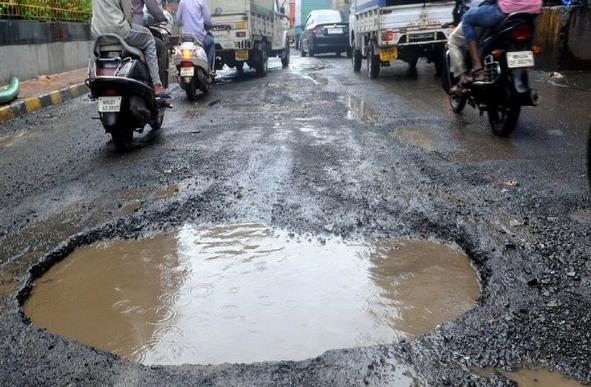
Vehicular traffic has been rapidly growing over the recent years with more privately owned vehicles taking to thestreetseachday.Thesituationisfurtherexacerbatedby thedeclineofrailroads.Thecollapseofrailroadsmakesthe situationevenworse.Roaddamageintheformofpotholes, as seen in Fig.1, is a significant burden for transportation authorities across the nation due to these factors and bad weather. In addition to seriously harming vehicle suspension systems, potholes can also result in serious accidents and life-altering injuries. Another significant factor in the reduction of state money is the need for ongoingpotholerepairs.Therefore,thedemandforpothole repair methods that are both affordable and durable is urgent.
Plasticwasteisprocessedintonewgoodsthroughthe recycling process. Recycling helps conserve resources, protect the environment from plastic pollution and greenhouseemissions,andlessenrelianceonlandfills.
3.2.
1. Low-DensityPolyethylene(LDPE):Carrybags,sacks, milkpouches,binlining,cosmetic,anddetergentbottles.
2. High-Density Polyethylene (HDPE): Carry bags, bottlecaps,householdarticles
3. Polyethylene Terephthalate (PET): Drinking water bottlesetc.
4. Polypropylene (PP): Bottle caps and closures, wrappersofdetergent
5. Polystyrene(PS):Yogurtpots,cleareggpacks,bottle caps.FoamedPolystyrene:foodtrays,eggboxes,disposable cups,protectivepackaging,etc.
6. Polyvinyl Chloride (PVC): Mineral water bottles, credit cards, toys, pipes and gutters; electrical fittings, furniture,foldersandpens,medicaldisposables,etc.
construction
The following are the guidelines published by Ministry of Railway(GovernmentofIndia)in2019[8]
1. This guideline (IRC: SP:98-2013) deals with the specifications and use of waste plastic in wearing course using dry process, their advantages, application, manufacturing,transportation,storages,andqualitytesting requirements.
International Research Journal of Engineering and Technology (IRJET) e-ISSN:2395-0056
Volume: 11 Issue: 07 | July 2024 www.irjet.net p-ISSN:2395-0072
2. Advantages and limitation of using waste plastic as modifier and binder: Laboratory as well as field performancestudies/investigationscarriedoutinIndia (In Tamil Nadu, Karnataka and Delhi) identifies following advantagesinusingwasteplasticinbituminousmixes.
i. Higher resistance to deformation, water induced damages.
ii. Increased durability and improved fatigue life, stabilityandstrength.
iii. Disposal of waste plastic and thereby environment friendly.Howeverfollowingneedtobeensuredinorderto achievetheadvantagesoflaiddownspecifications;
iv. The material shall consist of only low-density polyethylene (LDPE) or high-density polyethylene (HDPE), PU(availableinlimitedquantityaswaste)andPET.
v. Black colored plastic waste is a result of repeated recyclingandshouldnotbeused.
vi. PVCshallnotbeusedsincetheyreleaselethallevels ofdioxins.
vii. The Thermo Gravimetric Analysis (TGA) of thermoplastics has revealed gas evolution and thermal degradation may occur beyond 180°C. Thus, miss use or wrong implementation of this technology may result in release of harmful gases, premature degradation, if the temperaturesarenotmaintainedduringconstruction.
viii. HDPE material can be used for road construction in accordance with the Guidelines on Use of Plastic Waste in RoadConstruction.
3.4. Materials used
3.4.1.HDPEMaterial
HDPE is a type of polyethylene, the most common plastic which accounts for over 34% of the global plastic market.ThepropertiesofHDPEarelistedinTable2.
Table 2. PropertiesofHDPE
Thermalconductivity 0.44W/m°C
Specificheatcapacity 1330to2400J/kg°C
Specificheat(solid) 1.9J/kg°C
Crystallinity
The primary materials used to produce pavement are aggregates, which make up the majority of the pavement's structure. Wheel loads on the surface course and the pavement cause stresses in the aggregates that must be supported. They must also withstand damage broughtonbytheabrasiveactionoftraffic.Thefindingsof the numerous tests performed on aggregates in the lab, including the Los Angeles test, crushing test, impact test, flakiness test, and elongation index, specific gravity, are listedinTable3below.
Table 3. TestResultsofAggregate
3.5.
These days, it is normal practice to employ plastic wastewhenbuildingroads.Bitumenoftenhas about8%of plasticwasteaddedtoittoimproveitscharacteristics.The advantagesofputtingplasticinbitumeninclude:
1. A10%reductioninbitumenconsumption.
2. Developenvironmentallyfriendlytechnology.
International Research Journal of Engineering and Technology (IRJET) e-ISSN:2395-0056
Volume: 11 Issue: 07 | July 2024 www.irjet.net p-ISSN:2395-0072
4. Strengthentheroadandimproveitsfunctionality.
Road potholes are a serious issue that needs to be fixedinordertoreduceaccidents.Thetypicalplastic-blend bitumenisusedtopatchpotholes.However,constanttraffic and high-water pressure during the rainy season cause pothole damage. To solve this issue, plastic trash might be usedwithaggregatestocompletelyreplacebitumen,which couldbeanovelandinventivemethodofpatchingpotholes. During this repair, the plastic is combined with aggregates and coated with aggregates. According to tests done on aggregates, these plastic-coated aggregates are stronger thanthebitumen-coatedaggregates.
AccordingtoIRCregulations,thematerial mustonly be made of low-density polyethylene (LDPE) or highdensity polyethylene (HDPE), PU (which is only seldom available as waste), and PET. Thermogravimetric Analysis (TGA) of thermoplastics has shown that heat deterioration and gas evolution may take place above 180°C. Thus, meltingHDPEmaterialabovethatpointisnotadvised.
Experimental work
This section comprises of two parts. The first part comprisesthestudyonthepreliminarybindingcapacityof PET and HDPE materials with aggregates for repair of Potholes. The second part comprises of the repair of potholesusingHDPEplates.
ThepotholefillingisdonebyusingthePETmaterialShredded plastic bottles are used to fill the potholes, and theyaremeltedwiththeaidofablowtorch.Aggregatesare then placed over the melted surface and properly bonded with a rammer. The same procedure was followed using HDPEmaterial.
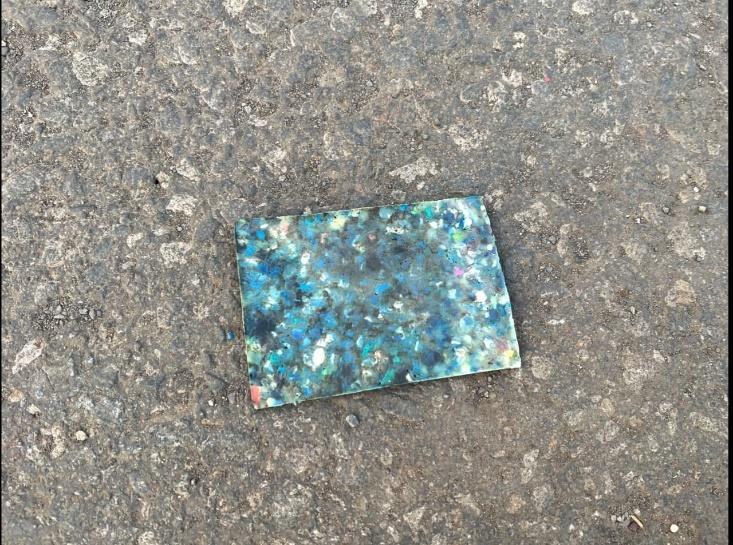
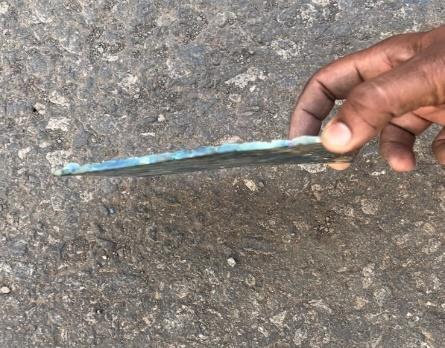
The experiment involving PET and HDPE material indicatesthattheHDPEmaterialexhibitsagreaterbonding strength with aggregate and the existing bituminous surface. and after heating, HDPE material quickly becomes cemented, making potholes capable of withstanding the weight of moving vehicles right away. Whereas, the PET material lost its bond and got eroded off. Thus, repair material HDPE was chosen for preparation of HDPE plate. The product composed of HDPE material prepared for the simplicity of quickly filling potholes is called HDPE plate, showninFig.2
3.6.2.ProcessofMakingHDPEPlate
1. Equipment: Gas Cylinder and Blowtorch assembly, AluminumMold,Gaslighter.
2. Material:HDPEintheformofSmallPellets
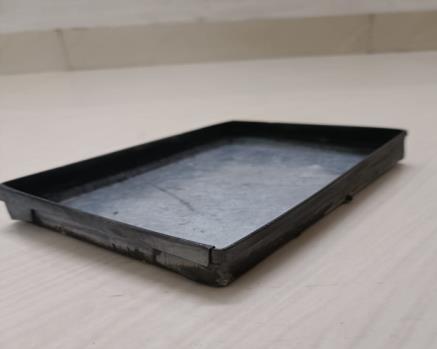
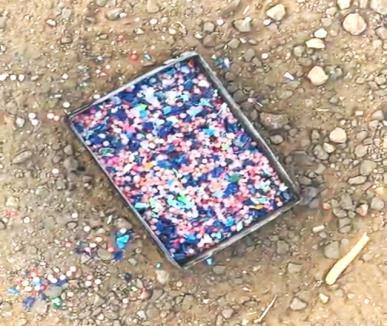
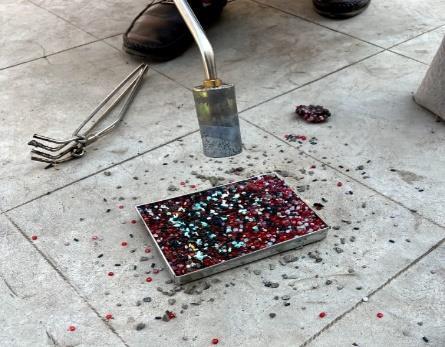
3. Procedure: Take an aluminum mould that is the appropriate size for the pothole as shown in Fig. 3. Place the HDPE pallets uniformly inside the aluminum mold, being careful todistributeitevenlyonaplatewithathicknessofaround 5mmasshowninFig.4.
International Research Journal of Engineering and Technology (IRJET) e-ISSN:2395-0056
Volume: 11 Issue: 07 | July 2024 www.irjet.net p-ISSN:2395-0072
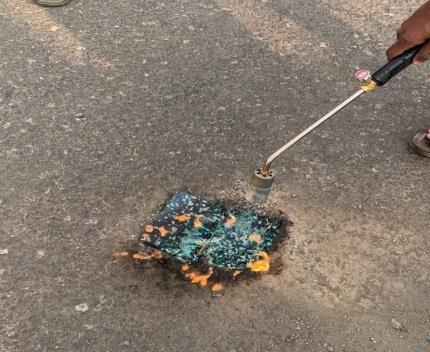
Use a blowtorch to melt the HDPE material; the temperature must not exceed 180°C as shown in Fig.5, making sure the material has melted all the way to the bottomofthemould.Permitittocoolfor15to20minutes. After cooling, the HDPE plate should be carefully removed from the mould as shown in Fig.6. Depending on the type and size of the pothole, HDPE plates can be molded into a varietyofshapesandsizes.
1. Equipment: Blower, Gas Cylinder and Blowtorch assembly,Rammer,Gaslighter.
2. Material:HDPEmaterial,Aggregates.
3. Procedure:
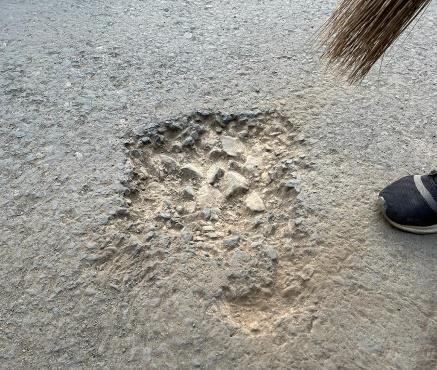
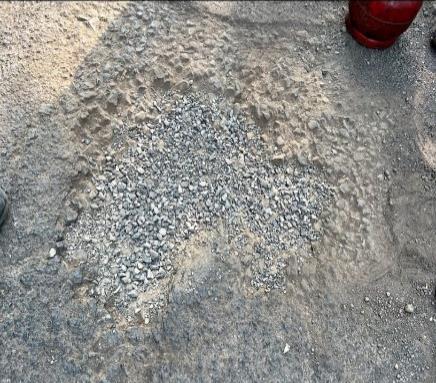
To remove large fragments of rock or soil, a blower orbroomisusedtoproperlycleanthepotholeasshownin Fig.7.Thentheproportionsofthepotholeareexamined.To create a solid base for the layer of HDPE plate, the pothole is filled with a layer of aggregates of uniform thickness, which is then compacted as shown in Fig. 8. Put the HDPE plateinthepotholesuchthatitcoversnearlyallofthemas showninFig.9.
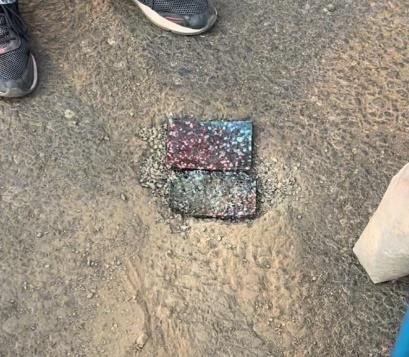
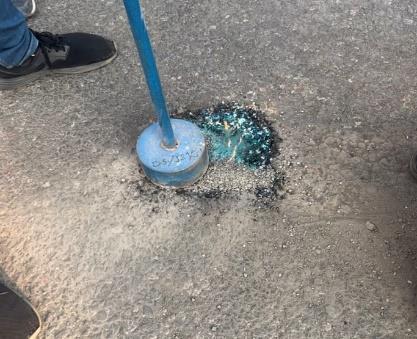
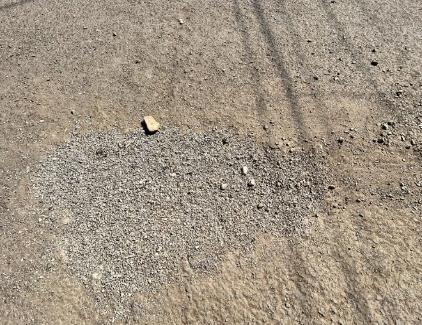
HDPE plate is positioned over the aggregates and heated with a blowtorch equipped with a gas cylinder at 160°C to melt the plate as shown in Fig. 10. Heat the plate until a semi-solid condition is achieved. Spread heated aggregatesoverthemeltedsurface,andthenusearammer to ram the pothole thoroughly as shown in Fig. 11. Spread somestonedustonthesurfacethathasbeenmended,then lettrafficpassoverthepotholeasdemonstratedinFig.12.
International Research Journal of Engineering and Technology (IRJET) e-ISSN:2395-0056
Volume: 11 Issue: 07 | July 2024 www.irjet.net p-ISSN:2395-0072
4. Result and discussion
4.1.Observationsontheconditionoftherepairedpothole
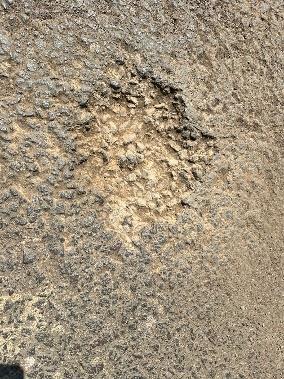
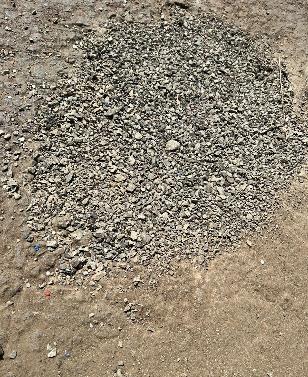
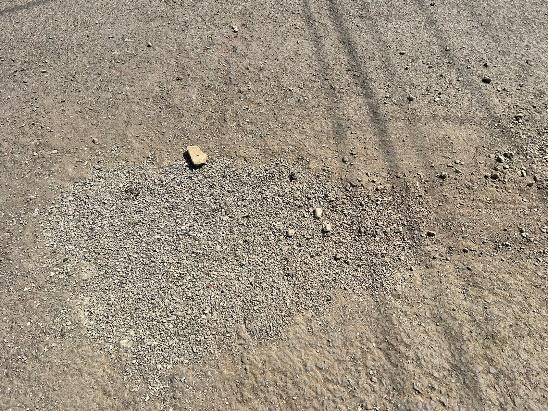
1. Theobservedpotholesweresubjectedtoavarietyof traffic loads over the course of the 16-week period, including both light and heavy vehicles. Additionally, the potholesweresubjectedtoarangeofclimaticchanges,such as the cold of winter and the heat of summer, allowing researcherstoassesshow well the repaired potholescould tolerate temperature changes, moisture intrusion, and thermalstress.Additionally,thepotholesawaweekofrain.
2. The restored component has shown extraordinary stability and resilience over the course of this 16-week monitoring period, with no appreciable alterations or deteriorations being noted. Reaffirming the efficiency and
long-lasting nature of the pothole repair procedure, the repaired area has amazing resilience, withstanding the test oftime,variousweatherconditions,andvariedtrafficloads withoutanydiscerniblesymptomsofdistress.
3. Basedontheobservation,ithasbeenprovenwithout a reasonable doubt that pothole repairs made with the use of HDPE plates have a far higher level of wear and tear resistance and a longer lifespan than potholes filled with bitumen.
4. Compared to bitumen and aggregate, HDPE and aggregatehaveastrongerconnection.
International Research Journal of Engineering and Technology (IRJET) e-ISSN:2395-0056
Volume: 11 Issue: 07 | July 2024 www.irjet.net p-ISSN:2395-0072
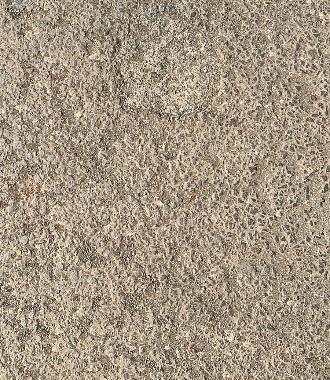
Fig-6: After112Days-28thMay2023
4.2 Cost comparison
This section studies the cost comparison between Conventional Method & the method implemented by using HDPEmaterial.
1. CostComparisonbetweenBitumen&HDPEmaterial:
i. CostofBitumen–INR72/kg.
ii. CostofHDPEmaterial–INR30/kg.
As per, Conventional method and method implemented using HDPE material on site, material requiredfor1m.X1m.X0.05m.ofonePotholeis,
i. Bitumen-0.5kg.
ii. HDPEmaterial-0.2kg
2. CostofBitumenandHDPEforrepairingonepothole,
i. WithBitumen–INR36
ii. WithHDPE–INR6
4.3. Discussion
1. In addition to ensuring safety, using high-density polyethylene (HDPE) material as a sustainable alternative for filling potholes supports an environmentally beneficial methodofwastedisposal.
2. Theentirecostsrelatedtoroadrepaircanbegreatly decreased, resulting in significant financial savings, by replacing bitumen with high-density polyethylene (HDPE) material,aninventiveandcost-effectivealternative.
3. By adopting this effective method of road repair, significant advantages can be realized, such as a notable decrease in the amount of time needed to fill potholes, a decreased demand for labor, and a decreased need for expensive equipment, streamlining the process of general roadmaintenance.
4. By utilizing the newly created high-density polyethylene (HDPE) plate, pothole filling can be done more quickly, and the repaired potholes can be put back intoservicemorequickly,leadingtobetterroadconditions andgreateroveralltransportationefficiency.
5. This method of pothole filling has a number of outstanding advantages over more conventional ones, including its adaptability to be carried out successfully even during the rainy season. By utilizing the characteristics of the produced HDPE plate, road maintenance personnel may effectively repair potholes no matter the weather, providing ongoing road maintenance and reducing commuter aggravation all year long, regardlessofbadweatherpatterns.
1. Compared to bitumen-filled potholes, those fixed using HDPE can resist heavy traffic and exhibit greater longevity.
2. Asignificantdecreaseintheresourcesandequipment neededfrom the beginning stageisaccomplished byusing HDPEpelletsinsteadofbitumen.
3. The updated approach successfully does away with the need for a hot mix facility. As a result, substantial cost reductionsaremadefromtheverybeginning.
4. Choosingbitumenrequiresa drawn-outandcomplex process before it can be used on site, which also necessitates ongoing heating. While using HDPE pellets offers a more streamlined method because only when fillingthepotholedothepelletsneedtobeheated.
5. Becausethismethodcanresistwetweather,itcanbe usedtopatchpotholesduringtherainyseason.
6. HDPEplatemanufacturing makesstorageandtransit easier.Itcanbeeffectivelytransportedandstoredbecause toitsconsistentshape.
7. Incomparison,bitumencosts72rupeesperkilogram, whereas HDPE costs only 30 rupees per kilogram, making theusageofHDPEeconomical.
8. By using this novel method, it is possible to totally replace bitumenwithHDPE throughoutthe potholerepair procedure.
9. Kolhapur City can easily use this extremely efficient and environmentally friendly technology, which will undoubtedly help reduce plastic waste and improve the standardofroadrepair.
1. Futurestudiescanbedonetoseewhetheradditional plasticpolymerscanbeusedtopatchpotholes.
International Research Journal of Engineering and Technology (IRJET) e-ISSN:2395-0056
Volume: 11 Issue: 07 | July 2024 www.irjet.net p-ISSN:2395-0072
2. Research can be done on a substitute substance for the stone aggregate. The durability and sustainability of pothole repairs can be improved through the use of recycledmaterials.
3. Todrasticallyshortenthetime,ittakesfortheHDPE to melt during the pothole repair procedure, an ignitable material can be inserted into the HDPE plate. Replacement oftheblowtorchassemblyformeltingtheHDPE,whichwill alleviatetheneedofcarryingthegascylinder.
Acknowledgments
We extend heartfelt appreciation to the Department of Civil Engineering, D. Y. Patil College of Engineering & Technology for providing the experimental test equipment requiredforthisstudy.SpecialthankstoInfinityPlasticfor arranging the plastic waste. Special recognition to Utkarsh Parale for his invaluable insights during the paper's composition, writing review and editing. Their expertise andsupporthavesignificantlyenrichedthisendeavor.
References
[1] Mathrubhumi (2023). 1481 deaths, 3103 injured: Pothole-related accidents on the rise, Mathrubhumi, 03 January 2023. Accessed March 2023, from, https://english.mathrubhumi.com/news/kerala/1-481dead-3-103-injured-union-govt-report-shows-potholerelated-accidents-on-increase-1.8187782
[2] United Nations Development Programme, India (2023). Plastic Waste Management. Accessed 7March2023,from https://www.undp.org/india/projects/plastic-wastemanagement
[3] Sarada, T., & Sreeja, G. (2018). An experimental study on plastic blended bituminous concrete mix roads. International Journal of Engineering & Technology, 7(3.35),37.https://doi.org/10.14419/ijet.v7i3.35.29144
[4] Sharma, M., Trivedi, A. S., & Sahu, R. (2016). A Review of Various Methods of Road Construction Using Waste Materials. International Journal of Civil Engineering Research, 7(2), 125–133. https://doi.org/http://dx.doi.org/10.13140/RG.2.2.17623. 27044
[5] Chhabra, R. S., & Marik, S. (2014). A Review LiteratureonTheUseofWastePlasticsandWasteRubber Tyres in Pavement. International Journal of Core Engineering and Management (iJCEM), 1(1), 1-5. https://www.hindex.org/2014/p442.pdf
[6] Vasudevan, R., Velkennedy, R., Ramalinga Chandra Sekar,A.,&Sundarakannan,B.(2010).UtilizationofWaste Polymers for Flexible Pavement and Easy Disposal of Waste Polymers. International Journal of Pavement Research and Technology, 3(1), 34–42. ISSN 1997-1400. https://doi.org/http://www.ijprt.org.tw/reader/pdf.php?i d=86
[7] Kulkarni, S. J. (2015). A Review on Studies and Research on Use of Plastic Waste. International Journal of Research and Review, 2(11), 692–696. https://doi.org/https://www.ijrrjournal.com/IJRR_Vol.2_I ssue11_Nov2015/IJRR0118.pdf
[8] Guidelines on use of Plastic Waste in Road Construction (Provisional) Guideline no. RDSO/WKS/2019/1, May 2019. Research Design and Standards Organization, Lucknow. https://rdso.indianrailways.gov.in/works/uploads/File/W KS-G-16.pdf