

ParkEase: Making urban parking effortless with IoT integration
Devyani Nalgundwar1 , Tannu Kumari2
Students of SOB, MIT
WPU
PUNE
Abstract
Nowadays the exponential rise in automobiles brought about by urbanization has made parking management in urban areas more difficult. Traditional parking systems frequently have trouble making effective use of available parking spaces, which leads to traffic jams, lost time, and more pollution. One solution to these problems is the use of Internet of Things (IoT) technology in parking management systems. This paper aims to determine the architecture, use, and advantages of an Internet of Thingsbased smart parking management system. This solution increases user pleasure, encourages eco-friendly urban living, and maximizes the effectiveness of parking space allocation by utilizing IoT sensors, advanced data processing, andan Androidapplication.
These systems will use an Android application and the Internet of Things to automate the parking and departure of automobiles. This IoT system will reduce human work and users will find parking more easily and securely. It will use number plates to verify the identity of cars and reserve parking spots appropriately. It would be suitable for all kinds ofparking lots.
Users may locate parking lots in their area, check the availability of spaces in real time, make payments, and reserve parking spaces with the aid of the Android app. Data transfer will be managed by Raspberry Pi devices, which will oversee the parking lots. To extract car information and distribute parking places, they will collect data from sensors and cameras. The majority of the hardware in the system consists of Raspberry Pi 3, USB cameras, IR sensors, magnetic sensors, and ultrasonic sensors. Additionally, it makes use of databases and Androidapps.
Keywords: IoT, Sensors, Raspberry Pi, Android, USB Cameras, IR sensors
Introduction
The lack of parking spaces in today’s cities is a huge drawback that has been worsened by the ongoing urbanization and growth without a corresponding increaseinparkinglots.Thisistoughfordriversbecause inadequate parking facilities cannot keep up with the population growth rate, resulting causing traffic jams, wasted time, and annoyed people. With this context in mind, connected devices are becoming increasingly
popular and are thus expected to simplify parking management.
This study explores IoT-based smart parking managementsystemsintheIndianContinentalPlatform. Nowadays, it is necessary to find some way of reducing traffic congestion and providing adequate solutions to address the problems of finding available space where vehicles can be parked due to the significant expansion of towns across India. Through Internet of Things technology, this problem can be addressed. The varied waysinwhichitcanassistinefficientparking,lesstraffic congestion within cities, and easier movements around them are highlighted here. In this paper, we focus on changing IOT technology in traffic systems that can completely alter how the parking system functions withinIndiancities.
IOT-enabled traffic management system has several functionalities with the aim of ensuring efficient movement of vehicles and improved safety. One such feature is giving drivers live directions, changing traffic lights according to current conditions, and monitoring vehicle presence using sensors. The result of this application is the efficiency of the traffic management system. With these kinds of systems, we can determine which parking spaces are occupied and which ones are not thus making it easier for motorists to find an available spot. For example, Bangalore, Delhi, and Mumbai cities are great examples where IoT applications have found success in traffic management. This paper will focus on how incorporating IOT technology can help reduce traffic congestion and enhance overall mobility and transportationwithinurbanareas.
However, despite its benefits, many challenges can be pointedout.TheseIOTsystemsneedtofocusonpeople’s privacy to be protected and safe. They should also ensure that the data about available parking lots and vehicle movements collected by them should be treated in such a way as not to violate the privacy of other people. Therefore, they must have clear policies and guidelines for recording, storing, and sharing information to safeguard users' trust. The second challenge could be that it needs to be accessible by everyone in terms of socioeconomic status and also affordability of technology and digital literacy skills. Inconclusion,thisstudytitled"ParkEase:Making Urban ParkingEffortlesswithIoTIntegration"seekstounravel
International Research Journal of Engineering and Technology (IRJET) e-ISSN:2395-0056
Volume: 11 Issue: 07 | July 2024 www.irjet.net p-ISSN:2395-0072
how IOT technology can significantly improve parking management in Indian cities. By examining how sensors are used and various IoT applications are pegged on traffic monitoring; the paper indicates how IoT integration has a potential for reducing congestion, enhancingsafetyaswellasmakingefficientuseofurban infrastructure.
Literature Review
This paper aims to discuss how IoT technology can help to solve parking problems in cities, especially in India, where parking issues are becoming severe due to rapid urbanization.
However, the available literature does not completely investigate the influence of IoT in Indian parking management. It overlooks critical issues such as data security and infrastructure readiness. This leaves a vacuum in knowing how IoT may successfully handle parkingissuesinIndiancities.
Finally, the paper addresses this gap by proposing a holistic solution targeted to Indian cities, emphasizing IoT'spotentialtochangeparkingmanagementandbuild smarter,moresustainableurbansettings.
There are various pieces of literature available that addresssmartparkingasitisofgreatimportance.
(Ashutosh Kumar Singh1, Apr 2019) [1]This article presentsaSmartParkingSystemthatusesIoT.Itusesan Android app, a Raspberry Pi, and sensors to manage parking and provide real-time availability updates. Through the use of image recognition and car number plate verification, users may book appointments and makepaymentsviatheapp. Thereportdescribessensor installation, Raspberry Pi integration, and Android interface with an emphasis on decreased emissions and congestion.
(J. Cynthia, November 2018) [2] This paper discusses a mobile app for users and parking spot owners that is introduced together with an Internet of Things (IoT)basedSmartParkingSystem.Itallowsuserstobeguided to open spots, reserve parking spaces, and authenticate themselves via RFID tags. Using infrared sensors, the system locates available parking spots and uses WiFi to transfer data to the smartphone app. Along with descriptions of the system's modules, architecture, and implementation, it offers suggestions for future developmentsandpossibleadvantages.
Methodology
Thesystemwillbeimplementedinthreemodules:-

SensorModule
Raspberry-pimodule
Androidmodule
Sensor Module: The sensor plays a crucial role in the functioning of a smart parking management system. It enables real-time monitoring of parking space availability, reservation management, and decisionmakingaccordingtothedatacollected.Differenttypesof sensorsusedare:-
Ultrasonic Sensor:- [3]Ultrasonicsensorsarethemost importantcomponentsinaparkingsystem,astheyallow drivers to locate vacant spaces in parking areas more quickly,avoidingunnecessarystrugglefordrivers.These sensorsradiatehigh-frequencysoundwavesbeyondthe human hearing range and measure the time taken by these waves to bounce back from nearby objects. This bounce-back time helps to calculate the distance to the objectaccurately.Thesesensorsareoperatedwithinthe frequencyrangeof20kHzto200kHz.Itispoweredbya transducer that helps convert electrical energy into ultrasonicwaves.

Figure 1: Modules
Figure 2: ultrasonicsensor[4]
International Research Journal of Engineering and Technology (IRJET) e-ISSN:2395-0056
Volume: 11 Issue: 07 | July 2024 www.irjet.net p-ISSN:2395-0072
It uses a method called time-of-flight measurement, where ultrasonic sensors calculate the distance by the time travel duration of sound waves to and from an object. Ultrasonic sensors provide real-time data based onthedetecteddistance,andtheyalsoofferbothanalog and digital outputs. Ultrasonic sensors are not only used in parking systems but are also included in various areas such as robotics, automation, and manymore.
Infrared Sensor:- [5]Infrared sensors are like heat detectors used in smart parking systems. They work by sensing the heat emitted by objects, such as vehicles. These sensors are mostly installed above the parking spacesorintegratedintoparkingspacessothattheycan cover the parking area more effectively. When a vehicle enters or exits a parking space it interrupts the infrared radiations which are detected by the sensor, that indicates the occupancy of the parking space. These sensors are very crucial in smart parking solutions as they detect accurately the presence of vehicles and enable efficient management of parking spaces worldwide.

Figure 3: Infraredsensors[6]
Therearetwomaintypes:-
i. Passiveinfraredsensors
ii. Activeinfraredsensors
i.Passive Infrared Sensors:-Passive infrared sensors are used to detect heat levels within their view. It always blocks the heat causing the sensor to detect occupancy, wheneveravehicleentersintothedetectionzone.These sensors are just like detecting energy and notice the change in heat whenever a car or person enters a parking space. They can get confused by things like rain and snow but are great at spotting activity. They work well inside but struggle outside, usually, they are placed underthegroundorceiling.
ii. Active infrared sensors:- Active infrared sensors are usedtoradiateheatandmeasurehowitbouncesback.If ever a vehicle blocks the bounces back and they know that the parking space is already occupied. They create
their heat and check always how it bounces back. Usually,theyworkbestindoors.
Camera-Based Sensors:- Camera-based sensors use cameras that are installed inside the vehicles to provide visual assistance when parking or squeezing into tight spaces. This system provides real-time footage of the available vehicles in the surroundings on a dashboard system inside the system. They provide features like parking guidelines, that help drivers to judge the distanceandalignmentwithobstacles.
Mostofthetimecamerasareputonthebackofthecars but in some cars, cameras are also on the front or sides too. whenever the driver puts the car in reverse the camerasensorsstartworkingandshowwhat's

behind the car. Some advanced system also offers differentanglesthatcanshowyoueverythingaroundthe car and make the parking easier no matter how the complexsituationis.
Raspberry Pi:- Consider the Raspberry Pi parking system as a helpful buddy in your car. It uses ultrasonic sensors that tell you if there is any obstacle around you or anything nearby you. Mostly these sensors are fitted on the bumpers of cars that emit high-frequency sound waves. Whenever these sound waves hit any obstacle, they bounce back like echos and the sensor catches them. To make this algorithm work we connect the sensorstoRaspberryPiusingwires.Wecanthinkofitas plugging them into the brain of the system. In short, we can say that Raspberry Pi is a small computer that controlseverything.
Figure 4: CameraBasedsensors[7]
Volume: 11 Issue: 07 | July 2024 www.irjet.net

5: RaspberryPiSensors[8]
The next part is programming where we write code usually in Python to tell the Raspberry Pi how to talk to the sensors. In simple we can say that it gives instructions using Python language. The program tells the sensors to send the sound waves and to measure how much time it takes to bounce back fromtheobjectsthatarepresentaroundthecar.On that basis, it also calculates how far they are present
OncetheRaspberryPicalculatesthedistanceitcan show this distance inside the car on the screen, so the driver knows how close they are to hitting something. It can also make alarms go off- like beepingsoundsorflashinglights,ifthecargetstoo close to that object. It warns the driver to stop. Lastly to run all these Raspberry needs some power to dotheirjobwithoutanyhiccups.
Magnetic Sensor:- [9]In a smart parking system magnetic sensor helps to identify the presence and absence of vehicles in the parking area. It works by identifying the alterations in the magnetic field Because of the presence of vehicles in parking areas. These variations are then converted into electrical signals to find out if there is space available or not to park the vehicle. Different sensors like Hall effect sensors, magneto-resistive sensors, etc are the common types of magneticsensorsthatuseuniqueprinciplesforworking.
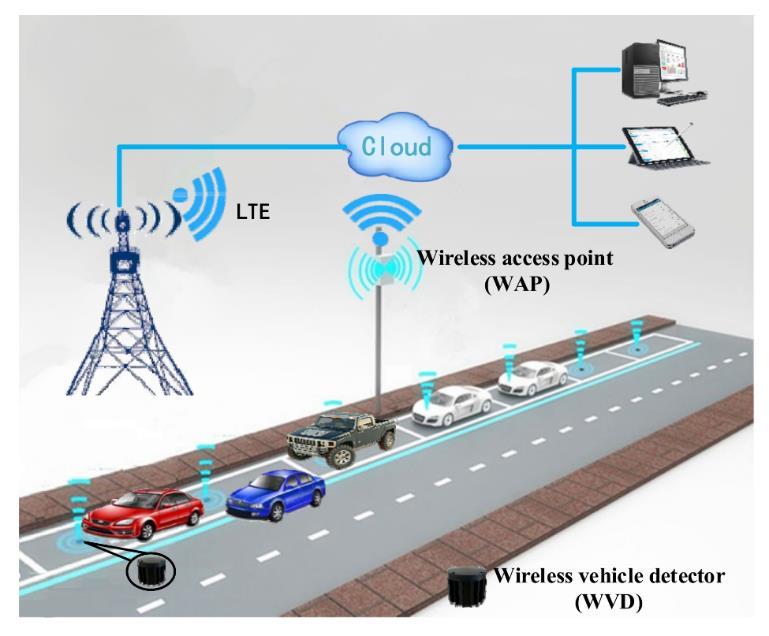
Magneticsensorsaremostlyinstalledunderthesurface ofparkingspaces.Thesesensorsaremostlynotvisibleto the drivers but it covers the entire parking area very efficiently. When a vehicle is parked over the sensors it disturbs the magnetic field then it leads to a change in themagneticfluxofdensity.
Then this disturbance is effectively detected by the sensorsthatindicatetheavailableareaforparkinginthe parking space. The detection range of magnetic sensors is limited to the proximity of sensors, i.e. within a few centimeterstoameter.Thesesensorsarenotaffectedby different weather conditions which makes them more suitableforoutdoorapplications.
Android Module:-

AndroidmoduleconsistsofcreatinganAndroidappfor parking stations that focus on user comfort and effortlessworking.Theuserinterface(UI)shouldbeeasy touseandnavigate.Itshouldinvolvefeatureslikeamap for showing nearby parking stations, and filters for decreasingthesearchresultsbasedondistance,whether International Research Journal of Engineering and Technology (IRJET) e-ISSN:2395-0056
Figure
Figure 6: Magneticsensors[10]
Figure 7: AndroidModule[11]
International Research Journal of Engineering and Technology (IRJET) e-ISSN:2395-0056
Volume: 11 Issue: 07 | July 2024 www.irjet.net p-ISSN:2395-0072
thespaceisavailableornot,andcost.Includingservices suchasGPS,whichensurestheexactlocationoftheuser and displays all the nearby parking lots using APIs such as Google Maps. keeping the important parking informationinadatabasegiveseasyaccesstodetailslike location, capacity, availability, and cost. Supporting prebooking functions and having a safe payment option for paid services also makes it easier for users to book parkingspotsbeforethetime.
Implications:-

Figure 8: SmartParkingSystem[12]
[13]Smart parking technology has been gradually implemented in various cities across India to address parking congestion and improve urban mobility. Here are examples of cities in India where smart parking solutions have been deployed along with details of the technologyused:
Pune:-
Sensors Used: Pune has implemented smart parking solutions utilizing ultrasonic sensors, magnetic sensors, andmobileapp-basedpaymentsystems.
In Pune people have introduced a smart parking system tomakeparkingeasierandlessstressful.Theyhaveused specialsensorsinparkingareasof JMRoadandFCRoad. These sensors help to detect if a car is parked or not in theparkingarea.Ituses anultrasonicsensorthatworks likesonarandhelpstosensethepresenceofavehicle.It alsousesamagneticsensorforparkingonthestreet.
Tomakethisprocessmoreefficient,theyhavecreateda smartphone application that tells drivers which parking spaces are available in real-time. So the drivers can easily check for parking spots before heading to the location. Also, they do not need to worry about carrying cash as they can easily pay for parking through the app. Thissmartparkingsystemhelpstomakeparkingeasier, reducestrafficcongestion,andsavestimeforeveryone.
Hyderabad:-
Hyderabad:
Sensors Used: Hyderabad has implemented smart parking technology featuring ultrasonic sensors, magnetic sensors, and mobile app-based payment systems.
In Hyderabad, people have introduced a smart parking system to make parking easier and less stressful. They have used special sensors in parking areas of Banjara HillsandHITECcity.Thesesensorshelptodetectifacar isparkedornotintheparkingarea.Itusesanultrasonic sensor that works like sonar and helps to sense the presence of a vehicle. also uses magnetic sensors for parkingonthestreet.
Tomakethisprocessmoreefficient,theyhavecreateda smartphone application that tells drivers which parking spaces are available in real-time. So the drivers can easily check for parking spots before heading to the location. Also, they do not need to worry about carrying cash as they can easily pay for parking through the app. Thissmartparkingsystemhelpstomakeparkingeasier, reducestrafficcongestion,andsavestimeforeveryone.
Challenges:
putting into effect IoT-enabled parking systems has somechallengeswhicharementionedbelow:
1. sensitive information: Sensitive information This includes securing data and preventing access to sensitive information such as vehicle numbersandpaymentinformation.
2. CybersecurityRisks:Cybersecurityrisksinvolve protecting parking sensors and communication network sensors against viruses, cyber-attacks, andunverifiedaccess
3. Interoperability and vendor lock-in: this involves taking care of the compatibility problems between different companies or vendors' systems. this is done via communication, collaboration with different systems and platforms, and freely available solutions.
4. Infrastructure and connectivity: for the sensors to work efficiently reliable internet connection
International Research Journal of Engineering and Technology (IRJET) e-ISSN:2395-0056
Volume: 11 Issue: 07 | July 2024 www.irjet.net p-ISSN:2395-0072
isamustanditalsoneedsastablepowersupply tofunctionproperly,especiallyinruralareas.
5. PhysicalDamageandEnvironmentalChallenges: outdoor parking sensors need to be designed in such a way that they can handle harsh weather conditions and possible physical damage. This needsthecombinationoftoughdesignideasand strongsafetymeasures.
6. Scalability and Maintenance: The increasing number of IoT devices and parking spaces makes managing and scalability more challenging. Handling this requires centralized managementtoolsandregularmaintenance.
Future Scope:-
1. IntegrationWithPublicTransport:-
Parking systems can work together with buses, trains, or other public transportation. This makes it easier to plan our trip with the help of one application. It helps to find a parking spot nearthepublicspotwhere wecaneasilyswitch withbusortrain.
2. RealTimeParkingUpdates:-
We can check the empty parking spaces available for parking using the mobile application before heading to the location. It uses different sensors to sense the available spotsinparkinglots.
3. EnvironmentMonitoring:-
Some parking system helps us to check the air quality and temperature around them. It helps cities to keep track of the pollution level and helpstomakechangestokeeptheaircleaner.
4. DigitalPayments:-
We can pay for parking space using our phone or digital wallet instead of using cash. This makesiteasierforeveryoneaswedon’tneedto carrycashorcoinstopaytheparkingfees.
5. SmartCityInitiatives:-
These are the projects that use new and innovativetechnologiestomakecitiesbetterfor everyone. Smart parking is just one part of making cities more efficient and enjoyable for people to live in. It is all about using different technologies to solve problems and improve people'slives
Conclusion:-
The potential of IoT in Indian cities is tremendous. By using IoT technologies India can tackle and solve all the challengesrelatedtourbanizationandtrafficcongestion. IoT systems mostly rely on sensors that are spread throughoutthewholecity.Itprovidesthereal-timedata tomakemoreinformeddecisions.Thesesensorshelpto
upgrade the parking systems, enhance the traffic flow, andreducepollution.
These sensors help to monitor environmental factors like air quality and pollution control. In places like New Delhi, these sensors help to track pollution levels guide the highly polluted areas, and keep informed to all citizens.
In public transportation, IoT is used to make things smootherandeasier.Itintegratesthemetrostationsand bus terminals to provide real-time updates on parking areas.Thismakestravelingeasierandsavestime.
In conclusion, we can say that IoT offers a promising pathtowardssmarterandmoresustainableIndiancities. But there is one thing that we need to take care is making sure our data is safe and all the systems can work together efficiently. Once we do that, IoT can lead to efficient traffic management, enhanced safety, and improvedurbanquality.
References:-
[1] Ashutosh Kumar Singh1, Mohit Prakash2, Shailesh Yadav3,Asst.Prof.PavanSharma4,(2019,April),“Smart ParkingSystemUsingIoT”, https://www.irjet.net/archives/V6/i4/IRJET-V6I4635.pdf
[2] J. Cynthia, C. Bharathi Priya, P. A. Gopinath, (2018, November), “IOT-based Smart Parking Management System”, https://www.ijrte.org/wpcontent/uploads/papers/v7i4s/E1996017519.pdf
[3] https://parksol.lt/solutions/ultrasonic-sensor
https://product.tdk.com/en/techlibrary/applicationnot e/park-assist_sensor-disk_ultrasonic_mlcc.html
[4]Figure https://images.app.goo.gl/v4Kx6QwoNwCKguAFA
[5]
https://ietresearch.onlinelibrary.wiley.com/doi/10.104 9/iet-its.2017.0406
[6]Figure3:https://images.app.goo.gl/NAFwmgnkqPD4Y 3Jr8
[7]Figure4:
https://images.app.goo.gl/Bkxdsi8HyVDSWiyw8
[8]Figure5:
https://images.app.goo.gl/c54qcVKoeCzDaQqd6
International Research Journal of Engineering and Technology (IRJET) e-ISSN:2395-0056
Volume: 11 Issue: 07 | July 2024 www.irjet.net p-ISSN:2395-0072
[9] https://parksol.lt/solutions/wireless-magneticparking-sensor
[10]Figure6:
https://images.app.goo.gl/JFmpnqCJ2ufYjCL96
[11]Figure7:
https://images.app.goo.gl/RhG6Ggsymdtmrz1UA
[12]Figure8:
https://images.app.goo.gl/5YErrwPtbrv5QHFF8
[13] https://parkplus.io/blog/cars/smart-parkingsolution