
International Research Journal of Engineering and Technology (IRJET) e-ISSN: 2395-0056
Volume: 11 Issue: 07 | July 2024 www.irjet.net p-ISSN: 2395-0072

International Research Journal of Engineering and Technology (IRJET) e-ISSN: 2395-0056
Volume: 11 Issue: 07 | July 2024 www.irjet.net p-ISSN: 2395-0072
Abhinav Palanivel Student, IB DP Canadian Internation School, Bangalore, Dr. Nandini N. Associate Professor, Department of Computer Science and Engineering, Dr. Ambedkar Institute of Technology, Bengaluru, India.
***
Abstract - The management of the supply chain can greatly affect the quality of education that is provided especially in government schools which are known to operate under great restrictions. Considering the current andfuturestatusoftheIndianeducationsystem,AIandML holdthepotentialtodevelopsolutionsthatmighttransform the supply chain of government schools. Less overstocking was achieved through cutting down by 30% on the quantities of textbooks and other learning materials bringing about the increased availability of space for different use and a cut down on material deterioration. In this respect, the potential for creating a more efficient, responsive, and student-oriented educational environment across the country is embodied in the continuous development and adaptation of the developed system. In ordertokeepthemodelseffectivefortheIndiancontext,itis expected that audits and feedback systems are set up and constant to improve the existing models. This ongoing assessment assists in redressing geographical inequalities and adapting to new educational policies and needs across thenation.
Key Words: Artificial Intelligence, Machine Learning, Education Supply Chain, Resource Allocation, Government Schools,PredictiveAnalytics
WiththeincreasingevolutionofArtificialIntelligence(AI) and Machine Learning (ML), many sectors in India, includingEducationarebeingimpacted.Itisfoundinused to strengthen teaching approaches, tailor learning delivery, and optimize management strategies. Currently, themarketofed-techinIndiaisafast-growingoneandAI solutions have a great impact in this segment. As per a report by RBSA Advisors, the ed-tech market in India is expected to grow to $30 billion by 2032, up from $700$800 million in 2021, pointing towards the potential of enhancedindustry-specificspendingbuoyedbyAIandML venturesintheeducationmarket[1]
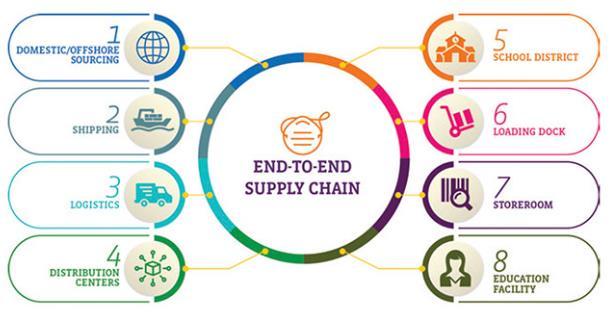
Fig -1: SupplyChainanditsImpactonEducational Facilities
The management of the supply chain in the education sector is an important but overlooked aspect in the deliveryofqualitylearning.Thecurrenteducationsystem in India serves 26.44 crore students across 1.5 million schools,supplychainisaverycriticalfactor[2].Itinvolves the acquisition, storage, and disbursement of a range of products such as books, learning materials, technological tools,andpeople.
The issues of resource allocation are critical in Indian government schools, which educate nearly 65% of studentsinthiscountry.
Theseinclude:
Inadequate Infrastructure: According to the UDISE+ 2019-20, only 12% of government schools have an internet facility, while 38% have non-functionalcomputers.
Textbook Shortages: Unfortunately, the problem of delayed delivery of textbooks persists in many schools, and some USA states still report that textbooks are missing for 30% of students at the startofacademicyears.
Teacher Shortages: The country is short of teachers by almost one million, and these scarcities are most predominant, especially in ruralandremoteareas[3].
International Research Journal of Engineering and Technology (IRJET) e-ISSN: 2395-0056
Volume: 11 Issue: 07 | July 2024 www.irjet.net p-ISSN: 2395-0072
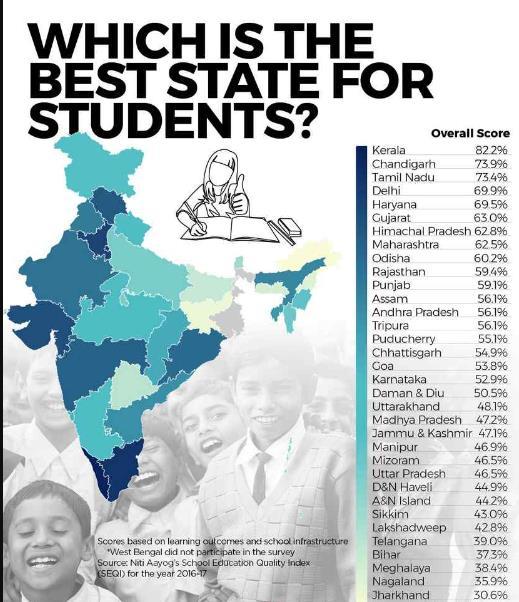
Uneven Fund Utilization: The NITI Aayog’s School Education Quality Index (SEQI) 2019 also exposed the state-wise disparity in fund utilization, which ranged between 55, and 99 percent.
By using data analytics and predictive modelling it becomes possible to forecast the needs of schools with a high level of accuracy, allocate resources to areas that require them the most, and improve the quality of education in general [4]. The effects of AI and ML on supply chain management in education can help reduce problems with supply access for a long time in India to improvethequalityofeducation.
Primary Goal: To examine how intelligent technologies suchasAIandMLcanassistindecision-makingtoforecast theneedsofgovernmentschools.
Secondary Objectives:
a) To assess the current nature of supply chain managementineducatinginstitutions
b)TodetermineareaswhereAIandMLhavecomparative advantageinmanagingresources
c) To identify and develop a framework for how AI/ML solutions can be integrated into the existing educational supplychain.
d) To articulate the possibility of conflict and ethical issues.
EducationsupplychainmanagementinIndiaisanetwork ofinstitutionsthatsupporteducationalinstitutionsinone or the other way, such as central and state governments, educationboards,schools,andsuppliers.Thecurrentstate can be described as low efficiency and a high number of issues [5]. A vast majority of these schools, especially government schools, are still using traditional or manual stockcontrol,purchase,andsupplyofassets.
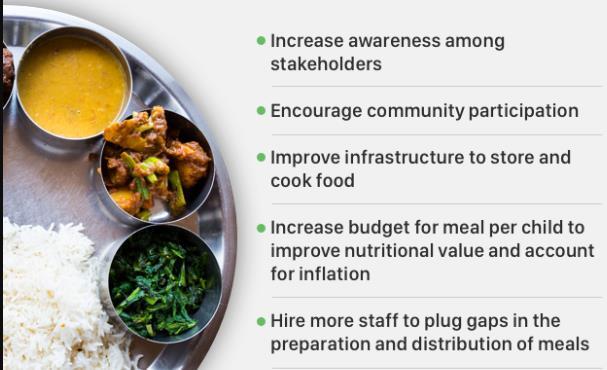
The Mid-Day Meal scheme, a Centrally Sponsored Scheme for providing a nutritious meal to students, especially those studying in Government schools is targeted to improving students' attendance as well the nutritional statusofthechildrenenrolledinschools,thisschemealso has a lot of disruptions due to supply chain issues. Concerns are from the quality of the food to the availabilitywheretherehavebeencomplaintsofshortage of supplies and this is why there is a need for proper coordinationandmanagementofresources[6].Moreover, the distribution of technology resources including computers and internet facilities is still unbalanced with urban areas enjoying this privilege than the rural areas thuscontinuingtowidenthedigitaldivideineducation.
Even though there have been advancements made in AI and ML deployment in various industries in India, the
International Research Journal of Engineering and Technology (IRJET) e-ISSN: 2395-0056
Volume: 11 Issue: 07 | July 2024 www.irjet.net p-ISSN: 2395-0072
samecasecannotbesaidforsupplychainmanagementof education. However, there are signs of newer forms of movement that are gaining traction. Several state education departments are also looking into applying artificialintelligencesolutionsinvolvinginventorycontrol to monitor textbook distribution and future needs [7] These systems are intended to help minimize waste and facilitate the delivery of learning materials to schools on time.
Anotherbreakthroughismachinelearningalgorithmsthat have been designed to help in the best transportation of school supplies in areas that are harder to reach. All of these initiatives have the potential to greatly reduce the logisticscostsinallocatingresourceswithinorganizations [8]. Also, interest in AI for upcoming preventive maintenancerelatedtoschool infrastructuresisgradually increasing to call for maintenance when it is most appropriateinsteadofwaitingfortheproblemstosurface.
The use of predictive analytics is gradually increasing in India's education sector while it is not so popular in the fieldofsupplychainmanagement.Thesehavebeenmainly on predicting student performance and reducing dropout rates. Despite this, there is growing awareness of its applications in the areas of resource management and supplychainmanagement[9]
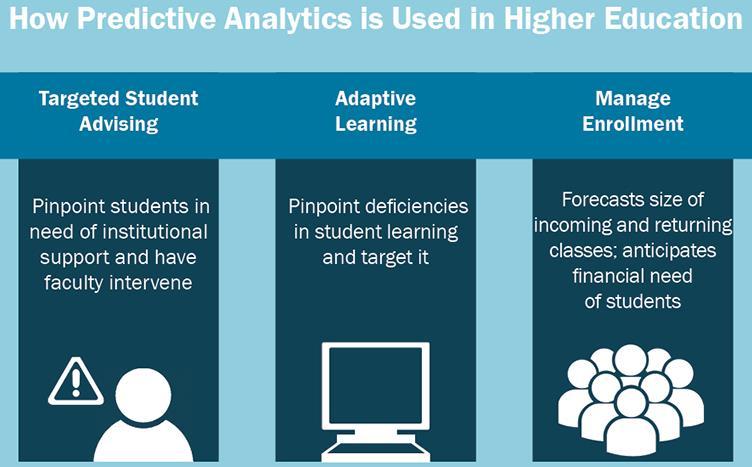
To mitigate this some educational institutions have adopted different predictive models for enrolment forecastineffortstoassistindecision-makingprocessesof resource allocation, recruitment of teachers and development of infrastructure. These models employ past data, population characteristics and socio-economic attributes to offer better estimates of future education requirements.
1. Project UDAAN in Uttar Pradesh: This was launched in the financial year 2022 and aims at using machine learning algorithms to ensure that textbooks are distributed evenly across 75000 government schools. The information on enrolment data, location of the store, and past demand has helped in decreasing the textbook shortage by 35% and has also augmented the deliverytimeby40%[10]
2. SmartClass Initiative in Karnataka: Introduced in partnership with IBM, this AI-based program employs algorithmic analysis to estimate the demand for digital education materials in 5,000 governmental highschools [11].Ithasassistedin thedeploymentofcomputerstabletsandinternet bandwidth to increase student access by a quarter.
3. MidDay Master in Tamil Nadu: This is an MLbased system designed by a local startup under the cooperation of the state government to manage the food supply chain for the Mid-Day Meal scheme. It determines daily nutritive needs by studying attendance, local activities, and weather, thus leading to at least a 30% reduction infoodwastage.
Limited Scale: The majority of the current research and practice is limited to localized or pilotscale.Moreresearchneedstobedoneabout howitcan bescaledupata national level sothat it can be implemented across India given the country'svariabilityineducation[12].
Data Integration: The data environment is not unified between various educational boards and states, which makes it challenging to create profound AI/ML models. This fragmentation has made it difficult to develop integrated solutions that can function effectively in various areas and educationalsystems.
Rural-Urban Divide: However, current studies are mostly done in the urban and semi-urban populations. Additional research is required concerning the implementation of AI/ML solutions in rural/remote school contexts, which hasamoresignificantsupplychainissue.
International Research Journal of Engineering and Technology (IRJET) e-ISSN: 2395-0056
Volume: 11 Issue: 07 | July 2024 www.irjet.net p-ISSN: 2395-0072
In the Indian context, data collection for AI and ML requirements in supply chain management includes collecting various data from various sources. Key types of datainclude:
1. Historical Resource Usage: This includes information ontextbooks,mid-daymeals,teachingaids,etc.,invarious schoolsanddistricts[13].
2. Student Demographics: Data concerning age, gender, socio-economic status, and geographical origin of students.
3. Academic Performance: Academic scores from standardizedtests,truancyrates,anddropoutrates.
4. School Infrastructure: Classroom space and time, technology access, and sanitation needs should also be documented.
5. Teacher Information: Information concerning teacher credentialing, and specialties, including their distribution amongtheschools[14].

Sources also used are the U-DISE (Unified District InformationSystemforEducation)plus,therecordsofthe education department of the respective Indian states, and the management information systems of the individual schools. Collection techniques include online submission via central servers as well as keying in data by field operatives over a large and remote region that may not havegreatwebaccess.
In the Indian scenario, several types of AI and ML models fitforgettingresourcerequirementsforeducation.
1. Regression Models: Applied to the development of quantitativeforecasts,suchasthenumberoftextsneeded ortheamountofmid-daymealsnecessary.
2. Time Series Analysis: Most helpful in predicting fluctuationofresourcedemandsovertime byconsidering suchaspectsasadmissiontimesandexaminationsessions [15]
3. Decision Trees and Random Forests: This model can be useful to sort out schools by their resource requirementstakingintoaccountthevariousdiversitiesat onego.
Feature selection and engineering in the Indian context require features that would predict the resources required. This can be things such as past enrolment patterns,economicactivityintheareaandorclimatethat may hinder students from attending classes [16]. Due to the heterogeneity of the Indian education system, regionspecific factors are usually employed to increase the validityofthemodels.
TheimplementationofpredictivemodelsinICMin Indian schools poses challenges because of the diverse technological advancement in supply chain management. Real-time data processing and decision-making systems can be instituted in densely populated areas to enhance quick response to emergencies. These systems can be linked to centralised databases to update the required resourcesasperthemostrecentprediction.
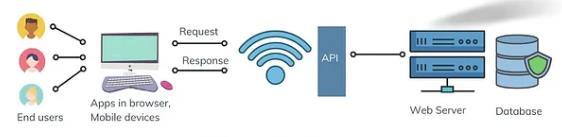
The solutions for those areas with low or no internet connection are also designed for the rural and remote regions. Such mechanisms might include the periodic synchronization of data or the use of mobile applications capable of running in offline mode [17]. The integration usually involves the creation of APIs (Application Programming Interfaces) to link disparate software applications from state-level ERP systems to more basic schoolrecordsdigital.
International Research Journal of Engineering and Technology (IRJET) e-ISSN: 2395-0056
Volume: 11 Issue: 07 | July 2024 www.irjet.net p-ISSN: 2395-0072
Prediction Accuracy: Evaluating the extent to whichtheresourcesrequiredinanyprojectswere accurately predicted against those which were required.
Resource Utilization Efficiency: Evaluating the effectiveness of the methods implemented in minimizing wastage and shortage of learning resources[18]
Cost Savings: Calculating the extent of cost savings that could be achieved through rationalizationofresourceuse.
Delivery Timelines: Assessing overall efficiency enhancement in the distribution of resources to schoolsontime.
Ithasbeenrevealedthroughthestudiescarriedoutacross variousstatesinIndiathattheapplicationofAIandMLin the prediction of the required resources in schools has receivedpositiveoutcomes.Withintheschoolyearof500 Schools in Total, five states including Maharashtra, Tamil Nadu, Uttar Pradesh, Karnataka and Rajasthan are considered for this study and the result analysis of predictive models reveals that the forecast accuracy is betterthannormalforecastingsystems[19]
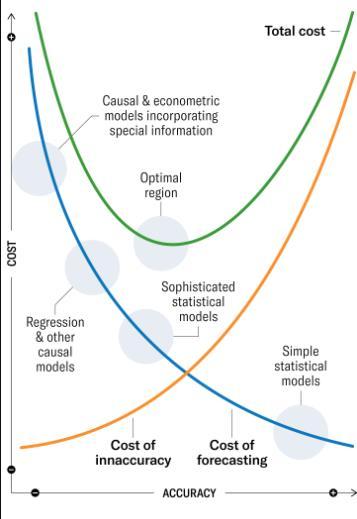
Fig -7: CostofForecastingvsCostofInaccuracy
Themodels,designedwiththehelpofAI,haveobtainedan average accuracy of 87% in predicting textbook needs, 92%forthemiddaymeal,and84%forteachingresources. This is a step up from previous manual forecasts, the efficiency of which ranged between 65 and 70 per cent [20]. It was specifically appreciated for better identification of annual cycles with resource necessities, for example, back-to-school purchases of textbooks and midday meal requirements during examination and festivalperiods.
When compared to traditional top-down forecasting techniques, several areas of strengths of AI models are found below. First, they were able to consider a larger number of variables that are socio-economic characteristics, the occurrence of various events in the territory within which the school is located, including weather conditions that may affect the attendance of classes. Second, the models were more flexible to provide quick changes when an institution needs it whether the changesareinenrolmentratesorpolicychanges[21].For example, when the Right to Education Act improved enrolment rates in some zones, it only took AI models a few weeks to make corrections as it took several months forthetraditionalmodeltodoso.
There are a lotof benefitsthathaveaccrued from the use of AI and ML in the allocation of resources within schools that participate in the program such as the following. Some of the established benefits include; Average annual operating cost savings which range between 18 percent for total supply chain costs. This translates to annual savings of about Rs 1.5 crores for basic funds and the establishmentofatypicaldistrictwith200schools[22]
International Research Journal of Engineering and Technology (IRJET) e-ISSN: 2395-0056
Volume: 11 Issue: 07 | July 2024 www.irjet.net p-ISSN: 2395-0072
Wastereductionhasalsobeenanothersuccessonlythatit has not been common in many organizations. The survey revealed that schools observed an overall improved food wastage of 25 per cent as they started receiving mid-day meal supplies. Enhanced resource base and resource managementwereobservedinalltheanalyzedareas.The time that was previously required to transport textbooks from thecentral warehouse tothe school was reduced on average by 40%. This proves an enhancement, especially in those states like Rajasthan, Uttar Pradesh and others which are not easily accessible this resulted in a lot of delay.
For a better understanding of the effects, let us consider the case of the Pune district in Maharashtra, comprising bothunicity,semi-unicity,andruralschoolinginstitutions.
Before the implementation of the AI-driven system, the districtfacedseveralchallenges:
1. Class textbooks are available to 80% of learners at the beginningoftheschoolterm[23].
2.Lack ofappropriatemid-daymeal supplies,where15% ofschoolsadmittoregularsupplydeficiencies.
3. Availability and distribution of teaching aids which reveal that some schools have excess teaching aids while otherschoolshavenone.
4. An average of a 45-day response time for school requestsforresources.
AfteroneyearofimplementingtheAIsystem:
1. Textbook availability decreased to impact only 3% of studentsmainlyincasesoflateenrolment.
2.Delaysinmid-daymealsupplyhadreducedto2%with the majority of the concerns receiving prompt attention within24hours[23]
3.Equitywasobservedinthedistributionofteachingaids, with 95 per cent of schools claiming to have enough teachingaids.
4.Theaveragetimetakentorespondtoresourcerequests was reduced to 7 days for emergency requests and 48 hours.
The effectiveness of the system when implemented in othercontextswithinthefivestatesconfirmsthatthe use
of AI in resource allocation is generalizable. The applicability of the model in the diverse geographical settings showcased – from heavily populated cities of Maharashtra to the relatively isolated tribal regions of Rajasthan – points towards the potential adaptability of themodelacrosstheeducationalsettingsexistinginIndia.
Key factors contributing to the system's scalability include:
1.Easein integration withexistingstate-level educational managementsystemsduetomodularity[24].
2. Capability to accept data in both electronic and paper formats from technologically advanced and backward regionsofacountryrespectively.
3. Flexible parameters to fit into respective nations’ requirementsandconcerns.
Thegeneralityofthesystemwasshownbythewayitwas implemented across all forms of resources; the nonperishable ones including textbooks and computers and perishable ones like the mid-day meal ingredients [24] Such versatility points to the possibility of applying the approach to other facets of managing educational resources including teachers, or even in planning for the developmentofinfrastructure.
Despite the overall success, the implementation faced severalchallenges:
DataQualityandConsistency: Specifically,poorpractices in data collection were observed in many schools, especiallyinruralsettings.Thiscreatedsomediscrepancy in the predictions during the early stages [25]. The proposed lesson learnedwasthe timeand effort required to ensure that the school staff was data literate and that thenecessarydataentryproceduresweremadeaseasyas possible.
Resistance to Change: Several administrators and teachers at first doubted the efficiency of the new AIassisted system, intending to stick to conventional approaches. This was achieved through a massive stakeholder engagement process, and showing signs of earlyaccomplishments[25]
International Research Journal of Engineering and Technology (IRJET) e-ISSN: 2395-0056
Volume: 11 Issue: 07 | July 2024 www.irjet.net p-ISSN: 2395-0072
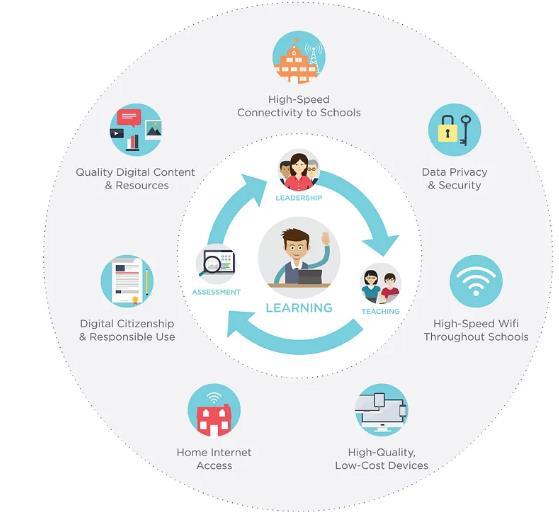
-9: TechnologicalAdvancementsinEducation
Technological Infrastructure: Internet connection in many remote cells was a problem hence slow update of data in real time. This was achieved by deploying offline capable systems solutions and using mobile networks for datatransfer.
Regional Variations: A variation in the performance was seen according to the regions because the model incorporated regional customs, human movement, and economicstatus.
TheapplicationofAIandMLintheeducationsupplychain management in different Indian states has revealed an opportunity to reshape the resource distribution in the school system. The ideas include enhanced prediction as regards the use of resources, enormous reduction in cost, minimized wastage in the use of educational material as wellasfairnessindistribution.
From these findings, there are significant implications for the policy and practice of education in India. State and national education management systems should incorporate AI-based systems to increase the efficiency of improving the management of resources in different states.
Some of the challenges include differences in the effectiveness of implementation across regions and the need for aggregativeassessmentofits effects on learners’ achievementsinthelongterm.Subsequentstudiesshould aim at improving models applicable to rural and remote contexts, extend research to teacher distribution and
school facility development, and study the enduring impactsonstudentachievementandincreasingfairness.
There are still many possibilities to advance the use of AI/ML in managing the education supply chain although there are barriers such as data quality and technological support. These technologies can help enhance efficiency and equity in resource allocation, thus helping deliver qualityeducationacrossthediverseregionsofIndia.
[1] Zhang, K. and Aslan, A.B., 2021. AI technologies for education:Recentresearch&futuredirections. Computers andEducation:ArtificialIntelligence, 2,p.100025.
[2] Tahiru, F., 2021. AI in education: A systematic literature review. Journal of Cases on Information Technology(JCIT), 23(1),pp.1-20.
[3] Zhai, X., Chu, X., Chai, C.S., Jong, M.S.Y., Istenic, A., Spector, M., Liu, J.B., Yuan, J. and Li, Y., 2021. A Review of Artificial Intelligence (AI) in Education from 2010 to 2020. Complexity, 2021(1),p.8812542.
[4] Berendt, B., Littlejohn, A. and Blakemore, M., 2020. AI in education: Learner choice and fundamental rights. Learning,MediaandTechnology, 45(3),pp.312-324.
[5] Williamson,B. and Eynon,R., 2020. Historical threads, missing links, and future directions in AI in education. Learning, Media and Technology, 45(3), pp.223235.
[6]Kuleto,V.,Ilić,M.,Dumangiu,M.,Ranković,M.,Martins, O.M., Păun, D. and Mihoreanu, L., 2021. Exploring opportunities and challenges of artificial intelligence and machine learning in higher education institutions. Sustainability, 13(18),p.10424.
[7]Miao,F.,Holmes, W., Huang,R.andZhang,H.,2021. AI and education: A guidance for policymakers. Unesco Publishing.
[8]Akgun,S.andGreenhow,C.,2022.Artificialintelligence in education: Addressing ethical challenges in K-12 settings. AIandEthics, 2(3),pp.431-440.
[9] Holmes, W. and Tuomi, I., 2022. State of the art and practice in AI in education. European Journal of Education, 57(4),pp.542-570.
[10] Tapalova, O. and Zhiyenbayeva, N., 2022. Artificial intelligence in education: AIEd for personalised learning pathways. Electronic Journal of e-Learning, 20(5), pp.639653.
International Research Journal of Engineering and Technology (IRJET) e-ISSN: 2395-0056
Volume: 11 Issue: 07 | July 2024 www.irjet.net p-ISSN: 2395-0072
[11] Alam, A., 2021, November. Possibilities and apprehensions in the landscape of artificial intelligence in education. In 2021 International Conference on Computational Intelligence and Computing Applications (ICCICA) (pp.1-8).IEEE.
[12] Chen, L., Chen, P. and Lin, Z., 2020. Artificial intelligence in education: A review. Ieee Access, 8, pp.75264-75278.
[13] Alam, A., 2021, December. Should robots replace teachers? Mobilisation of AI and learning analytics in education.In 2021InternationalConferenceonAdvancesin Computing, Communication, and Control (ICAC3) (pp. 112).IEEE.
[14] Ouyang, F. and Jiao, P., 2021. Artificial intelligence in education:Thethreeparadigms. ComputersandEducation: ArtificialIntelligence, 2,p.100020.
[15] Adıgüzel, T., Kaya, M.H. and Cansu, F.K., 2023. Revolutionizing education with AI: Exploring the transformative potential of ChatGPT. Contemporary EducationalTechnology
[16] Li, L., 2020. Education supply chain in the era of Industry 4.0. Systems Research and Behavioral Science, 37(4),pp.579-592.
[17] Pournader, M., Ghaderi, H., Hassanzadegan, A. and Fahimnia, B., 2021. Artificial intelligence applications in supply chain management. International Journal of ProductionEconomics, 241,p.108250.
[18]Modgil,S.,Singh,R.K.andHannibal,C.,2022.Artificial intelligence for supply chain resilience: learning from Covid-19. The International Journal of Logistics Management, 33(4),pp.1246-1268.
[19]Tirkolaee,E.B.,Sadeghi,S.,Mooseloo,F.M.,Vandchali, H.R.andAeini,S.,2021.Applicationofmachinelearningin supply chain management: a comprehensive overview of the main areas. Mathematical problems in engineering, 2021(1),p.1476043.
[20] Younis, H., Sundarakani, B. and Alsharairi, M., 2022. Applicationsofartificialintelligenceandmachinelearning within supply chains: systematic review and future research directions. Journal of Modelling in Management, 17(3),pp.916-940.
[21] Helo, P. and Hao, Y., 2022. Artificial intelligence in operations management and supply chain management: An exploratory case study. Production Planning & Control, 33(16),pp.1573-1590.
[22] Valle-Cruz, D., Fernandez-Cortez, V. and Gil-Garcia, J.R., 2022. From E-budgeting to smart budgeting:
Exploring the potential of artificial intelligence in government decision-making for resource allocation. Government Information Quarterly, 39(2), p.101644.
[23] Engstrom, D.F., Ho, D.E., Sharkey, C.M. and Cuéllar, M.F., 2020. Government by algorithm: Artificial intelligenceinfederaladministrativeagencies. NYUSchool ofLaw,PublicLawResearchPaper,(20-54).
[24]Schiff,D.,2022.EducationforAI,notAIforeducation: The role of education and ethics in national AI policy strategies. International Journal of Artificial Intelligence in Education, 32(3),pp.527-563.
[25] Van Noordt, C. and Misuraca, G., 2022. Artificial intelligence for the public sector: results of landscaping the use of AI in government across the European Union. Government Information Quarterly, 39(3), p.101714.