
Volume: 11 Issue: 07 | July 2024 www.irjet.net p-ISSN: 2395-0072

Volume: 11 Issue: 07 | July 2024 www.irjet.net p-ISSN: 2395-0072
Shruti Sajjan1 , Prof. Ambadas 2 ,
1 Department of Mechanical Engineering, VTU CPGS Kalaburagi, Karnataka
India.
2Assistant Professor, Department of Mechanical Engineering, VTU CPGS Kalaburagi, Karnataka India.
Abstract - Theincreasingenvironmentaldemandshaveled to a shift towards the use of the most suitable composite materials instead of steel for roofing. Researchers are currentlystudyinganddevelopingmaterialsthatshowsthe necessary properties while also being environmentally friendly. Natural fiber composites, which reveal similar properties to synthetic fibers, are being integrate with a matrix to produce ideal results. The hybrid composite materialsareamixtureofnaturalandsyntheticfiberswhich areeachinsameproportionratiotohavedesiredproperties. This presentresearchworkdealswiththestudymechanical properties of basalt fiber mat composites having bamboo fiberspulpsandglassfibertowhichreinforcedwithepoxy resinasthematrix. Inthisworkwearecarryingtensile test and flexural test and Hardness test to evaluate the mechanicalpropertiesofcompositeroofsheet.andanalysis of heat flux compared with original roof material with naturalfibers. TheHybridcompositesresultedinenhanced mechanical properties for the overall structure when comparedtotheoriginalroofmaterial.
Key Words: Composite Materials, Design, Mechanical Properties,NaturalFiber.
1.INTRODUCTION
The combining of the physical as well as the chemical propertiesofmorethanonematerialsoccurasaresult,the material has features that are distinct from the separate components. Particular units rely on being distinct and dividesinthelastmodule,thatseparatescompositesfrom being mixes and solid mixture. It combines to provide features that are superior to the separate elements properties.Matrixandfiller/fiberarethetwocomponentsof compositematerial(reinforcingphase).Fibers,sheets,and particlescanallbeusedtostrengthendifferentphases.The matrixphasesurroundsit.Intheproductionofcomposites, metals,ceramics,non-metals,andpolymerscanbeemployed asreinforcingandmatrixmaterials.Thecompositefiberis stifferandstrongerthanthematrixmaterialwhichservesas load bearing components. The load transfer medium betweenfibers/fillersisthecomposite'scontinuousphase (matrix).Becausethematrixismoreductilethanthefibers, itprovidestoughness. Whenexaminedinadequatedetail,all materialsaremadeupofdistinctsubunits,hencethephrase compositecouldmeanpracticallyanythingiftakenatface value. Composite materials are heavily being used in the
different fields of the technology like mechanical, aeronautical,etc.Thehighstrength-to-densityandhardnessto-density ratios of composite materials have led to widespread use in industry. The ability to improve these propertiesutilizingcutting-edgetechnologyandavarietyof manufacturingmethodshas broadened thescopeof these materials'applications.
Composite materials were first used in the aerospace industryinthe1970s,buttheyarenowusedinalmostevery industry after only three decades. Meanwhile, the automotivesector,whichisregardingtheindustryineach country,hasprofitedfromthecapabilitiesandpropertiesof thesemodernmaterials.Metallicpartsarebeingphasedout infavourofcompositesastechnologyadvances.
1. Materials made from composites exhibit mechanical characteristicswherethetensilestressis4-6timesgreater than that of conventional materials such as steel and aluminum.
2.Thetensilestrengthandstiffnessofthecompositematrix arefarsuperior.
3.Itiscapableofenduringsignificantdeformation.
4. Composites are, on average, 30–45 percent more costeffectivethanaluminumstructureswithsimilarfeatures.
5.Compoundscomposedofvariouselements.
6.Italsorequireslessenergytobeembedded.
7. Composites generate lower levels of vibrations during operation.
8.Thematerialsarealsosignificantlymoreflexible.
Rami Eid [4] has conducted tests on six FRPTRP-encased reinforcedconcretecolumnssubjectedtocompressiveaxial forces and examined the performance of circular, square, andrectangularcolumns.ThemoreFRPlayerspresent,the greaterthecompressivestrengthoftheconcrete,alongwith theassociatedstrain,whichisextensivelydocumentedinthe existing literature. of Marijn R. et al., (1999), Laura De Lorenzisetal.,(2003),SilviaRoccaetal.,(2008). International Research Journal of Engineering and Technology (IRJET) e-ISSN: 2395-0056
International Research Journal of Engineering and Technology (IRJET) e-ISSN: 2395-0056
Volume: 11 Issue: 07 | July 2024 www.irjet.net p-ISSN: 2395-0072
Nadeem A. Siddiqui [5] tested the impact of hoop and longitudinalCarbonFiberReinforcedPolymer(CFRP)bands on minimizing sideways bending and enhancing the durabilityofthincircularReinforcedConcrete(RC)columns, conducting tests on a total of 12 miniature circular RC columns, each with a 150 mm diameter. The findings indicatedthatCFRPhoopbandsofferbothcompressionto the concrete and lateral reinforcement to the longitudinal fibers,therebyaugmentingthedurabilityofbothshortand thinRCcolumns.Nonetheless,theinfluenceofhoopbands onthedurabilityofcolumnswasmorepronouncedforthe shortcolumnscomparedtotheslenderones.
Marinella Fossetti (2018) In this paper a generalized criterionforthedeterminationoftheincreaseinstrength,in ductility,andindissipatedenergyforvaryingcornerradius ratios of the cross section and liber volumetric ratios is shown. Numerical results using a finite element analysis, calibratedonthebasisofexperimentaldataavailableinthe literature, are carried outto calibrate the new analytical modelsandresultsshowsthatthestrengthincreasedoesnot requiredefinitionofthelateralconfinementpressure.
Thomas Vincent (2015) experimented on the influence of shrinkageoncompressivebehaviourofconcretefilledFRP of FRP-confined normal- and high-strength concrete (NSC andHSC).Atotalof30aramidFRP(AFRP)confinedconcrete specimensWithcircularcross-sectionsweremanufactured. Six of the specimens were instrumented to monitor long termshrinkagestraindevelopmentoftheFRP-confinedNSC andHSC, Withthreespecimensallocatedtoeachmix.The remaining 24 specimens were tested under axial compression, where nine of these specimens were manufacturedWithNSCandtheremaining15WithHSCand results shows that there is a decrease in strength enhancementratiowhereasitleadstoasignificantincrease instrainenhancementratioandalsodecreaseintheratioof theultimateaxialstrainsobtainedfrommid*sectionandfullheightI-VDTs(MLVDT/FLVDT)duetoapartialorcomplete lossofbondattheinterfacebetweentheconcretecoreand FRPshell.
ManalK_Zaki(2011)experimentedoncylindricalreinforced concrete (RC) columns confined With fiber reinforced polymer(FRP)composites.Thecolumnsstudiedareunder combinedaxialloadsandbiaxialbendingmoments.Thefiber method modeling (FMM) together With finite element analysis (FEA) are adopted to investigate the behavior of suchcolumnsandresultsshowsthataremarkableincrease inthetensionzonecanbeachievedduetothecontribution ofthelongitudinaldirectionoftheFRPinflexuralcapacity. Forcolumnsunderuniaxialbending,aremarkableincrease inMuandFxuarerecordedbyFRPconfining.Theincrease incolumncapacityoftheFRPconfinedcolumnscomparedto the reference columns increases as the balance point is approached
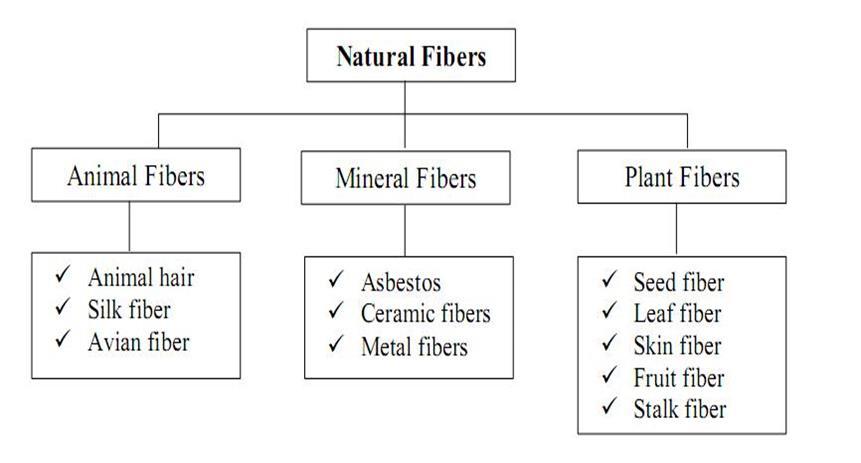
Classification of natural fiber
FIBERS AND RAW MATERIAL USED
Inthisresearchworkweusedfollowingfibers
1. BambooFiber
2. BasaltFiber
3. GlassFiber
5.1. Bamboo Fiber
Theterm“fiber”isoftenusedtodescribealong,thin,and flexible material with many applications in the manufacturingindustry.Naturalandsyntheticfibersderived fromplants,animals,andmineralsareallfairgameBamboo fiber,oneofseveraltypesofnaturalfiber,isproducedfrom the cellulose of the bamboo plant. Bamboo is a rapidly reproducingplantandthereforeisgettingextremeattention. Inrecentyears,bamboofibershavegainedpopularityasa sustainable alternative to more conventional fibers like cottonandpolyesterdue to their robust,long-lasting,and adaptableproperties.
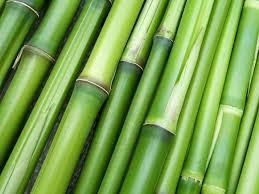
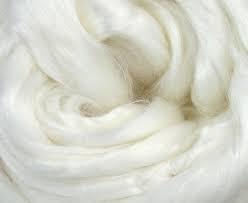
2:Bamboofiber
5.2. Basalt Fiber
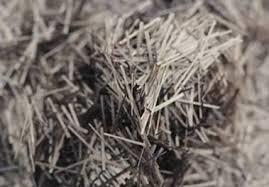
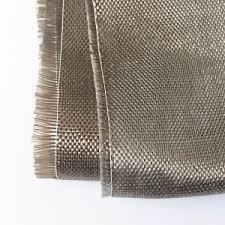
Basalt fiber (BF) is a high-performance inorganic silicate fiber made from natural basalt ore by high-temperature meltinganddrawing,anditisakindofgreenfiberthatdoes not create environmental pollution or pose a cancer risk. Compared with traditional glass fiber (GF), BF has better mechanical properties, as well as high-temperature and
International Research Journal of Engineering and Technology (IRJET) e-ISSN: 2395-0056
Volume: 11 Issue: 07 | July 2024 www.irjet.net p-ISSN: 2395-0072
corrosionresistance.Comparedwithcarbonfiber(CF),BF hasalowercostandisoneofthebestchoicestoreplaceGF andCF,basaltfiber-reinforcedpolymers(BFRPs)havebeen widelyusedinthepetrochemical,construction,aerospace, automobile,ship,andotherindustries.
2. Glass Fiber
Glassfiberisasubstancemadeupofmanyveryfineglass strands.Itsharessimilarstrengthcharacteristicswithother materialslikepolymersandcarbonfiber.Whileit's notas stiffascarbonfiber,it'smuchmoreaffordableandlessprone to breaking when used in mixtures. As a result, it's often added to polymers to enhance their strength and create a lightweightcomposite material knownasglass-reinforced plastic(GRP),alsoreferredtoas"fiberglass."Theprimary typeofglassfiberutilizedinfiberglassisE-glass,whichisa typeofalumino-borosilicateglasswithlessthan1%ofalkali oxides,primarilyusedintheproductionofglass-reinforced plastics.
Basaltfiberisacontinuousfibermadeofmelting. Stone at 1450 to 1500 degree through platinum rhodium alloybushing.NewEnvironmentprotectionfiberwhich is knownasthetwenty-firstCentury‘Volcanorock silk’,itis alsocalledgoldenfiberbecauseit’sGoldenbrown.
Bamboo fiber is made by a mechanical-bacterial process similartorettingflaxintolinenfibre.Inthisway,thewoody partofthebambooiscrushedmechanicallybeforeanatural enzymerettingandwashingprocessisusedtobreakdown thewallsandextractthefibre.Thisblastfibreisthenspun intoyarn.
Epoxy Resin comes in two parts: a resin and a hardener. Mixingtheresinandhardenertogetherpromptsachemical reactionbetweenthetwo,transformingthemfromaliquid into solid. Measuring accurately and mixing thoroughly is essentialtoensureyourepoxyresincuresproperly
The 200 mm x 200 mm x 10 mm composite was manufactured using hand-layup method. The resin was coatedwithbrushandrollerandkeptbetweenthe200mmx 200mmpressingplates.Apolyesterfilmlayerbetweenthe
plate and the composite surface was provided for easy releaseandforsmoothanduniformsurfacesurfacesonthe composites.AralditeLY556toHY951hardenerintheratio of (3:1) and mixed well and to different percentages .AlternativeTwolayersofbasaltfabricbamboofabricand glassfiberarefabricatedwithepoxyresinmixedoneabove the other until the desired thickness is achieved. The compositeswerethenleftatroomtemperaturefor24hours besolidified.Compositeswerethenremovedfromthemold followingthecuringprocess.
Thespecimensarederivedfromthefabricatedmaterialand subjected to different mechanical testing processes to determine their performance under various loading conditions. The results are then analysed and further the materialsareengineeredtoimprovethecharacteristicsso thatabetterproductcanbeachieved.
A. Tensiletest.
B. Flexuraltest.
C. Hardnesstest
A. Tensile test.
It is one of the most commonly used testing processes to evaluatethemechanicalpropertiesofthematerial.Thetests help to evaluate the properties related to elasticity and strength.Inatensiletestingprocess,aspecimenisobtained according to a prescribed standard and loaded under uniaxial force applied at two ends until the matrix is fractured.
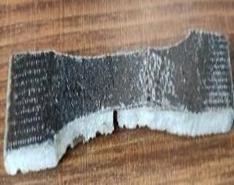
Figure4:TestSpecimen
Table-1: Tensiletestresultofnaturalandhybrid compositematerial
Research
Volume: 11 Issue: 07 | July 2024 www.irjet.net
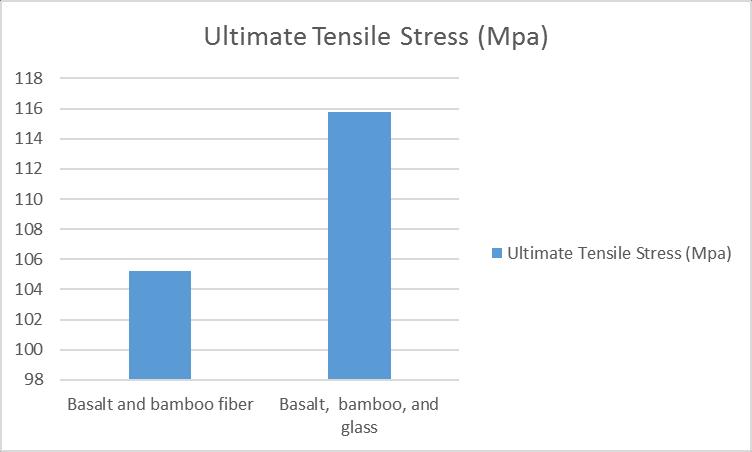
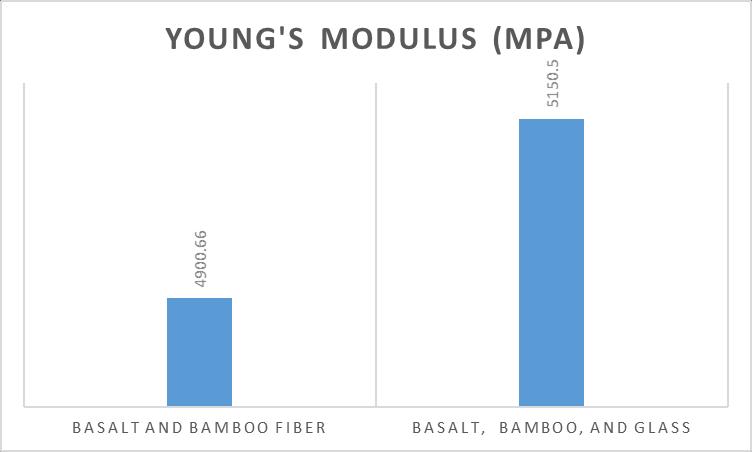
Everysamplewasmadeaccordingtotheguidelines,andthe directionwaskeptsteadyat0ºduringthemakingprocess. For the initial mix (Basalt + bamboo), the highest load it couldhandlewas10.00KN,withamaximumtensilestressof 105.20MPaandaYoung’smodulusof4900MPa.Thenext sample (Basalt + bamboo + glass) saw the load raised to 12.00KN,withamaximumtensilestressof115MPaanda Young’smodulusof5150MPa.
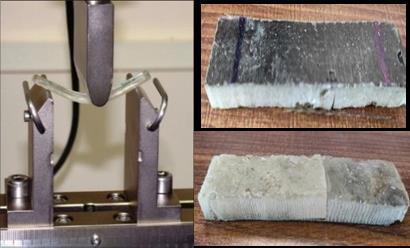
The specimens used in the testing process are generally rectangularingeometrywithoutanybondornotches.The flexural test helps us to determine the strength in brittle material because when the same material is gripped and loaded for testing would easily breakdown. Within the elasticrange,alinearrelationbetweenaloadanddeflection canbenoted.Thefailurefirstbeginson athinlayerofthe surfacewhichinitiatesthecrackingprocessandat-lastleads tothespecimenbreakpoint.
International Research Journal of Engineering and Technology (IRJET) e-ISSN: 2395-0056
Volume: 11 Issue: 07 | July 2024 www.irjet.net p-ISSN: 2395-0072
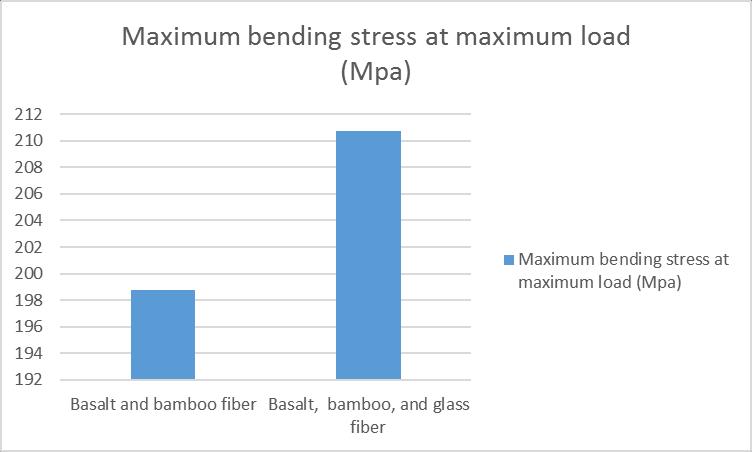
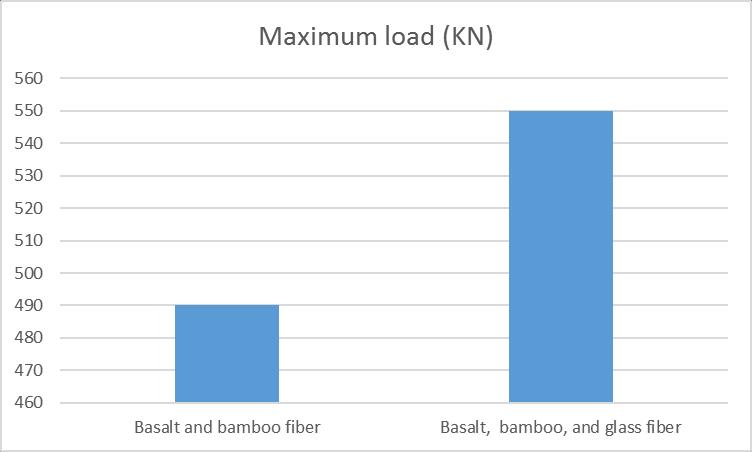
All the specimens being tested have a fixed orientation of 0°. For the specimen of (Basalt + bamboo + glass)themaximumbendingstressisrecordedat210Mpa withYoung’smodulusof10735Mpaforamaximumapplied loadof550.00KN.
Hardnessisthemechanicalpropertyofthematerialwhich helps it to resist the indentation. Hardness is one of the important parameters in the designing of a material. The process of measuring the hardness is by measuring the depthoftheindentationmarkleftonthematerialwhenload of known pressure is applied on it. Hardness is a typical propertyofamaterial.Hardnessisdefinedastheresistance to indentation, and it is determined by measuring the permanentdepthoftheindentationcausedonthesurfaceof the test material. The least RHN is for the combination of (Basalt+bamboo)i.e.68.AndwhenE-glassfiberispresent alongwiththecombinationof(Basalt+bambooandglass) theRHNis72whichsignifiesthestrengthimpartedbythe glassfibertotheComposite.
Table4:Hardnesstestresults
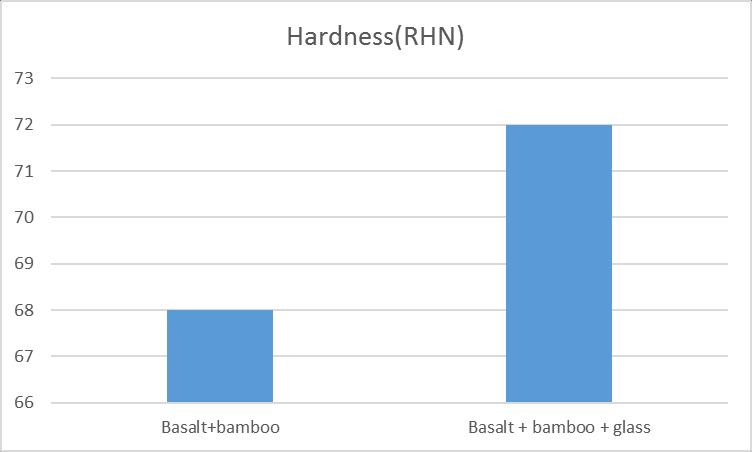
Whenapplyingaconstantforce(load)andaspecific indenter,thesmallertheresultingindentation,thetougher thematerial.Eachsampleiskeptataconsistentangleof0°. Referringtothetableabove,theRelativeHardnessNumber (RHN) for the mixture of Basalt, Bamboo, and Glass is 72, surpassing that of samples containing only Basalt and Bamboo fibers. The lowest RHN value is observed for the mixture of Basalt and Bamboo, which is 68. Additionally, when E-glass fibers are incorporated into the mixture of BasaltandBamboo,theRHNvalueremainsat72,indicating
the added strength provided by the E-glass fibers to the composite.
Heat Flux Analysis of Steel Sheet and Natural Fibers using CAD design:
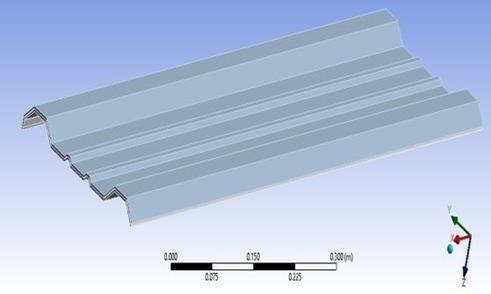
Figure:AnalysisofSteelSheetandBasalt,Bambooand GlassFibersusingcreo
Table5:HeatfluxforSteelSheetandBasalt,Bambooand GlassFibers
SteelRoof Heat Flux W/m2 Basalt, Bamboo & Glass Fiber
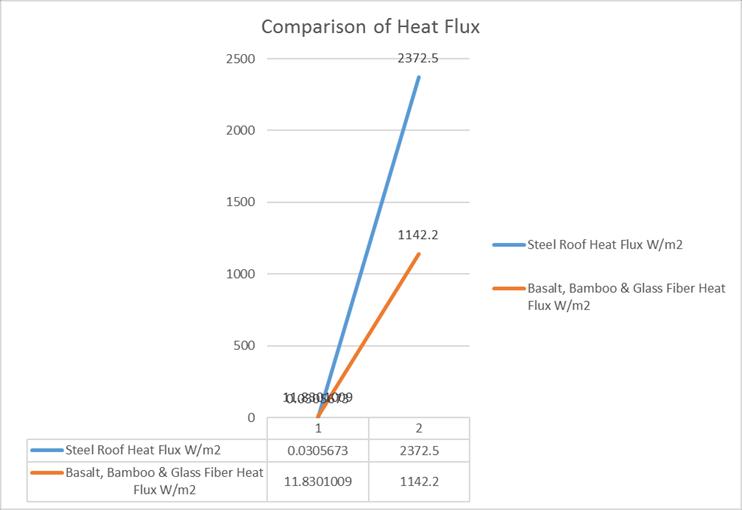
Chart-6:HeatfluxforSteelSheetandBasalt,Bambooand GlassFibers
The eco-friendlycompositematerialsmadefrom bamboo, basalt fibers and glass fibers are created by mixing them withepoxyresinasthebasematerial,usingtheconventional manual lay-up method. The physical characteristics like tensilestrength,bendingstrength,hardness,aremeasured throughtests.Theorientationofthefibersduringfabrication is maintained at 0º throughout the process. During the
International Research Journal of Engineering and Technology (IRJET) e-ISSN: 2395-0056
Volume: 11 Issue: 07 | July 2024 www.irjet.net p-ISSN: 2395-0072
manufacturingprocess,thealignmentofthefibersiskeptat aconstantangleof0º.Thefindingsindicatethatmaterials containing particulate fillings exhibit superior mechanical characteristics when contrasted with those without such fillers. In tests of tensile strength, the hybrid composites demonstratedthehighestultimatetensilestressamongthe other composite types. Based on these findings, it can be inferred that materials with particulate fillers in their compositematricespossessastrongpotentialforenhanced overallproperties.Itwasalsoseenthatbasalt,bambooand glassfiberscompositeshadbetterperformancethanthatof basaltandbamboofiberswhichimpliesthattheadditionof particulatesaredesirabletillacertainextentandwhenthe limit is exceeded the increase of strength is in a smaller quantity.
This is because the connections created between particles and reinforcements are significantly stronger comparedtotheconnectionsbetweenparticleswhenthey are just interacting with each other. In other words, the interaction between particles and reinforcements is more robust than the interaction between particles themselves, whichoccurswhentherearemoreparticlesinthematerial. Therefore, composites with particles as reinforcements exhibit strong mechanical characteristics and better performance, meeting the demands of today's industrial sector.Theproductioncostcanbereducedwhenmade in largequantities,makingitapreferableoptionforimproving andstabilizingperformance.
[1]AhsanFeroz,A.,Harshit,Chawla,D.,&Kumar,R.(2022). To study and analyze the design of drive shafts for automobiles using composite material through empirical review on literature. Materials Today: Proceedings, 56, 3820-3822.https://doi.org/10.1016/j.matpr.2022.01.309
[2] Mahajan, G.V., and V. S. Aher. "Composite Material: A Review over CurrentDevelopment and Automotive Application."InternationalJournalofScientificandResearch Publications,vol.2,no.11,2012,pp.2250-3153.
[3]T.Edwards,Compositematerialsrevolutionizeaerospace engineering, Ingenia Magazine Online, Issue 36, 24 p, September2008.
[4]RamiEidMarijnR.etal.,(1999),LauraDeLorenzisetal., (2003),SilviaRoccaetal.,(2008).
[5]NadeemA.Siddiqui(2014)analysisofcomposiesvol7 2014


Shruti Sajjan
Secured B.E in Mechanical EngineeringfromPDAEngineering College Kalaburgi Karnataka, India. in the year 2021 Now Pursuing M.Tech degree in Mechanical Machine Design Engineering from VTU CPGS Kalaburgi,Karnataka,India.
Prof. Ambadas Assistant Professor, Department of Mechanical Engineering, VTU CPGSKalaburgi,KarnatakaIndia.