
International Research Journal of Engineering and Technology (IRJET) e-ISSN: 2395-0056 Volume:11Issue:07|July2024 www.irjet.net p-ISSN:2395-0072
Chanchal Zope
Computer Engineering
SNDT Women’s University Mumbai, India
International Research Journal of Engineering and Technology (IRJET) e-ISSN: 2395-0056 Volume:11Issue:07|July2024 www.irjet.net p-ISSN:2395-0072
Chanchal Zope
Computer Engineering
SNDT Women’s University Mumbai, India
Roshni Chaudhari
Computer Engineering
SNDT Women’s University Mumbai, India
Kunjal Waykole
Computer Engineering
SNDT Women’s University Mumbai, India
Dr. Rachana Dhannawat
Computer Engineering SNDT Women’s UniversityMumbai, India
Abstract This paper proposes a novel smart waste man- agement system using Internet of Things (IoT) technologies to address the challenges of waste segregation, collection, and monitoring. The system employs ultrasonic sensors to detect dustbin fullness, and rain sensors to categorize waste into dry and wet fractions. Real-time bin location and fullness data are trans- mitted wirelessly to a central monitoring system via Bluetooth, enabling efficient waste collection and overflow prevention. The Android app visualises bin location and fullness level on a map, facilitating efficient waste collection and promoting transparency The proposed system offers a cost-effective and scalable solution for smart waste management in urban environments.
Index Terms Waste Segregation, IoT, Android App, LocationTracking, Bluetooth
Garbage bins in current management systems are emptiedat regular intervals by cleaners, leading to various drawbacks:
A. Some bins fill up faster, causing overflow onto streets, pollution, and breeding grounds for pathogens. B. Slow waste production in certain areas results in semi-filled bins upon collection, leading to fuel wastage and increased transportationcosts. With household garbage and municipal waste increasing daily, even small improvements in collection operations can yield significant cost savings. To address these challenges, proper garbage monitoring is essential. A proposed solution involves an IOT-based smart garbage monitoring and disposal system. This innovative technology aims to optimize waste management processes and alleviate the negative impacts of inefficient garbage disposal practices.
Samruddhi Chaudhari
Computer Engineering
SNDT Women’s University Mumbai, India
Furthermore, The proposed smart garbage monitoring sys- tem will automatically send SMS notifications to authorized personnel when a dustbin reaches full capacity, facilitated through Bluetooth and an Android application. Additionally, the system will utilize Google Mobile Services to pinpoint the exact location of the full dustbin on Google Maps, ensuring prompt action by authorities. Furthermore, waste segregation between wet and dry waste will be monitored using a rain sensor, allowing for efficient categorization and disposal of waste types. This comprehensive approach aims to enhance waste managementefficiencyandreducecostsassociatedwithsolid wastecollectionanddisposal.
The future IoT-based smart waste management system uses sensors to monitor waste levels in urban dustbins. An accom- panying Android application provides real-time informationon bin levels across different locations. When a bin is full,it sends notifications with its location to truck drivers forcollection.Higherofficialscanmonitoremployees, and the system is powered by solar panels for sustainability. Using Zig-Bee IoT technology, it can efficiently collect and transmit data, enabling dynamic supervision of waste collectionthroughcloud integration. The IOT community has designed a system that is powered by a solar panel which is also a means of renewable energy resources.[1][2][3][5][6][9]
The system utilizes IoT sensors to monitor waste levelsin urban dustbins. An Android app provides real-time infor- mation and alerts drivers when bins are full. Solarpoweredandcloud-connected,itoptimizesgarbagecollection efficiency and enables remote monitoring by higher officials.[2] Voice Controlled Automatic Dustbin (VCAD) responds to specific voice commands via an Android device.
© 2024, IRJET | Impact Factor value: 8.226 | ISO 9001:2008 Certified Journal | Page291
International
Volume:11Issue:07|July2024
Upon command recognition, the microcontroller opens the lid when garbageis detected, aiding elderly and disabled users.[3]
Using transfer learning to classify and recognize garbage, adapting the Inception V3 model from ImageNet. Data augmentation and convolutional neural networks are utilized, achieving high training and test accuracies. The model accurately identifies common garbage, showing promise for intelligent waste classification.[4] the significant issue of air pollution caused by solid waste garbage, emphasizing its impactonhumanhealth.Byproposingacloud-basedsolution utilizing sensors and AWS Kinesis, it aims to monitor and process garbage odor data, crucial for mitigating pollution in crowded cities.[7]
The
Smart Garbage Monitoring System is an innovative solution that combines various sensors and communication technologies to revolutionize waste management. This s l Systems for Mobile Communications (GSM) is used for sending location messages which are in-built into raspberry pi, and Bluetooth for transmitting sensor data to anAndroidappforreal-timetracking.
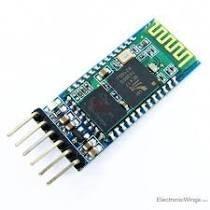
3) Bluetooth: Bluetooth technology is employed to transmitsensordata(rain,ultrasonic,GPS)fromthegarbage bins to a connected Android app. Application: The Android app serves as a centralised platform for monitoring all garbage bins. Users, including waste management authorities and citizens, can access real-time data on garbagelevels,types,andloca-tions.
ystem employs rain sensors for detecting the type of garbage (wetor dry) a console for displaying the result of segregation, ul- trasonic sensors for distance measurement, Global PositioningSystem (GPS) for location tracking. The Globa
The system consists of the following components:
1) Rain Sensor: Rain sensors are integrated into the garbage bins to detect the presence of moisture. These sensorsdifferentiatebetween wet and dry garbagebased on thelevelof humidity or rainwater infiltration.
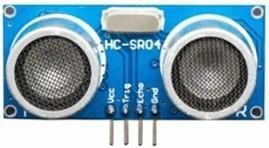
2) Ultrasonic Sensor: An ultrasonic sensor is placed in the trash can to measure the distance between the sensor and the trash can. As the waste level increases, the distance will decrease and the system will be able to monitor collectionconditions.
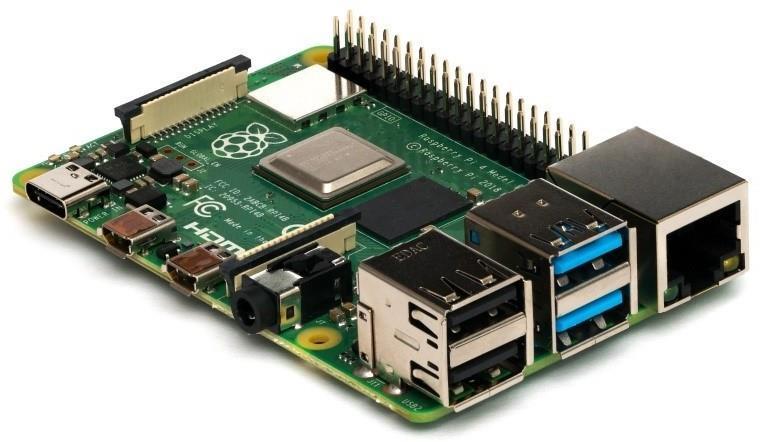
4) Raspberry Pi: Raspberry Pi 4 Model B is a one-of-akind computer developed by the Raspberry Pi Foundation. It’s a credit card-sized computer that can be used for a variety of tasks, including work, media, and homework. 1.5GHz64-bitquad-coreARMCortex-A72processor,built-in 802.11ac Wi- Fi, Bluetooth 5, full Gigabit Ethernet (unlimited),twoUSB2.0ports,twoUSB3.0ports,1,2,4,or8
Supports two monitors with up to 4K resolution on GB RAMandtwomicroHDMI(HDMI Type D) ports.
2. Bluetooth.
International Research Journal of Engineering and Technology (IRJET) e-ISSN:2395-0056 Volume:11Issue:07|July2024 www.irjet.net p-ISSN:2395-0072
5) Infrared Sensor: Infrared emitters vary in wavelength, output power, and response time. The infrared sensor consists of an infrared LED and an infrared photodiode, together calledan optocoupler or optocoupler. IR emitters, also known as IR LEDs, look like standard LEDs but emit infraredradiationthatis invisible to the human eye.
6) DC Motor: Adirectcurrent (DC) motor is a motorthat converts electrical current into electricity. DC motors take electrical energy fromdirectcurrentandconvert this energy into rotating machines. Output torque and speed depend on input voltage and motor design.
System Workflow:
1) Wasteisdepositedonthedesignatedrainsensorplate for moisture detection.
2) An infrared sensor continuously detects the presence of waste within the designated area, triggering the activa-tionofthe rainsensorforsubsequent moisture analysis.
3) Upon waste detection, the rain sensor assesses the waste’s moisture content. If moisture is present, the mo-tor rotates counter-clockwise, directing waste to thewetwaste compartment. Conversely, dry waste is directed to the designated compartment through clockwisemotorrotation.
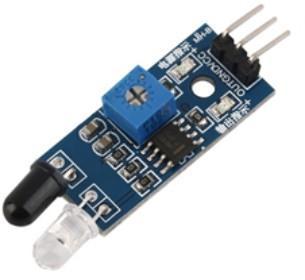
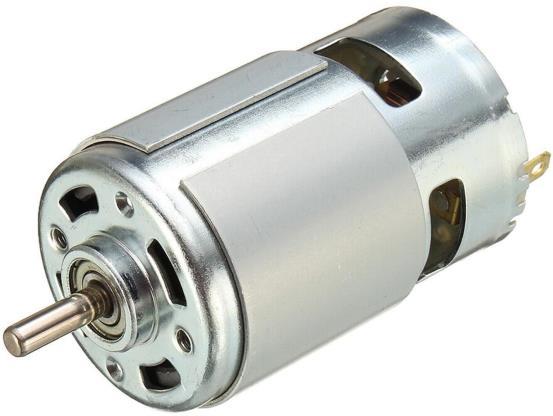
4) Ultrasonicsensorscontinuouslymonitorthefilllevelsin both wet and dry waste compartments.
5) Upon reaching the pre-set 10cm fill threshold in either compartment,thesystem proactivelytransmitsanautomatedSMSalerttoregisteredmobilenumbers,ensuring timely collection and preventing overflow.
6) ThedevelopedAndroidapplicationenableslivetracking of the bin’s location through a map interface based on transmitted coordinates.
7) The HC-05 Bluetooth module facilitates communication between the hardware and software adhering to live location tracking.
International Research Journal of Engineering and Technology (IRJET) e-ISSN:2395-0056
Volume:11Issue:07|July2024 www.irjet.net p-ISSN:2395-0072
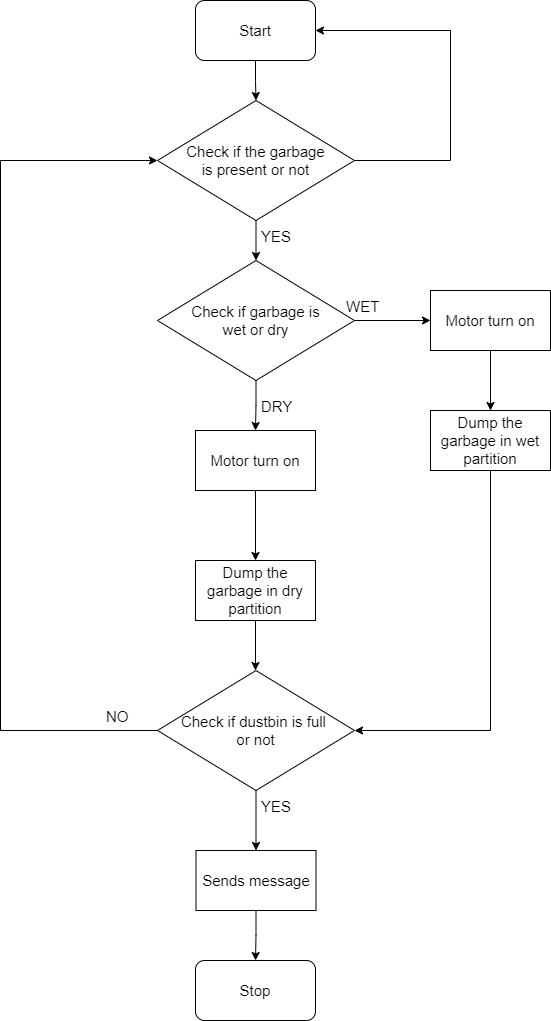
Fig.6. Flowchart oftheSmart WasteManagement system.
In conclusion, our proposed Smart Waste Management Sys- tem stands as a comprehensive solution poised to revolutionize waste management. By seamlessly integrating rain sensors for wet/dry waste detection, ultrasonic sensors for level measure- ment, GPS for location tracking, GSM for location messages, and Bluetooth for real-time data to an Android app, it offersa
data-drivenapproachtooptimizecollectionroutes,reduce costs,minimizeenvironmentalimpact,andenhancetransparency. The modular design allows for flexible deployment across diverse environments, paving the way for widespread adoption and significant advancements in waste management practices. While further research is crucial to fully unlock its potential, this innovative system holds immense promise for creating a cleaner, moresustainable,andcost-effectivefuture.
While further research is required for future work addition could be done of more segregation parts like metalsandnon-metalsalong withdryand wet.
[1] V.Ashwin Raju, J. Mappilllai Meeran, M. Sasidharan, Mr. K. Premku- mar, “IOT Based Smart Garbage MonitoringSystemUsingZigBee”,2019.
[2] BharadwajB,MKumudha,GowriChandraN,Chaithra G,“AutomationofSmartwastemanagementusingIoT to support “Swachh Bharat Abhiyan” - a practical approach”, 2017.
[3] Abhishek Ayush, Abhishek Kumar, Aditi Jha, Nilotpal Sarkar, Suresh Chandra Moharana, Himansu Das, “Voice Controlled Automatic Dustbin with Garbage Level Sensing”,2019.
[4] LiCao,WeiXiang,“ApplicationofConvolutionalNeural Network Based on Transfer Learning for Garbage Classification”, 2020.
[5] Sudharani Ashok Ghadage, Neeta Anilkumar Doshi, “IoT Based Garbage Management (Monitor and Acknowledgment)System:ARe-view”,2017.
[6] Nyayu Latifah Husni, Robi, Ekawati Prihatini, Nurhaida, Ade Silvia, Firdaus, “Garbage Monitoring andWarningSystem”, 2019.
[7] G Rashmi, Mohammed Ameenulla, S Sathish Kumar, “Cloud based Architecture for Solid Waste Garbage MonitoringandProcessing”,2019.
[8] Yanglu,Amit Yadav, Asif Khan, “Internet of Things BasedWirelessGarbageMonitoring System”,2019.
[9] Dr. K. Alice Mary, Perreddy Monica,, “IOT Based GarbageMonitoringSystem”, 2017.
[10] AnithaA,“GarbagemonitoringsystemusingIoT”,2017.
International Research Journal of Engineering and Technology (IRJET) e-ISSN:2395-0056
Volume:11Issue:07|July2024 www.irjet.net p-ISSN:2395-0072
[11] S.VinothKumar,T.SenthilKumaran,A.KrishnaKumar andMahanteshMathapati “Smart Garbage Monitoring andClearanceSystemusingInternet of Things”, 2017.
[12] Namakambo Muyunda, Muhammad Ibrahim “Arduino based Smart Garbage Monitoring System Analysis RequirementandImplementa-tion”,2017.
[13] Dr.N.Sathish Kumar, B.Vijayalakshmi, R. Jenifer Prarthana,A.Shankar “IOT Based Smart Garbage alert systemusingArduinoUNO”,2016.
[14] V. N. Bhat, ”A Model for the optimal allocation of trucks for solid waste management,” Waste Management&Research,vol.14,(1),pp.87-96,1996.