
International Research Journal of Engineering and Technology (IRJET) e-ISSN: 2395-0056
Volume: 11 Issue: 07 | July 2024 www.irjet.net p-ISSN: 2395-0072

International Research Journal of Engineering and Technology (IRJET) e-ISSN: 2395-0056
Volume: 11 Issue: 07 | July 2024 www.irjet.net p-ISSN: 2395-0072
Trushalkumar Savani1 , Kishan Pal2 , Aakash Suthar3
1M. Tech Student, L.J. University, Ahmedabad.
2Kishan Pal, Assistant Professor, Civil Engineering Department, L.J. University, Ahmedabad, Gujarat, India. 3Aakash Suthar, Assistant Professor, Civil Engineering Department, L.J. University, Ahmedabad, Gujarat, India
Abstract
The escalating human and economic losses caused by natural disasters in the past decades have raised concerns among researchers regarding the need to re-evaluate existing buildings to minimize casualties. In light of the vulnerability exposed by previous earthquakes, the seismic assessment of structures has become imperative, with particular emphasis on post-earthquake evaluations. This research project aims to propose an approach for evaluating the seismic vulnerability of buildings. Seismic fragility curves will be developed through nonlinear dynamic analysis, taking into account appropriate failure mechanisms. These fragility curves serve as essential tools for decision-makers in assessing seismic losses, both in pre-earthquake disaster planning and post-earthquake recovery programs. Fragility curves indicate the probability of failure as a function of peak ground acceleration. The primary objective of seismic fragility assessment is to estimate the likelihood of exceeding a specific damage level in a building due to seismic hazards, thereby predicting its vulnerability. In this study, seismic fragility analysis will be conductedon three different types of buildings, each having different slab designs and situated in diverse soil conditions.
Key Words: seismic analysis, Bracing, Flat slab, Grid slab, Fragility Curve, Pushover Analysis, Soft soil, medium soil, Hard soil.
Inrecentyears,theworldhaswitnessedasurgeinnatural disasters,particularlyearthquakes,resultinginsignificant humanandeconomiclosses.Thesecatastrophiceventshave underscored the urgent need for re-evaluating existing structures to enhance their resilience and minimize casualties. As a response to the escalating vulnerability exposed by past earthquakes, seismic assessment of buildingshasbecomeaparamountconcern.Thisresearch projectdelvesintothecriticalrealmofseismicvulnerability analysis, with a focus on post-earthquake evaluations, aimingtoprovidea comprehensiveapproach toassessing the seismic vulnerability of buildings. This assessment involvesthedevelopmentofseismicfragilitycurvesthrough nonlineardynamicanalysis,incorporatingrelevantfailure mechanisms.Thesefragilitycurvesserveasindispensable tools for decision-makers, aiding in the assessment of
seismiclosses,bothinpre-earthquakedisasterplanningand post-earthquake recovery programs. By quantifying the probability of failure as a function of peak ground acceleration,fragilitycurvesfacilitatetheestimationofthe likelihoodofstructuresexceedingspecificdamagelevelsdue toseismichazards,effectivelypredictingtheirvulnerability.
The primary objective of this study is to conduct seismic fragility analysis on three distinct types of buildings, each characterized by different slab designs, and situated in varied soil conditions. This multifaceted investigation encompassesawiderangeofstructuralscenarios,providing valuable insights into the interplay between building configurations,soilcharacteristics,andseismicvulnerability. Bycomprehensivelyexaminingthesefactors,thisresearch contributes to a deeper understanding of the complex dynamicsthatgoverntheresponseofbuildings toseismic events,enablingustodevelopmoreeffectivestrategiesfor mitigating the impact of earthquakes on our built environment.
Over the past few decades, India has borne the brunt of severaldevastatingearthquakes,amongwhichstandoutthe 2001Bhujearthquake,the2011Sikkimearthquake,andthe 2015Nepalearthquake.Theseseismiceventshaveexposed the vulnerability of many reinforced concrete (RC) structures, resulting in extensive structural damage and tragiclossoflifeduetocollapsingbuildings.Consequently, the primary source of seismic losses during these earthquakeshasbeenbuildingdamage.
Theoccurrenceoftheseearthquakeshasunderscoredthe criticalimportanceofassessingandevaluatingthestructural integrityofvariousbuildingtypesinourcountry,moreso than ever before. Figure 1 vividly depicts a building structurethatsuccumbedtotheforcesofanearthquake.To avert such catastrophic collapses in the future, it is imperativetoaccuratelydetermineseismicvulnerability.
International Research Journal of Engineering and Technology (IRJET) e-ISSN: 2395-0056
Volume: 11 Issue: 07 | July 2024 www.irjet.net p-ISSN: 2395-0072
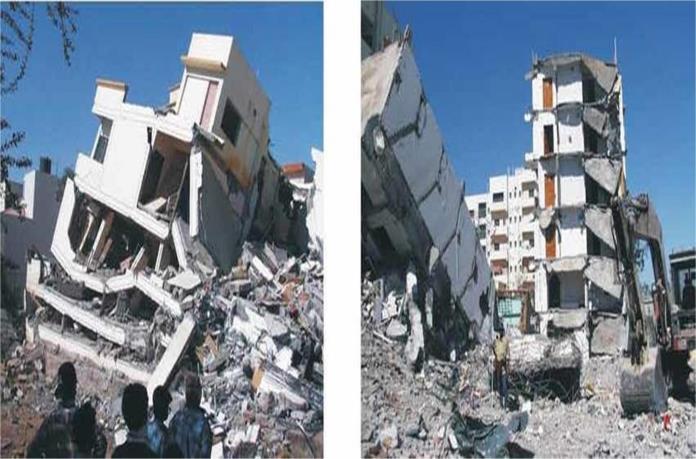
[1] Adhikari, R., Rupakhety, R., Giri, P., Baruwal, R., Subedi,R.,Gautam,R.andGautam,D.,2022.Seismic fragilityanalysisoflow-riseRCbuildingswithbrick infills in high seismic regions with alluvial deposits. Buildings, 12(1),p.72
Theintroductionadequatelysetsthestagebypresentingthe background, importance, and scope of the research. The authors effectively highlight the significance of studying seismic fragility in the specified context, making a compellingcasefortheresearch.
The literature review is comprehensive, demonstrating a thoroughunderstandingoftheexistingbodyofknowledge onseismicvulnerabilityandfragilityanalysis.Itprovidesa solid foundation for the current study by identifying gaps andjustifyingtheneedforfurtherinvestigation.
The paper outlines the methodology used for seismic fragilityanalysis,detailingthecriteriaforbuildingselection, data collection, and analytical techniques. The clarity in explaining the research methodology enhances the credibilityofthestudyandfacilitatespotentialreplication.
Thepresentationofresultsisclear,withappropriatevisuals such as graphs, charts, and tables to support the findings. Thediscussioninterpretstheresultseffectively,linkingthem backtotheresearchobjectivesandprovidinginsightsinto the implications of the findings. However, it would be beneficial to include a more detailed comparison with existingstudiesorstandardsforcontext.
[2] Pisode,M.,Surana,M.,Haldar,P.andSingh,Y.,2017. Comparative assessment of seismic fragility of RC frame buildings designed for older and revised Indian standards. ISET J Earthq Technol, 54(1), pp.17-29
Theintroductionaptlysetsthecontextbyhighlightingthe importance of seismic fragility assessment and the significance of comparing buildings designed under older and revised Indian standards. The research objectives are clearly stated, creating a well-defined framework for the study.
Theliteraturereviewdemonstratesarobustunderstanding ofthehistoricalcontextofseismicdesignstandardsinIndia. Theincorporationofrelevantstudiesandtheidentification ofgapsintheexistingknowledgecontributetothepaper's overall strength. It would be beneficial to include recent developments or changes in seismic design philosophy globallyforamorecomprehensiveperspective.
Thepaperoutlinesthemethodologyclearlyandconcisely, detailingtheselectioncriteriaforbuildings,datacollection processes, and the specific seismic fragility analysis techniques employed. The transparency in describing the methodologyenhancesthecredibilityoftheresearch.
The presentation of results is commendable, with appropriate visual aids to support the findings. The discussion effectively interprets the results, drawing connectionsbetweentheseismicperformanceofbuildings designed under older and revised standards. The paper excelsinelucidatingthepracticalimplicationsofthefindings forseismicresilienceinIndia.
[3] SAI,K.S.,RAMA,R.G.andMARKANDEYA,R.P.,2016. SeismicfragilityanalysisofregularandsetbackRCC frames-Afewhypotheticalcasestudies
Theintroductionestablishesthecontextbyemphasizingthe relevanceofcomparingregularandsetbackRCCframesin seismic vulnerability. The research objectives are clearly stated, setting a clear direction for the study. It would be beneficial to provide a brief overview of the motivation behind choosing setback frames and their prevalence in construction.
Theliteraturereviewprovidessufficientbackgroundonthe seismicbehaviorofregularandsetbackRCCframes.Itwould bevaluabletoincludemorerecentstudiesoradvancements intheunderstandingofseismicperformance,especiallythose related to setback structures. This could help anchor the studyinthecurrentstateofknowledge.
Thepaperoutlinesthemethodologyeffectively,detailingthe selection criteria for frames, the seismic fragility analysis approach,andthekeyparametersconsidered.Theclarityin explainingthemethodologyenhancesthereproducibilityof thestudyandbuildsconfidenceintheresearch.
Thepresentationofresultsisclear,withappropriatevisual aidssupportingthefindings. The discussioninterpretsthe resultseffectively,drawingcomparisonsbetweenregularand setbackRCCframes.However,thepapercouldbenefitfroma
International Research Journal of Engineering and Technology (IRJET) e-ISSN: 2395-0056
Volume: 11 Issue: 07 | July 2024 www.irjet.net p-ISSN: 2395-0072
more in-depth analysis of the reasons behind observed differencesinseismicfragility,possiblyexploringtheimpact ofsetbackconfigurationsonstructuralbehavior.
[4] Seismic Fragility Analysis ofRegularand Vertical Setback R/C Frame Buildings; Authors: PavaniTaliakula,Dr.V.A.Prasad
Theintroductionadequatelyestablishesthecontextand significance of comparing regular and vertical setback R/C frame buildings in seismic vulnerability. The researchobjectivesareclearlyarticulated,providinga solidfoundationforthestudy.Itwouldbebeneficialto brieflytouchupontheprevalenceofverticalsetbacksin real-worldconstructionandtheirpotentialadvantages orchallenges.
Theliteraturereviewprovidesareasonablebackground on the seismic behavior of R/C frames, but it could benefit from more recent studies or advancements in understanding seismic performance, especially those related to vertical setback structures. Including such informationwouldstrengthentheconnectionbetween thestudyandthecurrentstateofknowledge.
Thepapereffectivelyoutlinesthemethodology,detailing the criteria for building selection, seismic fragility analysisapproach,andkeyparametersconsidered.The clarity in describing the methodology enhances the reproducibilityofthestudyandbuildsconfidenceinthe research.
The presentation of results is clear, with appropriate visual aids supporting the findings. The discussion interpretstheresultseffectively,drawingcomparisons between regular and vertical setback R/C frame buildings. However, the paper could benefit from a deeper analysis of the observed differences in seismic fragility,possiblyexploringtheimpactofverticalsetback configurationsonstructuralbehavior.
[5] Comparative Study on SeismicFragilityAnalysis of RCC Building in Different Soil Conditions; Authors: RajdeepV.Dangar,Prof.B.R.Patel
The introduction sets the context by emphasizing the significanceofstudyingseismicfragilityinthecontextof different soil conditions. The research objectives are clearlystated,creatingawell-definedframeworkforthe study.Itwouldbebeneficialtoincludeabriefrationale for the selection of specific soil conditions and their relevancetoreal-worldscenarios.
Theliteraturereviewprovidesareasonablebackground on the seismic behavior of buildings in different soil conditions.However,toenhancethedepthofthereview, it would be valuable to incorporate recent studies or
advancements related to the interaction between soil characteristicsandtheseismicresponseofstructures.
Thepaperoutlinesthemethodologyeffectively,detailing the criteria for selecting different soil conditions, the seismic fragility analysis approach, and the key parameters considered. The clarity in describing the methodology enhances the reproducibility of the study andbuildsconfidenceintheresearch.
The presentation of results is clear, with appropriate visual aids supporting the findings. The discussion interprets the results effectively, drawing comparisons betweenseismicfragilityindifferentsoilconditions.To adddepthtotheanalysis,thepapercouldexplorehow specific soil characteristics contribute to variations in fragility.
Ourobjectivesinconductingthisanalysisareasfollows:
Evaluate the Probability of Structure Collapse: Assesstheprobabilityofstructurecollapsebased onpeakgroundmotion.
DeterminetheEffectonConventionalandFlatSlab Structures:Evaluatethedifferenceintheeffectof earthquakes on conventional and flat slab structures,consideringvarioussoilconditions.
PrepareFragilityCurves:Createfragilitycurvesfor different soil conditions to understand the relationshipbetweengroundaccelerationandthe probabilityofdamage.
Compare Fragility Curves: Compare the fragility curvesofconventionalandflatslabstructuresto identifyvariationsinvulnerability.
Theconclusionsuccinctlysummarizesthemainfindingsand their implications. It also suggests avenues for future research,contributingtotheongoingdiscourseinthefield. Theconclusionreinforcesthesignificanceofthestudyand its potential impact on building design and construction practicesinseismic-proneareas.
The conclusion provides a succinct summary of the key findingsandtheirimplicationsforseismicdesignpractices inIndia.Theidentificationoflimitationsandsuggestionsfor future research adds depth to the conclusion. The paper successfullyreinforcestheimportanceofadoptingupdated seismic design standards for enhanced structural performance.
International Research Journal of Engineering and Technology (IRJET) e-ISSN: 2395-0056
Volume: 11 Issue: 07 | July 2024 www.irjet.net p-ISSN: 2395-0072
The conclusion summarizes the key findings and their implicationsforseismicdesignconsiderations,emphasizing the significance of setback configurations. It would be beneficialtoprovideconcreterecommendationsfordesign improvements or modifications based on the observed differencesinfragilitybetweenregularandsetbackframes.
The conclusion provides a concise summary of the key findings and their implications for seismic design considerations, emphasizing the significance of vertical setbacks. It would be valuable to offer specific recommendations or insights for designers and engineers based on the observed differences in fragility between regularandverticalsetbackframes.
The conclusion provides a concise summary of the key findings and their implications for seismic design considerations,emphasizingtheinfluenceofsoilconditions. Itwouldbebeneficialtoofferspecificrecommendationsor insightsfordesignersandengineersbasedontheobserved differencesinfragilityamongvarioussoiltypes.
[1] Adhikari, R., Rupakhety, R., Giri, P., Baruwal, R., Subedi,R.,Gautam,R.andGautam,D.,2022.Seismic fragilityanalysisoflow-riseRCbuildingswithbrick infills in high seismic region with alluvial deposits. Buildings, 12(1),p.72
[2] Pisode,M.,Surana,M.,Haldar,P.andSingh,Y.,2017. Comparativeassessmentofseismic fragilityofRC frame buildings designed for older and revised Indian standards. ISET J Earthq Technol, 54(1), pp.17-29.
[3] SAI,K.S.,RAMA,R.G.andMARKANDEYA,R.P.,2016. SeismicfragilityanalysisofregularandsetbackRCC frames-Afewhypotheticalcasestudies
[4] Seismic Fragility Analysis of Regular and Vertical Setback R/C Frame Buildings; Authors: Pavani Taliakula,Dr.V.A.Prasad
[5] ComparativeStudyonSeismicFragilityAnalysisof RCCBuildinginDifferentSoilConditions;Authors: RajdeepV.Dangar,Prof.B.R.Patel