
2395-0072

2395-0072
YudhishtarSevhani1,KarimJassoma2,OmarShendy3
1Undergraduate students, department of Mechanical Engineering, University of Wollongong, Dubai, United Arab
Emirates.
Abstract - This paper explores the integration of automation and robotics in welding within the context of industry 4.0 and additive manufacturing. It begins with an overview ofweldingtechniquesand theirevolution.Keytopics include thetechnologicaladvancesinweldingautomation, the challenges andadvantages of implementing industry 4.0, and the impact of base materials on weld quality. The paper also discusses best practices for welding dissimilar materials, welding in e
xtreme conditions, and the role of welding in additive manufacturing. The study highlights future trends and concludes with the broader implications of these advancements for the industry.
Key Words: Welding techniques, automated welding, welding in industry 4.0, smart welding, future trends in welding,roboticsinwelding.
1.
Welding is an essential process across various sectors, particularlyinmanufacturingand constructionindustries, whereitis primarily usedfor assemblypurposes.Itinvolves creatingapermanentbondbetweentwomaterialsurfaces by altering specific physical and chemical properties. The techniques and technologies involved in welding are continuouslyevolvingtomeetrigorousinternationalsafety andprecisionstandards.Additionally,newapplicationswith extreme conditions or unique material limitations necessitate the development and adoption of diverse weldingmethods.
Theadvancementsinweldingarealsobeingdrivenbythe demandsofindustry4.0andadditivemanufacturing,bothof which heavily rely on automation and robotics. Industry 4.0 aimstocreatesmartfactorieswithinterconnectedsystems, where welding processes are integrated into automated production lines to enhance efficiency, consistency and quality.Additivemanufacturing,whichincludes3Dprinting, requires precise welding techniques to build complex structures layer by layer, often involving materials that present unique challenges The continuous innovation in weldingtechnologiesincludes
the development of advanced welding robots, laser welding, friction stir welding, and hybrid welding methods. These innovationsensurethatweldingcanbeadaptedtovarious applications,fromconstructingskyscrapersandbridgesto assembling intricate components in the aerospace and automotiveindustries.Moreover,thefocusonsustainability and environmental impact has led to the exploitation of ecofriendly welding techniques that minimize energy consumption and reduce emissions. Research and development efforts are directed towards improving the efficiency and effectiveness of welding processes, making them more suitable for a wide range of materials and conditions.
In this report, we will delve into these points in greater detail,exploringtheevolutionofweldingtechnologies,the impactofindustry4.0andadditivemanufacturing,andthe futuretrendsthatwillshapetheweldingindustry.Wewill alsoexaminepractical examplestoillustratehow welding continuestobeacornerstoneofmodernindustrialpractices.
2.1 History of welding,
Weldinghasevolvedsignificantlyoverthecenturies,shaping and being shaped by technological advancements and industrialdemands.Thejourneyfromprimitivemethodsto modern techniques highlights a remarkable progression drivenbythenecessitytojoinmaterialswithstrengthand durability. Only methods involved rudimentary forms of forge welding, when metals were heated in a fire and hammered together, a technique predominantly used for blacksmiths for centuries [4]. The advent of the industrial revolutionmarkedapivotalpointinweldingdevelopment. Asindustriesgrewandinfrastructuredemandssoared,more sophisticatedmethodswererequired,thelate19thandthe early20thcenturywitnessedsignificantbreakthroughswith penetrationofgasweldingandelectricarcwelding[5] These innovationsprovidedmorecontrolandprecision,enabling the joining of metals for a wide range of industrial applications.
Volume: 11 Issue: 07 | Jul 2024 www.irjet.net
WorldWarIandWorldWarIIfurtheracceleratedwelding advancements. The need for robust and reliable welding shipbuilding,aircraftmanufacturing,andweaponryspurred
rapiddevelopmentinweldingtechniquesandtechnologies [6].Duringthis period,arcweldingbecamemorerefined,and newmethodssuchasresistanceweldingemerged,offering improvedefficiencyandstrengthforcriticalapplications [7] . Postwarindustrialexpansionsawtheintroductionofmore sophisticated welding processes, including tungsten inert gas(TIG)weldingandmetalinertgas(MIG)welding.These methodsallowedforhigherprecisionandcontrol,catering tothegrowingcomplexityofindustrialmanufacturing.The latterhalfofthe20th centuryalsosawtheriseofautomation in welding integration robotics and computer control systemstoenhanceproductivityandconsistency [8]
In recent decades, the integration of welding with advanced technologiessuchaslaserweldingandfrictionstirwelding hasopenednewfrontiers.Thesemethodsofferunparalleled precisionandstrength,essentialformodernapplicationsin aerospace, automotive, and electronics industries [9]. The ongoing evolutionof weldingtechniquescontinuousto be drivenbythedemandforlighter,stronger,andmoredurable materials, reflecting the dynamic interplay between innovation and industrial needs. Welding’s journey from ancientforgemethodstocontemporaryhigh-techprocesses underscoresitscriticalroleinindustrialandtechnological progress.Eacheraofadvancementbuildsupontheprevious, continually refining and expanding the capabilities of this essentialpractice.
Welding techniques can be broadly divided into fusion welding and pressure welding, based on the type of coalescence established between substrates [10] The six major welding techniques widely employed in industries includeGasTungstenArcWelding,GasMetalArcWelding, ShieldedMetalArcWelding,FrictionStirWelding,Electron BeamWelding,andLaserBeamWelding [11] .
Gas Tungsten Arc Welding (GTAW) is recognized for its consistentweldquality,arcstability,controllableoperating power, minimal workpiece damage (weld can be done without overheating the workpiece), and economic viability [12].However,ithasdrawbackssuchaslowweldpenetration (molten weld pool does not extend deeply into the base material, consequentially the welded joint may have a thinnercrosssectionatthefusionzone),longsetuptimes, and unpredictable behavior under electromagnetic influence. Optimal weld parameters can significantly improve the output without compromising on weld properties.Factorslikeweldspeed,current,gasflowrate,
p-ISSN: 2395-0072
and penetration majorly influence tensile properties. Activating fluxes made of various oxides and halide compoundsinGTAWgreatlyimproveweldpenetration [13]
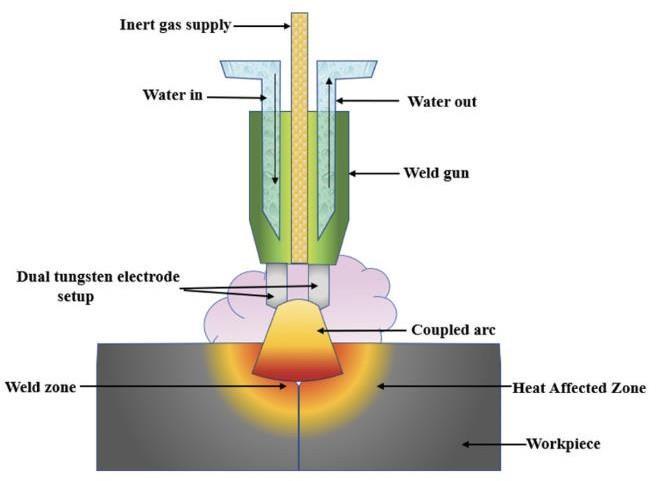
GTAWweldedalloysareaffectedbyissuesascleavageand pitcorrosionatthe weldzone. When GTAwelded,Nickelcopper (Ni-Cu) alloy exhibits high impact strength, high temperaturecorrosionresistance,strongductility,andhigh fatigue strength, enhancing mechanical and metallurgical qualitiesinhigh-pressurecorrosiveapplications.Dissimilar weldshaveshownsuperiormechanicalpropertiescompared to similar welds [14] Below is an image depicting gas tungstenarcwelding,
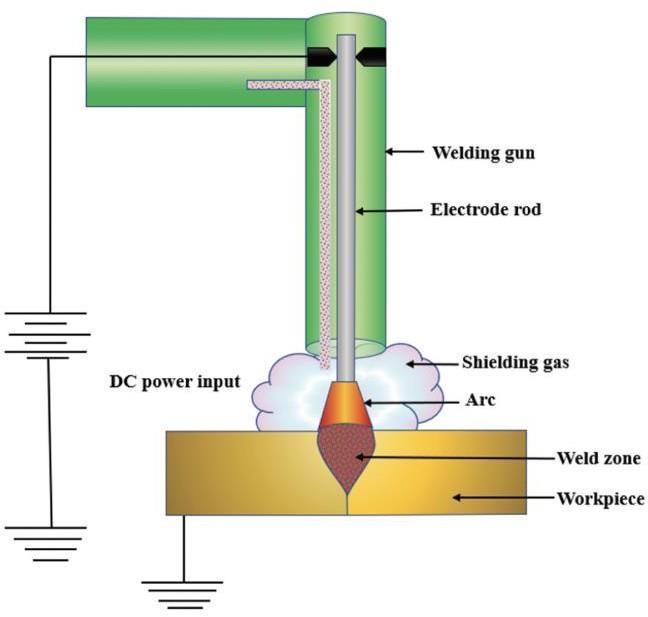
Gas Metal Arc Welding (GMAW) is renowned for its functional adaptability and ability to weld thick materials while maintaining high productivity, even when automated. This welding method achieves weld stability through meticulous control of various parameters, including Weld current,voltage,torchangle,wirefeedspeed,andelectrode extensionlength [12,16] Theprocesstypicallyproducesafine crystal,directionallysolidifiedmicrostructure,which,while beneficial for mechanical properties, may exhibit porosity defectsthatcanbemitigatedbyadjustingtheweldTravel speed [17].AlternatingcurrentGMAWisparticularlyuseful forapplicationsinvolvingthinsheetmetalweldingorthick plate welding where strict control over burn through is required.AC-GMAWoffersbettercontroloverarcstability, penetration depth, reinforcement height, and why are meltingcoefficient.Thismethodallowsforalterationinthe welding current waveform to provide comprehensive controloverheatinput [18].Thecontinuouschangeinpolarity ensuresproperdistributionofinputenergy,withthebase currentbeingappropriatelymodulatedtooptimizewelding conditions. Below is an image representing gas metal arc welding,
Shielded metal arc welding (SMAW) characteristics are influenced by weld speed, current, voltage, and external magnetic field. Alloys like super austenitic stainless steel, alloyed with molybdenum, showcase high corrosion resistanceandstrength,makingthemsuitablefornuclear, chemical,andpetrochemicalindustries.Preheatingthealloy canimprovetheweldmenthardnessandpenetrationdepth whilereducingtheheatinput.Residualstressesarecrucial indeterminingtheload-bearingcapabilitiesofthewelded joint, and heat treatment can enhance the weld bead microstructure [20]
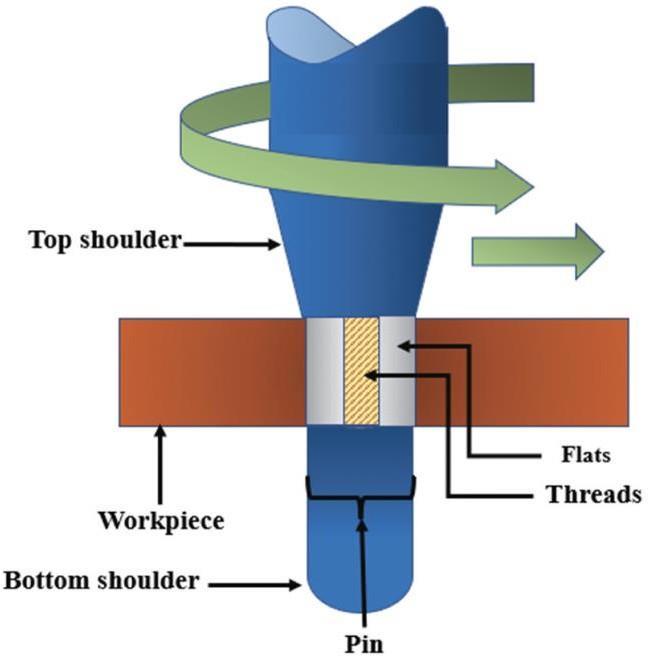
Friction Stir Welding (FSW) is a solid-state welding techniquethatemploysarotatingtooltiptraversingalong the interface to achieve coalescence between similar or dissimilarmetals.Thisprocessinducesmixingofthebase materials at the interface, effectively minimizing the chances ofelement segregation and enhancing resistancetostress corrosioncracking,distortions,andresidualstresses[21] The heatgeneratedduringFSWisjustsufficienttocausemixing at the interface without melting the base materials, thus maintaining the integrity of the joint and reducing waste generation. The process allows for close control of parameters, high repeatability, and minimal heat input, leading to a more efficient and environmentally friendly welding process [22]. the weldingprocessinFSWisgoverned bythreeindependentparameters,feedrate,toolrotational speed,andaxialforce.Anincreaseinweldpitch,whichisthe ratiooftoolrotationspeedtofeedrate,leadstohigherheat input, promoting grain recrystallization and resulting in finerequiaxedgrainsinthenuggetregion.Additionally,the axialforceunderaconstantweldpitchdirectlyinfluences
e-ISSN: 2395-0056 p-ISSN: 2395-0072
thequalityoftheweldbyaffectingthehydrostaticpressure exertedbytheweldshoulder,whichisessentialforinducing the required plastic deformation and frictional force for effectivestirring [23] .Belowisanimagerepresentingfriction stirwelding,
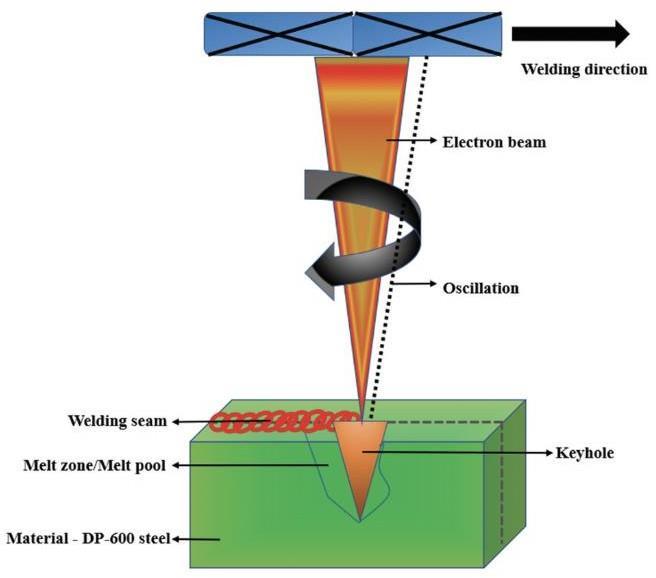
Electron Beam Welding employs a highly concentrated electron stream as the beam source, leading to rapid metallurgical reactions. Consequentially, weld characteristics such a mechanical properties and microstructure are significantly influenced by parameters likefocuscurrentandheatinput [25].Anincreaseinenergy density,managedbythefocuscurrentflow,enhancesweld penetration.Additionally,theweldwidthvarieswithdegree ofbeamfocusonthetopsurface,generallywideningasheat inputrises.Heatinputvariationsalsoaffectgrainsize,with higher heat input promoting grain growth. The ratio of temperaturegradienttocrystallizationspeedplaysacrucial role in microstructure development (a lower ratio transformscellulardendriticgrainsintoequiaxeddendrites) [26] Indissimilarwelds,particularlywithTitaniumalloys,the fusionzoneexhibitsmaximummicrohardnessduetobrittle phase formation. Fracture tests indicate these welds typically fail at the fusion zone, showing lower tensile strengthcomparedtothebasematerial [27].Formetalsprone to oxidation, vacuum electron beam welding prevents exposuretooxidizingenvironments,minimizingheatinput andacceleratingcoolingtoreduceprecipitationformation and enhance weld properties [28] . Below is an image representingthesetupofelectronbeamwelding,
LaserBeamWelding(LBW)isaversatileweldingtechnique known for its unique ability to manipulate heat input distribution,makingitparticularlywell-suitedforwelding dissimilarmetalsandalloys.Themethodscharacteristiclow heatinputresultsinanarrowHAZ,ensuringasmallerweld bead with minimal distortions. Additionally, LBW can be easily automated, enabling the welding of complex geometries while maintaining close tolerances [30] The process is meticulously controlled through several parameters, including laser beam power, welding speed, the positionofthefocalpoint,andfocaldistance.Byincreasing the welding current and plasma gas flow rates, deep
2395-0056 p-ISSN: 2395-0072
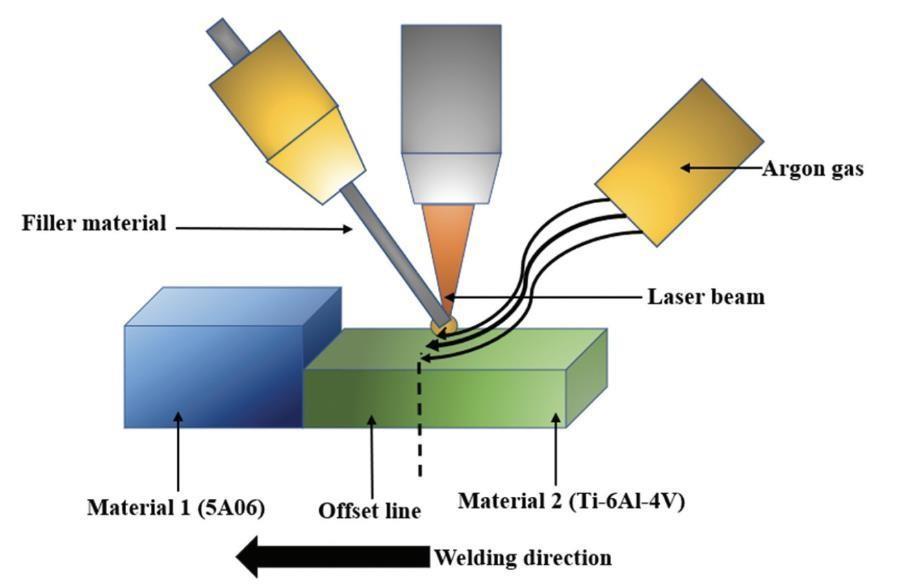
penetrationintotheworkpiececanbeachieved.Thestrength oftheweldisdirectlycorrelatedwithanincreaseinlaser beam power and focal length of the weld bead [31]. The resultingweldtypicallyexhibitsanasymmetricprofiledueto thedifferentialheatresponseofeachmetaloneithersideof theweld.Themicrostructureoftheweldismainlyinfluenced bytheprimarymetal’smicrostructureandthethermalcycle duringtheheatinput,whichvarieswiththebeamoffset [32] Below is an image representing the setup of laser beam welding,
Automationandroboticshavebecometransformativeagents inweldingprocesses,elevatingprecision,speed,andsafety to unprecedented levels. The integration of these technologies not only streamlines manufacturing but also addresseschallengesassociatedwithhumanlimitations.One key aspect of this integration lies in the development of roboticweldingsystems,whichbringa host of benefits to theweldingindustry.Theserobotsusuallyfeatureaversatile three-dimensionalarmdesignedtointricatelyweldmetals. Integratedwithawirefeeder,thisroboticmarvelutilizesa high-heattorchatitsextremity,meltingmetalsseamlessly during the welding process. A feeder attached to the arm facilitatesacontinuoussupplyofadditionalmetalwirefrom thefeeder,andarcshieldsefficientlypreventthehigh-heat arc from mingling with oxygen [34]. The images below depict weldingrobotsusedintoday’sindustry.Imagesofthespotwelding robot, laser welding robot, plasma welding robot andarcweldingrobotispresentedinthenextpage(page5).
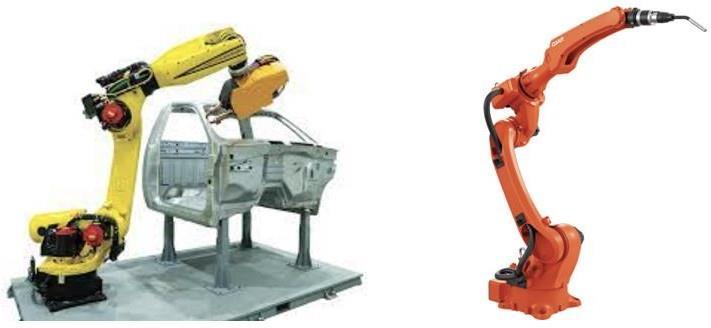
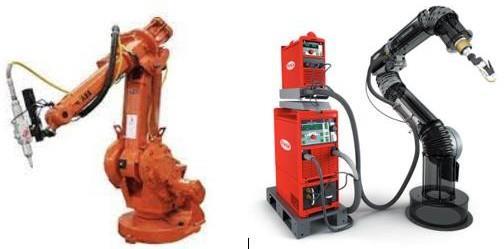

Precision,ahallmarkofsuccessfulwelding,issignificantly enhanced through robotic systems. These machines operate with meticulous accuracy, consistently reproducing welds with minimal variation. Unlike their human counterparts, robots do not yield to fatigue or distractions, ensuring continuousandhigh-levelprecisionthroughoutthewelding process. Advanced robotic welding arms, equipped with sensorsandvisionsystems,canadapttovariationsin materialsandjointgeometries,furtherrefiningtheprecision of welds [39] This level of consistency not only improves the overall quality of welded products but also reduces material waste, a critical consideration in cost-effective manufacturing.Theintegrationofautomationandrobotics bringsaparadigmshiftinthespeedofweldingprocesses. Robotsoperateatapacethatfarexceedshumancapabilities, resultinginacceleratedproductioncycles.Thisincreased
speed is not only advantageous in meeting demanding production schedules but alsoin enhancing efficiency and output.Weldingrobots,guidedbysophisticatedalgorithms andreal-timedata,candynamicallyadjusttheirspeedand movements,optimizingthe weldingprocessformaximum efficiencywithoutcompromisingprecision.Thisacceleration in welding speed contributes to a significant reduction in overallproductiontime,enablingmanufacturerstorespond swiftly to market demands [40]. Safety is paramount in welding,andautomationplaysapivotalroleinminimizing risksassociatedwiththisinherentlyhazardoustask.Robots areimpervioustotheenvironmentalfactorsthatcanpose threatstohumanwelders,suchasextremeheat,fumes,and confinedspaces.Byreplacingoraugmentinghumanworkers with robotic systems, particularly in hazardous environments, the potential for accidents and injuries is greatly reduced [41]. Additionally, robotic welding systems
e-ISSN: 2395-0056 p-ISSN: 2395-0072 Volume: 11 Issue: 07 | Jul 2024 www.irjet.net
are equipped with advanced safety features, including sensorsthatcandetectthepresenceofhumansorobstacles intheworkspace,promptingtherobottoslowdownorhalt operationstopreventcollisions[42]
Advancing the integration of automation in welding may introduce mind-controlled welding robots, where operators can guide the robot’s actions through mental commands insteadofrelyingonacomputerinterface[43] .Collaborative robotsmightundertakeexpensiveoperations,andartificial visionsystems, powered by predictivecontrol algorithms, could model parameters [44]. Intelligent robotic welding, utilizingvisionsensors,wouldanalyzecharacteristicsand applicationsintheweldingprocess.Thisfacilitatesremote monitoring and control, enabling operators to oversee operationsfromasecuredistance[45] Thisnotonlyprotects human workers from potential harm but also ensures continuous monitoring of welding quality, properly addressinganydeviationsfromspecifications.
Implementing industry 4.0 technologies in welding, while promisingtransformativebenefits,posesseveralchallenges. Onesignificanthurdleistheintegrationofexistingsystems withadvancedtechnologies.Manyweldingoperationsrely on traditional machinery that lacks the necessary connectivityforseamless interaction withsmart devicesand dataanalytics [46].Retrofittingthissystemcanbecostlyand complex.Forexample,aweldingrobotthatonceoperated independently is now revamped to communicate its progress.Retrofittinginthiscasenotonlyincurs costsfor newhardwareandsoftwarebutalsodemandsforexpertise.
Another challenge lies in the cybersecurity realm. The increased connectivity inherent in Industry 4.0 introduces a higher susceptibility to cyber threats [47] . Safeguarding sensitive data and ensuring the resilience of networked systems become critical considerations. Comprehensive cybersecurity measures must be implemented to protect against potential breaches and ensure the integrity of the weldingprocesses.Interoperabilityissues emergeasanother significantchallenge.Integratingdiverseweldingmachines, sensors and data analytics tools from different manufacturerscanbecomplex,asstandardizationacrossthe industry remains a work in progress [48] This lack of standardized communication protocols hampers seamless connectivityanddataexchange,limitingthefullpotentialof Industry4.0inweldingenvironments.
Lastly, the transformational shift also demands a skilled workforce capable of operating and maintaining these advanced systems. Upskilling and retraining programs become imperative to bridge the gap between traditional welding practices and the demands of a digitally driven
Implanting industry 4.0 technologies in welding heralds a new era of efficiency, precision, and adaptability in manufacturing.Oneoftheprimaryadvantagesisenhanced automation, where smart welding systems equipped with sensorsandconnectivityseamlesslycommunicateandadapt tochangingconditions.Thisnotonlyboostsproductivitybut alsoensuresconsistency,andhigh-qualitywelds,reducing the likelihood of defects. Industry 4.0 technologies bring aboutreal-timemonitoringanddataanalyticscapabilities, allowing for proactive maintenance and optimization of welding processes. Predictive analytics can predict equipment failures, minimizing downtimes and reducing overallmaintenancecosts[50].Additionally,theintegrationof data-driven insights enables manufacturers to make informed decisions, optimize welding parameters, and streamline production workflows. Connectivity facilitates remote monitoring and control, enabling off-site supervision ofweldingoperations.Thisnotonlyimprovesthesafetyof the work environment by reducing human exposure to hazardousconditionsbutalsoallowsforquickresponseto deviationsfromspecifications.Collaborativerobots,another
industry [49]. Overcoming these challenges requires a collaborative effort from industry stakeholders, policymakers, and educational institutions to foster a conducive environment for the successful integration of industry4.0technologiesinwelding. facetofIndustry4.0,canworkalongsidehumanoperators, augmenting efficiency and handling labor-intensive tasks, whilealsoensuringasaferworkplace [51].Furthermore,the implementation of Industry 4.0 in welding fosters greater customization and flexibility. Smart systems can quickly adapttochangesinproductspecifications,makingiteasier to accommodate varying customer demands [52]. Overall, the advantages of Industry 4.0 technologies in welding contribute to a more agile, efficient, and responsive manufacturingecosystem.
The integration of automation and industry 4.0 has revolutionizedmodernmanufacturingprocesses,including welding. Automation involves the use of machinery and technology to perform tasks without human intervention, enhancingefficiency,precision,andsafety.Industry4.0,also knownasthefourthindustrialrevolution,buildsonthisby incorporatingadvancedtechnologiessuchastheinternetof things(Iot),artificialintelligence(AI),anddataanalysisto create smart, interconnected systems [53]. Together, these advancements are transforming traditional welding techniquesintohighlysophisticated,automatedprocesses that can meet the demands of contemporary industrial applications.
6.1 Complementary role of automation and industry 4.0 in welding,
Automation and industry 4.0 complement each other in weldingbyenhancingtheprecision,efficiency,andflexibility of welding processes. Automation streamlines welding operations through robotic welders that can perform repetitivetaskswithhighaccuracy.Reducinghumanerror andincreasingproductionrates.Theseroboticsystemsare capable of handling complex geometries and maintaining consistentquality,makingthemidealformassproduction [54] Industry 4.0 takes automation a step further by integratingsmarttechnologiesintoweldingoperations.Iot devices can collect real time data from welding machines, sensors, and the work environment, providing valuable insightsintoprocessparameterssuchastemperature,weld speed,andmaterialproperties.Thisdataisanalyzedusing AIalgorithmstooptimizeweldingparametersandidentify potentialdefectsbeforetheyoccur [55].Theresultisamore efficientandadaptiveweldingprocessthatcanrespondto changingconditionsanddemands.
Additionally, the digital twin concept, a kay aspect of industry4.0,allowsforthecreationofavirtualmodelofthe weldingprocess.thisdigitalrepresentationcanbeusedfor simulation,monitoring,andoptimization,ensuringthatthe physicalweldingoperationrunssmoothlyandefficiently[56] By leveraging these advanced technologies, welding processesbecomemorereliableandcosteffective,meeting the high standards required in industries such as aerospace, automotive,andconstruction.
6.2 Role of IoT and real time monitoring in welding,
Real time monitoring, facilitated by IoT, plays a transformativeroleinmodernweldingprocesses,bringing unprecedented levels of precision, efficiency, and quality control.Iotdevices,embeddedwithsensorsandconnected to the internet, enable continuous collection and transmissionofdataduringweldingoperations.Thisdatadrivenapproachallowsforreal-timemonitoringofvarious parameters critical to the welding process, such as temperature, weld speed, arc stability, and material properties. One of the primary benefits of real time monitoringinweldingistheabilitytomaintainconsistent weldquality [57] .Sensorscandetectdeviationsfromoptimal welding conditions immediately, triggering corrective actionstopreventdefects.Forinstance,ifthetemperature falls outside the desired range, adjustments can be made instantlytobringitbacktotheoptimallevel.Thisimmediate response reduces the occurrence of weld flaws, such as cracksorporosity,ensuringhigherintegrityandstrengthof thewelds.
2395-0072
Additionally, real-time monitoring enhances predictive maintenance capabilities. They're continuously analyzing datafromweldingequipment, IoTsystemscanidentifysigns ofwearorpotentialfailuresbeforetheyleadtobreakdowns [58] . This proactive maintenance approach minimizes downtime and extends the lifespan of welding machinery, thereby reducing operational costs and increasing productivity. IoT-enabled real-time monitoring also facilitates better process optimization. By analyzing historical and real-time data, manufacturers can fine tune welding parameters to achieve optimal performance. This optimization can lead to faster weld times, reduced material waste, and improved energy efficiency. Furthermore, the abilitytoremotelymonitorandcontrolweldingoperations allowsforgreaterflexibilityandresponsiveness,especially inlargescalemanufacturingenvironments.
The quality of a weld is dependent on several factors, but mostimportantly,theweld’sdurabilityandstrengthwillbe mostly a result of three main factors: the composition, mechanical, thermal, and electrical properties, and microstructure of the metals involved in and around the joint.Thisholdstrueforboththebaseandfillermetals [59] . As there are far too many hypothetical combinations and typesofmetalstodiscuss,thescopeofthisreportwillfocus mostly on steel. In steel, lower carbon content is often associated with better weldability and integrity. As the numberofalloyingelementsincreases,sodoestherisk of liquationcrackingalongtheweldorinandaroundtheheataffected zone (HAZ). Alloys with good resistance to hightemperature oxidation and creep are generally better at resisting hydrogen attack at high temperatures and pressures but must still be welded with care due to their highhardenability[59].Thecompositionofthemetalmayalso influence how its microstructure changes as a result of weldingandthis needsto betakenintoaccountgiven the desired application of the productandthestressesonthe joint.Forexample,itwasshownthatasthenickelcontentin austenite steel increased, its solidification mode changed from ferrite-austenite to austenite-ferrite. This change in crystal lattice structure, its associated properties, and its implicationsforthedesiredapplicationneedtobekeptin mindwhenchoosingthecompositionofthematerialsina givendesign[60]
Whendesigningproducts,thespecificapplicationthatthe pr ilar metal be joined together permanently through welding. This can prove to be a challenge for designers if theyopttogofortraditional/conventionalformsofwelding
oduct will be used for may require that two pieces of dissim
Volume: 11 Issue: 07 | Jul 2024 www.irjet.net
such as solid-state welding, especially when the metals have significantlydifferentmechanicalproperties.Differencesin their melting points may cause one metal to remain solid while the other melts making it much harder to maintain bothmetalsintheidealconditionsandphasesforastrong stableweld.Anotherissuemightariseifthetwometalshave different thermal expansion rates or coefficients as this wouldleadtodistortionandmakeitmuchhardertoposition thetwometalsappropriatelywhenjoiningthemtoensure that the final result or the end product has the specified dimensionsrequiredorthatthetwopiecesofmetaldidn’t changeshapenearthejointandaffecttheproduct’sdesired specifications. A discrepancy in the metals’ thermal conductivitycouldalsoresultinmiscalculatedandcrooked welds due to the weld bead being distributed unevenly acrossthesurfaceofthemetals[61]
Thereare afew possible methodsforadjusting conventional weldingmethodstobetteraccommodatedissimilarmetals andmitigateorlessenanyerrorthatmayresultfromtheir differingproperties,mostlyusingspecificfillermetalsthat lessenthedisparitywithinthemetals’properties.Butthese areall suboptimal solutions intermsof quality,withtheir most redeeming qualities being their affordability and scalabilityforlarger-scaleapplications [62].Frictionwelding aswellasdiffusionbondingmayalsobeviablealternatives althoughtheyarealsonotwithoutfault [59].Laserwelding avoids many of the issues associated with conventional weldingofdissimilarmetalsduetoitsaccuratepositioning andcontroloftheweldbeadalongthejoint,lowdistortion, andrapidheatingandcoolingprocesses[63]
Similarly, electron beam welding allows the welder to accurately control the beam size and location thus minimizingdistortionofthetwometalcomponents,andthe vacuum environment minimizes any contamination and subsequentreactionofthemetalwithoxygen,hydrogen,and nitrogen,meaninghighlyreactiveandrefractorymetalscan be welded together withfewerimpurities in the joint [62]
Weldsareaprimarymethodofassemblyaswellasrepair, and often times they are required to be performed under extremeconditions,suchasunderwater,wheremaintaining the welding temperature might be an issue. Multiple methodscouldbeusedforunderwaterwelding,suchaswet welding, local cavity welding, and dry welding [64]. The most commonly used method is wet welding, where the base metal, weld arc, and welder are in the water without a mechanical barrier separating them from it, making it easier to weld complexgeometries. Flux-cored arc welding(FCAW) and shielded metal arc welding (SMAW) are used for wet welding because using coated arcs for welding is the cheapestandmostflexiblemethod[64] InadditiontoSMAW, temper bead welding (TBW) is used, a method where
p-ISSN: 2395-0072
additional weld beads are deposited onto constructional weld beads, resulting in an annealing or tempering effect, thus reducing hardness and increasing ductility [65]. The arcs used in SMAW consist of a metal core with a coating that consistsofamixtureoffinechemicalpowderandminerals bonded together. The coating differs depending on the application and base metal; an example is carbon steel, wherehydrogen-controlledcoatingsorironpowdercoatings wouldbeused.Asforunderwaterwelding,awaterproofflux coatingwouldbeused.Ingeneral,ferriteelectrodeswithan iron-oxide-basedcoatingarepreferredduetotheirabilityto resist hydrogen cracking [66] In SMAW, a weld bead is deposited by the melting of the core metal along with the ironpowderinthecoating.Stabilizingsubstancesareused toimprovearcstabilityandreducespatter[66].Drywelding canbeusedaswell,inwhichtheweldingisperformedina chamberthatseparatestheweldfromthewaterandusually containsairorhydrogen.Dryweldingallowstheuseofmost welding methods and often results in better welds, but it requiressupportequipmentthatresultsinahighcostthat couldbetwiceasmuchasthatofwetwelds [64] .
Weldingprocessesinadditivemanufacturing(AM)relyon rawmaterialasitsbase,usuallyintheformofpowder,wire, or sheet, which is then melted and resolidified, forming a densemetalstructurethroughtheuseofanenergyorheat source such as a laser, electron beam, or electrical arc performed in a layer-by-layer manner [67]. The preferred AM process uses laser welding systems, which tend to yield products with good dimensional accuracy and surface finish inashorttime[68,69].Yetelectronbeamweldingsystemsare likely to produce parts with better mechanical properties sinceitisperformedinavacuumchamberunderuniform high temperatures, thus reducing residual stresses in the final product [68]. Another procedure that could be taken to helpreducetheresidualstresscausedbythecyclicheating andcoolinginvolvedwithlasersystemsisjoiningseparate componentsmadebylaserweldingwiththeuseofelectron beam welding, creating the final part [69]. Laser welding systemsareknownbymanynames,suchasselectivelaser melting(SLM)andlaserpowderbedfusion(LPBF)andarea process in which the printing platform is covered with metallicpowder,whichis then meltedselectivelybylaser beams to the shape of the computer-aided design (CAD), then resolidified. The printed layer is then covered once againwithmetalpowderthrougheitheratoolthatdeposits the layer or the baseplate lowering into the powder pool, andthentheprocessisrepeated[70]
SLMiscommonlyusedinfabricatingtitaniumGrade5parts usedforbiomedicalandaerospaceapplicationsbecauseit allowsforthecreationofadensitygradientwithinthesame componentdirectlyduringthebuildup.TitaniumGrade5is commonlyusedforitslowdensityanddesiredmechanical
Volume: 11 Issue: 07 | Jul 2024 www.irjet.net
properties [71]. Another welding method that has been adaptedforAMuseisgasmetalarcwelding(GMAW).Itisa process that makes use of consumable wire electrodes, allowing for the joining of metal parts and the deposition process by melting the electrode through heat that is the resultofanelectricarcstuckbetweentheelectrodeandthe basepiece.TheuseofGMAWinAMinvolvesthedeposition of a series of beads over one another, forming the final design.AGMAW-AMsystemincludesseveralcomponents, amongwhichareapowersupplyunit,shieldinggassupply, wire feeder, and computer numerical controlled (CNC) baseplate. GMAW-AM is often preferred over other AM methodsduetoitslowprocessingtime,highdepositionrate, energy efficiency, mechanical properties, and acceptable accuracy[72]
Emerging technologies in welding are paving the way for significant advancements in the industry, driven by the integrationofdigitalandintelligentsystems.Thefollowing arekeyemergingtechnologiesshapingthefutureofwelding:
Virtualandaugmentedreality(VR/AR):thesetechnologies areenhancingtrainingandprecisioninwelding.VRprovides immersive training environments, allowing welders to practice without the risk associated with live welding. AR aids in precision by overlapping digital information onto the physical world, helping welders align and place welds accurately [73] .
5G technology: the advent of 5G enables faster and more reliable communication between devices. In welding, this translatestoreal-timedatatransferandremotemonitoring capabilities,allowingforbettercontrolandoptimizationof weldingprocesses [74]
Cloudcomputing:Thistechnologyfacilitatesthecreationof data-driven welding expert system. Cloud com offers a centralized repository for welding parameters and processingdata,accessiblefromanywhere.IoTenablesrealtime monitoring andcontrol,enhancingtheefficiencyand accuracyofweldingoperations [75]
Machine learning and AI: Ai techniques are being integrated intoweldingsystemstoenableadaptivecontrolanddecision making.Machinelearningalgorithmsanalyzeweldingdata to predict outcomes and adjust parameters in rea-time, improvingweldqualityandconsistency [76] .
Theseemergingtechnologiesarecollectivelyadvancingthe welding industry towards more intelligent, efficient, and preciseprocesses.Aligningwiththeprinciplesofindustry 4.0andsupportingthegrowthofadditivemanufacturing.
e-ISSN: 2395-0056 p-ISSN: 2395-0072
In conclusion, welding is a foundational process in manufacturing and construction, essential for ensuring structural integrityanddurability.Integratingautomation androboticsmightusherinanewerawithintheindustry, enhancing precision and speed. Industry 4.0 technologies may hold the key to several benefits, including real-time monitoring, proactive maintenance, and enhanced customization. Adopting these technologies could be a challenge due to cybersecurity, interoperability, and the needforaskilledworkforce,butovercomingthesehurdles could be achieved via collaboration among industry stakeholders and lawmakers. The implementation of Industry 4.0 brings efficiency, adaptability, and improved safetytoweldingprocesses.Additionally,therearecountless factors that can impact weld quality, with a few examples givenforsteels.Dissimilarmetalweldingisalsodiscussed withlaserweldingandelectronbeamweldingappearingto be promising alternatives although more research and investigationmaystillbeneededthroughouttheindustry.
Underwater welding methods, particularly wet welding, showcase adaptability in complex environments. In additive manufacturing, welding processes evolve with laserweldingsystemslikeSLMandGMAW,offeringrapid, precise fabrication. Welding is a relatively unexplored section of the engineering landscape, with near limitless potential for its applications and future technological advancements. Transitioning from the older conventional welding methods to Industry 4.0 showcases not just technological progress but animprovement in excellence and efficiency within welding practices and sets a higher standardforitsfutureapplications.
[1] - Mishra D, Pal SK, Chakravarty D. Industry 4.0 in welding.WeldingTechnology.2021:253-98.
[2] -KahP.Overviewoftheexplorationstatusoflaser-arc hybrid welding processes. Rev. Adv. Mater. Sci. 2012 Apr 1;30:112-32.
[3] - Rachman T. Application of Environmentally Friendly TechnologyintheWeldingProcess.CollaborateEngineering DailyBookSeries.2023Jun29;1(1Juni):92-9
[4] - DixitUS,Hazarika M,DavimJP,DixitUS, Hazarika M, Davim JP. Manufacturing through ages. A brief history of mechanicalengineering.2017:99-125.
[5]-PogrebiskyDM.Weldingofmetals:Classification,brief history,development.InstyPrints;2016.
Volume: 11 Issue: 07 | Jul 2024 www.irjet net
InternationalResearchJournalofEngineeringandTechnology(IRJET) e-ISSN: 2395-0056 p-ISSN: 2395-0072
[6] - FranceEJ. The nature of welding and its relationship withthesteelindustry.SteelTimesInternational.2020Sep 1;44(6):22-7.
[7] - Bera T.TheHistory ofDevelopmentofGasMetal Arc Welding process. Indian Science Cruiser. 2020 Nov 1;34(4):64-6.
[8] - KaziJ,ZaidS,Talha SM,YasirM,AkibD.Areviewon variousweldingtechniques.InternationalJournalofModern Research.2015;5(2):22-8.
[9]-KashaevN,VentzkeV,ÇamG.Prospectsoflaserbeam welding and friction stir welding processes for aluminum airframe structural applications. Journal of Manufacturing Processes.2018Dec1;36:571-600.
[10]-ZhangYM,YangYP,ZhangW,NaSJ.Advancedwelding manufacturing:abriefanalysisandreviewofchallengesand solutions.JournalofManufacturingScienceandEngineering. 2020Nov1;142(11):110816.
[11]-ShravanC,RadhikaN,DeepakKumarNH,SivasailamB. A review on welding techniques: properties, characterisationsandengineeringapplications.Advancesin MaterialsandProcessingTechnologies,DOI.2023;10:080.
[12]-KahP,SuorantaR,MartikainenJ.Advancedgasmetal arc welding processes. The International Journal of AdvancedManufacturingTechnology.2013Jul;67:655-74.
[13] - Medzhidov MR, Ostroverkhova TA. Benefits and drawbacksofTIGandMIGwelding.InНовыетехнологиинефтегазовомурегиону2014(pp.112-114).
[14]-LonglongG,HualinZ,ShaohuL,YueqinL,XiaodongX, Chunyu F. Formation quality optimization and corrosion performance of Inconel 625 weld overlay using hot wire pulsed TIG. Rare Metal Materials and Engineering. 2016 Sep 1;45(9):2219-26.
[15]-C,S.,Radhika,N.,DeepakKumar,N.H.,&Sivasailam,B. Image of gas tungsten arc welding [Internet]. Taylor and Francisonline;2023[cited2024June14].Availablefrom: https://encryptedtbn2.gstatic.com/images?q=tbn:ANd9GcRdH4KX0T4oueW1 E8dAE-oardvmUNAsODF50_36r5xJfjMTfNxI
[16]-IbrahimIA,MohamatSA,AmirA,GhalibA.TheEffect of Gas Metal Arc Welding (GMAW) processes on different welding parameters. Procedia Engineering. 2012 Jan 1;41:1502-6.
[17] -LiuY,WangW,XieJ,SunS,WangL,QianY,MengY, Wei Y. Microstructure and mechanical properties of aluminum 5083 weldments by gas tungsten arc and gas metal arc welding. Materials Science and Engineering: A. 2012Jul15;549:7-13.
[18] - Arif N, Chung H. Alternating current-gas metal arc weldingforapplicationtothickplates.JournalofMaterials ProcessingTechnology.2015Aug1;222:75-83.
[19]-C,S.,Radhika,N.,DeepakKumar,N.H.,&Sivasailam,B. Imageofgasmetalarcwelding[Internet].TaylorandFrancis online;2023[cited2024June14].Availablefrom: https://encryptedtbn2.gstatic.com/images?q=tbn:ANd9GcRdH4KX0T4oueW1 E8dAE-oardvmUNAsODF50_36r5xJfjMTfNxI
[20] - Pathak D, Singh RP, Gaur S, Balu V. To study the influenceofprocessparametersonweldbeadgeometryin shieldedmetalarc welding.MaterialsToday:Proceedings. 2021Jan1;44:39-44.
[21]-MishraRS,MaZY.Frictionstirweldingandprocessing. Materials science and engineering: R: reports. 2005 Aug 31;50(1-2):1-78.
[22] - Swarnkar A, Kumar R, Suri A, Saha A. A review on Friction Stir Welding: An environment friendly welding technique.In2016IEEERegion10HumanitarianTechnology Conference(R10-HTC)2016Dec21(pp.1-4).IEEE.
[23] - Rodrigues DM, Loureiro AL, Leitao C, Leal RM, Chaparro BM, Vilaça P. Influence of friction stir welding parameters on the microstructural and mechanical properties of AA 6016-T4 thin welds. Materials & Design. 2009Jun1;30(6):1913-21.
[24]-C,S.,Radhika,N.,DeepakKumar,N.H.,&Sivasailam,B. shieldedmetalarcwelding[Internet].TaylorandFrancis online;2023[cited2024June14].Availablefrom: https://encryptedtbn2.gstatic.com/images?q=tbn:ANd9GcRdH4KX0T4oueW1 E8dAE-oardvmUNAsODF50_36r5xJfjMTfNxI
[25] - Węglowski MS, Błacha S, Phillips A. Electron beam welding–Techniquesandtrends–Review.Vacuum.2016Aug 1;130:72-92.
[26]-WangG,HuangY,CaoW,HuangZ,HuttulaM,SuY,Tan C.MicrostructureandcrystallizationmechanismofTi-based bulk metallic glass by electron beam welding. Journal of ManufacturingProcesses.2018Apr1;32:93-9.
[27] - Metzger G, Lison R. Electron beam welding of dissimilarmetals.Weldingjournal.1976Aug1;55(8):230-40
[28]-HanK,WangH,PengF,ZhangB,ShenL.Investigation ofmicrostructureandmechanicalperformanceinIN738LC jointbyvacuumelectronbeamwelding.Vacuum.2019Apr 1;162:214-27.
[29]–C,S.,Radhika,N.,DeepakKumar,N.H.,&Sivasailam,B. Imageofelectronbeamwelding[Internet].Taylorand Francisonline;2023[cited2024June14].Availablefrom:
Volume: 11 Issue: 07 | Jul 2024 www.irjet.net
InternationalResearchJournalofEngineeringandTechnology(IRJET) e-ISSN: 2395-0056 p-ISSN: 2395-0072
https://encryptedtbn2.gstatic.com/images?q=tbn:ANd9GcRdH4KX0T4oueW1 E8dAE-oardvmUNAsODF50_36r5xJfjMTfNxI
[30] - Martukanitz RP. A critical review of laser beam welding.CriticalReview:IndustrialLasersandApplications. 2005Mar8;5706:11-24.
[31]-LeongKH,GeyerHK.Laserbeamweldingofanymetal. InInternational Congress on Applications of Lasers & Electro-Optics1998Nov1(pp.F242-F250).AIPPublishing.
[32]-LiuS,MiG,YanF,WangC,JiangP.Correlationofhigh power laser welding parameters with real weld geometry and microstructure. Optics & Laser Technology. 2017 Sep 1;94:59-67.
[33]-C,S.,Radhika,N.,DeepakKumar,N.H.,&Sivasailam,B. Imageofelectronbeamwelding[Internet].Taylorand Francisonline;2023[cited2024June14].Availablefrom: https://encryptedtbn2.gstatic.com/images?q=tbn:ANd9GcRdH4KX0T4oueW1 E8dAE-oardvmUNAsODF50_36r5xJfjMTfNxI
[34]-KahP,ShresthaM,HiltunenE,MartikainenJ.Robotic arc welding sensors and programming in industrial applications. International Journal of Mechanical and MaterialsEngineering.2015Dec;10(1):1-6.
[35]-VasilashGS.ImageofSpot-weldingrobot[Internet]. Gardner Web; 2020 [cited 2023 Nov 24]. Available from: https://www.gardnerweb.com/articles/robotdevelopments-for-automotive-applications
[36] - Image of arm-welding robot [Internet]. [cited 2023 Nov 24]. Available from: https://www.dsrobots.com/aggregate-manipulatorrobot.html
[37] -Imageoflaserweldingrobot[Internet].[cited2023 Nov 24]. Available from: https://www.goldenfiberlaser.com/professional-factory-forstainless-steel-letters-cutting-machine-3d-robotic-armlaser-welding-machine-vtop-fiber-laser.html
[38]-Imageofplasmaweldingrobot[Internet].[cited2023 Nov24]. Available from: https://www.directindustry.com/prod/fronius/product5983-1885558.html
[39] - YanS,Tao X, XuD.High-precisionroboticassembly systemusingthree-dimensionalvision.InternationalJournal of Advanced Robotic Systems. 2021 Jun 26;18(3):17298814211027029.
[40] - Xu LX, Chen YY. Deep reinforcement learning algorithms for multiple arc-welding robots. Frontiers in ControlEngineering.2021Feb22;2:632417.
[41]-SzczurekKA.MixedRealityHuman-RobotInterfacefor RoboticOperationsinHazardousEnvironments.
[42] -WangB,HuSJ, SunL,FreiheitT.Intelligentwelding system technologies: State-of-the-art review and perspectives. Journal of Manufacturing Systems. 2020 Jul 1;56:373-91.
[43]-EichhornF.Aspectsofthemechanisation,automation and utilisation of robots in welding. InAutomation and robotisation in welding and allied processes. IIS/IIW internationalconference1985(pp.2-53).
[44] - Keshvarparast A, Battini D, Battaia O, Pirayesh A. Collaborative robots in manufacturing and assembly systems: literature review and future research agenda. JournalofIntelligentManufacturing.2023May30:1-54.
[45] - Al-Karkhi NK, Abbood WT, Khalid EA, Jameel AlTamimi AN, Kudhair AA, Abdullah OI. Intelligent robotic weldingbasedonacomputervisiontechnologyapproach. Computers.2022Oct29;11(11):155.
[46]-HongTS,GhobakhlooM,KhaksarW.Roboticwelding technology. Comprehensive materials processing. 2014 Feb;6(February):77-99.
[47] - Humayun M. Industry 4.0 and cyber security issues and challenges. Turkish Journal of Computer and Mathematics Education (TURCOMAT). 2021 Apr 28;12(10):2957-71.
[48] - Burns T, Cosgrove J, Doyle F. A Review of Interoperability Standards for Industry 4.0. Procedia Manufacturing.2019Jan1;38:646-53.
[49] - Li L. Reskilling and upskilling the future-ready workforceforindustry4.0andbeyond.InformationSystems Frontiers.2022Jul13:1-6.
[50] -Duan L, Da Xu L. Data analytics in industry 4.0: A survey.InformationSystemsFrontiers.2021Aug24:1-7.
[51]-ThamesL,SchaeferD.Industry4.0:Anoverviewof keybenefits,technologies,andchallenges.Cybersecurity forIndustry 4.0: Analysis for Design and Manufacturing. 2017:1-33.
[52]-ZhangC,ChenY,ChenH,ChongD.Industry4.0andits implementation:Areview.InformationSystemsFrontiers. 2021Jun7:1-1[27]-BaileyN.WeldabilityofFerriticSteels. WoodheadPublishing;1994.
[53] - Mishra D, Pal SK, Chakravarty D. Industry 4.0 in welding.WeldingTechnology.2021:253-98.
[54]-NaikDK,SharmaVP,DineshKumarR.Automationin Welding Industries. Automation in Welding Industry:
IncorporatingArtificialIntelligence,MachineLearningand OtherTechnologies.2024Feb19:37-48.
[55]-SonarT,BalasubramanianV,MalarvizhiS,DusaneN. RoleofIoTandAIinWeldingIndustry4.0.IndianWelding Journal.2022Jan1;55(1).
[56] - Wang X, Hua Y, Gao J, Lin Z, Yu R. Digital twin implementationofautonomousplanningarcweldingrobot system.ComplexSystemModelingandSimulation.2023Aug 3;3(3):236-51
[57] - KahP,LayusP,HiltunenE,MartikainenJ. Real-time weld process monitoring. Advanced Materials Research. 2014Jul2;933:117-24.
[58]-WangX,LiuM,LiuC,LingL,ZhangX.Data-drivenand Knowledge-based predictive maintenance method for industrial robots for the production stability of intelligent manufacturing.ExpertSystemswithApplications.2023Dec 30;234:121136.
[59] - Bailey N. Weldability of Ferritic Steels. Woodhead Publishing;1994.
[60] - Chen Y, Wei S, Wu D, Lu S. Role of Ni content on microstructuralandmechanicalresponsesofNb-stabilized metastableausteniticstainlesssteelweldmetals.Journalof Materials Research and Technology. 2023, Sep; 26(1):84258239.
[61]-KumarN,YuanW,MishraRS.FrictionStirWeldingof Dissimilar Alloys and Materials. Butterworth-Heinemann; 2015.
[62] - Sun Z, Karppi R. The application of electron beam welding for the joining of dissimilar metals: an overview. JournalofMaterialsProcessingTechnology.1996,May,27; 59(3):257-267.
[63] - Sun Z, Ion JC. Laser welding of dissimilar metal combinations. Journal of Materials Science. 1995, Sep; 30(17):4205-4214.
[64] - J. Łabanowski, D. Fydrych, G. Rogalski Gdańsk :University of Technology, Faculty of Mechanical Engineering, Department of Materials Technology and Welding,Gdańsk,Poland
[65] -Brätz,O.;Klett,J.;Wolf,T.;Henkel,K.-M.;Maier,H.J.; Hassel,T.InductionHeatinginUnderwaterWetWelding Thermal Input, Microstructure and Diffusible Hydrogen Content. Materials 2022, 15, 1417. https://doi.org/10.3390/ma15041417
Volume: 11 Issue: 07 | Jul 2024 www.irjet.net © 2024, IRJET | Impact Factor value: 8.226 | ISO 9001:2008 Certified Journal | Page246
e-ISSN: 2395-0056 p-ISSN: 2395-0072
[66]-Vashishtha,Prashant,etal."Problemsencounteredin underwater welding and remedies-a review." Materials Today: Proceedings 64(2022):1433-1439.
[67] -DebRoy,T,Wei,HL,Zuback,JS,Mukherjee,T,Elmer, JW,Milewski,JO,Beese,AM,Wilson-Heid,A,De,A&Zhang, W2018,‘Additivemanufacturingofmetalliccomponents–Process, structure and properties’, Progress in materials science,vol.92,no.C,pp.112–224.
[68] - Oliveira, JP, Santos, TG & Miranda, RM 2020, ‘Revisiting fundamental welding concepts to improve additivemanufacturing:Fromtheorytopractice’, Progressin materials science,vol.107,pp.100590-.
[69]-Chen,Xiaohui,Zhang,J,Chen,Xin,Cheng,X&Huang,Z 2018, ‘Electron beam welding of laser additive manufacturing Ti–6.5Al–3.5Mo–1.5Zr–0.3Si titanium alloy thickplate’, Vacuum,vol.151,pp.116–121.
[70]-Song,X.,Zhai,W.,Huang,R.,Fu,J.,Fu,M.W.andLi,F., 2022.Metal-based3D-printedmicroparts&structures.
[71]-Benedetti,M,Cazzolli,M,Fontanari,V&Leoni,M2016, ‘FatiguelimitofTi6Al4ValloyproducedbySelectiveLaser Sintering’, Procedia Structural Integrity, vol. 2, pp. 3158–3167.
[72]-Pattanayak,S&Sahoo,SK2021,‘Gasmetalarcwelding based additive manufacturing—a review’, CIRP journal of manufacturingscience andtechnology,vol.33,pp.398–442.
[73] - VeningstonK,RajendranDK.VRandAR in Welding Technologies. Automation in Welding Industry: IncorporatingArtificialIntelligence,MachineLearningand OtherTechnologies.2024Feb19:129-42.
[74] -WangB,HuSJ,SunL,FreiheitT.Intelligentwelding system technologies: State-of-the-art review and perspectives. Journal of Manufacturing Systems. 2020 Jul 1;56:373-91.
- Suryanarayanan R, Sridhar VG. Future factories–automated welding cell based on cloud computing technology. EAIEndorsed TransactionsonCloud Systems. 2018No
[75] v15;4(13):e1-
[76] - Mahadevan R, Jagan A, Pavithran L, Shrivastava A, SelvarajSK.Intelligentweldingbyusingmachinelearning techniques. Materials Today: Proceedings. 2021 Jan 1;46:7402-10.