
International Research Journal of Engineering and Technology (IRJET) e-ISSN: 2395-0056
Volume: 11 Issue: 07 | July 2024 www.irjet.net p-ISSN: 2395-0072

International Research Journal of Engineering and Technology (IRJET) e-ISSN: 2395-0056
Volume: 11 Issue: 07 | July 2024 www.irjet.net p-ISSN: 2395-0072
Yagyashri1, Mr. Jonty Choudhary2
1Research Scholar, M. Tech. (Structural Engg.)
2Assistant Professor, Department of Civil Engineering, Jhada Sirha Government Engineering College, Jagdalpur Chhattisgarh India.
Abstract - According to the construction section, the necessary supplies are currently unavailable. Therefore, we must come up with a different plan of action by substituting other components for cement, fine aggregate, and coarse aggregate in the concrete. The most expanding component of concrete is cement. Cement manufacturing is responsible for more than 5% of the world's carbon dioxide emissions. This technique uses GGBS, an alternative source of cement a compressive analysis of the characteristics of concrete with GGBS partially substituting cement. Made in the blast furnace that produces iron, GGBS is a by-product. Blast furnaces are supplied with a precisely regulated mixture of iron ore, coke, and limestone and run at temperatures between 1500 and 1600 °C. It has an off-white hue. In this studies M35-grade concrete mixtures have GGBS replacement percentages of 20%, 30%, and 40% of the original cement. Strength measurements at 7 and 28 days include compressive strength. It is determined what percentage of GGBS substitution is ideal by comparing the strength to regular concrete.
Key Words: Ordinary Portland cement, GGBFS, Compressive strength, Design mix, conventional concrete.
In the globe, concrete is undoubtedly the most frequently used building material, with almost six billion tons manufacturedannually.intermsofindividualconsumption. Thereisonlywaterinthearea.Themostsignificantmaterial element in the constructed environment is concrete. Concrete with less embodied energy might benefit the economy and the environment greatly without sacrificing functionality or driving up costs. Portland cement, aggregates,andwaterarethethreeprimarycomponentsof concrete. Although Portland cement typically makes up about 12% of the mass of the concrete, it accounts for around 93% of the total embodied energy of the material and 6–7% of global CO2 emissions. To minimize the unfavorablefeatures,youcanusesomeremedialsteps.
1.1 Formation of GGBS and its compositions:
An iron manufacturing industry byproduct is groundgranulatedblastfurnaceslag.Meltedslagrisestothetopof themoltenironatatemperatureofapproximately15000-
16000 °C as a result of feeding the furnace with iron ore, coke,andlimestone.About30%to40%SiO2and40%CaO makeupmoltenslag,whichisnearlyidenticaltoPortland cement's chemical makeup. GGBFS will reduce carbon dioxide gas emissions in place of Portland cement. It is therefore a building material that is friendly to the environment. GGBFS is regarded as an environmentally beneficial material since it usually doesn't need to be processedbeforebeingusedinconcreteinmodernthermal powerplants.WithGGBS,wecanreplaceroughly80%ofthe Portlandcementinconcrete.Improvedresistancetosulfate attack,corrosion,andwaterimpermeabilityareamongthe qualities of GGS. because of decreased heat hydration. It lessensthepossibilityofthermalfracture.Itismoreresilient andworkable,butlesspermeabletootherorganizations.
1.2 Using Concrete with GGBFS:
an improved and more robust basis. decreasing and managing heat cracking. lower heat-induced hydration. sustaineddevelopmentofstrength.strengtheneddefenses againstpeaty,acidicsubstances.heightenedresiliencetosalt and sulfates in the maritime milieu. These days, high-rise structures, bridges, and highways are the main uses for GGBSconcrete.
DeterminewhetherusingGGBSinsteadofcement whilebuildingconcreteisfeasible.
Examine how concrete cubes' compressive strengthsbehave.Whensubstituting20%,30%,or 40% of the cement with GGBS, compare the outcometoconventionalnormalconcreteandthe numberofcubescast.Then,comparethequalities withstandardmixM35.
The goal is to determine the most cost-effective replacement percentage without compromising strengthandtoofferaffordablebuildingcosts.
T. Vijayagowri, P. Sravana, P. Srinivasa Rao (2014) Studiesonstrengthbehaviourofhigh volumes of slag in concrete ‘Investigated the effects on compressive strength, split tensile
International Research Journal of Engineering and Technology (IRJET) e-ISSN: 2395-0056
Volume: 11 Issue: 07 | July 2024 www.irjet.net p-ISSN: 2395-0072
strengthandflexuralstrengthofconcreteat28, 90,180and360daysbypartialreplacementof cementwithGGBFSon.Heused50%GGBFSas replacement material of cement an also used variouswater/binderratiosare0.55,0.50,0.45, 0.40,0.36,0.32,0.30and0.27.Heobservedthat the strength gain by replacement of slag is inversely proportional to the water/ binder ratio and slag concrete gains appreciable amount of strength at later ages (90 days onwards). He found out that the strength of high volume of slag concrete is more at later ages because rate of hydration of slag with Ca(OH)2andwaterisslow.Heconcludedthat onreplacementofcementby50%GGBFShelps to reduce the cement content of concrete, therebyreducingthecostofconcreteandalso protectingtheenvironmentfrompollution.
Reshma Rughooputh and Jaylina Rana (2014) Partial replacement of cement by ground granulated blast furnace slag in con Crete‘Studiedtheeffectsonvariousproperties of concrete including compressive strength, tensile strength, splitting strength, flexure strength, modulus of elasticity, drying shrinkage and initial surface absorption by partial replacement ofOPC byGGBFSon.The testswereconductedwithreplacementranging from 30 % to 50% at 7and 28 days. It was foundthatcompressivestrengthisloweratthe earlyagebutincreaseafterthelateragetime. Flexural strength of test specimens increased by22%and24%,tensilestrengthincreasedby 12%and17%for30%and50%replacement respectively.Dryingshrinkageincreasedby3% and4%.Staticmodulusofelasticityincreases by 5% and 13%. Based on the results the optimummixwastheonewith50%GGBFS.
Mohammed Shariq, Janaka prasad, A.K. Ahuja (2008) Strengthdevelopmentofcement mortar and concrete incorporating GGBFS’ Studied the effect of curing procedure on the cement mortar and concrete incorporating ground granulated blast furnace slag compressive strength development. The compressivestrengthdevelopmentofcement mortar is calculated by the 20, 40 and 60 percent replacement of GGBFS for different types of sand. Similarly, the strength development of concrete is investigated with 20,40and60percentreplacementofGGBFSon twogradesofconcrete.Testsresultsshowthat the incorporating 20% and 40% GGBFS is highlysignificanttoincreasethecompressive
strengthofmortarafter28daysand150days, respectively.
Santosh Kumar karri, G.V. Rama Rao, P. Markandeya Raju (2015) Partialreplacement ofcementwithGGBSinconcrete‘researchedby using 30%, 40% and 50% as cement replacementlevelsandcuredthespecimensof M20andM40gradeofconcretefor28and90 days.Hetestedvariouspropertiesofconcrete andfoundthatthecompressivestrengthand tensilestrengthofmortarmixeswithslagwhen determined at the ages of 7, 14, 28 and days decreasesatearlyagesofcuring(3and7days). Thespecimensshowedincreaseincompressive strengthwhentestedat7and28days,for20% replacement of cement. Concrete cubes were alsoexposedtoH2SO4andHClof1%and5% concentrationandweretestedforcompressive strengthat90daysand28daysrespectively.
C. Sabeer Alavi, I. Bhaskar, R. Venkata Subramani (2013) Strength and durability characteristicsofGGBFSbasedSSC‘Studiedthe effects of partial replacement of cement with 10-50%ofGGBFSandfoundthat30%GGBFS replacement is good as beyond that the compressivestrengthstartsdecreasing.Healso concluded that the split tensile strength and flexural strength conducted at 7 and 28 days increases with increase in GGBFS content. It wasalsofoundthattheworkabilityincreases withtheincrease4inpercentageofGGBFS.
4.1 Cement Content:OrdinaryPortlandcement(OPC)isthe besttypeofPortlandcementtouseinconcretestructures used for general construction. There are three variations offered.Cementingrades33,43,and53inthisinvestigation hadanOPC53grade,meaningthatitsspecificgravitywas 3.04anditsfinenesswas4%.
4.2 Coarse Aggregate: Iutilizedaggregatewithamaximum size of 20 mm, a constant grade, and uniform grading. Its specific gravity is 2.70, and its rate of water absorption is 0.75%.
4.3 Fine Aggregate: ThispieceusesriversandfromZoneII. The maximum size of the fine aggregate is 4.75 mm, the specificgravityis2.60,andthewaterabsorptionis1.16%.
4.3 Water: Concrete is mixed and cured using portable water.
4.4 Ground-granulated blast furnace slag, or GGBFS: isa by-product of the iron-making process. The chemical composition of Portland cement is comparable to that of
International Research Journal of Engineering and Technology (IRJET) e-ISSN: 2395-0056
Volume: 11 Issue: 07 | July 2024 www.irjet.net p-ISSN: 2395-0072
moltenslag.Whenthemoltenironistappedout,theresidual slag,whichisprimarilycomposedofsiliciousandaluminous residue, is rapidly quenched with water, forming glassy granulate.
5. MIX DESIGN STEPS FOR M-30 GRADE CONCRETE:
AsISrecommendedconcretebasedon{IS10262-2019}.
(a) Steps for mixed design for concrete:
1.GradeofConcrete=M-30
2.Cement=OPC-53
3.SizeofCoarseaggregate=20mm
4.Exposurecondition=Severe
5.Workability=75mm
6.Methodofconcreteplacing=manualmixing
7.Minimumcementcontent=320kg/m3
(b) Test result for material:
1.Specificgravityofcement=3.04
2.Specificgravityofcoarse-aggregate=2.70
3.Specificgravityoffine-aggregate=2.60
4.Waterabsorptionofcoarse-aggregate=0.75%
5.Waterabsorptionforfine-aggregate=1.16%
6. Sandspecification=Zine-II
(c) Target mean strength for M-30 grade concrete = 38.25 N/mm2
(d) Selection of water-cement ratio = 0.45
(e) Selection of water content = 207.236 kg/m3
(f) Cement content =425.73 kg/m3
(g) Coarse aggregate (per m3) = 1119 93 kg
(h) Fine aggregate (per m3) = 630.69 kg
6. TEST ON CONCRETE:
Workability test of Concrete: Concrete'sworkabilitymay improve the material's consistency and flowability. The workabilityofconcreteslumpconeexamination:Thistest determineshowconsistentconcreteis.Concretehasamix ratioofC:S:A::1:66:3.04,whereasnormalconcretehasamix ratioofC:S:A::1:48:2.63.Standardconcretehasslumpvalues of82.50mm,whereasGGBFSconcretehas86mm.
7. RESULT AND DISCUSSION:
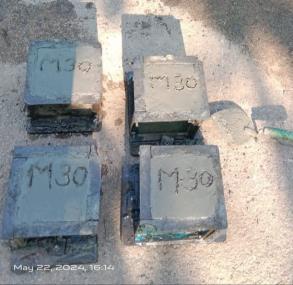
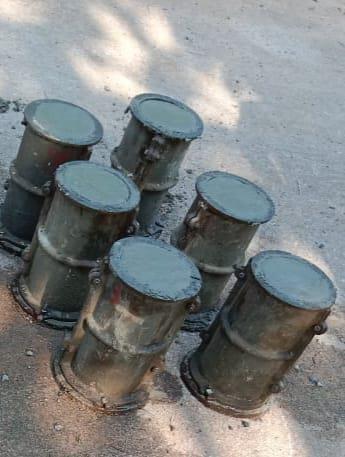
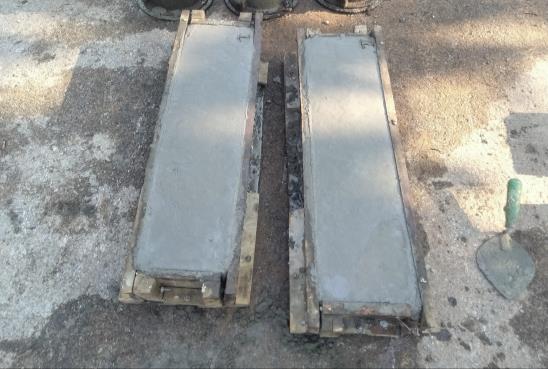
The sample of concrete were cast in accordance with IS 10086-1982. The cube, cylinder, and beam samples were curedinawaterpondforaperiodof28days.Atsevenand twenty-eight days, the strength metrics of self-compacted concrete were compared to those of conventionally cured concrete.
6.1 TEST OF SAMPLE:
Compressive Strength test: CompressiveStrengthisequal toP/��,whereAisthecross-sectionalarea(150×150x150 mm)andPistheappliedload.
Volume: 11 Issue: 07 | July 2024 www.irjet.net

Fig-4: Compressive strength test in UTM
TABLE-1:CompressiveStrengthresultsofConcrete.
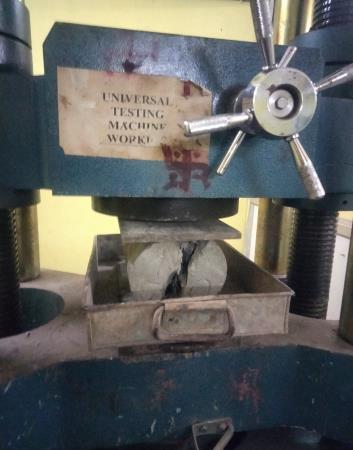
TABLE-2: TensileStrengthresultsofConcrete:

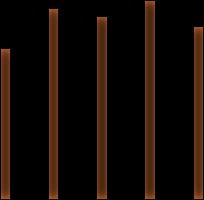
Chart-1: Compressivestrengthofconcreteafter7,and28-
ConventionalconcretevsGGBFSconcrete
Split tensile strength test: utilizing300-mm-highand150mm-diametercylinders.WherePistheload,Disthecylinder diameter,andListhecylinderlength,theformulaforsplit tensilestrengthis2P/πDL.
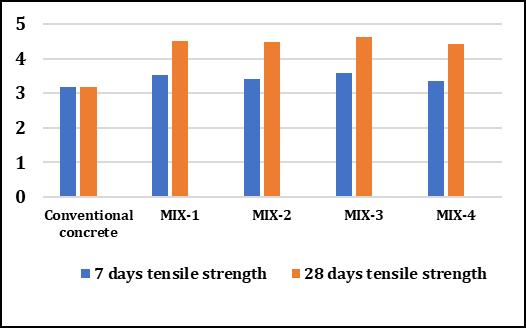
Chart-2: Tensilestrengthofconventionalconcreteafter7 and28-daysvsGGBFSconcrete.
Flexural Strength test: a 150 x 150 x 700 mm beam specimenwitha2000KNforcetoproducebending.WL/bd is equivalent to f strength. A hydraulic apparatus was utilizedtotesteachofthesespecimens.
International Research Journal of Engineering and Technology (IRJET) e-ISSN: 2395-0056
Volume: 11 Issue: 07 | July 2024 www.irjet.net p-ISSN: 2395-0072
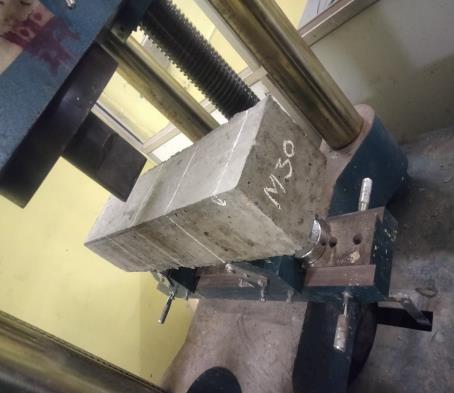
Fig-6: flexural strength test of concrete in UTM
TABLE-3: TensileStrengthresultsofConcrete:
S.NO.
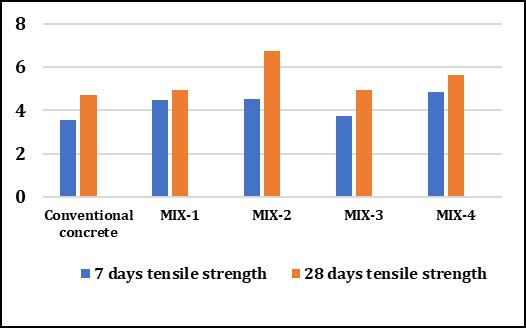
Chart-3: flexuralstrengthOFConventionalconcreteafter 7and28-daysvsSelfcompactingconcrete.
7. CONCLUSION:
1.ThecurrentanalysisshowsthatthebestamountofGGBS toreplacecementinaconcretemixis30%.
2. GGBS compressive strength may replace conventional concretecubesbyupto40%.
1. IS383:1970Codeforfineandcoarseaggregatefor concrete.
2. ConcreteTechnology:TheoryandPracticebyM.S. Shetty.
3. ConcreteTechnology:TheoryandPracticebyM.L Gambhir.
4. ConcreteTechnology:byS.S.Bhavikatti.
5. IS 10262:2009 Recommended Guidelines for ConcreteMixDesignBureauofIndianstandardNew Delhi.
6. BureauofIndianStandardsIS516:1959Methodsof TestsforStrengthofConcrete.
7. Indian Standard code456:2000 of practice for general structural use of plain and reinforced concrete.
8. IS456,2000”Concrete,PlainandReinforced,“Bur. Indian Stand. Delhi, pp.1-114, 2000. Bengin M A Herki(2020)
9. Reshma Rughoopath and Jaylina Rana (2014) ‘Partial replacement of cement by ground granulated blast furnace slag in concrete’ Journal engineering trends in engineering and applied sciences(JETEAS),Vol.5,Issue5
10. 2. T. Vijayagowri, P. Sravana, P. Srinivasa Rao (2014) ‘Studies on strength behaviour of high volumesofslaginconcrete’Internationaljournalof researchengineeringandtechnology(IJRET),Vol.3, Issue4
11. 3.C.SabeerAlavi,I.Bhaskar,R.VenkataSubramani (2013) ‘Strength and durability characteristics of GGBFS based SSC ‘International journal of engineeringtrendsinengineeringanddevelopment (IJETED),Vol.2,Issue3
12. 4. Santosh Kumar karri, G.V. Rama Rao, P. Markandeya Raju (2015) ‘Strength and durability studiesonGGBSconcrete’Internationaljournalof civilengineering(IJCE),Vol.2,Issue10
13. 5. Magan deep, Ravikanth Pareek and Varinder Singh(2015)‘Utilizationofgroundgranulatedblast furnace slag to improve properties of concrete’ International journal of engineering and technologies(IJET),Vol.6,Issue2
International Research Journal of Engineering and Technology (IRJET) e-ISSN: 2395-0056
Volume: 11 Issue: 07 | July 2024 www.irjet.net p-ISSN: 2395-0072
14. 6.YogendraO.Patil,ProfP.N.Patil,Dr,ArunKumar Dwivedi (2013) ‘GGBS as partial replacement of OPC in cement concrete’ International journal of scientificresearch(IJSR),Vol.2,Issue11
15. 7.A.Oner,S.Akuyz(2007)‘Anexperimentalstudy on optimum usage of GGBS for the compressive strength of concrete cement and concrete compositions’Vol,3,Issue5
2024, IRJET | Impact Factor value: 8.226 | ISO 9001:2008