

International Research Journal of Engineering and Technology (IRJET) e-ISSN: 2395-0056
Volume: 11 Issue: 07 | July 2024 www.irjet.net p-ISSN: 2395-0072
COMPARITIVE ANALYSIS OF BIODIESEL PRODUCED FROM ALGAE AND CONVENTIONAL DIESEL FUEL
1Student, Department of Mechanical Engineering, Institute of Engineering and Technology Calicut University, Malappuram, Kerala, India
2Student, Department of Mechanical Engineering, Institute of Engineering and Technology Calicut University, Malappuram, Kerala, India
3Student, Department of Mechanical Engineering, Institute of Engineering and Technology Calicut University, Malappuram, Kerala, India
4Student, Department of Mechanical Engineering, Institute of Engineering and Technology Calicut University, Malappuram, Kerala, India
5Assistant Professor, Department of Mechanical Engineering, Institute of Engineering and Technology Calicut University, Malappuram, Kerala, India
Abstract - The increasing industrialization and increasing number of vehicles and engines are leading to a growing concernoverthedepletionoffossilfuelsforbiofuelproduction. This has led to a growing interest in renewable fuel sources like biofuels, which offer several advantages such as reduced greenhouse gasemissions, improvedairquality,andenhanced energysecurity.However, theuseoffood-producingplantsfor biofuel production may disrupt food supplies and should not be the primary focus. Biofuels, including solid biomass, liquid fuels, and various biogases, are gaining attention due to increasedenergysecurityand fluctuations inoilprices. Algae, particularly microalgae, are particularly promising for biodiesel production due to their high lipid production capabilities. The project aims to develop and optimize a sustainable and cost-effective process for biofuel production from algae, covering cultivation, harvesting, lipid extraction, and biodiesel production. The nutritional quality of microalgae depends on the culture medium used. The outcomesofthisproject could contributetotheestablishment of a sustainable and cost-effective process for biofuel production from algae, offering a viable alternative to conventional fossil fuelsand fosteringamoresustainableand environmentally friendly energy future.
Key Words: Renewable Resources, Biodiesel Production, Algae,Transesterification,Chlorellasp.,Biofuel
1. INTRODUCTION
The transportation sector's CO2 emissions contribute to environmentalpollutionandglobalwarming.Withthecost ofcrudeoilrisingduetodiminishingsupply,theproduction of alternative fuels is crucial in the coming decade. Fossil fuelsareunsustainable,leadingtoincreasedCO2 levelsand greenhouse gas accumulation. To ensure a clean environmentandsustainability,thereisapressingneedto produce renewable and environmentally friendly fuels.
Biodiesel,derivedfromnaturalsourceslikevegetableoils, animalfats,andalgae,isthemostwidelyusedbiofueldueto its environmental advantages, including biodegradability andcleanburning.Algaespeciesaretheprimarysourceof biofuel production worldwide, offering numerous advantagesovertraditionalfeedstocksourceslikecropsand wastematerials.Theycanthriveinvariousenvironments, making them a more sustainable and efficient source of feedstock.Themostwidelyusedchemicalprocessforthis conversion is transesterification, which involves using a catalystandalcoholtoconvertextractedlipidsintobiofuels. Algaecaneffectivelyremovetoxiccomponentsfromwater, makingthemvaluablecontributorstowastewatertreatment efforts. The project aims to compare the feasibility and efficiencyofproducingbiodieselfromthreedifferenttypes ofalgaebyconductingexperimentsandanalyses.
1.1 PROBLEM IDENTIFICATION
o Fossil fuels contribute to climate change and environmentaldegradation.
o Fossilfuelsarefiniteresourcesthatwilleventually runout.
o Hazardous emission from fossil fuels can lead to respiratorydiseases.
o Extraction, transportation, and refining of fossil fuelsareexpensive.
o Fossilfuelsposesafetyrisks.
o Airpollution.
o Waterpollution.
International Research Journal of Engineering and Technology (IRJET) e-ISSN: 2395-0056
Volume: 11 Issue: 07 | July 2024 www.irjet.net p-ISSN: 2395-0072
2. LITERATURE REVIEW
o In2017,ajournalarticlebySulimanKhan,Rabeea Siddique,WasimSajjad,GhulamNabi,KhizarMian Hayat, Pengfei Duan, and Lunguang Yao explored the potential of algae as biofuel producers, highlightingtheneedtoavoidcompetingwithfood productionandthepotentialofgenetictechnology.
o In 2023, Raviprajapati and Baraiya published a journaldiscussingtheproductionofbiodieselfrom natural algae, a promising alternative fuel with similar physical and chemical properties to petroleum-baseddiesel,demonstratingitspotential for sustainable development. Table 2.1 compares algalbiodieselwiththeIndianstandardsfordiesel fuel.
o HariramVenkatesan,GodwinJohnJ.,andSeralathan Sivamani's study evaluates the combustion and emission characteristics of algal and cotton seed biodiesel as alternative fuels for compression ignition engines, comparing them with mineral diesel. Table 2.2 presents a comparison between transesterifiedbiodieselandASTMbiodiesel.
o Chee Loong Teo, Haryati Jamaluddin, Nur Azimah Mohd Zain, and Ani Idris published a study on biodiesel production using lipase-catalyzed transesterification of microalgae lipids from Tetraselmis sp. The study found that the lipasecatalyzed method yielded seven times more biodieselthanthealkaline-basedmethod.Table2.3 displaysthevariancesinparametersbetweenthe GuillardandWalneculturemedia.
Table-2.1:ComparisonofalgalbiodieselandIndian standardsofdiesel.
Table-2.2:Comparisonoftransesterifiedbiodieseland ASTMbiodiesel.
Table-2.3:DifferenceinparametersofGuillardandWalne culturemedia.
*Anderson(2005);Amsler(2008)
**Anderson(2005) ***Cahyaningsih(2006);Amsler(2008) ****Cahyaningsih(2006);Kinoyo(2010)
3. METHODOLOGY
Algae can be produced using a wide variety of methods, rangingfromclosely-controlledlaboratorymethodstoless
International Research Journal of Engineering and Technology (IRJET) e-ISSN: 2395-0056
Volume: 11 Issue: 07 | July 2024 www.irjet.net p-ISSN: 2395-0072
predictablemethodsinoutdoortanks.Theterminologyused todescribethetypeofalgalcultureinclude:
Indoor/Outdoor:
Indoor culture allows control over illumination, temperature,nutrientlevel,contaminationwithpredators andcompetingalgae,whereasoutdooralgalsystemsmakeit very difficult to grow specific algal cultures for extended periods
Open/Closed:
Open cultures such as uncovered ponds and tanks (both indoors or outdoors) are more readily contaminated than closed culture vessels such as tubes, flasks, carboys, bags, etc.
Axenic:
Axenic cultures are free of any foreign organisms such as bacteria and require a strict sterilization of all glassware, culturemediaandvesselstoavoidcontamination.
Batch culture:
The batch culture consists of a single inoculation of cells into a container of fertilized seawater followed by a growing period of several days and finally harvesting when the algal population reaches its maximum or nearmaximum density.
Continuous culture:
The continuous culture method, (i.e. a culture in which a suply of fertilized seawater is continuously pumped into a growth chamber and the excess culture is simultaneously washed out), permits the maintenance of cultures very close to the maximum growth rate.
3.1 SELECTION OF ALGAE
Algae, particularly marine microalgae like Tetraselmis sp. and Nannochloropsis sp., are increasingly recognized as valuable sources for biofuel production due to their oil content,rapidgrowthrate,andsafety.Algaecanconvertoil into fuels like kerosene oil and biodiesel through transesterification, making diesel production economical and straightforward. They are also known for their noncompetitive, fast-growing nature, making them ideal for biodiesel production. Algae can thrive in saltwater environments,reducingfreshwaterstrainandutilizingCO2 as a primary carbon source. They can also be cultivated usingwastewaterornutrient-richwatersources,reducing fertilizeruseandpollution.Algaearecategorizedintoseven groups,withgreenalgaebeingparticularlywell-knownfor theiruseinbiodieselproduction.
CHLORELLA SP.:
Chlorella,aversatilemicroalga,isapromisingbiofuelsource duetoitshighlipidcontent,rapidgrowth,andadaptability tovariousenvironmentalconditions.Itsfattyacidprofileis well-suitedforbiodieselproduction,andChlorellasp.PG96 isa promising candidatedueto itsgrowthpropertiesand
capacitytoaccumulatehighlipidlevels.Chlorellarequires lesswater,land,andfertilizerthantraditionalbiofuelcrops like corn and soybeans, making it a more sustainable and environmentally friendly choice. Its lipid content of up to 50%byweightmakesitanefficientbiofuelsource.
TheCentralMarineFisheriesResearchInstitute(CMFRI)in KochiprovidedsamplesofChlorellasp.
3.2 DETERMINATION OF MEDIUM
Thechoiceofgrowthmediumiscrucialforalgaecultivation for biofuel production. Common media include Walne medium and Guillard's F/2 medium, which provide necessary nutrition and conditions for microalgae growth andmultiplication.F/2mediumhasgainedpopularityover Walne medium due toitsnutrient-limiting propertiesand otheradvantages.Itisessentialtouseappropriatemediato ensure good growth and nutrition for the algae being produced. F/2 medium is a popular enriched seawater mediumforcoastalmarinealgae,particularlydiatoms,with a halved concentration. It offers a more concentrated environmentforalgaegrowth,leadingtohigherlipidcontent incellsduetolowernutrientconcentration.F/2mediumis morestableandlesssusceptibletocontamination,resulting inamoreconsistentandhigheryieldofthefinalproduct.It is also more cost-effective to prepare, reducing overall productioncostsofbiofuelsderivedfromalgaecultivatedin thismedium.Italsoallowsforahigherdensityofalgalcells, leading to greater yield per unit area. Walne medium requires more space for cultivation due to lower cell densities.
3.3 MEDIUM PREPARATION
The table 3.1 lists the quantities of chemicals required to prepare1literofmedium.
Mix each of the chemicals into approximately 750 ml of dH2O,ensuringthoroughmixingbetweenadditionstofully dissolve. Once all chemicals have been added, make the solution up to 1 L. Refer to table 3.2 for the specific quantitiesofchemicalsneeded.
Mixbothchemicalswith1literofdH2Oandautoclavefor dissolution.Afterward,storethesolutioninadarkplace.The amounts of chemicals needed to prepare 1 liter of the solutionarespecifiedintable3.3.
To prepare 1 litter of f2 Medium;
o AddeachstocksolutionsintheStandardquantities to1Lseawater
o Dispensetoflasksandautoclaveat121°C(15psi, 20 mints). Must be sterilized separately from seawatertopreventprecipitation.
o DiluteoriginalphosphatestockwithdH2Osuchthat 1mLaddedto75mLofsterilemediumwillgivethe
International Research Journal of Engineering and Technology (IRJET) e-ISSN: 2395-0056
Volume: 11 Issue: 07 | July 2024 www.irjet.net p-ISSN: 2395-0072
requiredconcentrationofphosphate(11mgL-1)in themedium.
o Autoclavedilutephosphatestockat121°C(15psi, 20mints).
o After cooling, dispense aseptically with sterilized automaticdispenser.
Table-3.1:Liststhequantitiesofchemicalsrequiredto prepare1literofmedium.
The experiment involved collecting seawater from the nearestsea,filteringitwithcottontoremovesandanddust particles,andstoringitinaDuranbottleforsterilizationin anautoclaveapparatus,acrucialstepinensuringseawater sterilization.
3.4 AUTOCLAVE APPARATUS
Autoclaves are a reliable method for disinfecting and sterilizing medical instruments and labware using a combination of steam, pressure, and time. They eliminate microorganismsandspores,decontaminatebiologicalwaste, andsterilizemedicalinstrumentsandlabware.Autoclaves are highly recommended for rendering regulated medical wasteinactivebeforedisposal.
1
2
3
4
5
6
Table-3.2:Quantitiesofchemicalsrequiredforpreparing 1litteroftracemetalsolution
The autoclave uses moist heat sterilization to eliminate various microorganisms, including bacteria, viruses, and heat-resistant endospores. By producing saturated steam under pressure, it heats instruments to temperatures surpassing the boiling point of water, enhancing the sterilization temperature. The effectiveness of steam sterilization stems from the steam's moisture, which coagulatesproteinsthatmicrobesrelyon,renderingthem inactiveandultimatelyleadingtotheirdemise.
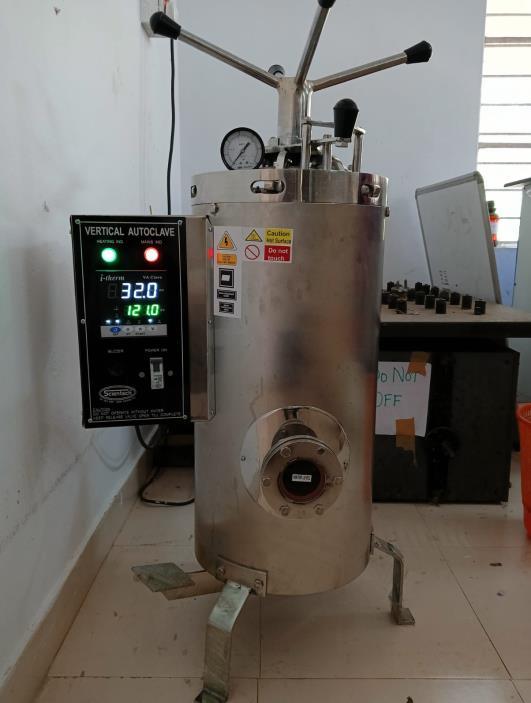
In this study, the department of Biotechnology at Calicut University provided the necessary autoclave setup. The autoclaveapparatusisdepictedinfigure3.1.
Table-3.3:Quantitiesofchemicalsrequiredforpreparing 1litterofferriccitratesolution
International Research Journal of Engineering and Technology (IRJET) e-ISSN: 2395-0056
Volume: 11 Issue: 07 | July 2024 www.irjet.net p-ISSN: 2395-0072
3.5 GROWING OF ALGAE SEED
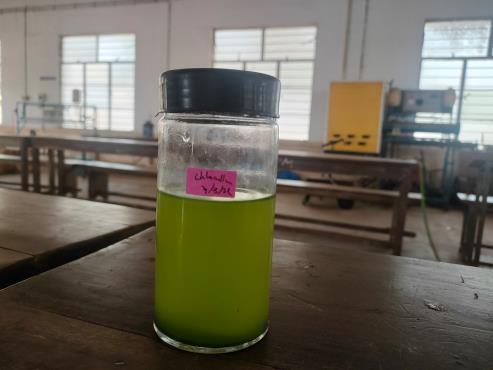
ThecultivationofalgaeseedsinF/2mediumiscrucialfor achieving high lipid yields for biofuel production. The processinvolvesinoculatingtheseedsintosterilemedium, sealing the bioreactor, and maintaining a controlled environment. The growth phase begins, with gradual introduction of nutrients to maintain low nutrient concentration.Aslipidaccumulationbeginsduetonutrient limitation,cellgrowthslowsdown,markingthestationary phase. This phase is significant for lipid accumulation, as algaecellsstorelipidsasanenergysourceduringnutrient scarcity. Figure 3.2 illustrates the development of algae in F/2 medium.
ThebotanydepartmentatCalicutUniversity,alongwiththe Chemistry departments at both Calicut University and the Institute of Engineering and Technology, provide all the necessary setup for cultivating the medium and growing algae.
3.6 TANK PREPARATIOIN AND LARGE SCALE CULTIVATION
Theoldrefrigerator'scontainerisusedforopencultivation ofalgaeforbiodieselproduction.Thetanksarecleanedand sun-driedtoensurequalitygrowth.Afterbeingsealedwith M-seal,theyaredisinfectedwith70%methanoltoprevent contamination. After a 24-hour period, one-fourth of the tank is filled with water, and the algae developed in F/2 medium is introduced. Daily checks and water levels are maintained,andthegrowthofalgaeismonitored.Thetanks willturnpalegreenwithin30to45days,andthecolorwill turndarkgreen(Figure3.3),indicatingtheoptimaltimeto harvest the algae. Regular monitoring and top-ups are necessarytoensurethehighestqualityalgae.
3.7 HARVESTING OF ALGAE
Algae harvesting from open tanks requires careful separation of algae cells from the culture medium to
minimize biomass loss. Here are the steps involved in the algaeharvestingprocess:
o Harvesting algae during stationary phase to maximizequality.
o Equipmentshouldbesterilizedbeforeharvestingto preventcontamination.
o Pre-treatment: helps separate algae cells from culturemedium.
o Centrifugation:isthemostcommonlyusedmethod forharvestingalgaecells.
o Drying:removesmoisturecontentfromalgaecells tostoreandtransport.
o Store:driedalgaecellsinairtightcontainersincool, dryplace.
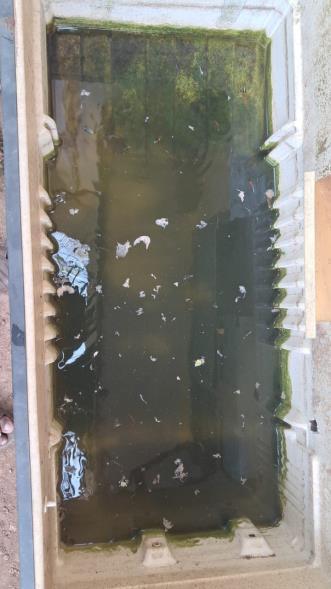
Figure-3.3:fullydevelopedalgaetank.
Alum is a chemical compound used in large-scale open cultivationtosettlealgae.Itisahydrateddoublesulfatesalt of aluminum, with an astringent and acidic taste. Alum is odorless,colorless,andtypicallyfoundinawhitecrystalline powder. It is highly soluble in water and is used as a coagulantinwatertreatment.Whenaddedtothealgaetank, itcausesthealgaetosettledown.Excesswaterisdrained out,leavingthesettledalgae.Thealgaearecollected,dried intoapaste,andprocessedusingaspraydryertoproduce algaepowder.
3.8 SPRAY DRYER EQUIPMENT
Aspraydryerisamethodforrapidlydryingliquidsorslurry using hot gas, especially for products like foods and medicinesthataresensitivetoheat.Itseparatessoluteand solvent to create solids through heat transfer, making it fasterandsimplerthanothermethods.High-pressuresinglefluidandtwo-fluidnozzlesarecommonlyusedfordrying.In pharmaceutical production, spray drying is crucial for producing Amorphous Solid Dispensation, which evenly
International Research Journal of Engineering and Technology (IRJET) e-ISSN: 2395-0056
Volume: 11 Issue: 07 | July 2024 www.irjet.net p-ISSN: 2395-0072
dispersesActivePharmaceuticalIngredientsintoapolymer matrix, enhancing drug dispersion and facilitating medication distribution. The machine uses a feed pump, atomizer,airheatingunit,airdispenser,anddryingchamber to dry liquids. The atomizer spins at 3,000-50,000 RPM, atomizingtheliquidintodropletsandheatingthemup.
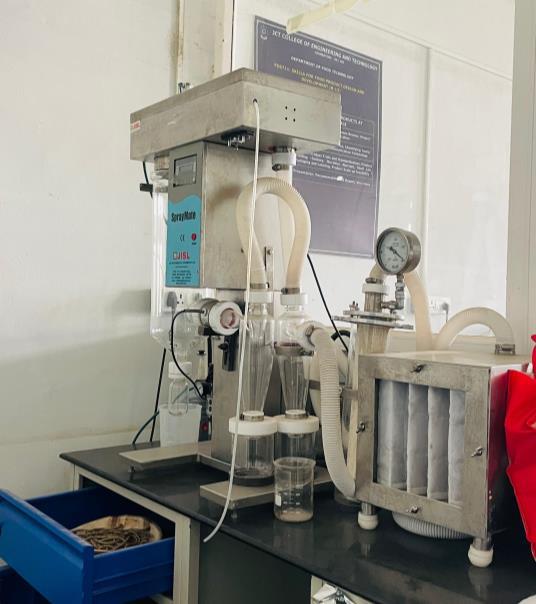
Figure-3.4:Spraydryer.
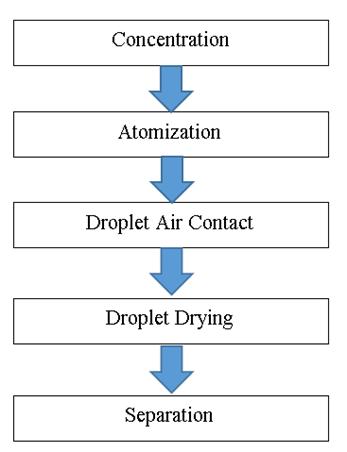
Therearethreefundamentalstepsinvolvedinspraydrying.
o Atomizationofaliquidfeedintofinedroplets.
o Mixing of these spray droplets with a heated gas stream,allowingtheliquidtoevaporateandleave driedsolids.
o Driedpowderisseparatedfromthegasstreamand collected.
Theflowchartprovidedillustratestheprocessinvolvedin operatingaspraydryer.
3.9 EXTRACTION OF ALGAEL OIL
Soxhlet extraction is an economical method for isolating bioactive compounds from natural sources. It involves distillingadrysampleinathimbleandtransferringittoa flask with the desired solvent. This process ensures continuousextractionofsolidmatter,enhancingefficiency and reducing costs, and the extracted oil is used in the transesterificationprocesstoproducebiodiesel.
SOXHLET EXTRACTION:
Soxhlet extraction is a chemical process used to extract bioactive compounds from natural sources. It involves dissolvingadrysampleinasolventandtransferringitfrom one phase to another, with the solute having higher solubility in the second phase. Common extraction types include liquid/liquid, liquid/solid, and acid/base. The Soxhlet extractor is used to perform sample extraction by placingthesampleonfilterpaperandassemblingthedevice. Asolventisaddedtoareservoirflaskandheated,mixingthe solublepartwiththesolventforextraction.Thesolventis thensiphonedbackwhenitsurpassesthemaximumheight of the siphon. This process is repeated with the flask to extract portions of the material each time, ensuring pure solventuseandconcentration.
Thealgaepowderisplacedinanextractionthimble,and300 mLofhexaneisaddedtoa500-mLroundbottomflask.The sampleisextractedfor4-6hoursat4-6cycles/hourat80-85 degrees Celsius. After extraction, a mixture of hexane and algal oil is obtained, which is then transferred to a rotovaporapparatustoremovethehexanecontent.
3.10 SOXHLET APPARATUS
The Soxhlet extractor, invented by Franz von Soxhlet in 1879,isacruciallaboratorytoolforextractinglipidsfrom solid materials. It is particularly useful when a compound has limited solubility in a solvent and the impurity is insoluble. The extractor consists of a percolator for circulating the solvent, a thimble for retaining the solid material, and a siphon mechanism for emptying the condensedsolvent.Thesourcematerialisplacedinsidethe thimble,which isthenloadedinto the mainchamber. The solvent is added to a distillation flask, and the Soxhlet extractorispositionedontopofit,witharefluxcondenser on top. This setup allows for efficient solvent recycling, allowingforthedissolutionoflargerquantitiesofmaterial withoutconstantmonitoringormanagement.Thesolventis gentlyheatedinarefluxprocess,causingthevaportoriseup adistillationarmandreachthechambercontainingthesolid material. As the chamber nears fullness, the contents are emptiedusingasiphon,andthesolventisreturnedtothe distillation flask. The solvent is eliminated using a rotary evaporator, yielding the extracted compound. The Kumagawa extractor features a specific design, with the thimbleholder/chambersuspendedinsidethesolventflask
International Research Journal of Engineering and Technology (IRJET) e-ISSN: 2395-0056
Volume: 11 Issue: 07 | July 2024 www.irjet.net p-ISSN: 2395-0072
abovetheboilingsolvent,allowingforimprovedextraction ofcompoundswithhighermeltingpoints.
The diagram 3.5 illustrates the setup of the Soxhlet apparatus, while diagram 3.6 depicts the schematic arrangementofthesameapparatus.
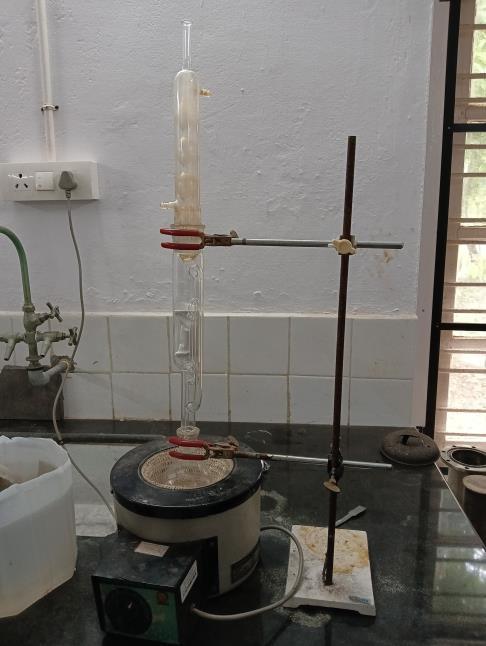
-3.5:setupoftheSoxhletapparatus.
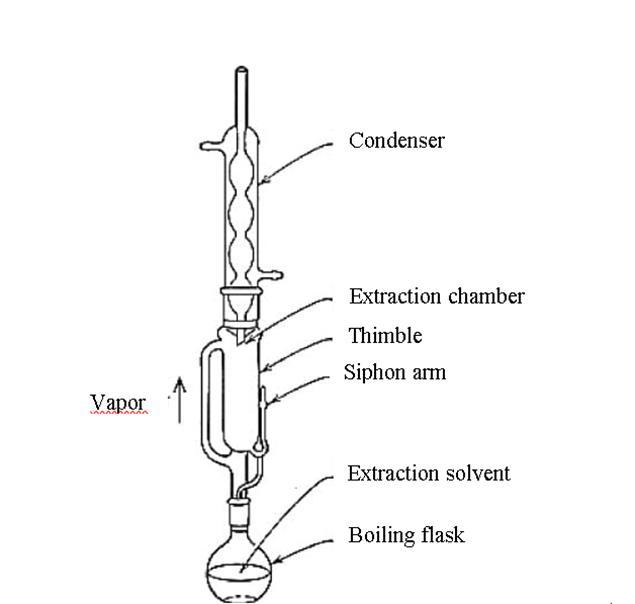
Figure-3.6:schematicarrangementofthesoxhlet apparatus.
3.11 ROTO VAPOR
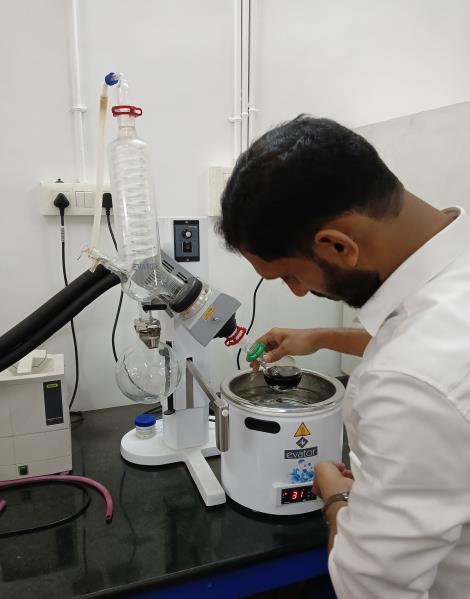
Therotaryevaporator,alsoknownasarotavap,isachemical laboratorydeviceusedtoefficientlyremovesolventsfrom samplesthroughevaporation.Itworksbyloweringpressure, rotatingthesample,andheatingthesolution.Touse,ensure poweristurnedonatthetoprightofthestand.Thestepsfor operatingarotaryevaporatorareasfollows:
o Toreducewaterusageinexperiments,useawater circulator with a water reservoir, as most evaporation processes are designed with water reservoirs.
o Before using an apparatus like a round-bottomed flask,ensureitisfilledtooverhalfitscapacitywith thesolutionneededforevaporation.
o TheKeckclipiscrucialforconnectingtheflaskto the evaporator's bump trap, ensuring a steady connection and preventing foam or splashing solutionsfromoverflowing.It'sessentialtokeepthe bumptrapcleanbeforeanylaboratoryprocedureto preventcontamination.
o Theguideoutlinesusingajoystickknobtolowera flask in water, ensuring it's not too close to the bottomandnotincontactwithwater.
o Theguideoutlinesusingajoystickknobtolowera flask in water, ensuring it's not too close to the bottomandnotincontactwithwater.
o Rotate the flask at moderate speed, accurately adjusting the rotation notch to one-third of the maximumrotationvalue.
o Close the stopcock by turning the evaporator perpendiculartothebleedvalve,therebystopping hissingandallowingpressuretograduallydecrease.
o The solvent will gradually evaporate in the flask, withnospecificduration,justallowittogather.
o Thesampleshouldbekeptatreducedpressurefor a period to ensure the complete removal of any remainingsolventresidue.
o Topreventevaporation,followthestepsinreverse.
o Thecompoundyou'researchingforcanbefoundin theresidueaccumulatedintheflask,possiblywith solvent traces, and can be left exposed for some time.
International Research Journal of Engineering and Technology (IRJET) e-ISSN: 2395-0056
Volume: 11 Issue: 07 | July 2024 www.irjet.net p-ISSN: 2395-0072
3.12 TRANSESTERIFICATION
Biodiesel,abiofuelderivedfromvegetableoilsandanimal fats,isproducedthroughtheconversionoflongchainfatty acids.Itiscommonlyusedincompressionignitionengines and is produced through transesterification, where oil components are converted into simple alkyl esters by reactingwithshortchainalcoholslikemethanolandethanol. The efficiency of this process depends on the type and quantity of catalyst used, which can be homogeneous or heterogeneous based on its phase with the reactants. Transesterificationisacost-effectiveandefficientmethod forproducingbiodiesel,asitinvolvesswappingtheRgroup of an alcohol with the R' group of an ester. This process produces mono-alkyl esters, the primary components of biodiesel, and glycerol as a secondary product. Biodiesel produced through transesterification offers numerous benefitscomparedtotraditionalpetroleumdiesel,including reducedemissions,enhancedlubricity,andbiodegradability. The process of converting oils through transesterification reactioncanbedepictedbelow,
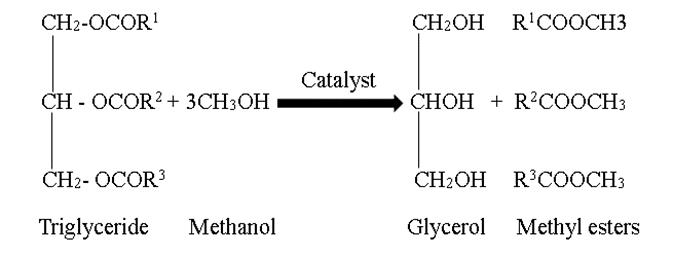
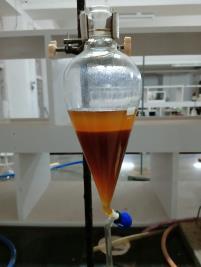
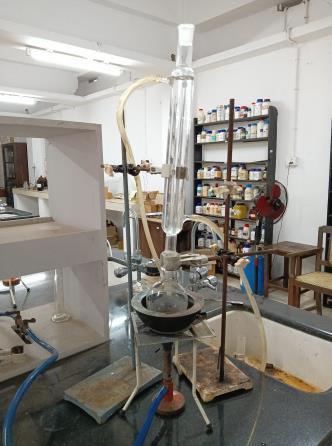
For this experiment, we utilized KOH as the catalyst. We added1.5weight%ofKOHto5.92partsmethanolto1-part oil ratio. The mixture was thoroughly stirred until the oil completelydissolved.Subsequently,theoilwasaddedtothe methanol and KOH mixture and stirred well again. The resultingmixtureintheroundbottomflaskwasthenplaced ina transesterificationsetupasdepictedinfigure3.8 and heatedtoapproximately50-60degreesCelsiusfor4-5hours. Afterheating,twodistinctlayerswereobservedasinfigure 3.9.Theupperlayercomprisedthemethylester,whichisthe biodiesel, as its density is lower than that of the glycerol observedatthebottomoftheroundflask.Theseparationof thebiodieselandglycerolwasachievedusingaseparating funnel.
4. RESULTS
In this experiment, we gained valuable insights into the process of converting algae into diesel. The production of biodieselfromalgaeprovedtobebothtime-consumingand expensive, requiring a significant amount of delicate and costlyequipment.Theyieldofdieselobtainedwasminimal, andtheproductionprocessnecessitatedtheconsumptionof asubstantialamountofadditionalenergy,includingheatand electricity.Inthisstudy,weinitiallyobtained1.8kgofwet algae paste, which reduced to 810g of algae powder after drying.Throughthesoxhletextractionprocess,only430ml ofoilwasobtainedfromthealgaepowder,leadingtoayield ofjust260mlofbiodiesel.Despitethelimitedquantity,we proceeded to conduct a load test on a single-cylinder 4strokedieselengineusinga20%blendofthebiodiesel.The test results, including density, flash point, and fire point comparisons,aredetailedbelow.
4.1 FLASH POINT
Theflashpointisthelowesttemperatureatwhichaliquid releasesvaporinatestvessel,creatinganignitablemixture with the air near its surface. A lower flash point makes it easiertoigniteasolvent.Aliquidhydrocarbon'sflashpoint indicatesthetemperatureitneedstobeheatedtoproduce enoughflammablevapourtoignitewhenexposedtoaflame. Diesel fuels have a flashpoint ranging from 52°C to 93°C, with fuels below 60°C classified as flammable and those above60°Cascombustible.Biodieselblendedwith20%has aflashpointof53°C.
4.2 FIRE POINT
Thefirepointofafuelistheminimumtemperatureatwhich afuelvaporcansustaincombustionforatleastfiveseconds afterbeingignitedbyastandard-sizedopenflame.Itisthe precise temperature at which the vapors of a substance sustaincombustionevenafterbeingignited.Theflashpoint andfirepointarecrucialinassessingthevolatilityandfire
International Research Journal of Engineering and Technology (IRJET) e-ISSN: 2395-0056
Volume: 11 Issue: 07 | July 2024 www.irjet.net p-ISSN: 2395-0072
resistanceoflubricants,aswellasdeterminingthenecessary temperature conditions for transportation and storage. Lubricantmanufacturerscanusetheflashpointtoidentify potentialcontaminationintheirproducts.Dieselfuel'sflash point ranges from 52 to 96°C, while a 20% blended biodiesel'sflashpointisaround68°C.
4.3 CLEVELAND APPARATUS
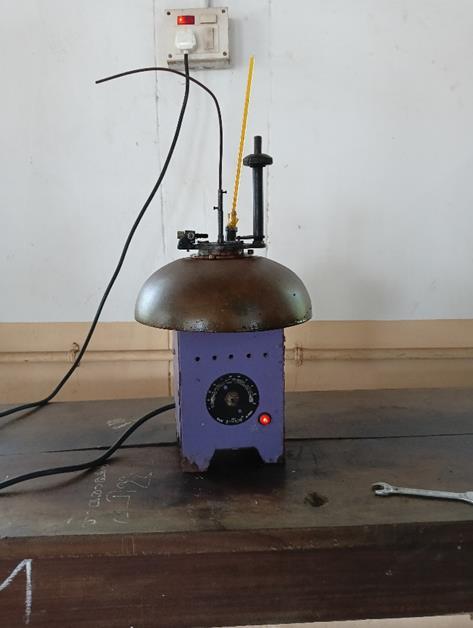
Figure-4.1:Clevelandapparatus
TheClevelandflashtestermeasurestheflashandfirepoint of petroleum products by increasing temperature until flammablevaporigniteswithatestflame.Itdeterminesthe firepoint,thetemperatureatwhichthetestflameproduces at least five seconds of ignition, and operates within a temperaturerangeof120to250degreesCelsius.
4.4 DENSITY
Density is the mass of a substance per unit of volume, influenced by its atoms' mass, size, and arrangement. It is calculatedbydividingthesubstance'smassbyitsvolume.A relative density less than 1 indicates less density than a reference substance, while a higher density indicates denserness. When the relative density is exactly 1, the densities of two substances are equal, meaning equal volumes have the same mass. Diesel fuel typically has a densityof830-860kg/m³atroomtemperature,whileour 20%blendedbiodieselhasadensityof836.8kg/m³at32°C. Density is crucial in understanding the properties of materialsandtheirpotentialapplications.
WeobtainedthedensityinformationattheIndianOilpetrol pumplocatedinKoottilangadi,Malappuram.
4.5 ENGINE PERFORMANCE
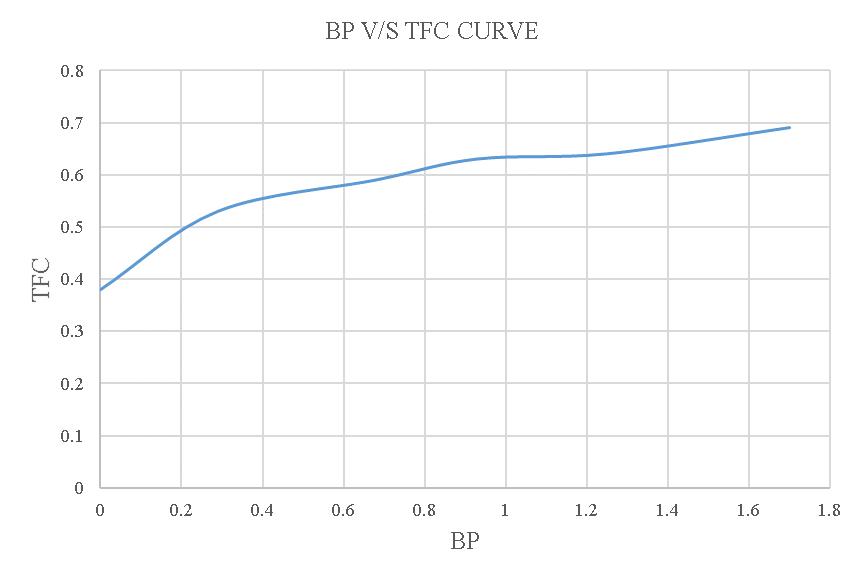
Inacomprehensivestudy,itwasfoundthatthemechanical efficiency of an engine running on biodiesel is not significantly different from that of an engine running on normal diesel. The load test setup is clearly depicted in figure4.2.Table4.1presentsthereadingsandresultsofthe load test conducted on a single cylinder 4-stroke diesel engineusingnormal diesel, whilefigure4.3shows the BP V/S TFC curve to find FP, figure 4.4 illustrates the BP V/S mechanicalefficiencycurve,figure4.5illustratestheBPV/S SFCcurve,infigure4.6and4.7wecanseetheBPV/SBrake thermalefficiencyandBPV/SIndicatedthermalefficiency respectively.
Table4.2displaysthereadingsandresultsoftheloadteston asinglecylinder4-strokedieselengineusing20%blended biodiesel,andfigure4.8demonstratestheBPV/STFCcurve tofindFP.Additionally,figure4.9providesanexplanationof theBPV/Smechanicalefficiencycurve,figure4.10givesthe detailsofthecurveBPV/SSFC,figure4.11andfigure4.12 shows the BP V/S Brake thermal efficiency and BP V/S Indicated thermal efficiency of 20% blended biodiesel respectively.
InTable4.3,youcanfindthereadingsandresultsoftheload test conducted on a single cylinder 4-stroke diesel engine using 15% blended biodiesel. Additionally, Figure 4.13 illustrates the BP V/S TFC curve to determine FP, while Figures 4.14 and 4.15 display the BP V/S mechanical efficiencycurveandtheBP V/SSFCcurveand figure4.16 andfigure4.17showstheBPV/SBrakethermalefficiency and BP V/S Indicated thermal efficiency of 15% blended biodiesel,respectively.
MovingontoTable4.4,itprovidesthereadingsandresults oftheloadtestona singlecylinder4-strokediesel engine using 10% blended biodiesel. Furthermore, Figure 4.18 depictstheBPV/STFCcurveforfindingFP,andFigures4.19 and4.20showtheBPV/Smechanicalefficiencycurveand theBPV/SSFCcurveandfigure4.21andfigure4.22shows theBPV/SBrakethermal efficiencyandBPV/SIndicated thermalefficiencyofusing10%blendedbiodiesel.
We conducted the load test on a single cylinder 4-stroke diesel engineandcheckedtheflashpointandfirepointat theThermalEngineeringLabatCalicutUniversityInstitute ofEngineeringandTechnology.
4.6 LOAD TEST SETUP
Theexperimentalconfigurationincludesasinglecylinder4 strokedieselengine,atoploadsystem,afueltank,exhaust gas, and a manometer. The 4-stroke diesel engine with a single cylinder is being tested under load, boasting a maximum power output of 5HP. The brake drum has a radiusofabout0.16meters,thepistondiameteris87.5mm,
Volume: 11 Issue: 07 | July 2024 www.irjet.net p-ISSN: 2395-0072
stroke length is 110mm, brake drum diameter is 300mm, orifice diameter is 20mm, and the discharge coefficient is 0.62..ThesuppliedenginefromKirloskarCompanyisaselfgoverned type, single-cylinder, vertical, four-stroke, aircooledCIengine.Theengineisconnectedtoabrakedrum dynamometer,whichfunctionsasaloadingdeviceusinga ropebrakesetup.

-4.2:loadtestsetup.
o AirSupplySystem
The engine cylinder's suction side is connected to an air tank,allowingatmosphericairtoenter.Awatermanometer measurespressuredropacrossanintakepipe,calculatingair volume.
o FuelSupplySystem
The fuel system consists of a fuel tank, filter, pump, and injector,withfuelstoredinanoverheadtank.Afterfiltration, it's directed to the pump via gravity and delivered to the injector,sprayingitintothecylinderasafinemist.
o LubricatingSystem
Theenginepartissuppliedwithlubricatingoiltominimize frictionbetweenmovingpartsanddissipatetheheatcaused byfriction.Oncefiltered,thelubricatingoilisdistributedto various moving parts of the engine from the lubricating pump.
o LoadingSystem
Thebrakedrumdynamometerisapowerabsorbingdevice usedtotestanengine'sperformanceunderload.Itconverts the crankshaft's rotational tendency into tangential force, measuringbrakepower(B.P).Theropedrumdynamometer usesaropewrappedaroundtheengine'sbrakedrum,with oneendcarryingadeadloadandtheotherconnectedtoa spring balance. The drum's rotation is always against the dead load's pull, allowing all power to be absorbed by friction. The brake drum is typically water-cooled to dissipateheatgeneratedfromabsorbedpower.
PRECAUTIONS:
o Fuelandlubricatingoilarecheckedandifneeded theyaretobesupplied.
o Coolingwaterinletandoutletforenginejacketand brakedrumshouldbeopened.
o Engineshouldbestartedandstoppedwithnoload.
o De-compression liver should be engaged before cranking.
WORKING:
Theformulaisusedtocalculatethemaximumloadthatcan beappliedtotheenginebeforestartingit.

T
Starttheenginewithoutload,withthefuelsupplyonandthe decompression lever engaged. Record the time for fuel consumptionandwatermanometerleveldifference.Apply initial load, record spring dial reading, and repeat until maximumloadisreached.Stoptheenginebycuttingthefuel supply.
THEORY:
o OutputPowerorBrakePower

o Torque
o TotalFuelConsumption

o SpecificFuelConsumption

o IndicatedPower
I.P=B.P+F.P
Where,
TheFrictionalPower(F.P)isderivedfromthecharacteristic plot(TFCVsB.P).
International Research Journal of Engineering and Technology (IRJET) e-ISSN: 2395-0056
Volume: 11 Issue: 07 | July 2024 www.irjet.net p-ISSN: 2395-0072
o Mechanicalefficiency o Brakethermalefficiency


o Indicatedthermalefficiency

CALCULATIONS:
FromthisgraphthevalueofFPis1.4
Table-4.1:Readingsandresultsoftheloadtestconductedonasinglecylinder4-strokedieselengineusingnormaldiesel.

|
International Research Journal of Engineering and Technology (IRJET) e-ISSN: 2395-0056
Volume: 11 Issue: 07 | July 2024 www.irjet.net p-ISSN: 2395-0072
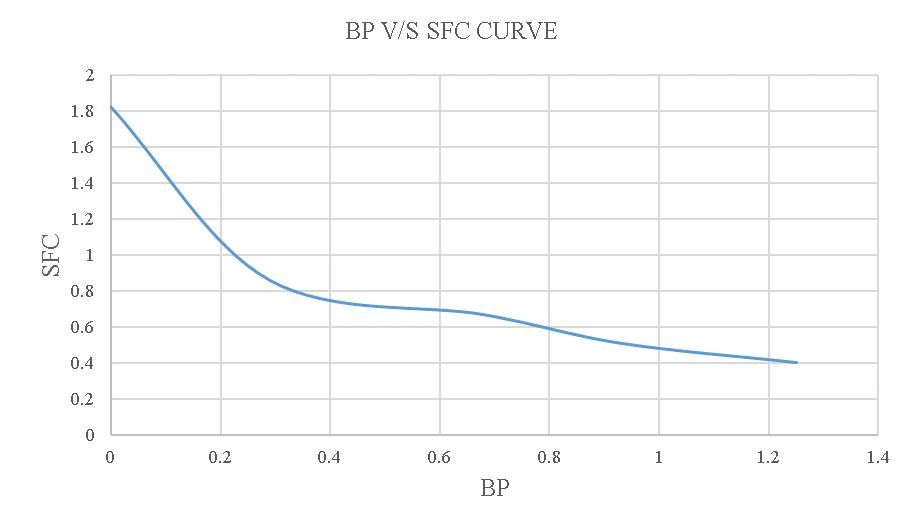
-4.5:BPV/SSFCcurve.
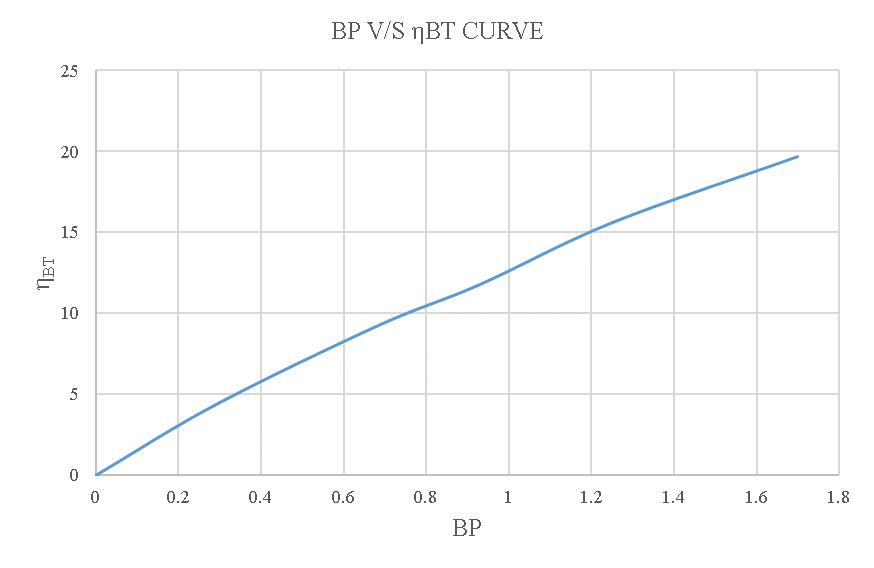
-4.6:BPV/SBrakethermalefficiency.
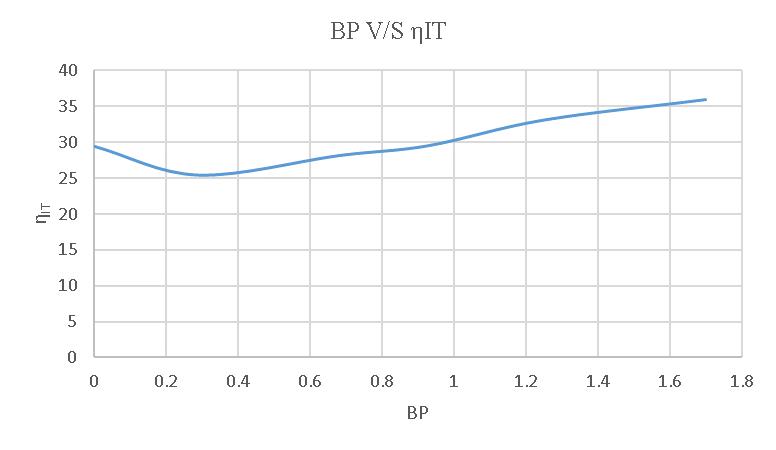
-4.7:BPV/SIndicatedthermalefficiency
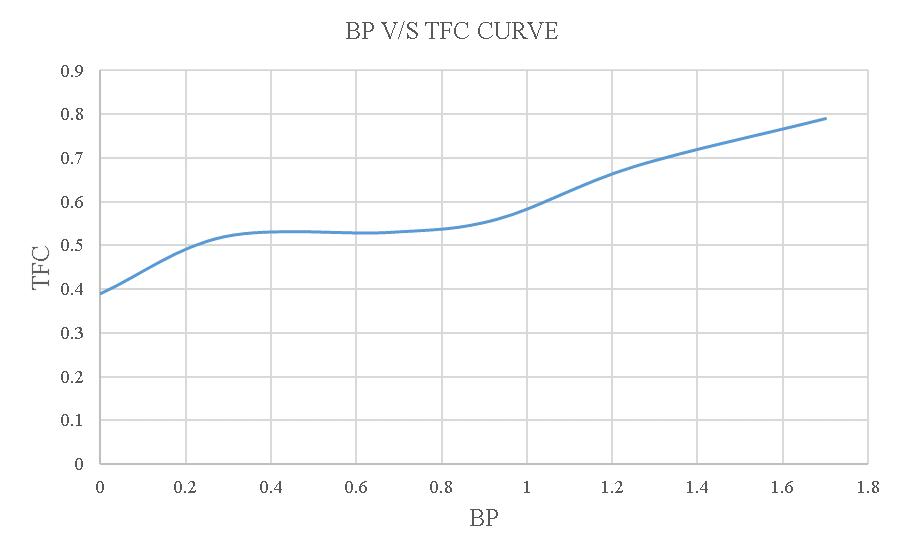
Figure-4.8:BPV/STFCcurveoftheloadtestusing20% blendedbiodiesel.
FromthisgraphthevalueofFPis1.7
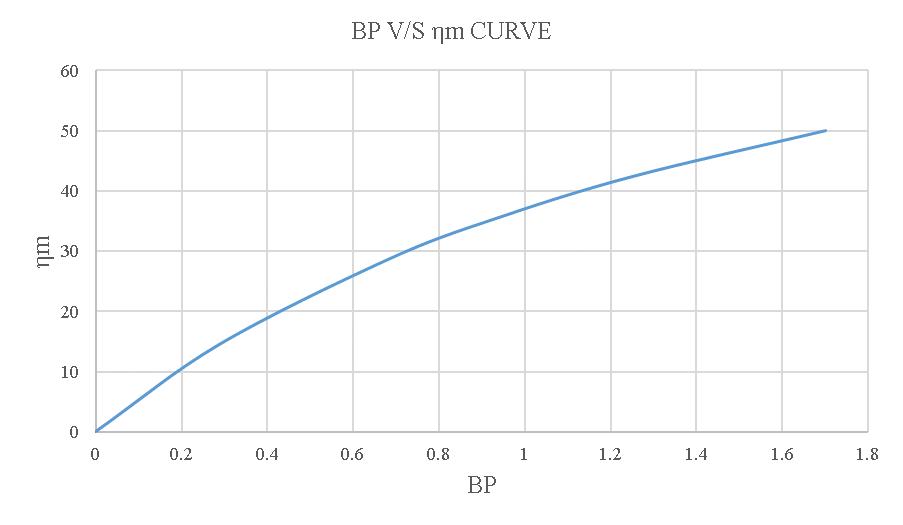
Figure-4.9:BPV/Sηmcurveoftheloadtestusing20% blendedbiodiesel.
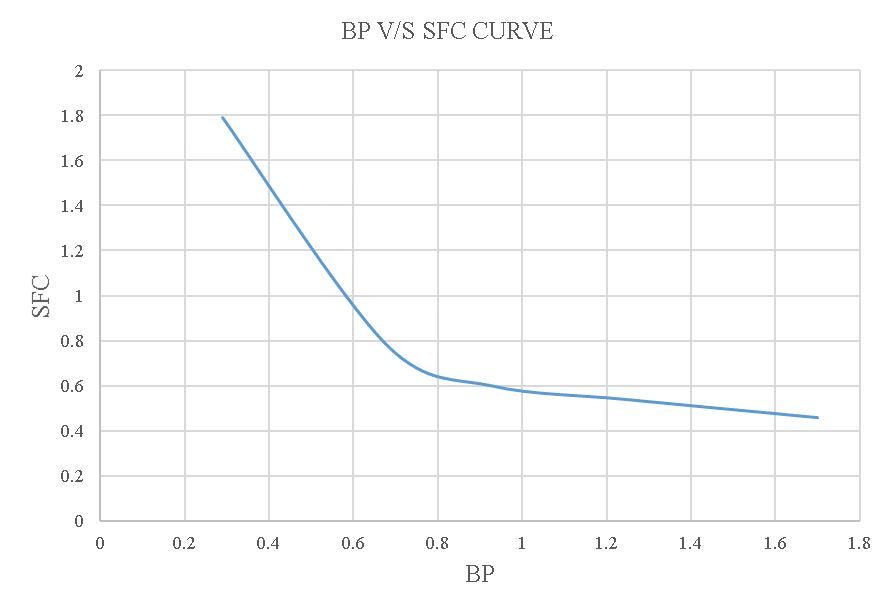
Figure-4.10:BPV/SSFCcurveoftheloadtestusing20% blendedbiodiesel.
© 2024, IRJET | Impact Factor value: 8.226 | ISO 9001:2008 Certified Journal | Page192
International Research Journal of Engineering and Technology (IRJET) e-ISSN: 2395-0056
Volume: 11 Issue: 07 | July 2024 www.irjet.net p-ISSN: 2395-0072
Table-4.2:Readingsandresultsoftheloadtestonasinglecylinder4-strokedieselengineusing
Table -4.3:Readingsandresultsoftheloadtestonasinglecylinder4-strokedieselengine using15%blendedbiodiesel.
International Research Journal of Engineering and Technology (IRJET) e-ISSN: 2395-0056
Volume: 11 Issue: 07 | July 2024 www.irjet.net p-ISSN: 2395-0072
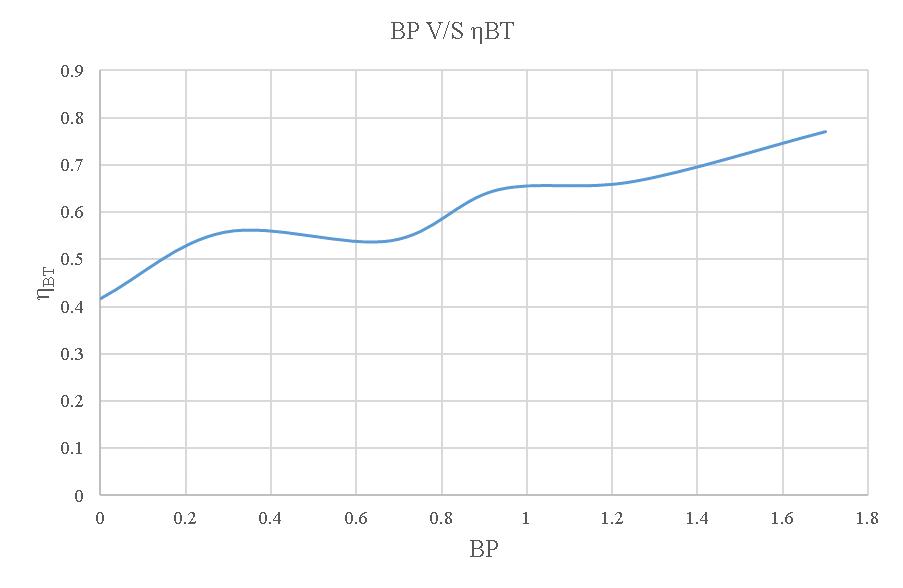
-4.11:BPV/SηBTcurveoftheloadtestusing20% blendedbiodiesel.

-4.12:BPV/SηITcurveoftheloadtestusing20% blendedbiodiesel.
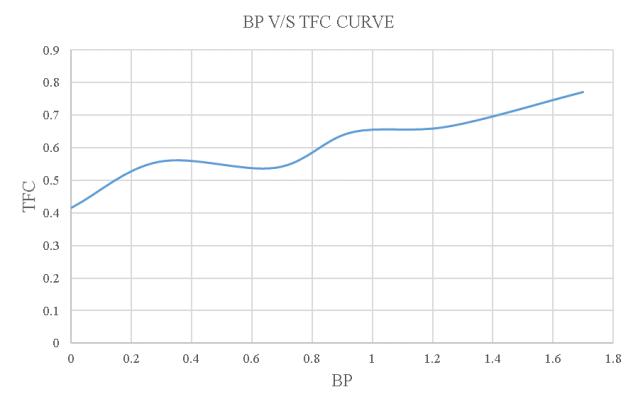
-4.13:BPV/STFCoftheloadtestusing15% blendedbiodiesel.
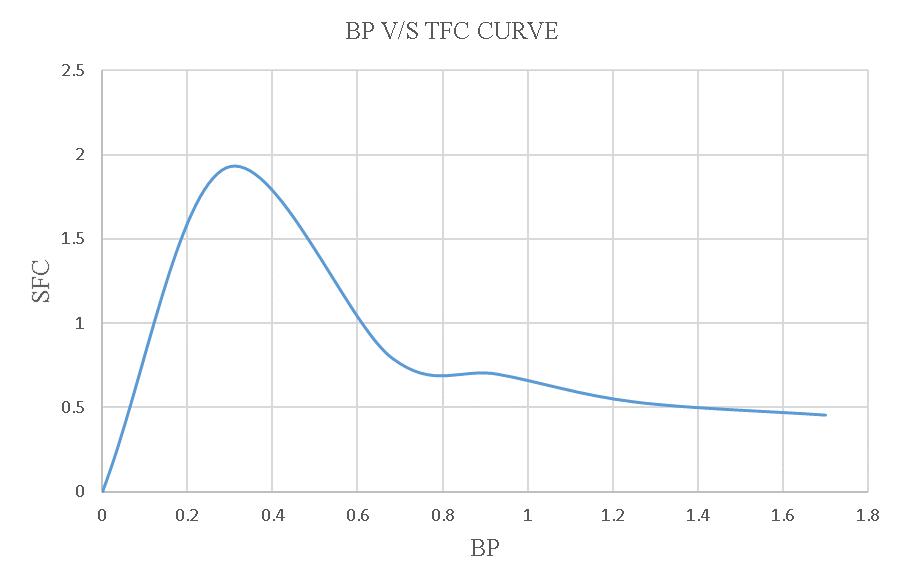
Figure-4.14:BPV/SSFCoftheloadtestusing15% blendedbiodiesel.
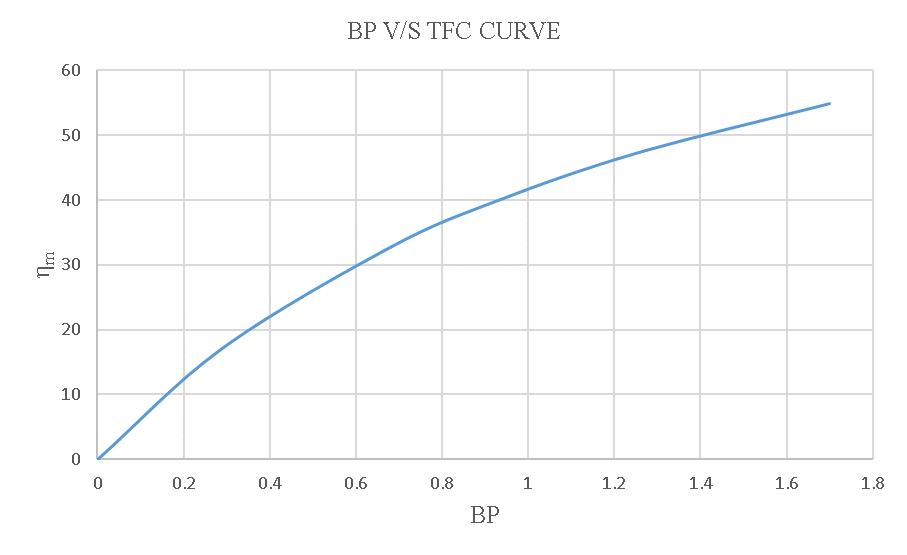
Figure-4.15:BPV/Sηmoftheloadtestusing15%blended biodiesel.
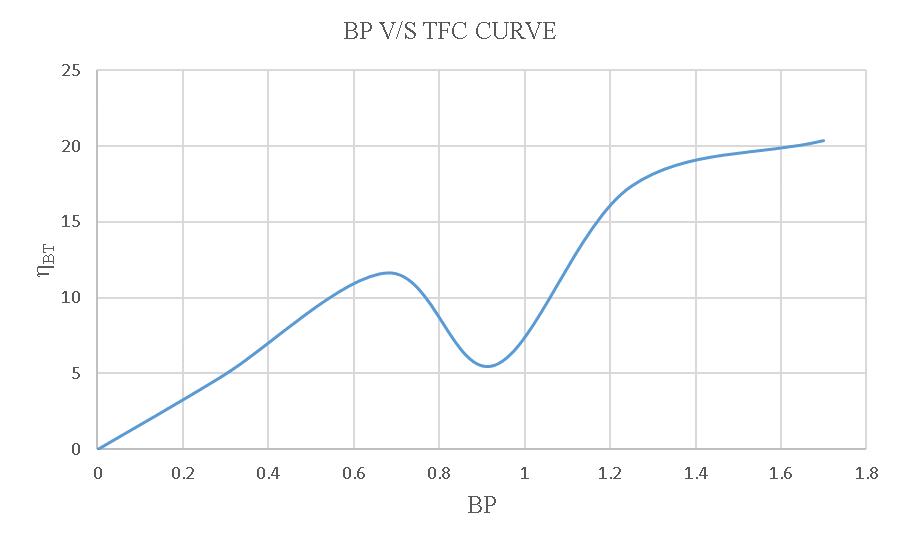
Figure-4.16:BPV/SηBToftheloadtestusing15% blendedbiodiesel.
2024, IRJET | Impact Factor value: 8.226 | ISO 9001:2008 Certified
International Research Journal of Engineering and Technology (IRJET) e-ISSN: 2395-0056
Volume: 11 Issue: 07 | July 2024 www.irjet.net p-ISSN: 2395-0072
Table-4.4:Readingsandresultsoftheloadtestonasinglecylinder4-strokedieselengine using10%blendedbiodiesel.
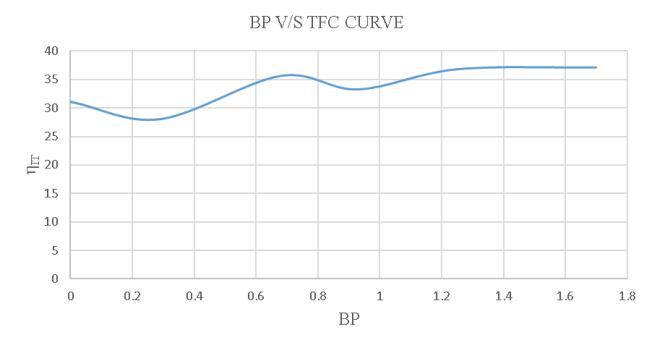
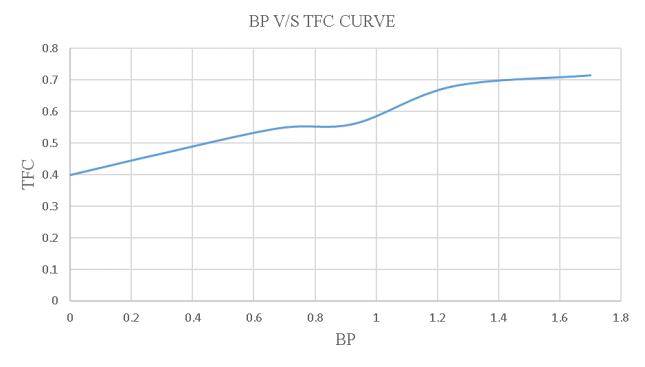
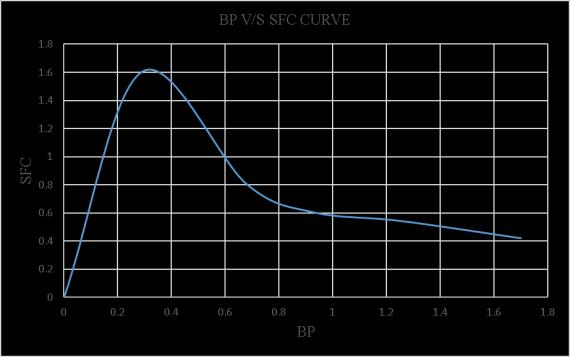
-4.19:BPV/SSFCoftheloadtestusing10% blendedbiodiesel.

blended biodiesel.
© 2024, IRJET | Impact Factor value: 8.226 | ISO 9001:2008 Certified Journal | Page195
International Research Journal of Engineering and Technology (IRJET) e-ISSN: 2395-0056
Volume: 11 Issue: 07 | July 2024 www.irjet.net p-ISSN: 2395-0072

Figure-4.21:BPV/SηBToftheloadtestusing10% blendedbiodiesel.
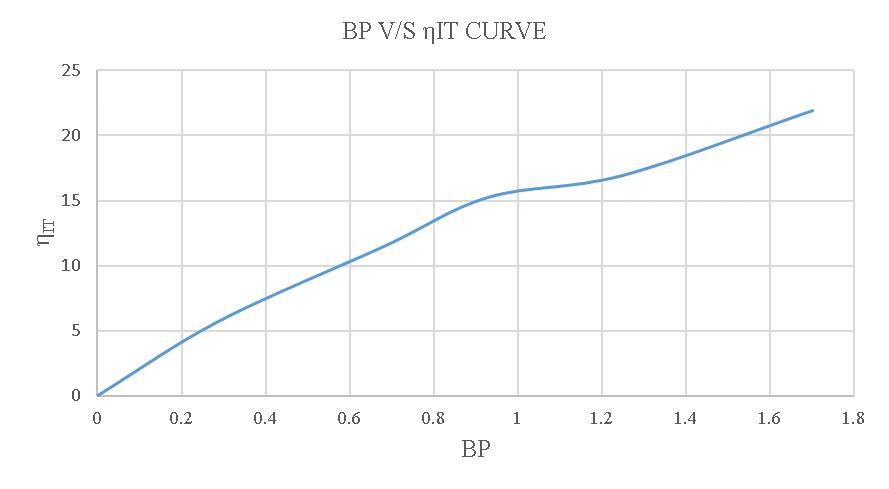
Figure-4.22:BPV/SηIToftheloadtestusing10%blended biodiesel.
4.7 COMPARISON
MECHANICAL EFFICIENCY:
Theaveragemechanicalefficiencyofa4-strokedieselengine usingregulardieselis38.258%.Whenusinga20%blend, theefficiencydropsto34.174%,whilea15%blendresults in an efficiency of 38.348% and a 10% blend yields an efficiencyof35.46%.
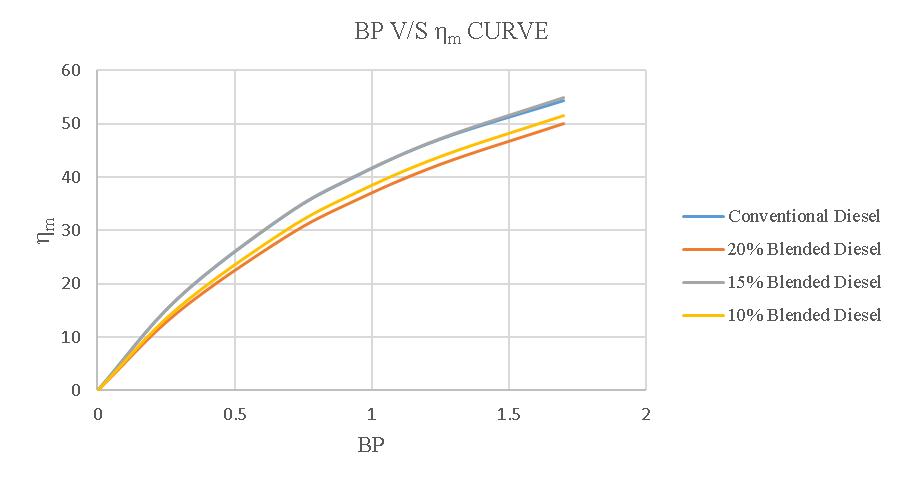
Figure-4.23:Comparisonofηmofconventionaland blendeddiesel.
BRAKE THERMAL EFFICIENCY:
Thebrakethermalefficiencyofa4-strokedieselenginewith regular diesel is 12.144%. When using a 20% blend, the efficiencyincreasesto13.83%,whilea15%blendresultsin an efficiency of 11.94% and a 10% blend leads to an efficiencyof14.288%.
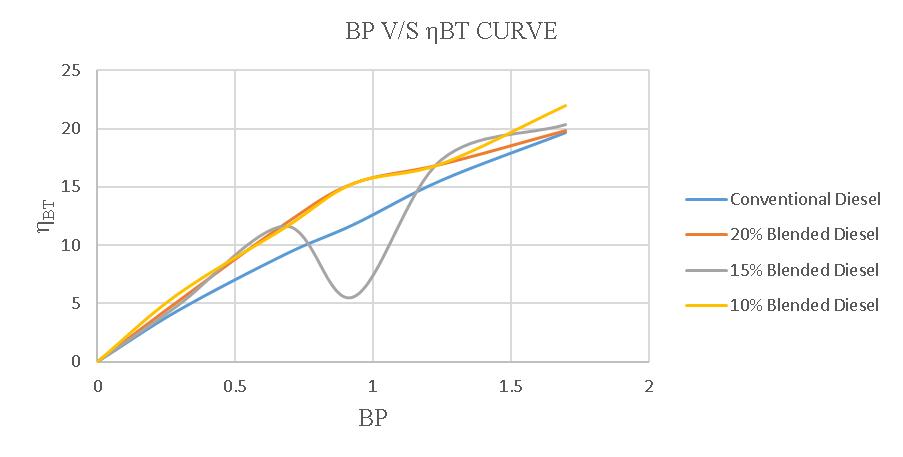
Figure-4.24:ComparisonofηBTofconventionaland blendeddiesel.
INDICATED THERMAL EFFICIENCY:
Theaverageindicatedthermalefficiencyofa4-strokediesel engineusingregulardieselis30.30%.However,whenusing a20%blend,theefficiencyincreasesto40.025%.Similarly, theefficiencyusinga15%blendis33.64%,andwhenusing a 10% blend, the efficiency is 39.31%. These findings demonstrate the impact of different fuel blends on the engine'sperformance.
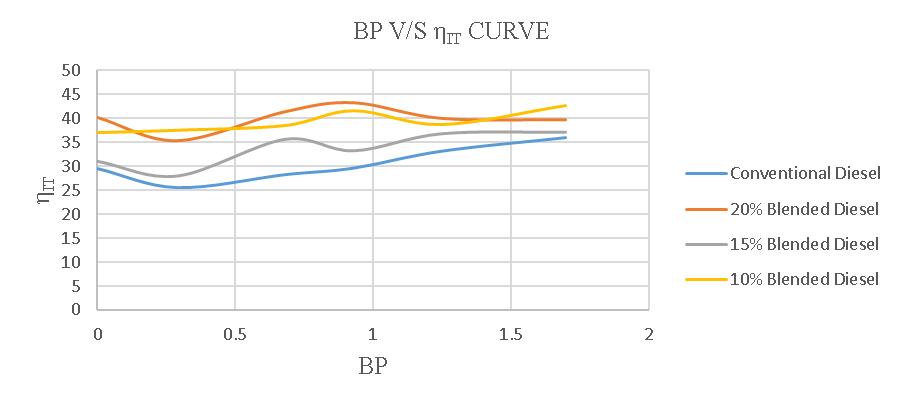
Figure-4.25:ComparisonofηITofconventionaland blendeddiesel.
5.
CONCLUSION
Duringourexperiment,wediscoveredthatdifferenttypesof algae can thrive in different conditions. While Nannochloropsis and Tetraselmis did not survive in the sameconditions,Chlorellasp.did,sowewillfocusonfurther processingChlorellasp.only.Asaresult,wewereunableto observe the details of producing biodiesel from NannochloropsisandTetraselmis,aswellastheproperties andperformancemeasuresofbiodieselfromthesealgae. Basedontheexperimentconducted,itcanbeinferredthat there are minimal variations in the efficiency and
International Research Journal of Engineering and Technology (IRJET) e-ISSN: 2395-0056
Volume: 11 Issue: 07 | July 2024 www.irjet.net p-ISSN: 2395-0072
parameters of the engine load test on a single cylinder 4strokedieselengine.The4-strokedieselengine'smechanical efficiency with regular diesel is 38.258%. However, when usinga20%blend,theefficiencydropsto34.174%.A15% blendresultsinanefficiencyof38.348%,anda10%blend yields35.46%efficiency.Thebrakethermalefficiencywith regulardiesel is12.144%,but whenusinga 20%blend, it increasesto13.83%.A15%blendresultsinanefficiencyof 11.94%,anda10%blendleadsto14.288%efficiency.The averageindicatedthermal efficiencywithregulardiesel is 30.30%, but when using a 20% blend, it increases to 40.025%. Using a 15% blend results in an efficiency of 33.64%, and with a 10% blend, the efficiency is 39.31%. These findings demonstrate the impact of different fuel blends on the engine's performance. Although there is a difference,itisnotsubstantial.Additionally,propertiessuch asdensity,flashpoint,andfirepointarewithinacceptable limits.Uponanalyzingtheengine'sperformanceduringthe loadtest,itwasobservedthattheengineoperatedsimilarly towhenrunningonnormaldiesel.Therewasnoexcessive smoke, vibrations, or noises. Overall, the engine ran smoothlyandsafely.Insummary,theenginedemonstrated satisfactory performance when using algae biodiesel with certainblends.
Thedownsideisthattheproductioncostandtimerequired are quite high. Converting algae into powder necessitates expensive equipment. After that, the powder needs to be turnedintooil,followedbythetransesterificationoftheoil to obtain diesel. The soxhlet extraction process for oil extraction is time-consuming, taking about 5-6 hours to obtain 20ml ofoil.Additionally,anothercostly equipment called a roto-evaporator is needed to obtain pure oil. The equipment for the soxhlet setup and transesterification setupisfragile,requiringcarefulhandlingandexperienced workers. Transesterification is also a time-consuming process.Moreover,thereagentsusedforsoxhletextraction and transesterification, such as hexane and methanol, are expensiveandflammable,necessitatingthoroughcareand well-equippedsafetyprecautions.
The production process for algae-based biodiesel is both expensiveandtime-consuming.Itrequiresalargeamountof wet algae to produce a small quantity of biodiesel and demands careful handling, experienced workers, and additionalenergy.However,theresultingbiodieselcanbe used safely in engines. In conclusion, it is not currently economical to produce biodiesel from algae, but further research, development, and improvements may make it morefeasibleinthefuture.
REFERENCES
[1] N K.R I.F F K.Aburai,"Effectsoflight-emittingdiodes (LEDs) on lipid production of the aerial microalga Coccomyxa sp. KGU-D001 under liquid- and aerialphaseconditions.,"2020.
[2] M. R. a. M. N. Baraiya, "Production of Biodiesel From naturalAlgae,"2023.
[3] M.H.BeckerK,"APotentialSourceforTomorrow'sOil andBiodiesel.,"2008.
[4] G.J.Brian,"Theeconomicsofproducingbiodieselfrom algae,"2011.
[5] H. J. N. A. M. Z. a. A. I. Chee Loong Teo, "Biodiesel production via lipase catalysed transesterification of microalgaelipidsfromTetraselmissp.,"2014.
[6] A. S. S. ,. W. A. S. O. M. K. M. A. Elgharbawy, "Transesterification reaction conditions and lowquality feedstock treatment processes for biodiesel production,"2021.
[7] G. J. J. a. S. S. Hariram Venkatesan, "Evaluating the combustion and emission phenomenon of algal and cottonseedbiodieselasfuelforcompressionignition engine,"2021.
[8] P.k.b.T.A.c.M.A.d.B.G.e.S.A.MohammedDanisha, "Conversion of flaxseed oil into biodiesel using KOH catalyst: Optimization and characterization dataset," 2020.
[9] I. K. R. R. M. T. B. Rawat, "A critical evaluation from laboratorytolargescaleproduction.,"2013.
[10] R. S. W. S. G. N. K. M. H. P. D. a. L. Y. Suliman Khan, "Biodiesel Production from Algae to Overcome the EnergyCrisis,"2017.