
International Research Journal of Engineering and Technology (IRJET) e-ISSN:2395-0056
Volume: 11 Issue: 07 | July 2024 www.irjet.net p-ISSN:2395-0072

International Research Journal of Engineering and Technology (IRJET) e-ISSN:2395-0056
Volume: 11 Issue: 07 | July 2024 www.irjet.net p-ISSN:2395-0072
Osama Zaheer1, Yash Bhagia 2, Khan Shah Ahmad Shakir Abu Asim3 , Mohd Azhan Umar Kamil4
1,2,3,4Zakir Hussain College of EngineeringandTechnology, Aligarh Muslim University, Aligarh (202001) -U.P., INDIA
Abstract - It was challengingto distinguish betweenfalse and true information due to social media networks’ easy access and rapid proliferation of content. The rapid spread of fake news has been facilitated by the simplicity of information dissemination on social media. Fake news has consequently grown to be a major issue with important repercussions for national security, public confidence, and media credibility. Thus, creating trustworthy and precise methods to identify fake information and stop its spread has become a big scientific challenge. To identify fake news, various machine-learning techniques have been proposed. However, the majority of those concentrated on a certain category of news (like political news), which raises the issue of dataset bias in the models employed. We want to provide a thorough analysis of the many methods for identifying false news using machine learning, which is essential in the classification of information. We also compared the performance of a variety of advanced pre-trained language models for fake news identification in addition to standard and deep learning models.
Key Words: Natural Language Processing, Machine Learning, Deep Learning, Neural Networks, Convolution NeuralNetwork
1.INTRODUCTION
Thewidespreaduseofsocialmediaplatformshasgreatly impacted the dissemination of information, including news.Theabilitytoaccessthemostrecentnewshasbeen made simpler for consumers by different online news platforms including social media, blogs, and other digital media formats. Approximately 68% of Americans as of August 2018 got their news from social media, up from 62% in 2016 and 49% in 2012 [1]. However, these platforms have also been used to spread fake news for monetary gain or to manipulate mindsets. Fake news has become a major issue in today’s society, significantly affectinghowpeoplethink andmakedecisions,leadingto erroneous beliefs, mistrust, and confusion. The main challenge in the existing content-based analysis is the difficulty in the detection of fake news, as it may encompass political, cinematic, and other issues. Therefore, common sense needs to be there for the detection of news datasets. The propagation of false information is a diverse topic on media platforms like Facebook, Instagram, and others. Fake news poses one of
the greatest threats to freedom of speech, the media, and democracy. It can even erode the public’s trust in governments. One notable instance of the effects of propagating fake news is the 2016 US Presidential Election. Gaining public’s trust and disseminating false information depend heavily on social and psychological aspects.Humans,forinstance,havebeenfoundtobecome gullibleandillogicalintheirabilitytodistinguishbetween truth and untruth when they are repeatedly exposed to erroneous information [1]. In this field of study, the application of machine learning algorithms, such as deep learning algorithms, graph-based techniques, multi-modal approaches, and explainable AI methods, have been concentrated on the detection of fake news. These developments in the sector greatly encourage future efforts to effectively tackle fake news. In general, fake newsisdetectedbyconfirmingvideosandimagesaswell astheidentityofthesenderbycheckingtheaccount’sage on social media. Whether an account has blue account verification,validatingthefriendsandfollowersaswellas content that is frequently shared, mainly validates the URL. In order to solve this issue, machine learning algorithms have been developed for the automatic detection of fake news. These algorithms examine the trendsandcharacteristicsofbothaccurateandfalsenews. On the basis of this information, they predict the validity of fresh publications. These algorithms can be trained using a large dataset to learn the traits and patterns of both real and fake news, recognizing the fake news with goodprecisionandrecall[2].
The complexity of the algorithms used for fake news detection varies; some rely on simple concepts, while othersusecomplexdeeplearningmodels.Oneofthemost popular techniques for examining news articles’ text is natural language processing (NLP). The text’s structure and substance, as well as the words used, their usage patterns,andtheirplacement,canallbeexaminedbyNLP algorithms. Machine learning algorithms can also look at newssources,howtheyspreadonsocialmedia,andother contextual information. Support vector machine (SVM), linearsupportvectormachine(LSVM),K-nearestneighbor (KNN), logistic regression (LR), decision tree (DT), and Naive Bayse models combining SVM and LR are examples ofmachinelearning(ML)models[3].
Another popular approach is to use network analysis to examine how news is shared on social media. This can
International Research Journal of Engineering and Technology (IRJET) e-ISSN:2395-0056
Volume: 11 Issue: 07 | July 2024 www.irjet.net p-ISSN:2395-0072
provide helpful information on how the news is disseminatedanditsorigins,whichcanbeusedtoidentify fake news.Fact-checking websites and databases can also beincludedintomachinelearningmodelstofurtherboost theiraccuracy.
The purpose of this research is to review existing studies and their conclusions, as well as to summarize research efforts in the identification of fake news using machine learning.
RQ1: What exactly is social media fake news, and what kindoffakenewsarethere?
RQ2: How reliable are deep learning versus conventional machinelearningmodelsatspottingfakenews?
RQ3: What methods are there to detect fake news on socialmedia?
RQ4: Which model works best with a limited amount of trainingdata?
We conducted our research across a seven-year span, however, we made assured that around two-thirds of the research publications we analyzed were published in or after 2020. Furthermore, because we focused on reviewing the existing state of the art as well as the difficulties and future directions, we established a list of keywords to search for the aforementioned scientific resources. The following terms are included in the set of keywords: fake news, detection techniques, social media, andliteraturereview.
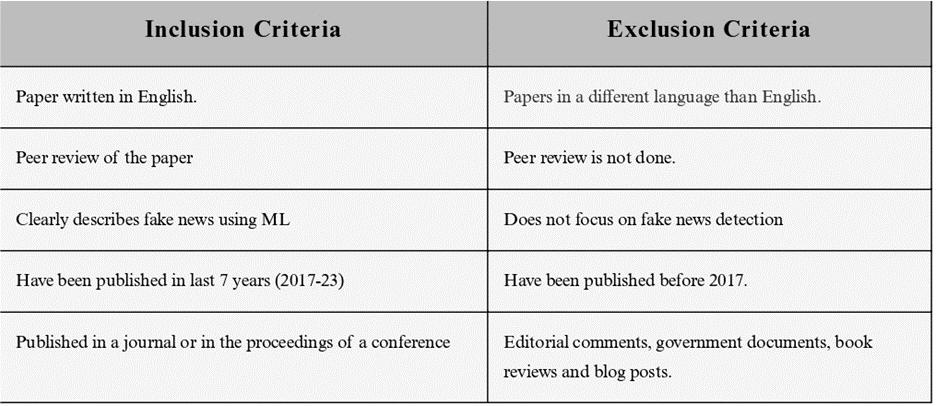
Abasiclistofarticleswasfound.Tochoosetheacceptable study papers from the initial list of studies we obtained, wefollowedasetofinclusion/exclusioncriteriaasshown in Figure 1. As a result, the inappropriate papers were excluded in compliance with the SLR requirements. The chosenpaperhadtobewritteninEnglish,haveundergone peerreview,andconcernshavebeenraisedabouttheuse of machine learning to detect fake news. On the other hand,theexclusioncriteriaweresetbasedonstudiesthat did not address machine learning-based fake news identification.Additionalexclusioncriteriaincludereusing previously published works, publishing unreviewed articles,andpublishingworksthatarenotinEnglish.
With its capacity to sway public opinion and decisionmaking,falsenewsdominanceintoday’ssocietyhasgiven
rise to serious concerns. Researchers have been looking intovariouswaystoidentifyfakenews,includingmachine learning algorithms, to address this problem. A review of the literature provides a summary of the work that has been done sofar on using machinelearningalgorithmsto identifyfakenews.Theuseofnaturallanguageprocessing (NLP) methods for fake news identification has been the subject of numerous studies. NLP algorithms examine the contentofnewsstoriestofindpatternsandtraitsthatcan differentiate between genuine and false news. The use of networkanalysistoinvestigatethedisseminationofnews on social media is another strategy that has been examined. According to research, fake news frequently comes from unreliable sources and tends to spread more quickly and broadly than legitimate news. Researchers havecreatedalgorithmsthatcanidentifyfakenewsbased on its patterns of dissemination by studying the network structureofthedistributionofnews.
AshaJ.etal.proposesaprocedurefordetectingfakenews using unsupervised and deep learning techniques due to the difficulty of detecting fake news with limited publicly availableresources.Theproposedmethodhasanaccuracy rate of 58% with the unsupervised SVM algorithm and 96.4%withtheHybridCNN-RNNdeeplearningalgorithm [4].
Uma Sharma et al. discuss the growing problem of fake news and its impact on people’s opinions and attitudes towards digital technology. To address this issue, the authors propose a system for fake news detection that uses NLP and machine learning techniques to determine whether news articles are true or false. The system’s performance is evaluated using various performance measures,andthebestmodelisdeterminedtobeLogistic Regressionwithanaccuracyof75%[5].
Iftikhar Ahmad et al. describe a study on the categorization of false news stories using machine learning algorithms and ensemble approaches. The study evaluates the accuracy, precision, recall, and F1-score of severalalgorithmsonfourdatasets.Theresultsshowthat the best-performing algorithm is the decision trees with an accuracy of 94%, while Wang-Bi-LSTM, with an accuracyof62%[6,]istheworst-performingalgorithm.
Berahmand K. et al. propose a link prediction technique based on neighbors and mutual influence nodes. Their study takes a similar approach to rate publishers’ influenceandcredibilityindisseminatingfakenewsbased ondatafromtheirsocialmediafollowers[7]
AccordingtoQawasmehetal.,identifyingfakenewsisone of the tough issues when using standard content-based analysis approaches. Due to the exceptional capability of feature extraction, neural network models have recently outpaced conventional machine learning techniques in
International Research Journal of Engineering and Technology (IRJET) e-ISSN:2395-0056
Volume: 11 Issue: 07 | July 2024 www.irjet.net p-ISSN:2395-0072
termsofperformance.Theresearchonspottingfakenews in the news and during time-sensitive situations is still lacking. We have therefore looked into the automatic detection of fake news on internet communication channels in this study. Moreover, we suggest adopting cutting-edgemachinelearningalgorithmstoautomatically identify bogus news. The suggested bidirectional LSTM concatenated model that performs with 85.3% accuracy ontheFNC-1dataset[8].
Sequential and recurrent layers are both used in Sedik et al.’sdeeplearningtechnique.TheCNN-LSTMmodel,which is a recurrent model, utilizes stacked CNN along with LSTMandDenselayers.Similarly,theGRUmodel,another typeofrecurrentmodel,employsabasicGRUalongwitha Denselayer.Ontheotherhand,sequentialmodelsemploy concatenated CNN, stacked CNN, or both. Based on experimentalresultsusingbinarylabeledKaggleandFake News Challenge datasets, the C-CNN and CNN-LSTM models demonstrate superior performance. Specifically, the C-CNN model achieves an accuracy of 99.90% on the Kaggle dataset, while the CNN-LSTM model attains an accuracyof96%ontheFakeNewsChallengedataset.[9].
Kaliyar, R.K. conducted an analysis of benchmarked data that included several attributes such as ID for a unique value, title for a specific content heading, and author for the name of the creator. The primary attribute used to differentiate labels was the text, and this dataset was utilized to train and test another dataset. The process began with word embedding, followed by a 1D convolution of three convolutions. Convolutional neural networks aim to extract valuable information from the trained model by utilizing pooling and dense layers. To evaluatetheperformanceofthemodel,accuracy,F1score, recall, and precision are considered as parameter assessment metrics. The proposed approach was able to achieveanaccuracyof98.32%[10].
Himank Gupta et al. proposed a framework based on a different machine learning approach to overcome several issues such as low accuracy, time lag, and lengthy processingtime.Theycollected data from400,000tweets from the HSpam14 dataset, out of which 250,000 were non-spam and 150,000 were spam tweets. The authors alsoextractedTop-30termsfromtheBag-of-termsmodel, whichyieldedthehighestinformationgain,andidentified several lightweight features. Their proposed solution outperformed the previous solution by approximately 18%andachievedanaccuracyof91.65%[11].
UsingTwitterdata,Monti,F.experimentedwithgeometric deep learning to determine fake news. The results of the studies suggest that social network structure and propagation play a key role in achieving the maximum level of fake news detection accuracy. The second step involvesdetectingfakenewsassoonasitstartstospread.
The third step involves testing the model once more to keepthelevelofaccuracy,soitisfoundedonpropagation. Rather than content for the purpose of detecting fake news. For non-Euclidean deep learning techniques that achieve an accuracy of 97% in terms of ROC, the phrase” geometric deep learning” is frequently used as a catch-all word[12].
To detect fake news on Twitter, a deep neural network architecture that can handle multiple input methods has been proposed. This architecture includes word embeddings of news headlines and bodies, linguistic attributes,andnetworkaccountfeatureslikeuserprofiles. The input can be combined at different network layers. A significant contribution of this approachis the creation of a newTwitterdataset containingboth real and fake news relatedtotheHongKongprotests[13].
Additionally, it is suggested to utilize a linguistic model [14] to identify the content features of news material, including its syntactic, grammatical, sentimental, and readability features. This model can then be used as a neural-based sequential learning model to detect fake news. Similarly, Hakak et al. proposed an ensemble classification model based on linguistic variables for fake news detection. They used 26 linguistic features from the text and fed them into a Decision Tree, Random Forest, andExtraTreeClassifierensemblemodel.[15].
4.
•Machine learning has proven to be a valuable tool in detecting fake news, using two primary methods: supervised learning and unsupervised learning. Unsupervised learning makes getting training data easier by using unlabeled data to extract features, but it might notbeasefficientassupervisedlearning.Labeleddataare
International Research Journal of Engineering and Technology (IRJET) e-ISSN:2395-0056
Volume: 11 Issue: 07 | July 2024 www.irjet.net p-ISSN:2395-0072
necessaryforsupervisedlearning,butgatheringenoughof them can be time and money-consuming. Deep learning hasbecomea prominent tool fordetectingfake newsasa result of recent advancements in natural language processing.Avarietyofalgorithmsareemployedtodetect fakenews.[16].
• To analyze the text of the news stories, NLP techniques are applied. Techniques like sentiment analysis, topic modeling,andsemanticanalysiscanbeusedinthis.These methods can aid in spotting the use of emotive language, content discrepancies, and factual mistakes in reports. NLP, a cutting-edge field of machine learning, enables computers to learn, analyze, manipulate, and even synthesize human languages. In this process, various techniques such as pre-processing, word embedding, and featureextractionareused.[16].
•Thetraditionalmachinelearningmodels,alsoreferredto as shallow models, encompass various algorithms including supervised and unsupervised learning. Unsupervisedlearninginvolvesk-means,whilesupervised learning comprises techniques such as evolution tree analysis, support vector machine (SVM), hybrid SVM, Bernoulli’s naive Bayes [17], LDA [18], and voting classifier [19]. These algorithms have been utilized in multiplestudies,includingZhangetal.(2019)[20],Janget al. (July 2018) [21], Kauffmann et al. (October 2020) [22] todetectfakenews.
• A variety of deep learning models have been utilized in research, such as unsupervised learning algorithms like RNN(Shuetal.2019;Agarwaletal.2020)[23,24]),LSTM (Umeretal.2020)[25,],andGRU(Vereshchuketal.2020) [26],aswellasAC-BiLSTM(Truemanetal.2021)[27];and Ensemble models (Ozbay and Alatas February 2020[28]. Additionally, CNN (Kaliyar et al. June 2020[29]; models havealsobeenimplementedinstudiestoachieveeffective results.
• Deep learning algorithms have the ability to learn featuresdirectlyfromsourcetextsandimageswithoutthe need for manual feature engineering. This process can be executed end-to-end. Compared to shallow models, deep learning techniques excel in interpretability, learning capacity, feature representation, number of parameters, andexecutiontime,especiallyforlargedatasets.[16].
• According to Devlin et al. [33], BERT (Bidirectional Encoder Representations from Transformers) is a pretrained model designed to learn contextual word representations of unlabeled text. The BERT-Base variant was studied due to the significant time and memory requirementsoftheBERT-Largemodel.BERT-Baseisone oftwoBERTvariantsoriginallyintroduced.[32].
Weperformedabibliometricstudytodeterminethemost significantpapersandresearchersintheareaoffakenews detection using machine learning. The following search terms were used to retrieve all publications pertaining to fakenewsdetectionusingmachinelearning.
(“fake news” OR “machine learning” OR “deep learning” OR“naturallanguageprocessing”OR“socialmedia”).
Ourresearchwasrestrictedtojournalarticlesandsurvey papers across a ten-year span, however, most of the researchpapersreviewedwerepublishedinorafter2020.
Wethenusedthesubsequentinclusioncriteria:
•ThepublicationmustbewritteninEnglish.
• The article must discuss fake news detection using machinelearning.
•Thearticleorresearchpapermusthaveundergonepeer review.
The most influential papers and researchers were then found by looking at the citation information of these publications.
Inthispart,weanswerfourresearchquestions:
• RQ1: What exactly is social media fake news, and what kindoffakenewsarethere?
AccordingtoAllcottandGentzkow[30],thefirstdefinition of fake news is news pieces that are purposefully and demonstrably inaccurate and may lead to reader confusion. Other definitions were later offered in the literature,buttheyallconcurthatfakenewsisuntrue(i.e., non-factual)initsauthenticity.Theydispute,nevertheless, on whether certain related ideas, such as rumors, satire, conspiracy theories, hoaxes, and incorrect information, shouldbeincludedorexcludedfromthedefinition.
It is possible to list and identify the terms that are most frequently used in the literature to refer to, describe, and determine fake news.InFigure2, weclassifyon the basis ofvariousterminologiesbasedontwoessentialtraitsthat they all share: the purpose behind the news’s publication anditsvalidity.Toprecisely distinguishfalse news, terms such as disinformation, misinformation, and inaccurate information are used. The authenticity factor of a statement refers to its factual component and whether it can be verified as true or false. On the other hand, the intent aspect refers to the motivation behind the statementandwhetheritaimstodeceiveorharm.[31].
•RQ2:Howreliablearedeeplearningversusconventional machinelearningmodelsatspottingfakenews? Generally, deep learning models perform better than traditional models in terms of overall accuracy,
International Research Journal of Engineering and Technology (IRJET) e-ISSN:2395-0056
Volume: 11 Issue: 07 | July 2024 www.irjet.net p-ISSN:2395-0072
particularly on large datasets like the Combined Corpus. However, deep learning models are more susceptible to overfitting on smaller datasets. Despite this, Naive Bayes (with n-gram), a traditional model, shows promising potential in detecting fake news, with a performance that is nearly on par with deep learning models and achieving anaccuracyof93%onthecombinedcorpus.
Upon further investigation, it was found that as the amount of training data increases,the performance of the Bi-LSTM deep learning model improves at a faster rate compared to Naive Bayes. However, at some point, the performance of Naive Bayes reaches a saturation point and further improvements are minimal even with more training data. As a result, it can be concluded that deep learning models have the potential to outperform Naive Bayeswhentrainedwithsufficientexamples[32].
• RQ3: What methods are there to detect fake news on socialmedia?
Usingthemethodologies,wedividethedetectionmethods intothreecategoriesasshowninFigure3.
Human-based methods: This group generallyconsists of the employment of fact-checking and crowdsourcing methods, which are based on human understanding to examineandconfirmtheaccuracyofnewsinformation.
Artificial intelligence-based methods: The group of artificial intelligence-based methods is commonly used in academic publications to detect fake news. It category includes a combination of traditional machine learning (ML),deeplearningmethodssuchasconvolutionalneural networks (CNN) and recurrent neural networks (RNN), andnaturallanguageprocessing(NLP)techniques.
Blockchain-based techniques: This category contains ways that employ blockchain technology to identify and counteract fake news on social media by establishing the legitimacy of the news’s sources and their ability to be trackedback.[31].
• RQ4: Which model works best with a limited amount of trainingdata?
We looked into how various models performed with a small amount of training data. Notably, even with little datasets, pre-trained BERT-based models showed good performance.Particularlyonsmallerdatasetssuchasfake or real news, these algorithms are useful in identifying fake news. Furthermore, we analysed models from all three categories: Bi-LSTM (a deep learning model) and Naive Bayes with n-gram (a conventional model). Our findingsvalidatetheeffectivenessofartificialintelligencebasedmethodsinthiscontext[32].
Detecting fake news can be challenging for humans as it requires expertise and in-depth knowledge to recognize anomaliesandclassifynews reports.Manual validation of asinglearticleisdifficult,whichmakestheclassificationof fake news using machine learning models and ensemble techniques necessary. It is essential to be aware that not all news on social media is true and to exercise critical thinking.Thiscanhelpthepublicmakeinformeddecisions andprotectthemfromthosewhospreadmisinformation.
This study conducted a comprehensive analysis of false news detection models, building upon previous research. Variousmachinelearninganddeeplearningapproaches
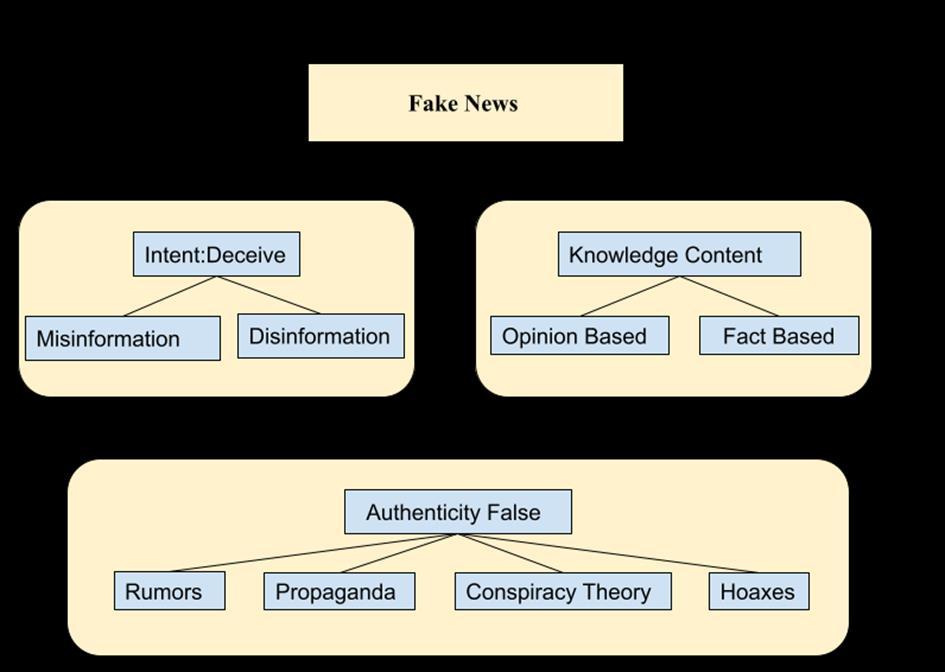
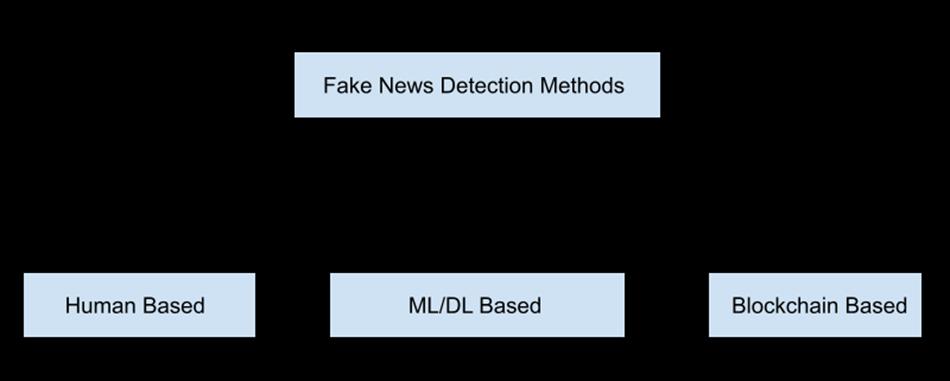
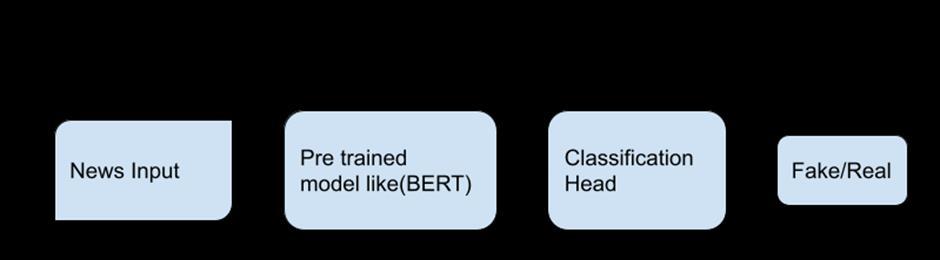
Figure4:Fine-tuningofBERTModel.
International Research Journal of Engineering and Technology (IRJET) e-ISSN:2395-0056
Volume: 11 Issue: 07 | July 2024 www.irjet.net p-ISSN:2395-0072
Were explored, along with datasets, simulation environments, techniques, and their respective strengths and limitations. Performance measures were also presented for evaluating model effectiveness, as well as identifying gaps and challenges in developing new false newsdetectionalgorithms.Thefindingsofthissurveycan serve as a guide for future researchers to develop innovativeandeffectivefalsenewsdetectionprograms.By improving the ability to identify false news, researchers can gain a better understanding of current issues, potentialsolutions,andfuturedirections.
[1] Jarrahi, A., Safari, L. Evaluating the effectiveness of publishers’ features in fake news detection on social media. Multimedia Tools and Applications, 82(3), 2913–2939.
[2] de Beer D, Matthee M.(2020) Approaches to Identify Fake News: A Systematic Literature Review. Integrated Science in Digital Age
[3]K.Shu,A.Sliva,S.Wang,J.Tang,andH.Liu(2017).Fake news detection on social media. ACM SIGKDD Explorations Newsletter, 19(1),22–36.
[4] Asha. J1, Meenakowshalya (2021). Fake News Detection Using Unsupervised and Deep Learning Algorithms.
[5] Sharma, U., Saran, S., & Patil, S. M. (2021). Fake News Detection using Machine Learning Algorithms. International Journal of Engineering Research & Technology (IJERT) NATSU – 2020 (Volume 09 – Issue 03).
[6] Ahmad, I., Yousaf, M., Yousaf, S., & Ahmad, M. O. (2020). Fake News Detection Using Machine Learning EnsembleMethods.
[7] Berahmand K et al (2021) A preference random walk algorithm for link prediction through mutual influence nodes in complex networks. Journal of King Saud University -Computer andInformationSciences.
[8] Qawasmeh E., Tawalbeh M. Abdullah M. (2019). October. Automaticidentificationoffake newsusing deep learning. 2019 Sixth International Conference on Social Networks Analysis, Management andSecurity (SNAMS).
[9] Sedik,A.,Abohany,A.A.,Sallam,K.M.,Munasinghe,K., & Medhat, T. (2022). Deep fake news detection system based on concatenated and recurrent modalities. Expert Systems with Applications,208,117953.
[10] Kaliyar, R. K., Goswami, A., Narang, P., & Sinha, S. (2020).FNDNet–Adeepconvolutionalneuralnetworkfor fakenewsdetection. Cognitive Systems Research,61,32-44.
[11]Gupta,H.,Jamal,M.S.,Madisetty,S.,&Desarkar,M.S. (2018). A framework for real-time spam detection in Twitter. 2018 10th International Conference on Communication Systems & Networks (COMSNETS), Bengaluru,380-383.
[12] Monti F., Frasca F., Eynard D., Mannion D. Bronstein M.M. (2019). Fake news detection on social media using geometricdeeplearning. Social andInformationNetworks.
[13] Mouratidis D, Nikiforos MN, Kermanidis KL (2021) Deeplearningforfakenewsdetectioninapairwisetextual inputSchema. Computation 9(2),20.
[14]Choudhary, A., &Arora,A.(2021).Linguistic featurebased learning model for fake news detection and classification. Expert Systems with Applications, 169, 114171.
[15] Hakak, S., Alazab, M., Khan, S., Gadekallu, T. R., Maddikunta, P. K. R., & Khan, W. Z. (2021). An ensemble machine learning approach through effective feature extraction to classify fake news. Future Generation Computer Systems, 117,47-58.
[16]Shah,N.,&Ganatra,A.(2022).Asystematicliterature reviewandexistingchallengestowardfakenewsdetection models. Social NetworkAnalysis andMining, 12,168.
[17]Singh,M.,Bhatt,M.W.,Bedi,H.S.,&Mishra,U.(2020). Performance of Bernoulli’s naive bayes classifier in the detectionoffakenews.
[18]Reddy,H.,Raj,N.,Gala,M.,&Basava,A.(2020).Textmining-based fake news detection using ensemble methods. International Journal of Automation and Computing,17,210-221.
[19] Verma, P. K., Agrawal, P., Amorim, I., & Prodan, R. (2021). WELFake: word embedding over linguistic features for fake news detection. IEEE Transactions on Computational Social Systems, 8(4),881-893.
[20]Zhang,C.,Gupta,A.,Kauten,C.,Deokar,A.V.,&Qin,X. (2019). Detecting fake news for reducing misinformation risks using analytics approaches. European Journal of Operational Research, 279(3),1036-1052.
[21] Jang, S.M., Geng, T., Li, J. Y., Xia,R., Huang,C. T., Kim, H., & Tang, J. (2018). A computational approach for examining the roots and spreading patterns of fake news: evolution tree analysis. Computers in Human Behavior, 84, 103-113.
[22] Kauffmann E, Pearl J, Gil D, Fernandez A, Sellers R, Mora H (2020) A framework for big data analytics in commercial social networks: a case study on sentiment analysisandfakereviewdetectionformarketingdecisionmaking. Industrial MarketingManagement, 90,523-537.
International Research Journal of Engineering and Technology (IRJET) e-ISSN:2395-0056
Volume: 11 Issue: 07 | July 2024 www.irjet.net p-ISSN:2395-0072
[23] Shu, K., Magudeswaran, D., & Liu, H. (2019). FakeNewsTracker: a tool for fake news collection, detection,andvisualization.
[24] Agarwal, A., Mittal, M., Pathak, A., & Goyal, L. M. (2020). Fake news detection using a blend of neural networks:anapplicationofdeeplearning.
[25]Umer,M.,Imtiaz,Z.,Ullah,S.,Mehmood,A.,Choi,G.S., &On,B.W.(2020).Fakenewsstancedetectionusingdeep learning architecture (CNN-LSTM). IEEE Access, 8, 156695-156706.
[26] Vereshchaka, A., Cosimini, S., & Dong, W. (2020). Analyzing and distinguishing fake and real news to mitigatetheproblemofdisinformation.
[27]Trueman,T.E.,Kumar,A.,Narayanasamy,P.,&Vidya, J. (2021). Attention-based C-BiLSTM for fake news detection. Applied Soft Computing, 110.
[28]Jiang,T.,Li,J.P.,Haq,A.U.,Saboor,A.,&Ali,A.(2021). A novel stacking approach for accurate detection of fake news.
[29] Kaliyar, R. K., Goswami, A., Narang, P., & Sinha, S. (2020).FNDNet adeepconvolutionalneuralnetworkfor fakenewsdetection. Cognitive Systems Research,61,32-44.
[30] Allcott, H., & Gentzkow, M. (2017). Social media and fake news in the 2016 election. Journal of Economic Perspectives.
[31]Aimeur,E.,Amri,S.,&Brassard,G.(2023).Fakenews, disinformation and misinformation in social media: a review. Social Network Analysis andMining, 13,30.
[32] Khan, J. Y., Khondaker, M. T. I., Afroz, S., Uddin, G., & Iqbal, A. (2021). A benchmark study of machine learning modelsforonlinefakenewsdetection.